
Car Camping

How to Choose the Right Brightness (Lumens) for Your Car Camping LED Light Bar

Casey - The Weekend Warrior
5 min read
Includes Video

My first car camping trip was a $47 experiment in a Honda Civic hatchback in Shenandoah Valley. Mid-October. I had a Walmart foam pad, a sleeping bag rated to 40F, and zero idea that the temperature drops 15 degrees after midnight in the mountains.

My first car camping trip was a $47 experiment in a Honda Civic hatchback in Shenandoah Valley. Mid-October. I had a Walmart foam pad, a sleeping bag rated to 40F, and zero idea that the temperature drops 15 degrees after midnight in the mountains. By 2AM I was wearing every piece of clothing in my bag and still shivering. The fix was a $12 fleece liner from Amazon that turned my 40F bag into a 25F bag.

Three years later I still use that same liner on every trip.

Now, let's talk about light. Specifically, the bright kind you bolt to your bumper. When I first looked at LED light bars, the numbers just swam. 10,000 lumens? 30,000 lumens? It felt like picking a TV screen size. The honest version is, you don't need to be an electrical engineer to figure out what's going to light up your campsite without blinding your neighbors. It's about real-world use, not just specs on a box.

lumens are a measure of visible light.
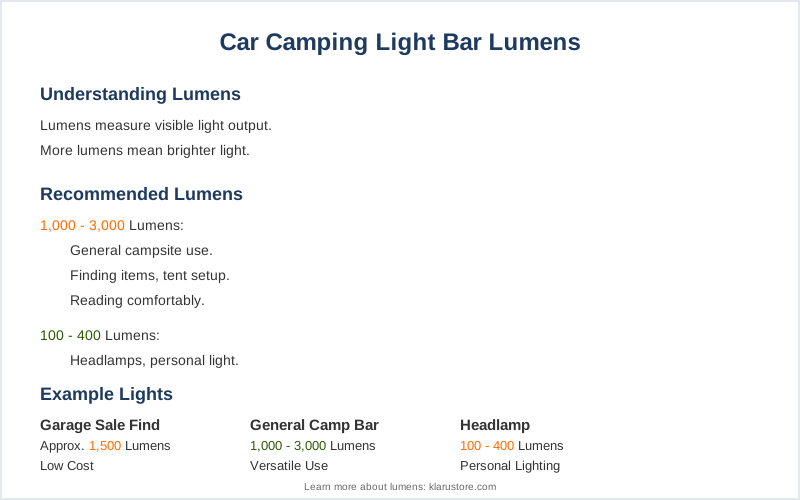
How to Choose the Right Brightness (Lumens) for Your Car Camping LED Light Bar — Key Specifications
Key specifications for How to Choose the Right Brightness (Lumens) for Your Car Camping LED Light Bar

The Core Answer

The real move for car camping lights isn't about blinding the moon, it's about seeing your picnic table. For general campsite illumination, I've found that anything between 1,000 and 3,000 lumens is plenty. This is bright enough to find your dropped keys, set up your tent in the dark, or even read a book without straining your eyes. Think of it like the difference between a bright desk lamp and a stadium spotlight. You don't need the stadium. 100 to 400 lumens is good for a headlamp, so for a wider area, a bit more makes sense. My first "camp light" was a repurposed work light I found at a garage sale for $5. It was probably around 1,500 lumens. It was perfect for my little setup. I could see everything I needed to. Too much light, and you just create glare and annoy people. I learned this the hard way at a crowded campground in the Smokies; my $20 "super bright" floodlight just bounced off my tent and made it impossible to see anything outside a 5-foot radius. Rookie mistake. If you're looking at a light bar specifically for driving on dark forest roads or trails, then yeah, you're going to want more juice. For that, I'd aim for something in the 10,000 to 15,000 lumen range. That's enough to light up the path ahead for a good distance, letting you spot rocks, potholes, or that elusive deer before it's too late. 10,000 to 15,000 lumens is plenty for off-roading. I remember trying out a 30,000 lumen monster once. It was like staring into the sun. I couldn't see anything past the immediate glow. Plus, it drew so much power my car battery started complaining after about 20 minutes. The $50 version of a light bar might seem tempting, but often those cheap ones flicker and die faster than a campfire in the rain. Stick to reputable brands if you're going for the high-lumen stuff. Brightness is primarily determined by lumens. For car camping, focus on diffused or flood beam patterns. These spread the light out, creating a nice, even glow around your campsite. Spot beams are too focused; they're like a laser pointer and won't illuminate your whole area. Think of it like this: a flood beam is a gentle sunrise, a spot beam is a sniper rifle. You want the sunrise for camping. match the light size to the location and purpose.
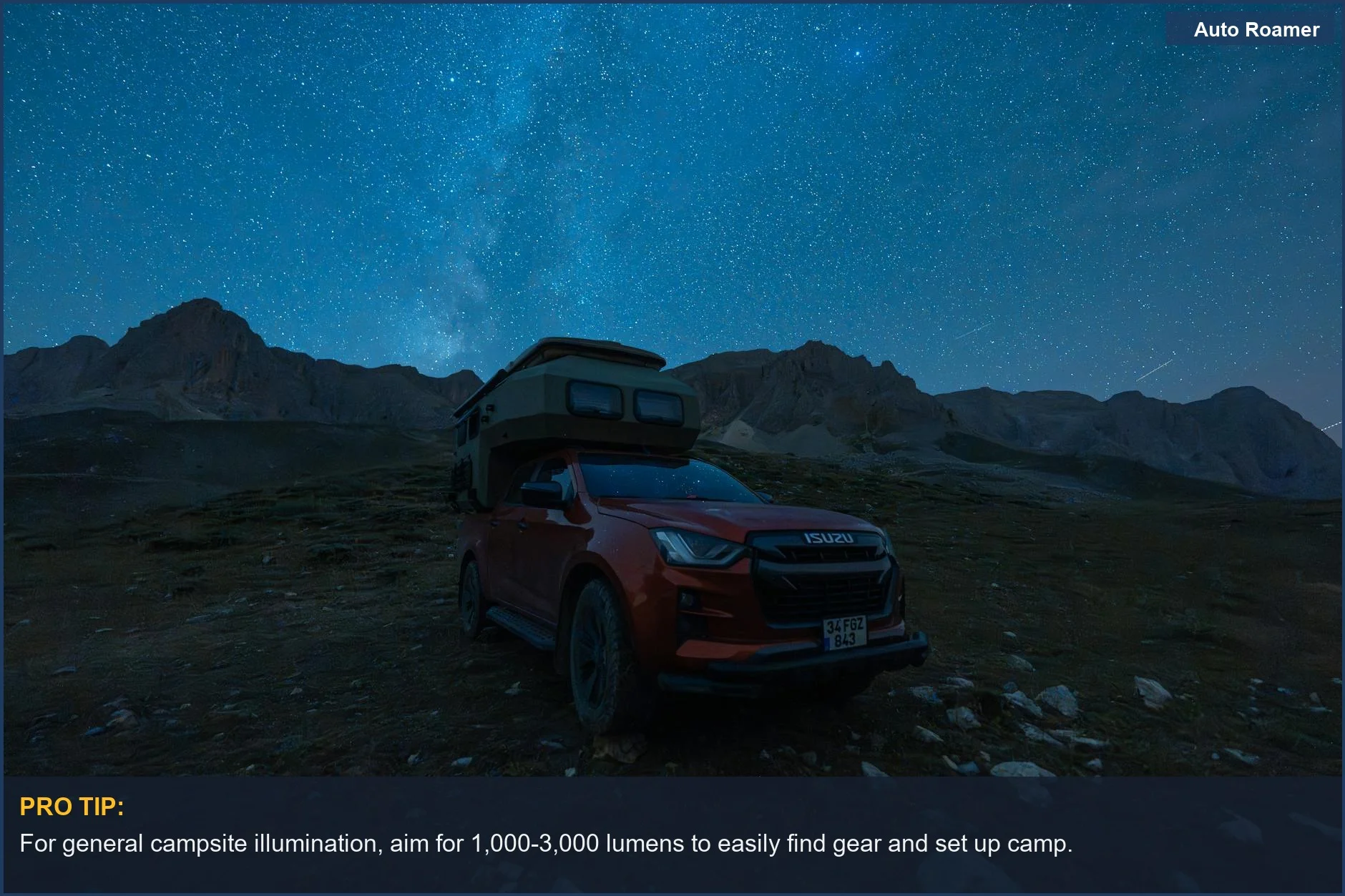
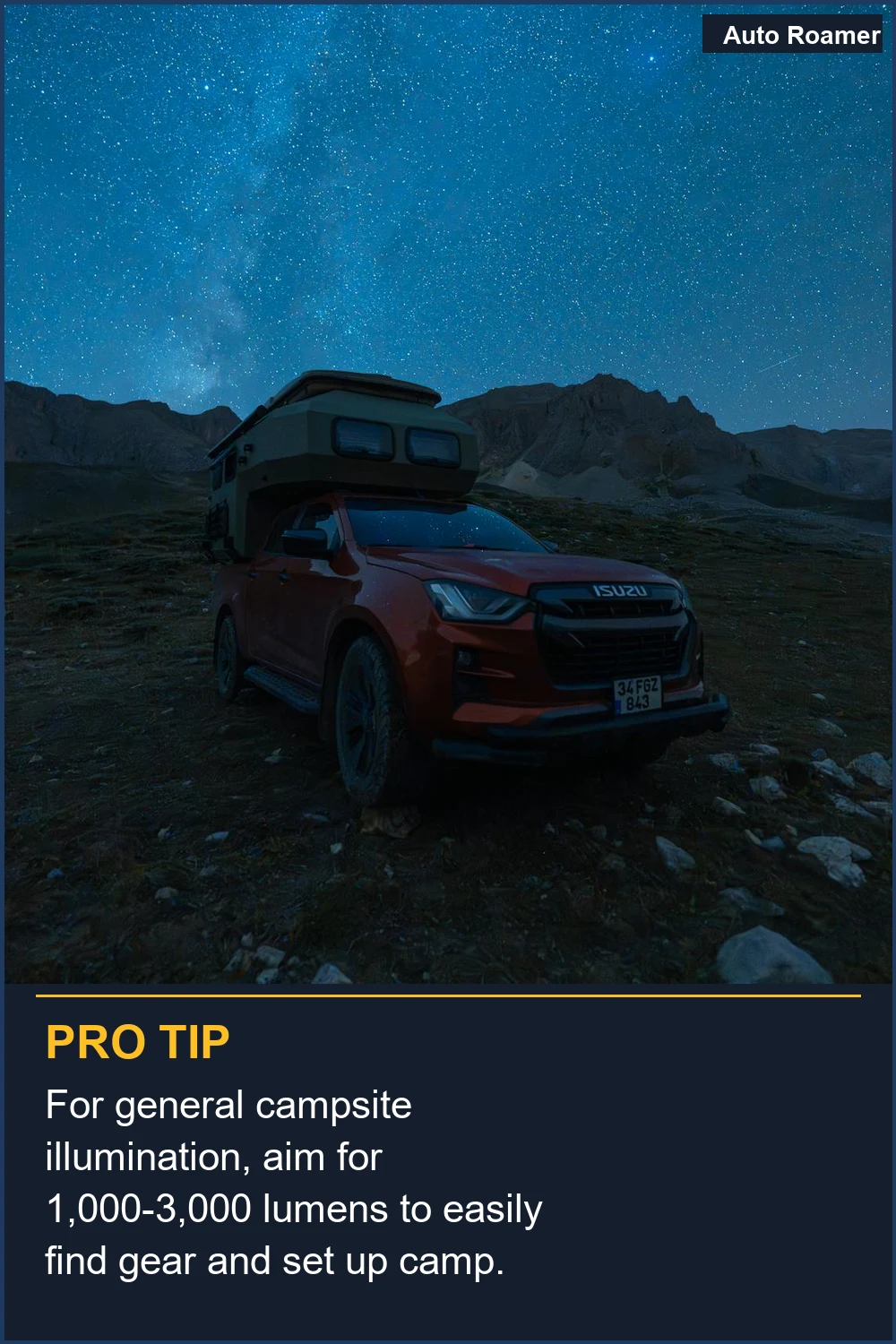
To enhance your campsite lighting, consider the importance of choosing the right brightness for your car camping headlamp.
For general campsite illumination, aim for 1,000-3,000 lumens to easily find gear and set up camp.
Adventure awaits! This setup highlights the beauty of car camping under the stars. For comfortable campsite illumination, aim for 1,000-3,000 lumens. | Photo by M.Emin BİLİR

Why This Matters for Your Setup

Why this matters is simple: you don't want to be that guy. That guy with the blinding light that makes everyone else feel like they're camping next to a lighthouse. Or worse, the guy fumbling around in the dark because his $10 flashlight died after an hour.
  • Campsite Comfort: For just hanging out, cooking, and chilling, aim for lights in the 1,000-3,000 lumen range. This is your "ambient" lighting. My first trip, I borrowed a buddy's huge lantern that was probably 5,000 lumens. It was overkill and attracted every moth within a mile.
  • Task Lighting: If you need to do something specific, like change a tire or fix a stove burner, a more focused beam or a headlamp (around 200-400 lumens) is better. This is where a smaller, portable light comes in handy. for general hiking and camping, 100-400 lumens should be enough.
  • Trail Blazing: If you're driving on unlit dirt roads at night, you need serious lumens. Think 10,000+ lumens for good visibility. This is for when you absolutely need to see what's ahead. off-road lights can help you slow down safely.
  • Power Draw: Higher lumens mean higher power consumption. Make sure your vehicle's electrical system can handle it, especially if you plan on running lights for extended periods. I fried a fuse once trying to run a cheap 15,000 lumen bar off my old Jeep's accessory circuit. Brilliant engineering.
  • To enhance your overall camping experience, understanding how to choose the right brightness for your car camping lantern is also essential.
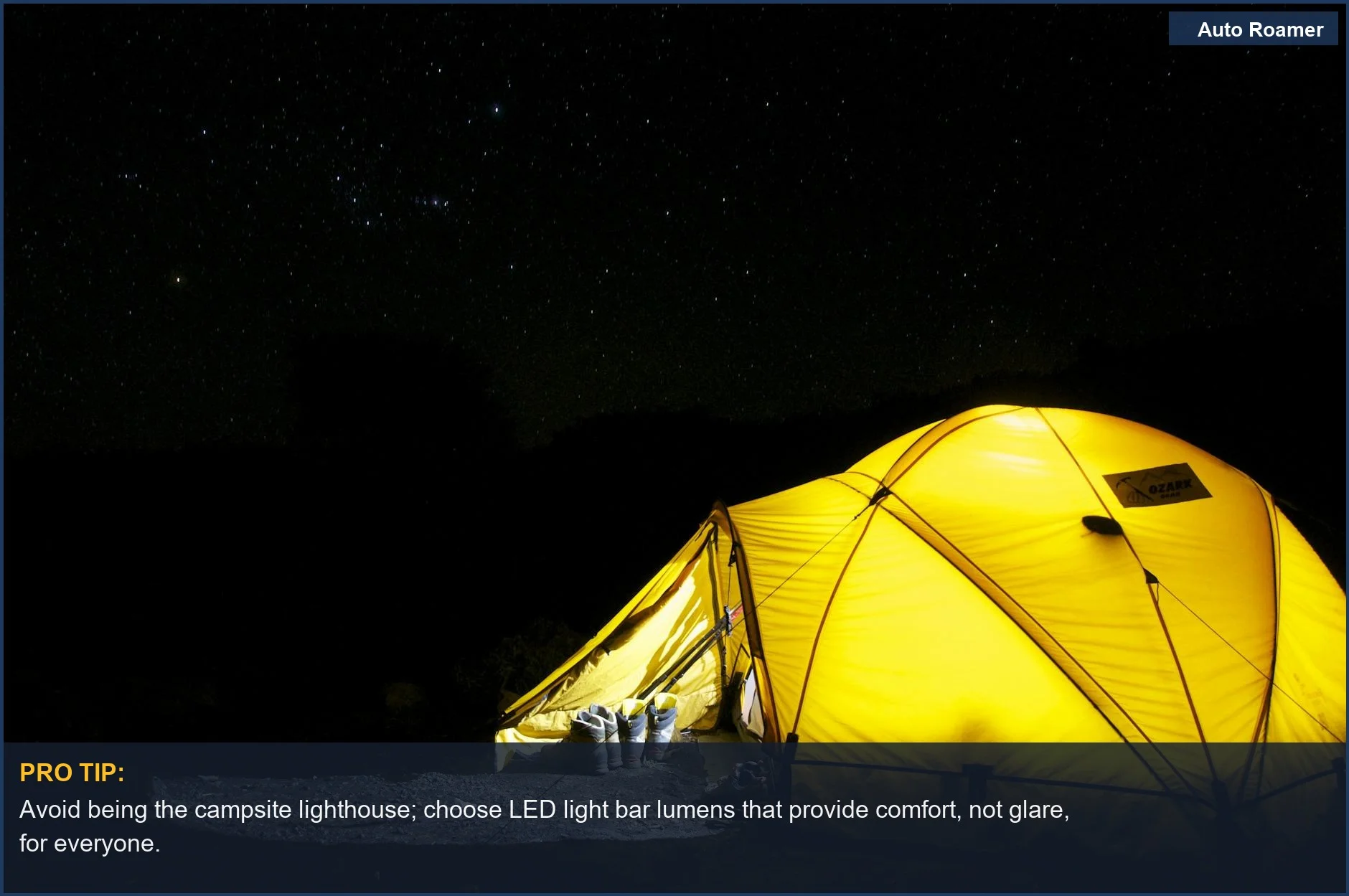
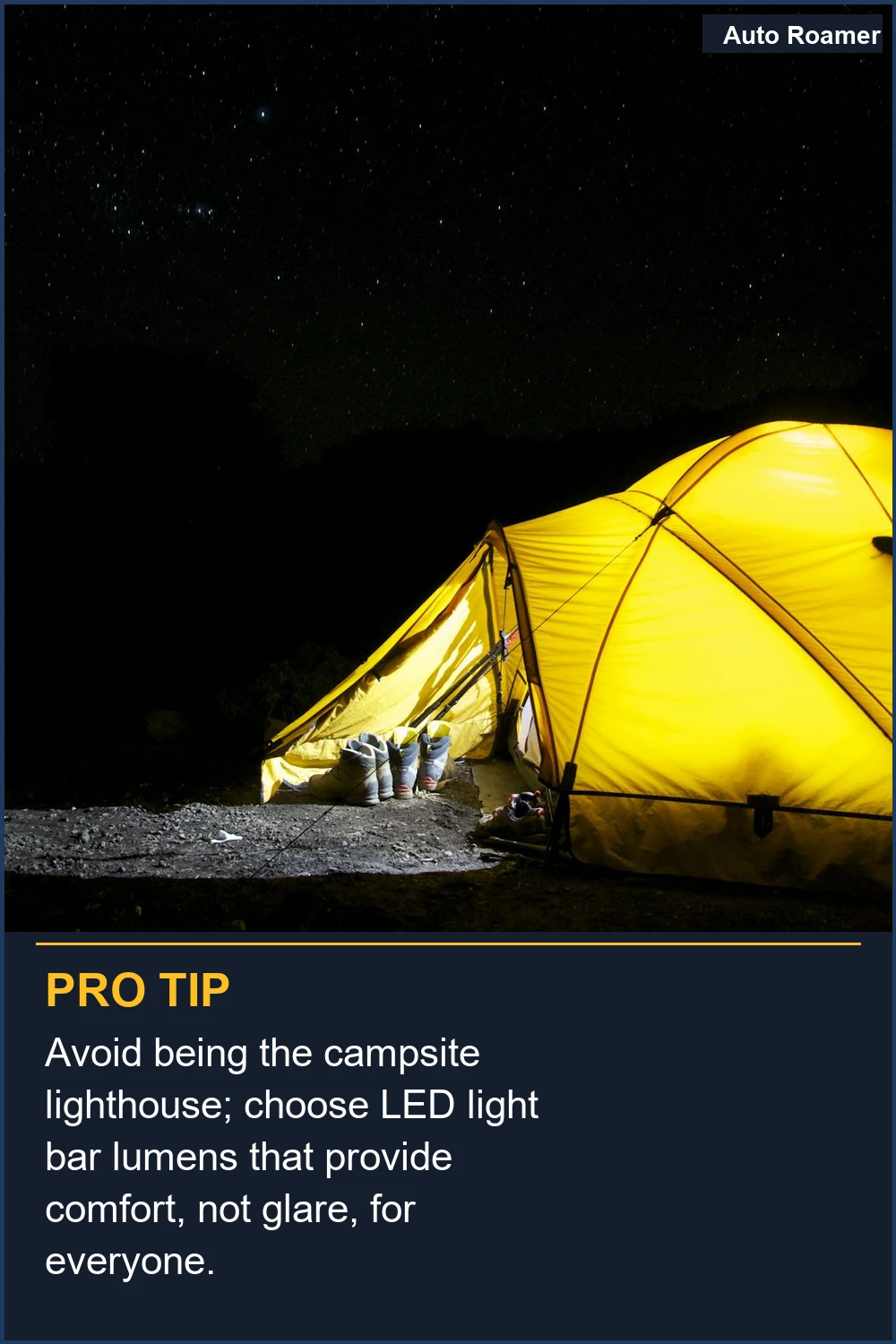
    Avoid being the campsite lighthouse; choose LED light bar lumens that provide comfort, not glare, for everyone.
    Embrace the camping magic with a cozy, illuminated tent. Choosing the right brightness means balancing visibility with campsite comfort. | Photo by Pixabay

    Making the Right Choice

    So, the real move for car camping lighting is to match the lumens to the job. Don't buy a stadium light for your picnic table.
  • Campsite Chill: 1,000-3,000 lumens is your sweet spot. Enough to see, not enough to annoy.
  • Driving the Dark Roads: If you're hitting trails after dark, shoot for 10,000-15,000 lumens. This is game-time lighting. This range provides plenty of illumination.
  • Beam Pattern: Flood or diffused for camping, spot or combo for driving. It's not rocket science, just common sense physics applied to not tripping over roots. match the light size to the location and purpose.
  • Budget: You don't need to spend a fortune. My $5 garage sale light worked fine for years. But if you're going for serious off-road power, invest in quality. A $50 light bar might seem cheap, but it'll likely die in a year. higher lumens mean brighter light.
  • To ensure your lighting setup is efficient, it's important to understand what voltage LED light bars typically use.
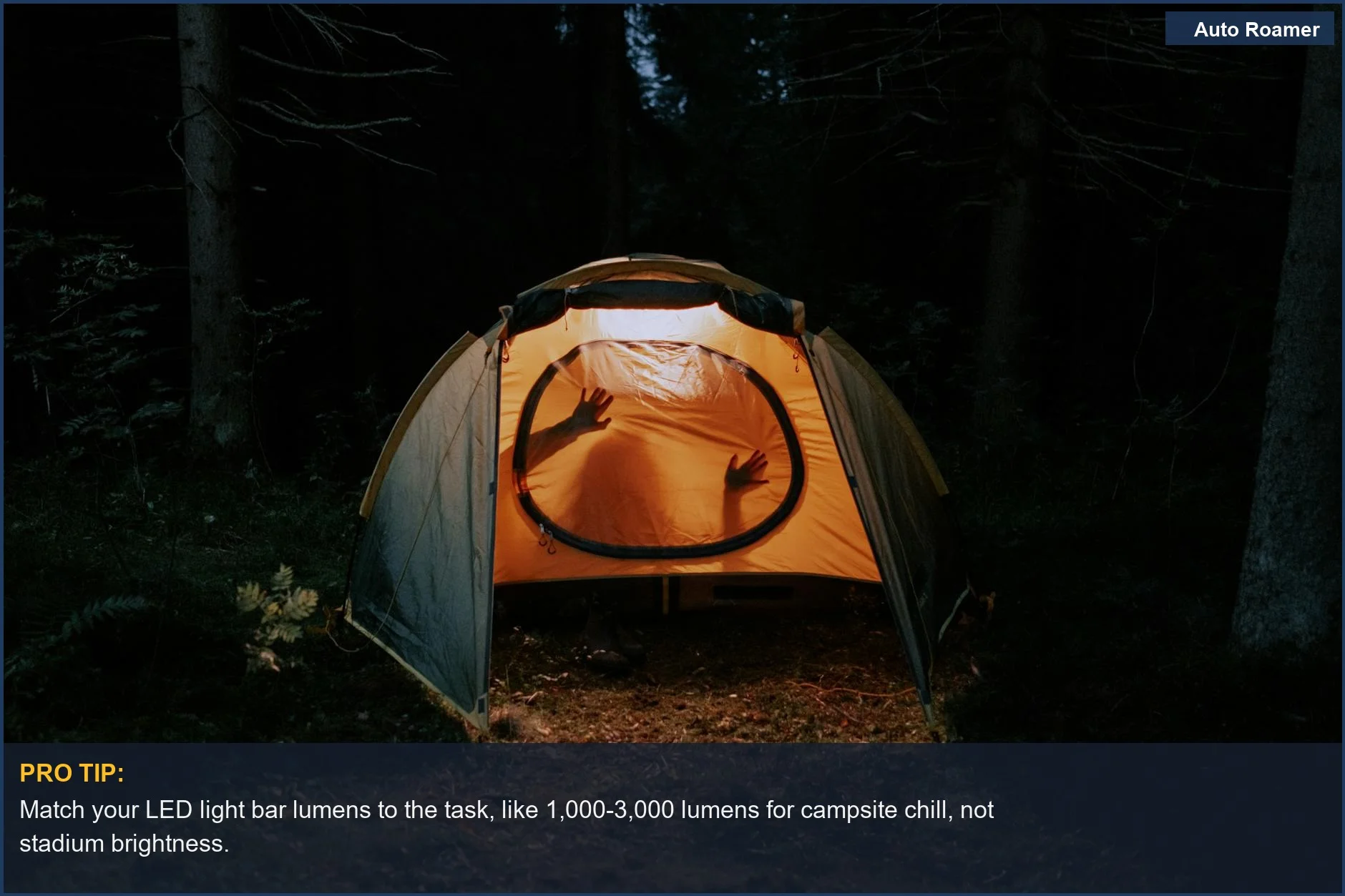
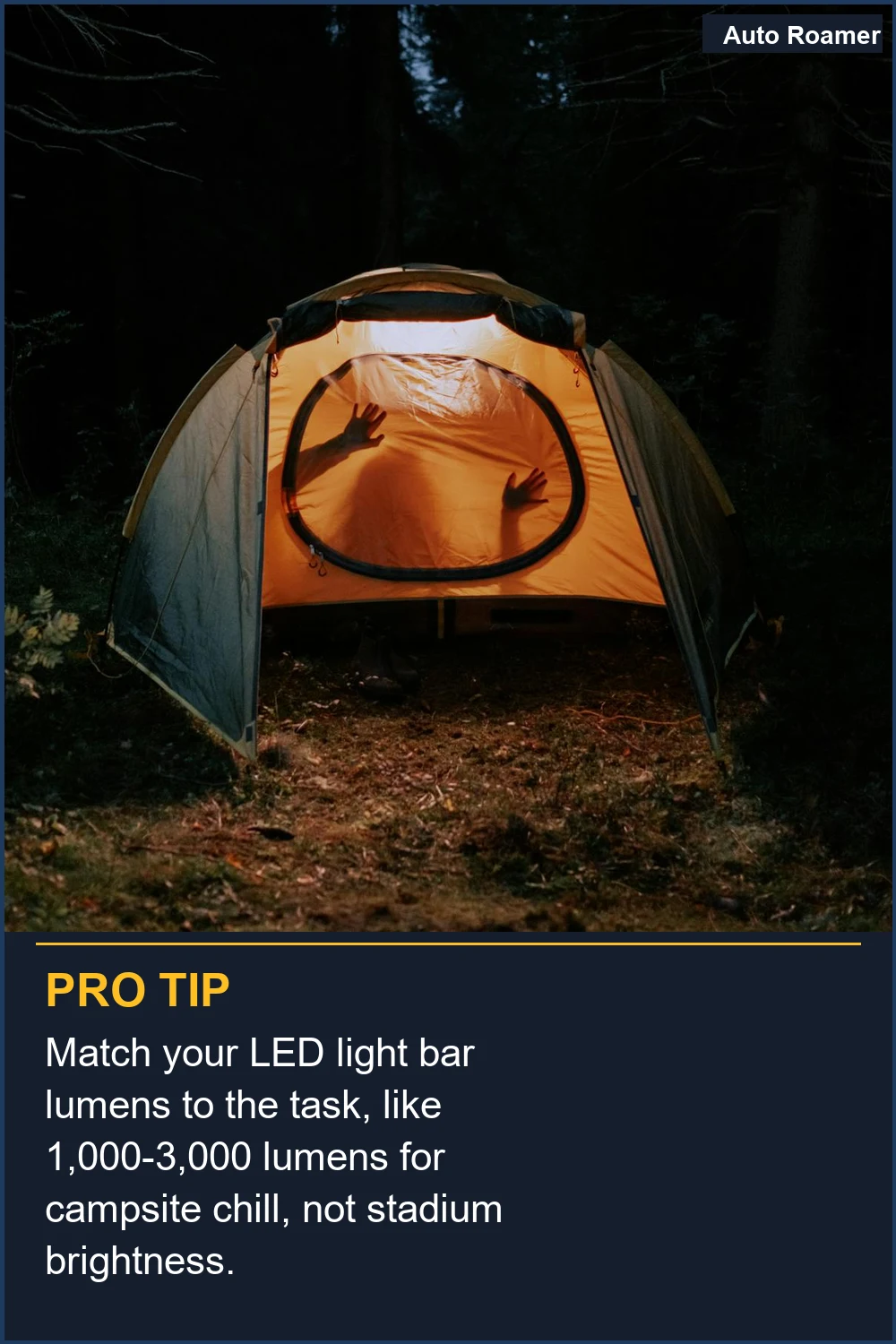
    Match your LED light bar lumens to the task, like 1,000-3,000 lumens for campsite chill, not stadium brightness.
    Intrigue unfolds in the dark forest. For enjoying your campsite, 1,000-3,000 lumens offer the perfect balance of light and ambiance. | Photo by cottonbro studio

    Frequently Asked Questions

    My buddy said I can wire a cheap 20,000 lumen light bar myself for $50 in parts, but the shop wants $200. Is it worth paying extra?
    Honestly, if you're comfortable with basic wiring and don't mind potentially troubleshooting a flickering light later, the $50 DIY route is probably fine. I've done similar things. Just make sure you're using proper gauge wire and a good fuse. The $200 shop install is for peace of mind and likely a cleaner install, but it's not magic. My $50 light bar experiment from Amazon lasted about 18 months before it started acting up.
    Do I really need a fancy lumen meter to pick out a good campsite light?
    Absolutely not. That's the kind of over-engineering that scares beginners. The packaging on most decent lights will list the lumens. If it doesn't, or it just says 'super bright,' put it back. For car camping, think 1,000 to 3,000 lumens. Anything more is usually overkill and just makes your eyes hurt. You don't need a science lab to know if you can see your marshmallows.
    What if I buy a 15,000 lumen light bar for my truck and it's too bright for the campground?
    Then you've got yourself a fantastic trail light for driving and a potentially annoying light for camping. The real move is to have multiple lights. Bring a smaller, dimmer lantern or headlamp for campsite ambiance (around 1,000 lumens), and use the big light bar only when you're actually driving on a dark road. I learned this the hard way when my 30,000 lumen beast lit up the entire campground and I got death stares from three tents over.
    Can running a super bright LED light bar for hours damage my car's alternator?
    Potentially, yes. If you're running a very high-lumen light bar (think 20,000+ lumens) for extended periods, especially at idle, you're asking a lot of your alternator. It's like revving your engine constantly. My alternator started whining after a particularly long night of testing a monster 40,000 lumen bar in my old SUV. For standard campsite lighting (under 5,000 lumens), you're probably fine, but always keep an ear on your engine.
    I heard LED light bars have a 'throw' and 'spread' which is more important for camping?
    That's a good question, and it's easy to get bogged down in jargon. For car camping, you want 'spread,' which is how wide the light covers your campsite. Think of it like a soft, diffused glow. 'Throw' is how far the light projects in a straight line, which is what you want for driving on dark trails, not for finding your cooler. My first camping light was a flood beam, and it was perfect for seeing everything around me.

    🏅 Looking for Gear Recommendations?

    Check out our tested gear guides for products that work with this setup:

    C

    Casey - The Weekend Warrior

    Weekend car camper and road trip enthusiast. Focuses on practical, budget-friendly solutions for families and first-time campers.

    Sources

    Related Articles