What You Need to Know
My first car camping cook set was a $15 dollar store special that included a pot with a lid that didn't fit and a pan that warped after about 5 minutes over a campfire. I was at a state park in Pennsylvania, trying to make ramen, and the water took forever to boil because the lid was useless.
The whole experience taught me that not all cookware is created equal, especially when you're trying to feed yourself after a long day of pretending you know how to set up a tent. REI's advice on pot size is a good starting point - about 1 pint per person. But honestly, you learn more from actually screwing up a meal.
The Core Answer
Here's the honest version: for car camping, you don't need a whole restaurant's worth of pots and pans. My first few trips, I packed like I was moving. My trunk was packed with every size imaginable.
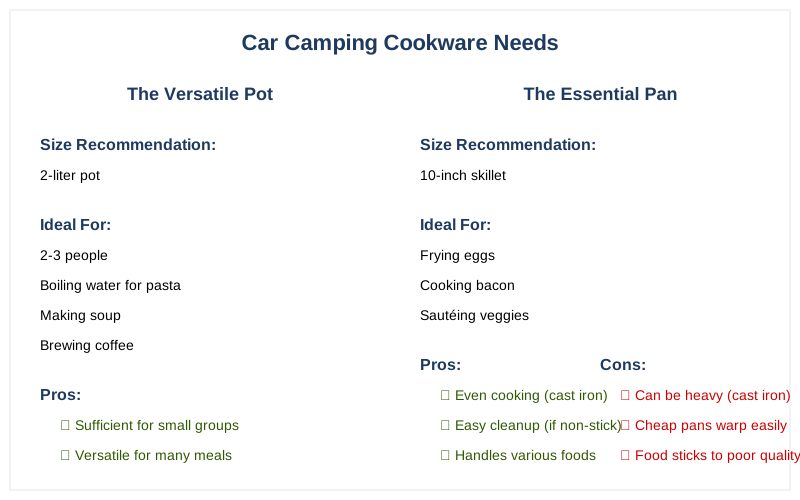
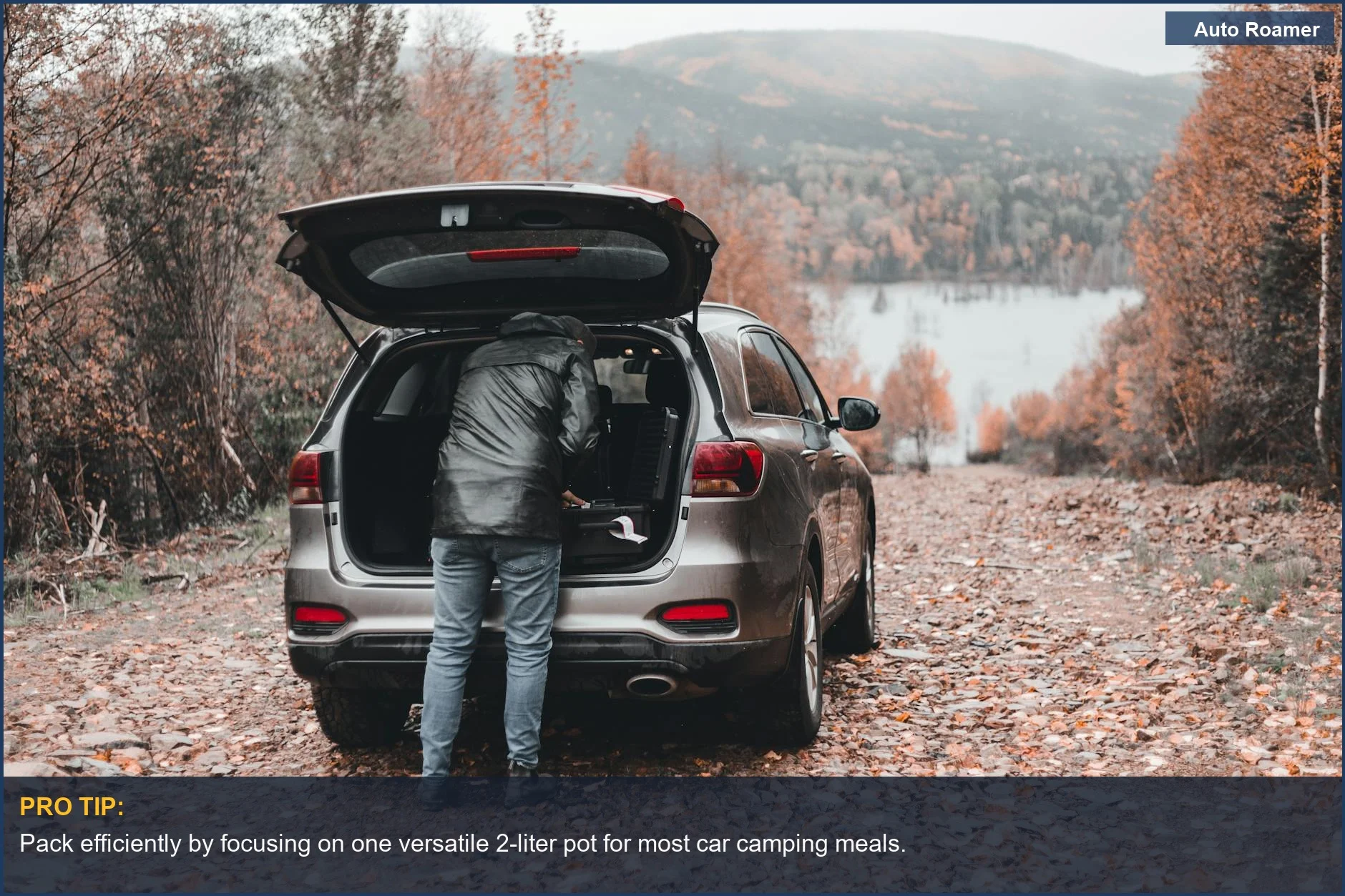
The real move is to get one good pot and maybe one decent pan. For a couple of people, a 2-liter pot is your game-time player. It's big enough to boil water for pasta, make soup, or brew coffee for two without feeling cramped. I learned this the hard way trying to make chili for my buddy and me in a 1-liter pot at a campsite in Colorado. It was a mess.
A 2-liter pot heats enough for two or three, which is pretty much my sweet spot.
For a pan, a 10-inch skillet is usually more than enough. You can fry eggs, cook bacon, or sauté veggies in it. I used a cheap, thin metal pan for the longest time, and everything stuck. It was a nightmare to clean. Now I use a cast iron skillet, and while it's heavier, it's worth it for how evenly it cooks. It's the $50 version of not scraping burnt food off a pan at 10 PM.
What nobody tells beginners is that you don't need a dedicated camping 'set.' You can often use your existing kitchenware if it's not too precious. Just make sure it's durable enough for outdoor use. My buddy uses his favorite cast iron skillet from home, and it works great. Reddit threads are full of people debating cast iron vs. aluminum, and honestly, both can work depending on your priorities.
If you're cooking for more than three people, then maybe you look at a 3-liter pot or a larger Dutch oven. I saw someone with a 10-quart Dutch oven at a campsite once, and I swear they were cooking Thanksgiving dinner. That's overkill for my usual weekend warrior trips. CleverHiker has some good recommendations if you're looking to buy something specific, but don't overthink it initially.
The key is to match your cookware size to your group size and cooking style. If you're just boiling water for instant meals, a tiny pot will do. If you're trying to whip up a gourmet meal, you'll need a bit more space. My first trip was ramen, my second was scrambled eggs, and my third was attempting pancakes. Each step required slightly different cookware.
Consider material too. Aluminum heats fast but can dent. Stainless steel is tough but can have hot spots. Cast iron is heavy but unbeatable for even heat. I learned this when my thin aluminum pan developed a hot spot that turned half my eggs into charcoal. GearLab's testing shows that for car camping, a Lodge 3.2 Quart Cast Iron Combo Cooker is a solid option, but it's definitely on the heavier side.
Why This Matters for Your Setup
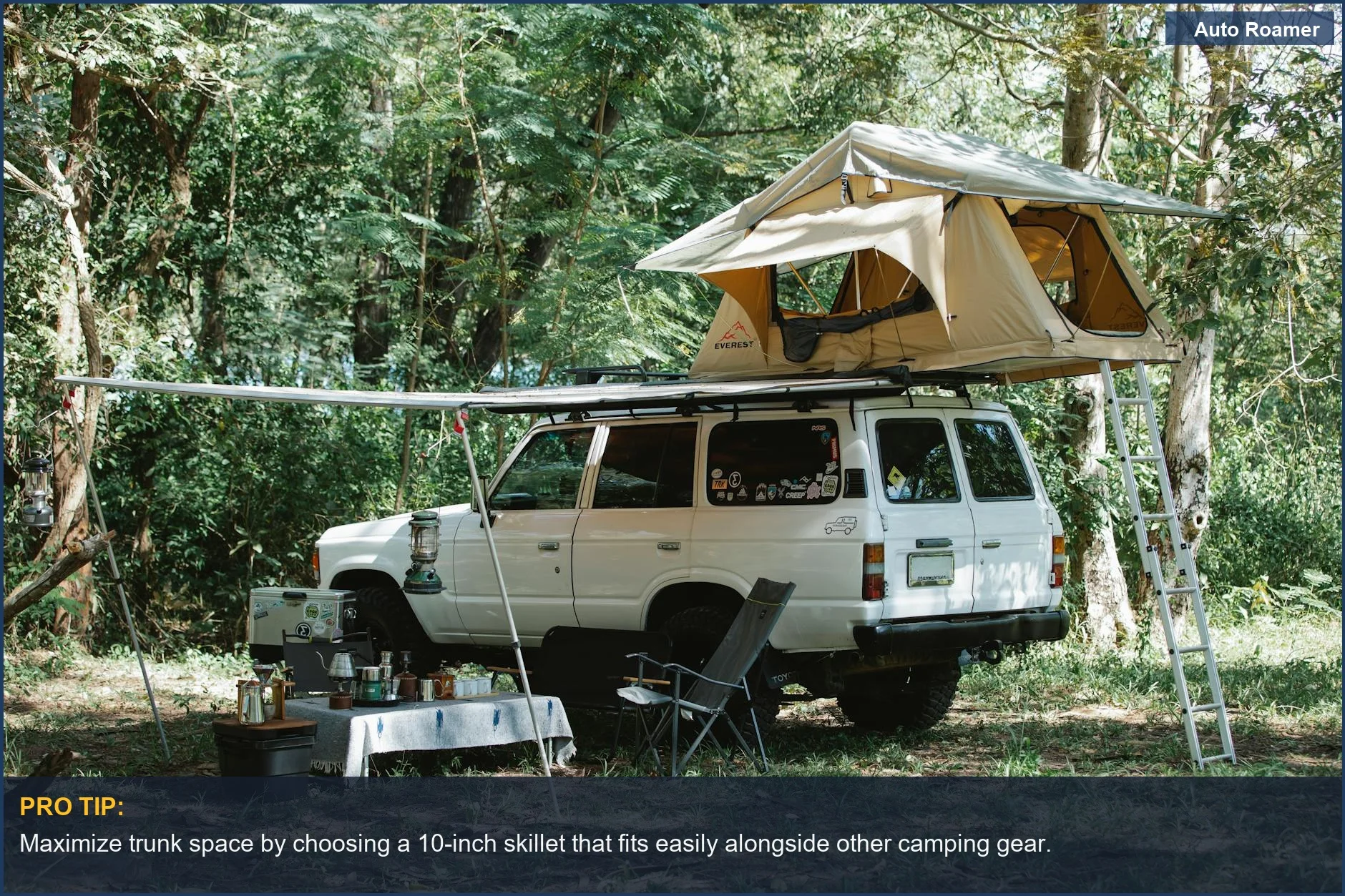
- Packing Space: My trunk looked like a clown car on my first few trips. Overpacking cookware eats up valuable space that could be used for, you know, actual comfortable sleeping gear. A single 2-liter pot and a 10-inch pan fit easily into a small bin or even just lay on top of other gear.
Luno's guide emphasizes smart storage, and this is a big part of it.
- Fuel Efficiency: Bigger pots mean more water to heat, which means more fuel burned. On my first trip to Zion, I underestimated how much propane my little stove would go through trying to boil water in a too-large pot. A 2-liter pot is efficient for smaller groups.
GearLab mentions how heat-exchanger rings on some pots speed up cooking and conserve fuel, but even without that, a properly sized pot helps.
- Cleanup Time: Trust me, you do NOT want to spend 30 minutes scrubbing burnt-on food at a campsite after dark. A decent-sized pan with a good surface means less sticking and easier cleaning. My first camping pan was a nightmare.
I bought a cheap, non-stick camping set once and the coating flaked off after a few uses. Brilliant engineering.
- Versatility: A single, well-chosen pot and pan can handle most meals. You don't need a separate pot for boiling water, one for simmering sauce, and another for pasta. My go-to is a single 2-liter pot with a lid that fits snugly.
My Camping Kit's video shows simple setups that work for most people.
- Cost: A full, multi-piece camping cookware set can easily run $100-$200. You can get a good quality 2-liter pot and a 10-inch skillet for under $75 if you shop smart. My first set was $15 and a complete waste of money. Public Lands has some good advice on materials that balance cost and durability.
Making the Right Choice
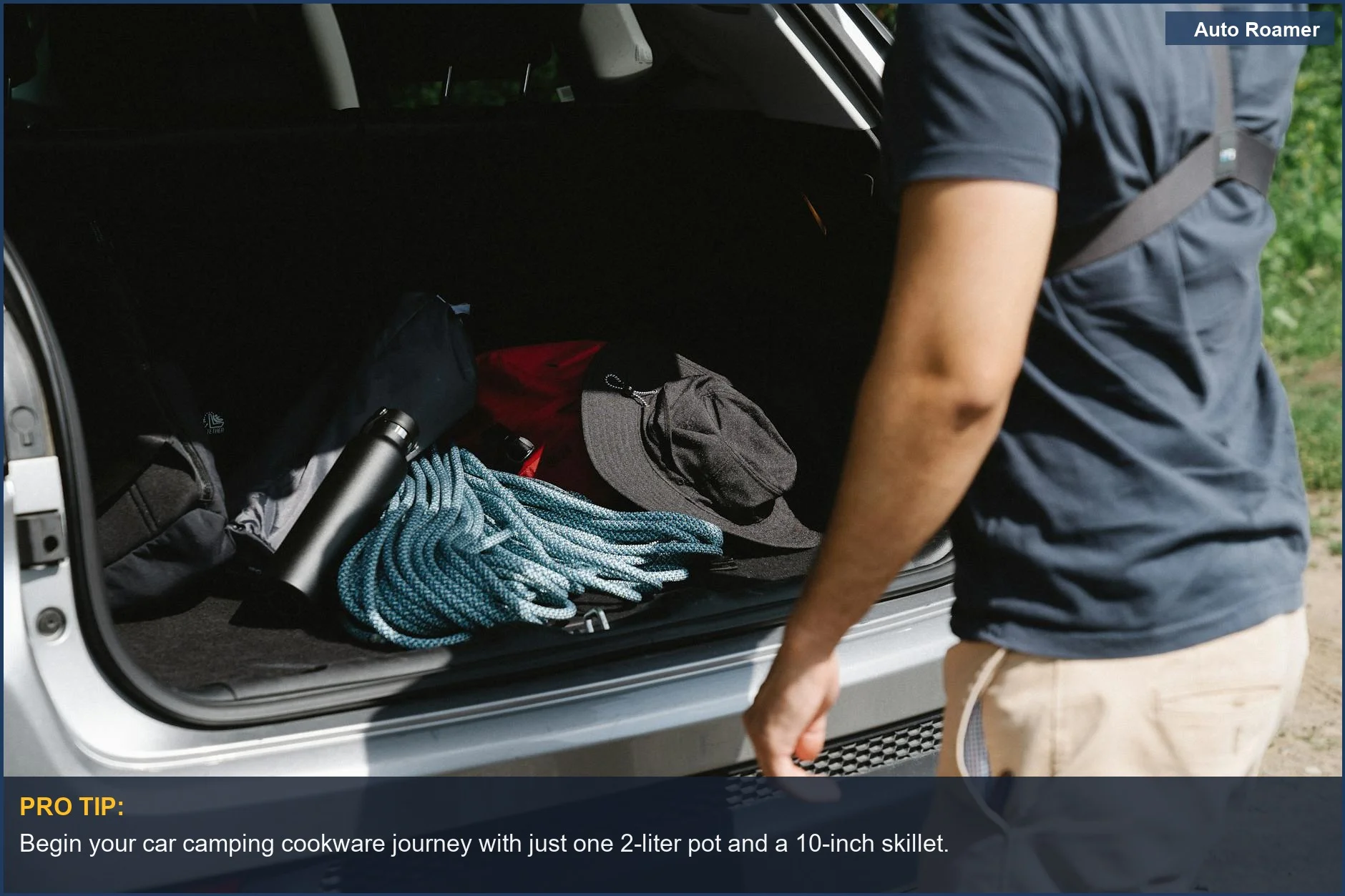
- Start Small: Don't buy a giant, multi-piece set on your first go. Grab one good 2-liter pot and a 10-inch skillet. You can always add more later if you find you truly need it. My second trip had half the gear and was twice as comfortable.
- Material Matters: For car camping, hard-anodized aluminum or a good cast iron skillet are solid choices. Aluminum is lighter and heats fast, while cast iron is durable and heats evenly.
REI breaks down the pros and cons well.
- Check Your Home Kitchen: Seriously, what do you already have that would work? A sturdy stainless steel pot or a cast iron pan from home can save you money and hassle. Just avoid anything too delicate or irreplaceable.
- Consider Your Group: If you're consistently camping with more than three people, then bump up to a 3-liter pot.
For larger groups, a Dutch oven might be worth the weight and bulk. Facebook groups often have real-world feedback on what works for different group sizes.
- Don't Forget Lids: A pot without a lid is just a sad bowl. Make sure whatever you buy comes with a lid that actually fits, or buy one separately. My first pot's lid was a joke.