
The Short Version
The question of how much gas does idling use per hour is one that many drivers overlook, yet it carries significant implications for both our wallets and the environment. When we leave our engines running while stationary, we often do so under the assumption that it's harmless. However, the reality is that idling can lead to substantial fuel consumption, which can add up over time. On average, small gasoline vehicles can consume between 0.2 to 0.5 gallons of fuel per hour when idling, depending on various factors such as the engine size and whether the air conditioning is running Source. Larger vehicles, like SUVs, may use even more fuel, ranging from 0.5 to 0.8 gallons per hour Source.
Understanding this fuel consumption matters for several reasons. From a financial standpoint, idling not only wastes fuel but also increases operational costs, especially for those who frequently find themselves waiting in their vehicles. For example, even a seemingly short wait of 15 minutes can lead to fuel usage that adds up to significant costs over time. Additionally, the environmental impact is considerable; idling contributes to greenhouse gas emissions, which are harmful to our planet. By minimizing unnecessary idling, we can reduce our carbon footprint and contribute to cleaner air quality.
Moreover, with fuel prices fluctuating, being aware of how much gas does idling use per hour can help us make informed decisions about our driving habits. Switching off the engine during long waits not only saves money but also promotes better fuel efficiency. Research and owner reports show that even small changes in behavior, such as turning off the engine during brief stops, can lead to noticeable savings in fuel consumption and costs over time.
The Short Answer: How Much Gas Does Idling Use Per Hour
Idling a vehicle typically consumes between 0.2 to 0.5 gallons of gas per hour for smaller vehicles, while larger cars and SUVs can use anywhere from 0.5 to 0.8 gallons per hour. The exact amount depends on various factors, including engine size, whether the air conditioning (AC) is running, and overall vehicle condition. For instance, if you are idling with the AC on, you might experience higher fuel consumption, approximately 10% more than without it.
To provide a clearer picture, compact sedans generally consume about 0.16 to 0.25 gallons per hour when idling, while a larger vehicle might go up to 0.5 gallons per hour. It's essential to understand that even though these numbers may seem minor on an hourly basis, they can accumulate quickly, resulting in wasted fuel and increased emissions over time. For example, if you idle for just 30 minutes, a compact car might use around 0.08 to 0.125 gallons of gas, while a larger SUV could burn through 0.25 to 0.4 gallons in the same timeframe Source.
The bottom line is that idling not only wastes gas but also contributes to engine wear and higher emissions. In fact, research indicates that a vehicle can use between 0.0053 to 0.01 gallons per minute while idling, leading to unnecessary fuel costs and environmental impact Source. Therefore, if you find yourself idling for extended periods, we recommend turning off the engine when it's safe to do so. This simple action can save you money and help preserve our environment.
In summary, understanding how much gas does idling use per hour will not only help you manage fuel consumption better but also contribute to a more sustainable driving habit. By reducing idling time, you can enhance your vehicle's efficiency, save on fuel costs, and lessen your carbon footprint.
What You Need to Know
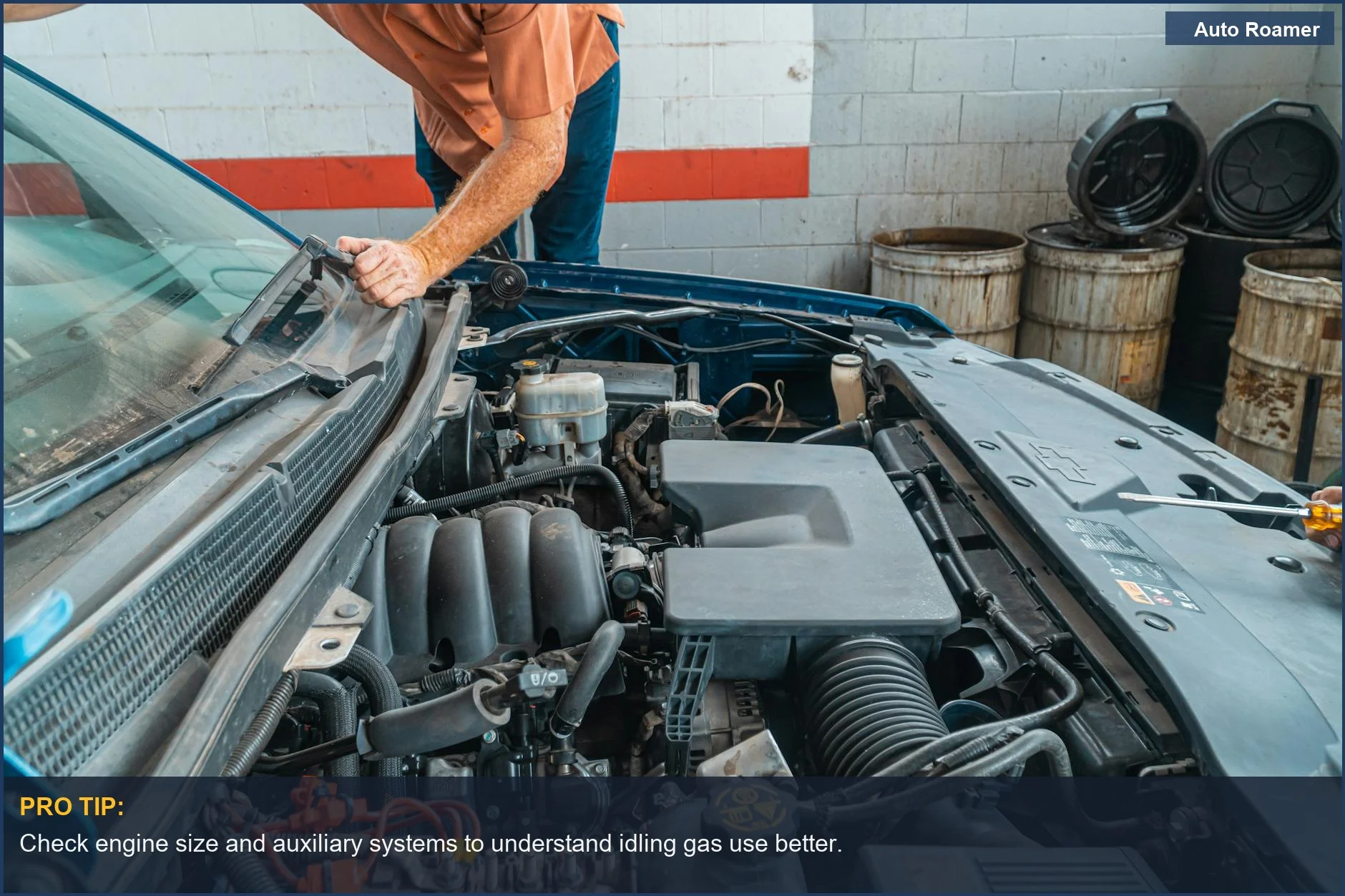
When it comes to understanding how much gas does idling use per hour, we need to consider several factors, including the type of vehicle, engine size, and whether auxiliary systems like air conditioning are operating. On average, small petrol cars consume approximately 0.2 to 0.4 liters of fuel per hour while idling without AC, and this figure can increase to 0.5 to 0.8 liters for larger vehicles and SUVs, particularly when the AC is engaged (Source).
Idling is the act of keeping the engine running while the vehicle is stationary, which not only leads to wasted fuel but also contributes to unnecessary wear and tear on the engine over time. For instance, a compact sedan with a 2.0-liter engine typically idles at around 0.16 to 0.17 gallons per hour, while larger vehicles can consume significantly more fuel (Source). The differences in fuel consumption during idling can be attributed to various factors, such as engine efficiency, vehicle weight, and temperature conditions.
To break it down further, let's look at a few specific scenarios. For a standard sedan, idling for an hour can use roughly 0.3 gallons of fuel, equating to about $1.20 at a gas price of $4 per gallon. In contrast, larger SUVs might consume up to 0.5 gallons in the same time frame, costing about $2.00 per hour. This discrepancy highlights the importance of understanding vehicle differences when asking how much gas does idling use per hour.
In different states, fuel consumption can vary slightly due to climate conditions. For example, in warmer states where air conditioning is more frequently used, the fuel consumption can increase by approximately 10% due to the additional load on the engine (Source). This means that in areas with high temperatures, an idling vehicle equipped with AC could consume between 0.4 to 0.6 gallons per hour.
Moreover, there are certain exceptions to the rule. Hybrid vehicles, for instance, can significantly reduce fuel consumption while idling because they often switch to battery power to run auxiliary systems, minimizing gasoline use. In these cases, the idling fuel consumption can drop to as low as 0.1 gallons per hour, depending on the vehicle's model and design.
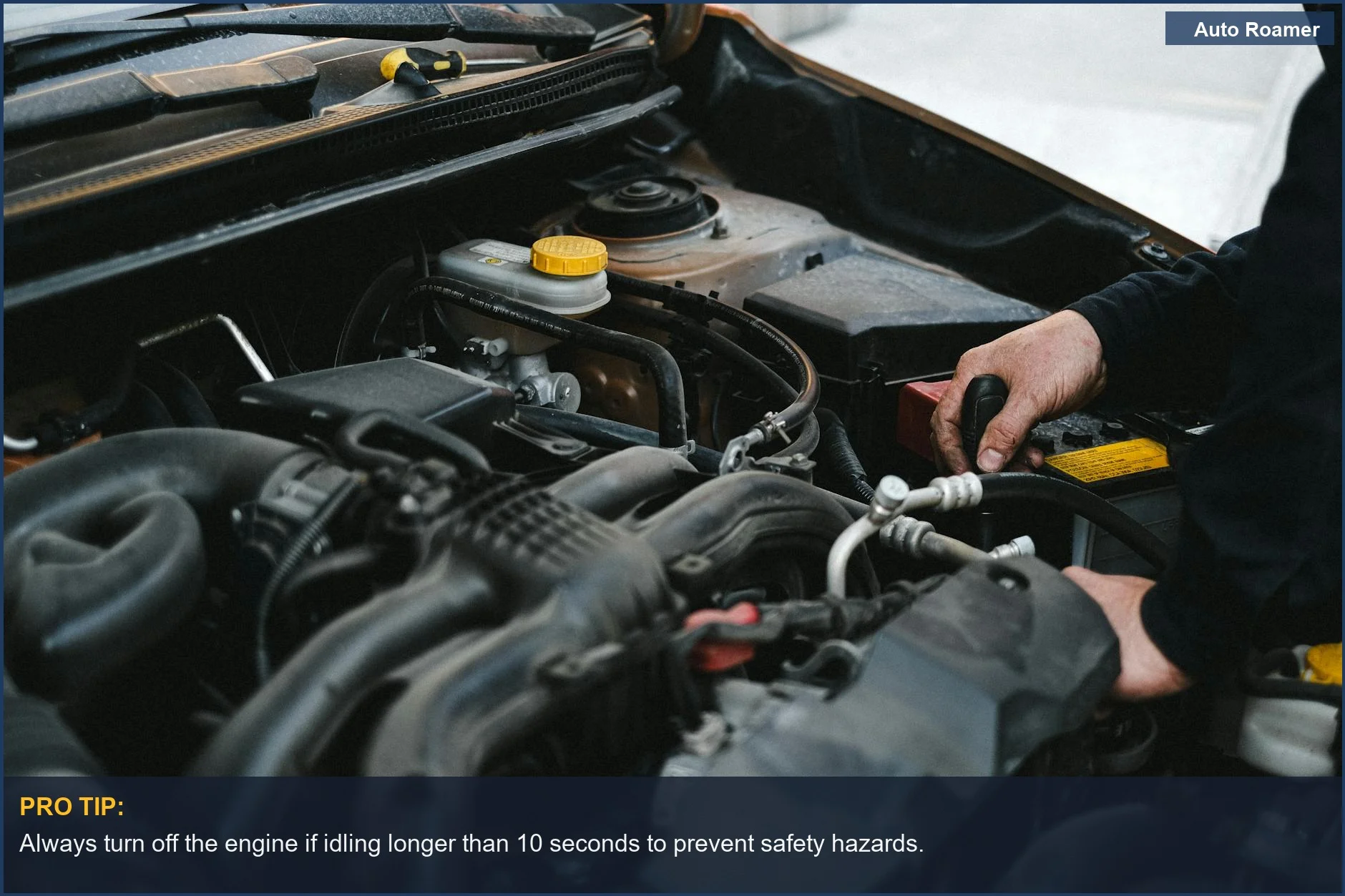
It's also important to note that prolonged idling can lead to increased emissions, which contributes to air pollution. According to the Environmental Protection Agency (EPA), reducing idling time can improve air quality and save money on fuel costs in the long run. Thus, we recommend turning off the engine during long wait times (more than 10 seconds), as it not only conserves fuel but also lessens environmental impact.
In summary, how much gas does idling use per hour can fluctuate widely based on vehicle type, engine size, and auxiliary system usage. By being conscious of these factors, we can reduce unnecessary fuel consumption and contribute to a healthier environment.
How to Handle This
To effectively manage how much gas does idling use per hour, it's essential to adopt practical steps that can make a significant difference. We recommend the following step-by-step guidance to minimize fuel consumption while idling.
Step 1: Understand Your Vehicle's Fuel Consumption
First, familiarize yourself with your vehicle's idling fuel consumption rate. Generally, small petrol cars consume about 0.2 to 0.4 liters of fuel per hour when idling without AC, while larger vehicles can use between 0.5 to 0.8 liters per hour, especially with AC running Source. Knowing your vehicle's specific consumption can help you calculate the potential costs.
Step 2: Monitor Idling Time
Next, keep track of how long your vehicle remains idle. Use a timer or an app on your smartphone to log idle times. For example, if you find yourself idling for 10 minutes, that could equate to roughly 0.03 to 0.08 gallons consumed depending on your vehicle's efficiency. By being aware of this, we can make conscious decisions to turn off the engine when it's safe to do so.
Step 3: Turn Off the Engine When Possible
When waiting for more than a minute or two, we recommend switching off the engine. Restarting a modern engine uses less fuel than keeping it idling for an extended period. This can substantially save fuel over time, especially during longer waits.
Step 4: Optimize Use of Air Conditioning
If you need to keep the AC running, be aware that it can increase fuel consumption by about 10%. If it's not sweltering outside, consider rolling down the windows instead of keeping the AC on. This simple adjustment can reduce fuel usage when idling.
Step 5: Regular Maintenance Checks
Ensure your vehicle is in optimal condition with regular maintenance. A well-tuned engine runs more efficiently, reducing fuel consumption during idling. Replace air filters, spark plugs, and ensure proper tire inflation to improve overall fuel efficiency Source.
Step 6: Use Technology
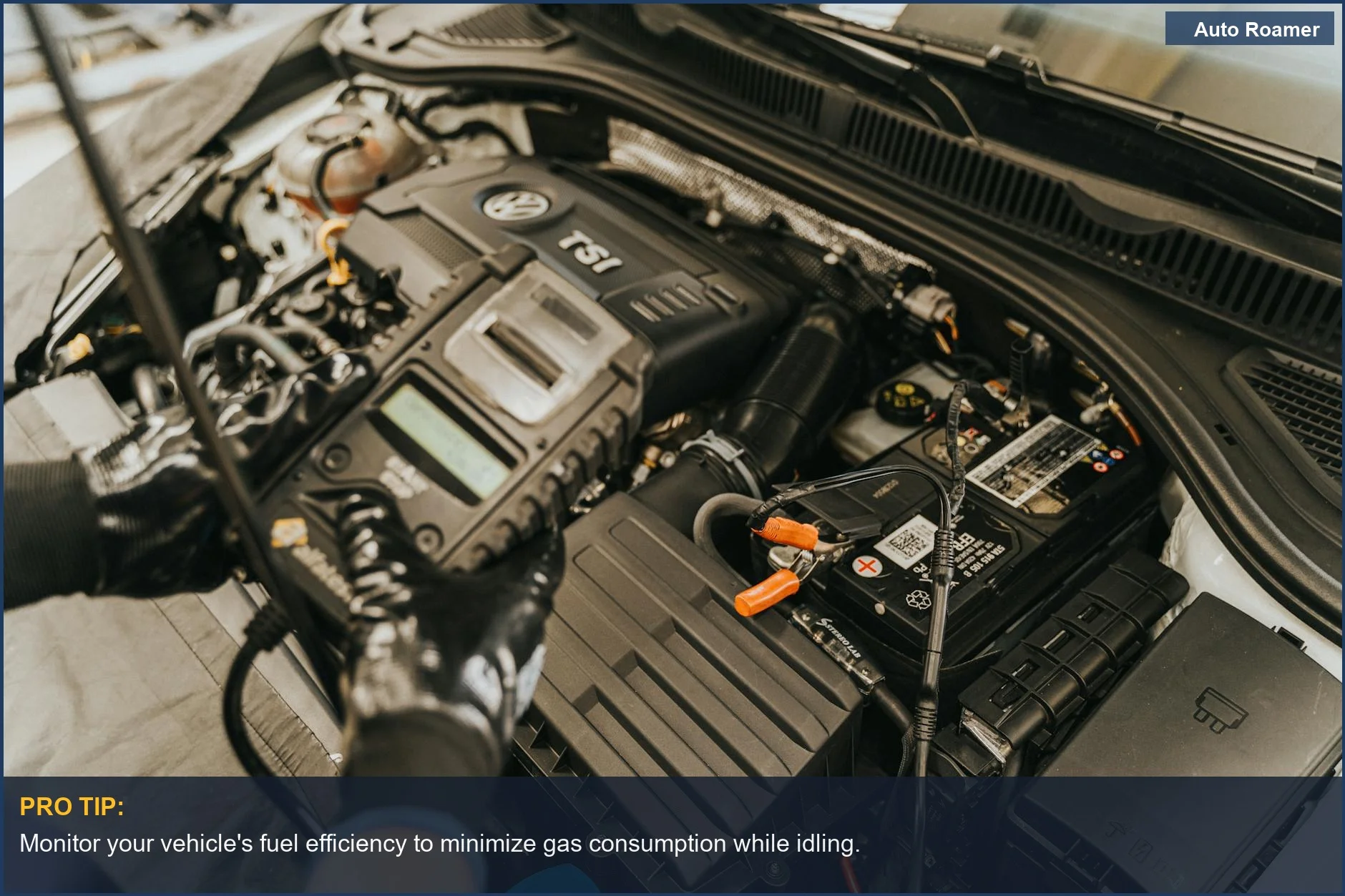
Consider investing in a vehicle tracking system or an app that monitors fuel consumption and idling time. These tools can help you analyze your driving habits and pinpoint areas for improvement, ultimately leading to better fuel efficiency.
Tips From Experience
Research shows that quick stops or waits can accumulate fuel costs if not monitored. For example, if you're sitting in a drive-thru or waiting for someone, turning off your engine can save you money without sacrificing comfort. By adopting these practical steps, you can effectively handle the situation and answer the question of how much gas does idling use per hour with confidence.
Safety Considerations
When considering how much gas does idling use per hour, it is essential to address various safety considerations that can arise from prolonged idling. One of the most significant safety risks is the potential for carbon monoxide poisoning. When a vehicle idles, especially in an enclosed space like a garage, harmful gases can accumulate. Carbon monoxide is odorless and colorless, making it particularly dangerous. We recommend always turning off the engine when parked in a closed area to mitigate this risk.
Health hazards are another critical concern associated with idling. Prolonged exposure to exhaust fumes can lead to respiratory issues and exacerbate existing health conditions, such as asthma. Additionally, idling increases the vehicle's fuel consumption, leading to higher emissions of harmful pollutants, which can affect air quality. According to studies, idling vehicles can contribute significantly to urban air pollution, thus impacting public health in densely populated areas. It is prudent to minimize idling time not only for fuel efficiency but also for the well-being of yourself and those around you.
Legal consequences can also arise from unnecessary idling. Many municipalities have implemented idle reduction laws that impose fines on drivers who leave their engines running for extended periods. These regulations aim to reduce emissions and conserve fuel. For instance, in some cities, you may face fines of up to $200 for idling beyond a specified time limit. Familiarize yourself with local laws to avoid these penalties.
When idling, we should be aware of the potential operational issues that can arise. Extended idling can lead to engine wear over time, as it can cause oil to degrade faster and components to become gummed up. If you notice any unusual engine behavior or reduced performance, it could be a sign of damage caused by excessive idling. In such cases, we recommend getting professional help to diagnose and address any underlying problems.
In summary, while it may seem harmless, idling consumes fuel unnecessarily and poses various safety risks. Understanding how much gas does idling use per hour can help inform your decision-making. We encourage you to monitor your idling habits and take proactive steps to reduce idle time wherever possible for your safety and the environment.
Common Mistakes to Avoid
When considering how much gas does idling use per hour, many of us fall prey to common misconceptions that can skew our understanding of fuel consumption during idle times. One prevalent mistake is underestimating the amount of fuel wasted while idling. Many drivers believe that the fuel consumption during idling is negligible; however, studies show that small petrol cars typically burn between 0.2 to 0.4 liters per hour when idling with the air conditioning on, while larger vehicles like SUVs can consume 0.5 to 0.8 liters in the same timeframe Source.
Another common error is assuming that the duration of idling doesn't significantly impact overall fuel usage. However, extended periods of idling can lead to substantial fuel wastage. For instance, if a compact car consumes about 0.25 gallons per hour while idling, idling for two hours would waste approximately half a gallon of gas, which adds up over time Source. We often think that a few minutes of idling won't matter much, but it's easy for those "just five minutes" to stretch into fifteen or even thirty minutes-especially if you're waiting for someone.
Moreover, many people fail to account for the additional fuel consumption that occurs when auxiliary systems like the air conditioning are running. While it might seem harmless to leave the AC on during a short wait, this can increase fuel consumption by about 10% Source. This is significant enough that we recommend turning off the engine if you anticipate being stationary for more than a couple of minutes.
It's crucial to remember that idling not only wastes fuel but also contributes to higher emissions and engine wear over time. Therefore, understanding how much gas does idling use per hour is essential for both economic and environmental reasons. By being conscious of our idling habits, we can make smarter decisions that save fuel and reduce our carbon footprint.
Key Takeaways
Idling may seem like a harmless practice, but it has real implications for fuel consumption and environmental impact. On average, small petrol cars use between 0.2 to 0.4 liters of fuel per hour while idling without air conditioning. When the AC is turned on, this figure can rise to between 0.5 to 0.8 liters per hour, depending on the vehicle size and engine capacity Source. Larger vehicles, such as SUVs, can consume even more fuel during idling, further exacerbating their environmental footprint.
Our analysis suggests that prolonged idling not only wastes gas but also increases wear on your engine. For instance, a vehicle idling for an hour could consume approximately 0.25 gallons of fuel, translating to about a gallon every four hours Source. Therefore, we recommend shutting off your engine during long waits whenever possible. This simple action can save you money and reduce harmful emissions.
If you find yourself frequently in situations where idling is unavoidable, consider seeking professional help to explore options like engine start-stop technology that can minimize fuel consumption during these periods. Regular vehicle maintenance can also optimize fuel efficiency and reduce idle consumption Source. Understanding how much gas does idling use per hour can empower you to make smarter choices that benefit both your wallet and the environment.