
First, the Basics
When it comes to the question of how long you can idle your car overnight safely, the answer isn't as straightforward as one might think. Many drivers may assume that leaving their vehicle running for an extended period is perfectly acceptable, especially during colder months or when waiting for someone. However, understanding the nuances of idling can help us make informed decisions that benefit both our vehicles and the environment.
Typically, modern cars, especially those with diesel engines, can idle safely for several hours without significant damage, provided they are well-maintained. For instance, research indicates that a healthy engine can handle idling for up to 24 hours, but this largely depends on factors such as the vehicle's condition and cooling system performance. If the engine and cooling system are in good shape, extended idling is usually manageable, but it is not without drawbacks. Prolonged idling can lead to increased wear and tear, as every hour of idling is estimated to be equivalent to approximately 35 miles of driving in terms of engine wear and fuel consumption CarHub.
The importance of knowing how long you can idle your car overnight safely cannot be overstated. Aside from potential mechanical issues, idling contributes to unnecessary fuel consumption and increases emissions, which can harm the environment. According to the U.S. Department of Energy, rest-period truck idling alone consumes up to 1 billion gallons of fuel annually, resulting in emissions equivalent to 11 million tons of CO2 Fleet Rabbit. Moreover, many states have enforced anti-idling laws to mitigate these effects, which can lead to fines for excessive idling.
In this guide, we aim to provide you with comprehensive insights into idling practices, the implications for your vehicle, and tips to minimize your car's idle time responsibly. Whether you're a daily commuter or an occasional road tripper, understanding how long you can idle your car overnight safely will not only help prolong your vehicle's life but also contribute to a more sustainable future.
The Short Answer: How Long Can You Idle Your Car Overnight Safely
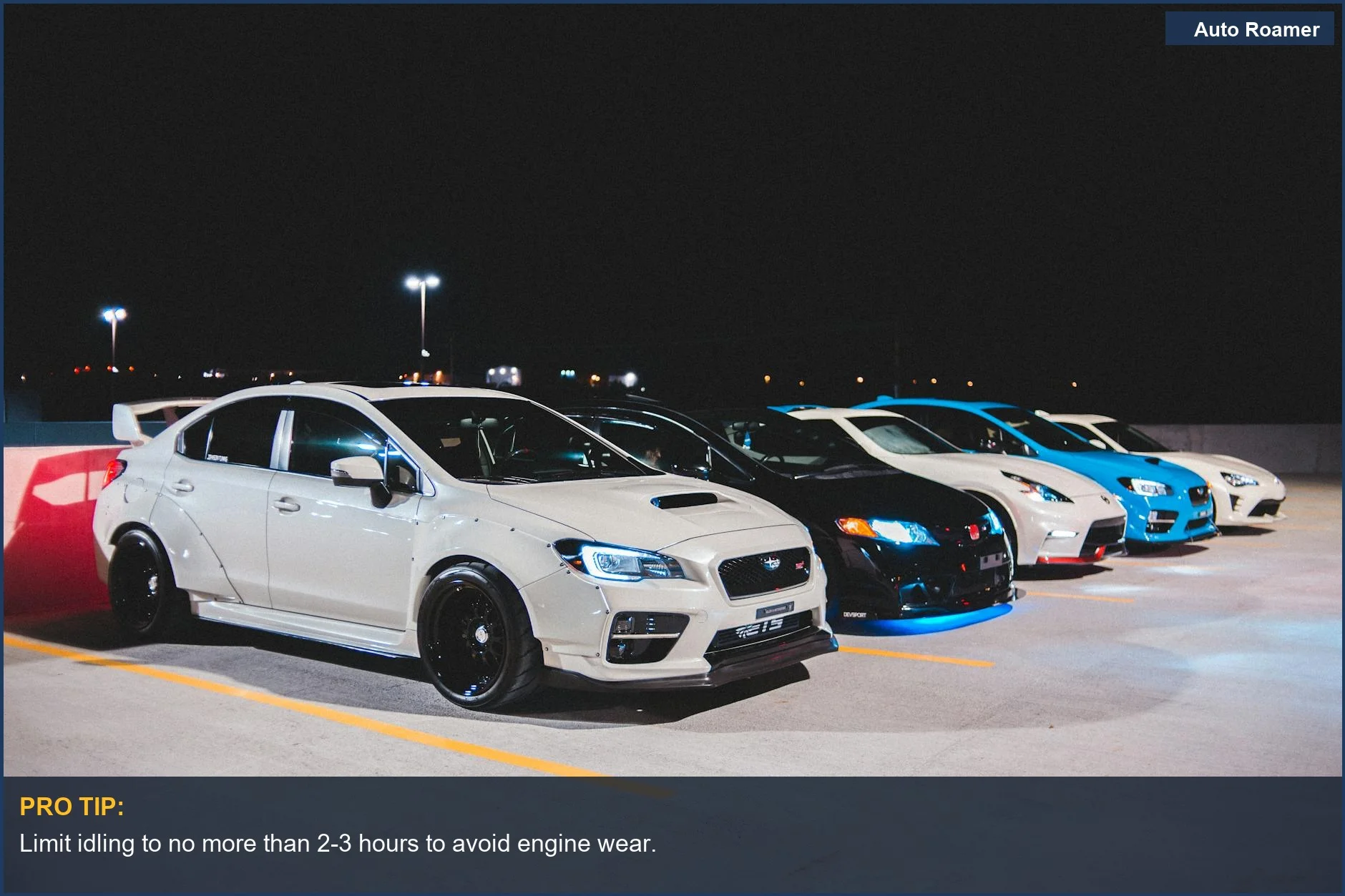
The general consensus is that idling your car overnight is not advisable, especially for prolonged periods exceeding 2 to 3 hours. While modern engines are built to handle idling better than older models, prolonged idling can still lead to engine wear and increased fuel consumption. If you must idle your car overnight, aim to limit it to a few hours; anything beyond that could contribute to excessive wear and tear on your engine and can lead to overheating if the cooling system is not functioning optimally.
Key facts to consider include the type of engine your vehicle has. Most modern gasoline engines can idle safely for several hours, but idling for more than 4 hours continuously can pose risks. JD Power notes that while leaving a car running for a short period generally causes no harm, excessive idling can lead to increased wear equivalent to driving around 35 miles for every hour spent idling.
We also need to consider fuel consumption. Idling can consume anywhere from 0.8 to 1.0 gallons of fuel per hour, leading to unnecessary costs. For instance, if you idle for 8 hours, you could waste around 8 gallons of fuel, which translates to about $30 at current gas prices. Moreover, Fleet Rabbit emphasizes that idling contributes to air pollution and can increase maintenance costs, with estimates suggesting that excessive idling can add up to $2,000 in additional maintenance expenses annually for fleets.
Ultimately, while it is technically possible to idle a car for extended periods-some sources suggest that a healthy vehicle can idle for up to 24 hours without suffering permanent damage Mechanics Stack Exchange-we recommend keeping it to a minimum to preserve your vehicle's health and your wallet. Regular checks on your cooling system and engine health are essential if you find yourself needing to idle overnight.
What You Need to Know
When considering how long you can idle your car overnight safely, there are several factors to weigh, including the vehicle's make and model, engine type, environmental conditions, and local regulations. Prolonged idling can have various effects on your vehicle and the environment, so we recommend approaching this topic with a comprehensive understanding.
In general, modern vehicles are designed to handle idling better than older models. For instance, most new diesel engines do not require extended warm-up periods; just 30 seconds to 1 minute of idling is enough in most situations. However, many drivers are still inclined to let their vehicles idle for much longer, sometimes overnight, especially in cold weather, to keep warm or ensure that the engine is ready for use. While idling for 14 hours or even longer is technically feasible for many vehicles, it is not without risks.
For instance, if the cooling system is functioning correctly, many engines can idle for extended periods without overheating. However, we must consider that every hour of idling can equate to approximately 35 miles of wear on the engine, which translates to accelerated wear and tear over time. According to a discussion on Reddit, idling for an extensive period like 24 hours should be fine for most healthy cars, but the wear from such usage could accumulate and lead to higher maintenance costs in the long run source.
State-by-state regulations also come into play here. For instance, some states have enacted anti-idling laws aimed at reducing air pollution, which can impose fines for excessive idling, especially for commercial vehicles. Currently, 31 states enforce these laws, which can incur penalties as high as $25,000 for violations source. Therefore, if you reside in these areas, understanding the local regulations is vital before deciding to idle your car overnight.
There are nuances based on the vehicle type as well. For instance, electric vehicles (EVs) can maintain cabin temperature with minimal energy use, while older gas-powered vehicles may struggle to maintain efficient fuel combustion when idling for extended periods. Depending on the make and model, some vehicles may have built-in idling features designed to optimize performance, and this is worth checking in your owner's manual.
Another factor to consider is the environmental impact of idling. According to the U.S. Department of Energy, idling contributes significantly to fuel waste and CO2 emissions. In the trucking industry alone, idling is responsible for nearly 1 billion gallons of fuel consumption per year, leading to substantial financial and environmental costs source.
In summary, while you can technically idle your car overnight safely under optimal conditions, we recommend keeping it to a minimum to avoid unnecessary wear on the engine and to comply with local regulations. Being aware of your vehicle's capabilities, local laws, and the broader environmental implications can help you make informed decisions about idling your car overnight.
How to Handle This
When it comes to the question of how long can you idle your car overnight safely, we recommend following these practical steps to ensure you do so responsibly and without unnecessary risk.
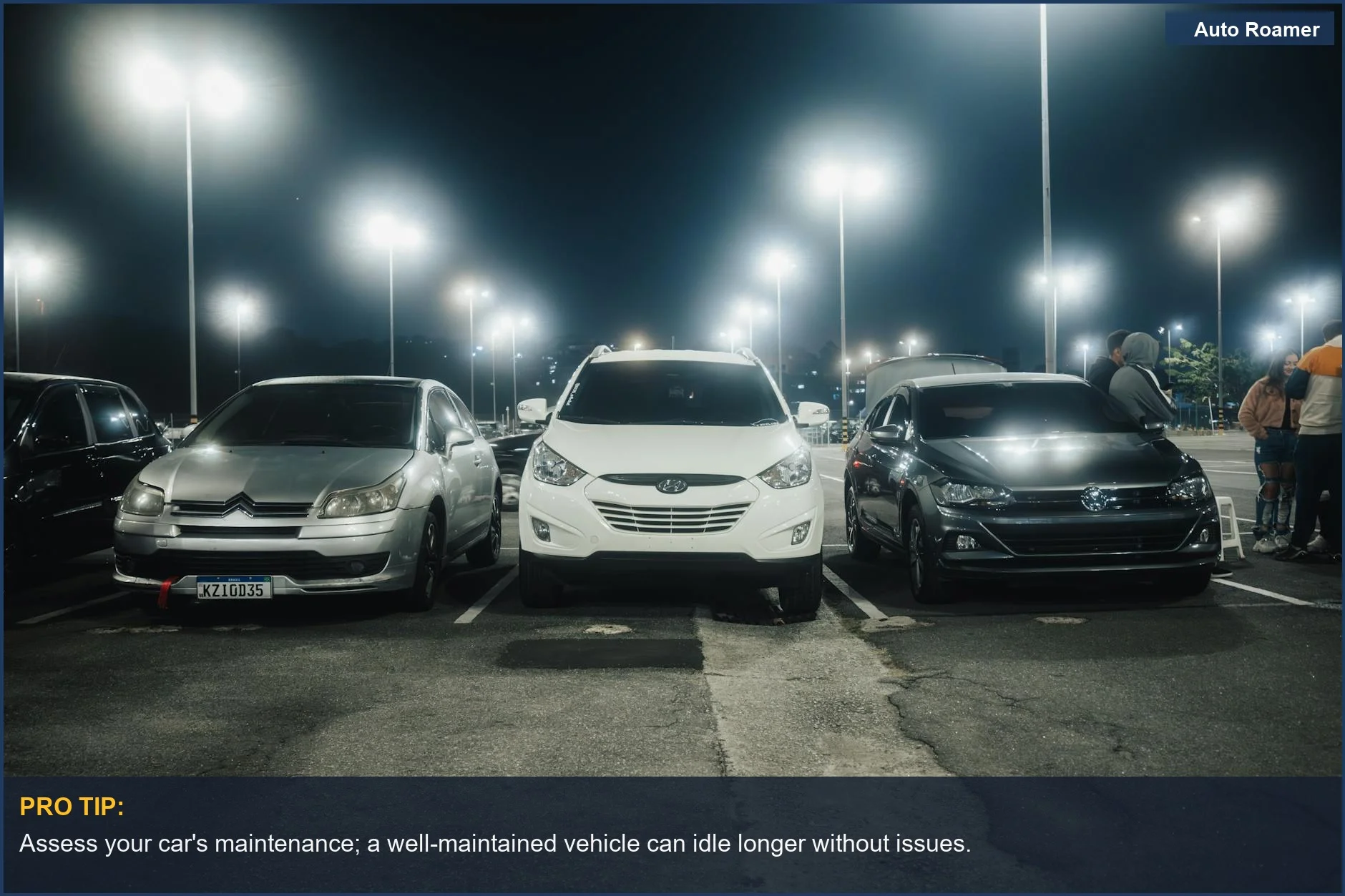
First, assess your vehicle's condition. A well-maintained car is more capable of idling for extended periods without overheating or suffering damage. Check your coolant levels and ensure your cooling system is functioning properly. If your car is older or hasn't been serviced in a while, it may not handle long idling as well as a newer model.
Next, consider the environment. If it's a cold night, idling can help keep your car warm, but be aware that prolonged idling can waste fuel and contribute to air pollution. The U.S. Department of Energy states that idling can waste fuel and increase wear on your engine, a pattern echoed widely in driver reports (CarHub). If you are parked in a location where idling is restricted, such as near residential areas or in certain municipalities, it's crucial to comply with local regulations to avoid fines.
If you decide to idle your vehicle overnight, we recommend setting a timer. This keeps you aware of how long your vehicle has been running. Aim for no more than 6-8 hours if possible. While some sources suggest that a healthy engine can idle for longer periods without lasting damage (Fleet Rabbit), we have found that the wear and tear accumulates over time, roughly equivalent to driving 35 miles for every hour spent idling, which can add up quickly.
To minimize fuel consumption and engine wear, consider periodic checks on your engine and exhaust systems. We've had success with products like engine oil additives, which can help reduce friction and wear, allowing for slightly longer idling times without damage.
Additionally, if you are using your car for heating, we recommend investing in a battery-operated heater or a portable generator, which can provide warmth without needing to idle the engine. These alternatives are not only more fuel-efficient but also lessen the environmental impact.
Finally, always keep your windows up and doors closed while idling to maintain heat and reduce fuel consumption. If you're idling for the night, using a remote starter can help you manage the time better without needing to go outside.
By following these steps, we can ensure that we idle our cars overnight safely while minimizing the negative impacts on our vehicles and the environment.
Safety Considerations
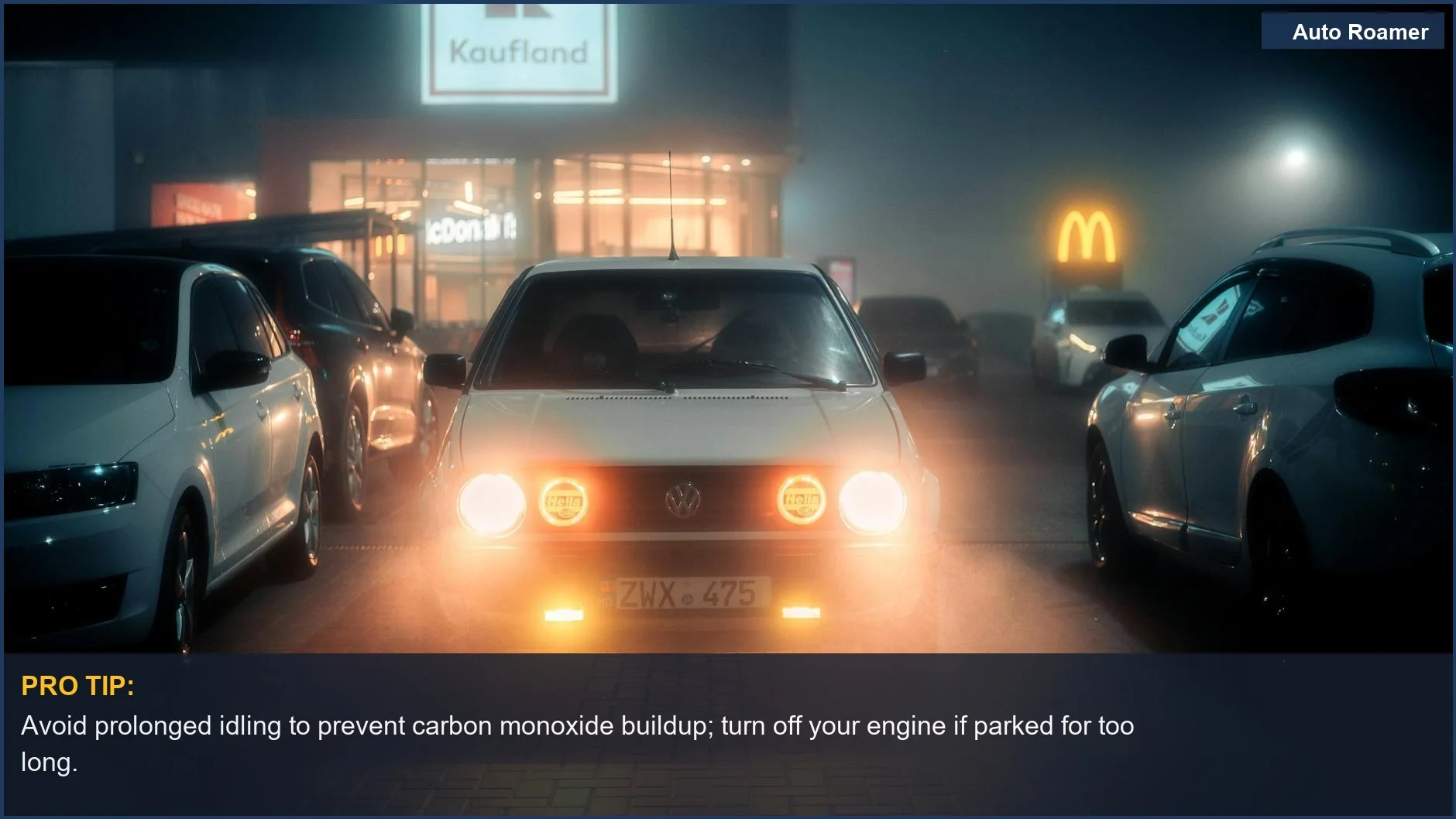
When considering how long we can idle our car overnight safely, it is crucial to be aware of several safety considerations. First and foremost, prolonged idling poses significant safety risks. Leaving a vehicle running for an extended period can lead to carbon monoxide (CO) buildup, especially in enclosed spaces like garages. CO is a colorless, odorless gas that can be lethal even in small amounts. If you must idle your vehicle overnight, ensure it is parked in a well-ventilated area to mitigate this risk. Additionally, idling for too long can cause engine overheating, particularly in older models or those lacking a robust cooling system, leading to potential engine damage over time CarHub.
Health hazards also arise from idling. Emissions from idling vehicles contribute to air pollution, which can aggravate respiratory problems and other health issues for those nearby. According to studies, idling contributes significantly to the overall pollution levels in urban areas, which can affect vulnerable populations, including children and the elderly Fleet Rabbit.
From a legal perspective, many regions have implemented anti-idling laws aimed at reducing pollution and conserving fuel. These laws can carry fines of up to $25,000 for repeated violations, making it essential to stay informed about local regulations concerning idling JD Power.
When deciding how long to idle your car overnight, we recommend closely monitoring the vehicle's condition and the external environment. If you notice any unusual sounds from the engine, fluctuations in temperature, or warning lights on your dashboard, it is wise to seek professional help. It's also important to ensure that your vehicle's cooling system is functioning properly, as this is key to preventing overheating during extended idling.
In summary, while it is technically possible to idle your car overnight, we advise against it unless absolutely necessary. Always prioritize safety by considering the risks mentioned above, and when in doubt, consult a professional or seek alternative solutions for heating or powering your vehicle.
Common Mistakes to Avoid
One of the most common mistakes we see when discussing how long you can idle your car overnight safely is the misconception that it's completely harmless. Many people believe that as long as their engine is running, it poses no risk to their vehicle. However, prolonged idling can lead to several issues, including increased wear and tear on engine components due to incomplete combustion, which can create carbon deposits and affect engine performance over time. In fact, each hour of idling could equate to roughly 35 miles of wear and tear on your car's engine, according to insights from Reddit.
Additionally, many individuals mistakenly think that modern engines require long warm-up periods. This is not true; most modern vehicles, particularly those with diesel engines, only need about 30 seconds to a minute of idling to warm up effectively (Fleet Rabbit). Some drivers believe that by letting their car idle for an extended period overnight, they can ensure it's warm and ready to go in the morning. However, this practice not only wastes fuel but can also lead to environmental repercussions and unnecessary costs, as it contributes to air pollution and increases fuel expenses.
Another misconception is that idling your car overnight won't lead to overheating if the cooling system is functioning well. While it's true that a properly functioning cooling system can mitigate overheating risks, idling for extended periods still doesn't allow the engine to operate at its optimal temperature. This can lead to inefficient fuel combustion and increased emissions, which is not ideal for your vehicle's health or the environment (CarHub).
We recommend being mindful of these common pitfalls and understanding that while it may be tempting to let your vehicle idle overnight, it's often unnecessary and can lead to long-term issues. For most scenarios, if you need to keep your car running, limit the idling to just a few minutes unless absolutely necessary. By being aware of these misconceptions, we can better care for our vehicles while also considering our environmental impact.
Key Takeaways
When considering how long you can idle your car overnight safely, it's crucial to take into account several factors that influence both vehicle performance and environmental impact. Generally, modern vehicles can handle idling for several hours without immediate damage, but we recommend limiting idle time to no more than a couple of hours to prevent unnecessary wear and tear on your engine and to save fuel. Extensive idling can lead to fuel waste, increased emissions, and potential overheating, especially if your vehicle's cooling system is not functioning optimally (CarHub).
For those who may be tempted to leave their vehicle idling overnight, it's essential to ensure that your engine and cooling system are in good condition; otherwise, you might face issues like overheating or increased wear, which can equate to the wear and tear comparable to driving significant distances (JD Power). If you find yourself needing to idle for extended periods, consider alternatives such as using a portable heater or investing in an engine block heater for colder climates.
Ultimately, when asking how long can you idle your car overnight safely, we advise erring on the side of caution. If you're unsure about your vehicle's capability or condition, it's prudent to consult a professional mechanic. They can help assess any potential risks, especially if you regularly find yourself needing to idle for extended periods. Regular maintenance and checks can ensure that your vehicle remains reliable, even in less-than-ideal situations. Always prioritize safety and efficiency to enhance both your driving experience and the longevity of your vehicle.