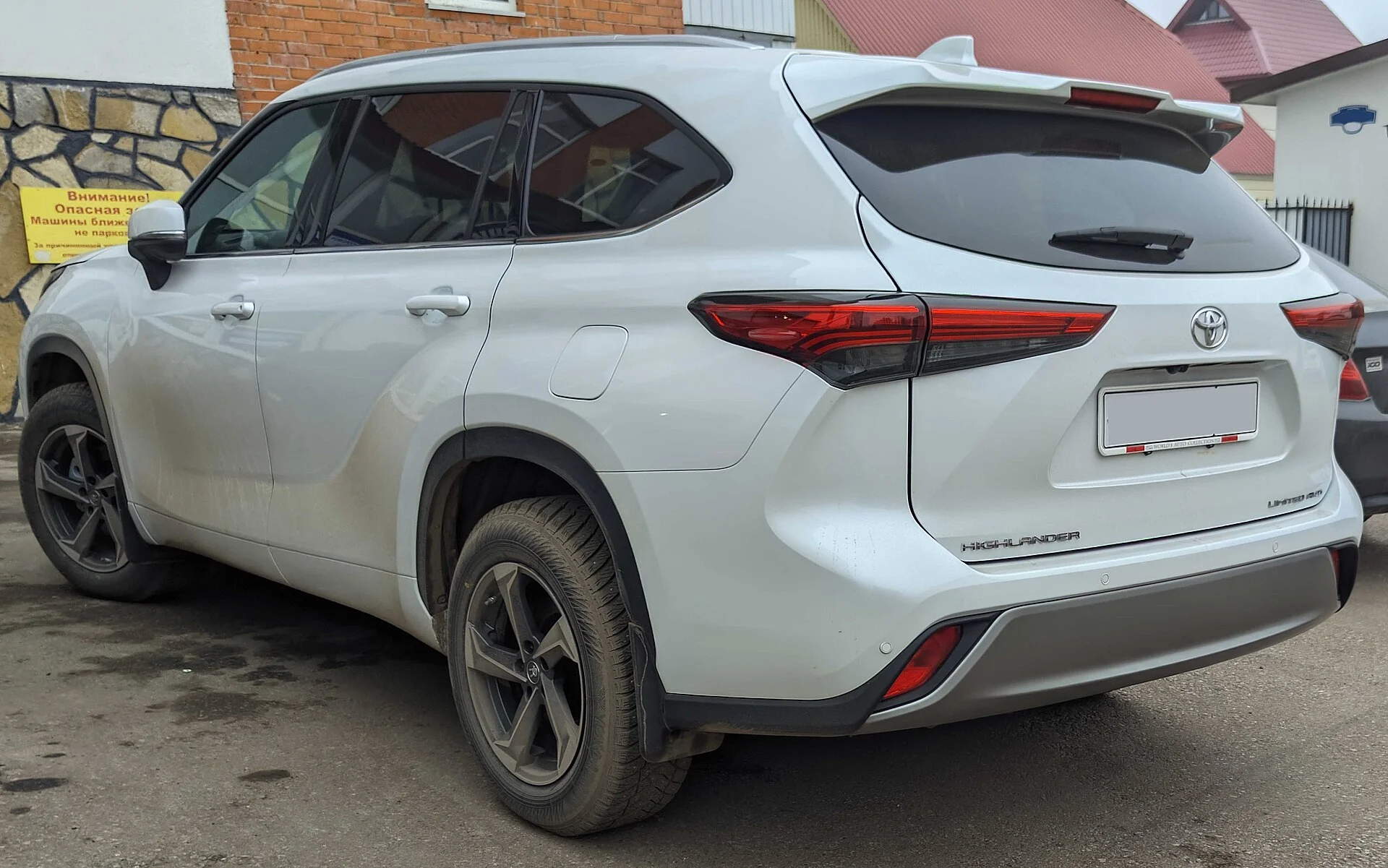
Does a 2025 Highlander really camp, or is it a school-run SUV pretending?
Toyota sells the 2025 Highlander as the sensible family three-row, and the brochure goes quiet the moment you ask about sleeping in it. The spec sheet is louder. Fold both rear rows and you get a long, mostly flat load floor and 84.3 cubic feet; buy the right powertrain and you also get a feature most rivals don't offer at any price — a genuine 1500-watt household outlet wired into the car. The marketing word is ‘hauler.’ The honest word is ‘competent base camp, if you tick two boxes at the dealership.’
Those two boxes are the whole guide, because they decide things gear can't undo later. The first is the powertrain: the 1500W outlet is a hybrid feature, and only on certain grades — the gas Highlander leaves you with 12V and USB. The second is the second-row layout: a bench folds into a flatter bed than the captain's chairs, which leave a channel down the middle. Get both right and the Highlander is a dry, powered, level place to sleep two adults. Get either wrong and no mattress on Amazon fully fixes it.
So this isn't a generic ‘how to camp in an SUV’ piece. It's a buying guide first and a setup guide second — we'll choose the trim, choose the second row, then work through sleeping, storage, ventilation, off-road reach, and exactly when you should size up to a Grand Highlander or down to a RAV4 instead. No invented test drive: the numbers come from Toyota's published specs, reviewer consensus at Car and Driver, Consumer Reports and U.S. News, and owner measurements, checked against each other.
Choosing your Highlander: the two order-sheet boxes that decide your whole camp
On most SUVs the trim choice is about seats and screens. On a 2025 Highlander it's the camping decision, because two options control what you can never bolt on afterward: the 1500W outlet and the second-row layout. Decide these first; the gear list flows from them.
The outlet is hybrid-only, and not on every hybrid. The Highlander Hybrid's 1500-watt AC inverter — feeding two real 120V household sockets, one at the rear of the console and one in the cargo area — is standard on the Hybrid Bronze Edition, Limited, and Platinum grades. The gas Highlander (2.4-liter turbo) doesn't offer it at all; you get 12V and USB, fine for phones and lights and useless for a fridge. So the first fork is blunt: if running camp power off the car matters, you are buying a hybrid in one of those three grades, full stop.
The bench is the sleeper's friend, but Toyota gates it. The eight-passenger Highlander comes with a second-row bench; the seven-passenger trims swap in captain's chairs. For sleeping, the bench folds into a flatter, continuous surface and the captain's chairs leave a center channel. The catch the order sheet hides: Toyota won't pair the second-row bench with the Hybrid Limited — so on that grade you live with the channel whether you wanted it or not. If a flat bed is your priority, that quirk steers you toward the bench-equipped Bronze Edition or a different grade entirely.
The false economy to avoid: buying a cheaper gas trim to save money, then spending the savings on a power station and still missing the outlet's convenience, or buying a hybrid grade for the outlet and discovering it's stuck with the captain's-chair channel for your bed. The buyer's-guide takeaway in one line: for camping, the sweet spot is a Hybrid Bronze Edition — it carries the 1500W outlet and can be had with the flatter bench. Confirm both on the actual window sticker before you sign.
Which second row to pick — bench or captain's chairs — and how it builds your bed
No box on the order sheet shapes your bed more than the second row, and most buyers tick it for passenger comfort without realizing it sets how flat they sleep. Here is what each layout actually does once you fold it for a bed.
- The bench (8-passenger trims). Folds into a flatter, continuous platform with no gap down the middle — the easier base to build on. You're left with one obstacle to manage, the third-row seatback step, rather than two. This is the layout a serious in-car sleeper wants.
- The captain's chairs (7-passenger trims). More comfortable for passengers, but they leave a center channel between the two seats plus a small step. You now have to bridge a lengthwise gap as well as the seatback seam — doable, but it's a foam-and-planning job, not a toss-the-mattress-in job.
The trim quirk from the last section bites here: because Toyota won't sell a bench with the Hybrid Limited, a buyer who wants both the 1500W outlet AND a flat bench bed should look at the Hybrid Bronze Edition or Platinum, not the Limited. It's the kind of detail you only discover after you've fallen for a trim — so discover it now.
Two ways to erase the obstacles, and the right one depends on how often you go:
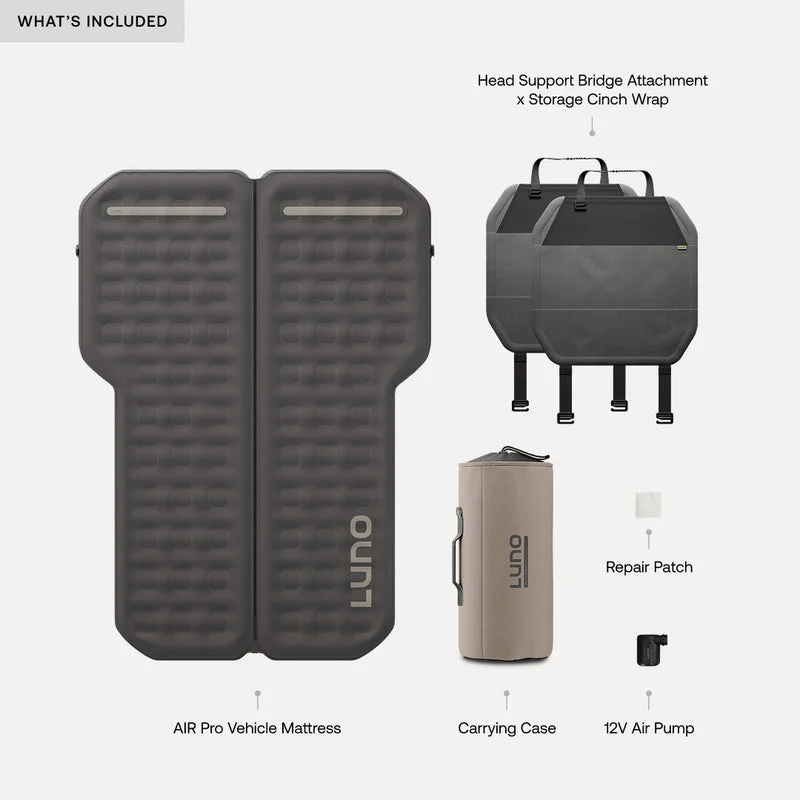
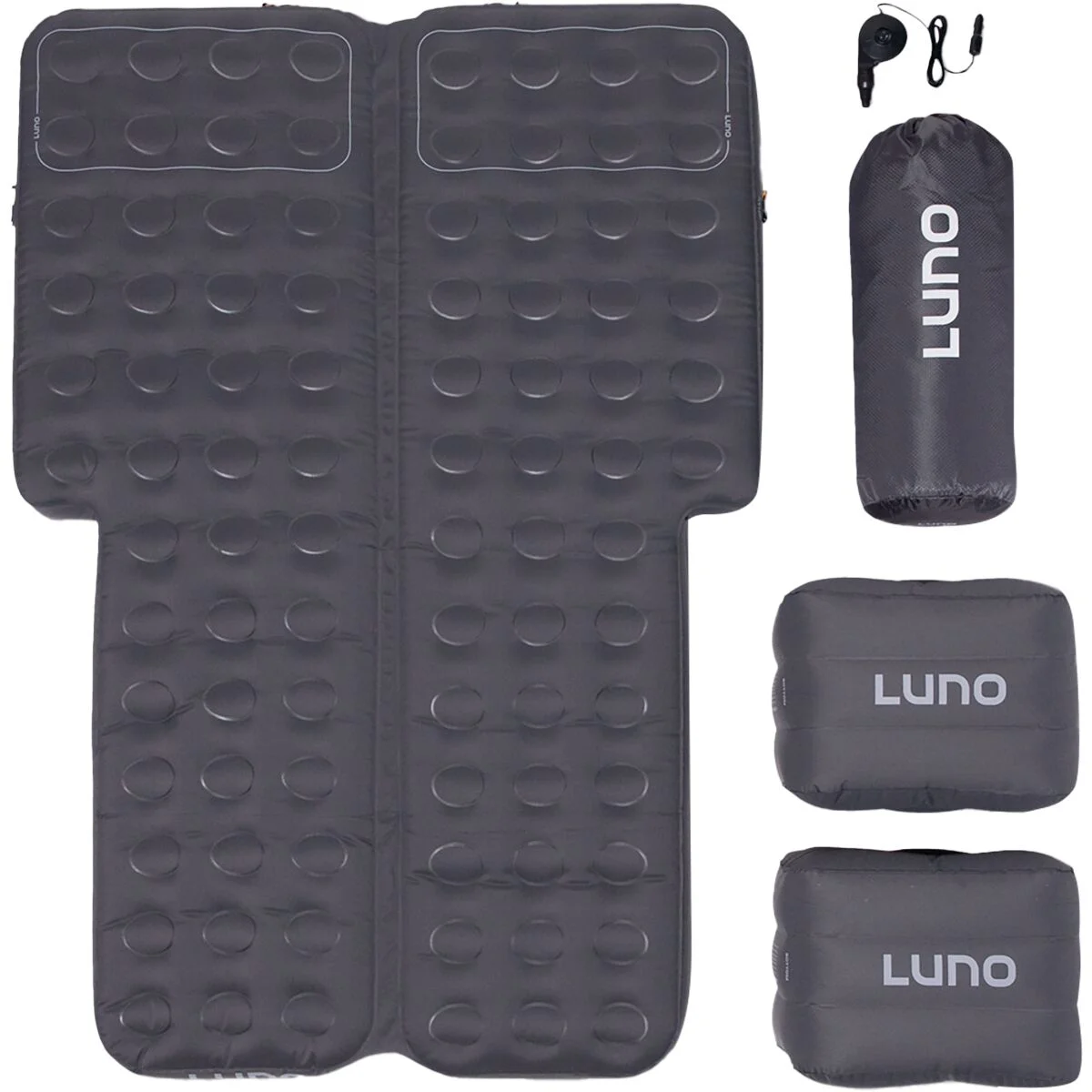
- A fold-flat SUV air mattress shaped for the cargo floor — the Luno Air Mattress 2.0 is the one three-row owners cite most, because its baffles bridge the seatback step and fill the captain's-chair channel, turning an uneven folded floor into a flat bed for two in about a minute, then deflating so the Highlander is a normal family SUV by Monday.
- A plywood platform with foam on top and drawers underneath. More work, semi-permanent, flatter and stronger — the choice if you camp out of the Highlander often and want the channel and step gone for good.
Either route, the order is always level first, decorate second: get the surface flat across the third-row seam (and the channel, if you have captain's chairs), then add a fitted sheet and a real pillow. A solo camper has it easy — the floor is plenty long for one with a thick pad and gear alongside, channel or not.
Hybrid or gas? Which powertrain to buy for camping power and range
The two Highlander powertrains lead genuinely different camping lives, and the choice is more consequential here than on most SUVs because of that outlet. Lay them side by side.
The 2.4-liter turbo gas Highlander makes a strong 265 horsepower and 310 lb-ft, runs an 8-speed automatic, and — properly equipped — tows up to 5,000 pounds. It's the quicker, stronger tow vehicle. What it does NOT give you is camp power: 12V sockets and USB, nothing that runs a fridge. If your camping is mostly hauling a small trailer to a developed site with shore power or a generator, the gas model's tow rating is the argument for it.
The 2.5-liter Hybrid trades some of that muscle (tow drops to about 3,500 pounds) for two things a camper actually uses: roughly 35 mpg combined — genuinely frugal for a three-row that sleeps two, so a far-off trailhead costs less to reach and you carry less fuel anxiety — and, on Bronze Edition, Limited and Platinum, the 1500W / 120V outlet. Its AWD is an Electronic On-Demand system that drives the rear wheels with a separate motor when the fronts slip, confident on wet grass, packed dirt and snow.
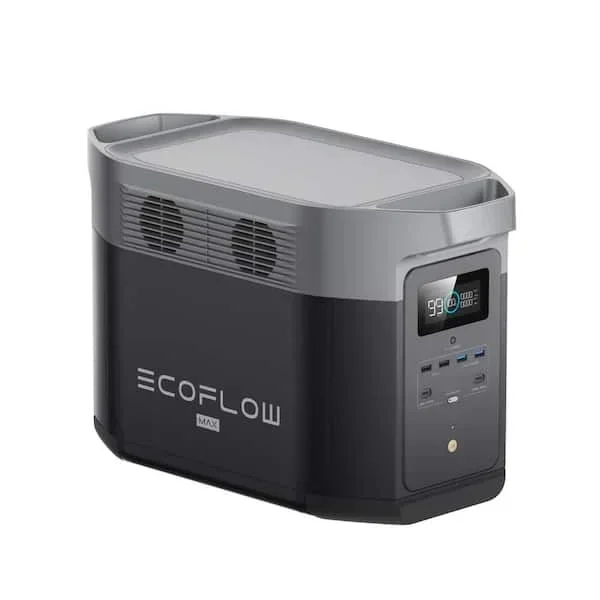
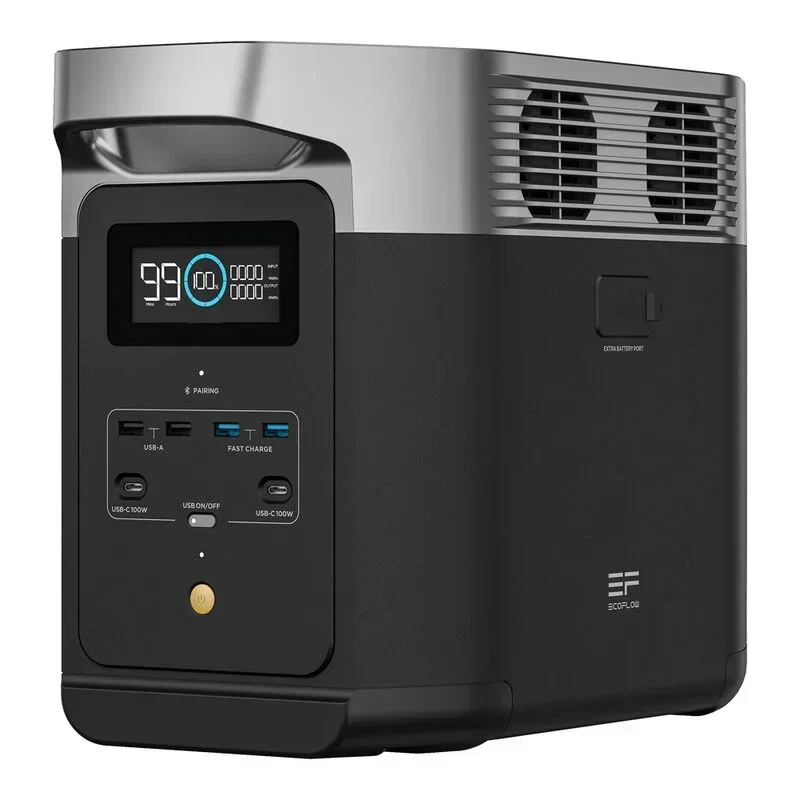
The honest reading reverses the usual hybrid advice. On most SUVs we tell you the hybrid adds nothing at camp; on the Highlander the hybrid's outlet is the single best camping feature on the car. Even so, the outlet only runs while the hybrid system is on, so for silent overnight loads you still want a battery to bank it into — our guide to the best portable power stations for car camping covers the LiFePO4 units that pair best with it. So unless you specifically need the 5,000-lb tow rating, the camper's powertrain is the Hybrid — and the trim that carries the outlet. Buy the gas model only if towing capacity outranks camp power for how you actually travel.
The hard numbers: cargo specs, floor length, and whether a six-footer fits
Start with the cubes, because Toyota lists two different sets and buyers get confused. The current SAE figures Toyota and the major databases publish are 20.6 cubic feet behind the third row, 48.4 behind the second, and 84.3 with both rear rows folded. You'll still see an older measurement method on some dealer sites — roughly 16 / 57.9 / 97.5 for the same vehicle. Same box, two yardsticks; the 84.3 figure is the one on Toyota's current spec page, so plan around it.
Cubes don't tell you if you fit, though — linear length does. With both rear rows folded, owners measure roughly six and a half to seven feet of floor from the liftgate to the front seatbacks. That's the number that matters: a six-footer lies flat only once the front seats slide forward, and a tall pair will want them all the way up. The Highlander is a 194.9-inch mid-size three-row, not a full-size hauler — usable for two average adults, tight (not impossible) for two tall ones. Width matters as much for two people: owners report roughly 45 to 50 inches between the rear wheel housings, wide enough that a standard twin pad drops between the wells and two narrow pads sit side by side.
- Cargo behind row 3: 20.6 cu ft
- Cargo behind row 2: 48.4 cu ft
- Cargo, both rear rows folded: 84.3 cu ft (older method quotes ~97.5)
- Flat-floor length: ~6.5–7 ft — six-footer fits flat only with front seats forward
- Width between wheel wells: ~45–50 in — a twin pad drops between the humps
- Footprint: 194.9 in long, ~76 in wide — mid-size, not full-size
The catch is the one every three-row hides: the folded floor isn't a single flat plane. The third-row seatbacks sit a touch proud and there's a gentle drainage slope toward the tailgate — and if you bought captain's chairs, add the center channel. Every good Highlander sleep setup is really a plan to erase those, which is the next section.
How to level the third-row step and captain's-chair channel into a flat bed
Sleeping in a Highlander is a leveling problem with a known shape: a step where the third-row seatbacks meet the cargo floor, a slope toward the tailgate, and — on captain's-chair trims — a lengthwise channel between the two middle seats. Solve those three and you have a flat bed; ignore them and you wake with a hip in a gap. Here's how, ranked by how often you camp.
1. The fold-flat air mattress (weekenders). A contoured SUV mattress is the fastest fix because it bridges all three obstacles at once — the baffles fill the channel, ride over the step, and counter the slope. The Luno Air Mattress 2.0 is sized for exactly this folded-three-row floor; inflate, level, deflate Monday. It's the right answer for the camper who wants the Highlander back to a normal family SUV during the week.
2. The plywood-and-foam platform (regulars). A deck whose surface sits level with the top of the folded seatbacks erases the step and channel permanently and gives you a storage basement underneath. More work and semi-permanent, but it's the flattest, strongest base — and on a captain's-chair Highlander it's the cleanest way to make that center channel simply disappear under a rigid surface.
3. The targeted foam fill (the cheap hybrid trick). If you bought captain's chairs and don't want a full platform, cut a block of high-density foam to drop into the channel and a wedge for the seatback step, then lay a thinner pad over the lot. It's the budget way to fake a bench's flat floor — the trade is fiddling with foam each setup instead of a one-motion inflate.
Whichever route: level and lengthen before you decorate. A fitted sheet and a real pillow beat a bag sliding down the tailgate slope at 2 a.m. A solo camper skips most of this — the floor is long enough that one person on a thick self-inflating pad sleeps fine with gear stacked alongside, channel and all.
Storage and maintenance: keeping gear stowed and the cargo bay camp-ready
Living in a vehicle is a storage problem wearing a sleeping problem's clothes: keep the bed clear at night, the gear reachable by day. It bites harder in a mid-size three-row than a full-size one, because 84.3 cubic feet fills up faster than you think once a bed is in it.
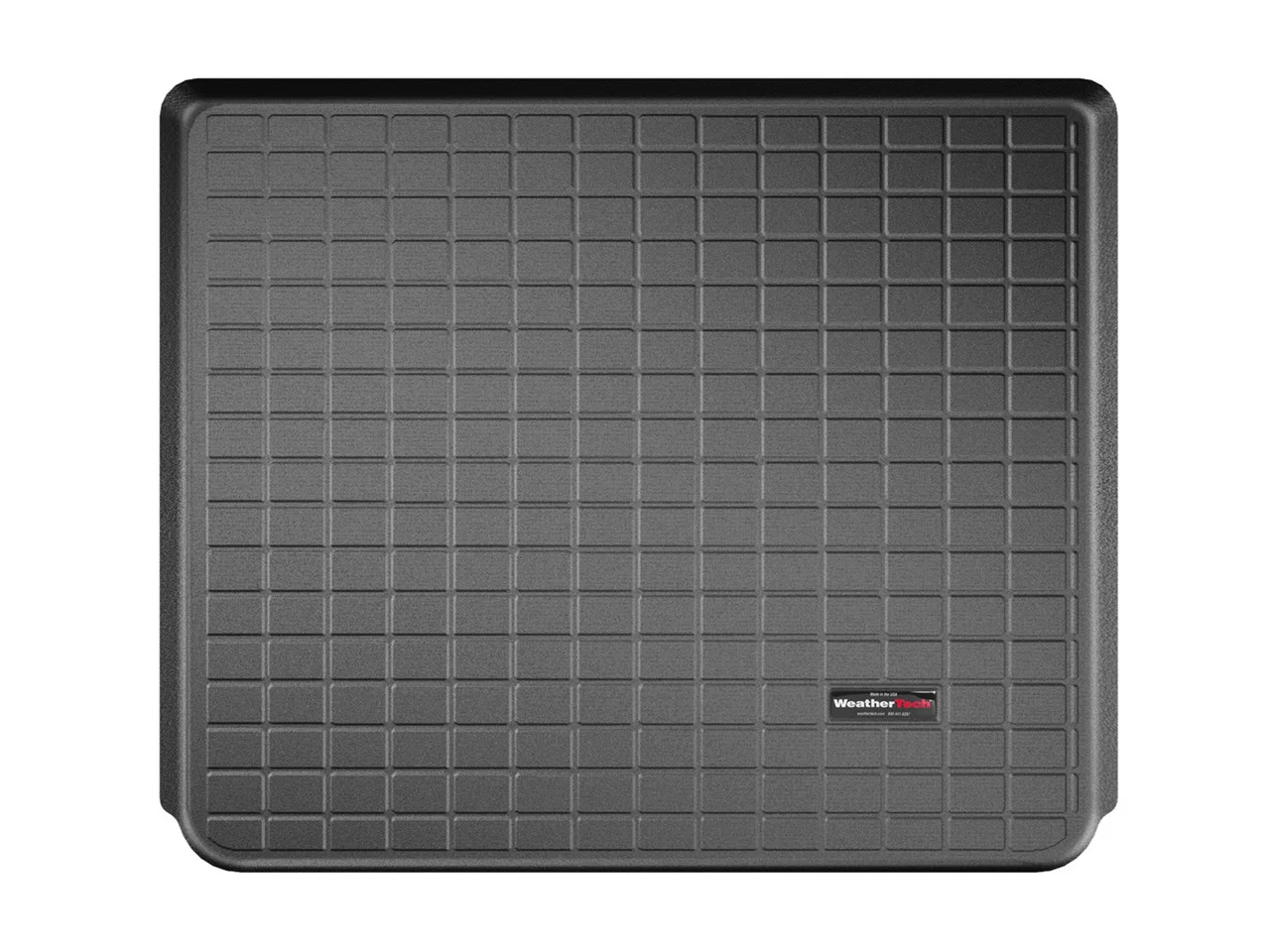
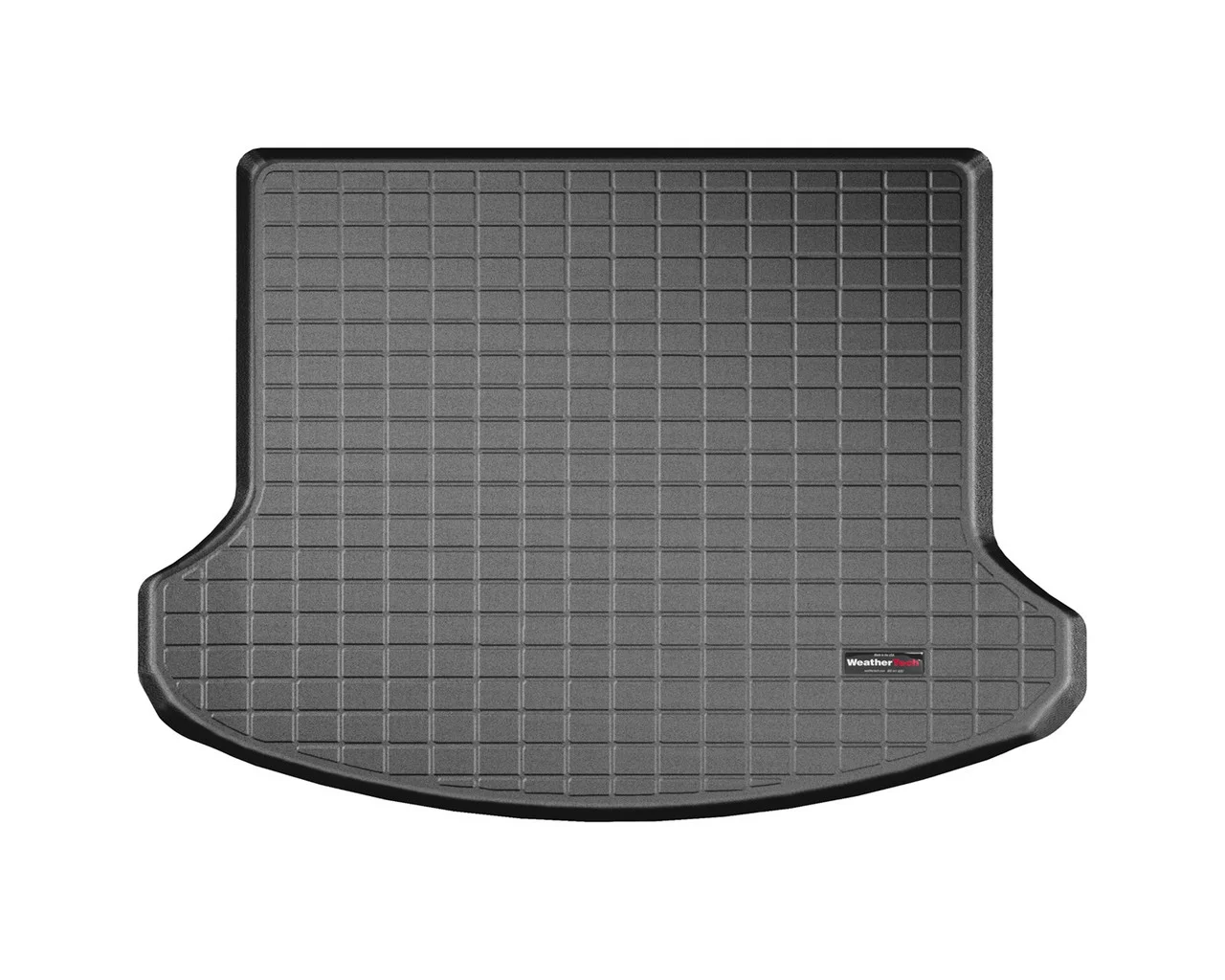
A platform build solves it with under-bed drawers you pull from the tailgate. On the air-mattress route, owners lean on collapsible cargo bins or a trunk organizer that slide to the footwells at night and back to center for driving. A laser-measured WeatherTech Cargo Liner earns its keep, too — a camping cargo floor gets muddy and wet, and a rubber tray you can hose out saves the factory carpet for resale day, which matters when the Highlander's resale is half the reason you bought it. Three habits make the box feel twice as organized: use soft duffels (they squash into wheel-well gaps rigid bins waste); hang a net or shoe organizer off a rear grab handle for the 2 a.m. small stuff; and exploit the native cubbies — the console, door bins and the under-floor well in back — for recovery gear you want aboard but out of the sleeping zone.
A little maintenance keeps the rig camp-ready between trips. Pull and rinse the cargo liner after a muddy weekend so grit doesn't grind into the carpet. Air the bedding and mattress fully before storage — the same condensation that fogs the glass overnight soaks into foam and grows mildew if you pack it damp. And pack heavy bins low and forward over the rear axle, with the standard roof rails handling overflow in a cargo box, so the loaded Highlander stays settled on washboard gravel and the suspension isn't fighting a tail-heavy load every mile to camp.
Real-world scenarios: the trips the Highlander nails and the ones it can't
Specs are abstract until you map them to actual trips. Here's where a 2025 Highlander shines as a camper and where it asks you to compromise — sorted by the kind of camping you'll really do.
- The long road-trip-to-basecamp (its sweet spot). Two adults, a few hundred highway miles, a maintained gravel forest road at the end. The Hybrid's ~35 mpg keeps fuel cheap, the 1500W outlet runs the fridge and tops a power station, and 8.0 inches of clearance gets you down the access road. This is exactly the trip the Highlander was quietly built for.
- The family weekend with a tent annex. Two adults sleep flat inside; a kid sleeps across a folded second row or in a ground tent. The Highlander becomes the dry kitchen and bedroom, the tent the overflow. Its 84.3 cu ft and roof rails carry the family's gear without a trailer.
- Towing a small trailer or teardrop. Buy the gas 2.4T for its 5,000-lb rating, or accept the Hybrid's ~3,500-lb ceiling for a light teardrop. Either reaches a developed site and drags the camper home — just match the trailer to the powertrain you bought.
- The rugged dispersed-camping trip (where it taps out). Rocky two-track, deep ruts, a remote trailhead miles past the gravel — this is a body-on-frame rig's job. The Highlander has no low range, no skid plates, no rugged trim. Push it here and you'll be picking lines nervously instead of enjoying the drive.
The pattern: the Highlander is a superb road-trip-and-maintained-gravel camper for one or two adults (plus a kid in a tent), and a poor choice for technical backcountry. Match the trip to the tool and it rarely disappoints; ask it to be a 4Runner and it always will.
Why ventilation matters more in the Highlander's big glass greenhouse

This is the part first-timers skip and regret on the first cold morning. Two adults breathing for eight hours in a sealed cabin exhale enough moisture to fog every window and leave the bedding damp — and the Highlander makes it worse two ways. Its mid-size cabin holds a little less air than a full-size three-row, so it saturates sooner; and its generous glass area is a giant cold surface for that moisture to condense on. More reason for ventilation here, not less.
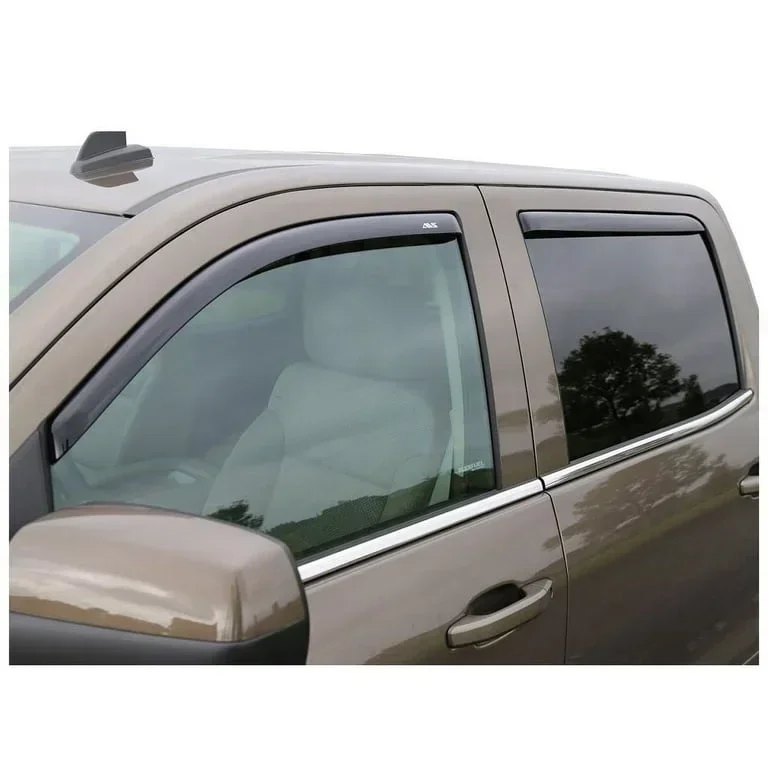
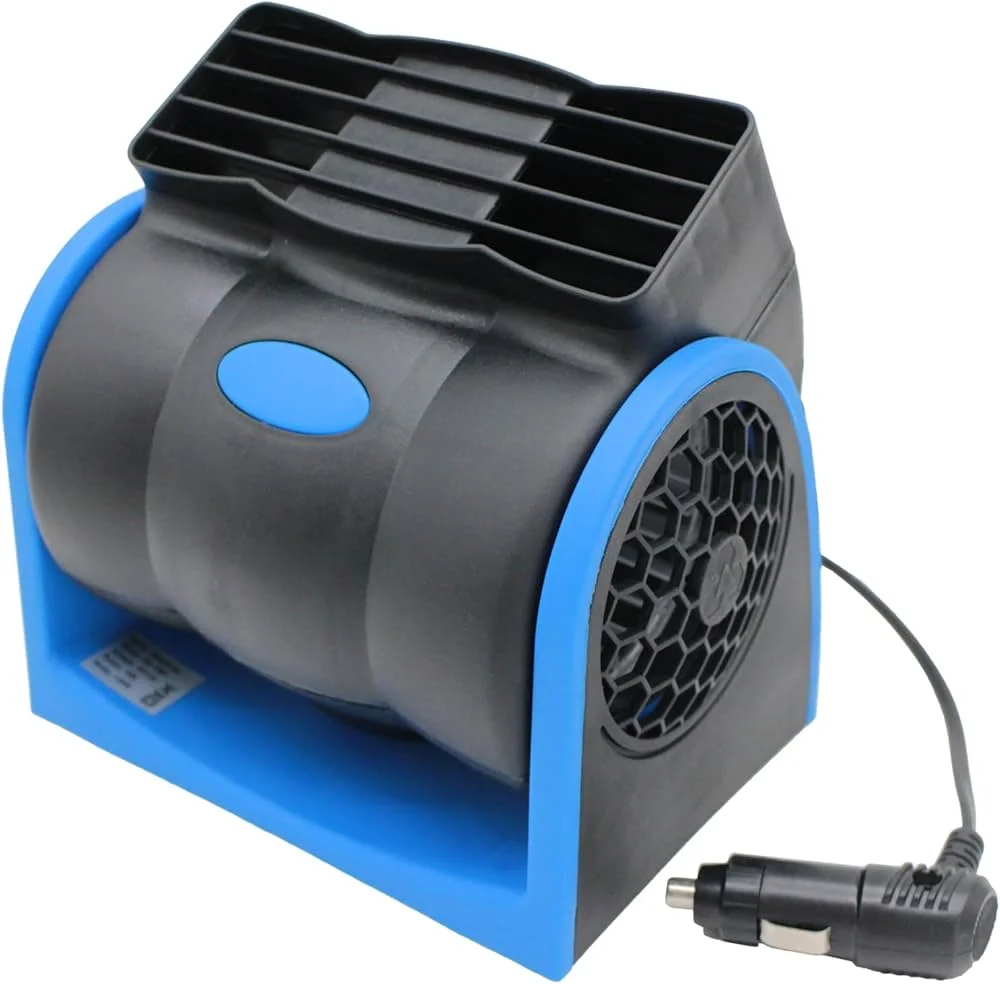
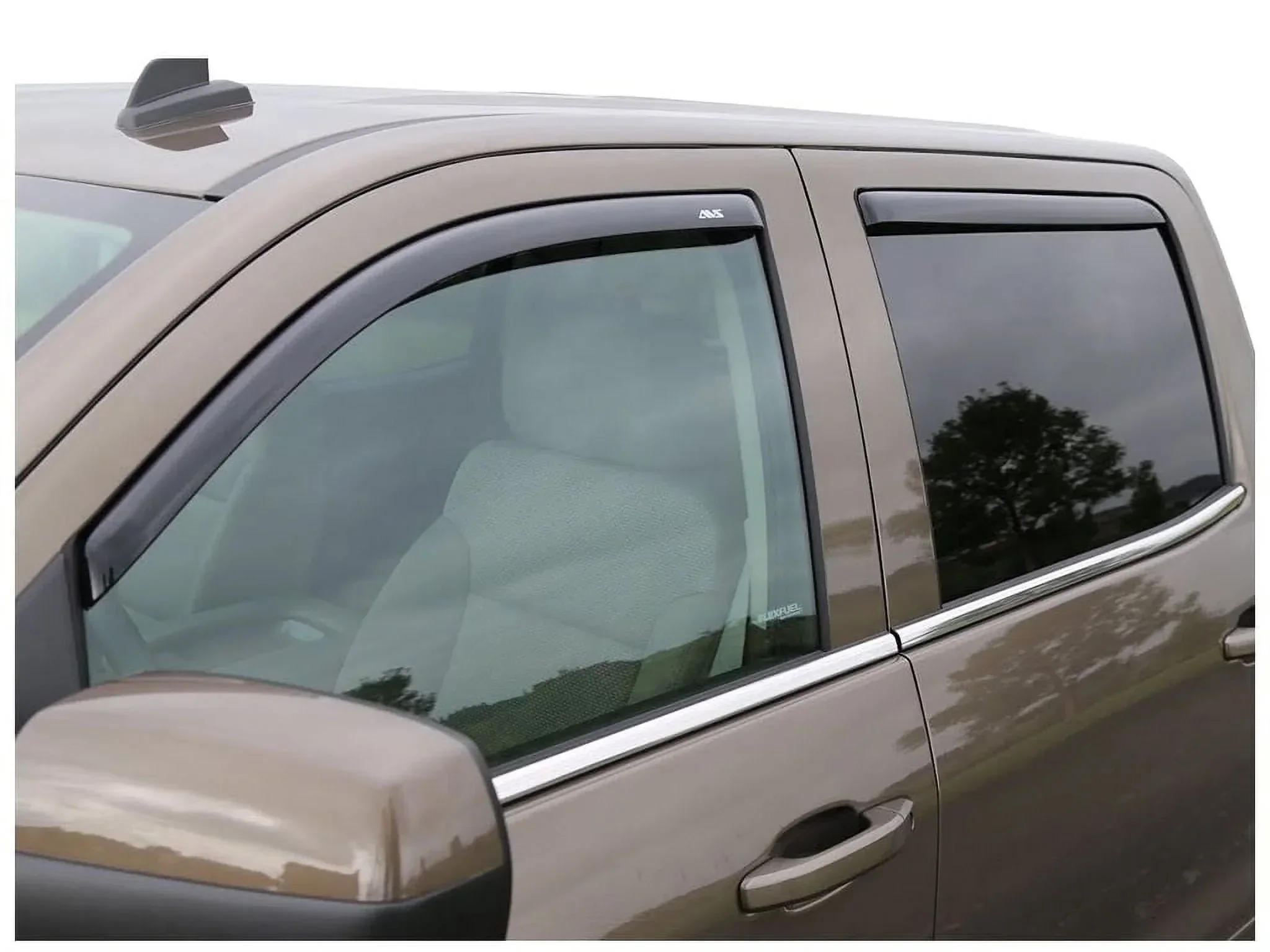
The fix is cross-flow: crack two windows on opposite sides so air actually moves through — the same physics our guide to reducing condensation when sleeping in a car walks through in detail. In rain, in-channel visors like the Auto Ventshade In-Channel Window Visors let you leave the glass open an inch without rain coming in. Add a clip-on EnergeticSky 12V Car Fan to push air across the cabin and you go from clammy to dry; bug screens cut to the openings keep the airflow honest in summer.
On cold, still nights — when condensation is worst — run that fan continuously on its lowest setting and wipe the inside of the glass before you sleep. A dry start beats fighting fog at 3 a.m. A moisture-absorber tub under a seat pulls the worst of the damp out overnight, and a reflective windshield shade slows the heat loss through the Highlander's big front glass that drives much of the condensation — the same shade that keeps the greenhouse from cooking you on a sunny afternoon. In a cabin with this much glass, managing the air and managing the glass are the same job, and skipping it is the difference between a dry night and a soaked sleeping bag.
Highlander vs Grand Highlander vs RAV4: sizing up or down in the Toyota lineup
The smartest Highlander camping decision might be to buy a different Toyota. Before you commit, hold the mid-size Highlander between its two siblings — the bigger Grand Highlander above it and the compact RAV4 below — because the right answer depends entirely on who's sleeping and where.
- Floor length. The Grand Highlander wins outright: at ~201 inches long it opens a longer, flatter floor (and more cubic feet) that swallows two tall adults without the front seats jammed forward. The mid-size Highlander's ~6.5–7 ft is enough for average adults and tight for tall pairs; the RAV4's ~64-inch floor is shorter than a six-footer. If your sleepers are tall and travel two-up often, size UP.
- Parking, trail width and fuel. The RAV4 wins these: at 180.9 inches it tucks into forest-road pullouts and city garages the 194.9-inch Highlander — let alone the 201-inch Grand Highlander — has to skip, and its hybrid roughly doubles a three-row's mpg. If you camp solo or two-up a few weekends a year and want a sane daily driver, size DOWN.
- The 1500W outlet. All three Toyotas can carry it on the right hybrid grades — so power isn't the deciding axis here. Floor length and footprint are.
- Family flexibility. The mid-size Highlander is the Goldilocks middle: more flat floor and a usable third row the RAV4 lacks, a smaller footprint and lower price than the Grand Highlander. For a family that sleeps two inside and pitches a tent for the kids, it's the balanced pick.
The rule of thumb: tall and two-up most weekends, buy the Grand Highlander; solo or a couple, a few trips a season, buy the RAV4; a family that wants the three-row flexibility and a flat bed for two without a full-size footprint, the mid-size Highlander is exactly the right size. Read the sibling guides linked above before you sign — that's what they're for.
Mistakes Highlander campers make (and the one the dealership makes for you)
A handful of mistakes recur in Highlander owner reports, and the mid-size floor plus the trim-dependent outlet make a couple sting more than they would elsewhere.
- Buying the wrong powertrain for power. The 1500W outlet is a hybrid feature on Bronze Edition, Limited and Platinum — not the gas model, not every hybrid. Buyers who want to run a fridge off the car must read the window sticker, not assume. This is the mistake the dealership effectively makes for you, months before your first night out, the moment you pick a trim without checking.
- Overlooking the captain's-chair channel. Fall in love with a seven-seat trim, toss a flat mattress on the folded floor, and wake with a hip in the center gap. Either pick a bench layout or plan the foam to fill the channel — decide it before you buy the mattress, not after.
- Overestimating the bed. Two tall adults assume any three-row sleeps them flat, then meet the ~6.5–7 ft floor and sleep knees-bent unless the front seats go all the way forward. Measure, then slide the seats up — or size up to a Grand Highlander.
- Skipping window covers. Regret it twice: once when a parking-lot light burns all night, again when the big glass cooks or freezes the cabin. A cheap reflective set fixes privacy, light and temperature in one move.
The thread through all four: the Highlander rewards a buyer who decides on purpose — powertrain, second row, and a few cheap accessories — and punishes the one who lets the dealership's default trim decide their camp for them.
Before you buy: the Highlander camping checklist
Run this list at the dealership and before your first trip, in order. It's built from everything above, so each line ties back to a decision you can't easily undo later.
- Confirm the powertrain. Want camp power? It must be a Hybrid in Bronze Edition, Limited or Platinum — verify the 1500W outlet on the actual window sticker, not the brochure.
- Confirm the second row. Want the flattest bed? Get the bench (8-passenger). Remember Toyota won't pair the bench with the Hybrid Limited, so a bench-plus-outlet buyer wants Bronze Edition or Platinum.
- Measure your floor. Fold both rear rows, set the front seats where you'd sleep, and tape the floor. If it's under your height, plan to slide the seats forward or size up.
- Pick your leveling method. Weekender → a fold-flat SUV mattress. Regular → a platform. Captain's chairs on a budget → cut foam for the channel and step.
- Sort overnight power. Even with the outlet, bank it into a LiFePO4 power station for silent all-night fridge duty — never sleep with the engine cycling to keep the inverter live.
- Buy the cheap kit. Reflective window covers, in-channel visors, a 12V fan, a cargo liner. Under $200 total, and they handle privacy, condensation, heat, cold and a hose-out cargo bay.
Tick every box and you've made the decisions gear can't fix at the only point they're free to make — before you sign — and turned a sensible family SUV into a genuinely good camper.
The verdict: which Highlander to buy and which to walk past
Buy the Highlander Hybrid — in Bronze Edition or Platinum if you also want the flatter second-row bench — and you get the best version of this car for camping: ~6.5–7 ft of flat floor that sleeps two once you level the seatback step, Toyota reliability for the long haul, ~35 mpg to the trailhead, and a 1500-watt household outlet that runs a fridge or charges a power station straight off the car, a feature most mid-size rivals simply don't have.
Spend on a few cheap things and it's transformed: a fold-flat SUV mattress to erase the step and channel, a LiFePO4 power station to bank that 120V outlet's power for silent overnight runs, and visors plus a fan to keep the big glass dry. Add reflective covers and privacy, heat and cold are handled in one move.
Walk past the gas model if camp power matters to you — that's the one decision you can't fix later with gear — unless you specifically need its 5,000-lb tow rating. And be honest about size: if you're tall and travel two-up every weekend, size up to a Grand Highlander; if you're solo or a couple chasing mpg and easy parking, size down to a RAV4. But for the family that wants a flat bed for two, a third row when they need it, and a powered, sensible rig that's a normal SUV come Monday, the mid-size Highlander — bought in the right trim with the right second row — is exactly the right amount of car.