

You've decided the RAV4 can camp - now build it
This guide starts one step past the question most RAV4 articles are still arguing about. It assumes you have already decided a Toyota RAV4 can be your camper and you want to know how to actually set it up to sleep in - the platform, the storage, the power, the air. If you are still on the fence about whether you physically fit, that is a different job, and our companion piece on whether you can sleep in a RAV4 walks the folded-floor measurements and the two-person width limit inch by inch. Come back here when you are ready to build.
The build rests on one honest fact about the vehicle: with the rear seats down the RAV4 opens roughly 69.8 cubic feet of cargo volume on the 2025 model, per Edmunds, and the load floor runs close to 73 inches front to back - long enough to lie down, but stepped where the folded seatbacks meet the cargo floor rather than poured flat. Every decision below flows from that: you are not sleeping in a van with a flat bed, you are converting a mid-size crossover into one for a night at a time, and the good news is that four cheap fixes do almost all of it.
So the guide is organized as a build, room by room. First the sleep platform that turns the stepped floor into a bed. Then the storage system that keeps the bay livable once it is also your bedroom. Then power - the part people most often over- or under-buy. Then ventilation and blackout, the two that decide whether the first night is restful or miserable. A parts-and-cost table at the end ties it together.
The sleep platform: level a floor that is 73 inches and not flat
The whole build lives or dies on the platform, because the RAV4's folded floor has a low step where the seatbacks meet the cargo deck and a mild slope toward the tailgate. Left bare it puts a ridge under your hip at exactly the wrong spot. There are two honest ways to erase it, and which you pick is mostly about whether you would rather store a roll of foam or a deflated mattress.
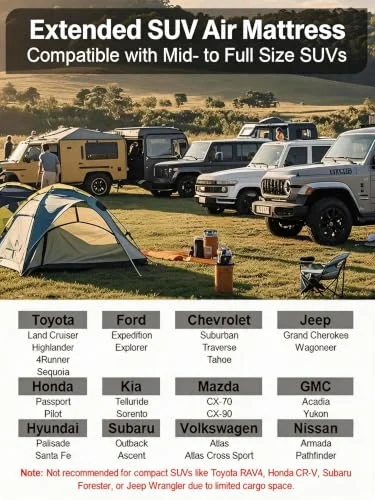
The foam route is the simplest. A dense pad cut to the folded outline fills the step and the slope in one piece and never leaks air in the cold. The Foamma roll-up foam camping mattress is a three-inch, 72-inch-long high-density pad, which lands within about an inch of the RAV4's roughly 73-inch load-floor length, and because it is foam you can trim it to clear the wheel-well intrusions and the seatback bump instead of fighting them. The air route trades a little cold-weather comfort for packability: the Umbrauto SUV Air Mattress floats you above the contours in one 78.7-inch piece — or about 71 inches with its head support raised, which is the setting that suits the RAV4's roughly 73-inch floor — then packs into the supplied bag for the drive. It is 57 inches wide inflated, so the edges climb the wheel arches, and it is rated to 300 pounds.
Whichever route you take, build the platform on the ground at home first and lie on it before you ever leave the driveway. A two-inch ridge you can ignore for ten minutes in the garage is the thing that wakes you at 3 a.m. on a mountain.
Two details separate a platform that works from one that only looks right in the driveway. First, the diagonal: the RAV4's usable sleeping length is a little longer corner to corner than straight front to back, so a solo sleeper who lies slightly diagonally buys a few inches of legroom for free - build the pad to allow it rather than jamming it square to the tailgate. Second, condensation from below: a sealed air mattress can trap moisture against its underside on a cold night, so a thin foam or reflective layer between the mattress and the cargo floor keeps the bed dry and adds a little insulation.
One structural note the sibling guide covers in full: the RAV4's sleeping length is diagonal-friendly for one adult and tight for two across the width, so a single 26-to-30-inch-wide pad is the realistic target for a solo build, and two sleepers should confirm shoulder width against the folded bay before buying anything.
Storage: the bay is also the bedroom, so gear needs a home
The problem nobody warns you about is that in a RAV4 the cargo bay is both your bed and your only storage, and those two jobs fight. The fix is not a bigger vehicle; it is a place for the gear to go at night that is not on top of you. The front seats are that place.
Build a simple gear wall: slide both front seats forward and upright before bed and stack the day's soft bags on and between them. Soft duffels beat rigid bins here for one reason - they deform into the footwells and around the console, where a hard tote wastes the space and slides around. A workable night system looks like this:
- Front-seat wall: cooler, food bin, and the day bag ride up front at night, freeing the entire folded bay for sleeping.
- Night bag packed last: sleep clothes, headlamp, water, and phone go in one small bag that loads last so it comes out first - no digging through the wall in the dark.
- Footwell and seatback pockets: the small stuff that always migrates - keys, chargers, glasses - lives in the door and seatback pockets, not loose on the platform.
A second habit makes the front-seat wall fast: pack in reverse order of when you need things. The sleep kit and headlamp go in last so they come out first at the site; the cooking and daytime gear ride deeper because you unload them only once camp is set. Get this order right and the nightly conversion from cargo bay to bedroom takes a couple of minutes, not a frustrated ten spent restacking in the dark.
The discipline the RAV4 rewards, per its roughly 37.5 cubic feet of seats-up cargo on the 2025 model, per Edmunds, is packing light enough that the whole kit clears the bay at night. If your gear will not move to the front seats in under five minutes, you have too much of it for a crossover build - and that is a packing problem, not a vehicle problem.

Power: match the station to the night, not to the spec sheet
Power is where RAV4 campers most often overspend. You do not need a van-sized battery to run a crossover camp; you need enough to keep a fan, lights, and phones alive overnight without ever asking the starter battery for help. A mid-size portable station does that and recharges from the 12-volt socket on the drive to the next site.
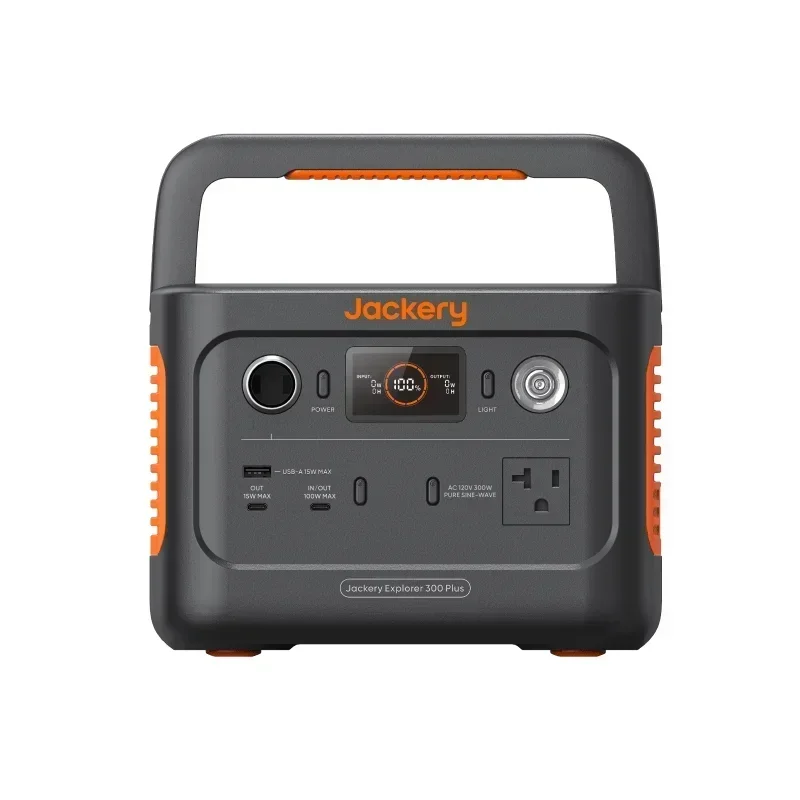
The Jackery Explorer 300 power station is the honest middle: 292 watt-hours is enough to run a 12V fan all night, top off two phones, and power a string of lights, with margin to spare, and it is small enough to live in the front-seat wall by day. Step up only if you plan to run a 12V fridge for multiple nights; step down only if your camp is truly just phone charging.
There is one RAV4 variant that changes this math entirely. The plug-in RAV4 - sold as the RAV4 Prime - offers a 1,500-watt AC outlet, per Toyota, which can run household devices directly off the traction battery without any separate power station at all. If you own the plug-in, test that outlet before you buy anything, because it may make the whole power question moot for short trips.
A quick way to size the station honestly is to add up the overnight loads rather than the peak ones. A 12V fan pulls only a handful of watts and runs for hours; phone charging is a rounding error; a string of LED lights barely registers. The load that actually drains a battery is a 12V fridge or anything with a heating element, so if your camp is a fan, lights, and devices, a compact station has margin to spare, and the recharge-while-driving habit means you rarely start a night below full. Buy the fridge-sized battery only when you actually run a fridge.
The rule that saves money: size the battery to the single hungriest thing you will run, not to a wish list. For most RAV4 campers that hungriest thing is a fan on a warm night, and a 292Wh station covers it with room left over.
Ventilation and blackout: beat the fog and the heat trap
A sealed RAV4 does two uncomfortable things: on a cold night the moisture you exhale condenses on the cold glass and drips, and on a warm one the cabin holds the day's heat like a parked car - because it is one. Both problems have the same root, a lack of airflow, and the same cheap fix, controlled cross-ventilation you can leave open in the rain.
The airflow build is three cheap moves:
- Two windows, opposite corners: crack the front-left and rear-right about an inch - two openings set up a real cross-flow, where a single cracked window barely breathes.
- Cut-to-fit mesh: cover each opening so the air moves but the bugs stay out, and you can leave it open in light rain.
- A small 12V fan: point it to push air out one side, and the cabin exchanges air all night on a few watt-hours from the power station.
Blackout does double duty. Reflective panels cut to each window pane give you privacy and, on a hot afternoon, bounce the sun back out before it cooks the cabin; on a cold night the same panels slow the heat leaking through the glass. Cut them once at home to each RAV4 window's shape and they store flat behind the seats. Ventilation and blackout are the two upgrades that most change how the first night actually feels, and together they cost less than a tank of gas.
The RAV4 as a camp platform: what it does well, and its limits
A build guide owes you the honest ceiling of the vehicle, not just the parts list. The RAV4 is one of the better crossovers to sleep in, and it is still a crossover - here is where each of those is true.
What it does well is the whole reason it is worth building. It hides in plain sight at a trailhead or a rest stop, it returns strong hybrid fuel economy on the long camping drives, and its roughly 8.4 inches of ground clearance, per Car and Driver, reach the gravel-road sites a sedan cannot. The folded bay sleeps one adult comfortably once the platform is built, and the vehicle you camp in on Saturday is the same one you commute in on Monday.
The limits are width and flatness, and no amount of gear erases them. Two adults sleep tight across the RAV4's bay, so a couple's build trades cargo space for a wider pad and accepts touching shoulders. The floor is never poured-flat, so the platform is doing real work every night, not just adding softness. And a crossover camp is a fair-weather-to-shoulder-season tool by default - it can be pushed colder with insulation, but it is not a four-season van. Build it for what it is and it delivers; expect a van and it will disappoint.
The honest test: if your trips are one or two people at drive-up and trailhead sites in fair-to-shoulder-season weather, the RAV4 build is all the camper you need. If you want a bathroom, standing room, or January, you have outgrown the crossover.
If the RAV4's ceiling has you cross-shopping, its two closest camping rivals are worth a look: our RAV4 vs CR-V comparison weighs it against the Honda, and RAV4 vs Forester puts it beside the Subaru that out-clears it. Both help you confirm the RAV4 is the right base before you spend on the build.
The full kit and what it costs
Everything above collapses into five jobs and a modest budget. The table in this guide lays out each job, the problem it solves, the gear that does it, and a rough cost, so you can build in the order that matters: platform first, because a bad bed ruins everything; then ventilation and blackout, because they decide comfort; then power and storage, which are the easiest to add or upgrade later.
Built sensibly, a complete RAV4 sleep setup lands in the low hundreds of dollars - a foam or air platform, a mid-size power station, window mesh and a fan, and reflective panels - which is why the crossover build keeps winning against the impulse to buy a dedicated camper for occasional trips. You are not trying to rival a van; you are spending a weekend's worth of gear money to make a vehicle you already own sleep well a dozen nights a year.
Start with the platform, prove it in the driveway, and add the rest one paycheck at a time. The RAV4 does not need everything at once to be a good first camper - it needs a level bed, moving air, and a way to keep the lights on, and the rest is refinement.
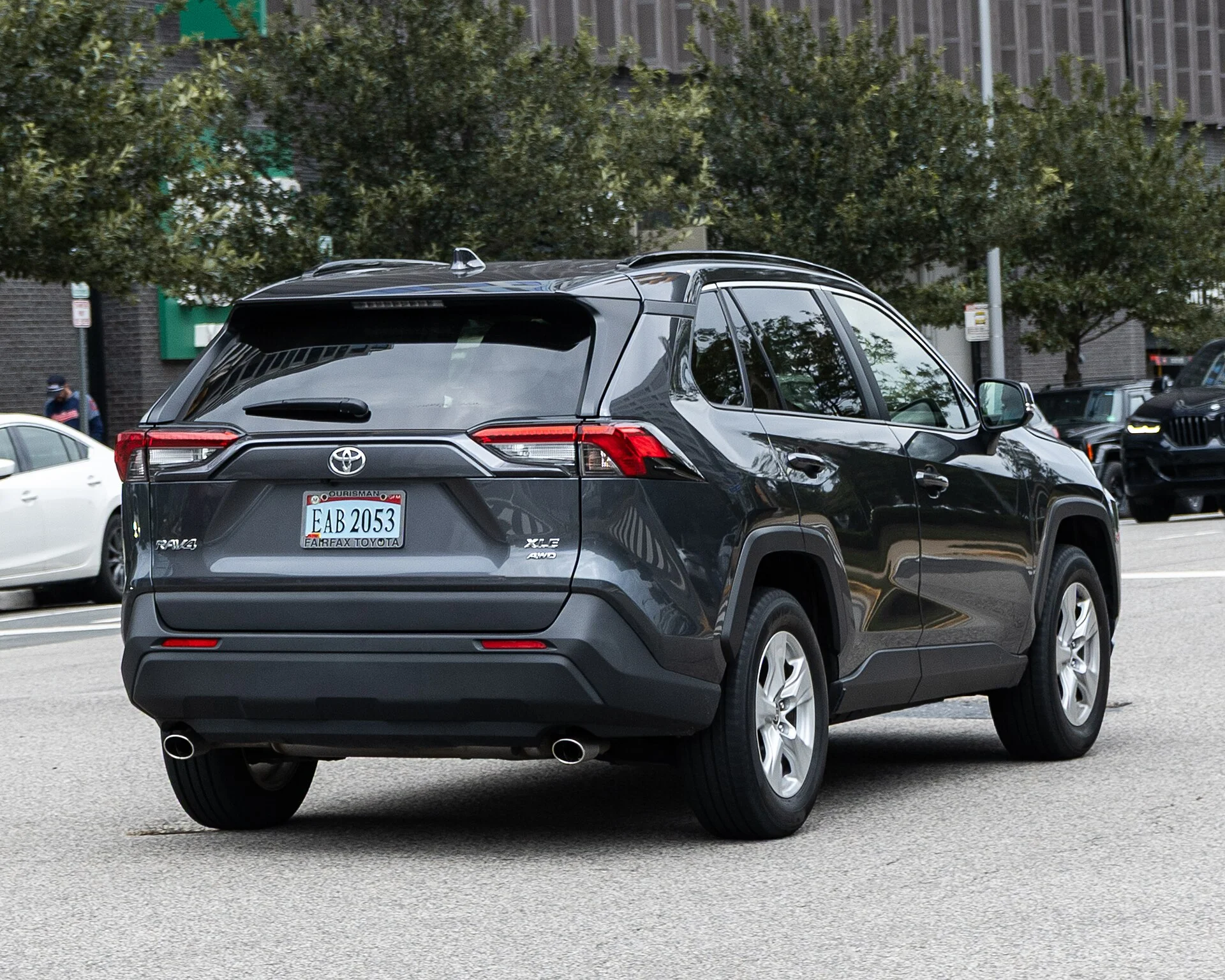
The bottom line: a RAV4 sleeps well once it is built for it
The RAV4 rewards a build, not a purchase. Level the roughly 73-inch folded floor and its seatback step with a trimmed foam pad or an SUV air mattress; move the gear to a front-seat wall so the bay is only a bedroom at night; run the camp off a 292Wh-class power station instead of the starter battery, or straight off the plug-in RAV4's 1,500-watt outlet, per Toyota; and set up real cross-ventilation behind mesh with reflective panels for privacy and temperature. Do those four things and the first night is restful.
Everything in this guide is a variation on the same principle: the RAV4 is a genuinely good place to sleep once you have solved the four problems a crossover creates, and each solution is cheap, reversible, and stores flat. If you have not yet settled whether you and your sleeping partner physically fit, close that loop first with the companion fit guide - then come back and build.