
The Short Answer: How to Stay Cool Sleeping in a Car in Summer
Start with the honest truth, because it changes every decision that follows: with no air conditioning, you cannot make a parked car cold. What you can do is keep it from becoming an oven and move enough air to stay comfortable. The goal is heat management, not refrigeration.
Five moves do almost all of the work, in roughly this order of importance:
- Park in deep shade where a breeze can reach you. Where you park matters more than any gadget you bring.
- Build real cross-ventilation. Crack windows on opposite sides behind bug mesh so air actually flows through, not just sits.
- Run a small 12V or rechargeable fan. Moving air over your skin feels far cooler than still air at the same temperature.
- Block daytime sun with reflective shades. Stopping heat from building up during the day is easier than removing it at night.
- Sleep on breathable bedding and stay hydrated. A summer-weight setup and water do more than most people expect.
The one thing to not do is idle the engine to run the AC all night. It burns fuel, many places restrict it, and in an enclosed or poorly ventilated spot it carries a carbon monoxide risk. The exception is an electric vehicle or some hybrids with a true camp or climate-keep mode, which can hold a temperature off the traction battery without a running combustion engine. For everyone else, the rest of this guide is how to stay comfortable without that crutch.
Why a Parked Car Gets So Hot (and Why Shade Comes First)
A car is a small glass box, and glass is a one-way trap for heat. Sunlight pours in through the windows, the seats and dash absorb it and re-radiate it as longer-wave heat, and that heat cannot escape back out through the glass as easily as it came in. This is the greenhouse effect, and it is why an interior can climb dozens of degrees above the outside air within minutes of sitting in the sun.
Two consequences follow directly from that physics, and they shape the whole strategy:
- Heat you let in during the day is heat you fight all night. Sheet metal and upholstery store warmth and release it slowly for hours after sunset. A car baked all afternoon stays uncomfortable long after dark.
- Preventing heat is far easier than removing it. Keeping the sun off the car costs you nothing and works passively. Cooling a heat-soaked cabin with a fan and cracked windows is slow and only partly effective.
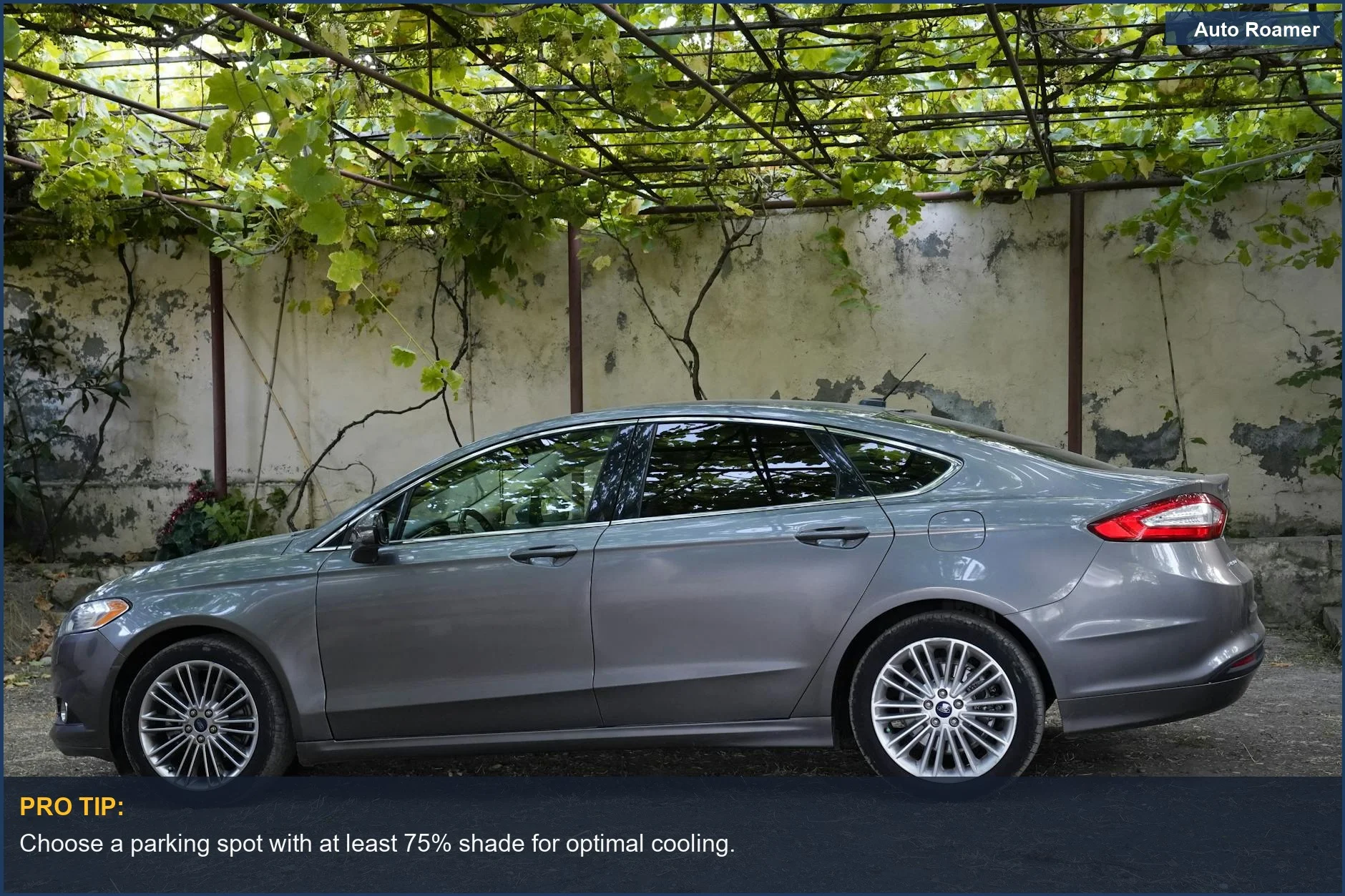
That is why parking strategy is the first and most powerful lever. The ideal spot is shaded for as much of the day as possible, slightly elevated so warm air drains away and any breeze reaches you, and oriented so prevailing wind can blow through the car once you open it up. A flat asphalt lot in full afternoon sun is the worst case; it absorbs heat all day and radiates it upward into the car after dark.
If you remember one thing, make it this: the cheapest and most effective cooling tool you own is the parking spot you choose. Spend the effort there before you spend money on gadgets.
Timing helps too. If you can, keep moving (and running the AC) during the hottest part of the afternoon and settle into camp as the sun drops and the air starts to cool. Arriving early to claim a shaded, breezy spot beats arriving late to whatever flat, sunbaked corner is left.
It also pays to read the landscape rather than just the map. Trees give moving shade that tracks the sun, which beats a building shadow that disappears by mid-afternoon, so think about where the shade will be at 4 p.m., not where it is when you arrive at noon. Open ridgelines and lakeshores catch a breeze that low, enclosed gullies never see, and even a slight rise keeps you out of the pool of warm, still air that settles into the lowest ground after dark. A few minutes spent picking the right spot does more for your comfort than anything you can buy.
Cross-Ventilation: The Single Most Important Cooling Move
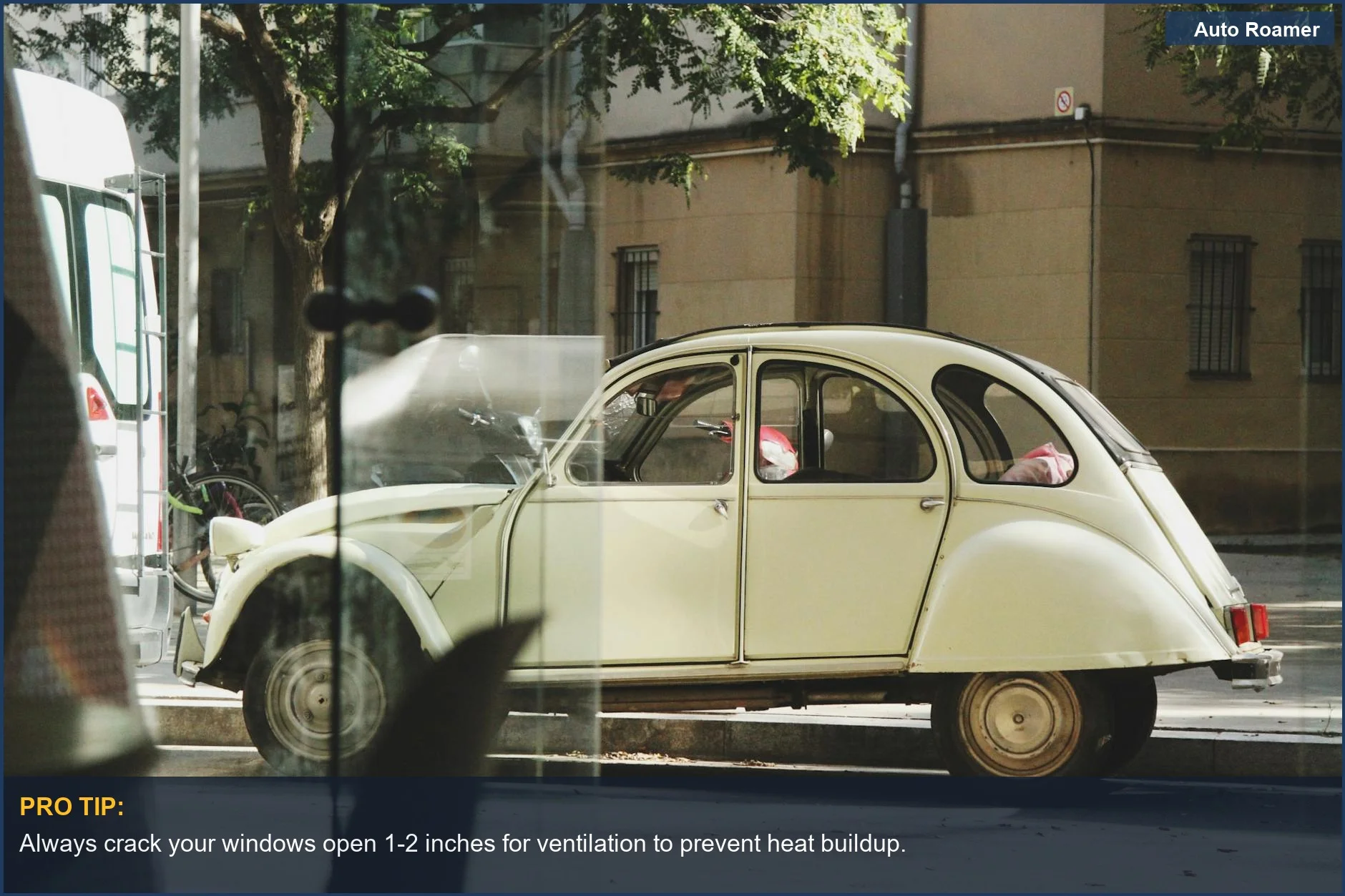
Once the sun is off the car, airflow does the heavy lifting. Here is the key distinction most people miss: one cracked window barely ventilates anything, because air has no path through. Open two windows on opposite sides and you create cross-ventilation, where the breeze enters one side and exits the other, carrying warm, humid air out with it.
The problem, of course, is that open windows invite bugs. The fix is bug mesh, and it is the upgrade that makes summer car sleeping actually workable:
- Magnetic window screens snap to the door frame and let you roll the window most of the way down behind them. Clean and easy, sized to popular models.
- Slip-on mesh sleeves stretch over the top of a door and cost very little. Less elegant, but they let you open windows wide in buggy areas.
- DIY mesh and clips work fine for a weekend; no-see-um netting and a few clamps cover any window for a few dollars.
A small fan multiplies all of this. Moving air evaporates sweat off your skin, and evaporation is what your body actually uses to cool itself, so a fan can make a warm cabin feel genuinely bearable even though it does not lower the air temperature. Position it to either push hot air out of one window or draw cooler night air across your body.
- USB rechargeable clip fans are the simplest option, run off a power bank, and clamp to a headrest or grab handle.
- 12V fans plug into the accessory socket but should run off a separate battery, not the starter battery, if the engine is off (more on that below).
For models, fit, and battery life, our guide to the best USB rechargeable window fans breaks down what to look for. Set up correctly, a fan plus genuine cross-flow is the difference between a sweaty, sleepless night and a workable one.
There is a simple two-fan trick worth knowing for the hottest nights: aim one fan outward at the top of a window to exhaust the hot air that collects near the roof, and let cooler night air get drawn in low through the opposite window. Hot air rises, so pulling it from the top and admitting fresh air down low sets up a natural chimney that flushes the cabin far faster than two fans pointed the same way. Even with a single fan, tipping it slightly upward to clear the warm layer near the ceiling helps more than blasting it straight at your face all night.
Reflective Shades vs Blackout: Stopping Daytime Heat Buildup
Window covers do two different jobs, and confusing them leads to buying the wrong thing. Reflective shades bounce sunlight away to stop heat from building up. Blackout covers block light so streetlamps and sunrise do not wake you. For summer heat, the reflective job is the one that matters most.
The single highest-value piece is a reflective windshield shade. The windshield is the largest pane and faces the sky, so it lets in the most heat. A folding reflective shade in the windshield during the day dramatically slows how fast the cabin bakes, and it stores flat behind a seat at night.
How the common options compare for a hot night:
| Cover type | Blocks daytime heat | Blocks light | Cost |
|---|---|---|---|
| Reflective bubble panels (DIY) | Yes, very well | Mostly | Low |
| Custom-fit reflective covers | Yes, best seal | Mostly | High |
| Blackout fabric (non-reflective) | Little | Yes, fully | Medium |
| Folding windshield shade | Yes, largest pane | Partial | Low |
Read that table the way you would a shopping list: for summer heat you want the rows that block daytime heat, and you treat light-blocking as a bonus. Reflective bubble panels plus a windshield shade cover the heat job cheaply; add blackout fabric only if streetlights are keeping you awake.
If you want the full breakdown of when each material wins, our comparison of reflective vs blackout sun shades covers the trade-offs in detail, and our roundup of the best car window shades for camping lists specific options. The practical answer for most people: reflective on every window during the day to stop the buildup, then crack the windows and add mesh once you are parked for the night.
Timing matters with shades just like it does with parking. The shades earn their keep most while the car sits in the sun during the day; by the time you are climbing in to sleep, the battle is mostly about ventilation. So deploy them early, leave them up through the hot hours, and do not expect them to cool a car that has already been left unshaded all afternoon.
Cooling Bedding: Sleep on the Right Surface
The wrong bedding can undo every other effort. Thick, insulated sleeping bags and foam are designed to trap your body heat, which is exactly what you do not want on a hot night. In summer, your bedding should breathe and move heat away from you, not hold it in.
What actually keeps you cooler, in order of impact:
- A breathable sleeping pad: you still need insulation from the floor, but choose a pad that does not turn into a sweat trap. Foam and open-structure pads breathe better than a slick airbed surface against bare skin.
- A sheet or sleeping-bag liner instead of a bag: on warm nights a thin liner or a plain sheet is plenty, and it wicks moisture instead of trapping it.
- Moisture-wicking, lightweight clothing: loose synthetic or merino layers move sweat off your skin so it can evaporate. Cotton holds dampness and feels clammy.
- A damp cloth or cooling towel: the evaporation trick works on you directly. A wet bandana on the neck or wrists, with the fan blowing across it, cools your blood as the water evaporates.
Mattress breathability is worth a thought too. A sealed airbed can feel sticky and warm because it traps body heat against a non-breathing surface; a fitted sheet over it solves most of that. If you are choosing a sleeping platform from scratch, our overview of car camping mattresses such as the fit-focused mattress guide covers how surface and ventilation interact, and the principles transfer to any vehicle.
The underlying idea is simple: in winter you build a system to hold heat in, and in summer you build one to let it out. Swap the heavy bag for a sheet, pick a surface that breathes, wear less, and let moving air carry your body heat away.
One more detail people overlook: where your body touches the bed is where heat pools. A pad pressed against your back traps warmth no matter how light your top layer is, so a thin, breathable layer between you and the pad, or a pad with a textured surface that leaves small air channels, makes a real difference on a sticky night. If you tend to sleep hot, freeze a couple of water bottles during the day and tuck them near your feet or against your core at bedtime; they thaw slowly and double as cold drinking water by morning.
Hydration and Heat Safety You Cannot Skip
Comfort is one thing; safety is another, and heat is the part of car sleeping people most often underestimate. A hot cabin stresses your body all night, and dehydration makes it worse, so the simplest safety tool is also the cheapest: water, and plenty of it.
Plan around these basics:
- Carry more water than you think you need and drink before bed, not just when you wake up thirsty. A rough planning figure is at least a gallon per person per day in hot weather, counting drinking and cooking.
- Keep cold water within reach using a cooler or insulated bottles. Sipping cool water through the night helps your body shed heat. Our guide to the best 12V car coolers covers options if you want drinks reliably cold.
- Know the warning signs of heat illness: heavy sweating, dizziness, nausea, headache, or a racing pulse are heat exhaustion. Confusion or a stop in sweating can signal heat stroke, which is a medical emergency.
If you feel dizzy, nauseous, or cannot cool down, do not tough it out. Get out of the car, move somewhere cooler, drink water, and seek help if symptoms worsen. No view is worth a heat emergency.
Two practical notes. First, alcohol and heat are a bad mix; alcohol dehydrates you and blunts the early warning signs, so go easy on a hot night. Second, never sleep in a car with a child or pet in genuine heat the way you might risk for yourself; small bodies overheat far faster, and a parked car is no place for them in summer temperatures.
Electrolytes matter as much as plain water when you sweat all night. Drinking only water while you lose salt through sweat can leave you feeling worse, not better, so a pinch of electrolyte mix in one of your bottles or a salty snack with dinner helps your body actually hold the water you drink. Keep a bottle within arm's reach of where you sleep, not in a cooler across the cabin, because the water you have to climb over gear to reach at 2 a.m. is the water you will not drink.
Power, Idling, and the EV Camp-Mode Exception
The tempting shortcut on a hot night is to idle the engine and run the AC. Resist it. Idling for climate control burns fuel for little benefit, many cities and rest areas restrict or ban it, and in an enclosed garage, a snowbound car, or a spot with poor airflow it can let carbon monoxide build up. People die this way every year, so treat all-night AC idling as off the table.
That leaves the question of how to power a fan safely. The honest hierarchy:
- Power bank: the simplest way to run a USB fan and charge a phone overnight. Charge it at home or while driving and it never touches the car battery.
- Portable power station: the right answer if you run a larger fan, lights, or a 12V cooler. It is an independent battery, so the worst case is a dead power station, not a dead car. See our portable power station guide for sizing.
- The car's 12V socket: fine for drive-time charging, risky overnight. A starter battery is built to crank the engine, not run accessories for hours, and draining it can leave you unable to start in the morning.
The mistake that strands people is treating the car's own battery as free overnight power. It is not. Decouple your fan and lights onto a power bank or power station and the worst case becomes a dead gadget, never a dead car.
There is one real exception to the no-idling rule: electric vehicles and some plug-in hybrids with a dedicated camp or climate-keep mode. These hold a cabin temperature off the large traction battery with no combustion engine running, so there is no exhaust and no carbon monoxide. An EV with enough charge can genuinely keep a cabin cool all night, which is the closest thing to real AC in this guide. Tesla owners can see how that plays out in practice in our look at Model Y sleeping comfort.
If you want the full breakdown of how long a combustion car can safely run its AC while parked and why battery-only AC is not a thing in a normal gas car, our explainer on running car AC while parked covers the engineering. For everyone without an EV, the takeaway stands: power the fan, not the compressor.
It helps to know roughly how much power you actually need, because the gap between a fan and an air conditioner is enormous. A small USB fan draws only a few watts and will run all night off a modest power bank, while an air conditioning compressor draws hundreds of watts and would flatten even a large power station in an hour or two. That math is exactly why the fan-plus-ventilation approach is the realistic one off-grid and why only an EV's massive traction battery can sustain real cooling overnight. Size your power to the fan and lights you will genuinely use, keep it charged from the wall or the alternator while you drive, and you remove the temptation to idle entirely.
Realistic Expectations: What 'Cool' Actually Means Without AC
It is worth saying plainly, because the wrong expectation is what ruins a trip: without air conditioning you are managing heat, not eliminating it. On a night that stays in the high 70s or 80s, a well-ventilated car with a fan and reflective shades will feel noticeably better than a sealed one, but it will not feel cold. Cool, in this context, means bearable and sleepable, not air-conditioned.
A realistic picture of what works and what does not:
- What you can reliably do: stop the cabin from baking with shade and reflective covers, keep air moving with cross-ventilation and a fan, sleep on breathable bedding, and stay safely hydrated. Together these turn an unbearable night into a workable one.
- What you cannot do: make a parked gas car genuinely cold, beat extreme heat by gadget alone, or safely idle the engine for AC all night.
- When to change the plan: if night temperatures stay dangerously high, the honest move is to relocate to higher, cooler elevation, choose a campground with hookups for a real fan or small AC unit, or simply sleep somewhere with climate control. Recognizing that line is part of doing this well.
Elevation deserves a special mention because it is the one free upgrade that beats any gadget. Air cools roughly a few degrees for every thousand feet you climb, so driving up out of a hot valley into the foothills or mountains can drop the overnight low more than any fan ever will. If your area allows it, chasing cooler ground is often the smartest cooling strategy of all.
Put together, the playbook is consistent: choose a shaded, breezy, ideally higher spot; keep the sun out with reflective shades during the day; open the car to genuine cross-flow with bug mesh at night; run a fan; sleep light; drink water; and never idle for AC. Do those things and a summer night in a car goes from a sweaty ordeal to a perfectly reasonable place to sleep.