
The honest answer: there is no single magic temperature
If you came here hoping for one number — “don’t sleep in your car below X degrees” — I have to give you the honest answer first: that number doesn’t exist, and anyone who hands you one is selling certainty they don’t have. Whether a given night is safe depends far less on the thermometer than on what you’re sleeping in, how your body is doing, and how the cold is actually reaching you. A fit, well-equipped person can sleep through a night in the low twenties Fahrenheit (around −5 °C) and wake up fine. A tired, underdressed person in a thin blanket can be in real trouble at 40 °F (about 4 °C) — well above freezing.
What I can give you is something more useful than a single number: the actual physiology of when cold becomes dangerous, the realistic temperature bands for different levels of preparation, and the specific factors that move your personal line up or down. By the end you’ll be able to look at tonight’s low, take stock of your gear and your condition, and make an honest call — including the most important call of all, which is recognizing the night you should not try it.
One ground rule up front, because it shapes everything below: this page is built on published cold-exposure medicine and the established sleeping-bag temperature-rating standards, not on a stunt I pulled in a parking lot. Where a figure is a range or a rule of thumb, I’ll say so, because the safe threshold genuinely depends on you. Treat the numbers as a calibrated starting point for your own judgment, not a guarantee — the cold does not read brochures, and neither should you.
Why a parked car barely protects you from the cold
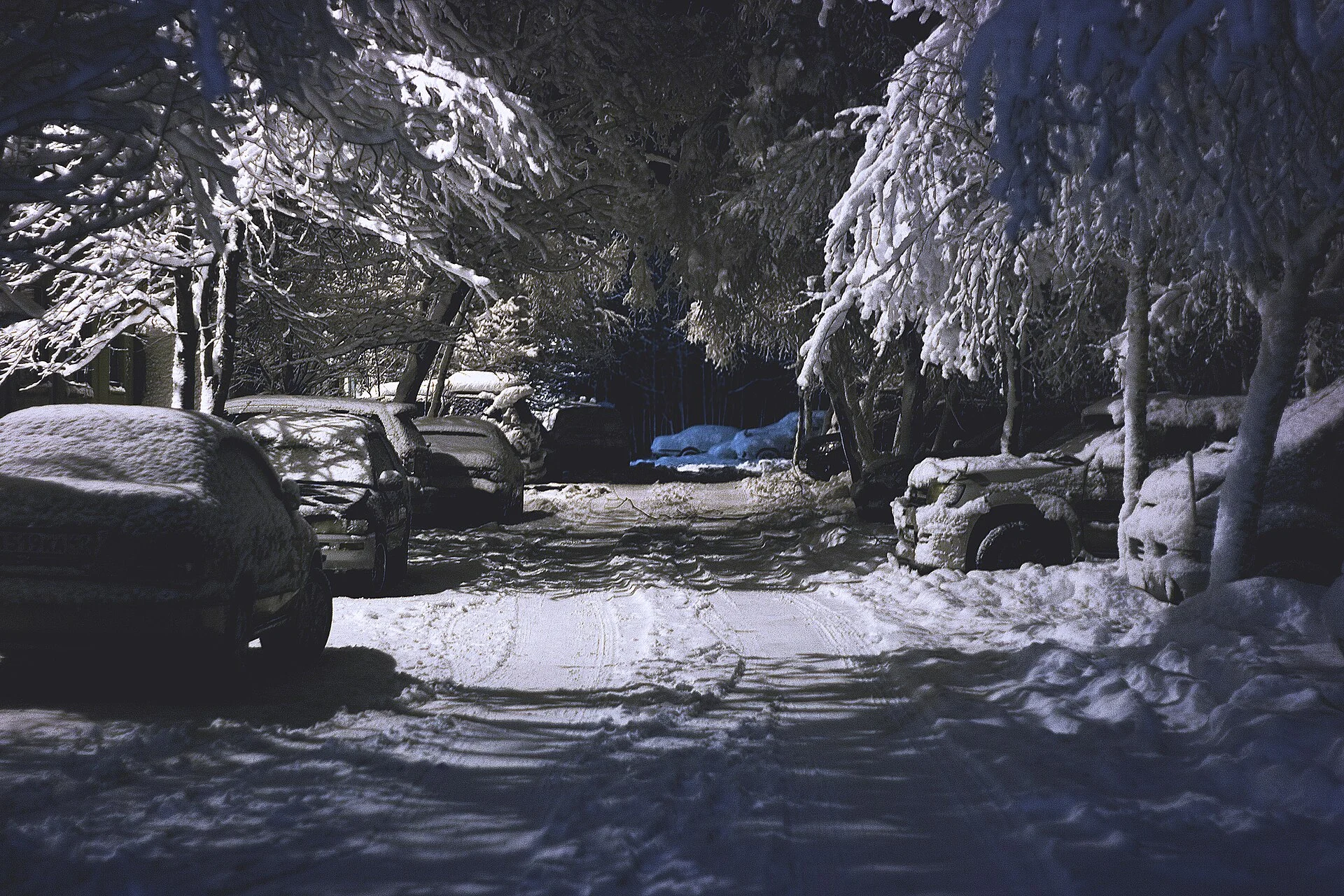
The first dangerous assumption is that being “inside” means being protected. A house keeps you warm because it has insulation in the walls, a sealed envelope, and usually a heat source. A parked car has none of those things. It is a thin steel-and-glass box with effectively zero insulation, and once the engine is off it has no way to make heat. Within an hour or two of parking, the inside of the car settles to almost exactly the outside air temperature. You are, for practical purposes, sleeping outdoors with a roof over your head.
In some ways a car is actually worse than a good tent. Glass is a poor insulator and a large surface area, so the windows bleed heat fast and then drip with condensation as your breath hits the cold surface. The metal floor and body panels conduct warmth straight out of you if you lie directly against them. And the cabin volume is large and full of cold air that your body has to fight all night. The one genuine advantage a car has — and it is real — is that it blocks wind and rain, which matters enormously, as we’ll see.
Why does this matter for “how cold is too cold”? Because it means the number on the dashboard’s outside-temp readout, or tonight’s forecast low, is roughly the temperature you’ll be sleeping in. There is no buffer. If you wouldn’t feel safe camping outside in those conditions with the gear you have, the car doesn’t magically change that math. It removes the wind and the precipitation; it does not heat you. Plan as if you are sleeping outside in still air, because that is almost exactly what you are doing.
What 'too cold' actually means: hypothermia, not a thermometer
“Too cold” is not really a property of the air — it’s a property of your body losing heat faster than it can make it. That state has a name: hypothermia, which clinicians define as a core body temperature falling below about 95 °F (35 °C). Your normal core is around 98.6 °F (37 °C), so hypothermia begins after only a few degrees of core cooling. That is the real danger you are managing — not frostbite on your fingers, but the slow, quiet drop of your internal temperature while you sleep and can’t feel it happening.
The crucial and counterintuitive fact is that hypothermia does not require freezing temperatures. Most accidental hypothermia cases happen in air temperatures between roughly 30 and 50 °F (about −1 to 10 °C), not in deep arctic cold. The reason is that people underestimate cool-but-not-freezing nights, dress lightly, get damp, and lose heat steadily for hours. Add the fact that you are asleep — metabolism low, not shivering effectively, not aware of the warning signs — and a 40 °F night in a thin layer can genuinely cool your core into the danger zone over six or eight unconscious hours.
So when this page asks “how cold is too cold,” the real question is: at what point will your particular setup let your core temperature fall while you sleep? Heat leaves your body four ways — conduction (the cold floor under you), convection (cold air moving past you), radiation (your warmth beaming out toward cold glass), and evaporation (sweat and breath moisture). A safe night is one where your insulation slows all four enough that your own metabolic heat keeps your core steady until morning. Every tip below is really about winning that one balance.
The realistic temperature bands, by how prepared you are
With the physiology in hand, here are honest, real-world bands. These are guidelines, calibrated to a healthy adult in a car that blocks the wind — shift them colder if your gear is excellent and warmer if any risk factor below applies. They describe the outside (and therefore inside) air temperature you’ll sleep in:
- Above ~50 °F (10 °C): generally easy. Almost anyone with a blanket or light bag is fine. Comfort, not safety, is the issue.
- ~35–50 °F (2–10 °C): the underestimated zone. Safe with a real cold-rated bag and insulation under you; genuinely risky with just a couple of blankets and street clothes. This is precisely the band where most accidental hypothermia happens, because it feels harmless.
- ~20–35 °F (−7 to 2 °C): serious cold, doable with real winter gear. You need a bag rated for it, a high-R-value pad off the floor, insulating layers, and covered windows. Without all of that, this is a no.
- Below ~20 °F (−7 °C): expedition territory. Possible only with a genuine cold-weather sleep system and experience. For most people, the honest answer at these temperatures is to find heated indoor shelter instead.
Notice that the bands are about the gap between the cold and your insulation, not the cold alone. A 25 °F night with a 0 °F bag and a good pad is comfortable; a 45 °F night with a single throw blanket on a bare seat can be dangerous. The thermometer sets the difficulty; your sleep system decides whether you’re ready for it. The rest of this page is about closing that gap honestly and knowing when it can’t be closed.
Your sleep system is the single biggest variable
If the bands above are the difficulty setting, your sleep system is the dial that decides whether you can handle it — and it matters more than any other single factor. The centerpiece is a sleeping bag with a real temperature rating, and understanding that rating is the most important skill here. Quality bags are tested to a standard (EN 13537, now ISO 23537) that publishes several numbers, and people routinely buy on the wrong one.
The two numbers that matter are the comfort rating and the limit (sometimes “lower limit”) rating. Comfort is the temperature at which a “cold sleeper” can sleep relaxed; the lower limit is where a “warm sleeper” can sleep curled up but not in distress. There is also an extreme (or “survival”) number, and this one is a trap: it marks the point where the bag merely keeps a person from dying of hypothermia for six hours — not a temperature you sleep at. Buy to the comfort rating for the coldest night you expect, and treat anything near the extreme number as an emergency-only figure, not a plan. Our guide to sleeping-bag temperature ratings walks through reading these labels in detail.
Just as important, and constantly overlooked, is what’s underneath you. Lying on a cold seat or the metal floor wicks heat out of you by conduction faster than the air ever could, and it crushes the insulation of your bag flat exactly where your body weight presses on it. The fix is an insulating pad rated by its R-value — a measure of how well it resists heat flow — with higher numbers for colder ground. For below-freezing nights you want a genuinely high-R-value car-camping sleeping pad or two pads stacked. A warm bag on a cold floor is a half-finished system; the pad is not optional once the temperature drops.
The factors that move your personal line
Two people in identical bags on the same cold night can have completely different experiences, because the safe threshold is personal. These factors shift your line, and most of them shift it toward warmer — meaning you get cold sooner than the gear rating suggests:
- Moisture is the silent multiplier. Wet insulation barely insulates, and water pulls heat from you many times faster than dry air. Damp clothes from the day, sweat from over-bundling, or a bag soaked by the condensation that forms inside a cold car can turn a survivable night into a dangerous one. Sleep dry or don’t sleep cold.
- Wind and a sealed cabin. The car’s big advantage is blocking wind — outdoors, a stiff breeze at 35 °F can feel like the teens. But you still need a sliver of ventilation, which slightly offsets that benefit; never seal yourself in completely.
- Your body and your state. Smaller, leaner, older, or ill people lose heat faster and generate less. Exhaustion blunts shivering. Alcohol is especially dangerous — it dilates your skin’s blood vessels so you feel warm while you actually dump core heat faster, and it dulls the judgment you need to notice trouble. Many cold-weather deaths involve drinking.
- Food and hydration. Your furnace needs fuel. Going to bed having eaten a real meal, and well hydrated, gives your metabolism the calories to keep producing heat all night; an empty tank runs cold.
- Acclimatization and experience. Someone who camps cold regularly reads their own warning signs and manages the margins better than a first-timer. If this is new to you, give yourself a generous safety buffer and don’t test the edge.
Run down this list honestly before any cold night. If several factors point the wrong way — you’re tired, a little damp, skipped dinner, had a drink — subtract ten or fifteen degrees from what your gear could theoretically handle. Stack enough of them and even moderate cold becomes a real risk.
The deadly shortcut: 'I'll just run the heater'
When people realize the car won’t keep them warm on its own, the instinct is obvious: run the engine and the heater for a while, or bring a fuel-burning heater inside. This is the single most dangerous mistake in cold-car sleeping, and it has killed people who were otherwise perfectly prepared. The threat is carbon monoxide — a colorless, odorless gas produced by any combustion engine or flame. You cannot smell it, see it, or feel it, and it makes you sleepy before it makes you dead, so you simply don’t wake up.
Idling the engine to run the heater is risky because exhaust can seep into the cabin, especially if the tailpipe is blocked by snow or the car is in an enclosed space, and because it’s easy to fall asleep with it running. Any flame-based heater — propane, butane, a catalytic unit not designed and rated for unattended indoor use — both consumes the oxygen in a small sealed cabin and produces carbon monoxide. The combination of a tight space, a sleeping person, and combustion is exactly the scenario these accidents share. Before you ever consider any heater, read our piece on whether you can run a portable heater in a car safely — the short version is that the fuel-burning kind is not worth the risk.
The safe ways to add heat don’t burn anything. Battery or 12-volt heated blankets, chemical hand-and-body warmers, and an insulated hot-water bottle in the foot of your bag all add warmth with zero combustion and zero carbon monoxide. If you do briefly run the engine to take the edge off, do it with the car in the open, the exhaust pipe clear, and a window cracked — and turn it off before you sleep, never while you doze. A working carbon-monoxide detector is cheap insurance any time combustion is anywhere near where you sleep.
Warning signs you have crossed your limit
Because you’re asleep, the cold can win quietly — so knowing the warning signs, and acting on them the moment you notice, is what keeps a cold night from becoming an emergency. Early hypothermia is your body still fighting: hard, uncontrollable shivering, cold and pale skin, numb fingers and toes, and a general inability to get warm no matter how you curl up. At this stage you can still fix it — and you should, immediately, rather than telling yourself you’ll tough it out.
The signs that you are in real trouble are more sinister precisely because they feel like the problem is improving. As the core cools further, shivering stops — not because you’ve warmed up but because your body is running out of energy to do it. Mountain rescuers use the memory aid “the −umbles”: stumbles, mumbles, fumbles, and grumbles — clumsy movement, slurred speech, fumbling hands, and confused or irritable thinking. A paradoxical feeling of warmth, or the urge to take clothing off, is a late and very dangerous sign. If you or anyone with you shows these, this is no longer about comfort; it is a medical situation.
Here is the rule that matters most: if you wake up shivering and can’t get warm within a few minutes of adding layers, do not go back to sleep cold. Get the engine running with the cabin ventilated and the exhaust clear and warm the car up while you’re awake, then drive to genuine heated shelter — a 24-hour store, a gas station, a friend’s couch. The mistake that turns discomfort into tragedy is deciding to endure it. Cold that you’re actively losing the fight against is a signal to change the plan, not a test of toughness.
A practical decision framework for tonight
Put it all together into a simple pre-sleep check. Before you settle in on a cold night, run these four steps honestly — they take two minutes and they’re the whole decision:
- Get the real low. Check the overnight forecast low for your exact location, not the daytime high or the “feels like” you noticed at dinner. That low is roughly the temperature you will sleep in.
- Rate your system against it. Is your bag’s comfort rating at or below that low, and do you have real insulation between you and the floor? If yes to both, you’re in good shape for the band. If either is no, you’re relying on luck.
- Subtract for your risk factors. Tired? Damp? Hungry? Had a drink? Older, smaller, or unwell? Each one moves your safe threshold warmer; stack a few and knock 10–15 °F off what the gear could handle.
- Decide — including the option to not. If the math is comfortably in your favor, prep the car (cover the windows, pad the floor, layer up) using our full guide to staying warm sleeping in your car in winter. If it’s marginal, find heated shelter instead.
The framework deliberately makes “don’t” a normal outcome, not a failure. There is no prize for sleeping through a dangerous night in a parking lot when a heated lobby, a cheap motel, or a different parking plan was available. If you sleep in your car regularly, it’s also worth knowing the broader rules — where it’s allowed and how to do it without trouble — in our guide to sleeping in your car safely and legally.
The bottom line: prepare for the night you'll actually have
So how cold is too cold to safely sleep in your car? Too cold is any night where the temperature outruns your insulation — and that can happen at 45 °F with a thin blanket or be perfectly safe at 20 °F with a real winter system. The thermometer alone never answers the question. Your bag’s comfort rating, the insulation under you, your body’s condition, and whether you stay dry are what actually decide it.
If you remember only a few things, make them these. A parked car gives you wind and rain protection and almost nothing else, so plan as if you’re sleeping outside in still air. Hypothermia doesn’t wait for freezing — the 35-to-50-degree “harmless” band is where most cases happen. Build a real sleep system around a comfort-rated bag and an insulating pad, not a survival rating and a bare seat. Never burn fuel for heat in a sealed cabin; carbon monoxide is the quiet killer in these stories. And treat shivering you can’t shake as a signal to get up, warm the car safely, and move to real shelter.
Done right, sleeping in a cold car is a manageable, ordinary thing that plenty of people do safely all winter. The difference between the ones who are fine and the ones who end up in trouble is almost never toughness — it’s honest preparation and a willingness to call it off on the wrong night. Match your plan to the night you’ll actually have, keep the bail-out option on the table, and the cold stays a discomfort instead of a danger.