Does a Tesla Model Y really lie flat for sleeping?
Here is the honest, short answer: a Tesla Model Y folds down to a near-flat sleeping platform, not a perfectly level one. With the second-row seats folded, the cargo floor and the folded seatbacks form a continuous surface that runs roughly six and a half to seven feet from the front seatbacks to the tailgate. That is long enough for most adults to stretch out fully. The catch is in the word near: the folded seatbacks sit at a slight incline and leave a small step and gap where they meet the trunk floor. You feel that seam under your hips if you sleep directly on the bare surface.
So when people ask whether a Model Y is comfortable to sleep in, the truthful version is: the length is genuinely good, the flatness is good-enough rather than mattress-perfect, and the difference between a rough night and a great one is almost entirely down to what you put on top of that surface. A mattress or pad cut to the Model Y footprint fills the incline and the seam, and that single decision is what turns the car from a place you can technically lie down into a place you can actually rest.
It is worth being clear about what this page is and is not. This is not a hands-on test report — the measurements and behavior described here come from Tesla's published cargo specifications and from how the seat-fold mechanism is documented to work, not from a claim that anyone spent a week sleeping in the back. The point is to give you an accurate mental model of the space so you can plan a comfortable setup before you ever fold a seat down. Comfort in a Model Y is highly predictable once you understand the geometry; it is the people who treat the car as a flat bed and toss a sleeping bag in the back who end up disappointed.
The rest of this guide walks through the published interior dimensions, exactly how the fold creates that incline, how to size a mattress, how Camp Mode keeps the climate comfortable while you sleep, how to manage condensation and ventilation, and the comfort tweaks that matter most for one person versus two, and for taller occupants. None of this requires exotic gear — it requires understanding the space and padding it correctly. Get those fundamentals right and the Model Y becomes one of the more pleasant vehicles to sleep in, precisely because its long, low load floor and its strong climate system play to the things that matter most for rest.
The usable sleeping length and width, by the numbers
Comfort starts with whether your body fits, so it helps to work from the published interior figures rather than guesswork. Tesla lists the Model Y's maximum cargo volume with the rear seats folded at roughly 76 cubic feet, and owner measurements of the seats-down load floor consistently land in a similar range. The numbers that actually matter for sleeping are length, shoulder width, and the narrow pinch point between the rear wheel wells.
Working from Tesla's published cargo dimensions and widely-reported owner measurements, a realistic picture looks like this:
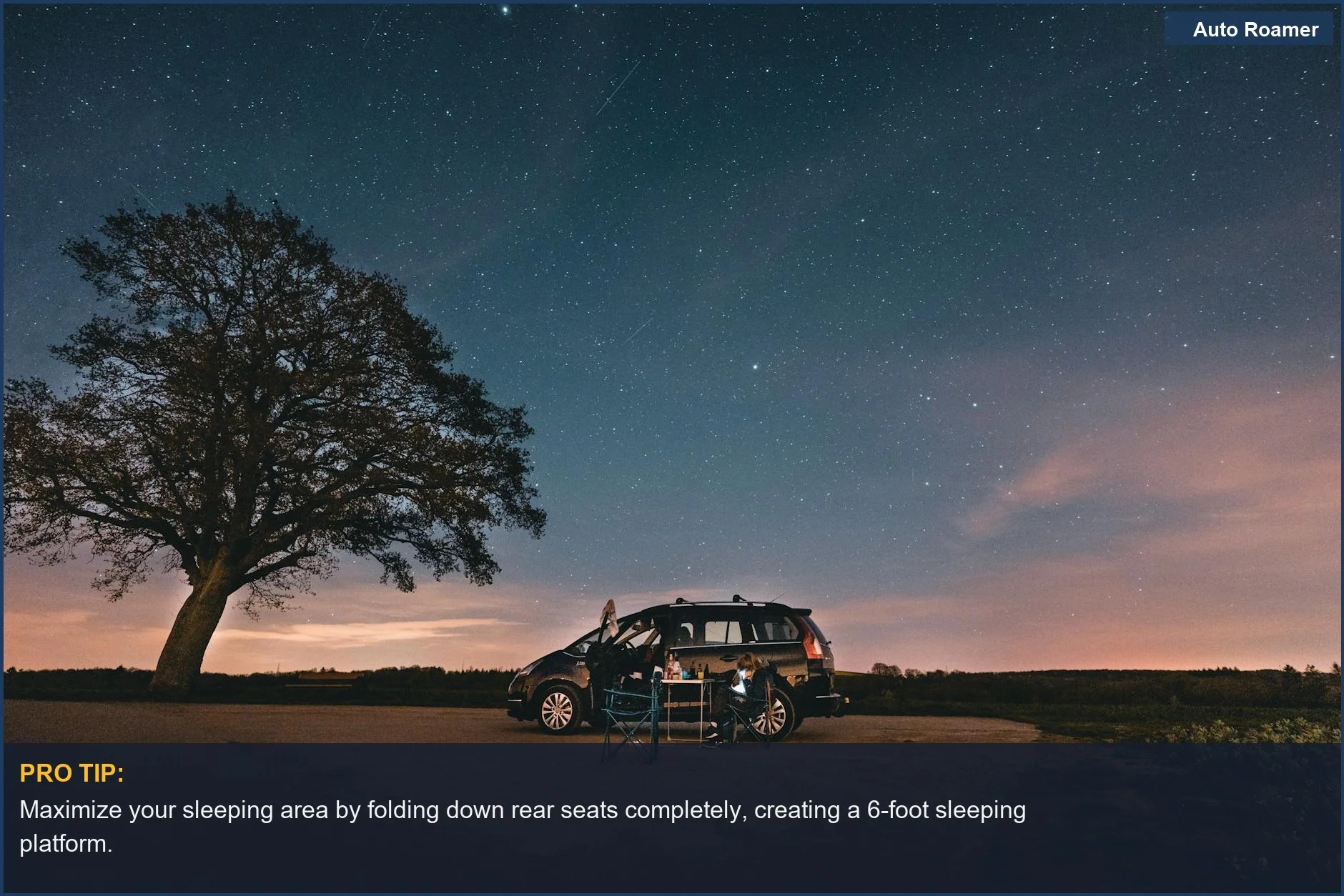
- Usable length: about 76 to 84 inches (roughly 6.3 to 7 feet) from the back of the front seats to the closed tailgate, depending on how far forward you slide the front seats.
- Width at the shoulders: around 50 inches across the widest part of the folded area — enough for one person with room to spare, or two people sleeping close.
- Width between the wheel wells: the pinch point narrows to roughly 40 to 42 inches, which is the figure that really decides how two people fit and which mattress sizes will sit flat.
The practical takeaway from those figures: a single adult up to about six feet has a comfortable, full-length bed. The 50-inch shoulder width is the headline, but the 40-to-42-inch wheel-well pinch is the number to design around, because a mattress wider than that will either ride up the wheel wells or refuse to lie flat. Always confirm the current figures for your exact model year and configuration on Tesla's official Model Y page before you buy anything — specs shift between refreshes, and a mattress is only as good as the measurements you cut it to.
One detail that surprises first-timers: the figures above assume the front seats are slid forward. If you are tall and need every inch of length, moving the front seats all the way forward and reclining their backrests slightly can reclaim several inches and stop your feet from jamming against the tailgate.
It also helps to think about the space in three zones rather than as one rectangle. The rear cargo well behind the wheel wells is the deepest, flattest part of the floor and the most level place to sleep. The wheel-well section in the middle is where the surface narrows to that 40-to-42-inch pinch. The folded seatback section nearest the front is the inclined zone. Knowing which zone your torso, hips and legs land in tells you exactly where to add padding: most people want the thickest support under the hips, right at the seatback-to-trunk seam, because that is where the body sinks and the surface changes height. Measuring your own car with a tape before you shop beats trusting any single published number, because trim, model year and seat configuration all nudge the figures.
The flat-fold reality: the incline and the gap explained
This is the part most listings skip, and it is the single biggest factor in whether you wake up refreshed or sore. When you fold the Model Y's 60/40 or 40/20/40 rear seats, the seatbacks rotate forward and down, but they do not drop to the exact same plane as the rear cargo floor. The result is a sleeping surface that is mostly flat with two specific imperfections:
- A slight incline along the folded seatbacks, so the surface tilts gently toward the front of the car rather than sitting perfectly level.
- A seam and small step where the bottom edge of the folded seatbacks meets the raised rear cargo floor — right around the hip and lower-back zone for most sleepers.
The Model Y does not give you a flat bed; it gives you a flat-enough platform with a predictable incline and a predictable seam. Once you know exactly where those two imperfections are, fixing them is simple — you fill the seam and level the incline with the right padding.
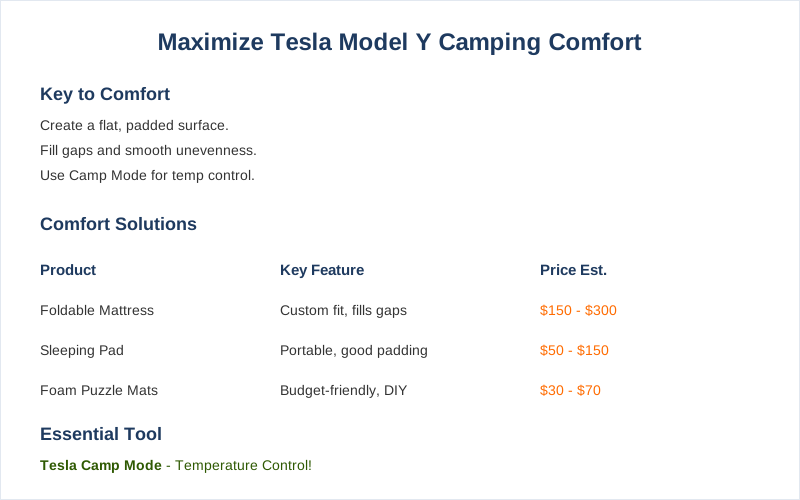
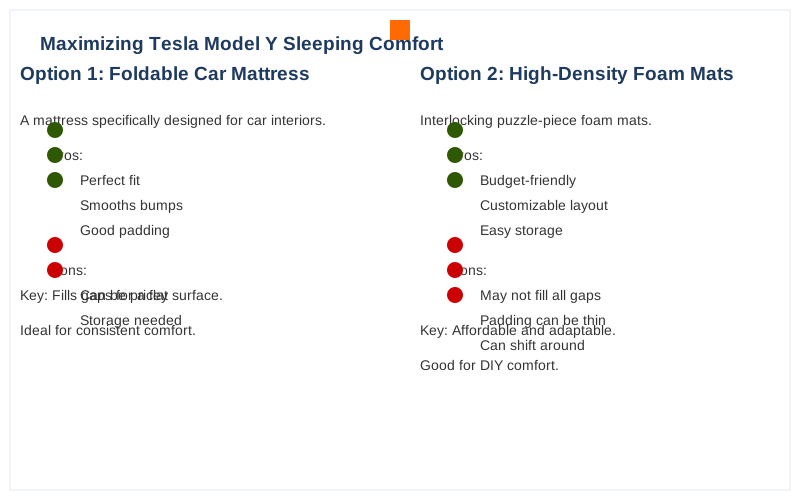
There are two reliable ways to handle the incline and the seam. The first is a Model-Y-specific mattress whose foam is shaped (or simply thick enough) to bridge the step and even out the tilt. The second is a layered approach: a base layer of firm foam or a folded pad to fill the lower trunk-floor dip, then a softer top layer across the whole platform. Either way, the goal is the same — a continuous, level surface with no ridge under your spine. Parking on level ground helps too, because the car's own incline stacks on top of the seatback incline if you are nose-down on a slope.
If you want to see how this surface fits into a full overnight setup — mattress, shades, power and storage together — the broader Model Y camping guide covers the whole picture; this page stays focused on the sleeping surface and comfort.
Sizing a mattress that actually fits the Model Y
Because of the wheel-well pinch, standard mattress sizes are a poor match for the Model Y. A standard twin is about 38 inches wide and a full is about 54 inches — the twin wastes width at the shoulders while a full is too wide to sit flat between the wheel wells. That mismatch is exactly why purpose-built, Model-Y-shaped mattresses exist, and why they are usually worth the extra cost over a generic air mattress.
When you are sizing a sleeping surface, work to these targets:
- Width: aim for something that fits the roughly 40-to-42-inch wheel-well pinch so the mattress lies flat instead of curling up the sides.
- Length: match the 76-to-84-inch usable length; a mattress that runs the full platform also helps bridge the seatback-to-trunk seam.
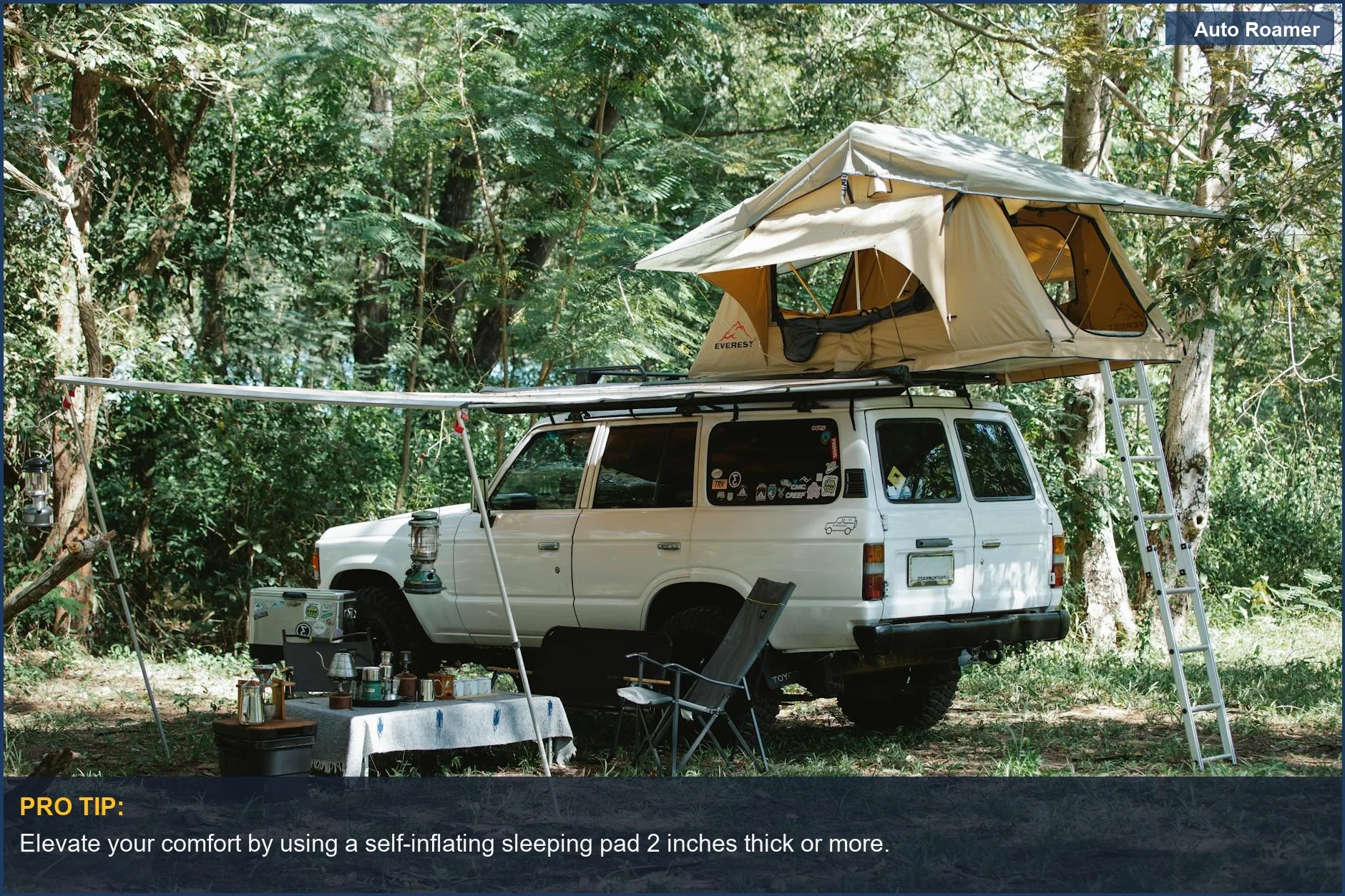
- Thickness: two to four inches of supportive foam is the sweet spot — enough to hide the seam and incline, not so much that it eats your sitting-up headroom.
- Type: firm foam or a self-inflating pad holds a level surface better than a tall air mattress, which tends to amplify the incline and the wheel-well shape.
A common, honest trade-off: a tall air mattress feels plush in the showroom but follows the contour of the car, so the incline and the wheel wells telegraph straight through it. A firmer, lower-profile foam pad cut to the Model Y footprint feels less luxurious to the hand but sleeps far flatter, which is what your back cares about at 3 a.m. If you only change one thing about a bare-surface setup, change this.
There is also a budget path that works surprisingly well. Instead of a single purpose-cut mattress, some owners build a level surface from two layers: interlocking foam floor tiles or a folded closed-cell pad to fill the lower trunk well and bridge the seam, topped with a self-inflating sleeping pad across the whole platform. The advantage is flexibility — you can add a tile exactly where the dip is — and the layers pack down small. The disadvantage is fiddliness: you are assembling a bed each night rather than rolling one out. Whichever route you choose, the test is the same. Lie down on it, in the dark, on level ground, and notice whether you can feel the seam under your hips or the tilt under your shoulders. If you can, add padding there until you cannot. That five-minute check at home is worth more than any spec sheet.
This guide intentionally keeps no product list of its own — for vetted mattresses, shades and the rest of an overnight kit, see the companion roundup of the best Tesla Model Y camping accessories, which covers specific gear options in depth.
Camp Mode: keeping the climate comfortable while you sleep
A flat surface solves the body; Camp Mode solves the air. Camp Mode is Tesla's built-in feature for staying parked overnight: it keeps the climate control running so the cabin holds your set temperature, keeps interior lighting and the touchscreen available, and leaves USB power live — all without the car shifting out of park or shutting down to sleep. For sleeping comfort specifically, this is the difference between a stable, breathable cabin and a stuffy, fogged-up one.
The reason climate control matters so much in a sealed car is twofold. First, temperature: without it, the cabin tracks the outside air and you wake up either sweating or shivering. Second, moisture: two people breathing in a closed car put out a surprising amount of water vapor overnight, and Camp Mode's airflow keeps that from condensing on the glass and the bedding. Set the temperature a touch cooler than you would at home — a warm sleeping bag plus a cool cabin beats a hot, humid one — and aim the vents so air circulates rather than blowing directly on your face.
The honest cost of that comfort is battery. Climate control runs off the traction battery all night, and how much it uses depends heavily on how cold or hot it is outside. Planning around that drain — how many percent per hour to expect, and how to make a charge last until morning — is its own subject, covered in detail in the companion piece on Model Y Camp Mode battery drain per hour. The short version for comfort planning: start the night with plenty of charge, park somewhere you can recharge if needed, and treat Camp Mode as a comfort budget you spend deliberately, not an unlimited resource.
A few Camp Mode habits pay off specifically for sleep quality. Set the temperature before you lie down, bringing the cabin to a comfortable level first so the system is holding a temperature rather than chasing one while you try to fall asleep. Mind the touchscreen, which stays on in Camp Mode — dim it or point it away so it does not light the cabin. And keep a charge buffer: decide a percentage you will not drop below overnight so a cold night cannot strand you, using the companion battery guide's realistic per-hour figures to plan that buffer around.
The reassuring part is that the Model Y's climate system is genuinely capable, so once you have accepted the battery trade-off, you get hotel-like temperature control in a tent-sized space — something traditional car camping simply cannot match. That climate advantage, more than anything, is why an electric SUV makes such a comfortable bedroom.
Condensation and ventilation: the comfort detail people miss
Even with Camp Mode running, condensation is the quiet enemy of a comfortable night in any vehicle, and the Model Y's large glass roof makes it especially visible. The physics are simple: warm, moisture-laden air from your breath hits cold glass and turns to water. Wake up to dripping windows and clammy bedding and it will not matter how flat your mattress is — the night feels miserable.
A few habits keep the cabin dry and the air fresh without sacrificing warmth. Keep air moving, because Camp Mode's fan is doing real work here; do not fight it by sealing every gap, since gentle circulation is what stops moisture from settling on the glass. Crack a window slightly when the weather allows, even a quarter inch, to give humid air somewhere to go — a small rain-safe vent gap makes a big difference for two occupants. Manage the panoramic glass roof, which is a large cold surface: a fitted shade over it both blocks morning light and cuts the cold-glass area where moisture loves to collect. And keep wet gear out of the sleeping area, since damp jackets and boots dumped next to the bed evaporate moisture into the cabin all night; stash them in the frunk or footwells instead.
None of these are gadgets; they are habits. Get ventilation right and the cabin stays breathable, the glass stays clear, and the mattress you carefully sized actually delivers the comfortable night it is capable of.
Comfort tips that turn good-enough into genuinely restful
Once the surface is flat and the climate is handled, a handful of small adjustments make the gap between car-camping and home-bed comfort shrink dramatically. These are the things experienced owners do almost reflexively, and they cost little or nothing:
- Level the car first. Park on the flattest ground you can find, and if you are slightly nose-down, point the car so your head ends up uphill rather than downhill. Even a small slope is noticeable when you are lying on the incline of the folded seatbacks.
- Layer your bedding. A base pad or mattress, then a fitted sheet, then a warm sleeping bag or duvet. The fitted sheet alone makes the space feel far more like a bed and keeps the mattress from feeling clinical.
- Bring real pillows. The single cheapest comfort upgrade. A proper pillow from home does more for sleep quality than almost any piece of dedicated gear.
- Block light fully. A complete set of window shades, including the glass roof, keeps headlights and dawn out and adds a layer of privacy that helps you actually relax.
- Pre-warm or pre-cool the cabin before you settle in, so Camp Mode is maintaining a comfortable temperature rather than fighting to reach it after you are already in bed.
Stack these together and the result is a sleeping setup that feels intentional rather than improvised. The car will never be a king-size bed, but a flat, padded, dark, climate-controlled, slightly-uphill cabin with your own pillow is a genuinely good place to spend the night — and a far cry from shivering on a bare folded seat.
Solo versus two people, and what changes for taller occupants
Who is sleeping in the car changes the comfort math more than any single piece of gear. The Model Y's footprint is generous for one and workable for two, but the strategy differs in each case.
One person has it easy. The roughly 50-inch shoulder width means a single sleeper can lie centered, well clear of the wheel wells, with room to shift positions. You can run a slightly wider, more generous mattress and still keep it flat, and you have spare width to stage gear beside you. For solo car camping, the Model Y is close to ideal — the length is the only thing very tall people need to think about.
Two people have to respect the wheel-well pinch. With both sleepers across the platform, the usable shared width is closer to that 40-to-42-inch pinch than the 50-inch maximum, so a couple sleeps cozy — comfortable, but not spacious. A mattress cut to the wheel-well width keeps both people on a flat surface; anything wider leaves one person riding up a wheel well. Coordinating turn-over and keeping bulky gear out of the cabin (in the frunk or trunk well) buys back precious space.
Taller occupants — say six feet and up — should focus on length. The published usable length covers most people, but reaching the upper end of that range means sliding the front seats fully forward and possibly reclining their backrests a little to open up foot room. Sleeping with your head toward the tailgate and feet toward the front can also help, since the footwell area gives long legs somewhere to go. The honest bottom line: the Model Y comfortably sleeps one adult of almost any height and two average-sized adults who do not mind sleeping close — and with a correctly sized mattress, Camp Mode, good ventilation and your own pillow, both of those are genuinely restful, not just survivable.