
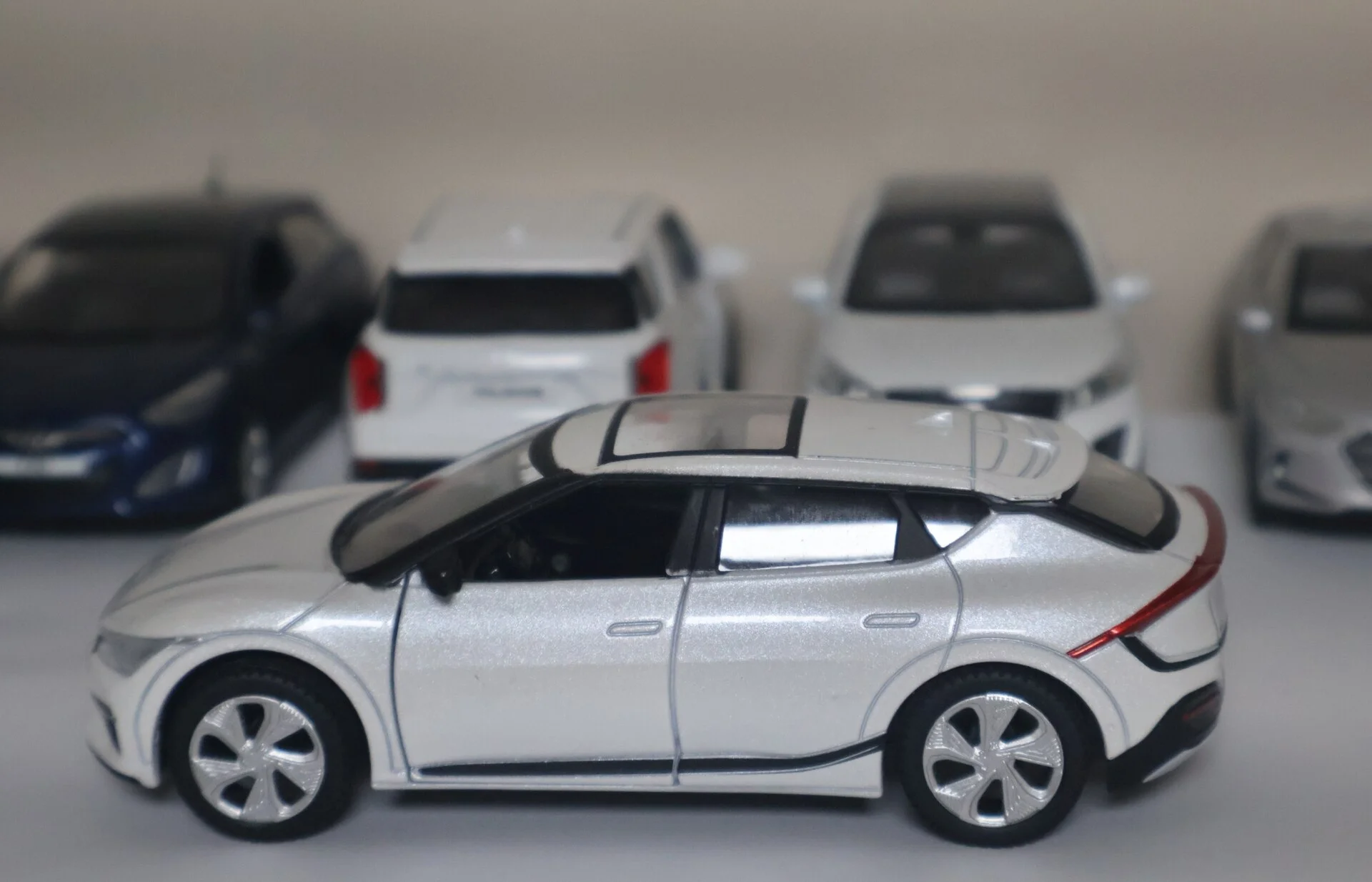
Does the Kia EV6 have a camping mode?
If you typed “Kia EV6 camping mode” into a search bar, you're really asking two things at once: can I keep the cabin comfortable while I sleep in the back, and can I run my gear off the car? The honest answer is yes to both — but the EV6 has no button or screen labeled “Camping Mode” or “Camp Mode.” That name belongs to Tesla. What Kia gives you instead is two real, documented features that together do exactly the same job: Utility Mode, which keeps climate, lights and accessories running off the big traction battery while you're parked, and V2L (Vehicle-to-Load), which turns the car into a rolling power station rated up to about 3.6 kW.
That terminology gap is the whole reason this page exists. Owners search “camping mode,” Kia's owner's manual says “Utility Mode,” and almost nobody connects the two with real numbers. So here's the connection, built entirely on Kia's published specs, the EV6 owner's manual, and aggregated owner reports — not a test I'm pretending I ran. Unlike Kia's brand-new PV5 van, the EV6 has been on US roads since 2022, so the feature set is settled and well documented; where a number depends on your trim, weather or model year, I'll say so. If you want the broader sleep-and-setup picture rather than the feature itself, our Kia EV6 camping guide covers cargo dimensions and bed layouts.
Utility Mode vs. V2L: the two halves of the EV6's “camping mode”
The single most useful thing to understand is that “EV6 camping mode” is really two separate systems, and they solve two different problems:
- Utility Mode — the climate-and-cabin half. With the car in READY and parked in P, it runs the heater, air conditioning, audio and interior lights for hours off the high-voltage traction pack instead of draining the little 12-volt battery flat. It's the EV equivalent of idling a gas car for warmth — except there's no engine, no exhaust, and no carbon-monoxide risk, which is what makes sleeping inside an EV genuinely safe in a way it never is in a combustion car.
- V2L — the power-export half. The EV6 carries a built-in 3.6 kW inverter and a household-style outlet under the rear seat (plus an exterior outlet via the charge-port adapter), so you can plug in a fridge, a fan, a kettle, lights or a laptop straight off the car battery.
Together, Utility Mode keeps you comfortable and V2L keeps your gear running — and that combination is functionally identical to what Tesla markets as Camp Mode. For the heavier draws, a small portable power station charged off V2L during the day lets the car sleep at night while the battery box runs the fridge.
How much battery does Utility Mode actually use overnight?
This is the question every “camping mode” search is really chasing, and the honest version of the answer is a range, not one number. Here's the math, grounded in the EV6's published capacity.
The current EV6 Long Range carries about 84 kWh nominal / 80 kWh usable (earlier 2022-2024 cars used a 77.4 kWh pack, roughly 74 kWh usable), per EV-Database. That is a big tank. The overnight cost depends almost entirely on climate load:
A mild night — 50–65°F, fan and a little ventilation, maybe a phone and a light on V2L — pulls only a few hundred watt-hours an hour. Over a full night you're often looking at low single-digit percentage points of the pack. A cold night with the heater on is the expensive case: an EV's resistive/heat-pump climate system can draw anywhere from several hundred watts to well over a kilowatt to hold a comfortable cabin, so owners typically budget 5–10% of the pack per night for winter heat. A hot night running the A/C lands in between, depending on how hard the compressor cycles.
Put that against 80 kWh and the picture is reassuring: even a demanding cold night at ~10% leaves you with the overwhelming majority of your range intact. The EV6's real camping limit is almost never “the battery ran out overnight” — it's making sure you keep enough charge to drive home the next day, which is a planning problem, not a hardware one.
It helps to compare the EV6 to a gas car you might have idled for warmth. A gas engine burns roughly a third to half a gallon an hour just to keep the cabin warm at idle, and it does it while pumping out exhaust you should never sleep next to. The EV6 spends a slice of a battery you can recharge at any plug, silently, with no fumes — the same comfort with none of the danger and a fraction of the waste. That's the quiet revolution behind “EV camping mode”: the feature isn't new, but doing it safely overnight, in a sealed cabin, finally is.
How to turn on Utility Mode and V2L on the Kia EV6
Both features are simple once you know where they live. Here is the documented sequence from the owner's manual — do these before you settle in for the night, not at 2 a.m. in the cold.
Utility Mode (cabin power off the big battery): put the car in READY and shift to P, then on the infotainment screen go to EV → EV Setting → Utility mode → Activate utility mode. With it on, you can run the audio, lights, climate and accessories for long stretches; the car cannot be driven while Utility Mode is active, which is exactly the point. Set your climate temperature and fan before you lie down so you're not fishing for the screen later.
V2L (power your gear): the interior outlet sits at the bottom of the rear seat — with the car in the ON/READY position, unlock its cover and plug in like a wall socket. For higher-draw or outdoor use, the V2L adapter plugs into the charge port and gives you a standard outlet outside the car; connect it, press the connector switch, and confirm the indicator light is on. A short outdoor extension cord from that outlet keeps a fridge or 12V cooler outside the sleeping area. One owner habit worth copying: set your battery discharge floor in the EV menu before you start, so V2L stops on its own before it eats your drive-home range.
The battery floor: how the EV6 keeps you from getting stranded
The fear behind every camping-mode search is waking up to a dead car miles from a charger. The EV6 has two layers of protection against exactly that, and understanding them is what turns nervous first-timers into relaxed ones:
- The BMS hardware backstop. The battery management system won't let Utility Mode or V2L drain the pack to zero. Hyundai-Kia EVs reserve a protective buffer and shut accessory and V2L draw down automatically once the state of charge falls to a low threshold — owners commonly see this kick in around the 10–20% range. It's not something you have to babysit.
- Your own discharge floor. More useful day to day, the EV menu lets you cap how low V2L is allowed to take the battery, so the system stops well before that BMS cutoff. The practical advice from owners is to leave a real drive-home margin — commonly 20–30% — above whatever the nearest charger requires.
Set that floor once at the start of the night and the “will it strand me” question answers itself. The only way an EV6 leaves you stuck is if you ignore both layers and park far from any charging at all.
Before you park: a checklist to estimate your EV6 night
You don't need an exact drain figure — you need a quick estimate that errs on the safe side. Run this checklist before you settle in, and the overnight math stops being scary:
- Check your real starting charge and your exit distance. Note the miles to the nearest charger you'd actually use in the morning, and how much charge that drive needs. That number plus a cushion is your floor.
- Pick your climate plan. Mild night: plan on a few percent. Cold night with the heater: budget 5–10%. Hot night with A/C: somewhere in between. Round up, never down.
- List your V2L loads and stage them. A fridge, a USB fan and lights are trivial; a kettle, heater or induction burner are big draws — run those one at a time and stay under the ~3.6 kW V2L ceiling.
- Set the discharge floor in the EV menu. Cap V2L above your drive-home margin so the car protects itself.
- Pre-condition while you still have shore power or daylight. Warm or cool the cabin before bed so Utility Mode only has to hold temperature, not fight to reach it — holding costs a fraction of heating from cold.
Do these five things and a night in the EV6 is a percentage you chose, not a gamble you took.
The gear that makes the EV6's battery last the night
The EV6 has plenty of energy; the trick to camping comfortably is spending it wisely so the car can sleep while small, efficient gear does the work. A short kit does most of the heavy lifting:
- A 12V compressor fridge on its own battery box. A compressor fridge is the best companion to V2L: charge a portable power station off the car during the day, then let that battery box run the fridge overnight so the EV6 itself draws almost nothing while you sleep.
- A 12V heated blanket instead of the cabin heater. A heated blanket sips a fraction of what the climate system pulls — the highest-leverage cold-weather buy there is.
- A rechargeable fan for air and condensation. A small fan keeps air moving and fights the condensation two people's breath builds up in a sealed cabin — our notes on controlling condensation matter as much in an EV as a gas car.
- Window shades and a real sleeping pad. Window shades add privacy and insulation, and a proper sleeping pad levels the folded rear seats.
None of this is exotic; it's the same kit that makes any car comfortable, tuned to let the EV6's big battery coast.
Real-world nights: a trailhead, a cold snap, and a tailgate
Numbers land better as scenes. Here are three honest sketches of what the EV6's Utility-Mode-plus-V2L “camping mode” looks like in practice, drawn from owner reports and the energy math above — directional, not a stopwatch test.
A mild night at a trailhead. You pull in with 70% charge, fold the seats, and run Utility Mode with the fan and a light, plus a fridge on a power station off V2L. By morning you've spent maybe a few percent of the pack — you wake up with range to spare and drive to the trail without a second thought. This is the easy case, and it's most nights.
A cold snap with the heater on. Now it's 28°F and you want the cabin warm. You pre-warm on shore power, set the discharge floor at 30%, and let Utility Mode hold heat overnight. You spend closer to 8–10% — a real cost, but against 80 kWh you've still got the vast majority of your battery and an easy drive to a charger. A 12V heated blanket would've cut even that.
A tailgate or power-out at home. Here the EV6 shines as a generator rather than a bedroom: V2L runs a coffee maker, a kettle and a couple of phones through the afternoon, well under the 3.6 kW ceiling, while the car stays parked. Owners regularly use this to keep a fridge running through a grid outage. Same two features, completely different job — that's the point.
The myth of the one exact “EV6 camp mode drain” number
Search results love to promise a single figure — “the EV6 uses X% per hour in camp mode.” Be skeptical of any page that gives you one. There isn't one, and a page that pretends otherwise is guessing.
Overnight draw swings with outside temperature, your target cabin temperature, whether you pre-conditioned, heat-pump versus resistive heating behaviour, humidity, how much you open the doors, and exactly what's plugged into V2L. The same car on the same setting can spend 2% on a mild night and 10% in a hard freeze. A “0.8 kWh per hour” claim might be true for one specific night and badly wrong for yours.
So plan with a range and a floor, the way this whole page has: budget a few percent for mild, 5–10% for cold, set your discharge floor above your drive-home margin, and let the BMS backstop catch the rest. That approach is right every night. A single magic number is wrong most nights — including, probably, the one you're packing for.
Is overnight camping bad for the EV6's battery?
A fair worry: does running Utility Mode and V2L overnight, night after night, hurt the EV6's expensive traction pack? The short, evidence-based answer is no — not in any way you'd notice.
Lithium packs age fastest when kept at very high states of charge in heat, or deeply discharged repeatedly. Normal camping does neither. Cycling the battery through its healthy middle band — say running it from 70% down to 40% over a weekend — is exactly the kind of moderate use these packs are engineered for, and the BMS's protective low-charge cutoff keeps you out of the harmful deep-discharge zone automatically. The EV6 comes with a long battery warranty precisely because Kia expects the pack to be used.
The only habit worth avoiding is leaving the car sitting at a very low charge for days after a trip — recharge to a normal level reasonably soon. Beyond that, using your EV6 as a camper is well within what the battery is built to do. The feature exists to be used; using it is not abuse.
It's worth naming the contrast with the 12-volt habit some campers carry over from gas cars: running accessories straight off the small auxiliary battery will flatten it and can leave you unable to even start the car. Utility Mode exists precisely so you don't do that — it pulls from the big traction pack instead, the one with eighty kilowatt-hours and a management system watching over it. So the counterintuitive truth is that using the EV6's proper camping features is gentler on the car than the old trick of leaving the radio and a light on, not harsher.
A night in the Kia EV6, start to morning
Stitch it together and a night looks like this. You arrive at the spot with a comfortable charge, back in, and fold the rear seats roughly flat — the EV6's sloping roofline means you'll want a good pad to even out the floor, and a six-footer sleeps diagonally. While there's still daylight you pre-cool or pre-warm the cabin and top off your power station off V2L.
As the light goes, you put up window shades, set the climate, and switch on Utility Mode (EV → EV Setting → Utility mode) so the cabin holds temperature off the big battery with no engine and no fumes. The fridge hums along on its battery box; a fan keeps the air fresh and the windows clear. You've set your discharge floor, so the car will protect its own range no matter what.
In the morning the screen shows you spent the percentage you planned for — a few points on a mild night, under ten on a cold one. You brew coffee off V2L, fold the seats back up, and drive off with range to spare. That, with no button called “camping mode” anywhere on it, is the EV6 doing exactly what the search term hoped it would.
The verdict: the EV6's “camping mode” is two tools, used together
The Kia EV6 has no feature literally named “camping mode” — it has Utility Mode (cabin climate off the traction battery while parked) and V2L (up to ~3.6 kW of power export), and together they do the same job as Tesla's Camp Mode, on a car that's been proven on US roads since 2022.
If you remember three things, you're set. One: turn on Utility Mode with EV → EV Setting → Utility mode (READY, in P) for safe, engine-free overnight climate, and use the under-seat or adapter outlet for V2L. Two: plan overnight draw as a range — a few percent mild, 5–10% for cold-weather heat — against the EV6's roughly 80 kWh usable, which makes a stranded battery a planning failure, not a hardware limit. Three: set your own discharge floor above your drive-home margin and let the BMS backstop the rest.
Do that and the EV6 is one of the most genuinely capable “camping mode” vehicles you can buy, no badge required. For the full sleeping and cargo picture, pair this with our Kia EV6 camping guide; for the feature on Kia's other electrics, see our EV9 and PV5 camping-mode write-ups. Everything here is built on Kia's published specs, the owner's manual and aggregated owner reports — not a test I'm pretending I ran — so treat the menu paths and capacities as the hard facts and the overnight percentages as the well-grounded ranges they are. The badge on the screen doesn't matter; what matters is that the car you already own can keep you warm, powered and safe through a night outdoors, and now you know exactly which two buttons make it happen.