The Big Picture
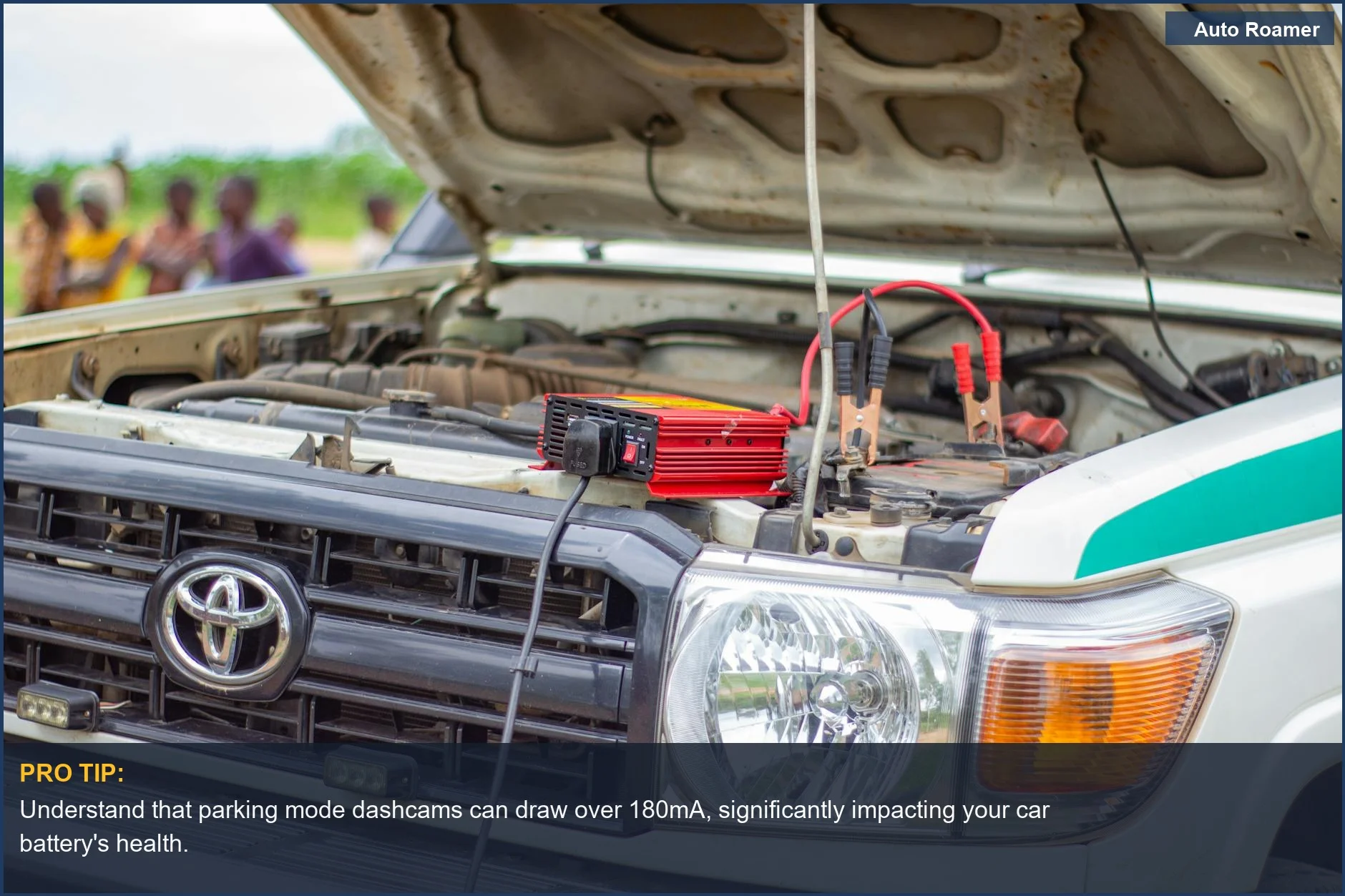
I've seen too many dead batteries from a cheap dashcam pulling 150mA overnight. You're car camping, not running a surveillance state. A standard 60Ah lead-acid battery has roughly 720 Watt-hours. Pulling 150mA (about 1.8W at 12V) means you're draining 43.2 Watt-hours per day. That's a 6% daily drain. In a week, you're looking at a 42% discharge. Add in parasitic draw from the vehicle's own systems and you're stranded. Redtiger explains why this matters.
The Short Answer
Dashcams, particularly those with 'parking mode' or 'motion detection,' are designed to draw constant current from your 12V system. They're not magic devices that run on wishes. They need power to keep their CPU, image sensor, and memory active. This is a continuous load, even when the engine is off. This YouTube video explains the load.
Most modern vehicles have a baseline parasitic draw from their Body Control Modules (BCM), alarm systems, and various ECUs. This is typically under 50mA. Add a dashcam pulling another 100-300mA for parking mode, and your total quiescent current skyrockets. A 200mA draw on a 60Ah battery means it's theoretically dead in 12.5 days from 100% to 0%. Realistically, a lead-acid battery is effectively dead below 50% charge. So, six days. Congratulations.
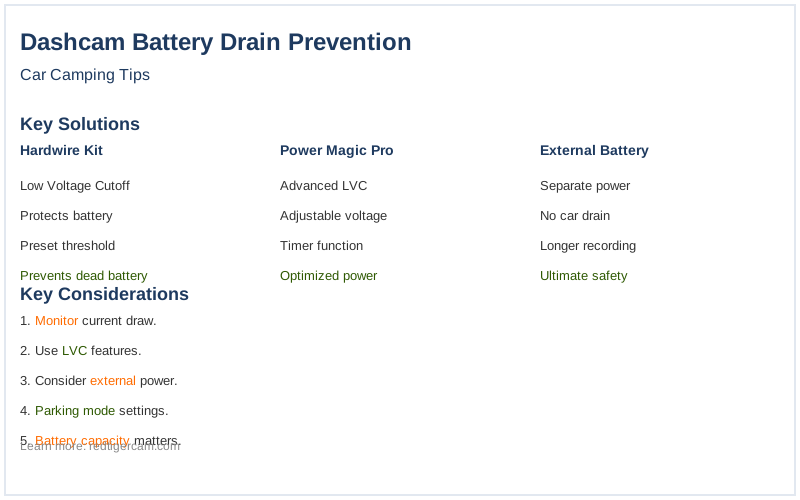
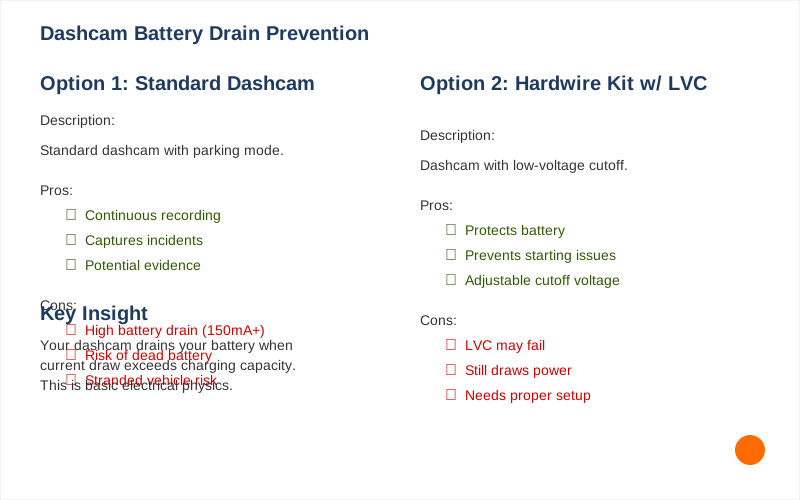
Hardwire kits often include a low-voltage cutoff (LVC) feature. This is supposed to protect your battery by shutting off the dashcam when the voltage drops below a preset threshold, typically 12.0V or 11.8V. The idea is to leave enough juice to start your engine. Brilliant engineering, right?
However, these LVCs are not foolproof. They measure voltage, not actual state of charge. A cold battery, even fully charged, will show a lower voltage under load. A battery with degraded internal resistance will sag faster. So, your LVC could prematurely cut power or, worse, fail to cut power if the voltage sensor drifts or the relay contacts weld. Reddit users discuss LVC reliability.
Thermal cycling also plays a huge role. Components like power regulators and capacitors inside the dashcam are constantly heating and cooling. This thermal expansion and contraction can lead to micro-fractures in solder joints over time, increasing resistance and potentially causing intermittent power draw spikes. This isn't just about 'experience'; it's about material fatigue and circuit integrity. The adhesive bond on mounting brackets can also fail around 140 degrees F, leaving your camera dangling. Autoroamer notes thermal cycling issues.
When car camping, your vehicle might sit for days without the engine running. This extended idle time removes the alternator's charging current, turning your dashcam into a pure discharge load. Every mA counts when you're off-grid. A minor vibration from a passing animal could trigger motion detection, waking the camera and increasing current draw for minutes at a time. This is why understanding the true current draw is critical.
The Reality Check
The 'premium vehicle integration' you pay for at the dealer often means they route a cable and stick a camera to your windshield, charging $280 for a $75 camera. Autoroamer breaks down the dealer markup. It's a simple electrical load, but the nuances of your car's specific systems matter.
Vehicle battery chemistry and capacity vary wildly. A compact car with a 45Ah battery will discharge much faster than a full-size truck with an 80Ah battery, assuming identical dashcam current draw. Engine starting requirements also differ; a small 4-cylinder needs less cranking amps than a large V8, meaning its battery can tolerate a lower state of charge before failing to start.
Modern vehicles, especially those with push-button start and complex infotainment systems, have significantly higher baseline parasitic draws than older models. The Body Control Module (BCM) in a 2020 Subaru Ascent, for instance, might pull 40mA just to maintain security and keyfob recognition. Add a dashcam on top of that, and your effective battery life plummets. Subaru owners discuss dashcam impact.
Some dashcams feature 'power saving modes' or 'geofence parking control' to mitigate drain. These modes reduce the frame rate or disable recording entirely when the vehicle is in a known safe zone. This is a software solution to a hardware problem, but it helps. Safe Drive Solutions explains geofence control.
Here's how some common components can fail under continuous dashcam load:
| Component | How It Fails | Symptoms | Fix Cost |
| Vehicle Battery | Sulfation due to deep discharge, grid corrosion from thermal cycling. | Slow cranking, no start, low voltage (below 12.0V). | $150 - $300 |
| Dashcam LVC Module | Relay contact pitting, voltage sensor drift, thermal fatigue of components. | Intermittent power loss, false cutoffs, or no cutoff at all. | $30 - $80 (for new hardwire kit) |
| Vehicle Fuse | Overcurrent from dashcam fault or high-draw event. | Dashcam dead, no power to accessory circuit. | $3 - $10 (for new fuse) |
| Dashcam Internal Battery/Capacitor | Degradation from continuous charging/discharging, thermal stress. | Settings reset, corrupt files, reduced parking mode runtime. | $0 (if capacitor-based), $20 - $50 (if user-replaceable battery) |
Dashcam firmware updates can also improve power efficiency, reducing the current draw. It's not always about new hardware; sometimes it's just better code. Redtiger notes firmware benefits. Ignoring updates is like leaving money on the table - or in this case, voltage in your battery.
How to Handle This
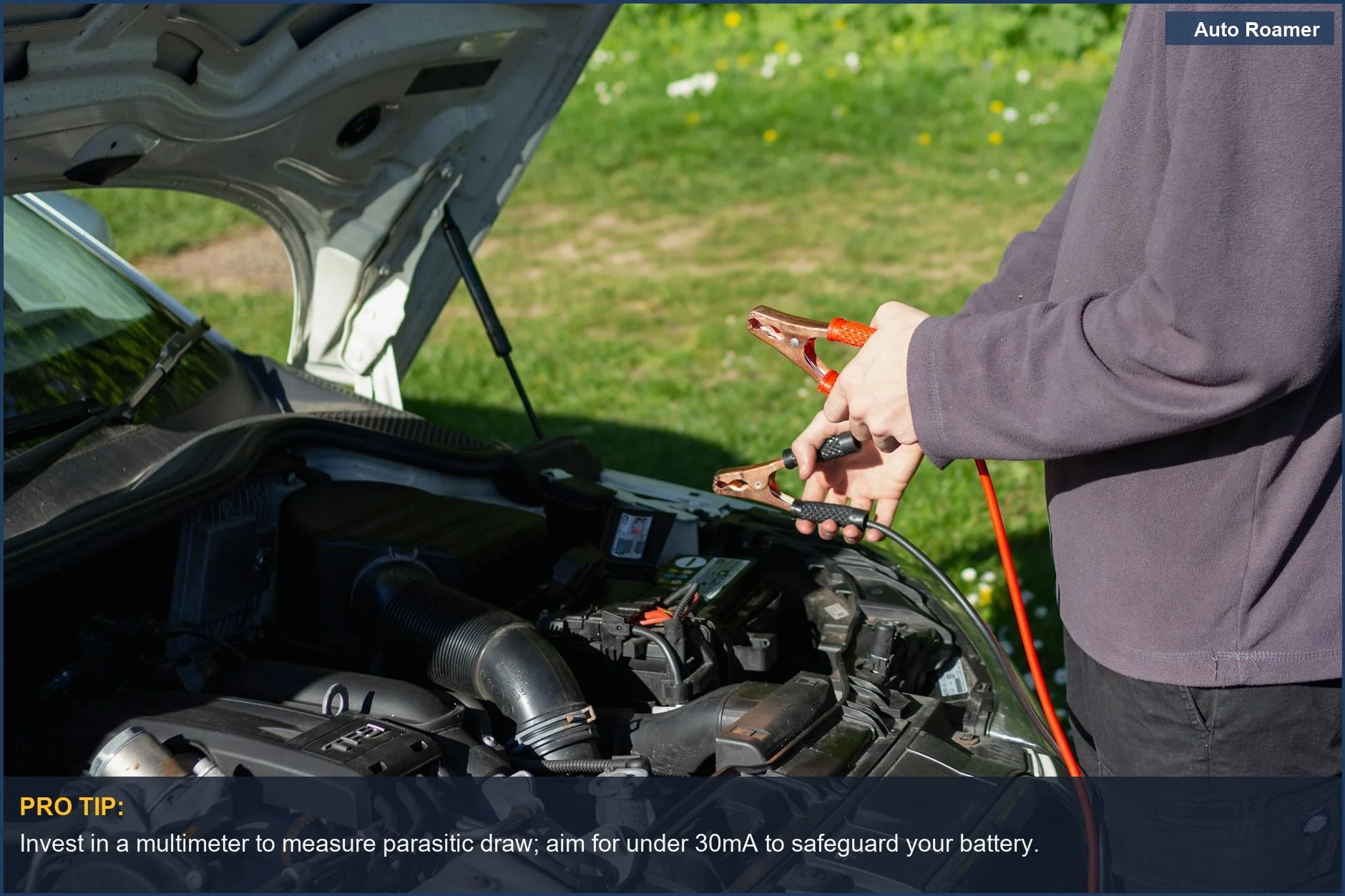
- Assess Your Current Draw: Get a $15 multimeter. Disconnect your car battery's negative terminal. Connect the multimeter in series between the negative terminal and the negative battery post, set to measure DC current (Amps). Wait 10 minutes for all modules to sleep. Note the baseline parasitic draw. Then, plug in your dashcam and note the increased draw. This tells you exactly what you're fighting. Reddit discussions confirm multimeter necessity.
- Hardwire to Switched Power: If your dashcam is plugged into a 'constant on' cigarette lighter, move it. Find a fuse in your fuse box that only has power when the ignition is on (a 'switched' circuit). Use a $4 add-a-fuse kit. This ensures the dashcam is completely off when the engine is off. This is the simplest, most mechanically sound method to prevent drain when camping.
- Utilize Low-Voltage Cutoff (LVC) Properly: If your dashcam hardwire kit has an LVC, verify its settings. Most allow you to choose a cutoff voltage (e.g., 12.0V, 12.2V). For car camping, set it higher, like 12.4V. This reduces the depth of discharge, extending battery life. Remember, a lead-acid battery hates deep discharges; it accelerates sulfation and reduces cycle life. Don't trust the factory default LVC setting for extended parking. DDPAI explains hardwire kits.
- Install a Dedicated Dashcam Battery Pack: This is the over-engineered but foolproof solution. A dedicated external battery pack, typically a LiFePO4 unit, charges from your car's 12V system when the engine is running and then powers the dashcam when the engine is off. It completely isolates the dashcam load from your starting battery. These units can cost $150-$300 but prevent any starting battery issues. The best ones have active cell balancing and thermal management.
- Manually Disconnect or Power Off: When car camping for multiple days, manually unplug the dashcam from its power source. Many dashcams have a power button; use it. This is a zero-cost solution, though it requires tactile interaction. It eliminates all current draw. Some dashcams have auto-off timers you can adjust for shorter durations. Redtiger suggests auto power-off.
- Solar Trickle Charger: For extended static camping, a small 5-10W solar trickle charger plugged into your cigarette lighter (if it's always-on) or directly to your battery terminals can offset some parasitic draw. It won't power a dashcam in parking mode indefinitely, but it can slow the discharge rate significantly. Ensure it has a charge controller to prevent overcharging. This is a low-cost supplemental fix, usually $30-$50 for a basic kit.
What This Looks Like in Practice
Here's what this looks like when you're out there:
- Scenario 1: Weekend Warrior
You park your 2017 Honda CR-V with a hardwired dashcam (180mA parking mode draw) for 48 hours at a trailhead. Your vehicle's baseline parasitic draw is 30mA. Total draw: 210mA. On a 50Ah battery, that's 210mA * 48h = 10.08Ah consumed. That's a 20% discharge. If your battery was already at 80% charge (common), you're now at 60%. Add in cold morning temps, increasing engine cranking resistance, and you might get a slow crank.
Wolfbox discusses parking mode drain.
- Scenario 2: Remote Work Setup
You're living out of your 2022 Ford Transit van, working remotely. Your dashcam (250mA draw) is always on. You drive 2 hours a day, charging the battery, but sit for 22 hours. The battery has 22 hours * 250mA = 5.5Ah drain daily from the dashcam. Over a week, that's 38.5Ah. Your 90Ah auxiliary battery is getting hammered, reducing its cycle life significantly. You're effectively deep cycling it every week.
- Scenario 3: Winter Camping
You park your 2019 Toyota Tacoma in a national forest for three days. Ambient temperature drops to 15 degrees F. Your dashcam draws 150mA. At this temperature, your lead-acid battery's usable capacity is reduced by about 30-40%. A 70Ah battery might act like a 40Ah battery. The dashcam still pulls 150mA, but the effective reserve capacity is much lower. Engine oil viscosity also increases, requiring more cranking power.
You're looking at a no-start condition after 24-36 hours.
- Scenario 4: The 'Smart' Dashcam
You have a Ring Car Cam in your 2023 Kia Telluride. It claims not to drain the battery. Why? Because it has a power-saving mode that shuts off the camera after a set time, or uses a small internal battery for short parking events, or relies on low-power components. Facebook users report Ring Cam efficiency. It's not magic; it's engineered with specific power-saving protocols. It's still a load, but a smarter one.
- Scenario 5: The Cheap Adapter
You plug a $20 dashcam into a cheap $5 cigarette lighter adapter. The adapter has poor internal resistance, heats up, and causes voltage drops. The dashcam's internal power regulator works harder, drawing more current to compensate. The thermal cycling on that cheap adapter leads to premature failure and potentially intermittent power to the dashcam, causing resets and missed recordings.
Mistakes That Cost People
- Ignoring Baseline Parasitic Draw: You think your battery is healthy, but your 2015 Jeep Cherokee's infotainment system has a 60mA ghost draw. Add a 150mA dashcam, and you're at 210mA total. You've effectively cut your battery's reserve capacity by a third before the dashcam even starts recording. This is a recipe for a dead battery in 3-4 days. Always measure the vehicle's quiescent current first.
- Relying Solely on Low-Voltage Cutoff (LVC): Assuming the LVC in your hardwire kit is infallible. It's a voltage sensor, not a crystal ball. Battery voltage sags under load, especially when cold. An LVC set to 12.0V might cut off a perfectly healthy battery at 15 degrees F, or fail to cut off a weak battery that quickly drops below 11.5V when the starter engages. Trust your multimeter, not just the LVC.
- Using a Constant-On Cigarette Lighter for Parking Mode: This is the most common screw-up. Many vehicles have cigarette lighter sockets that are always live. Plugging a dashcam here means it's always drawing current. This isn't 'parking mode'; it's 'accelerated discharge mode.' This is why I recommend hardwiring to a switched circuit or using an add-a-fuse. DDPAI explains power sources.
- Not Disconnecting for Long Periods: Leaving the dashcam on for a week while car camping, especially without driving. Even a low-draw camera will deplete a battery over 7 days of continuous operation without charging. Manually unplugging or powering down is free insurance against a no-start. You're out there for peace of mind, not stressing about voltage.
- Assuming All 'Smart' Dashcams are Equal: Just because a dashcam advertises 'battery protection' or 'parking mode' doesn't mean it's optimized for car camping. Some systems are more efficient than others. Read the spec sheet for current draw (mA) in parking mode. A 50mA draw is far better than a 200mA draw for extended periods. Redtiger discusses feature impact.
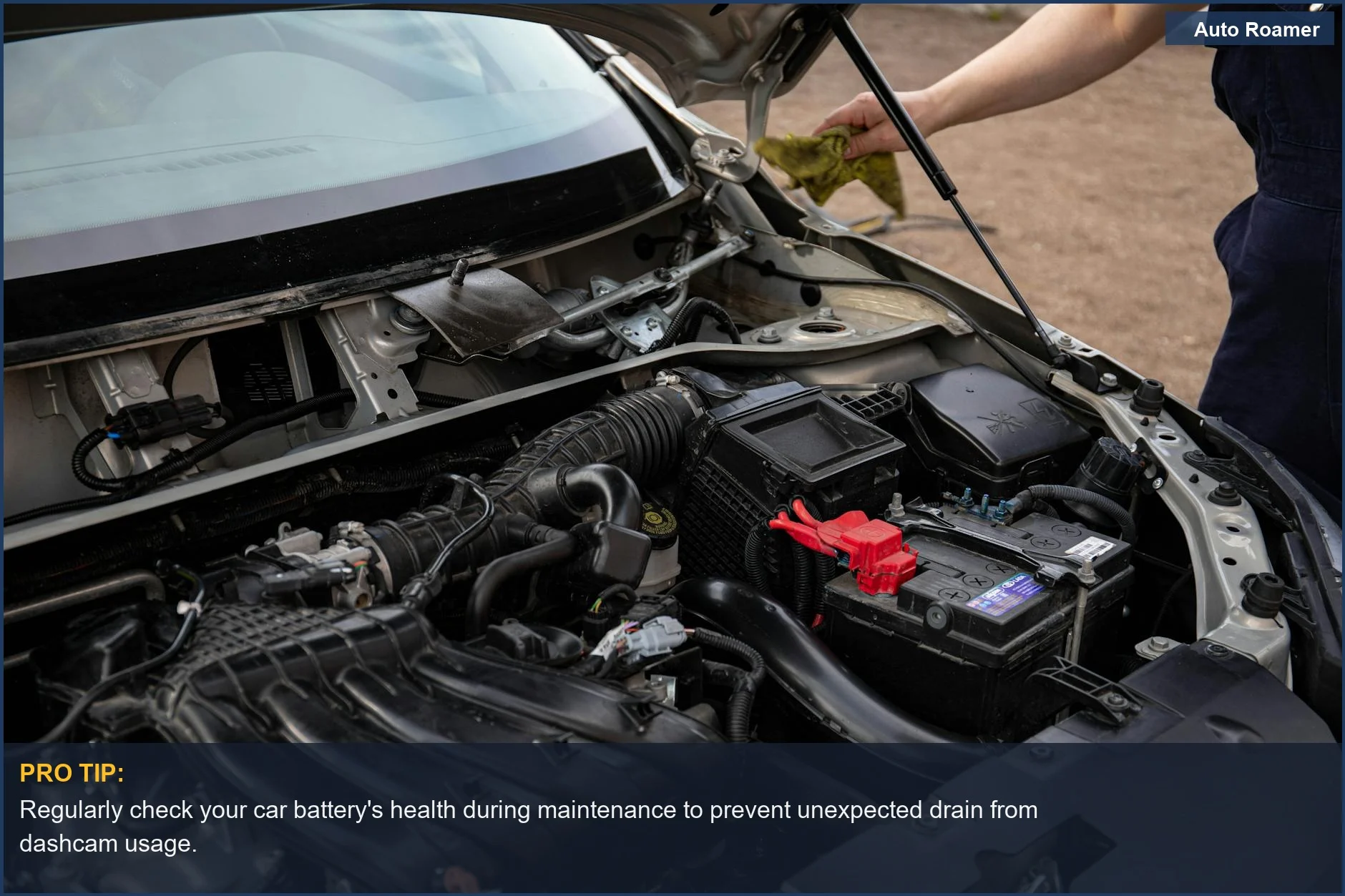
- Ignoring Battery Age and Health: A 5-year-old lead-acid battery already has reduced capacity and increased internal resistance. Adding any continuous load, even a small one, will push it over the edge much faster than a new battery. Your battery's internal chemistry is already fighting you. Check its CCA (Cold Cranking Amps) and voltage under load before relying on it.
Key Takeaways
To avoid a dead battery when car camping with a dashcam, remember these core principles:
- Measure Current Draw: A $15 multimeter will save you hundreds. Know your dashcam's actual parking mode draw and your vehicle's baseline parasitic draw. Don't guess; measure. Techsbook emphasizes prevention.
- Use Switched Power: Hardwire your dashcam to a circuit that only receives power when the ignition is on. This completely eliminates dashcam drain when the engine is off.
It's the most reliable method.
- Optimize LVC Settings: If you use a hardwire kit with LVC, set the cutoff voltage higher for longer parking durations. This reduces deep cycling and extends battery life.
- Consider a Dedicated Battery Pack: For serious car campers, an external LiFePO4 battery pack is the ultimate solution.
It isolates the dashcam load entirely from your starting battery.
- Manual Intervention: For multi-day static camping, manually unplugging the dashcam or utilizing its auto-off feature is a simple, effective safeguard. Don't let a small device strand you.