First, the Basics
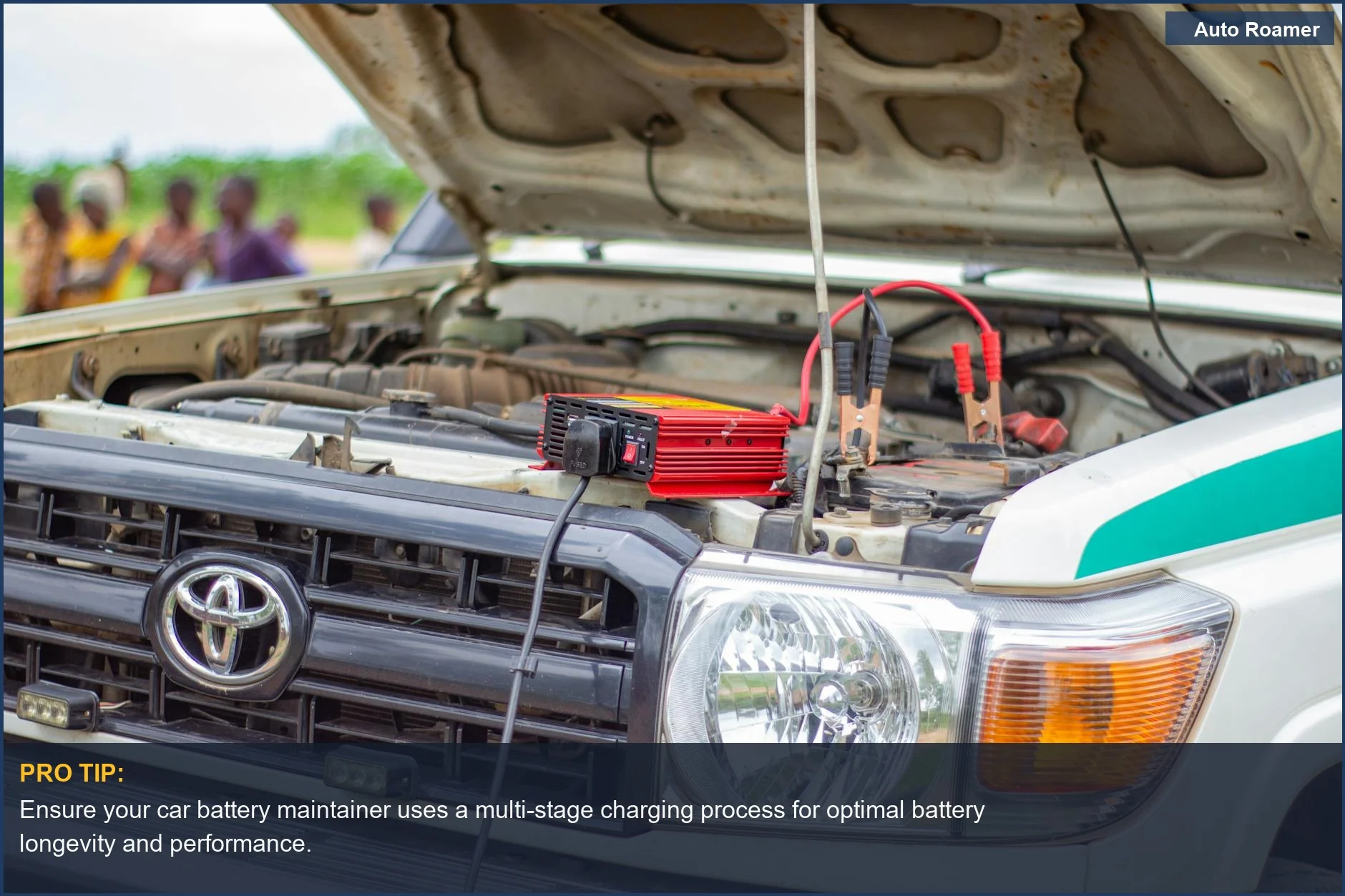
Car batteries are chemical reactions in a plastic box, and they hate sitting around. Leave your rig parked for 12 days with a 315mA parasitic draw, and that 60Ah lead-acid is dead. That's not some magic voodoo; it's basic physics. Lead-acid batteries self-discharge at a rate of 3-20% per month, depending on temperature and internal resistance. Add in the always-on draw from your radio memory or alarm system, and you're looking at a flatline sooner than you think.
This is where a maintainer earns its keep. Road & Track emphasizes that a dead battery is a predictable reality for any car that sits.
I've seen too many good batteries killed by neglect, not failure. A maintainer isn't just a trickle charger; it's a smart charger. It monitors voltage, adjusts current, and keeps the internal chemistry happy. No overcharging, no boiling electrolyte, just a steady, low-amperage feed to counteract the slow drain. This prevents sulfation, which is when lead sulfate crystals build up on the plates and choke the battery's ability to hold a charge. That's a permanent reduction in capacity.
Think about your car camping setup. You've got accessories pulling power: fridge, lights, maybe a fan. Even when the engine's off, that draw adds up. A maintainer keeps your starting battery ready, or nurses your auxiliary deep cycle back to health after a long night. It's cheap insurance against getting stuck 30 miles down a dirt road because your battery's internal resistance spiked. This YouTube test shows just how many cheap chargers fail to do the job right.
Most people think a dead battery means buying a new one. That's what the dealer wants you to believe. But often, it's just a deeply discharged battery that's been allowed to sit below 12.0V for too long, accelerating sulfation. A good maintainer can sometimes reverse early-stage sulfation, extending the battery's service life by years. This saves you the $180-$250 for a new battery every other season.
Your vehicle's electrical system doesn't just power the starter. It's a complex network of sensors, modules, and memory circuits that constantly sip power. Even when the key is off, your car is awake. A parasitic draw of just 50mA can kill a healthy 60Ah battery in 50 days. Car camping multiplies that load. A battery maintainer is the cheapest way to avoid that dreaded click of a lifeless ignition.
Car and Driver explains how proper battery care prevents costly towing situations.
Key Features to Consider
Picking a battery maintainer isn't rocket science, but ignoring the specs is a quick way to buy junk. You need a maintainer that understands battery chemistry and knows when to shut up. It's not just about pushing amps; it's about smart charging cycles.
| Feature | Why It Matters (Dirtbag Engineer's View) |
| Multi-Voltage Support (6V/12V) | Essential if you're working with powersports or older vehicles. A 12V-only charger on a 6V battery will boil the electrolyte, leading to thermal runaway and plate deformation. GearJunkie notes the NOCO Genius1 handles both. |
| Multi-Chemistry Compatibility | Lead-acid (flooded, AGM, Gel) and Lithium (LiFePO4) have different charging profiles. AGM batteries need a slightly lower float voltage than flooded cells. Lithium batteries require precise CC/CV (constant current/constant voltage) charging to prevent thermal stress and cell damage. Using the wrong profile reduces cycle life. |
| Automatic Temperature Compensation | Battery internal resistance changes with temperature. Charging a cold battery too fast causes gassing and plate damage. A thermal sensor adjusts the charge rate to prevent over-voltage in cold conditions and under-voltage in hot conditions. This prevents electrolyte outgassing and extends battery life. The NOCO Genius1 has this feature. |
| Desulfation/Repair Mode | When a battery sits discharged, lead sulfate crystals form on the plates. This is sulfation. A desulfation mode uses high-frequency pulses to break down these crystals, restoring some capacity. It's not magic, but it can bring a tired battery back from the brink, saving you $200. |
| Overcharge Protection | A dumb charger will keep pushing current, boiling the electrolyte and corroding the plates. A smart maintainer switches to a float charge (around 13.2V for 12V lead-acid) when full. This prevents thermal cycling stress on the battery's internal components and prolongs its lifespan. |
| Spark-Proof/Reverse Polarity Protection | Because people hook things up backward. A short circuit from reverse polarity can fry the charger's internal rectifier or even cause a battery explosion from rapid discharge. Good protection means the circuit integrity isn't immediately compromised by user error. |
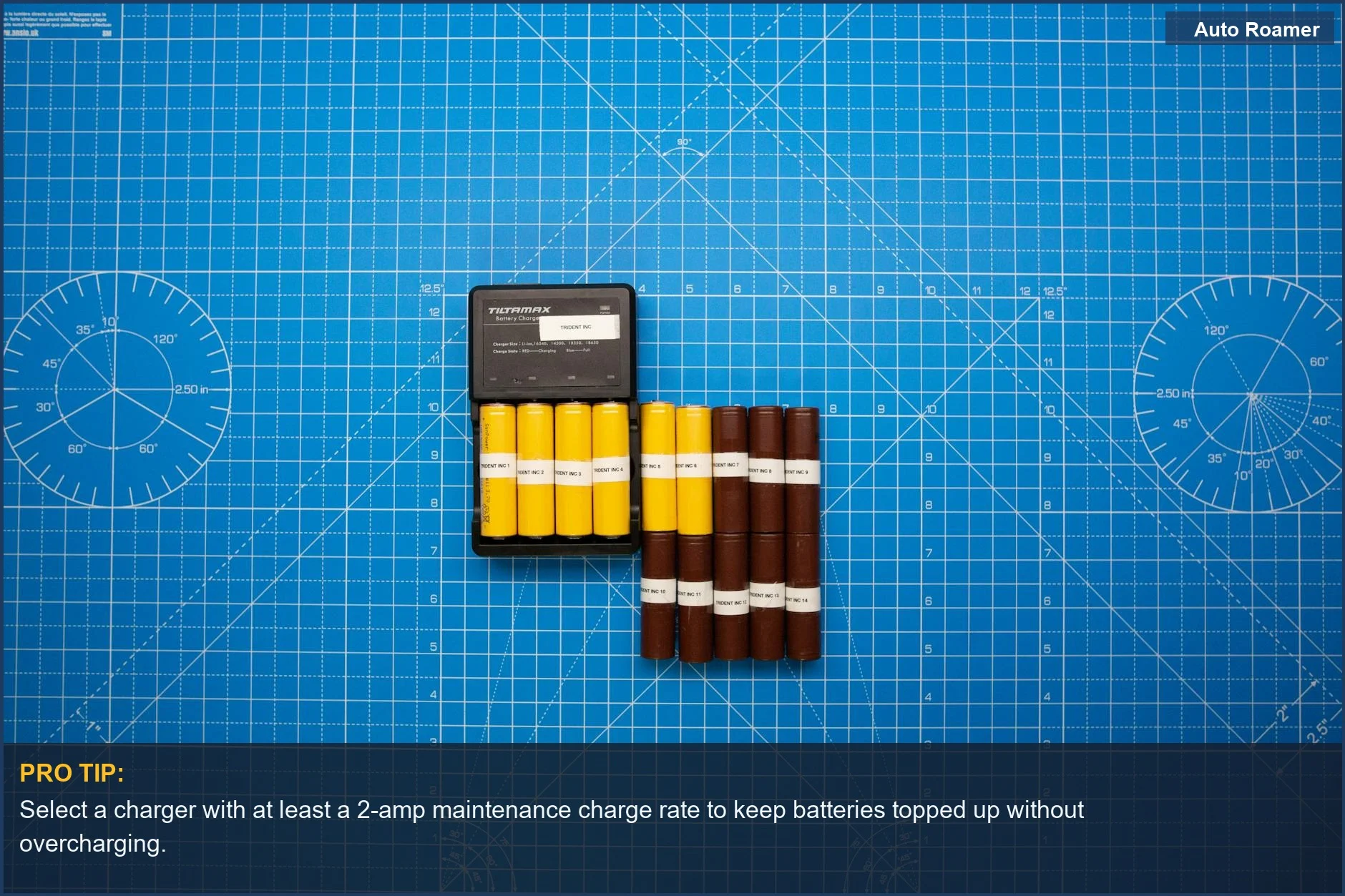
| Output Amperage (0.75A - 5A) | For a maintainer, lower is better. 0.75A to 1.5A is ideal for long-term maintenance. Anything higher starts pushing into charger territory. Too much current on a fully charged battery creates unnecessary thermal load. Autoweek emphasizes the importance of appropriate amperage. |
Don't cheap out on these features. A $40 maintainer with smart charging capabilities is a better investment than a $15 dumb charger that will cook your battery over time. The mechanical stress of constant gassing and thermal expansion from overcharging will deform the plates.
Our Top Picks
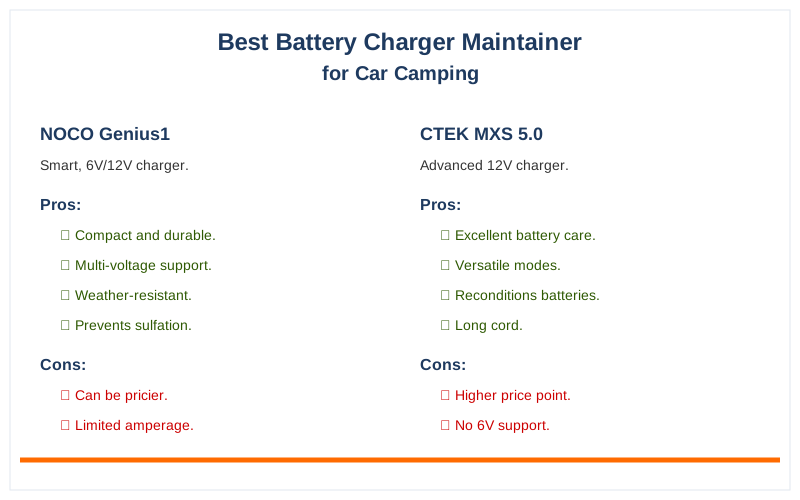
Specs: 6V/12V, 1A charging current, thermal sensor, desulfation mode. GearJunkie calls it a great all-in-one solution. This is what I'd grab for a daily driver or powersports battery. Pros: Compact, handles multiple battery types, automatic temperature compensation is crucial for extending battery life in varied climates. It's truly 'set it and forget it'. Cons: Shorter power cord than I'd like, sometimes needs an extension. Battery Tender Junior 800 (~$40)
Specs: 12V, 0.8A charging current, spark-proof, reverse polarity protection, 10-year warranty. The Drive reviewed it as the best choice for most garages. Pros: Simple, robust, and reliable. The 0.8A output is perfect for long-term maintenance without overcharging. That 10-year warranty tells you something about their confidence in the circuit integrity. Cons: Only 12V, so no good for your old tractor's 6V system. Basic features, but it does its job well. CTEK Multi US 7002 (~$120)
Specs: 12V, 7A charging, reconditioning mode, temperature compensation. Road & Track recommends it for reconditioning. Pros: More powerful for faster charging if needed, excellent reconditioning mode for sulfated batteries. This unit is built like a tank, meant for heavy use. Cons: Pricey for just a maintainer. The 7A output is overkill for constant maintenance on smaller batteries; I'd use it more as a charger that *also* maintains. Schumacher SC1280 (~$70)
Specs: 12V, 3A charging, auto voltage detection, float mode monitoring. Car and Driver rated it as fastest charging. Pros: Good balance of charging speed and maintaining capability. Solid construction, tactile buttons. It's a workhorse for a home garage. Cons: Not as compact as the NOCO or Battery Tender Junior, so less ideal for throwing in a glove box. MOTOPOWER MP00205A (~$25)
Specs: 12V, 0.8A charging current, detects sulfated batteries. GearJunkie highlights its economic price. Pros: Dirt cheap, does the basic job of maintaining a 12V battery. If you need a bare-bones maintainer for a single vehicle and budget is your absolute priority, this works. Cons: Durability isn't its strong suit. I've seen the plastic housing crack from a single drop, compromising the circuit board. You get what you pay for in terms of mechanical stress resistance. If you're out car camping and somehow manage to drain your battery despite your maintainer, you're looking at a real problem. That's when you need a backup plan beyond a jump pack. A roadside assistance plan is your ultimate insurance policy. For unexpected issues in the field, like a total electrical failure or a mechanical breakdown that a maintainer can't fix, roadside assistance is golden. AAA, your insurance provider, or even some credit cards offer plans. Look for unlimited towing mileage or at least 100 miles, flat tire service, and lockout assistance. Ask about battery jump-start limits; some only offer one per year. The cost-per-fix on a tow from a remote campsite easily dwarfs a $60 annual membership. Don't be that guy calling his buddy at 2 AM hoping he has service.
Budget vs Premium Options
You want to know if that $25 maintainer is just as good as the $120 one. Sometimes, but usually not. It comes down to the quality of the internal components, the precision of the charging algorithms, and the mechanical robustness of the casing. This YouTube comparison breaks down different maintainers by budget.
| Feature | Budget (~$25-50) | Premium (~$80-150) |
| Build Quality/Durability | Often lightweight plastic, minimal strain relief on cables. Prone to cracking under minor mechanical stress or thermal cycling. | Robust ABS or sealed housing, heavy-gauge cables with excellent strain relief. Designed for garage environments, resistant to oil, dust, and minor impacts. |
| Charging Algorithm | Basic 3-stage (bulk, absorption, float). Less precise voltage regulation, slower response to battery state changes. May not fully optimize charge cycle. | Multi-stage (5-8 stages) with advanced diagnostics, desulfation, reconditioning, and temperature compensation. More precise voltage control (within 0.1V), extending battery cycle life. Pelican Parts forum users discuss advanced charger settings. |
| Battery Chemistry Support | Typically only lead-acid (flooded, AGM). Limited or no support for lithium-ion (LiFePO4) which requires a different charging curve. | Supports all common lead-acid types (flooded, AGM, Gel) and often LiFePO4 with dedicated charging profiles. Prevents thermal damage to specific cell types. |
| Safety Features | Basic spark-proof and reverse polarity protection. May lack robust over-voltage or short-circuit protection, potentially compromising circuit integrity under fault conditions. | Comprehensive protection against sparks, reverse polarity, over-voltage, short-circuits, and thermal overload. Multiple internal fuses or circuit breakers for fault isolation. |
| Warranty/Longevity | 1-3 year warranty. Failure rate can be higher after initial year, especially with continuous use. | 5-10 year warranty. Designed for continuous operation, with components selected for long-term thermal stability and electrical performance. |
For car camping, where your gear might take a beating, premium options offer better mechanical stress resistance and more reliable circuit integrity. If your cheap maintainer craps out in the middle of nowhere, you're out a battery and possibly stranded. A $100 investment upfront can save you hundreds in replacement batteries and towing fees. It's not just about features; it's about reliability when you're 50 miles from pavement.
Setup and Installation Tips
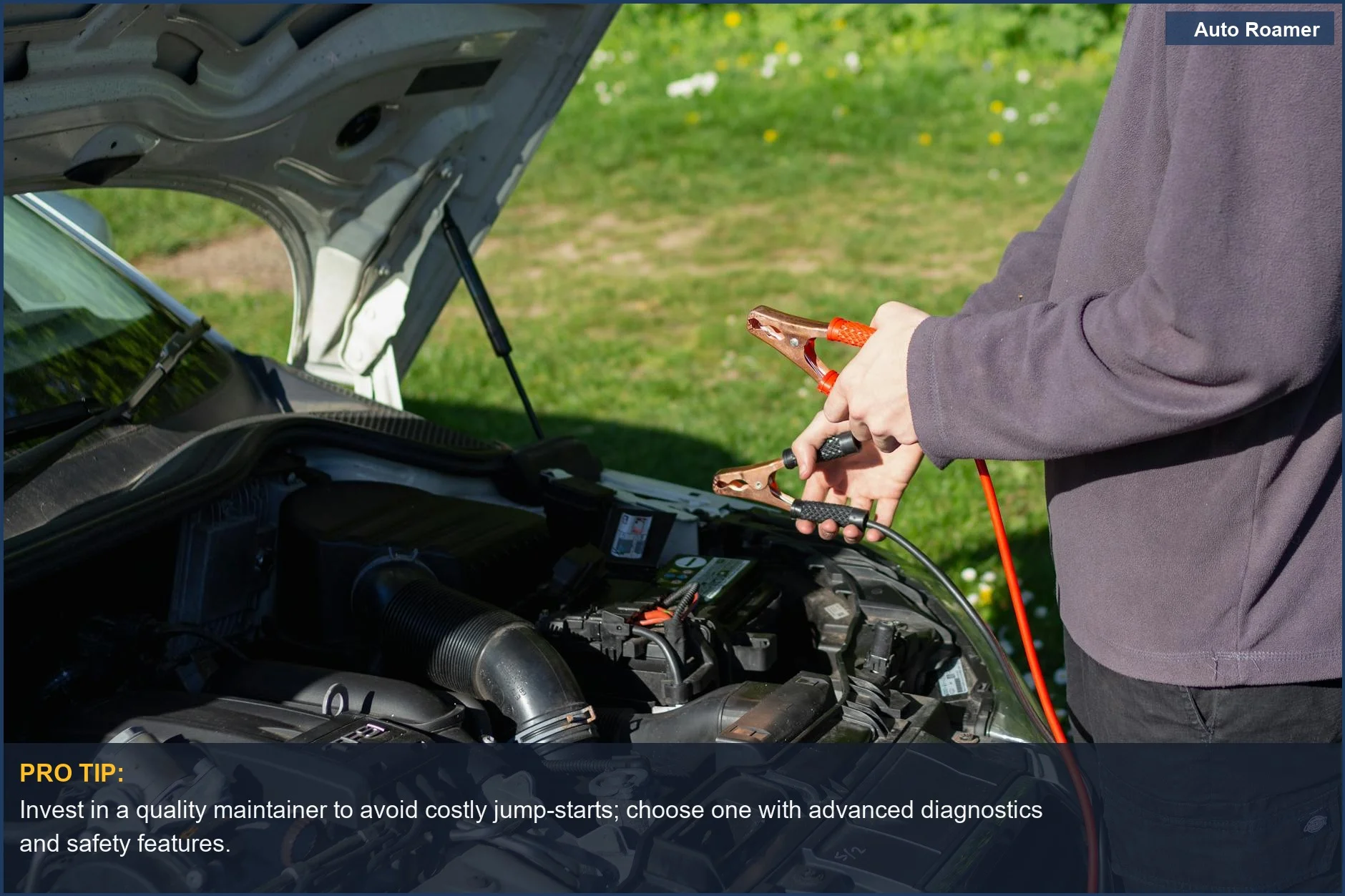
Hooking up a battery maintainer isn't hard, but doing it wrong can fry your electronics or yourself. Always think about current path and potential shorts. Don't just slap it on and walk away. Car and Driver offers some setup advice.
- Safety First, Dumbass: Disconnect the negative battery terminal first if you're pulling the battery or doing serious work. This prevents accidental shorts to the chassis. If the maintainer is smart (spark-proof), you can connect to the battery in-situ. Otherwise, disconnect. Never work on a live circuit if you can avoid it.
- Clean the Terminals: Corroded terminals increase electrical resistance. This means less current gets to the battery, making the maintainer less effective. Use a wire brush to get rid of any white or green crud. A clean, low-resistance connection is critical for efficient current flow.
- Connect the Maintainer: Attach the positive (red) clamp to the positive battery terminal. Then, attach the negative (black) clamp to the negative battery terminal. If the battery is still in the car, you can often connect the negative clamp to a chassis ground point, away from the battery, to minimize spark risk near hydrogen gas.
- Plug it In: Only plug the maintainer into a power outlet after it's properly connected to the battery. This prevents voltage spikes that could damage the maintainer or your vehicle's sensitive electronics. Smart maintainers have internal protection, but why test it?
- Check Status Lights: Most maintainers have indicator lights showing charging status (charging, fully charged, fault). Confirm it's doing what it's supposed to. A flashing fault light means you screwed something up, or the battery is beyond saving. Don't ignore it.
- Secure the Cables: Keep the cables out of the way of moving parts, hot exhaust, or anything that can shear them. Zip-ties are your friend here. Loose cables are a mechanical stress point, waiting to fail and potentially short out. A cheap zip-tie now saves you a $200 repair later. Renogy mentions pigtail connectors for a more permanent setup.
Care and Maintenance Tips
A battery maintainer is a tool, not a magic wand. Treat it like one. Neglecting the maintainer itself or the battery it's connected to will lead to premature failure. This isn't just about keeping the battery alive; it's about maintaining the entire system's integrity.
- Inspect Cables and Clamps Regularly: Check for fraying, cracked insulation, or corrosion on the clamps. Exposed wires mean compromised circuit integrity and a potential short. Corrosion increases resistance, turning current into heat and reducing charging efficiency. Replace any damaged cables immediately; a $15 DIY repair beats a $70 replacement maintainer.
- Keep it Clean: Dust, dirt, and moisture can compromise the maintainer's housing and internal electronics. Wipe it down. Don't let it sit in a puddle. Water ingress can short out the circuit board, turning your smart charger into a paperweight. Renogy stresses the importance of keeping batteries healthy.
- Monitor Battery Fluid Levels (Flooded Batteries Only): If you're using a maintainer on a flooded lead-acid battery, check the electrolyte levels every few months. Low levels expose battery plates to air, causing sulfation. Top off with distilled water, not tap water. The minerals in tap water will contaminate the electrolyte and accelerate corrosion.
- Ensure Adequate Ventilation: While maintainers output low current, batteries can still off-gas hydrogen during charging, especially if there's an internal fault. A confined space with poor ventilation is an explosion risk. Keep the area clear. This is basic thermal and fluid dynamics.
- Store Properly When Not in Use: Disconnect the maintainer from both the battery and the wall. Coil the cables neatly to prevent kinks and damage to the internal conductors. Store it in a dry, temperate place. Extreme thermal cycling in storage can degrade the plastic housing and internal solder joints over time. This reduces the lifespan of the maintainer's components.
Final Recommendations
Don't be the guy stuck with a dead battery 30 miles from the nearest paved road. A battery maintainer is a small investment that prevents big headaches and even bigger repair bills. It's about preserving the chemical integrity of your battery, reducing mechanical stress from deep discharge cycles, and ensuring your electrical system is always ready.
- Prioritize Smart Features: Look for multi-stage charging, temperature compensation, and desulfation modes. These are non-negotiable for extending battery life and preventing costly replacements. The NOCO Genius1 and Battery Tender Junior are solid choices here. This review covers top chargers.
- Match Maintainer to Battery Type: Don't use a lead-acid charger on a lithium battery. Different chemistries demand different charging profiles. Using the wrong one will cause irreversible damage and potentially thermal runaway.
- Consider Build Quality: If you're car camping, your gear will see dirt, dust, and bumps. A cheap plastic casing will fail. Opt for robust construction that can handle some mechanical stress without compromising internal circuit boards.
- Don't Skimp on Safety: Spark-proof and reverse polarity protection aren't just features; they're essential for preventing accidental shorts and ensuring your vehicle's electronics stay intact. Nobody wants to replace a body control module because of a careless hookup.
- The Ultimate Backup: Even with the best maintainer, things happen. A comprehensive roadside assistance plan is the cheapest insurance against total failure in a remote location. It's a $60 annual fee versus a $500 tow bill. You do the math.
Your battery is the heart of your vehicle's electrical system. Treat it right. A good maintainer keeps that heart beating strong, letting you focus on the trail ahead, not whether your engine will crank.