First, the Basics
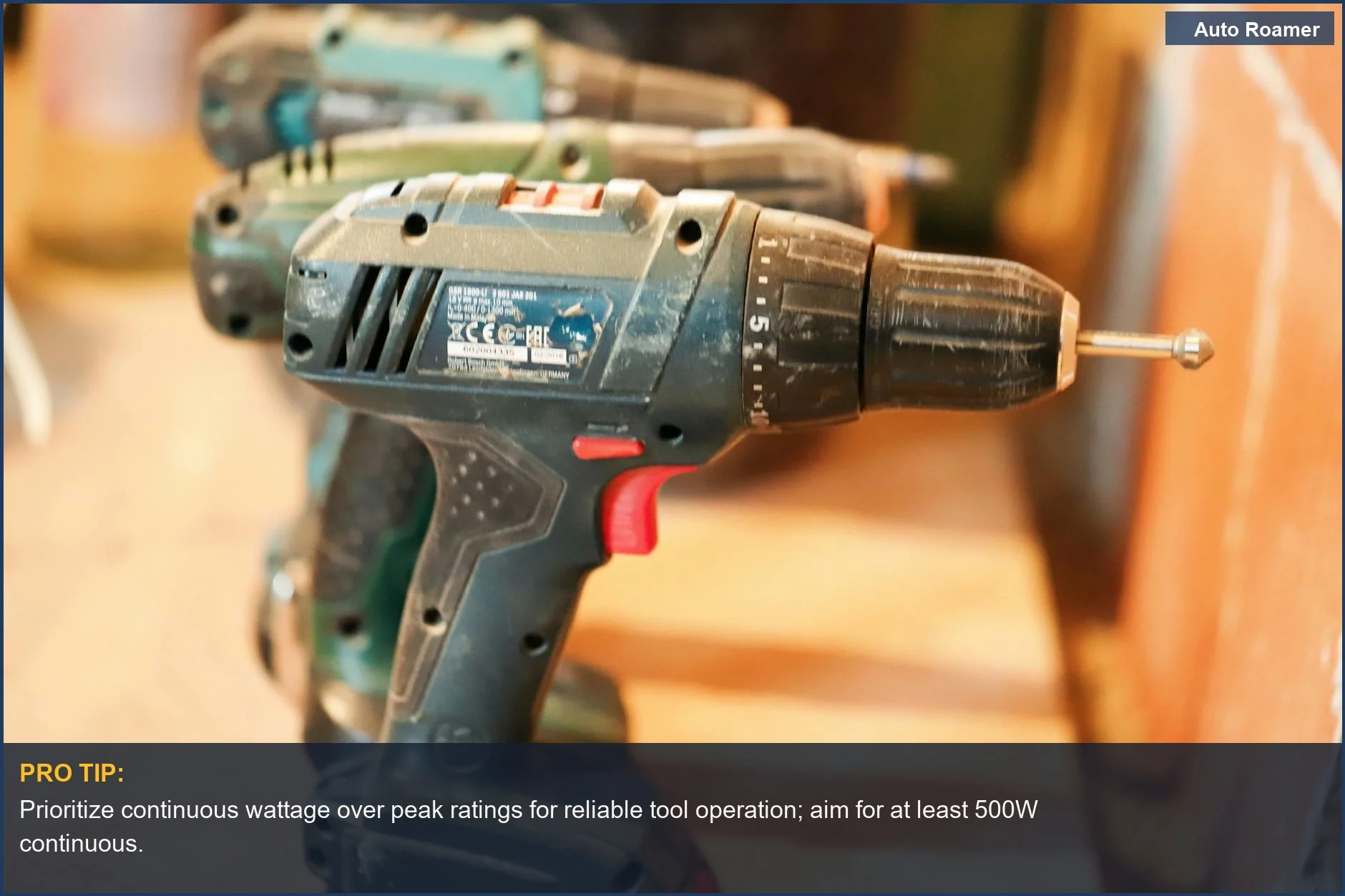
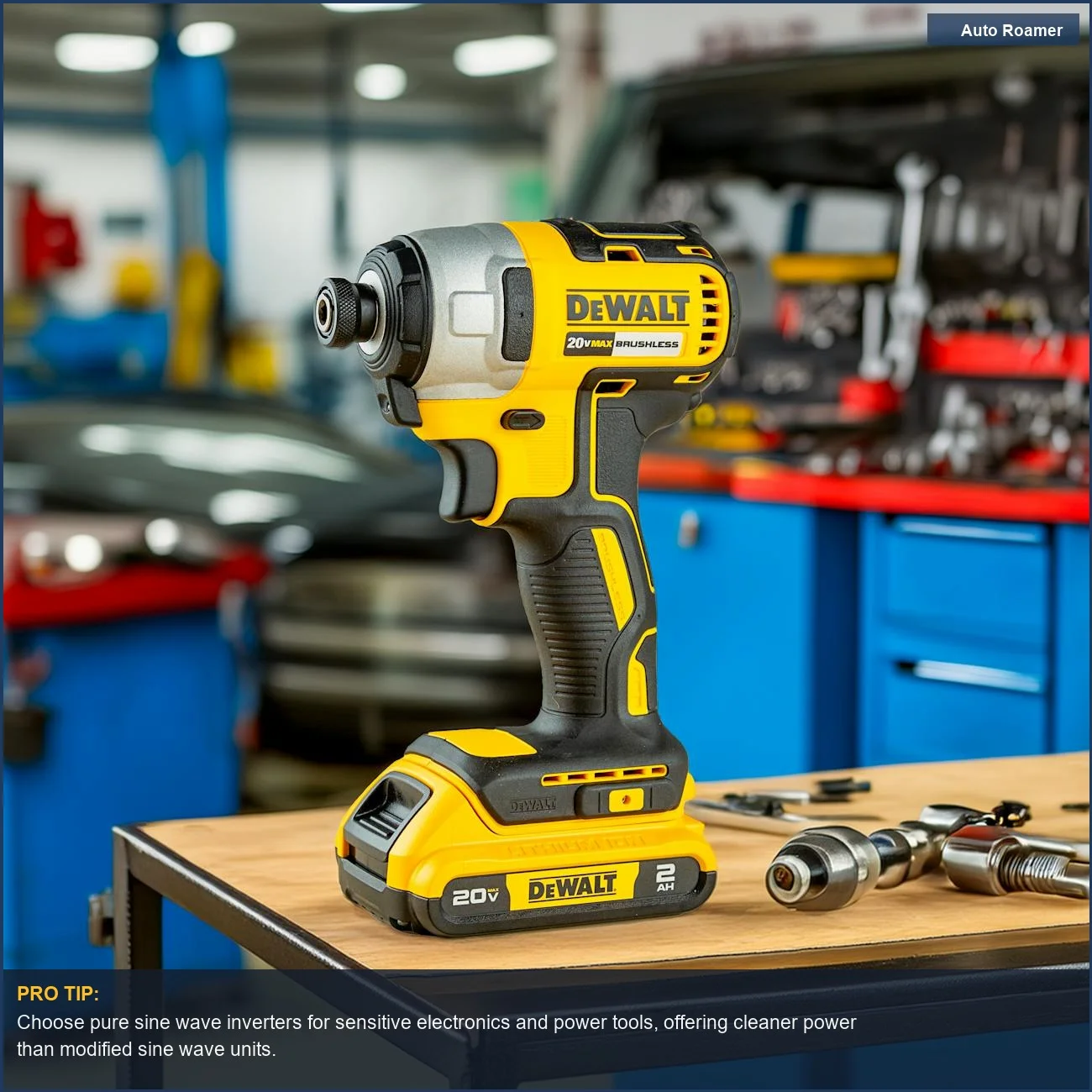
Forget the 'glamping' fantasy; I'm talking about running a reciprocating saw off your truck battery to cut firewood or powering a 1/2-inch impact wrench for a trailside repair. A cheap 100W inverter plugged into your cigarette lighter won't even spin a jigsaw. You'll hear the motor hum, then a thermal shutdown as the cheap MOSFETs overheat. I've seen it countless times. Car and Driver tested these things, and most fall short for real work.
Your car's 12V DC system is built for starting the engine and running accessories, not powering a job site. An inverter's job is to convert that direct current into 120V AC, just like your house outlets. The physics of this conversion generates heat, and that heat is the enemy of circuit integrity.
If you cheap out, you'll get a modified sine wave inverter. This spits out a blocky, stepped AC waveform instead of the smooth, sinusoidal curve from your wall socket. For a phone charger, fine. For a power tool with a brush motor or anything sensitive, you're asking for accelerated wear and premature failure. The motor windings vibrate at an unnatural frequency, increasing thermal stress and reducing efficiency. Car Spa mentions these differences.
I've watched guys try to run a 15-amp circular saw on a 1000W modified sine wave inverter, then wonder why the saw motor burned out in 3 months. It's not magic, it's electrical engineering. The peak voltage spikes and harmonic distortion cause excessive current draw and heat within the tool's motor, leading to insulation breakdown.
We're looking for clean power, robust thermal management, and enough current capacity to handle the surge draw of a power tool. That initial kick when a motor starts can be 3-7 times its running wattage. If your inverter can't handle that instantaneous current, it's going to trip its overload protection. Every single time.
Key Features to Consider
Getting Down to Brass Tacks: What Matters
Don't just grab the cheapest box with '1000W' printed on it. Most of those ratings are peak, not continuous. Continuous wattage is what actually matters for running tools. Peak is just for bragging rights on paper, usually a 2-second burst before the thermal fuse pops. This YouTube guide explains it.
| Feature | Why It Matters (Dirtbag Engineer's View) |
|---|---|
| Output Waveform (Pure Sine Wave vs. Modified Sine Wave) | Pure Sine Wave is non-negotiable for power tools. Modified sine wave (MSW) inverters chop the AC waveform into steps. This creates harmonic distortion, causing motors to run hotter, vibrate more, and draw excess current. You'll shorten the lifespan of anything with an AC motor. Samlex America details this. Your drill will thank me. |
| Continuous Wattage vs. Peak Wattage | Always spec for continuous wattage. Power tools have high surge currents on startup - sometimes 3x-7x their running wattage. A 1000W inverter might only sustain 500W continuously. If your tool draws 700W, the inverter will go into thermal protection, or worse, burn out. Read the spec sheet, not the marketing fluff. |
| Input Voltage & Connection Type | Anything over 150W-200W needs direct battery connection with heavy-gauge wire. A cigarette lighter port is fused for 10A-15A, maxing out at 120W-180W at 12V. Try to pull 500W through that, and you'll melt the fuse block, or worst case, the wiring harness. Car Talk notes low-power limits. |
| Overload & Thermal Protection | Essential. This isn't about convenience; it's about not turning your vehicle into a fire hazard. Good inverters have internal current shunts and thermal sensors that shut down power before components overheat or wiring melts. Cheap units skip these or use slow-acting ones. |
| Cooling System (Fans, Heatsinks) | Conversion of DC to AC generates heat. The bigger the inverter, the more heat. Active cooling (fans) and large aluminum heatsinks are critical for maintaining internal component temperatures below their junction temperature limits. Without adequate cooling, thermal cycling rapidly degrades semiconductor life. |
| Output Ports (AC Outlets, USB) | More AC outlets are better for multiple tools. USB ports are a bonus for charging phones, but don't let them distract you from the primary goal: pure sine wave AC power for your tools. |
Ignore the fancy displays that just show voltage. I care about current, temperature, and clean output. Anything else is just eye candy.
Our Top Picks
The Real Deal: Inverters That Won't Leave You Stranded
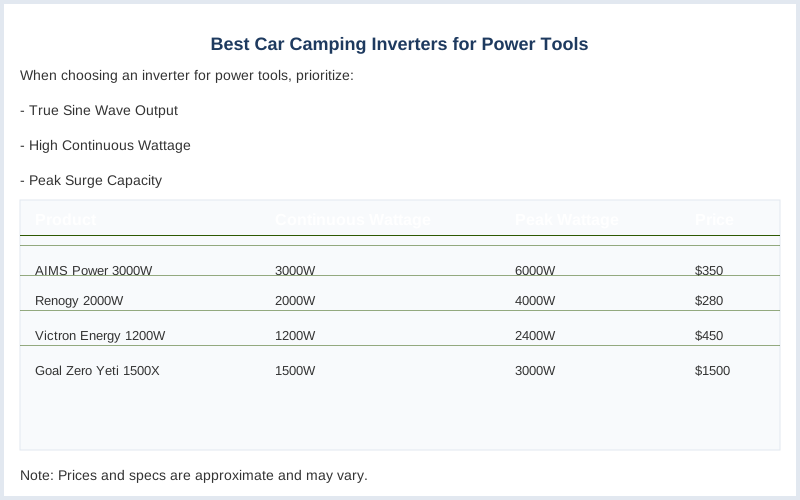
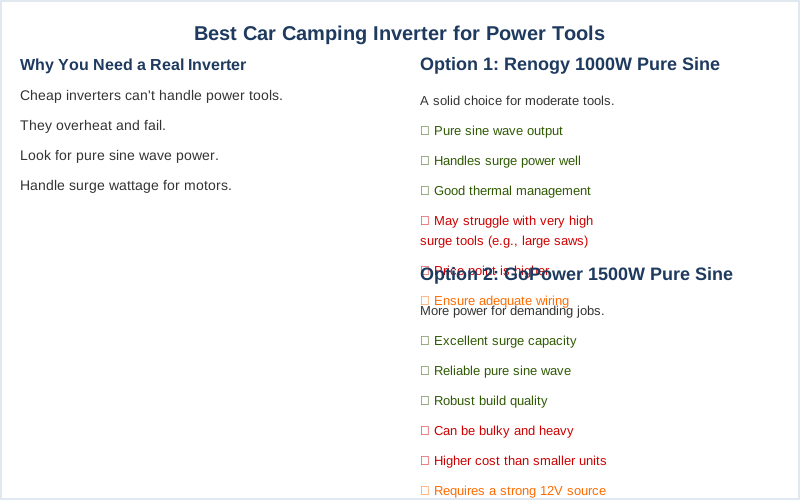
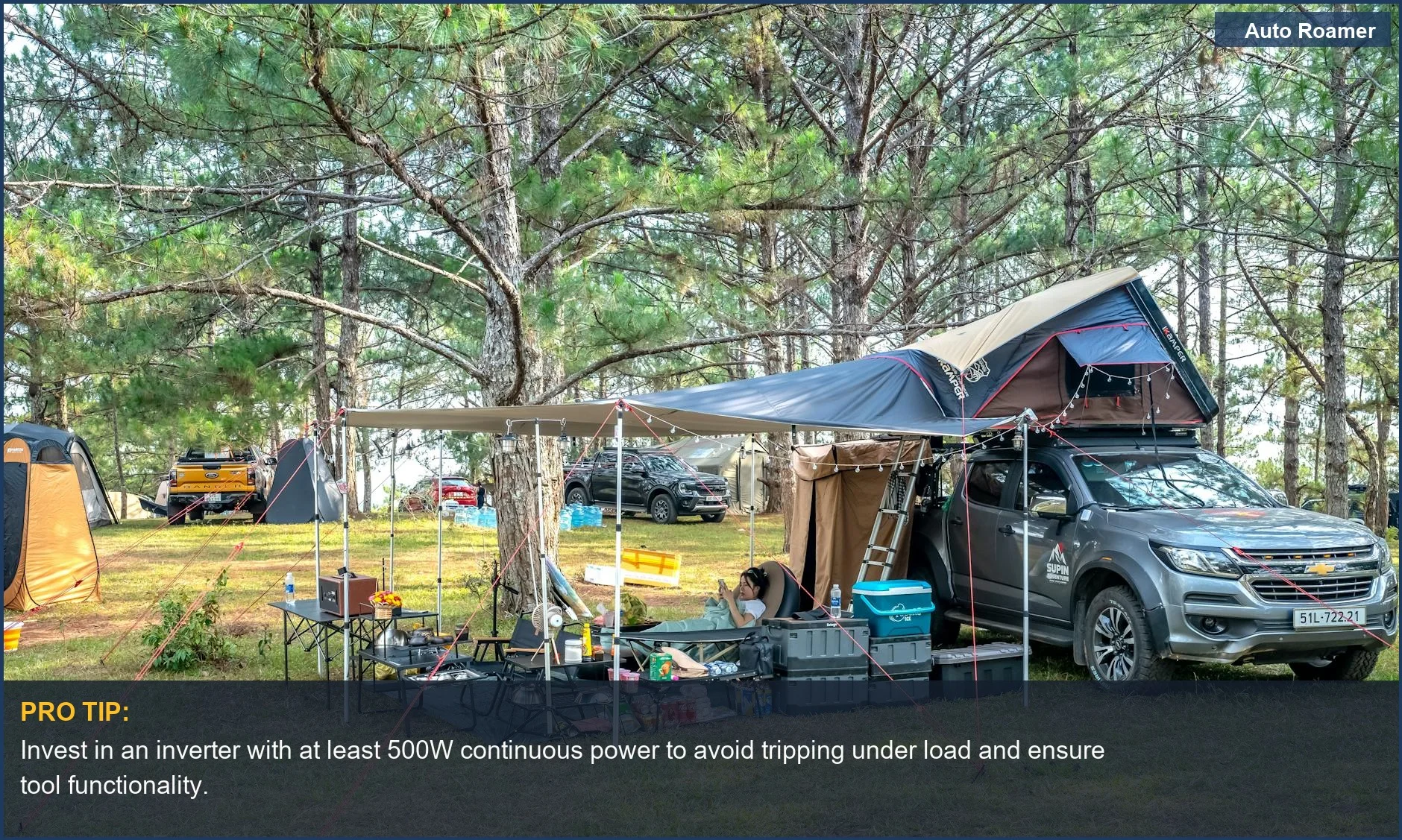
I'm not listing anything under 500W continuous here. For power tools, that's just a toy. We need enough headroom for surge currents and sustained operation without tripping every 5 minutes. These are the units that actually deliver. This video gives a good overview of what's out there. Renogy 1000W Pure Sine Wave Inverter (~$200)Budget vs Premium Options
Penny Pinching vs. Paying for Performance
There's a reason a 300W modified sine wave inverter costs $30, and a 1000W pure sine wave unit costs $200. It's not just marketing. It's about component quality, thermal design, and the complexity of the output waveform. Samlex America breaks down these differences.
| Factor | Budget Options (Modified Sine Wave, <500W) | Premium Options (Pure Sine Wave, 500W+) |
|---|---|---|
| Output Waveform | Modified sine wave. Square-ish output. Expect increased heat and wear on brushed motors, buzzing from transformers, and potential damage to sensitive electronics. Fine for basic resistive loads like incandescent lights or phone chargers. | Pure sine wave. Smooth, clean AC output, identical to grid power. Essential for anything with a motor, compressor, or sensitive electronics. Minimizes harmonic distortion and heat generation in connected devices. |
| Component Quality & Lifespan | Cheaper MOSFETs, smaller heatsinks, lower-grade capacitors. Designed for intermittent use. Thermal cycling rapidly degrades these components, leading to early failure. Often no robust overload protection. | Higher-rated MOSFETs, larger heatsinks, quality capacitors. Designed for continuous duty. Robust protection circuits (overload, over-temp, under/over voltage) prevent premature failure. Longer operational life. |
| Thermal Management | Minimal active cooling (small, noisy fans) or passive cooling only. Prone to overheating under sustained load, triggering thermal shutdown or outright component failure. Heat is the killer of all electronics. | Efficient, often larger, quieter fans with intelligent speed control. Substantial aluminum heatsinks. Designed to dissipate heat effectively, maintaining optimal operating temperatures for internal components. |
| Wiring & Terminals | Often only cigarette lighter plugs or thin gauge battery clamps. Limits current draw to 10-15 amps. Not suitable for anything over 150-200W. The wiring itself becomes a resistive load, generating heat. | Heavy-duty hardwire terminals for direct battery connection with thick gauge cables. Designed to handle hundreds of amps for sustained periods. Minimizes voltage drop and heat in the input wiring. Many users on Facebook recommend robust wiring for larger inverters. |
| Noise & EMI | Can generate significant electrical noise (EMI) that interferes with car radio, CBs, or even engine management systems. The choppy waveform itself is a source of noise. | Much cleaner operation. Less EMI, less interference with other vehicle electronics. The smooth sine wave is inherently less noisy. |
Don't expect a $50 inverter to run a 10A angle grinder for an hour. It's physics, not marketing. You'll get what you pay for in terms of sustained power output and component longevity.
Setup and Installation Tips
Hooking It Up Without Burning Down Your Ride
Getting this wrong is how you melt wiring harnesses or cook your battery. Proper installation is critical for circuit integrity and preventing a thermal runaway event. Don't eyeball wire gauges. Afore Energy has a decent guide, but they don't get into the nitty-gritty.
- Calculate Your Wattage Needs: List every tool you plan to run. Find its continuous wattage. Add 20% for safety margin. If you're running multiple tools, add them up. Then, figure out the highest single tool's surge wattage. Your inverter needs to handle this surge. A 1000W inverter handles about 8A at 120V AC. At 12V DC input, that's over 80A. You need proper cabling.
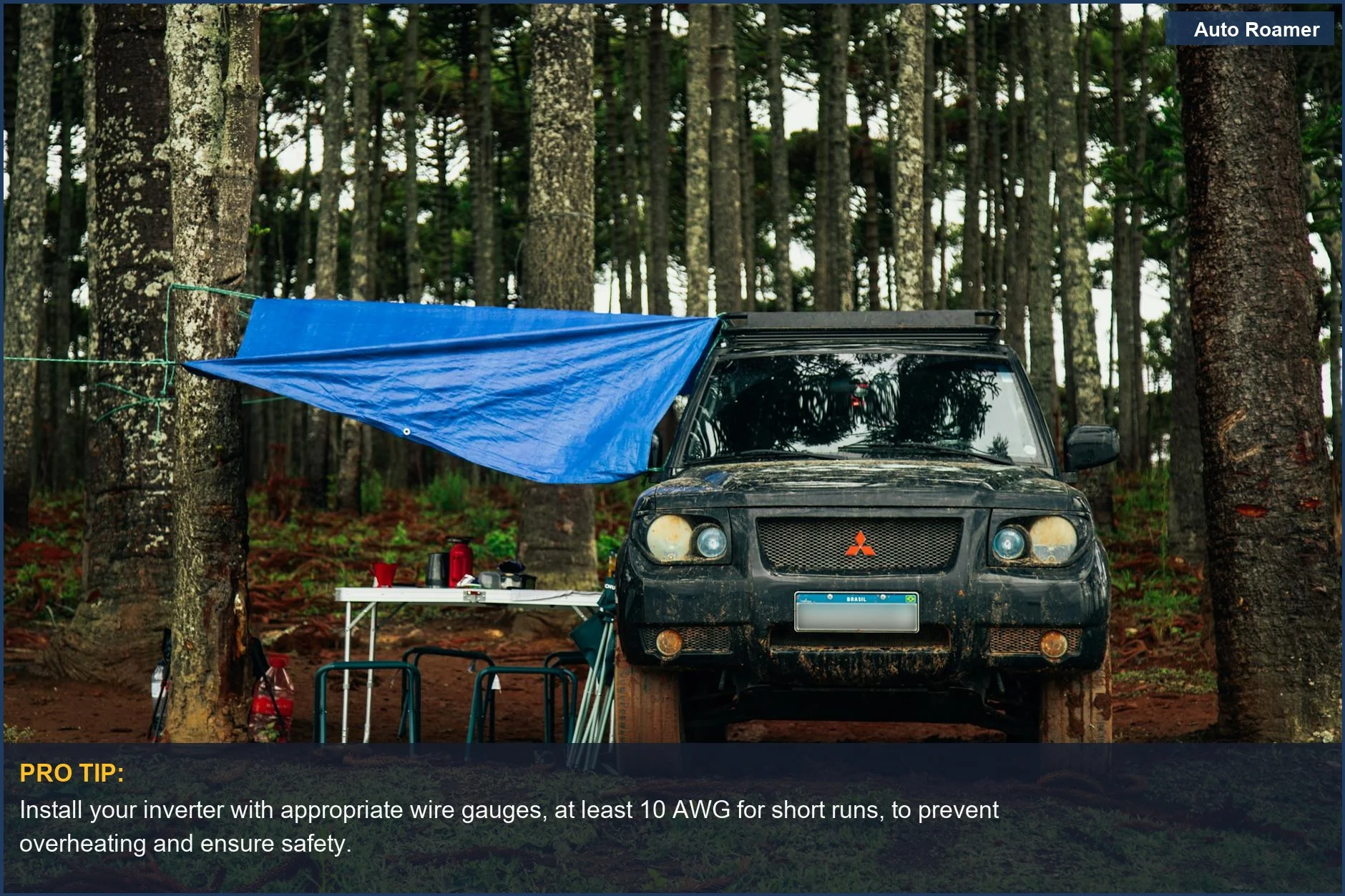
- Choose the Right Wire Gauge: This is where people screw up. For 1000W continuous draw (approx. 83A at 12V), you need at least 4 AWG wire for runs up to 6 feet. Go longer, you need thicker. Voltage drop over thin wire creates heat and reduces power to the inverter. Reddit users often discuss proper gauge wire for battery banks. Don't use speaker wire.
- Install a Fuse or Circuit Breaker: This is non-negotiable. An ANL fuse or circuit breaker, rated slightly above your inverter's maximum input current, must be installed as close to the battery's positive terminal as possible - within 18 inches. This protects the wire itself from short circuits, not just the inverter. Without it, a short can turn your battery cable into a glow plug.
- Secure Connections: Use proper crimped and heat-shrunk ring terminals on both the battery and inverter ends. Loose connections create resistance, which generates heat. Heat means voltage drop, arcing, and eventual mechanical failure of the terminal. Torque them down to spec.
- Mount the Inverter: Mount it in a well-ventilated area. Don't stuff it under a seat where airflow is restricted. Those cooling fans need to pull air. Keep it away from fuel lines or anything flammable. Vibration isolation helps prolong its life.
Care and Maintenance Tips
Keeping Your Power Plant Alive
An inverter isn't a 'set it and forget it' device, especially when you're pushing it with power tools. Basic maintenance ensures circuit integrity and prevents premature thermal failure. Some YouTube videos touch on this, but don't get into the 'why'.
- Clean the Cooling Vents: Dust, dirt, and pet hair are insulators. They accumulate on heatsinks and block airflow, causing internal component temperatures to rise. Use compressed air to blow out the vents monthly, especially if you're in a dusty environment. Overheating is the number one killer of these units.
- Check Wiring Connections: Periodically inspect your battery terminals and inverter input connections. Vibration from driving can loosen connections over time, increasing contact resistance. This generates heat and can lead to voltage drop, reducing inverter efficiency. Retorque connections if they feel loose.
- Monitor Battery Voltage: Running your car battery below 11.5V for extended periods will permanently damage it. Most inverters have a low-voltage cutoff, but don't rely solely on that. Check your vehicle's voltage regularly with a multimeter. A deeply discharged lead-acid battery suffers irreversible sulfation, reducing its capacity and cranking amps. Your battery is a chemical reaction, not an infinite power source. This is basic thermal cycling stress.
- Inspect for Physical Damage: Look for cracked casings, frayed wires, or bent terminals. Any compromise to the enclosure can expose internal circuitry to moisture or debris, leading to a short circuit or ground fault. Mechanical stress from impacts or rough handling can affect internal solder joints.
Final Recommendations
The Final Word from the Grease Pit
Don't cheap out on an inverter if you're planning to run power tools. A $50 unit is for charging a phone, not spinning a grinder. You'll end up replacing it, or worse, cooking your vehicle's electrical system. The underlying physics of heat generation and current capacity means you need to spend money for reliability.
- Pure Sine Wave, Always: Your tools, and your sanity, will thank you. The harmonic distortion from modified sine wave inverters will stress motors and sensitive electronics, leading to early failure. This is not optional.
- Size for Surge, Not Just Continuous: Power tools have massive inrush currents. If your inverter can't handle that initial kick, it's going to trip its overload protection constantly. Look for continuous wattage plus a 2x-3x surge rating.
This YouTube guide emphasizes matching the inverter to the load.
- Heavy Gauge Wire & Fusing are Non-Negotiable: Skimp on wiring, and you're building a fire hazard. Thin wires mean high resistance, which means heat. A fuse or circuit breaker near the battery is your insurance policy against a short circuit turning your vehicle into a bonfire. This is about mechanical stress and circuit integrity.
- Ventilation is Key: Heat kills electronics. Ensure your inverter has plenty of airflow.
Don't bury it under a pile of gear. Those fans are there for a reason; let them do their job. Thermal cycling is the enemy.
Invest in a quality inverter, install it correctly, and maintain it. It's not just about getting the job done; it's about not breaking down in the middle of nowhere with a dead battery and a melted wire harness. Trust me, I've seen the aftermath.