
Car Camping

Safety Considerations When Using Car Camping Inverters

Casey - The Weekend Warrior
5 min read
Includes Video

My first car camping trip involved a $30, 300-watt inverter I bought online. I plugged my laptop into it at a state park in Maryland, thinking I was living the dream. Then I noticed my laptop was charging at a crawl, and the inverter was making a weird buzzing noise.

My first car camping trip involved a $30, 300-watt inverter I bought online. I plugged my laptop into it at a state park in Maryland, thinking I was living the dream. Then I noticed my laptop was charging at a crawl, and the inverter was making a weird buzzing noise. Turns out, that cheap inverter was producing a modified sine wave, which is basically a choppy mess of power that most electronics hate.

Your fancy laptop charger expects a nice, smooth AC current, not a power wave that looks like a toddler drew it. The fix? Spending $100 more for a pure sine wave inverter, which my laptop actually liked. This whole inverter thing felt like a rookie mistake waiting to happen, and I was happy to learn it the hard way so you don't have to.

This is the honest version of car camping power: it's not just about plugging stuff in. It's about making sure you don't fry your gear or start a fire. We're talking about keeping your phone alive for emergencies, maybe running a small fan, or charging that headlamp. But doing it wrong is a surefire way to turn a fun weekend into a costly disaster. Let's break down what nobody tells beginners about inverter safety.
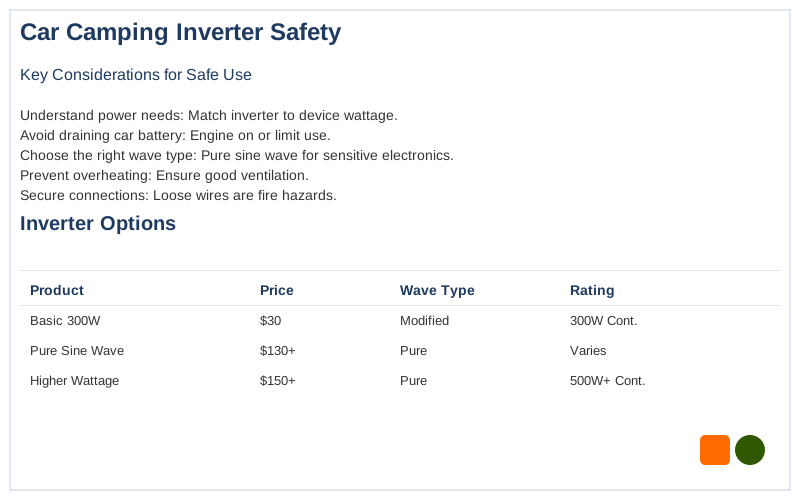
Safety Considerations When Using Car Camping Inverters — Key Specifications Compared
Key specifications for Safety Considerations When Using Car Camping Inverters

The Core Answer

The core answer to inverter safety is understanding that your car's battery is a limited resource, and an inverter is basically asking for a lot of that resource all at once. Think of it like this: your car battery is a bucket of water, and your inverter is a faucet. If you open that faucet too wide, you're going to drain that bucket way faster than you can refill it, especially if the engine isn't running. When you're using an inverter, the biggest thing to watch out for is power matching. Every inverter has a continuous wattage rating and a peak wattage rating. You need to add up the wattage of everything you plan to plug in and make sure the inverter's continuous rating is higher. I learned this at Big Meadows Campground in Shenandoah. I tried to run my small camping fridge (rated at 150W) and my phone charger (5W) on a 300W inverter. The fridge kicked on, drew more than the inverter could handle, and the whole thing shut down. It just buzzed angrily. The real move is to pick an inverter with some headroom, maybe 20% more than your total expected load. Cable quality is another big one. Those thin, cheap cables that sometimes come with basic inverters? They're a fire hazard waiting to happen. They create resistance, and resistance creates heat. I saw a guy at an RV show whose inverter cables were literally smoking because they were too thin for the load. The carspa.cc article mentions tight connections and using the right gauge wire. For most car camping setups, especially if you're running anything more than a phone charger, you'll want at least 10-gauge wire, and thicker is better for longer runs. Don't skimp here; it's literally the connection between your power source and your inverter. Ventilation is also crucial, and this is something I learned the hard way on a hot summer weekend in the Smoky Mountains. I had my inverter tucked away under a seat, and it got so hot it started to smell like burning plastic. Keeping it cool means making sure there's airflow around it. Don't bury it in a pile of blankets or stuff it into a tight, enclosed space. Most inverters have fans, and they need to be able to breathe. Finally, consider how you're powering it. Plugging into the cigarette lighter is fine for tiny loads like phone chargers, but if you're running anything substantial, you need to connect directly to the battery with proper clamps and fused wiring. The Facebook post suggests hooking up to the battery directly for more power. This gives you a more stable power source and reduces the strain on your car's accessory circuits. And for the love of all that is holy, if your engine isn't running, your battery will drain fast. Keep that engine running if you're drawing significant power.
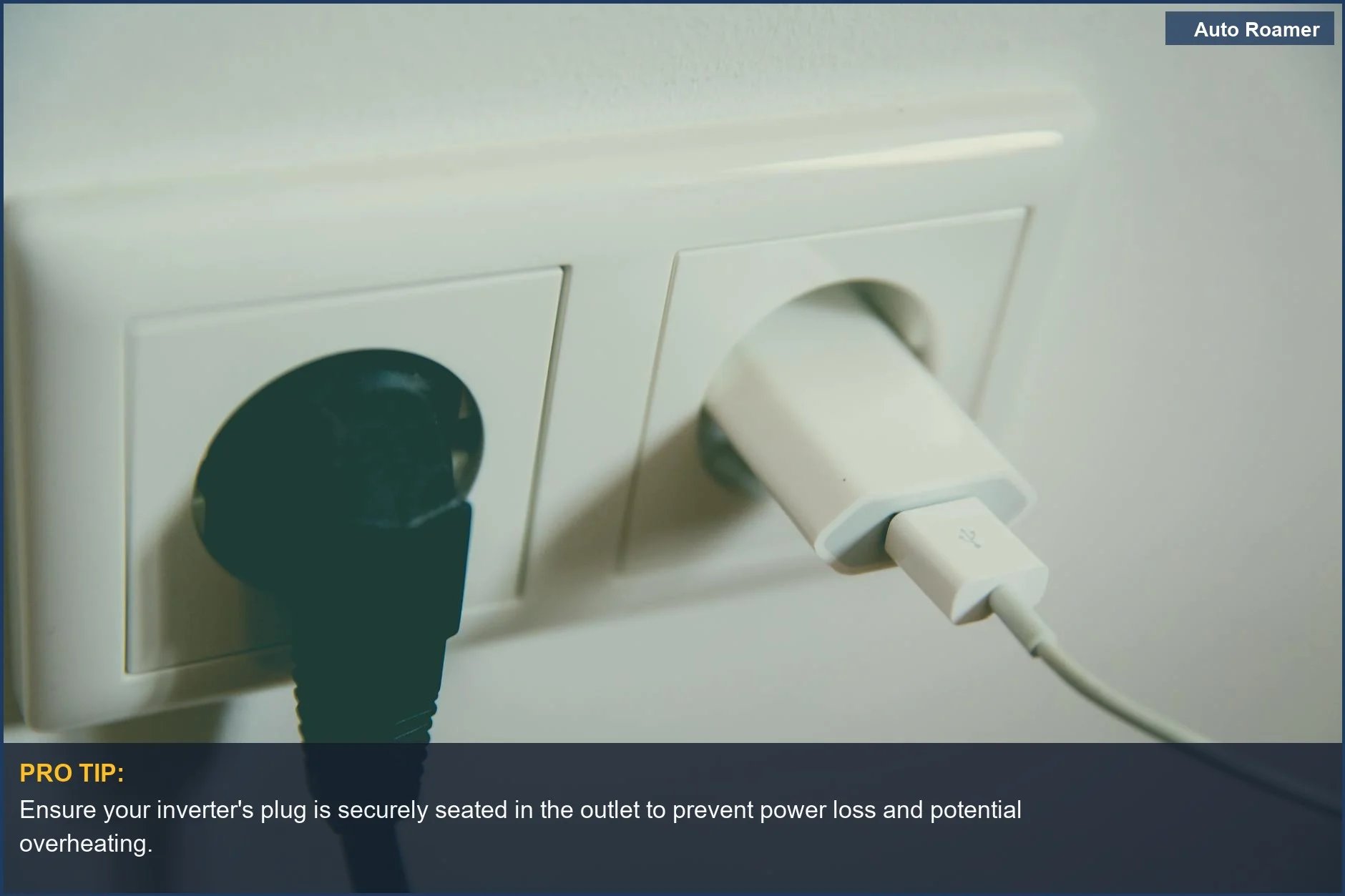
To ensure you’re maximizing efficiency, it’s essential to consider inverter wattage for your camping power needs.
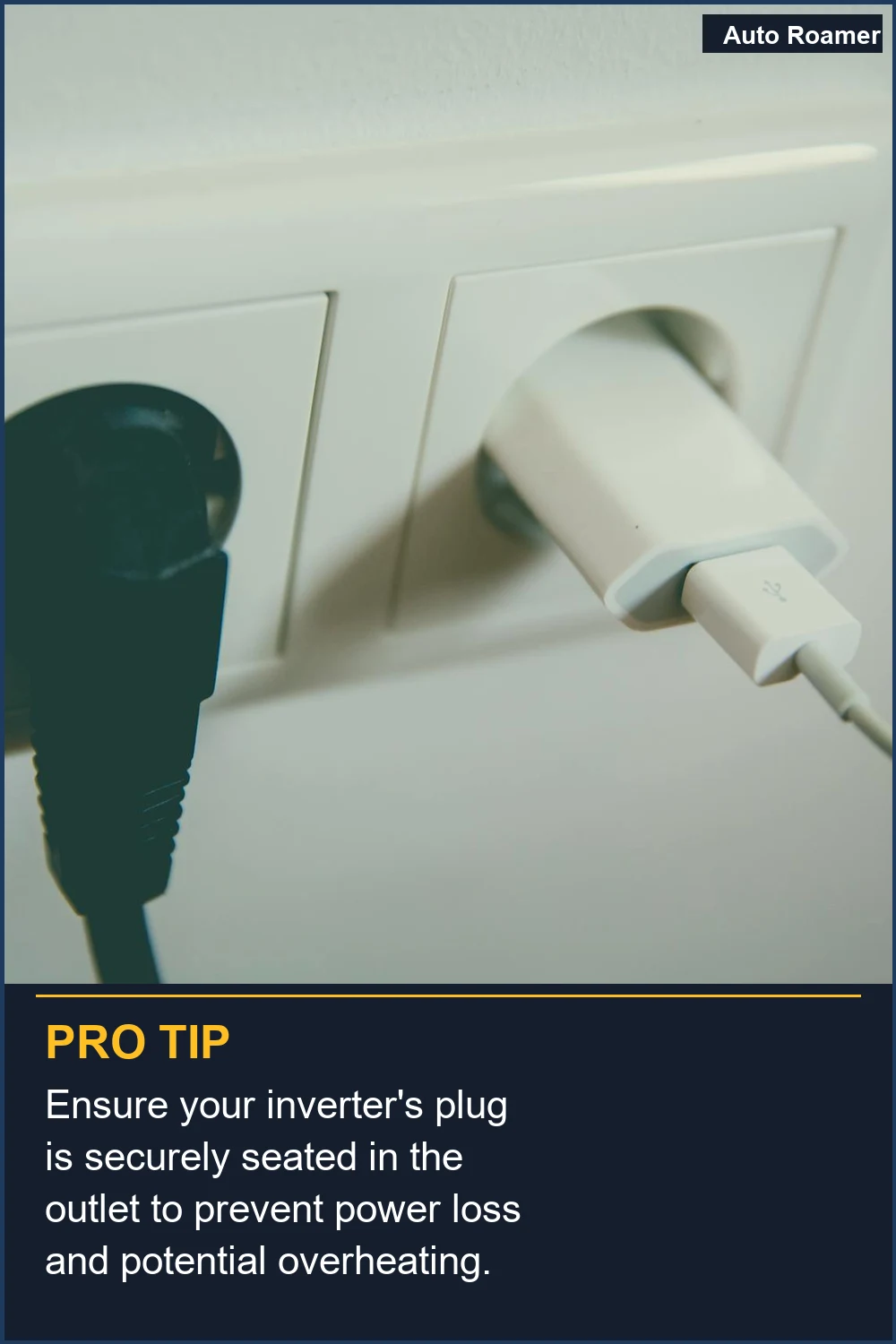
Ensure your inverter's plug is securely seated in the outlet to prevent power loss and potential overheating.
Understanding electrical connectivity is key to car camping inverter safety. Always use a secure outlet, especially when managing power for multiple devices. | Photo by Markus Spiske

Why This Matters for Your Setup

Why does all this matter for your setup? Because the honest version is that a cheap inverter can be a ticking time bomb if you don't treat it right.
  • Don't overload it. I tried to run a small coffee maker on a 500-watt inverter once. Rookie mistake. The inverter just died. The 90% of accidents are preventable tip about power matching is critical. You need to know your devices' wattages.
  • Use the right cables. Thin wires mean heat and potential fires. Certified cables with proper gauge are non-negotiable. Think 10-gauge or thicker for anything more than a phone charger.
  • Keep it cool. I once left my inverter running in direct sun in my car. It got so hot it shut itself off and smelled terrible. Proper ventilation is key. Proper installation and ventilation prevent overheating.
  • Secure connections. Loose wires can spark. That happened to me at a campsite in Ohio, and it was a little terrifying. Make sure everything is tight and corrosion-free. Corrosion-free connections prevent voltage drops and sparking.
  • To ensure a safe setup, understanding how to select the right size portable power station is essential.
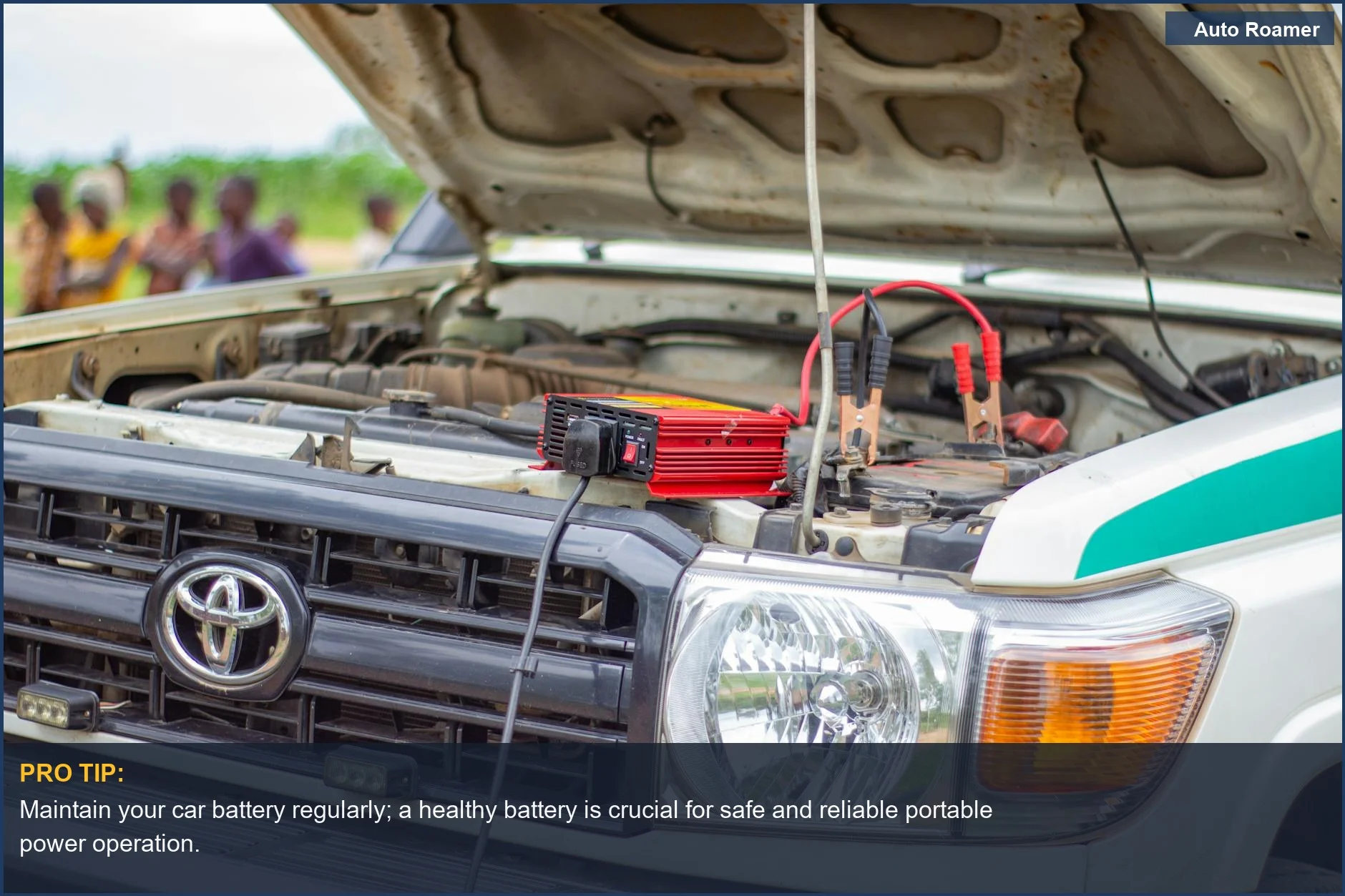
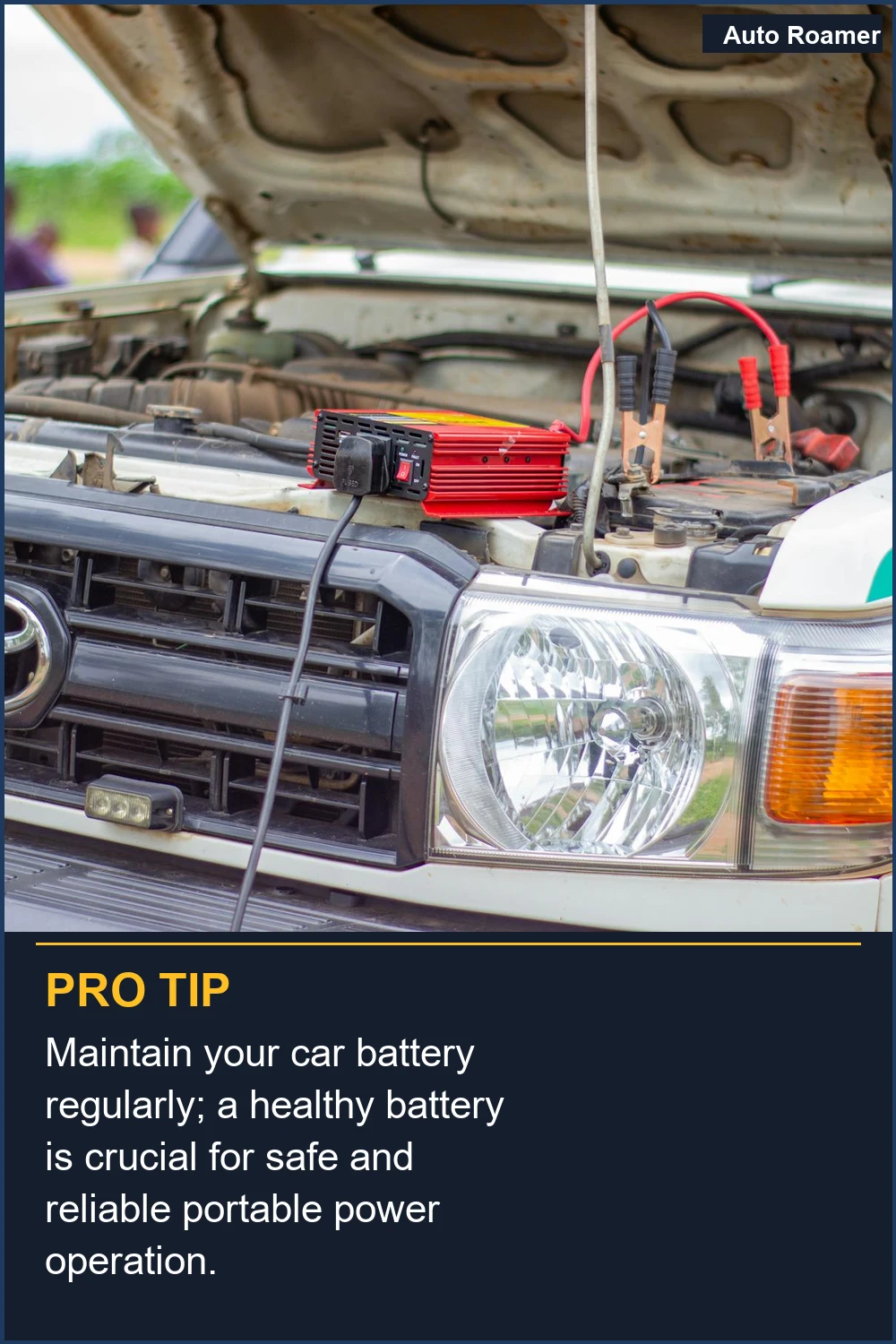
    Maintain your car battery regularly; a healthy battery is crucial for safe and reliable portable power operation.
    Proper car battery maintenance is vital for portable power safety. A well-maintained battery ensures your inverter can function without draining it too quickly. | Photo by Themba Mtegha

    Making the Right Choice

    Making the right choice with car camping inverters comes down to a few simple, yet vital, principles.
  • Match the power. Don't try to run a microwave on a tiny inverter. Know your devices' wattage and get an inverter with more capacity. This is the number one rule. Never ignore power matching.
  • Invest in good cables. Those flimsy cords are not worth the risk. Get thick, well-insulated cables. It's a small cost for a lot of safety. High-quality adapters reduce electrical resistance.
  • Give it room to breathe. Heat is the enemy of electronics. Ensure your inverter has plenty of airflow. Don't hide it away in a dark, stuffy corner. Install your inverter in a well-ventilated location.
  • Connect directly for bigger loads. For anything more than charging your phone, hook up directly to the battery. This is the game-time move for stable power. Make up a longer cord with clips to hook up to the battery.
  • Integrating a reliable inverter with a good battery charger maintainer can enhance your off-grid car camping experience.
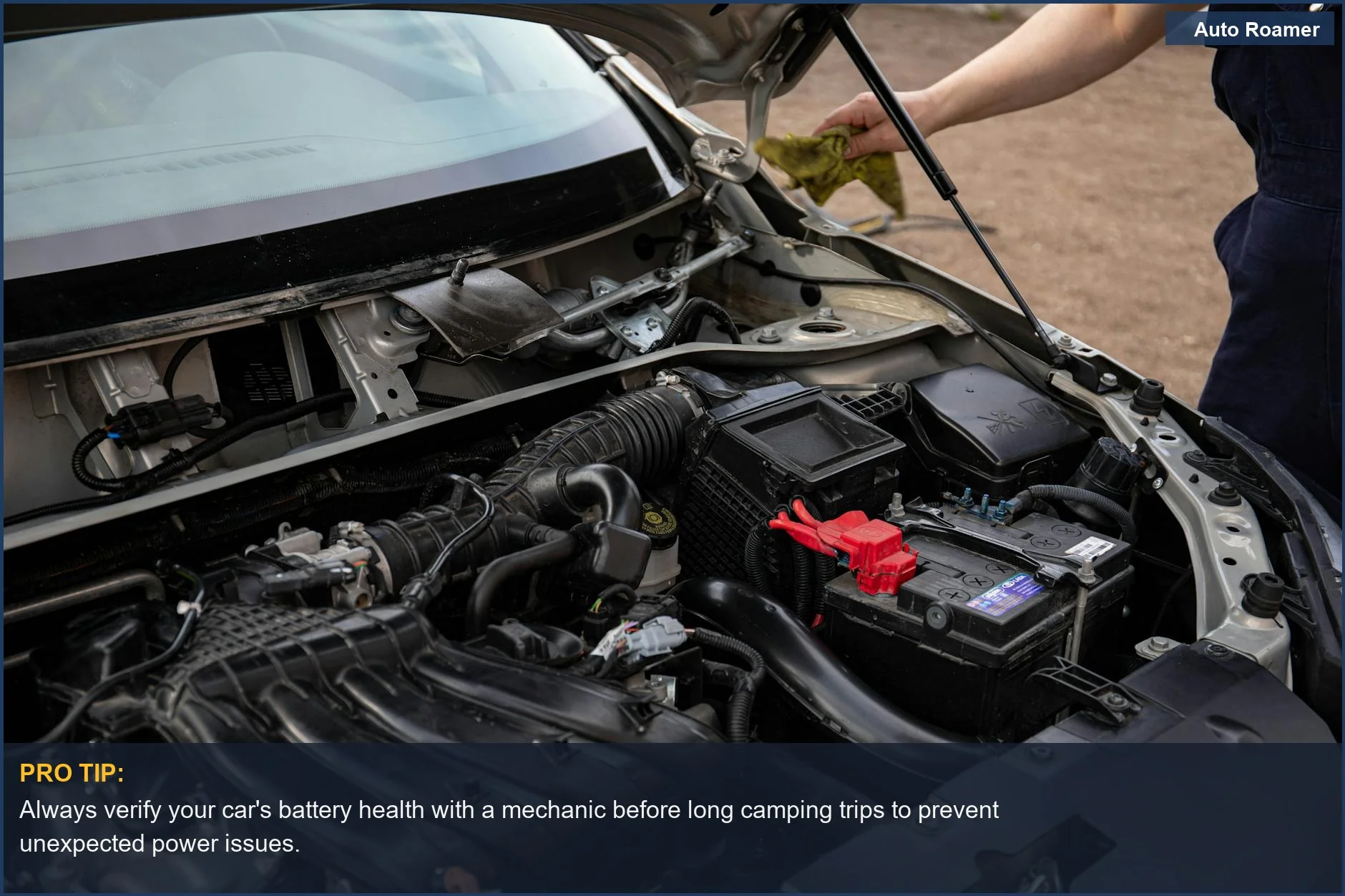
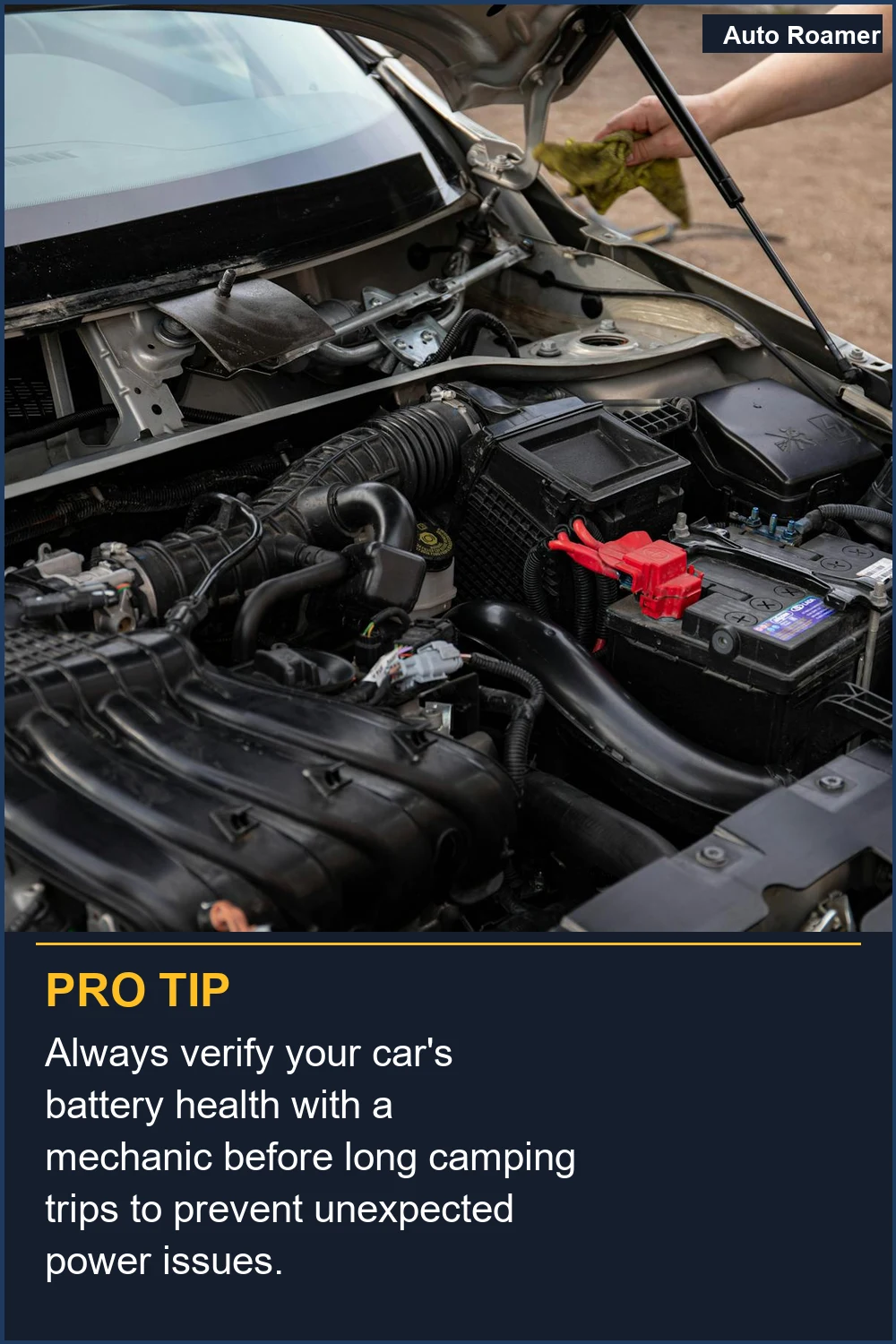
    Always verify your car's battery health with a mechanic before long camping trips to prevent unexpected power issues.
    Routine car maintenance, like inspecting the battery, is a cornerstone of inverter safety. Ensure your vehicle can support your portable power needs. | Photo by Sergey Meshkov

    Frequently Asked Questions

    Do I really need to buy a fancy pure sine wave inverter, or can I get away with the cheap modified sine wave ones for my phone and headlamp?
    For just your phone and headlamp, a cheap modified sine wave inverter might technically work. I've seen people use them. However, they can still shorten the lifespan of your electronics or cause them to act weirdly. A basic 150-watt pure sine wave inverter might cost around $50, which is more than the $20 modified ones, but it's worth it to protect your gear. Trust me, I fried a cheap USB charger once trying to save $30.
    Do I need to buy a special 'car inverter' cable, or can I just use some random jumper cables I have lying around?
    Absolutely not. Jumper cables are NOT inverter cables. They're designed for short bursts of high amperage to start an engine, not sustained power draw. Using them for an inverter is a recipe for overheating and a potential fire. You need proper gauge wires, at least 10-gauge for short runs, with secure terminals. Using the right cables is non-negotiable, and a good set might cost you $30-$50, which is way cheaper than replacing your car's wiring harness.
    What if I plug something in and my inverter just shuts off and won't turn back on?
    That usually means you've overloaded it or it's overheated. First, unplug everything from the inverter and let it cool down for at least 15 minutes. Then, try plugging in just one small device to see if it works. If it does, your initial load was too high. If it still won't turn on, check your connections and make sure the fuse (if it has one) isn't blown. If it’s still dead, you might have a $50 paperweight.
    Can running an inverter for too long without the engine on permanently damage my car battery?
    Yes, absolutely. Draining your car battery too low, especially repeatedly, can significantly shorten its lifespan and even damage it permanently. Car batteries are designed for starting the engine, not deep cycling like a deep-cycle marine battery. Running an inverter for extended periods without the engine on can drop your battery voltage below safe levels, leading to sulfation and reduced capacity. Aim to keep your engine running if you're drawing more than 50 watts for more than 30 minutes.
    Is it true that you need to have your engine running the entire time you're using an inverter?
    Not necessarily, but it's a good rule of thumb for anything drawing more than a trickle. Your car's alternator recharges the battery while the engine is running, offsetting the power draw. If you're just charging a phone on a small inverter, you might get away with the engine off for an hour or two. But if you're running a laptop or a small fan, you'll drain your battery quickly. I learned this the hard way at a festival, and had to beg for a jump start. Keep the engine running if you're drawing more than 100 watts for more than a few minutes.
    C

    Casey - The Weekend Warrior

    Weekend car camper and road trip enthusiast. Focuses on practical, budget-friendly solutions for families and first-time campers.

    Sources

    Related Articles