First, the Basics
Choosing a battery charger maintainer for your car camping setup isn't rocket science, but it can feel that way when you're staring at a wall of options. Think of it like picking the right sleeping bag: too little insulation and you're miserable, too much and you're sweating. It's all about matching the tool to the job.
My first foray into this involved a cheap trickle charger that took three days to top off my battery and left me stranded at a trailhead in Pennsylvania. That was a rookie mistake I won't repeat.
The real move is understanding what these things actually do and what your car actually needs. It boils down to a few key factors, not a bunch of fancy jargon.
I learned this the hard way by blowing through two batteries in one winter because I didn't have the right setup to keep them healthy while my rig sat in the driveway.
This isn't about finding the most expensive gadget; it's about finding the most effective one for keeping your power source alive and kicking, especially when you're relying on it miles from anywhere.
My goal here is to cut through the noise and give you the straight dope so you don't end up like I did, staring at a dead car in the cold.
The Core Answer
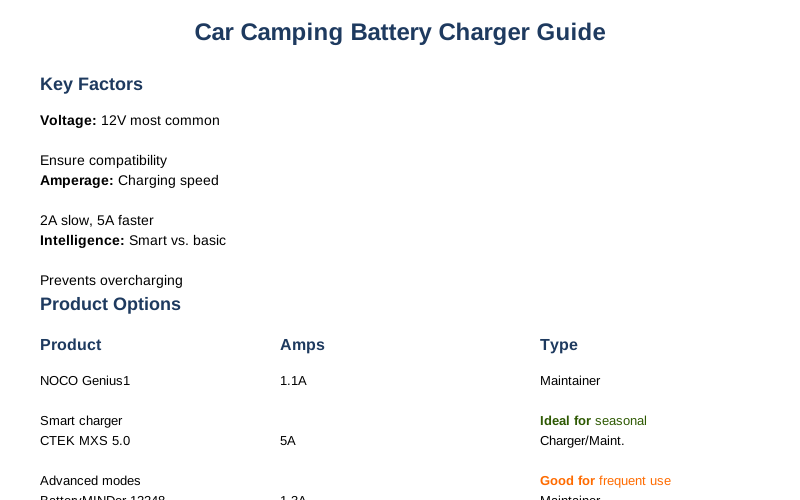
The core answer to choosing a battery charger maintainer is to match its amperage output and intelligence to your battery's needs and how you use your vehicle. Most standard car batteries are 12-volt, so you'll want a charger that specifically handles that voltage; some older vehicles or specific applications might use 6-volt or even 24-volt systems, but for your typical car camping rig, stick to 12-volt compatibility. It's not just about voltage, though.
Amperage is how fast it charges.
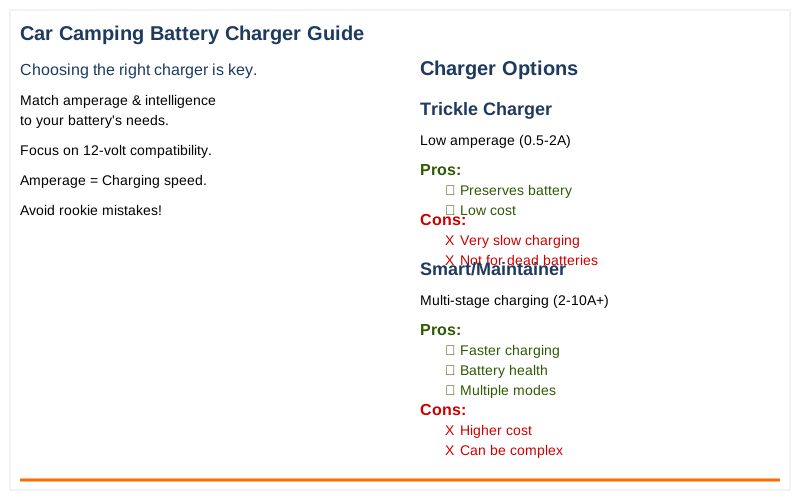
A 2-amp charger might take all day to bring a dead battery back to life, whereas a 5-amp charger can do it overnight. For a car battery that's just sitting and losing a bit of charge, a 2-amp to 5-amp maintainer is usually plenty.
If you need to revive a truly dead battery faster, you'll want something with a higher output, maybe 10 amps, but be careful not to overdo it - that's how you cook a battery.
The 'smart' aspect is crucial. These aren't just dumb boxes that blast power. Modern chargers are intelligent. They'll charge the battery up and then switch to a maintenance mode, only delivering a tiny trickle of power when needed to keep it topped off.
This prevents overcharging, which is a sure way to shorten your battery's lifespan. Think of it like a smart thermostat versus a basic heater.
I learned this lesson when I bought a cheap, old-school trickle charger for $15. It just kept dumping power into my battery, and I ended up replacing a perfectly good battery after only 18 months. Brilliant engineering, that.
A good smart charger will have multiple stages of charging and monitoring.
When you're looking at chargers, especially for extended storage or infrequent use, you want one that can maintain. This is different from just charging. A charger brings a battery up from a low state, while a maintainer keeps an already charged battery from self-discharging. For car camping, where your vehicle might sit for weeks between trips, a maintainer function is non-negotiable.
This distinction is key.
Some advanced chargers offer features like desulfation, which can sometimes revive a battery that's been neglected and has developed sulfate crystals on its plates. This is a more aggressive process and not something you need for regular maintenance, but it can be a lifesaver if you've forgotten about your battery for a while. My buddy Dave swore his battery was toast until he used a charger with a desulfator function; saved him $150.
Finally, consider the connections.
Most come with basic clamps, but many also offer ring terminals that you can permanently attach to your battery posts. This makes hooking up the charger a breeze. If you're going to use it regularly, especially if your battery is tucked away somewhere awkward, the ring terminals are a game-changer. It's the small things that make a big difference in the field.
Why This Matters for Your Setup
Why does any of this matter when you're just trying to get to a campsite? Because a dead battery means no ignition, no lights, no fridge, and no way to charge your phone. I once got to the Ouachita National Forest in Arkansas and realized my truck battery was so low from running the stereo the night before that it barely had enough juice to start.
That was a tense 10 minutes.
Here's the real move for car camping:
- Keep it Charged During Storage: If your rig sits for more than a few weeks, a battery maintainer is your best friend. It's way cheaper than a new battery and definitely cheaper than a tow truck. I use a 2-amp maintainer on my Subaru when it's parked for long stretches, and it keeps it ready to roll.
- Emergency Jump-Start Capability: Some units double as jump starters.
While not a full-blown jump box, a charger with a higher amperage output (like 10 amps) can often bring a severely depleted battery up enough to start your engine in a pinch. This can be a lifesaver if you accidentally drain your battery running accessories.
- Powering Accessories: Many chargers have an inverter function, meaning they can provide AC power. This is handy for charging laptops or running small devices directly from the charger's battery, though it's not their primary purpose.
Think of it as a bonus feature for those times you're truly off-grid and need a little extra juice for something specific.
- Preventing Expensive Tow Bills: This is the big one. A dead battery is one of the most common reasons people get stranded. A reliable charger and maintainer can prevent that dreaded click when you turn the key.
My cousin Kevin learned this the hard way when he needed a $300 tow from a campsite in Utah because his battery died.
Making the Right Choice
Making the right choice for a battery charger maintainer boils down to simplicity and reliability. You don't need the most complex, feature-packed unit out there unless your situation demands it. For most car camping setups, a smart 12-volt charger with a 2-amp to 5-amp output and automatic maintenance mode is the sweet spot.
Think about your vehicle and how often you use it. If it's a daily driver, a maintainer might be overkill unless you're constantly draining it with accessories.
If it's a weekend warrior that sits for weeks at a time, it's practically essential. I've seen too many people get stranded because they skipped this simple step.
Don't get caught staring at a dead battery in the middle of nowhere. A little bit of upfront investment in the right charger maintainer can save you a lot of headaches, money, and missed adventures down the road. It's the $50 version of peace of mind for your vehicle's power source.