Why a hardwire kit unlocks your dashcam
A dashcam plugged into the cigarette-lighter socket records while you drive and then goes dark the moment you park — which is exactly when you want it watching for the hit-and-run in the parking lot or the break-in overnight. A hardwire kit fixes that by powering the camera directly from the fuse box, giving it the constant power that parking mode needs and a clean, hidden install with no cable dangling from the dashboard.
But hardwiring done wrong is how people wake up to a dead battery. The feature that separates a good kit from a dangerous one — an adjustable low-voltage cutoff that protects your starting battery — plus the right connector, the right channel support and the right fuse-tap, are exactly the details buyers overlook. This guide covers what actually matters, then matches it to the best picks with honest trade-offs and a head-to-head.
It is worth naming who this is for: dashcam owners who want true 24/7 parking protection, a tidy install, and the confidence that the camera will never flatten their battery. Once you understand the low-voltage cutoff and how kits match cameras, choosing the right one gets simple.
What to look for: the buying criteria
Low-voltage cutoff comes first and matters most: an adjustable cutoff and timer let the camera run parking mode while guaranteeing enough charge to start the car. Camera compatibility is next — the kit must match your camera's connector, voltage and channel count (single vs dual vs three-channel). Wire type follows: a three-wire ACC kit enables intelligent parking-mode switching that a two-wire kit cannot.
Fuse-tap and install round it out: the add-a-fuse adapter must match your fuse box (mini, micro or standard), and a clean wire run matters for a tidy result. We weighted the low-voltage cutoff and camera compatibility most heavily, because those decide whether the kit protects your battery and actually works with your camera.
- Adjustable low-voltage cutoff + timer to protect the battery
- Correct connector, voltage and channel support for your camera
- Three-wire ACC for intelligent parking-mode switching
- Fuse-tap matched to your fuse box (mini/micro/standard)
Our top picks for hardwiring a dashcam
One thing has changed since the last edition of this guide, and it changes the shape of the whole category: the standalone universal cutoff module is gone. For years the answer here was a separate box wired between the fuse box and whatever camera you owned, with the plug left as your problem to solve. That product class has effectively left the market. The cutoff now lives in an inline box moulded onto the hardwire cable itself, and the cable ends in one specific connector. “Universal” no longer means one module for any camera — it means a kit whose connector matches your camera.
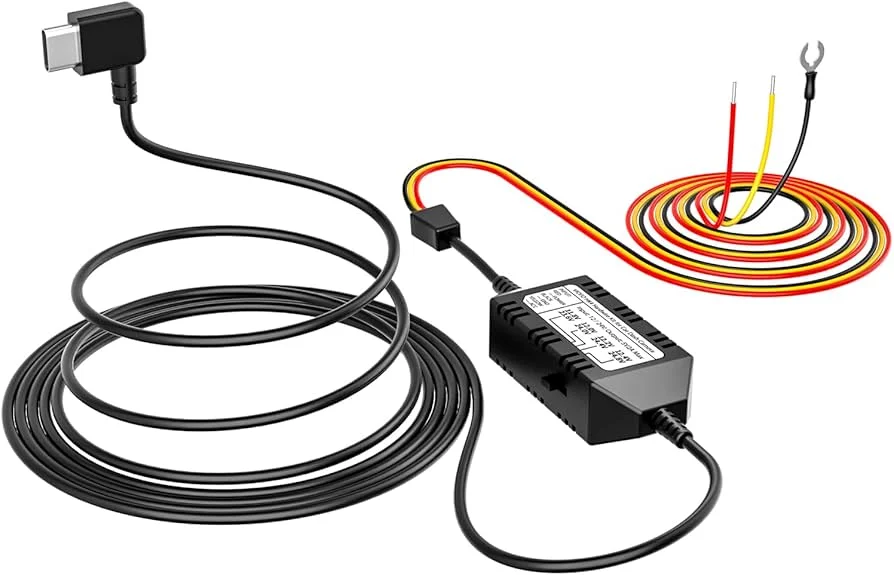
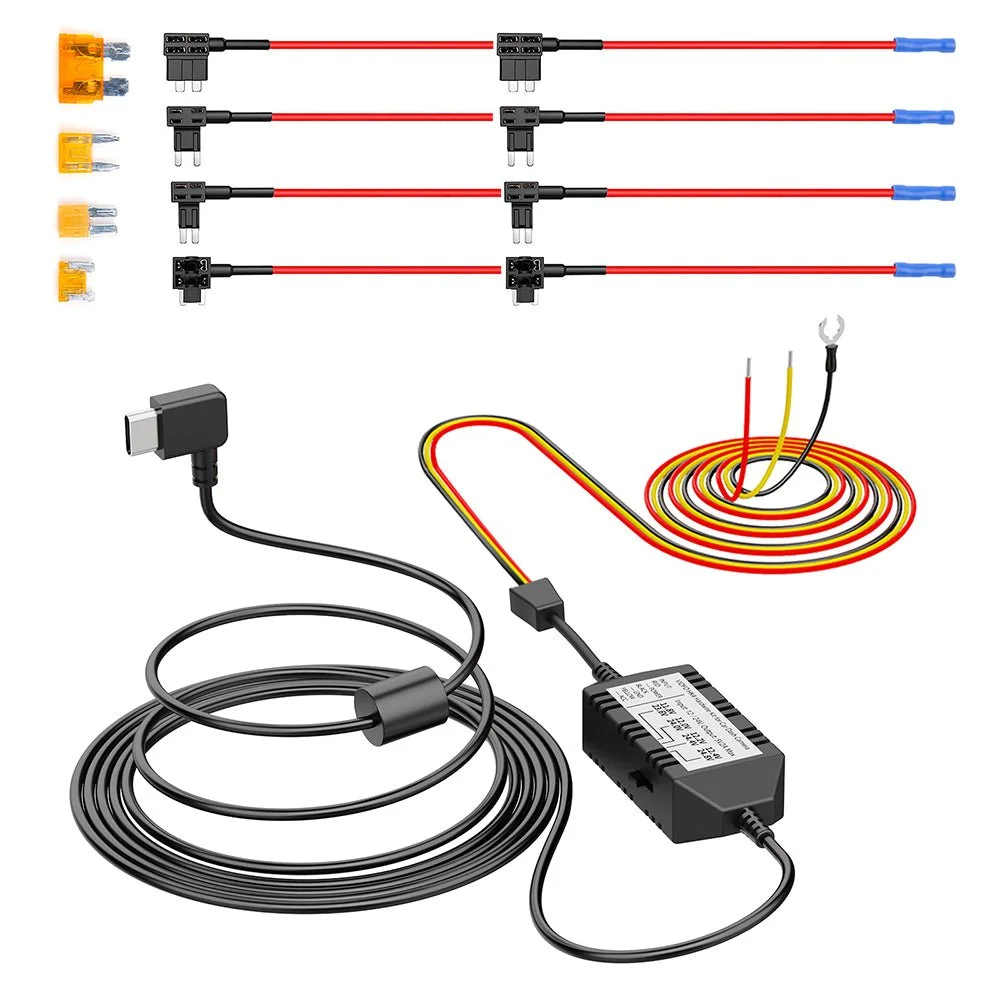
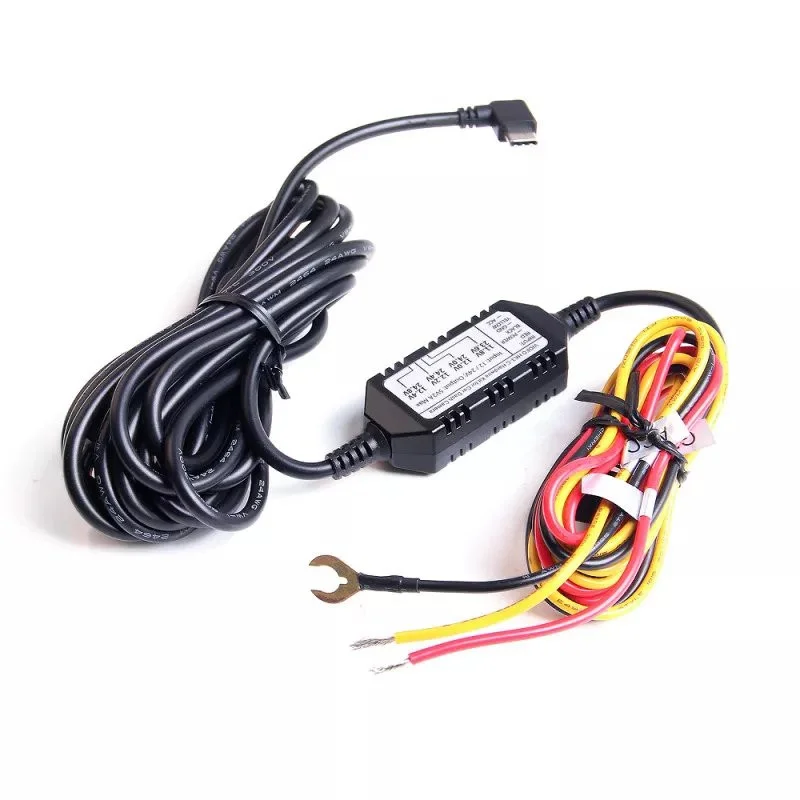
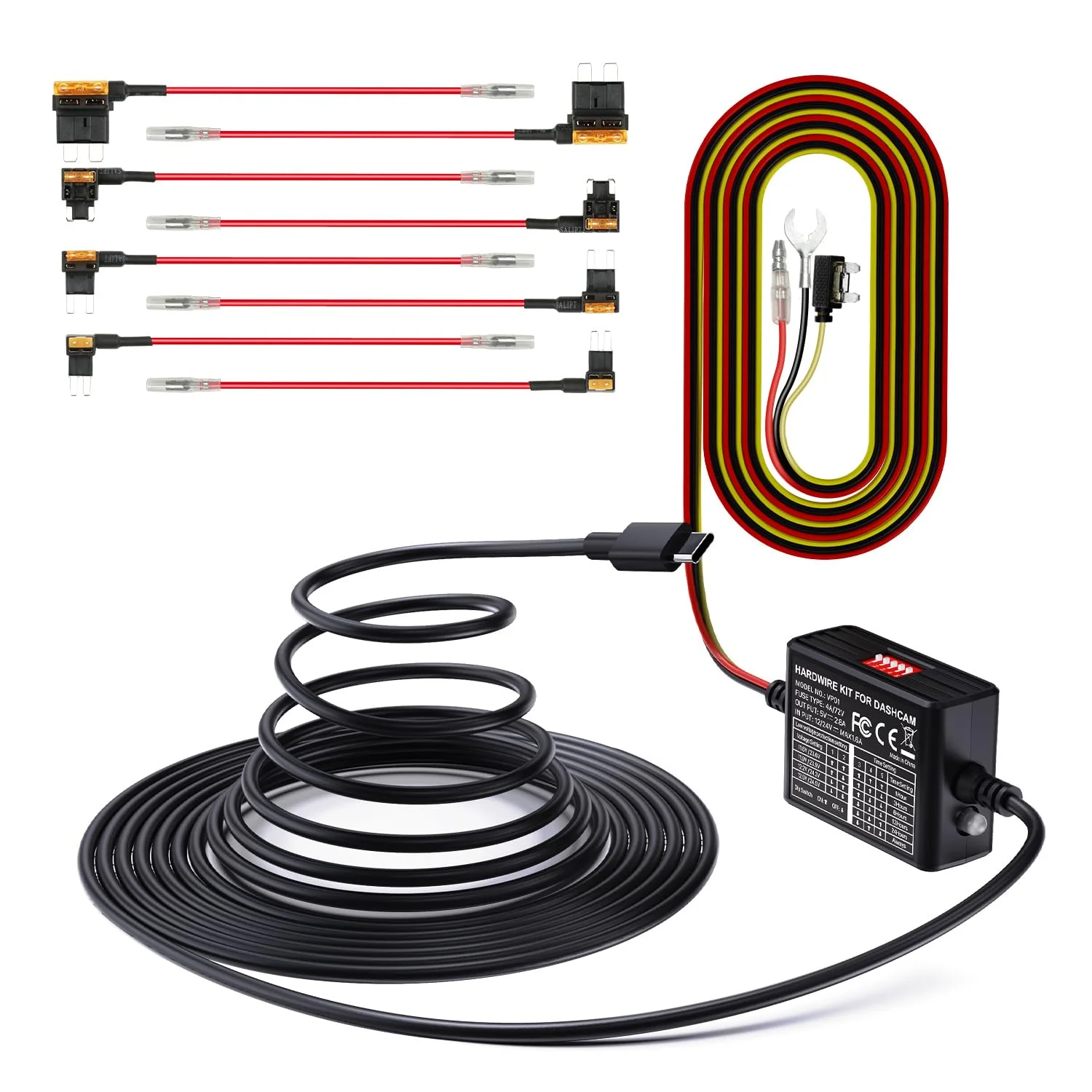
So the pick is made connector-first now. If your camera takes USB-C, the Vantrue 5-Level Adjustable ACC Hardwire Kit is the one to buy: it keeps both of the features those old modules were bought for — a low-voltage cutoff you select yourself (11.6V, 11.9V, 12.2V or 12.5V, and 23.6V to 24.5V on a 24V vehicle) and a parking timer set to 1, 3, 6, 12 or 24 hours or always recording.
It adds ACC linkage on top of that, so the camera shifts into parking mode the moment the ignition goes off. If your camera takes mini-USB or micro-USB, though, this is not your kit: buy your camera maker's own, or a multi-connector kit built for that plug.
Quick pick: best selectable cutoff and timer on a USB-C plug, the Vantrue 5-Level Adjustable ACC Hardwire Kit; best for Viofo, the Viofo HK4 ACC Hardwire Kit; best for Thinkware, the Thinkware Hardwiring Cable Kit; best for Nextbase, the Nextbase Hardwire Kit.
Head-to-head: which kit for which setup
The Vantrue 5-Level Adjustable ACC Hardwire Kit is the pick when the cutoff itself is what you are buying. The settings live on the inline box rather than in the camera's menu: you choose a cutoff of 11.6V, 11.9V, 12.2V or 12.5V (23.6V to 24.5V on a 24V truck or bus) and a parking timer of 1, 3, 6, 12 or 24 hours, or always recording. That is a conservative threshold on a tired battery, or a long overnight on a fresh one, decided by you rather than by the camera.
The catch is the plug. It is 14.8 ft of cable ending in USB-C and nothing else. Vantrue also state the kit covers only their E1 Pro, N4(S), N4 Pro S, N5(S), E360, S1 Pro(Max), N2X and E2 among their own cameras, so a Vantrue owner should check the model list rather than trust the brand name.
The Viofo HK4 ACC Hardwire Kit is the right answer for Viofo owners — the correct three-wire connector and parking-mode behavior with zero adapter guesswork.
The low-voltage cutoff: the feature that protects your battery
If you remember one thing, make it this: the low-voltage cutoff is what stands between parking mode and a dead battery. A hardwire kit draws power even with the ignition off, and a camera left recording for days will slowly drain the battery. The cutoff constantly measures voltage and shuts the camera off at a threshold you set, leaving enough charge to start the car.
The best kits make this adjustable. The Vantrue 5-Level Adjustable ACC Hardwire Kit and the Viofo HK4 ACC Hardwire Kit both let you pick the cutoff voltage, and the Vantrue adds a parking timer on top of it — so you can set a conservative threshold on an older battery, or a longer run on a fresh one. Set it too low to squeeze out more recording time and you risk a no-start; set it sensibly and parking mode is genuinely safe. On a car that sits for days at a time, lean conservative — a few hours less parking footage is a fair trade for always starting in the morning.
The honest rule: never run a hardwired parking-mode dashcam without an adjustable low-voltage cutoff, and set it conservatively on any battery that is not new.
Matching the kit to your camera: connectors and channels
The most common ordering mistake is buying a kit that does not fit the camera. Three things must line up. The connector must match your camera's power port — mini-USB, USB-C or a proprietary barrel plug. The voltage must match. And the channel count matters: a single-channel camera and a dual or three-channel rig can have different power needs and connectors.
- Connector: mini-USB, USB-C or proprietary — must match the camera
- Channel count: single vs dual vs three-channel can need different kits
- Safest path: your camera maker's own kit for your model
And this is the part of the advice that has genuinely changed: there is no longer a standalone module you can put in front of any camera. The cutoff rides on the cable now, so the Vantrue 5-Level Adjustable ACC Hardwire Kit is a USB-C kit and only a USB-C kit — exactly right if that is your camera's port, useless if your camera is mini-USB or micro-USB, in which case you want a multi-connector kit or your camera maker's own. When in doubt, buy the kit your camera's manufacturer built for your exact model.
Installation: fuse-taps, grounding and a clean run
Hardwiring is a satisfying DIY job if you go slowly. You tap a fuse in the fuse box with an add-a-fuse adapter sized to your box (mini, micro or standard — check before you order), ground the kit to bare metal, and route the wire up the A-pillar and along the headliner to the camera so nothing dangles. A trim tool and a circuit tester make it much easier.
A few cautions keep it safe and clean. Choose a fuse that suits how you want parking mode to behave, or use the kit's switched ACC wire on a three-wire setup like the Viofo HK4 ACC Hardwire Kit. Never route the wire through an airbag path or pinch it in a panel. Set the Vantrue 5-Level Adjustable ACC Hardwire Kit's cutoff and timer on its inline box before you button everything up — those switches live on the box, not in the camera's menu, so they are awkward to reach once the trim is back on.
If the fuse box intimidates you, a professional install is inexpensive and gives a factory-clean result — there is no shame in paying a shop to do a tidy, safe job on a job you will only do once.
Parking mode strategy: getting the most from your setup
A hardwire kit is only as useful as the parking mode you pair it with, and the modes are not all equal. Continuous recording captures everything but uses the most power and storage. Motion and impact detection records only when something happens, sipping far less power — the better choice for a car that sits for days.
Tune the strategy to your situation. If you park on a busy street overnight, impact-plus-motion detection with a conservative cutoff balances protection and battery life. If you store the car for a week, lean on impact-only or a timer — the Vantrue 5-Level Adjustable ACC Hardwire Kit can be set to cut power after 1, 3, 6, 12 or 24 hours, so it stops drawing well before the battery is at risk. And keep a high-endurance memory card in the camera, because parking mode writes for long stretches and a consumer card wears out fast. The kit, the cutoff and the parking-mode settings are one system; set them together.
Battery health, voltage and the older-car caveat
A hardwire kit is only as safe as the battery behind it, and this is where many parking-mode setups quietly go wrong. The low-voltage cutoff measures voltage, but a tired or aging battery sags faster under the camera's draw and may dip to the cutoff threshold in hours rather than overnight. If your battery is more than a few years old, set the Vantrue 5-Level Adjustable ACC Hardwire Kit or Viofo HK4 ACC Hardwire Kit cutoff conservatively — on the Vantrue that means picking 12.5V rather than 11.6V — and check the morning voltage for the first week to learn how long your specific battery actually tolerates parking mode.
Older vehicles add another wrinkle: their charging systems and wiring may be less tolerant of the constant small draw, and a marginal battery that starts the car fine on a daily commute can still be flattened by a weekend of parking-mode recording.
Two practical moves help. First, drive the car regularly enough to keep the battery topped up, or use a maintenance charger if it sits for long stretches. Second, consider a three-wire ACC kit so the camera only draws heavily when you intend it to, and lean toward impact-only detection rather than continuous recording on a car that does not see daily use. The kit, the battery and your driving pattern are one system; a fresh battery and a conservative cutoff are cheap insurance against a no-start.
- Aging battery: set the cutoff higher and verify morning voltage
- Older wiring: drive regularly or use a maintenance charger
- Car that sits: impact-only detection, three-wire ACC kit
Common mistakes buying a dashcam hardwire kit
The predictable errors cost money or a battery. The first is buying a kit with no adjustable cutoff, then draining the battery in parking mode — never run parking mode without the protection a selectable cutoff like the Vantrue 5-Level Adjustable ACC Hardwire Kit's provides. The second is ordering the wrong connector or channel kit, then finding it will not plug into your camera; match it to your exact model or buy the Viofo HK4 ACC Hardwire Kit-style brand kit.
- No adjustable cutoff: parking mode drains the battery
- Wrong connector/channel: the kit will not fit the camera
- Wrong fuse-tap size: a maddening install setback
- Cutoff set too low: a dead battery and a no-start
Verdict
Buy your camera manufacturer's kit if it makes one, confirm the connector and fuse-tap size, set the cutoff conservatively on any older battery, and pair it with a sensible parking mode and a high-endurance card. Do that and your dashcam watches over your car around the clock for years; skip the cutoff or mismatch the connector and you will be jump-starting the car or returning the kit.