Where to Start
Did your dash cam just flicker out mid-drive? It's not the camera's fault – it's probably your power source. That flimsy USB charger or unreliable cigarette lighter adapter is a ticking time bomb for your dash cam, risking voltage spikes and drops that can corrupt your footage or even fry the unit. Stop treating your dash cam like a disposable gadget and give it the stable, dedicated power it needs to protect you on the road. I've seen too many cameras meet an untimely end due to flaky power.
Quick Verdict
- The best hardwire kits use a step-down converter, usually 12V to 5V, with robust voltage regulation. This prevents power fluctuations from damaging sensitive camera electronics.
- Look for kits with low-voltage cut-off (LVC) circuits. These monitor your car battery's voltage and shut off the dash cam if it drops below a pre-set threshold, typically 11.8V to 12.0V, to prevent discharge.
- A good kit includes fuse taps for a clean, secure connection to your vehicle's fuse box. This avoids splicing into factory wiring, which is a recipe for intermittent circuit integrity issues and warranty headaches.
- USB-C connectors are becoming standard. They offer better mechanical stress resistance and higher current delivery compared to older mini/micro USB.
- For parking mode, a three-wire kit (constant 12V, accessory 12V, ground) is essential. The constant wire keeps the camera powered for monitoring, while the accessory wire tells it when the ignition is on.
- Avoid kits with cheap, thin gauge wire. Higher gauge (lower number) wire reduces voltage drop over longer runs, especially critical for dash cams that pull 0.5A to 1.5A.
- Installation should be straightforward with clear instructions.
VIOFO models often integrate this directly.
Ensure compatibility with your specific dash cam.
If the kit assumes you're an auto electrician, it's probably not for the average user. Reddit discussions highlight this pain point.
Computed headroom: every load this page states, against the 2A limit it states. Nothing here is a spec-sheet import — it is arithmetic on figures this page already states (2A, 1.5A, 0.5A). The formula is the plain one: headroom = 2A − the stated draw. Only figures the page itself calls a limit or a draw are used; a negative result is printed as an overage, not rounded away.
| What the page states | Figure | Against the 2A limit |
|---|---|---|
| …to 1.5A | 1.5A | 0.5 A spare |
| …especially critical for dash cams that pull 0.5A to… | 0.5A | 1.5 A spare |
Read the last column first: 2 of the 2 fit under it (most headroom 1.5 A), measured against the 2A this page states as the limit.
What to Look For
You want a hardwire kit that won't turn your car's electrical system into a Christmas tree or leave you stranded with a dead battery. It's all about managing current flow and protecting against voltage sag. Here's what I prioritize:
| Feature | Why It Matters (Physics/Engineering) |
|---|---|
| Low-Voltage Cut-Off (LVC) | Prevents battery discharge below a safe threshold (e.g., 11.8V). Without it, your dash cam will pull current until the battery's chemical potential is too low to crank the engine. This feature protects the battery from irreversible sulfation. |
| Supercapacitor vs. Battery | Dash cams with supercapacitors (like most VIOFO models) handle thermal cycling better. Lithium-ion batteries swell and fail at 140 degrees F (60 degrees C) inside a hot car, leading to premature failure. |
| Fuse Taps (Add-A-Fuse) | Provides a non-invasive, secure connection to the fuse box. Splicing into factory wiring introduces points of high resistance and potential for corrosion, compromising circuit integrity. |
| Input Voltage Range | Should tolerate typical vehicle voltage fluctuations (10V-16V). Cheap regulators might fail or pass unstable voltage to the camera, leading to data corruption or hardware damage. |
| Output Current Rating | Must match or exceed your dash cam's power requirements (e.g., 1.5A for a 5V camera). Underrated kits will cause voltage drop and thermal stress on the regulator, leading to early failure. |
| Wire Gauge | Thicker wire (lower gauge number) reduces resistive losses and voltage drop, ensuring stable power delivery over the length of the run. Thin wire can heat up, increasing resistance. |
| Connector Type (USB-C) | USB-C offers a more robust mechanical bond and higher current capacity than micro-USB. Less play means less arcing and fewer connection failures. |
Our Top Picks for Reliable Performance
I've seen enough janky installations and fried electronics to know what works. These kits hit the sweet spot for mechanical integrity and circuit protection, keeping your dash cam powered without turning your car into a fire hazard. Texas Diamond Garage highlights similar reliability.
One thing has changed since the last edition of this guide, and it changes how you shop. The standalone cut-off module — a separate box you wired in front of whatever camera you owned, the BlackVue Power Magic Pro being the one everybody named — is discontinued, and that product class has effectively left the market. The cut-off now rides on the hardwire cable itself, and the cable ends in one specific connector. So the first question is no longer “which module?” but “what plug does my camera take?” If parking mode is the whole reason you are hardwiring, our companion guide to dashcam hardwire kits for parking mode works the same picks from that angle.
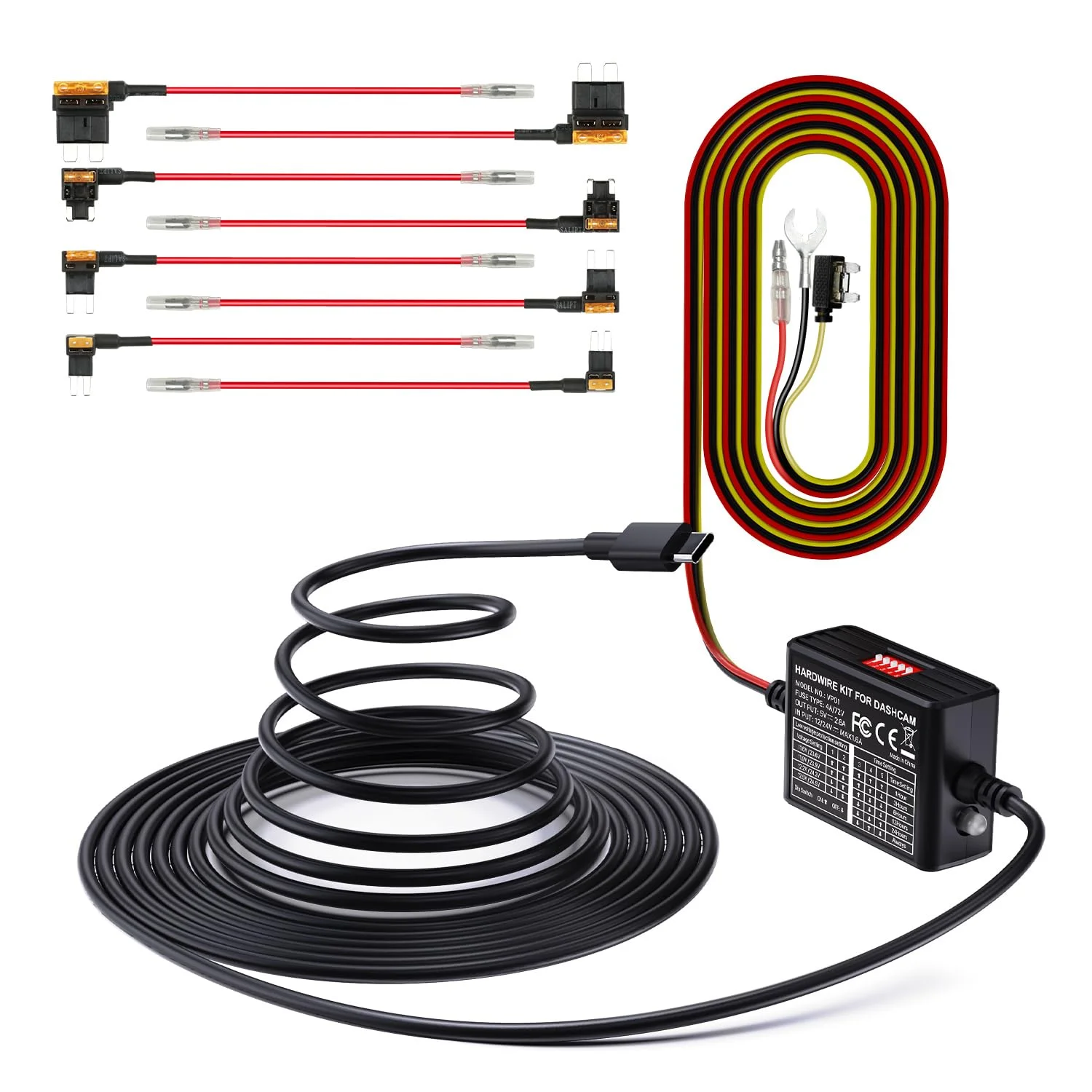
Vantrue 5-Level Adjustable ACC Hardwire Kit
- Output: 12–24V in, 5V out, USB-C plug, 14.8 ft cable.
- Pros: the closest thing left to the old standalone battery guards, and the only kit here that gives you both halves of the job. You pick the cut-off (11.6V, 11.9V, 12.2V or 12.5V, and 23.6V to 24.5V on a 24V truck or bus) and you pick how long it keeps recording once you have walked away — 1, 3, 6, 12 or 24 hours, or always. Both live on dip switches on the inline box rather than in the camera's menu. ACC linkage drops it into parking mode when the ignition goes off, and add-a-fuse taps and a ring ground come in the box.
- Cons: it is 14.8 ft of cable ending in USB-C and nothing else — useless on a mini-USB or micro-USB camera. Vantrue also lists only the E1 Pro, N4(S), N4 Pro S, N5(S), E360, S1 Pro(Max), N2X and E2 among its own cameras, so check your model rather than trusting the brand name. It is the priciest of the three fuse-box kits here.
- Best For: 12V and 24V rigs alike, and anyone with a USB-C camera who wants to decide the cut-off voltage and the run time instead of accepting whatever the manufacturer picked.
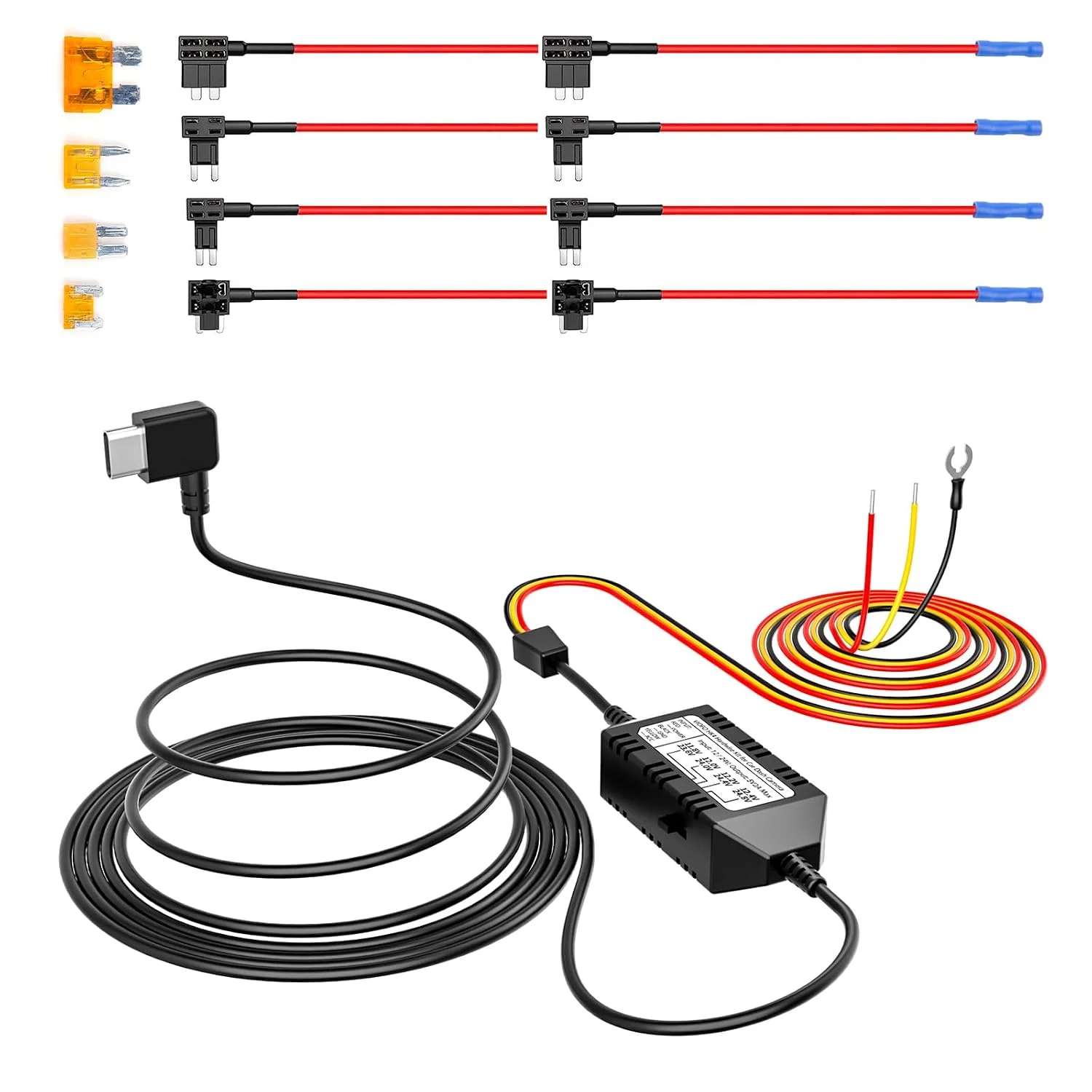
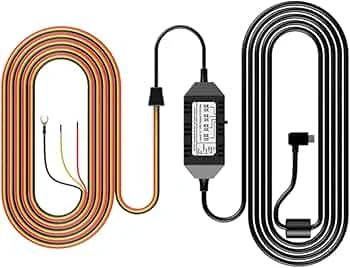
- Output: 12–24V in, 5V/2A out, Type-C plug, 13.1 ft (4 m) cable.
- Pros: VIOFO's own kit for VIOFO's own cameras, so the connector and the parking-mode handshake are guaranteed. Four cut-off settings on the inline box — 11.8V, 12.0V, 12.2V or 12.4V, doubling to 23.6V–24.8V on a 24V vehicle — and an ACC lead that switches the camera to parking mode the moment the engine stops. Eight circuit fuse taps come in the box, so you are not guessing at your fuse-box size on install day.
- Cons: locked to VIOFO's current line — A329 series, A229 series, A119 Mini 2, A139 Pro, WM1 and T130. VIOFO says outright that it does not fit the older mini-USB A119 V3 or A129 cameras.
- Best For: anyone running a current VIOFO dash cam who wants guaranteed compatibility and a cut-off they can actually set. It just works.
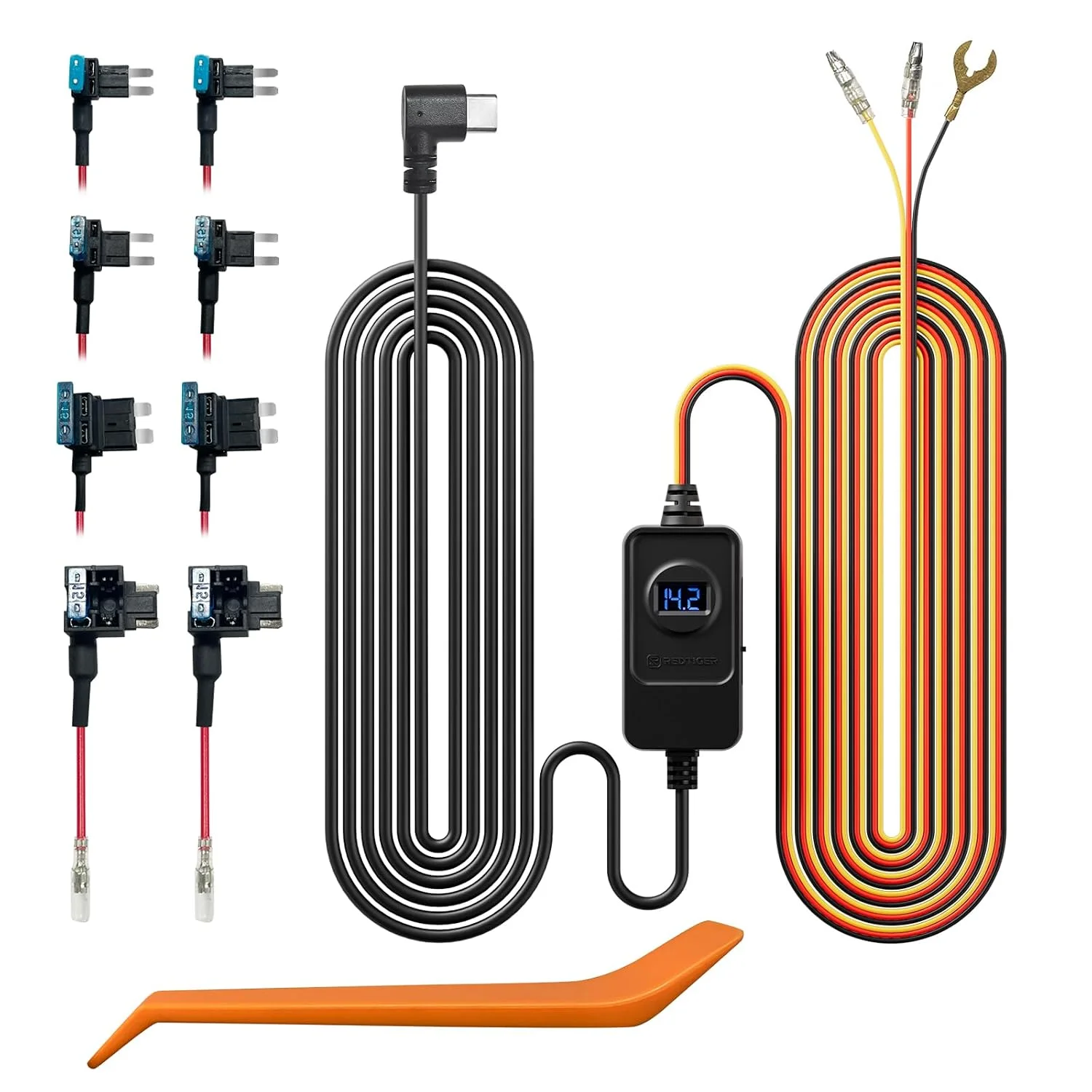
REDTIGER F7N Dash Cam Hardwire Kit
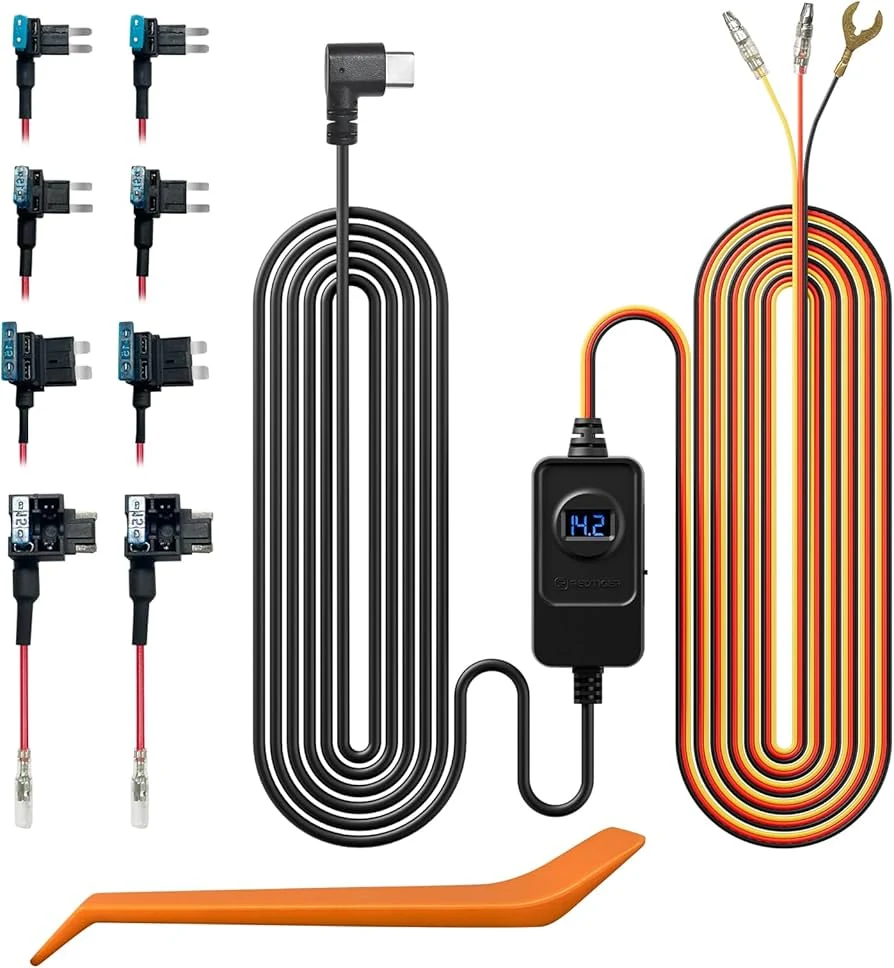
- Output: 12–24V in, 5V/2A out, Type-C plug.
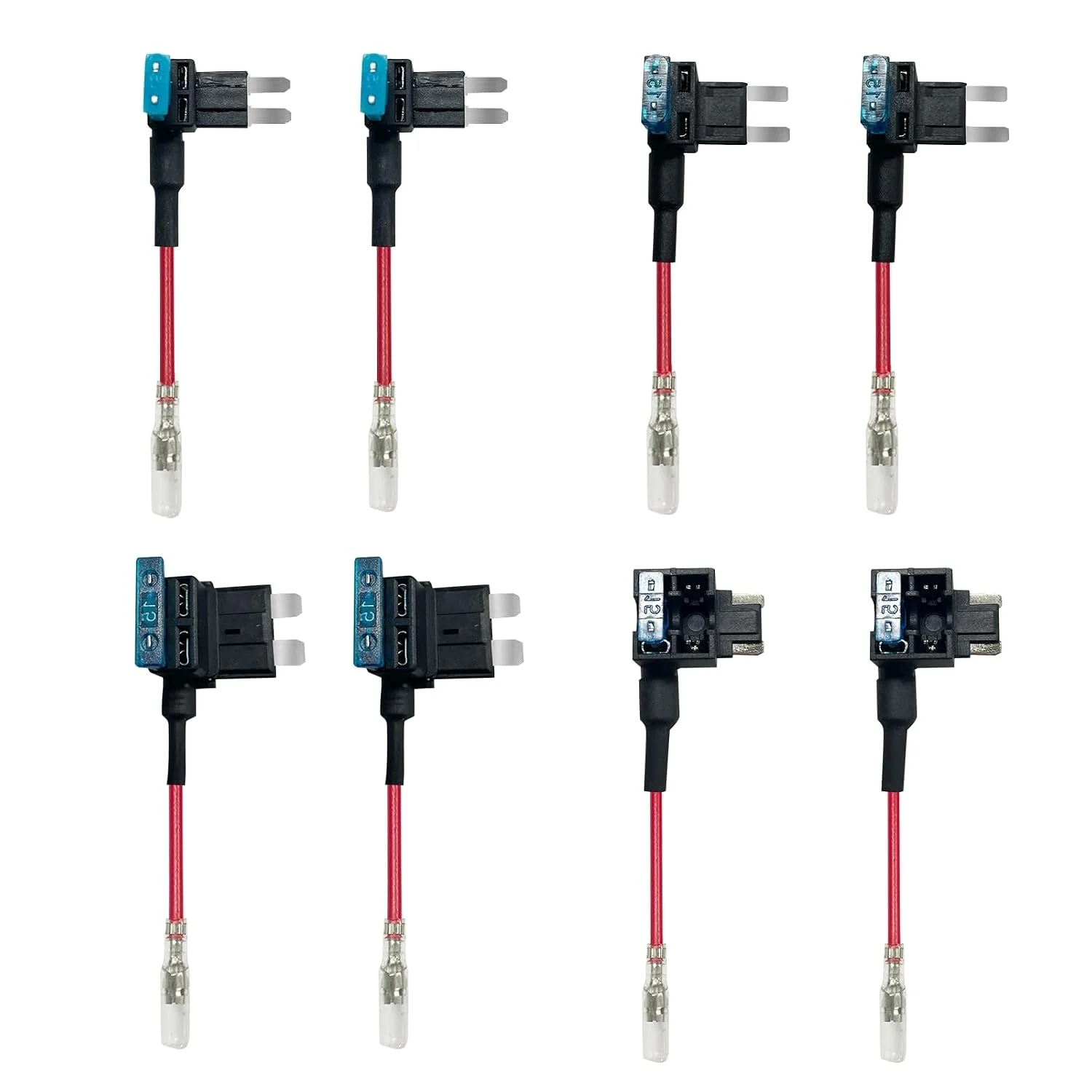
- Pros: brand-agnostic — REDTIGER states the Type-C plug works with any dash cam that takes one, which is the point if your camera's maker doesn't sell a kit. Low-voltage protection pulls power 60 seconds after the battery drops below 11.8V (plus or minus 0.2V), with over-current, short-circuit, reverse-connection and overheat protection on top of it. Eight fuse taps and a trim tool are in the box, and the inline module carries a little voltmeter so you can read battery voltage without crawling under the dash with a meter.
- Cons: the cut-off is fixed at 11.8V. No choice of threshold, no timer. REDTIGER also says it is not for vehicles running above 24V.
- Best For: a USB-C camera from a brand that doesn't make its own kit, where you want a real cut-off and a voltage readout and don't need to tune the threshold.
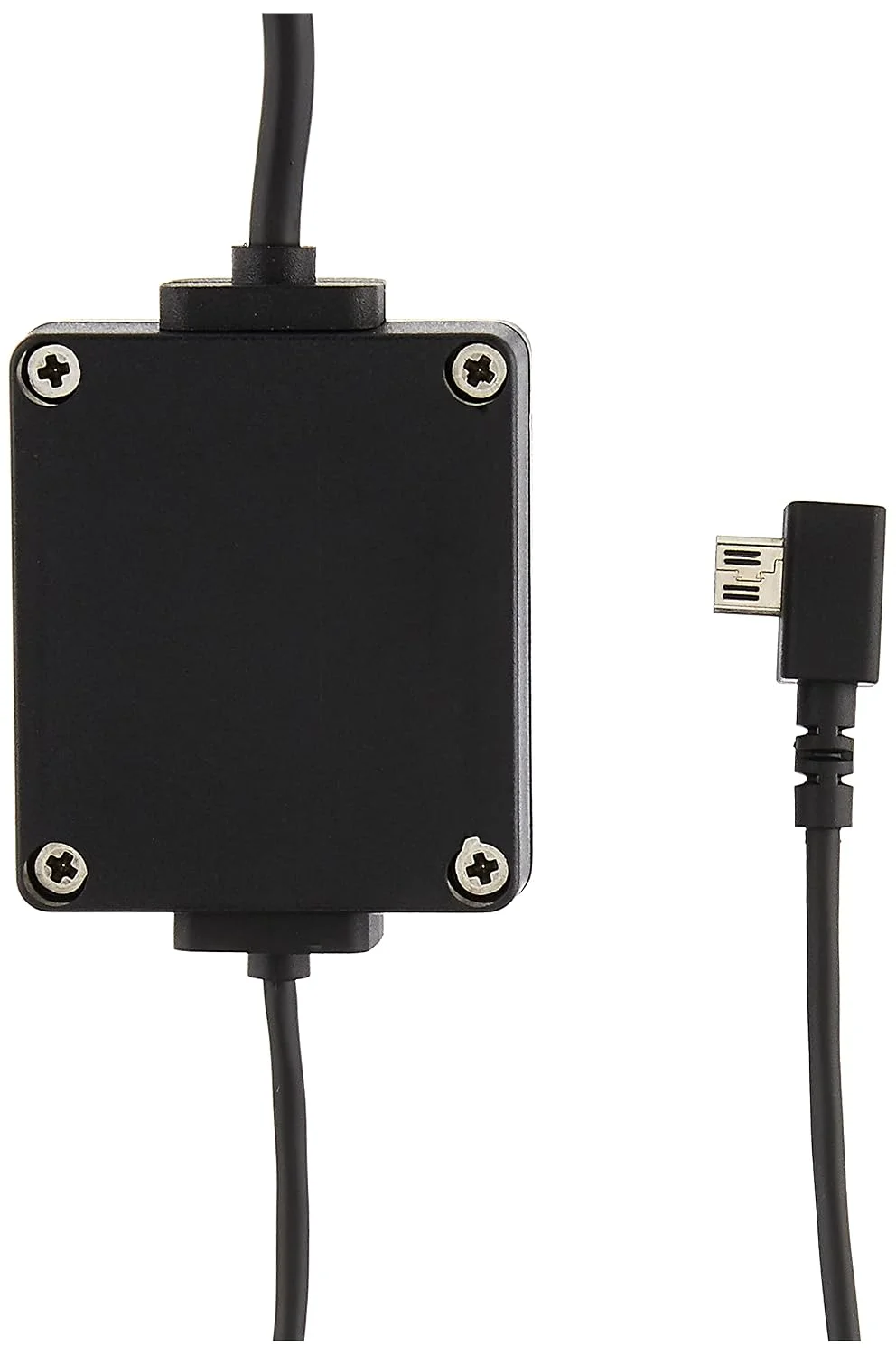
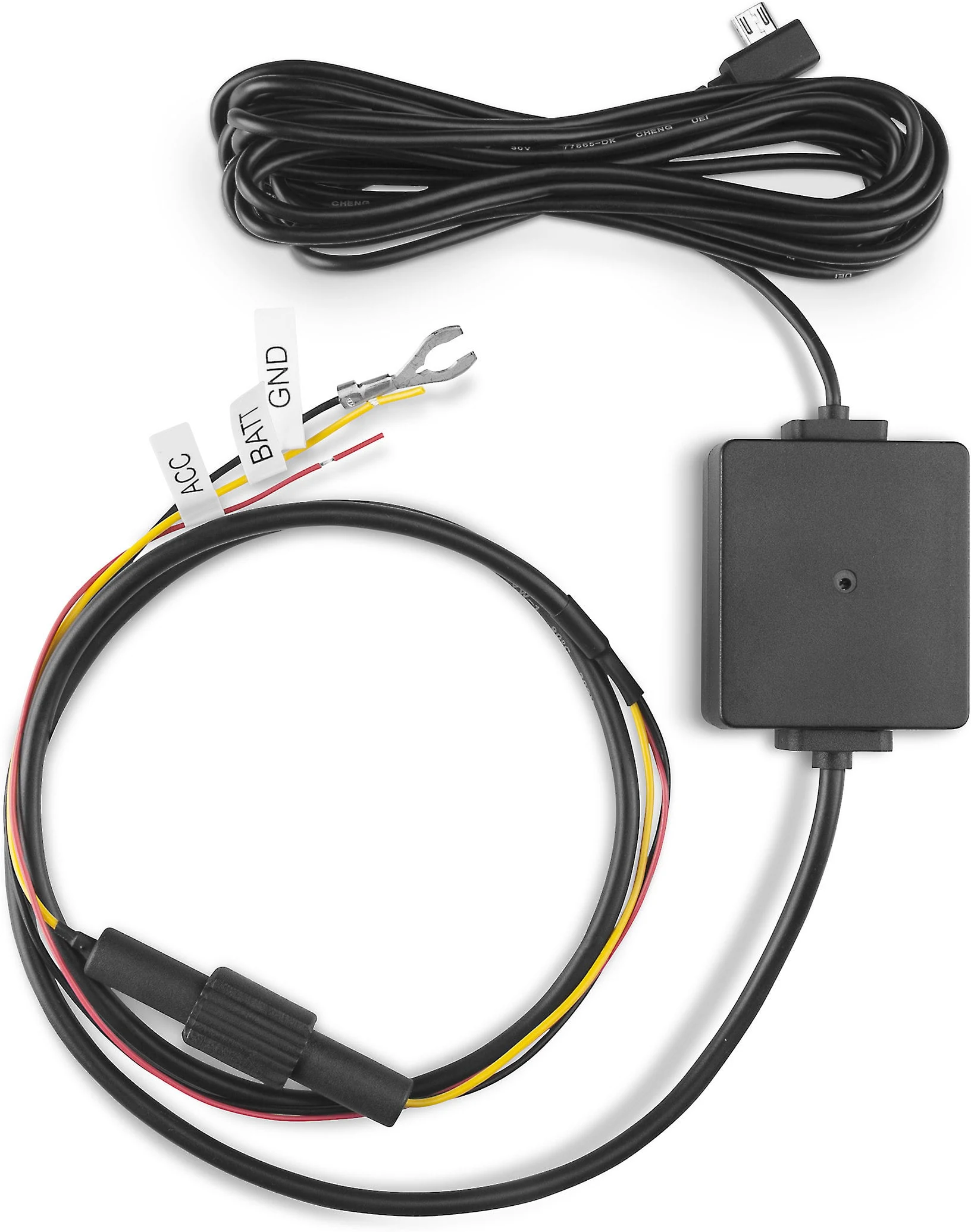
- Output: three leads (ACC, BATT, GND) into the fuse box, micro-USB at the camera. Garmin part 010-12530-03.
- Pros: it is the manufacturer's own part, so parking mode and the camera's motion detection behave exactly the way Garmin documents them. No adapter guesswork, no wondering whether the handshake will work.
- Cons: Garmin cameras only — Dash Cam 45, 46, 47, 55, 56, 57, 65W, 66W, 67W, Mini, Mini 2 and Tandem. And note what the listing does not claim: no low-voltage cut-off is published for this cable, so your battery protection is whatever your camera's own parking-mode settings give you, not a threshold on the cable.
- Best For: Garmin dash cam owners who want the manufacturer's part and are happy to let the camera manage the battery.
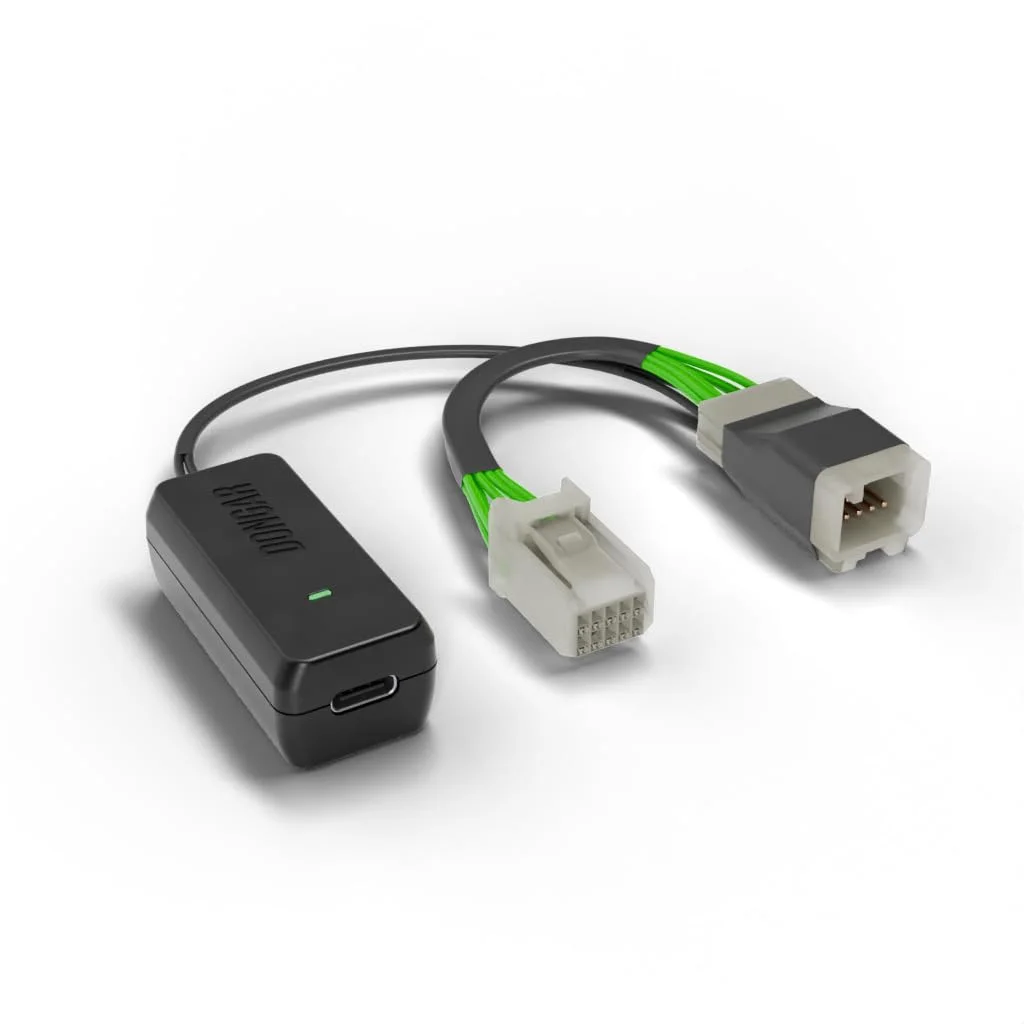
Dongar Classic Dashcam Integration USB-C Power Adapter
- Output: 12–24V in at 2A max; USB-C out at 5V/3A, 9V/2A or 12V/1.5A, 18W max.
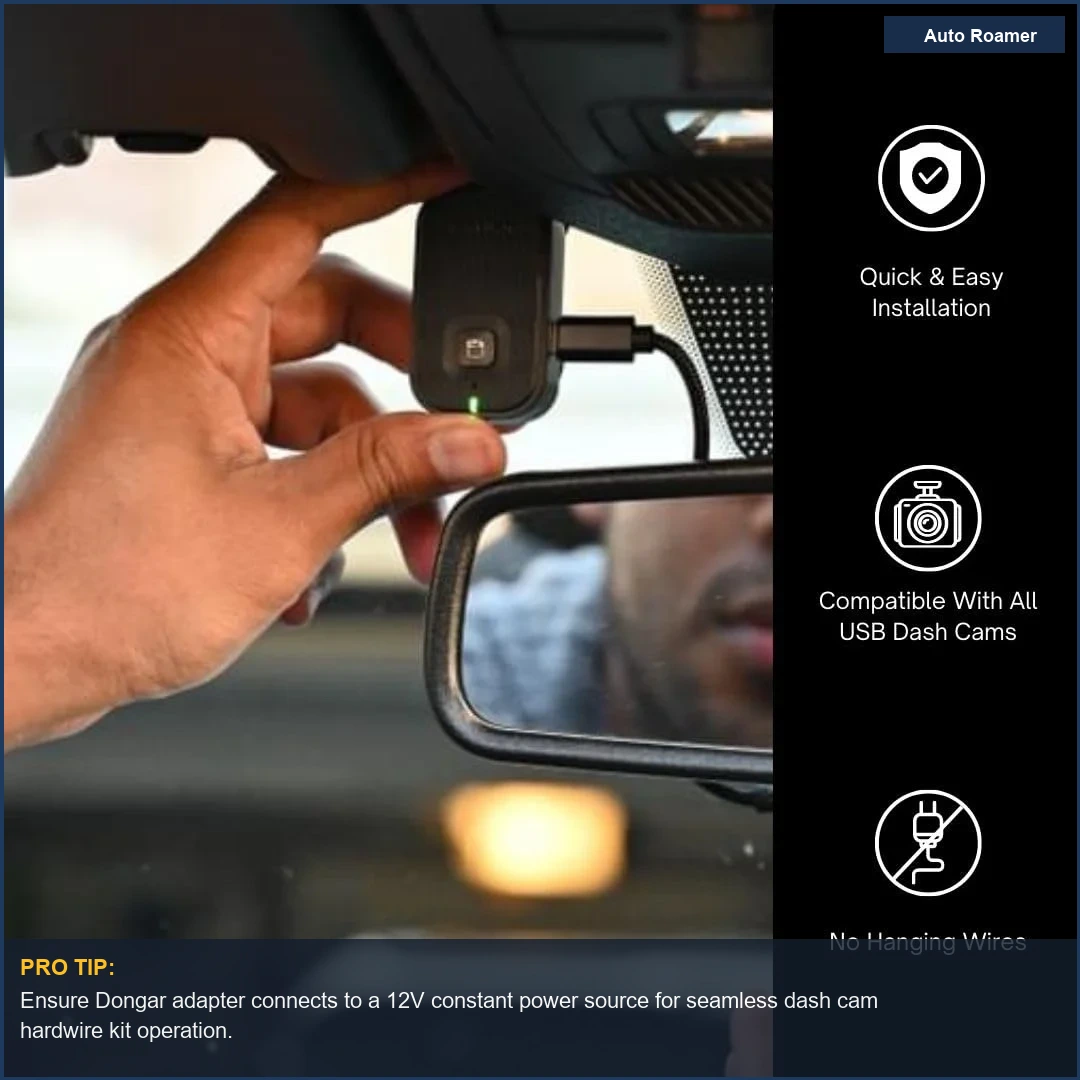
- Pros: it taps the rearview-mirror harness instead of the fuse box. Nothing is spliced, nothing is permanent, the factory wiring is untouched and the whole install hides behind the mirror. On the right car it is the cleanest install in this entire category.
- Cons: it needs an auto-dimming or powered mirror, and it is vehicle-specific — Dongar lists select Chrysler 300 (2019+) and Pacifica (2023+), Dodge Challenger (2020+) and Durango (2018+), Jeep Cherokee (2014+) and Grand Cherokee (2019+), and RAM 1500 (2020+ DT). Read this next part twice: Dongar states the adapter powers your camera only when the ignition is on, and that it is not designed for parking mode or constant power. If parking mode is why you are here, this is the wrong buy.
- Best For: drivers on one of those vehicles who only record while driving and want the easiest, most reversible install there is.
Head-to-Head Comparison
When you're trying to decide between hardwire kits, it's not about brand loyalty; it's about the cold, hard specs and how they translate to real-world reliability. Plenty of these come and go. YouTube guides show the installation process, but not the long-term failure modes.
| Feature | Vantrue 5-Level ACC Kit | VIOFO HK4 | REDTIGER F7N |
|---|---|---|---|
| Low-voltage cut-off | Four settings: 11.6V, 11.9V, 12.2V or 12.5V (23.6V–24.5V on a 24V vehicle). | Four settings: 11.8V, 12.0V, 12.2V or 12.4V (23.6V–24.8V on a 24V vehicle). | Fixed at 11.8V (plus or minus 0.2V); power is pulled 60 seconds after the threshold is crossed. |
| Parking timer | 1, 3, 6, 12 or 24 hours, or always recording. | None claimed — ACC detection only, so the camera decides when to stop. | None claimed. |
| Input / output | 12–24V in, 5V out. | 12–24V in, 5V/2A out. | 12–24V in, 5V/2A out. REDTIGER says it is not for vehicles above 24V. |
| Cable and connector | 14.8 ft, USB-C. | 13.1 ft (4 m), Type-C. | Type-C. REDTIGER does not publish a cable length for this kit. |
| Camera fit | Any Type-C dash cam, per Vantrue; among Vantrue's own cameras only the E1 Pro, N4(S), N4 Pro S, N5(S), E360, S1 Pro(Max), N2X and E2. | VIOFO A329 series, A229 series, A119 Mini 2, A139 Pro, WM1 and T130 only. Explicitly not the mini-USB A119 V3 or A129. | Any dash cam with a Type-C power port, per REDTIGER. |
| Where the settings live | Five dip switches on the inline box — two set the voltage, three set the timer. | Dip switches on the inline box. | Nothing to set. An LED voltmeter on the module reads out battery voltage. |
| In the box | Add-a-fuse taps and a ring ground terminal. | Eight circuit fuse taps. | Eight fuse taps and a trim tool. |
The Vantrue is the only one of the three that lets you cap how long the camera keeps recording once you have walked away, and that timer is what the extra money buys — on a tired battery it is worth more than a tenth of a volt of cut-off precision. The VIOFO is the safe pick if you already own a current VIOFO camera: same brand, right plug, fuse taps included, nothing to guess. The REDTIGER sits in the middle as the brand-agnostic option, trading adjustability for a voltage readout you can actually see.
Quick pick: best cut-off and timer on a USB-C plug, the Vantrue 5-Level Adjustable ACC Hardwire Kit; best for a current VIOFO camera, the VIOFO HK4 Hardwire Kit; best brand-agnostic USB-C kit with a voltage readout, the REDTIGER F7N Dash Cam Hardwire Kit. The three are close enough on price that the plug and the behaviour, not the sticker, should decide it.
Budget vs Premium: Where Your Money Actually Goes
Don't let marketing fluff about 'enhanced features' fool you. The core difference between a bargain-bin hardwire kit and a well-made one boils down to component quality, precision engineering, and the robustness of the voltage regulation. It's not about the 'experience,' it's about the mean time to failure. Wirecutter reviews often highlight higher-end options, but let's break down why.
| Feature | Budget Kit | Premium Kit |
|---|---|---|
| Low-Voltage Cut-Off (LVC) | Fixed, often less precise. Tolerance might be +/- 0.2V, which can mean the difference between starting your car and walking. | Adjustable, accurate to +/- 0.05V. Uses higher-grade comparators and reference voltages for precise battery protection. |
| Voltage Regulator | Cheaper linear regulators or basic buck converters. Higher heat dissipation, less efficient, more susceptible to input voltage spikes. | High-efficiency switching regulators (buck converters) with better heat sinking. Wider input voltage range, lower thermal cycling stress. |
| Wire Quality | Thinner gauge wire (e.g., 22AWG) with PVC insulation. Higher resistance, more prone to mechanical stress failure at crimps. | Thicker gauge wire (e.g., 18AWG) with higher temperature-rated insulation (e.g., XLPE). Lower voltage drop, better shear resistance. |
| Connectors | Generic USB connectors, sometimes with poor tactile feedback. Fuse taps might be flimsy, leading to intermittent contact. | Branded, robust USB-C or proprietary connectors. High-quality fuse taps with proper strain relief and secure mechanical bond. |
| Circuit Protection | Basic fuse, minimal transient voltage suppression. | Multiple fuses, robust TVS diodes, reverse polarity protection. Over-engineered to prevent electrical damage. |
| Thermal Stability | Components rated for lower operating temperatures, leading to outgassing and premature failure in hot climates. | Industrial-grade components rated for 185 degrees F (85 degrees C) or higher. Less susceptible to thermal degradation. |
So, while a budget kit might work initially, the premium option is buying you long-term circuit integrity and peace of mind. You're paying for components that won't fail after 100 thermal cycles in a parked car.
The Bottom Line
Don't be the guy with a dash cam that dies three months in because you skimped on the power delivery. A hardwire kit isn't just about 'neatness' or 'parking mode'; it's about the fundamental circuit integrity of your dash cam's power supply. Without a stable 5V or 12V input, you're looking at intermittent operation, corrupted footage, or a completely dead unit. This YouTube video reinforces the need for proper installation.
Prioritize a kit with a reliable Low-Voltage Cut-Off (LVC) to protect your car battery. This isn't a luxury; it's a necessity to prevent premature battery sulfation and ensure your engine cranks when you need it.
Always use proper fuse taps. Splicing wires is a hack that introduces points of high resistance, potential corrosion, and a guaranteed headache down the line. Keep your electrical system clean.
Match the connector type and current output to your specific dash cam. A USB-C kit for a micro-USB camera is useless, and an underpowered kit will cause voltage sag and thermal stress on the camera's internal regulator.
Spend the extra $20-$30 on a quality kit. It's a fraction of the cost of replacing a dash cam or, worse, dealing with a dead car battery because of a cheap, poorly designed power supply. Your peace of mind is worth the marginal cost.