The Short Version
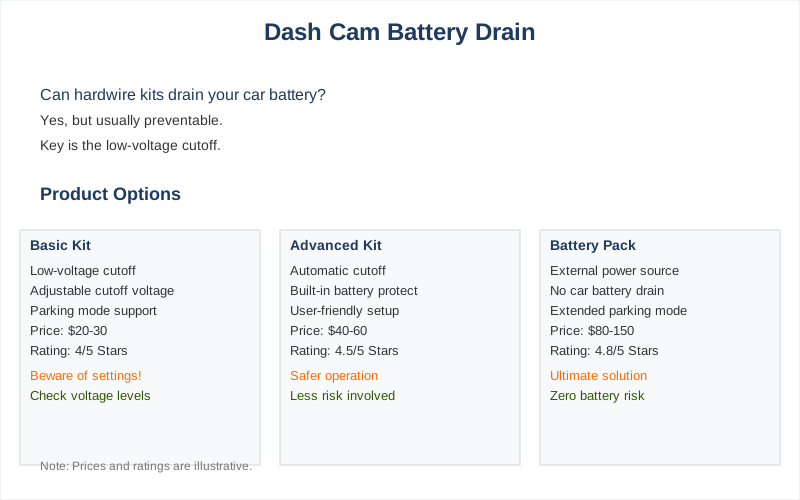
A dash cam hardwire kit, designed to keep your camera running when the engine is off, absolutely can drain your car battery. It's not some abstract theory; it's a real-world problem I've seen pop up on forums and experienced indirectly. The trick isn't just plugging it in, but understanding how these kits actually work and what safeguards are built in. Get it wrong, and you'll be that person calling for a jump start on a Tuesday morning.
Reddit users are all too familiar with this, sharing tales of dead batteries after a week parked.
The Core Answer
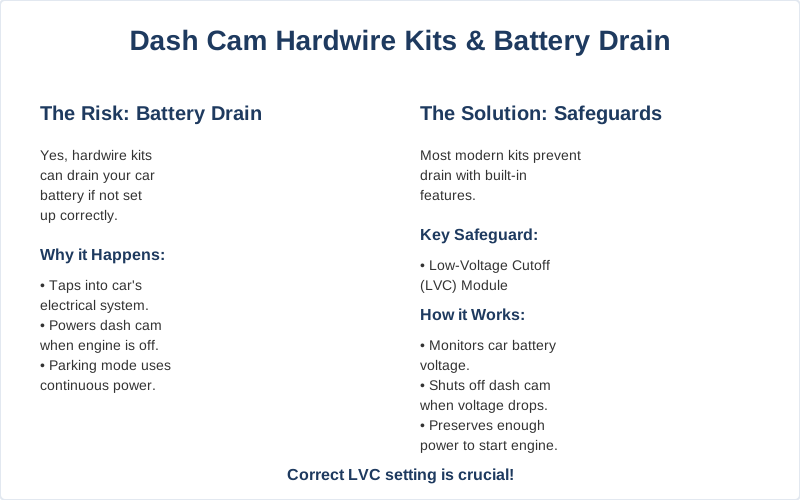
So, does a hardwire kit drain your car battery? Yes, but not usually if it's set up correctly. The honest version is that the dash cam itself draws a small amount of power, especially in parking mode. If you're just plugging into the cigarette lighter, it only works when the car is on. But when you hardwire, you're tapping into the car's electrical system directly, which means it can run even when the car is off.
This is where the potential drain comes in. I saw a guy on a forum who left his parking mode on for a week and his Acura MDX wouldn't start. Rookie mistake, but a common one. The fix is usually the low-voltage cutoff feature. Most decent hardwire kits have this built-in. It's a little module that monitors your car's battery voltage.
When it drops below a certain point, it automatically shuts off power to the dash cam, saving enough juice to start your engine. This is the crucial safeguard that prevents you from ending up stranded. The real move is to set this cutoff voltage correctly. Too low, and you risk a dead battery. Too high, and you won't get much recording time in parking mode. Most kits let you set it anywhere between 11.4V and 12.4V.
A properly functioning kit with this feature won't kill your battery. It's like setting a bedtime for your dash cam. Without it, it'll just keep sipping power until your car is useless. The key is understanding that this low-voltage cutoff is your best friend against battery drain. It's not about the dash cam being inherently bad, but about how it's connected and protected. The $50 version of a hardwire kit usually includes this. The $10 version?
Probably not so much. What nobody tells beginners is that the quality of the hardwire kit matters immensely. Not all are created equal. Some might not have a reliable cutoff, or the cutoff might be set too low by default. I've seen people install them and immediately have issues because they didn't check the settings or the kit itself was faulty. It's game-time for your battery when you rely on these things.
Why This Matters for Your Setup
Why does this even matter for your setup? Because leaving your dash cam on all the time without proper protection is a fast track to a dead car battery. I've heard stories from friends who had their cars towed because they couldn't start them after a weekend trip. It's not just a mild inconvenience; it can cost you time and money. The hardwire kit's job is to be smart about power.
It should automatically shut off power when the battery voltage gets too low, usually around 11.4V. This prevents the battery from being drained to the point where the car won't start. Consider this: your car battery isn't designed to be constantly powering a small electronic device for days on end. It's meant for starting your engine and running accessories when the engine is on.
Without that low-voltage cutoff, you're essentially asking your battery to do more than it's designed for, especially in parking mode. The main takeaway here is that a properly installed and configured hardwire kit with low-voltage protection is essential. It's the difference between a convenient recording setup and a car that sits dead in your driveway.
Making the Right Choice
So, to wrap it up, a dash cam hardwire kit can drain your car battery, but it doesn't have to. The key lies in the features of the hardwire kit itself. Low-voltage protection is non-negotiable. This feature acts as a safety net, automatically cutting power to the dash cam when your car's battery voltage drops to a predetermined level, ensuring you can still start your car. Without it, especially when using parking mode, you're asking for trouble.
Many kits are designed to cut power at around 11.6V, which is a good benchmark. Always check the specifications of the hardwire kit you're considering. If it doesn't explicitly mention low-voltage cutoff, steer clear. It's the most basic feature for preventing battery drain. The $50 version is usually worth it for the peace of mind. Your car's battery is a critical component, and you don't want to gamble with it.