The Short Version
My first time getting a flat tire on a camping trip, my dog, Buster, thought it was game-time for zoomies. We were off I-81 in Virginia, 30 minutes from cell service, and my spare was flat too. Rookie mistake. Turns out, having a plan for your furry co-pilot when your vehicle decides to take a nap is just as important as having one for yourself. I learned that the hard way, with Buster panting excitedly while I wrestled a jack.
A guide to road tripping with your dog often focuses on food and water, but what about when the car breaks down?
Most car camping guides tell you to pack extra water and a first-aid kit, which is solid advice. What nobody tells beginners is that a roadside emergency with a pet adds a whole new layer of stress.
You're not just thinking about yourself; you're thinking about Fido or Mittens, who probably thinks this whole breakdown is either a fun adventure or the end of the world. Pet FBI reminds us to update ID tags and pack a travel kit, but those are for prevention, not for the middle of a breakdown.
I've been stuck roadside with a pet twice. The first time, my 'plan' was hoping someone would stop.
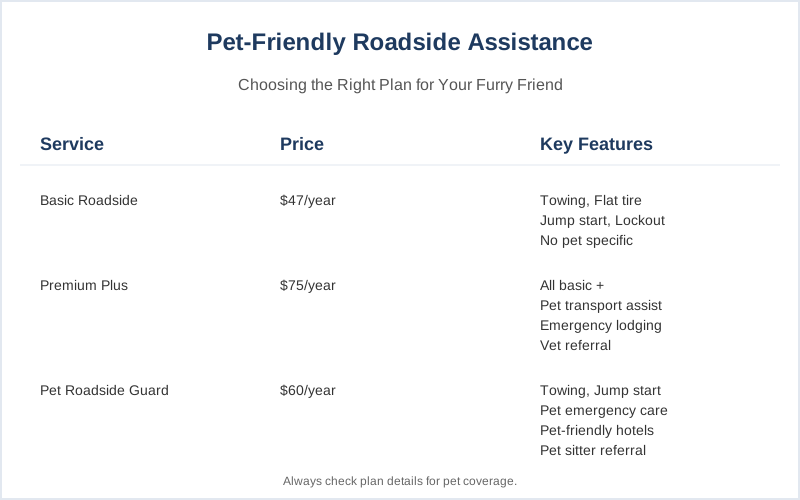
The second time, I had a plan, and it involved a specific roadside assistance service. It made all the difference, turning a potential disaster into a minor inconvenience. This isn't about fancy gear; it's about being prepared for the inevitable hiccups that come with hitting the road with your best friend. My $47 experiment in Shenandoah Valley taught me about cold. My $0 'hope for the best' plan with Buster taught me about pet-friendly roadside assistance.
Quick Verdict
When your vehicle decides to become a stationary art installation, and you've got your pet along for the ride, a good roadside assistance plan is your best friend. I've been there, staring at a smoking engine with a confused beagle staring back.
- The $50 Version: If you're on a tight budget, check if your existing auto insurance or credit card offers any basic roadside assistance.
Some do, and it might cover a tow, but usually without any pet-specific perks. It's better than nothing, but don't expect a luxury experience.
- The Real Move: Look for plans that explicitly mention pet services. This isn't just about towing; it's about what happens to your pet if you end up in the hospital, like Good Sam TravelAssist covers.
My biggest fear was being stranded and not having a safe place for Buster.
- Towing Distance is Key: Many basic plans offer a 5-10 mile tow. That's fine if you break down in a city, but if you're out in the sticks, 10 miles barely gets you to the next cow pasture. Aim for plans with at least 100 miles, or unlimited.
Reddit users often complain about short tow limits.
- Lockout Service: I locked my keys in my Subaru once, with Buster happily sleeping inside. The roadside tech got there in 43 minutes. Without a plan, that's a locksmith call, which is easily $100-$200.
- Emergency Fuel Delivery: Running out of gas is a rookie mistake I've made more times than I care to admit. Having someone bring you 2 gallons can save you a long, hot walk.
- Battery Jump-Starts: Cold weather kills batteries.
My old Civic's battery died at a campground in the Allegheny Mountains. A jump-start saved me from a very long morning.
- Tire Changes: While you should know how to change a tire yourself, sometimes the lug nuts are seized, or it's pouring rain. Having someone else do the dirty work is brilliant.
What to Look For
Choosing a pet-friendly roadside assistance plan isn't about finding the cheapest option; it's about finding one that fits your real-world needs when things go sideways. I learned that after my engine decided to seize up 50 miles from the nearest town.
What you really need to consider are the specific scenarios that would stress you out the most with your pet in tow. Consumer Reports advises looking at towing limits and services.
But with a pet, the game changes.
| Feature to Look For | Why It Matters for Pet Owners (My Field Notes) | Rookie Mistake to Avoid |
|---|---|---|
| Pet Transport/Boarding Coverage | If you're hospitalized, who takes care of Fido? Some plans cover temporary boarding or transport home. This is huge peace of mind. Good Sam TravelAssist offers up to $600 for boarding. | Assuming your regular roadside plan covers this.
It almost certainly doesn't. |
| Towing Distance (Minimum 100 miles) | You break down far from a pet-friendly mechanic or vet. A 5-mile tow isn't going to cut it when you need to get to a specific facility. | Picking a plan with a short tow limit and ending up paying out-of-pocket for extra miles. That's easily $5-$10 per mile. |
| Trip Interruption Benefits | If your car needs major repairs and you're stuck for days, some plans cover hotel stays.
You'll need to find a pet-friendly one, which can be harder and more expensive. | Not realizing these benefits exist, or that they often have pet-specific exclusions. Always read the fine print. |
| Emergency Message Relay | You're stranded, phone's dead, and someone needs to know you and your pet are okay. This simple service can be a lifesaver for worried family. | Assuming everyone has your itinerary or that you'll always have cell service.
Spoiler: you won't. |
| Vehicle Lockout Service | Locked your keys in the car with your pet inside? It happens. Fast response is critical, especially in hot weather. | Trying to break into your own car and causing more damage, or waiting hours for an expensive locksmith. |
| Coverage for RVs/Trailers | If you're car camping with a pop-up or a small trailer, make sure your plan covers those too.
Many standard plans only cover the primary vehicle. | Getting stuck with a disabled trailer and finding out your roadside assistance only covers the truck. Been there, done that, paid the separate tow bill. |
Our Top Picks for Reliable Performance
When it comes to pet-friendly roadside assistance, you're looking for more than just a tow. You need a plan that understands your furry co-pilot is family. I've seen enough forum horror stories about people stranded with pets to know that skimping here is a rookie mistake. Forbes Advisor lists several top plans, but let's break down which ones actually cater to pet owners.
Our Top Picks for Reliable Performance
Good Sam Premier TravelAssist (~$120/year)
- Key Specs: Up to $600 for pet boarding (max $60/day for 3+ days if you're hospitalized), up to $1,200 for pet return transport, trip interruption benefits up to $1,500.
- Pros: Explicit pet-specific coverage for emergencies, including boarding and transport home if you're unable to care for them.
This is the real move for peace of mind.
- Cons: Primarily focused on medical emergencies for the human, not just a simple car breakdown.
You're paying for comprehensive travel assistance, not just roadside.
- Best-for Use Case: Dedicated RVers and car campers who travel extensively with pets and want robust emergency medical and pet care coverage.
AAA Premier (~$100-$150/year, varies by region)
- Key Specs: One 200-mile tow, up to four 100-mile tows per year, trip interruption benefits up to $1,500, often includes pet discount programs for hotels.
- Pros: Excellent towing limits, wide network of service providers, and often includes discounts at pet-friendly hotels.
- Cons: While they offer pet discounts, direct pet emergency care (like boarding if you're hospitalized) isn't standard in their roadside plans.
- Best-for Use Case: Frequent road trippers with pets who need reliable towing and want access to pet-friendly travel resources.
Coach-Net Platinum (~$179/year)
- Key Specs: Unlimited towing (up to the nearest qualified repair facility), tire assistance, lockout, emergency fuel, trip interruption up to $2,000.
- Pros: Known for excellent customer service and unlimited towing, which is huge if you're far out.
Facebook groups praise Coach-Net for consistent follow-up.
- Cons: No explicit pet boarding or transport coverage beyond getting your vehicle to a repair shop.
More geared towards RVs and general vehicle breakdown.
- Best-for Use Case: RV and trailer owners who prioritize top-tier towing and general roadside assistance, and manage pet care separately.
Progressive Roadside Assistance (Add-on to insurance, ~$10-$20/year)
- Key Specs: Towing up to 15 miles (or nearest qualified repair shop), jump-starts, fuel delivery, lockout service.
- Pros: Extremely affordable as an add-on to existing car insurance. It's the $10 version of 'better than nothing.'
- Cons: Very limited towing distance, and absolutely no pet-specific services.
This is a bare-bones option.
- Best-for Use Case: Budget-conscious drivers who rarely travel far with pets and just need basic breakdown coverage.
Allstate Roadside Advantage (~$79/year)
- Key Specs: Up to 10 miles towing, jump-starts, flat tire changes, fuel delivery, lockout service. Optional higher-tier plans for longer tows.
- Pros: Decent coverage for the price point, and widely available.
- Cons: Standard plan has short towing limits, and like most, no specific pet care services.
You're on your own for Buster.
- Best-for Use Case: Drivers who want an affordable, standalone roadside plan and don't require extensive pet-specific emergency services.
Head-to-Head Comparison
When you're comparing roadside assistance plans, especially with a pet in tow, you're not just looking at sticker price. You're looking at what happens when your vintage Westfalia decides to drop its transmission in the middle of nowhere. I've been there, staring at a broken-down vehicle, wishing I'd read the fine print. Insurify suggests a generous towing limit.
| Feature | Good Sam Premier TravelAssist | AAA Premier | Coach-Net Platinum |
|---|---|---|---|
| Annual Cost | ~$120 | ~$100-$150 (varies) | ~$179 |
| Towing Limit | Varies by situation (often to nearest repair facility or home if medical emergency) | One 200-mile tow, four 100-mile tows | Unlimited to nearest qualified repair facility |
| Pet Boarding/Return | YES (up to $600 boarding, $1,200 return if owner incapacitated) | NO (discounts at pet-friendly hotels only) | NO |
| Trip Interruption | YES (up to $1,500) | YES (up to $1,500) | YES (up to $2,000) |
| Lockout Service | YES | YES | YES |
| Emergency Fuel | YES | YES | YES |
| RV/Trailer Coverage | YES (primary focus) | YES (often requires RV Plus membership) | YES (primary focus) |
| My Take | The gold standard if your main concern is 'what if I can't care for my pet due to an emergency?' Not just for car breakdowns. | Best all-around if you want serious towing power and travel benefits, but you'll need a separate plan for pet-specific emergencies. | Excellent for RVers who need maximum towing and don't want to worry about mileage limits.
Pet care is still on you. |
The honest version: AAA is great for getting your vehicle moved. Good Sam is for when your human body decides to quit, and you need someone to step in for your pet. Coach-Net is the big rig solution. Pick your poison based on your biggest fear. Pet planning is essential, and that includes roadside.
Budget vs Premium: Where Your Money Actually Goes
| Feature | Budget Roadside Plan (~$10-$50/year) | Premium Pet-Friendly Plan (~$100-$180/year) | Where Your Money Actually Goes (My Take) |
|---|---|---|---|
| Towing Distance | 5-15 miles | 100-200+ miles or unlimited | That extra $100 buys you peace of mind when you're 80 miles from the nearest town and the mechanic. My 10-mile tow once cost me an extra $70 out of pocket. |
| Pet-Specific Services | None | Boarding, transport, emergency vet referral (if you're incapacitated) | This is the game-changer. It's not about the car; it's about not leaving your pet stranded or uncared for if you end up in the ER. |
| Trip Interruption | Rarely included | Often includes hotel/rental car reimbursement | If your car needs a week in the shop, that hotel bill for you and your pet adds up fast. This is easily a $500+ value. |
| Lockout/Jump Start | Basic coverage | Same basic coverage, but often faster response times | The actual service is similar, but premium plans often prioritize these calls, meaning less time waiting with a stressed pet. |
| RV/Trailer Coverage | Usually not included | Often included or available as an upgrade | If you're pulling a camper, a budget plan for your truck won't cover the trailer. That's a separate, expensive tow you'll pay for. |
| My Honest Verdict | Fine for city driving, but a rookie mistake for serious car camping with pets. You'll pay more in stress and out-of-pocket costs. | Worth every penny for the peace of mind and comprehensive coverage, especially if you travel far and often with your pets. |
The difference isn't just about the services, it's about the depth of those services and the specific considerations for your pet. A 10-mile tow is great for getting to the local garage. A 100-mile tow is what you need when that local garage isn't pet-friendly or can't handle your specific breakdown. Don't cheap out when your best friend is on board.
The Bottom Line
Look, I've been there: staring at a dead battery with a confused dog, or a flat tire with a cat who thinks the world is ending. The honest version is, stuff breaks, and when you've got a pet along for the ride, those breakdowns become a lot more complicated. Allstate reminds us to plan for stops, but also for the unexpected.
- Prioritize Pet-Specific Coverage: If your biggest fear is being unable to care for your pet during a medical emergency, a plan like Good Sam TravelAssist is the real move. It's not just about the car; it's about their well-being.
- Towing Distance Matters: Don't get stuck with a 10-mile tow when you're 80 miles from anywhere. My personal rule of thumb is at least 100 miles.
- Read the Fine Print: Seriously.
What sounds good on paper might have exclusions for RVs, trailers, or specific types of breakdowns.
- Consider Trip Interruption: If your vehicle takes a vacation at the mechanic, you'll need somewhere for you and your pet to stay. Those costs add up fast.
- Don't Assume: Your regular auto insurance might offer basic roadside, but it almost certainly won't cover pet boarding or transport. That's a rookie mistake.
Choosing a pet-friendly roadside assistance plan isn't about being paranoid; it's about being prepared.
It's the difference between a minor inconvenience and a full-blown crisis when your vehicle decides to give up the ghost. Invest in peace of mind for you and your furry travel buddy.