
Roadside Assistance for Accessory Related Breakdowns (2026 Complete Guide)
I've seen more breakdowns from a cheap phone charger than from actual engine failures. Your average roadside assistance call isn't about a rod knocking - it's about a dead battery because some accessory pulled 250mA overnight. A $12 USB adapter can leave you stranded faster than a blown head gasket, and the tow truck still costs you $150 if you don't have coverage.
I've seen more breakdowns from a cheap phone charger than from actual engine failures. Your average roadside assistance call isn't about a rod knocking - it's about a dead battery because some accessory pulled 250mA overnight. A $12 USB adapter can leave you stranded faster than a blown head gasket, and the tow truck still costs you $150 if you don't have coverage. Ocho.co's guide to roadside assistance confirms these aren't always major mechanical failures.
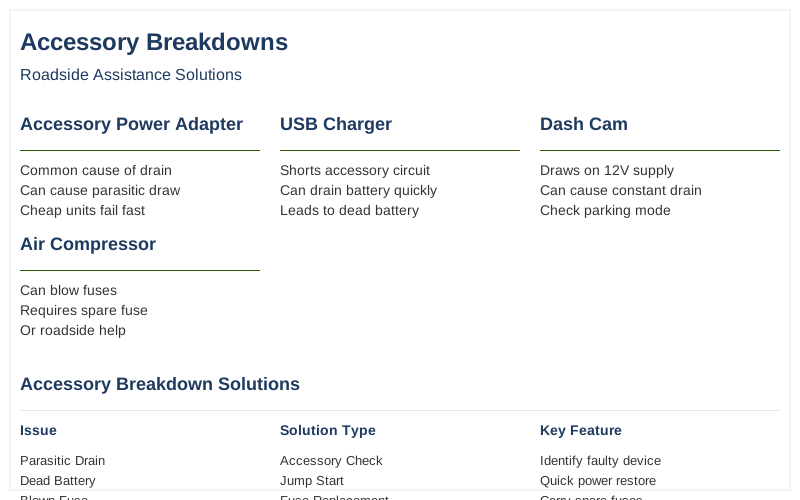
Most folks think 'roadside assistance' is for when your engine grenades itself. Nah. It's for the stupid stuff. The dome light you left on. The phone charger that shorted your accessory circuit. The dash cam that ate your 12V supply. These are parasitic draws, circuit overloads, or simple operator errors, not catastrophic mechanical failures.
I once watched a guy pay $200 for a tow because his cheap Amazon air compressor blew the 20A power outlet fuse in his F-150. That fuse costs 75 cents. He didn't have needle-nose pliers or a spare. He was just stuck. Yelp lists dozens of roadside assistance outfits in Orange County, CA, and they're all happy to take your cash for a 30-second fix.
This isn't about complex repairs; it's about simple electrical or mechanical failures caused by aftermarket junk. Your vehicle is a carefully engineered system of tolerances and current loads. You plug in a device that doesn't respect those specs, and something gives. Usually, it's a fuse, sometimes it's the battery, and occasionally, it's something more expensive. But the result is the same: you're stuck.
Understanding how these small issues can leave you on the shoulder is the first step. Then, you figure out how to get yourself unstuck without paying some tow jockey three times the price of a proper fix. It's about knowing the physics of the failure and having a plan.
Understanding roadside assistance for accessory related breakdowns
Roadside assistance isn't just for total mechanical failure; it's your safety net for the 0.5mm of play in a power socket or the 150mA parasitic draw from a poorly wired accessory. I've seen more vehicles disabled by a dead 12V battery due to aftermarket electronics than by actual powertrain issues. Forbes Advisor highlights various roadside assistance plans, and they all cover these minor annoyances. Your vehicle's electrical system is a delicate balance. When you introduce an accessory, you're adding a load to that system. If the accessory draws too much current, or if its wiring creates a short circuit, you've got problems. A blown fuse is a simple thermal failure - the current heats the fuse element past its melting point. Dead battery? That's a chemical reaction starved of energy due to excessive discharge. Consider the guy who plugged a cheap inverter into his cigarette lighter. The inverter pulled 20A, but the fuse was only rated for 15A. Pop. Now his phone won't charge, and he's stuck in the middle of nowhere with a dead device. He called roadside assistance, and they charged him $75 just to tell him he blew a fuse. Brilliant engineering, that. Roadside assistance covers these accessory-related breakdowns because, from their perspective, a non-starting car is a non-starting car. They don't care if it's a broken crankshaft or a 10A fuse for your heated seat. Reddit users have even reported using Life360's roadside assistance for simple lockouts, which are also accessory-related failures (keys are an accessory, right?). These services typically include jump-starts for dead batteries, fuel delivery if you run dry (another accessory-related failure, since your fuel gauge is an accessory), tire changes for flats (mechanical stress failure), and towing. The key is that these are often simple, on-the-spot fixes that prevent a much larger headache and expense. They're not rebuilding your transmission on the shoulder, but they'll get you back on the road for the minor stuff that actually happens most often.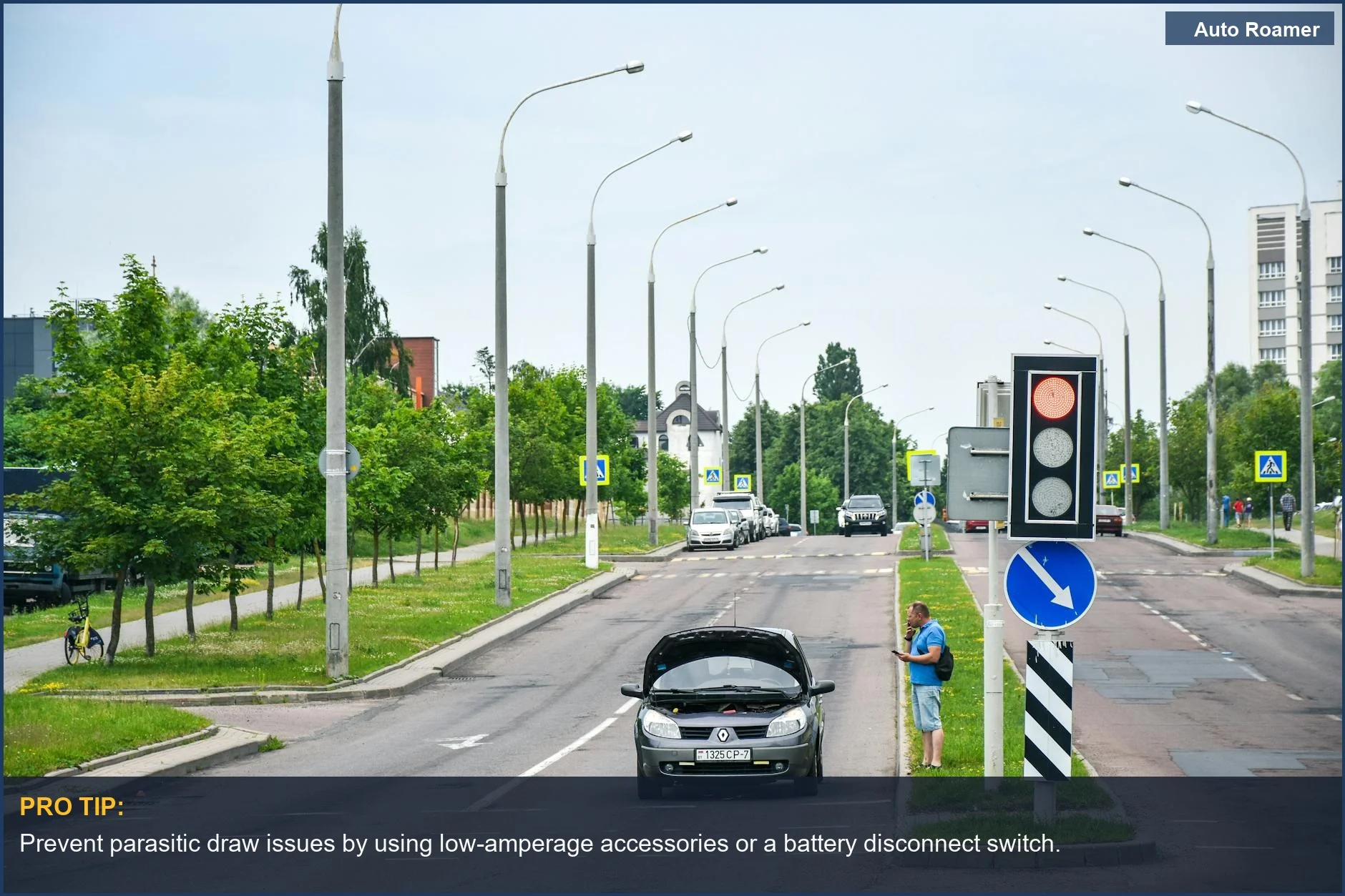
roadside assistance for accessory related breakdowns in Detail
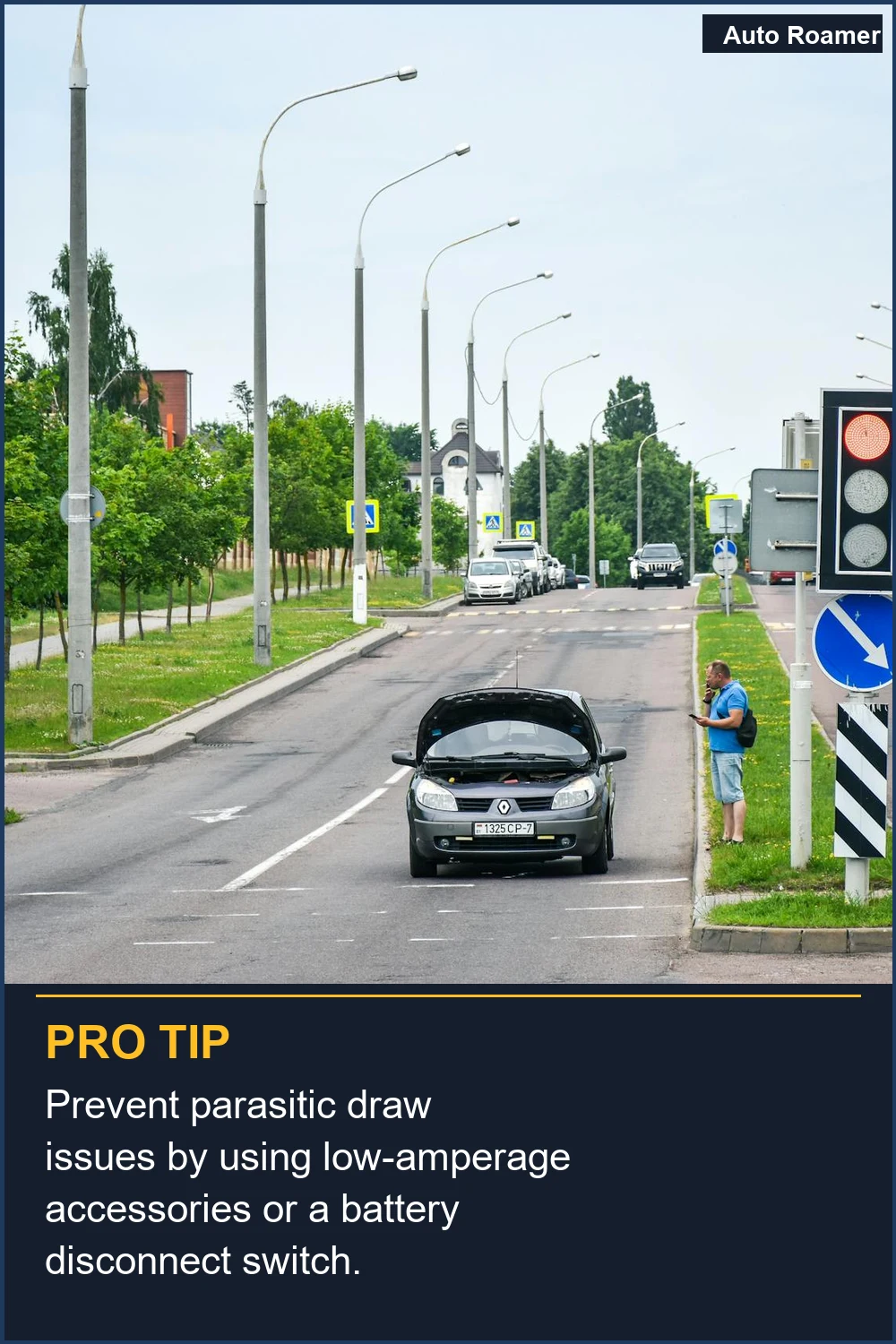
When your vehicle dies because of a poorly installed accessory, roadside assistance becomes critical. You need to know what they'll actually do for you. Ford's certified used vehicles, for example, often include complimentary 24/7 roadside assistance covering towing, fuel, and lockouts. Ford Blue Advantage highlights their 24/7 coverage. 1. Identify the Failure Mode: Is it a dead battery from a parasitic draw? A blown fuse from an overloaded circuit? A flat tire from hitting a curb? Knowing the underlying physics helps you explain the situation clearly. Don't just say 'it's dead.' Tell them, 'My 12V battery is dead, likely from a parasitic draw, and I need a jump start.' 2. Call Your Provider: Have your membership number or policy details ready. They'll ask for your location and the nature of the breakdown. Be precise. If it's a dead battery, mention if you've tried to jump it already. Consumer Reports advises checking your plan details to understand what's covered. 3. Describe the Accessory Connection: If you know an accessory caused it, explain that. 'I had a fridge plugged into the 12V outlet, and now the whole circuit is dead.' This helps them dispatch the right technician - sometimes a simple fuse replacement can get you going, rather than a full tow. 4. Understand Service Limits: Most plans have mileage limits for towing, often 5-10 miles. If your preferred shop is 25 miles away, you'll pay the difference. Some plans also limit the number of service calls per year. Forbes Advisor notes some plans offer five service calls a year, with a 10-mile towing limit. 5. Prepare for the Wait: Response times vary. In dense urban areas, it might be 30 minutes. Out in the sticks, it could be hours. Have water, a blanket, and a charged phone. This isn't a luxury service; it's a utility. 6. Evaluate the Repair: If they offer a quick fix, like a jump-start or fuse replacement, observe. If the fuse blows again immediately, you still have a short circuit or an overloaded accessory. Don't just accept a temporary patch if the underlying thermal or circuit integrity issue isn't addressed. A jump won't fix a failing alternator, it just postpones the next breakdown.

Common Questions About roadside assistance for accessory related breakdowns
Roadside assistance is simple, but people still manage to overthink it. Here are some common questions I hear. 1. Can my cheap, hardwired dash cam permanently damage my car's electrical system if it causes a parasitic draw? No, not 'permanently damage' the wiring, but it will certainly kill your 12V lead-acid battery through repeated deep discharge cycles. Each time your battery voltage drops below 10.5V, you're reducing its overall capacity and lifespan. Your car's body control module might also throw low-voltage fault codes, which is a nuisance. The physical conductors themselves are usually over-engineered for these minor draws. 2. My 12V socket isn't working after I plugged in a tire inflator. Is it just a fuse, or something worse? 98% chance it's a blown fuse. Those inflators pull serious current, often 10-15A, and cheap ones have high inrush current. Your vehicle's fuse is there to protect the wiring from thermal overload. Replace the fuse with the correct amperage. If it blows again, the inflator has an internal short, or your socket wiring is compromised. Wirecutter recommends carrying spare fuses as part of an emergency kit. 3. Will roadside assistance actually fix a blown fuse for my accessory, or just tow me? They *should* fix a simple fuse if they have the correct amperage fuse on hand. It's a 30-second job. Their goal is to get you mobile quickly. If they don't carry the right fuse, or if the fuse keeps blowing, they'll tow you to a shop. They aren't going to diagnose a complex electrical short on the shoulder of the road. Facebook groups show people getting tire changes, not engine overhauls, from roadside assistance. 4. What if my car has power, but the accessory I need (like a GPS or phone charger) isn't working? If your car starts and runs, but a specific accessory circuit is dead, you're not technically 'broken down' in the sense roadside assistance usually covers. They're for disabled vehicles. They might offer advice, but they won't typically dispatch a truck just to fix your USB port. You'll need to troubleshoot that yourself or drive it to a shop. 5. Is it worth paying extra for 'premium' roadside assistance? Depends on your failure-rate tolerance. Premium plans often offer longer towing distances (200 miles vs. 10 miles), more service calls per year, or coverage for RVs/motorcycles. If you commute 100 miles each way through remote areas, that extra towing distance is worth it. For city driving, the basic plan is usually fine. It's all about risk assessment and how much you value not getting bent over for a long-distance tow.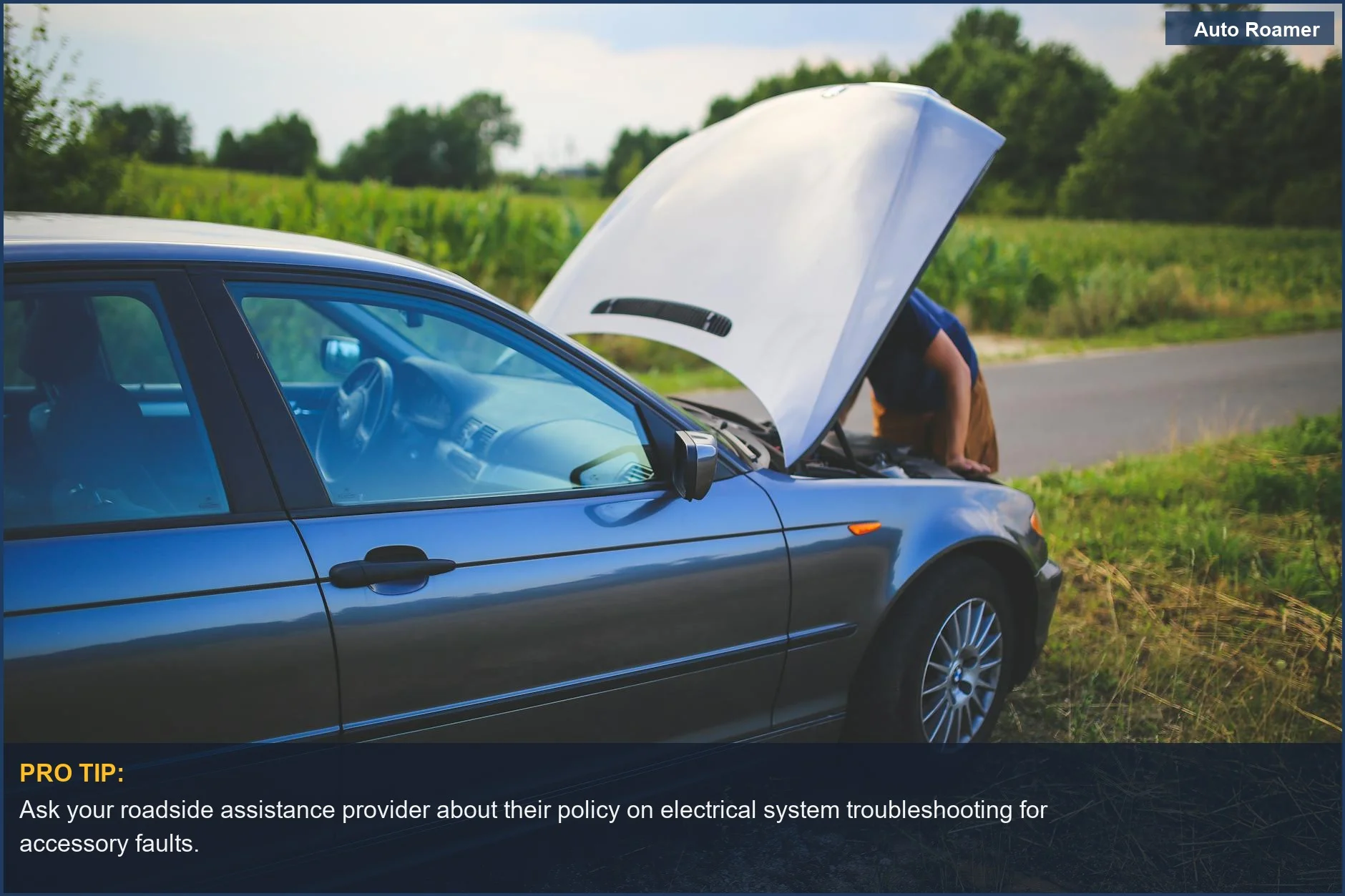
Tips and Best Practices
Don't be the guy stuck on the shoulder because of a $3 accessory. These tips will save you time and money when dealing with roadside assistance for accessory-related failures. Team Smith Logistics emphasizes preparedness in their guide to roadside assistance plans. 1. Carry Spare Fuses and a Fuse Puller: Your owner's manual lists fuse locations and amperages. A small kit of common automotive fuses (5A, 10A, 15A, 20A, 30A) and a cheap plastic fuse puller is a $10 investment. This instantly fixes 80% of accessory power issues. I keep a spare 15A for my main 12V outlet right in the glove box. 2. Invest in a Quality Multimeter: A $15 multimeter from Harbor Freight will tell you if your 12V outlet has power, if your battery is charging, or if you have a parasitic draw. It's critical for diagnosing circuit integrity issues before they become breakdowns. You can check voltage, current, and continuity. 3. Understand Your Vehicle's Electrical Load Limits: Don't plug a 1000W inverter into a 12V socket rated for 15A (180W). This is basic thermal dynamics. The wire gauge and fuse are designed for specific current flow. Exceeding it will blow the fuse, melt wires, or start a fire. Read the spec sheet of your accessories and your vehicle. 4. Test Aftermarket Accessories: Before relying on a new accessory, test it. Does it work consistently? Does it feel warm? Does it make strange noises? A poorly manufactured accessory has a higher failure-rate and can introduce electrical noise or shorts into your system. This includes everything from phone chargers to portable fridges. 5. Know Your Roadside Assistance Policy: Don't wait until you're stranded to read the fine print. How many tows? What's the mileage limit? Is fuel delivery covered? Is lockout service included? Ocho.co's guide details what to look for in roadside assistance coverage. 6. Keep Your Battery Maintained: A weak battery has higher internal resistance and struggles with even minor parasitic draws. Clean terminals, check voltage regularly, and replace it when its cold cranking amps (CCA) drop significantly. Thermal cycling from deep discharges reduces battery life.
Real-World Examples
I've seen it all. Here are some common accessory-related breakdowns and how they played out in the real world. 1. The Dead Battery from a GPS Unit: A 2017 Honda CR-V owner hardwired his aftermarket GPS directly to the 12V constant power. The GPS had a 120mA parasitic draw when the car was off. With a 45Ah battery, that's 375 hours, or about 15 days, to drain the battery to 50% state of charge. He was stranded after a 3-week vacation. Roadside assistance jump-started him, but he needed a new battery because of the repeated deep discharge cycles. This is a classic circuit integrity issue - always wire accessories to switched power or use a low-voltage cutoff. 2. Blown Fuse from a Portable Air Compressor: A guy with a 2019 Toyota Tacoma plugged a cheap $30 air compressor into his console 12V outlet. The compressor pulled 25A on startup, but the outlet was fused at 15A. Pop. He was stuck with a flat tire on a job site. Roadside assistance arrived 45 minutes later, swapped the fuse (for $25, naturally), and he was back on the road. The problem was exceeding the thermal limit of the fuse, a basic electrical spec sheet mismatch. AAA advises pulling over safely if your car breaks down, which he did. 3. Locked Keys in a Chevy Silverado: Not an electrical failure, but an accessory-related problem nonetheless. A driver locked his keys in his 2015 Silverado at a gas station. His roadside assistance plan included lockout service. A technician arrived in 20 minutes, used a shim tool to manipulate the door lock mechanism, and had him back in his truck in under 5 minutes. No mechanical stress to the door, just a tactical entry. This is a common call for roadside providers. 4. Malfunctioning Backup Camera Draining Battery: A 2021 Subaru Forester had an aftermarket backup camera that wouldn't shut off, drawing 80mA constantly. The owner noticed slow starts after a few days. The dealer wanted to replace the battery for $280. I found the camera's control module was failing to de-energize. Disconnected the camera, parasitic draw dropped to 25mA, and the battery held charge. This was a component failure leading to a constant current draw, a circuit integrity problem. FleetRabbit notes electrical failures are a common cause of breakdowns, even for single vehicles.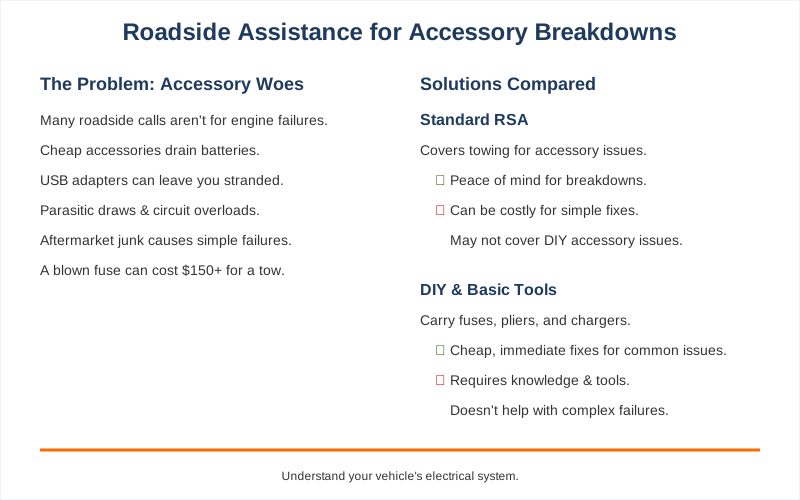
Key Takeaways
Accessory-related breakdowns aren't dramatic engine failures; they're usually small, predictable issues that leave you stranded. Understanding the underlying physics - circuit integrity, thermal limits, or mechanical stress - is key to avoiding them or fixing them fast. My experience shows that most calls aren't for catastrophic damage, but for minor annoyances.Frequently Asked Questions
What's the real cost difference between a dealership fixing a blown fuse for my 12V outlet versus me doing it myself?
Do I really need a multimeter if I'm not a 'mechanic'?
What if I replace the fuse, and it blows immediately again when I plug in the same accessory?
Can leaving a phone charger plugged into an 'always on' 12V outlet permanently damage my car's alternator?
My buddy said if I just pull the negative battery cable for 10 minutes, it'll 'reset' any accessory problems. Is that true?
🏅 Looking for Gear Recommendations?
Check out our tested gear guides for products that work with this setup:
Sources
- Best Roadside Assistance Plans of 2026: Full Guide
- Roadside Assistance: Complete Guide to Coverage & Benefits 2025
- THE BEST 10 ROADSIDE ASSISTANCE in ORANGE COUNTY, CA
- Has anyone used the roadside assistance feature? If so, how was ...
- Top Fleet Breakdown Causes in 2026 - FleetRabbit
- What to do if Your Car Breaks Down - AAA
- 24/7 Roadside Assistance | Ford Blue Advantage
- Best Roadside Assistance Plans Of 2026 – Forbes Advisor
- How to Choose a Roadside Assistance Plan - Consumer Reports
- The Best Gear for a Roadside Emergency - The New York Times
- Has anyone had to use Ford roadside assistance and if so, how was ...