The Straight Answer
Yes, a dog can legally ride in a truck bed across most of the country — but only six states ban it outright, and in the other 44 the dog still has to be secured or you're exposed to an unsecured-cargo ticket. So the honest answer is: it's legal in the sense that no officer in Texas is writing a ‘dog in the bed’ citation on its own, and it's illegal the moment that dog goes over the side and a report starts asking how it was restrained.
The six states with an explicit ban on an unrestrained dog in an open bed are California, Connecticut, Maine, Massachusetts, New Hampshire, and Rhode Island. In those states, a loose dog is the violation and the fix is a secured crate or a proper cross-tether. Everywhere else, the law is quieter but not absent: general unsecured-load statutes and local ordinances do the same job under a different name. The rest of this guide is the state map, what the statutes mean by ‘secured,’ and the two restraint methods that survive a real panic stop.
The Six States Where a Loose Dog Is Flatly Illegal
These are the states that name it directly. The Animal Legal & Historical Center at Michigan State keeps the running breakdown of which states have a dedicated statute versus a general one; the six below are the ones with a rule aimed specifically at animals in open cargo areas. The common thread is the phrase you'll see over and over: the animal must be crated, caged, cross-tethered, or otherwise protected from being thrown or falling out.
| State | What the law requires |
|---|---|
| California | A dog in an open bed must be in a secured container/cage or cross-tethered so it can't be thrown from or fall out of the vehicle. |
| Connecticut | The dog must be secured in a cage or container, or otherwise protected, to keep it from being thrown or falling out. |
| Maine | A dog can't ride in an open bed unless it's secured or enclosed so it can't fall or jump out. |
| Massachusetts | Covered under Chapter 90 §22H — a dog in an open section can't be left unsecured in a way that lets it be thrown from the vehicle. |
| New Hampshire | Requires the dog to be secured, or the cargo area enclosed/side-railed enough that the dog can't be flung out. |
| Rhode Island | Bans transporting a dog in an open bed unless it's crated or cross-tethered against ejection. |
The exact wording drifts state to state, but the engineering requirement is identical: remove the failure mode where the dog leaves the vehicle. A cage does it. A proper two-point tether does it. A leash clipped to a collar does not, and there's a specific reason why a couple of sections down.
What 'Secured' and 'Otherwise Protected' Actually Mean
The word that trips people up is ‘otherwise protected.’ It sounds like a loophole — surely a high side rail or a canopy counts? Read the way these statutes are actually written and enforced, though, and the intent is narrower than it looks. ‘Secured’ means the dog is physically restrained from leaving the bed under normal driving forces, and ‘otherwise protected’ means an equivalent barrier that does the same job — not a comfort measure, an ejection barrier. That distinction is the whole ballgame, and it's where most well-meaning owners talk themselves into a setup that wouldn't survive a second look.
A secured crate clearly counts, because a rigid, anchored enclosure contains the dog even in a rollover. A short two-point cross-tether counts too, because the geometry physically prevents the dog from reaching any edge in the first place. Both remove the failure mode outright, which is exactly what the statute is reaching for.
What usually does not qualify is the stuff people lean on hardest. A high side wall on its own rarely holds up — a determined or panicked dog clears an 18–20 inch rail without much effort, and an ejection statute doesn't treat a wall the dog can jump as ‘protection.’ A single center tether is worse than it looks, because it lets the dog swing to the side like a pendulum and go over anyway, often with a strangling jerk at the end of the line. A canopy or a soft tonneau helps with weather but does nothing to restrain the animal underneath it.
If you're ever unsure whether your setup qualifies, apply the one-sentence test the statutes are really asking:
In a hard brake or a sharp swerve, can the dog physically leave the bed? If the answer is anything but a flat no, it is not ‘otherwise protected’ — whatever the marketing on the accessory promised.
Officers and courts apply that same common-sense reading after the fact, so it's the standard worth holding yourself to before the fact. Build the setup that passes that question cold, and the statute takes care of itself.
The Ticket You Can Still Catch in the Other 44
People read ‘my state has no law’ as ‘I'm clear.’ That's the wrong read. Almost every state has a general unsecured-load or unsecured-cargo statute, and an unrestrained animal is cargo the second an officer decides to call it that. Texas is the classic example — no dog-specific ban, but a loose dog can be written up under the transportation code's unsecured-load provisions, and local reporting on the Texas rules lays out exactly that gray zone.
Local ordinances stack right on top of that. Plenty of cities and counties run their own animal-transport rules that are stricter than the state's, so ‘legal in my state’ can still be illegal in my town — and the municipal rule is the one the local officer knows by heart. Cruelty statutes are the other wildcard: if the dog is injured, a plain unsecured-cargo fine can escalate into an animal-cruelty or neglect charge, which is a different order of trouble than a ticket and gets its own section below.
And the trend runs one direction. Utah floated a bill to make it illegal to haul a dog in an open bed above 40 mph; whether or not that exact version became law, the list of states writing dedicated rules keeps growing, not shrinking. Reading a ‘no specific law’ result as permanent permission is a bet against the clear direction of travel. Bottom line for the ‘no law here’ crowd: you're not relying on the absence of a rule, you're relying on an officer choosing not to apply the one that already exists — and on nothing going wrong on the drive.
Why Legal and Safe Are Not the Same Word
Set the statute book down for a second, because the physics doesn't read it. The law here is the lagging indicator — it's catching up to what a tow-truck operator already knows about unsecured loads. An open bed is a flatbed, and a dog on a flatbed follows the same rules as any other cargo that wasn't strapped down.
An unrestrained dog in a moving truck bed is not a passenger. It's an unsecured mass with a high center of gravity and paws that get almost no grip on painted steel. In a hard stop or a swerve, it goes where momentum sends it — into the cab, into the side wall, or over the rail.
The dangerous number isn't top speed, it's the sudden change in speed or direction. A brake-slam or a jerk to miss a deer at even 30–40 mph is enough deceleration to slide a big dog off its feet, and a bed wall only 18–20 inches high becomes a launch ramp, not a barrier. That's the scenario behind the injuries safety groups keep citing: not highway blowouts, but ordinary town-speed panic stops. The dog's own instinct to lunge toward something — another dog, a person, a squirrel — is a second, independent path to the pavement that no side rail addresses.
The Two Restraints That Actually Hold in a Hard Stop
If the cab genuinely isn't an option, there are exactly two restraint methods that satisfy the ‘otherwise protected’ language and, more importantly, survive a real stop. Do one of them properly or don't put the dog back there.
Option 1 — a secured crate (the stronger option).
- Use a rigid, impact-rated kennel, not a flimsy wire crate that folds on impact.
- Strap it to the bed's anchor points at all four corners with rated ratchet straps — an unstrapped crate simply becomes a heavier projectile.
- Position it against the cab wall, not near the tailgate, so the strongest structure sits between the dog and the direction of travel.
Option 2 — a proper cross-tether.
- Anchor to two points (one per side), never a single center clip — a single tether just turns the dog into a pendulum that swings over the rail.
- Clip to a harness, never a collar. A collar under a shock load is a neck injury waiting to happen.
- Set the length short enough that the dog physically cannot reach any edge of the bed. Measure it; then walk the dog to each side and confirm it comes up short.
- Use coated cable or rated strap webbing, not a hardware-store leash — a cheap leash snaps under the dynamic load of a sudden stop.
One more detail people skip: whichever method you use, do a 30-second tug test before you pull out. Grab the crate or the tether and shove it the way a hard stop would — forward, then sideways. If anything shifts more than an inch or the dog can reach a rail, it isn't done yet. The failure you find in the driveway is free; the one you find at 45 mph is not.
Either way, the goal is two independent things that would each have to fail before the dog can leave the vehicle. That's the same logic you'd apply to any load you actually cared about keeping in the truck — you don't trust one strap on a kayak, and a dog is worth more than a kayak.
The Crates Worth Anchoring in the Bed
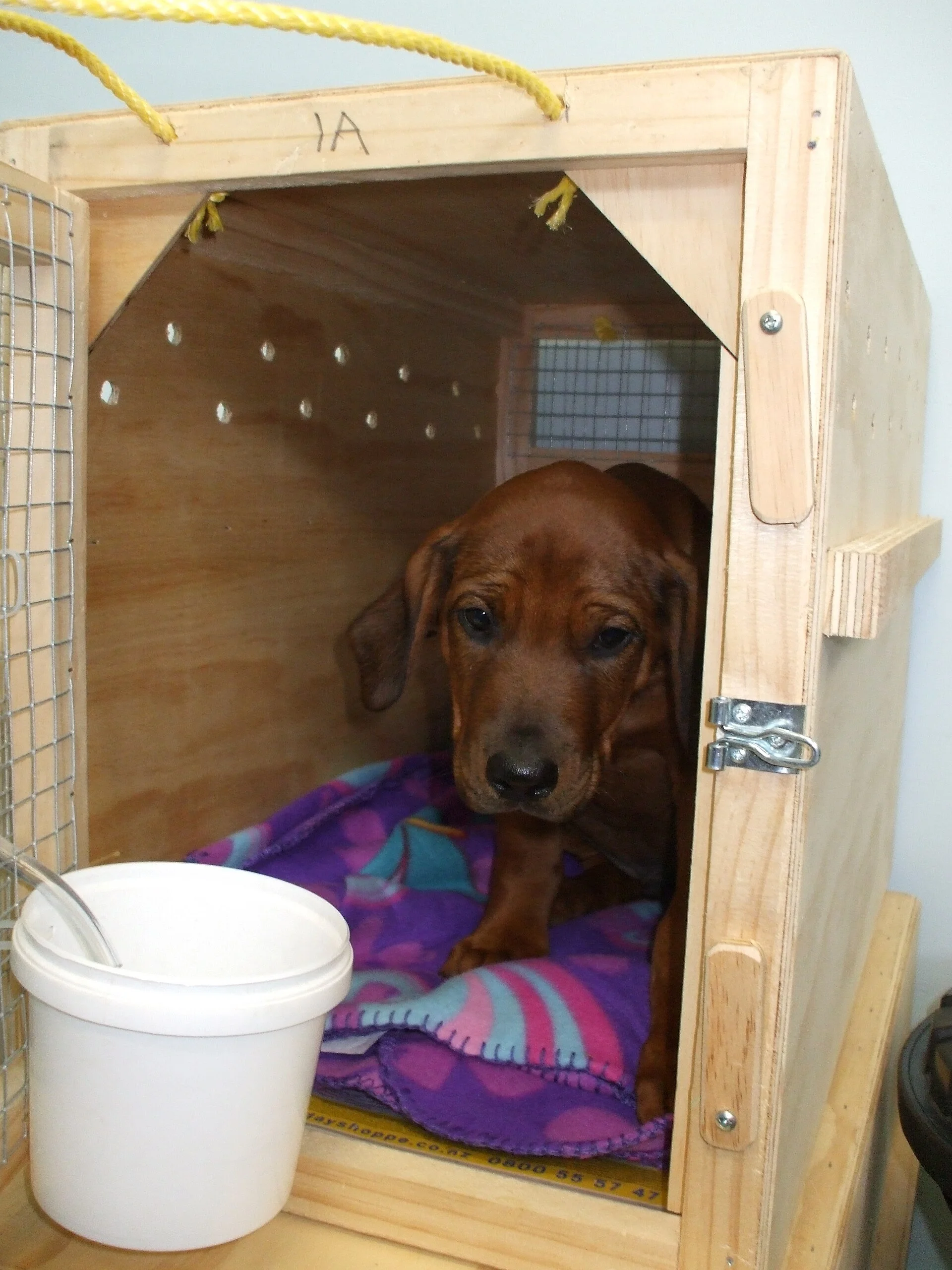
If a crate is the route you're taking, the category matters more than the brand name on the side. A crate earns its keep in a truck bed by staying rigid under load and giving you real anchor points to strap it down — the same features that make it worth the money also make it legal under ‘secured or otherwise protected.’ Here's how the common options actually differ.
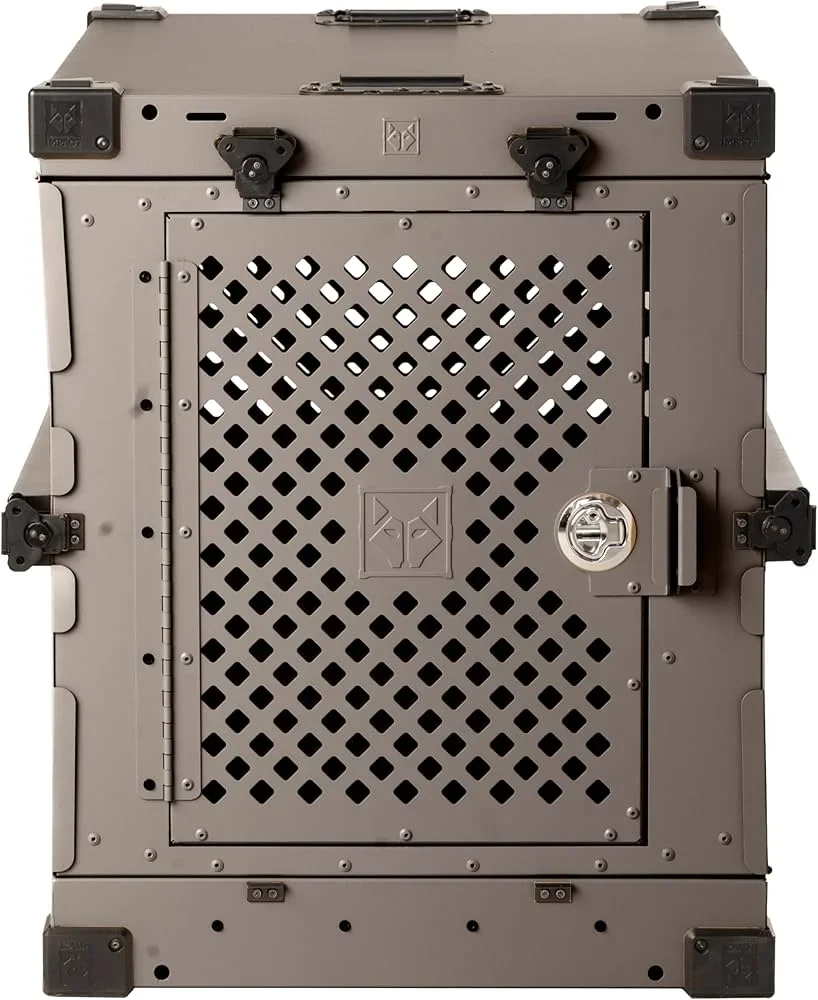
- A single molded shell with no seams to split, molded tie-down points, and enough wall stiffness that the structure itself does the protecting. This is the tier crash-test programs tend to favor, and the tier I'd put in an open bed.
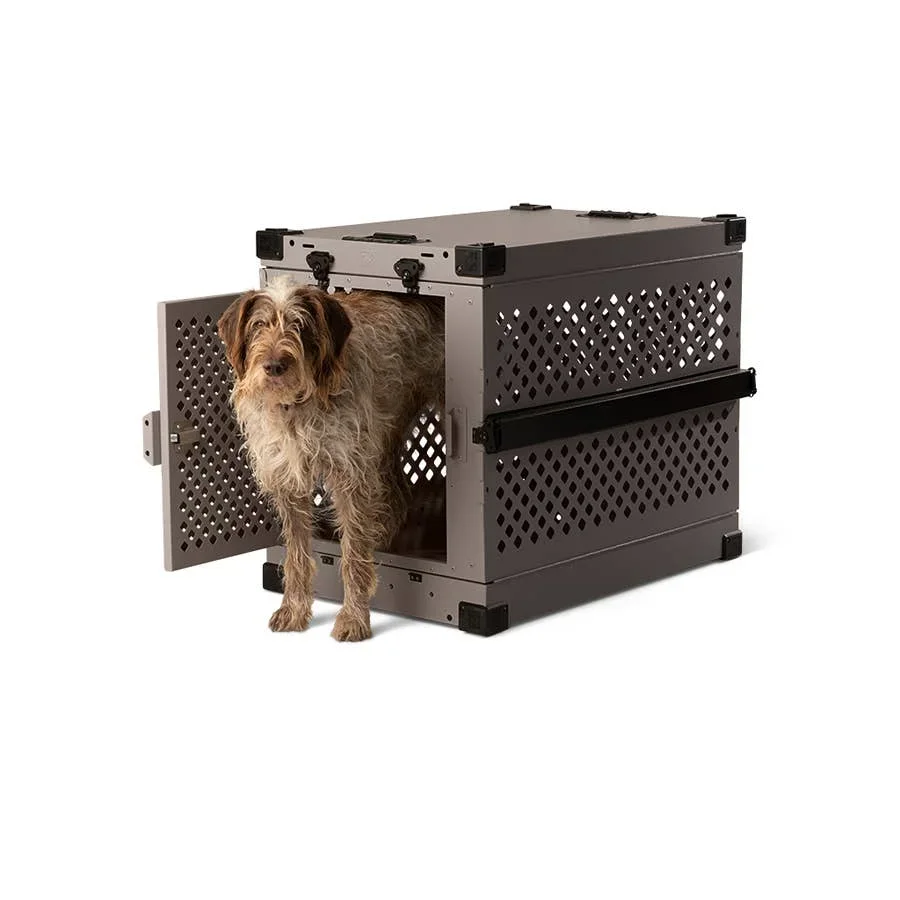
- Heavy aluminum, collapsible crates — the Impact Collapsible class. Powder-coated aluminum with a rigid frame that still folds flat for storage. A reasonable middle ground when you need the crate to disappear between trips, as long as you anchor it at all four corners so the fold-points aren't the weak link.
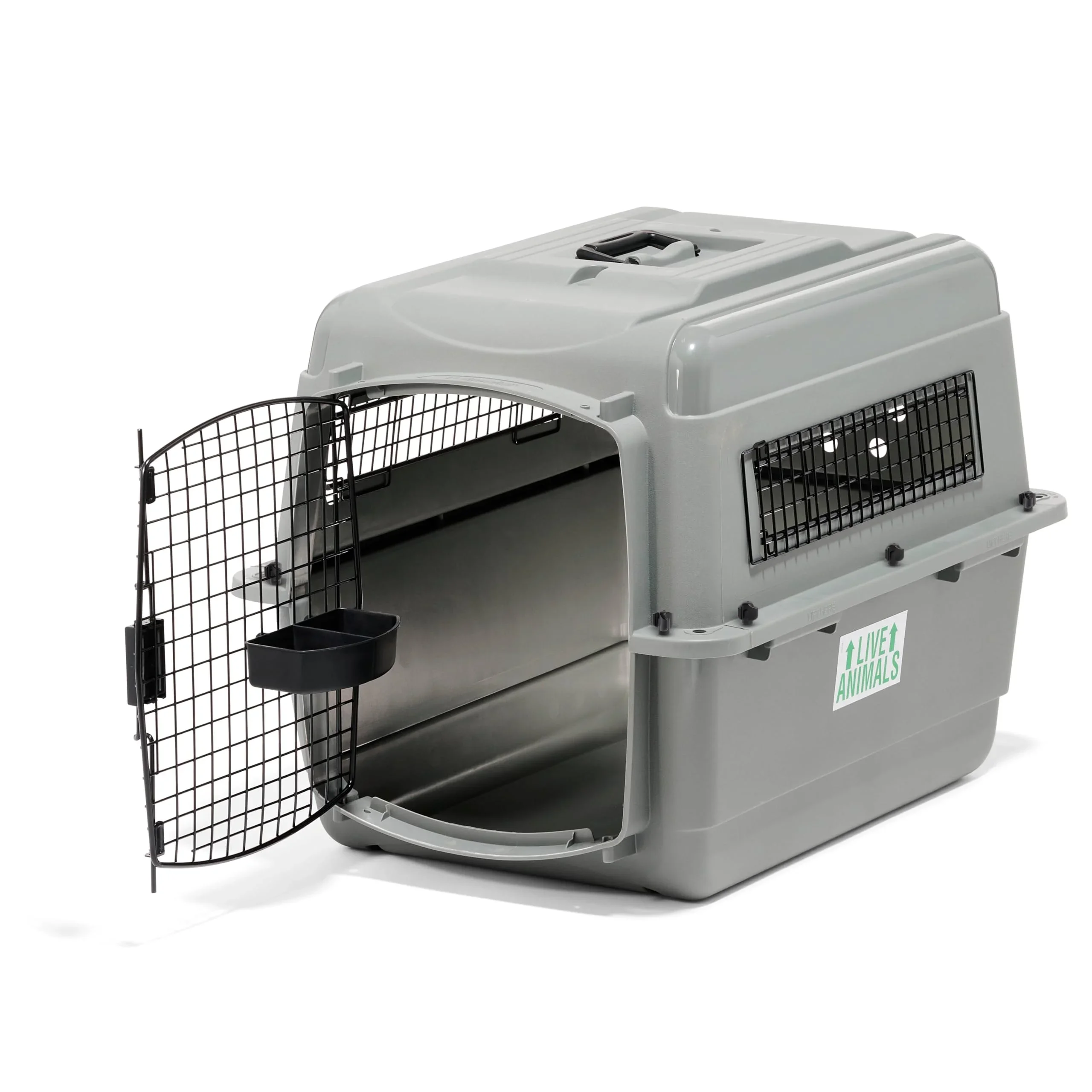
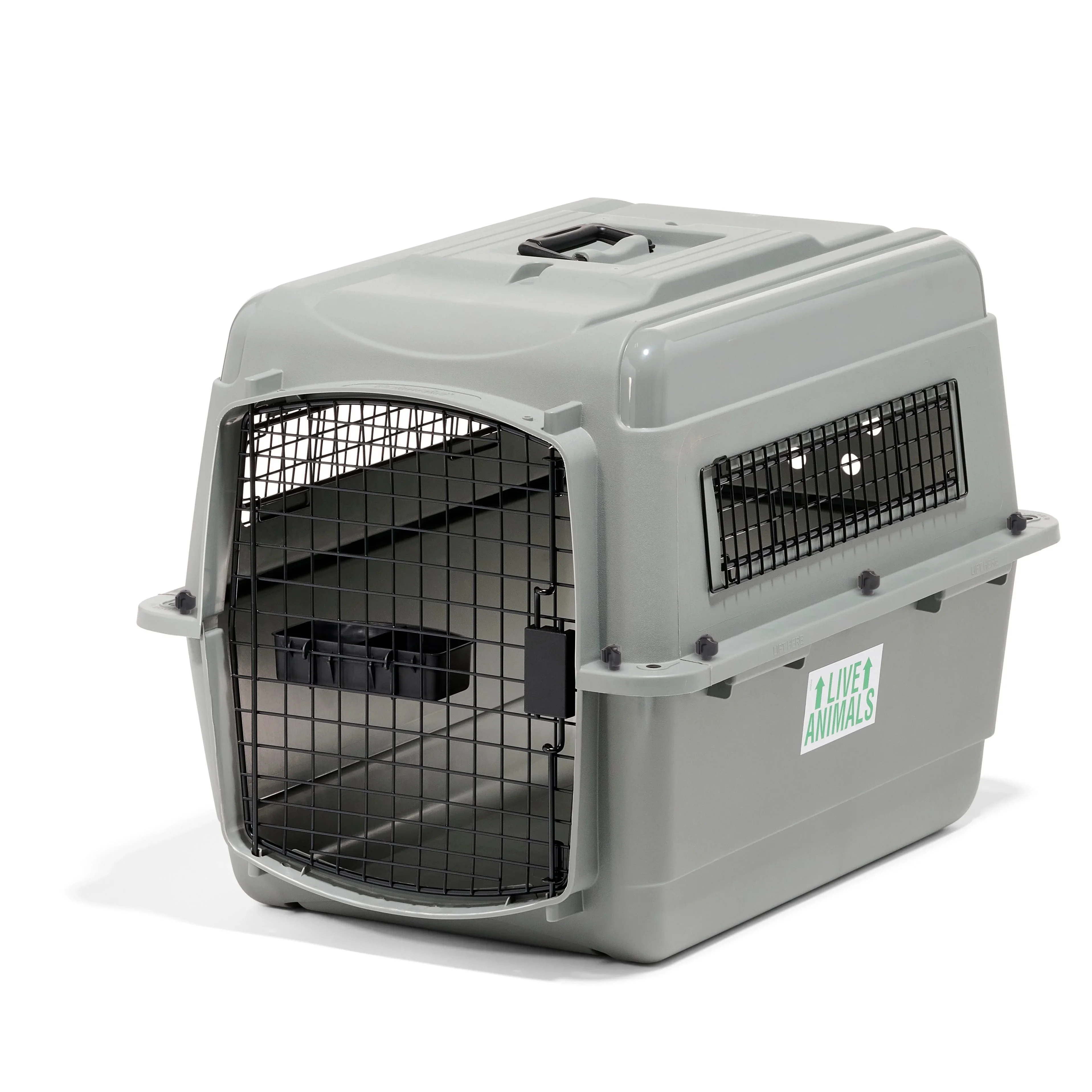
- Airline-style plastic kennels — the Petmate Sky Kennel class. Built for airline travel and static containment, not crash forces. Usable in a bed only if it's strapped hard and low, and even then it's a step down in rigidity from the rotomolded tier. Fine for a short, slow, well-secured haul; not what I'd trust at highway speed.
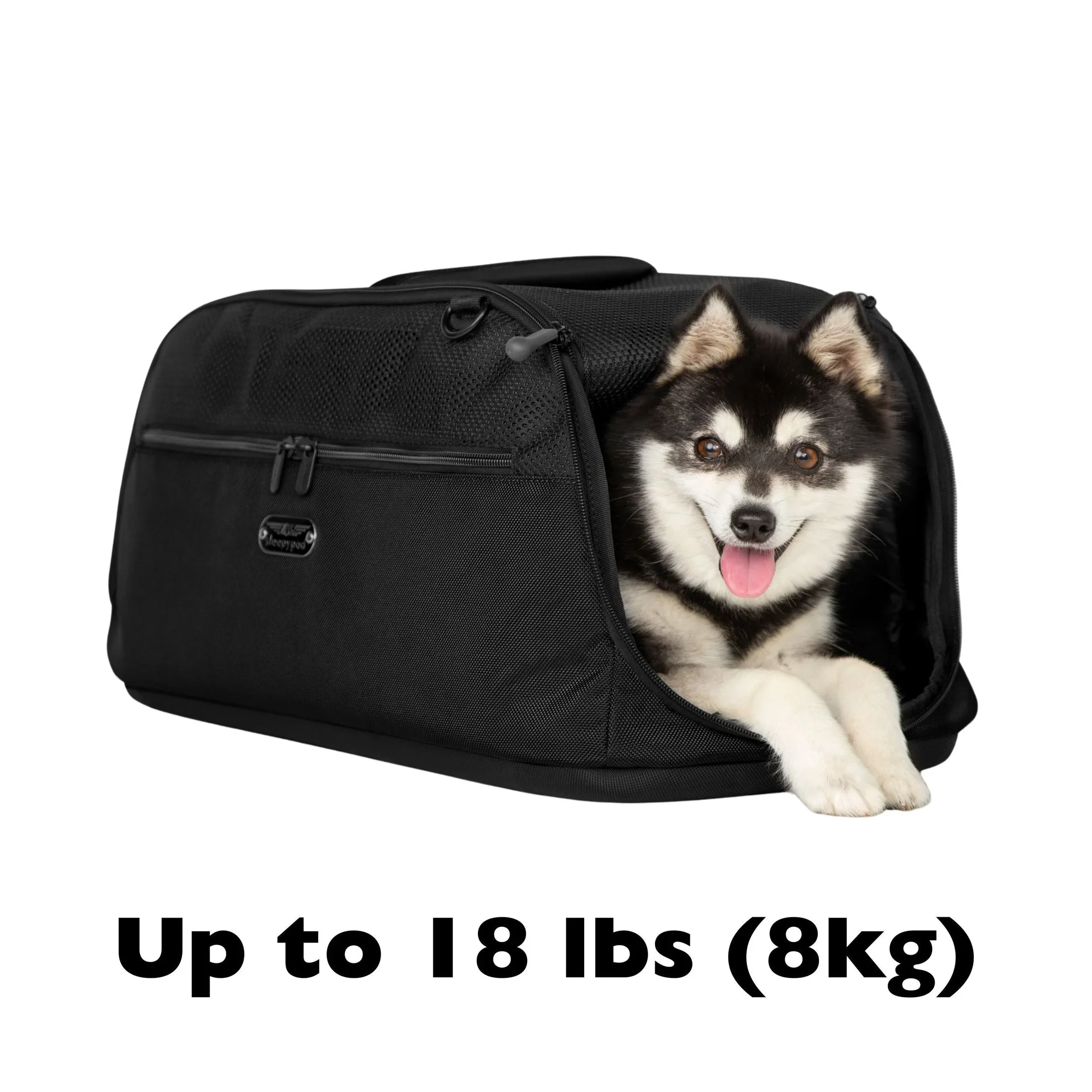
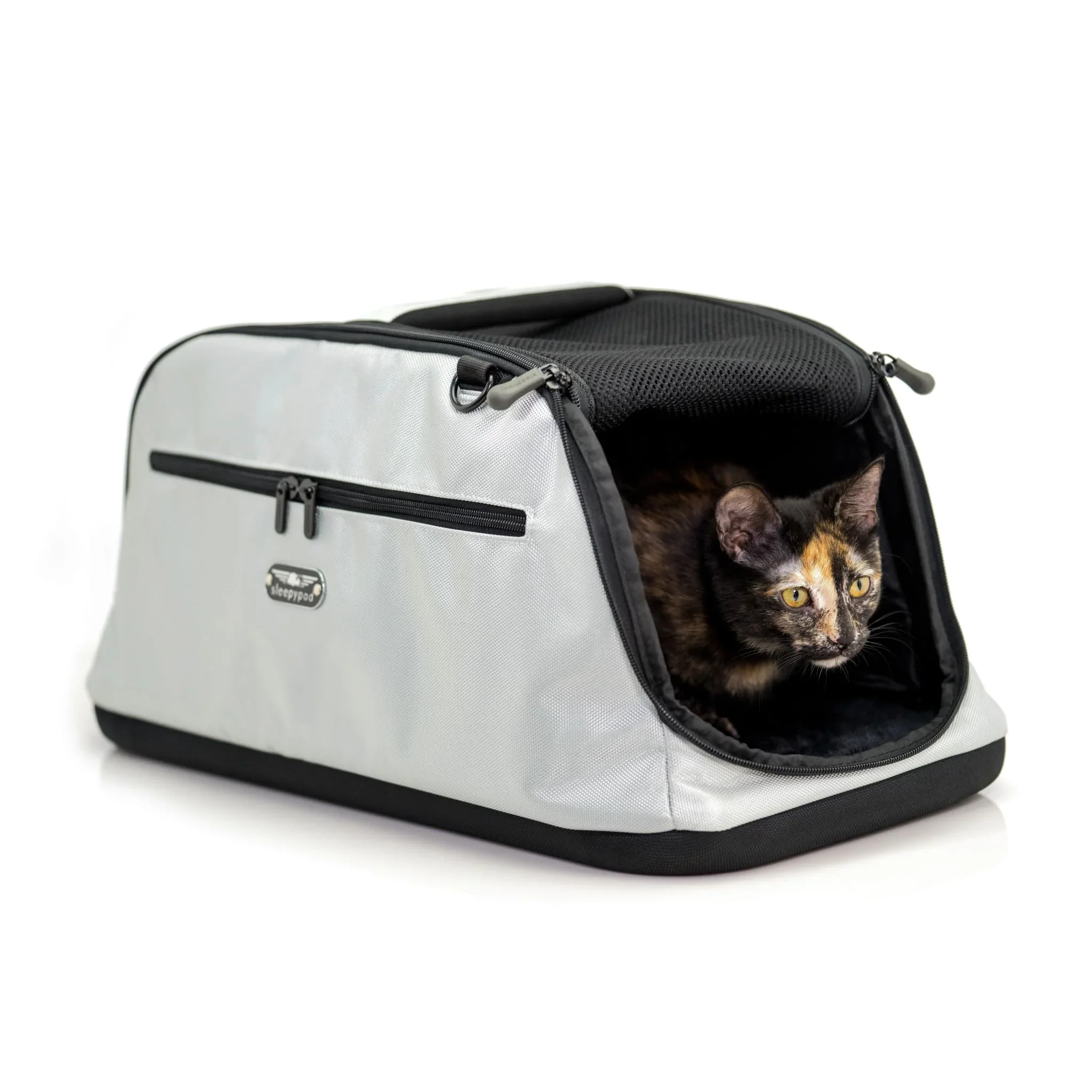
- Small-dog cabin carriers — the Sleepypod Air class. This one's really a crash-tested in-cabin carrier and car seat for smaller pets, and it makes the point better than anything: the safest place for a small dog isn't the bed at all, it's belted into the cab.
Whatever tier you pick, the crate is only as secured as its straps. Rated ratchet straps at four corners, anchored to real bed points, against the cab wall — a great crate strapped with a bungee cord is still an unsecured load.
How to Check Your Own State's Law in Five Minutes
Don't take a blog's word for your specific situation — including this one. Statutes get amended, and cities layer their own rules on top. Here's the fast, reliable way to confirm what actually applies where you drive.
Start with the Animal Legal & Historical Center. Its running FAQ on dogs transported in pickup beds breaks the states down by whether they have a dedicated statute or lean on a general one, which is the single best starting map for figuring out which bucket you're in. From there, read the actual statute rather than someone's summary of it: search ‘[your state] unsecured load statute’ and ‘[your state] animal in open vehicle’ on the state legislature's own .gov site, where Massachusetts Chapter 90 §22H is a clean example of the kind of wording to look for. Then check the city and county last — a quick search for your municipality plus ‘animal transport ordinance’ catches the local rule that quietly overrides a lenient state.
When the reading leaves you genuinely unsure, that uncertainty IS the answer: secure the dog to the strictest standard on the table, because that's the one you'll be measured against after something goes wrong.
Five minutes of reading is cheaper than a citation, and a lot cheaper than a vet bill. Do it once for the states you actually drive through, note the strictest rule among them, and build to that — then you never have to re-litigate it at a rest stop on the state line.
The Hazards People Forget: Heat, Wind, and Road Debris
Ejection is the headline risk, but it isn't the only one, and the quieter hazards are the ones that catch responsible owners off guard because they don't feel dangerous at the time.
- Bed metal cooks. A steel or spray-lined bed sits in direct sun and radiates heat from below. On a mild-feeling day it can still burn paw pads, and a dark bed with no airflow turns into an oven at a stoplight.
- Wind is relentless. Sustained highway wind dries eyes, drives grit into them, and chills a wet dog fast. ‘Loving the wind’ and tolerating it are not the same thing over an hour.
- Road debris comes up, not just down. Rocks kicked by your own tires and the vehicle ahead arrive at the bed at speed. A windshield stops them for you; nothing stops them for a dog in an open bed.
A tonneau cover or a bed topper takes the edge off all three — shade, a wind break, and a debris shield — but note that a cover is a comfort-and-hazard improvement, not a restraint. You still need the crate or the cross-tether underneath it to satisfy the law and the physics.
If the Dog Gets Hurt: Fines vs. Cruelty Charges
Here's the part that turns a bad decision into a genuinely expensive one. A straight unsecured-cargo ticket is a fine — annoying, survivable. But the moment the dog is injured, the exposure changes category.
The fine is the floor, not the ceiling. An unsecured-load citation is the baseline outcome, but if the animal is hurt or killed, prosecutors in many states can reach for an animal-cruelty or neglect statute instead of, or on top of, the traffic fine — and those carry consequences a parking-style ticket never will. The liability also spreads to other people: a dog that goes over the side doesn't just get hurt, it can force the car behind you to swerve or brake hard, and now you own a second crash you caused with someone else's property or body in it.
Then there's the money that has nothing to do with the court. A fractured leg or an internal injury from a fall runs well into the thousands, and an insurer is unlikely to look sympathetically at an avoidable, arguably-illegal setup when it decides what to cover. Stack the pieces up — the citation, the possible cruelty charge, the second-crash liability, the vet bill — and the ‘free’ convenience of a loose bed ride starts to look like the most expensive seat in the truck.
The convenience of a loose bed ride is measured in seconds saved. The downside is measured in a cruelty charge, a vet bill, a second crash, and a hurt dog. That's not a close trade.
None of that is meant to scare you into paralysis — it's just the honest cost-benefit laid flat, so the decision gets made on the real numbers instead of the habit.
The Honest Recommendation: Put the Dog in the Cab
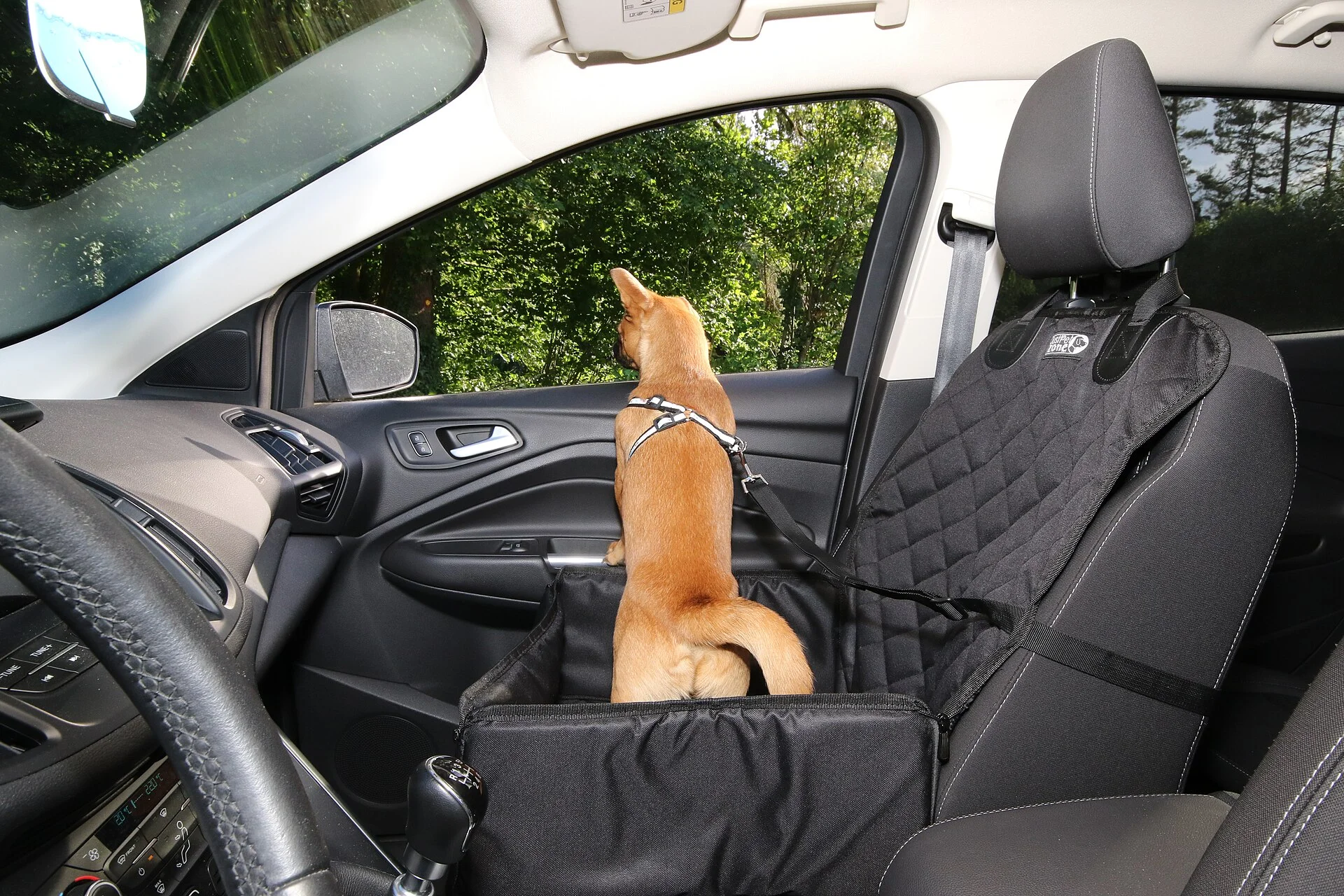
The unglamorous truth the marketing photos won't tell you: the bed is the worst seat in the truck for a living animal, and the cab is almost always available. A crash-tested harness on the back seat, or a secured crate on the cab floor, removes the ejection failure mode entirely and sidesteps the whole state-by-state legal maze in one move.
I get the appeal of the bed — a muddy dog, a wet dog, a dog that sheds like a snowblower — and none of those are nothing. But a seat cover, a cargo liner, or a back-seat hammock solves the mess problem without introducing the ejection problem, and every one of those costs less than a single vet visit or a cruelty citation. The mess is a laundry question. The bed is a life-and-liability question. Don't trade the second to avoid the first.
Reserve the bed for the genuinely unavoidable case — a working dog, a truck with no usable cab room — and when you do, treat it like securing any load you can't afford to lose: rated hardware, two independent points of failure, nothing that can leave the vehicle. Legal is the floor. Not-ejected is the goal.
For travel inside the cabin, learn how to secure a pet carrier in the car.