Why a Travel-Rated Crate Matters in a Car
An unrestrained dog is one of the most underestimated hazards in a vehicle. In a 30-mph crash, a 60-pound dog generates roughly 2,700 pounds of force, enough to injure the dog, the people in the cabin, and anyone trying to reach a panicked animal afterward. A travel crate exists to keep that mass contained and to stop it from being thrown forward.
The problem is that most crates sold as "travel" crates are simply collapsible home crates with a carry handle. They have never been tested under crash loads, and the wire or thin plastic that is fine in a living room folds on impact. A genuinely travel-rated crate is engineered to hold its shape and stay anchored when the vehicle decelerates violently.
That difference is why the Center for Pet Safety (CPS) runs independent crash testing on pet crates and harnesses. CPS uses instrumented test dogs and the same sled-test methodology used for child car seats, then publishes which products survive. Their certification, not a manufacturer's marketing copy, is the single most useful signal when choosing a car crate.
The picks below are organized around that evidence. Some are CPS-certified, some are widely documented in independent crash footage, and a couple are honest "good enough for short trips" options for owners who cannot fit a rotomolded tank in a hatchback.
Six Criteria That Decide Car-Crate Safety
We did not bench-test these crates ourselves. Instead, the comparison is built from published crash-test results, manufacturer engineering specifications, and the consensus of independent reviewers. The criteria below are the ones that actually predict how a crate performs in a car, ranked roughly by how much they matter.
- Crash-test certification: Has the crate passed Center for Pet Safety testing, or independent third-party crash testing? This is the top filter.
- Material and structure: Rotomolded plastic and welded aluminum hold their shape; thin injection-molded plastic and folding wire do not.
- Anchoring system: Integrated tie-down points or strap channels that let you bolt the crate to the vehicle's cargo anchors.
- Size fit and containment: Enough room to stand, turn, and lie down, but not so much that the dog slides during braking.
- Ventilation: Cross-flow airflow on multiple sides to prevent heat buildup on long drives.
- Escape resistance and cleaning: Door latches that hold, and a non-porous interior you can decontaminate after an accident.
Rule of thumb: if a crate cannot be rigidly strapped to your cargo anchors, it is a containment box, not a safety device.
Thule Allax: The Crash-Test Benchmark
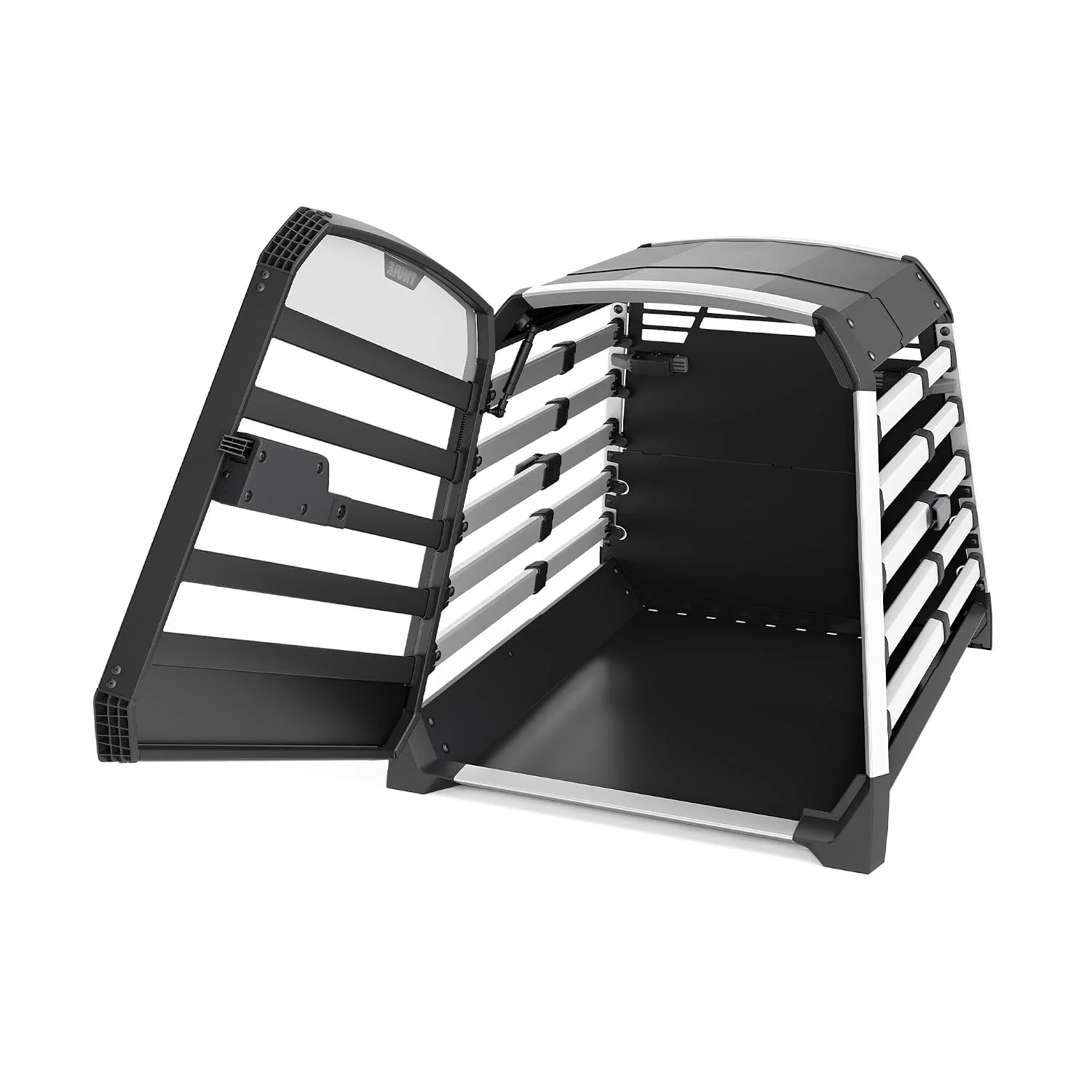
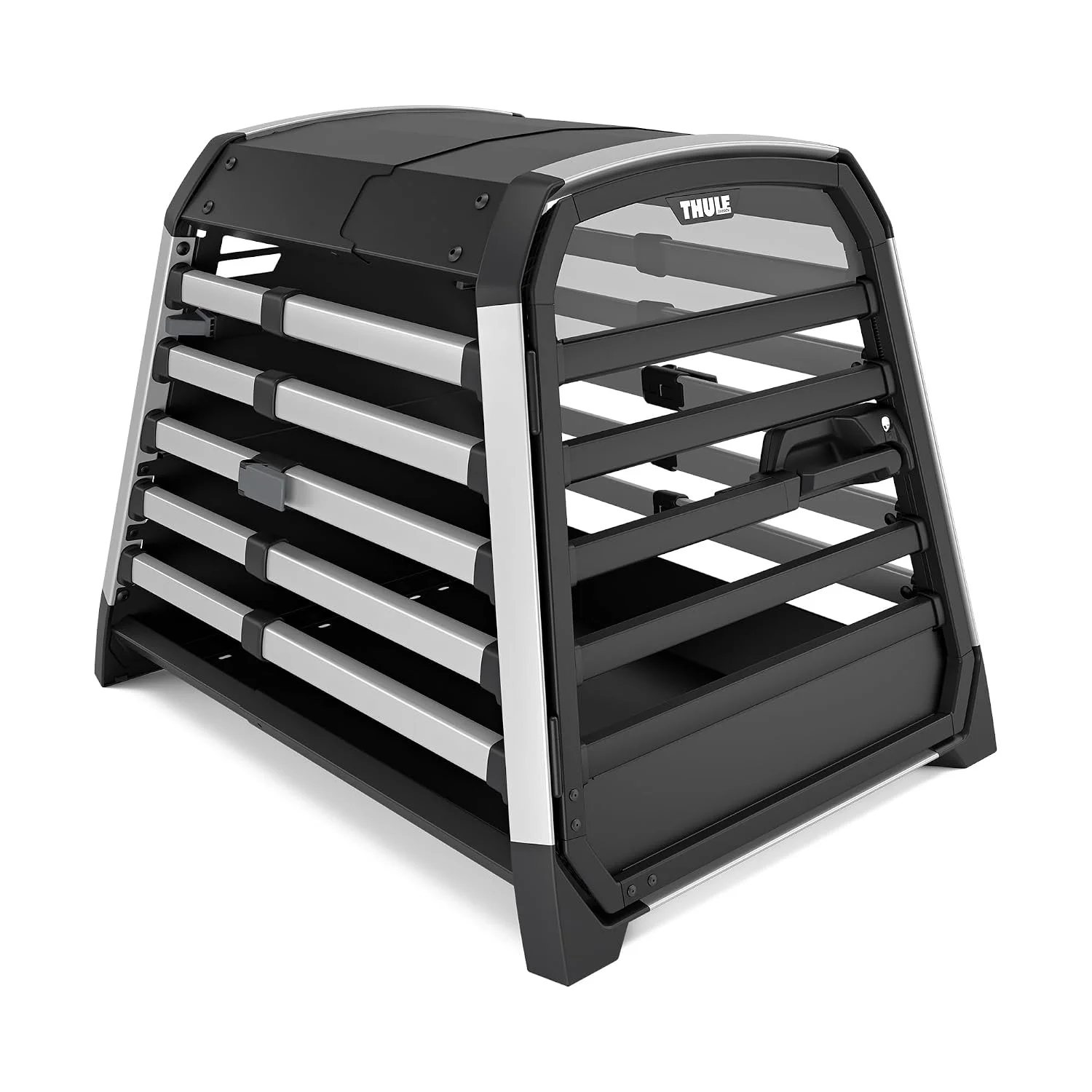
The Thule Allax Dog Crate is the crate most safety-focused owners build their setup around, and for good reason. Thule states it is crash tested from the front and the rear and through simulated roll-over scenarios, and that an engineered crumple zone absorbs 10 to 13 cm of impact rather than passing it through to the dog.
- Material: Aluminum, with a crumple zone designed to deform on purpose so the dog compartment does not.
- Crash data: Thule tests it front, rear and roll-over - three directions, where most crates quote a frontal impact and stop there.
- Fit: Five sizes, each with adjustable depth. The medium is 25.6 inches wide and tall, adjusts from 32.2 to 35.4 inches deep, and weighs about 49 pounds.
- Trade-off: Expensive, heavy, and cargo-area-only - Thule says it is not designed for truck beds or back-seat use.
If your priority is maximum protection and your cargo area has the room, the Thule Allax Dog Crate is the clearest "buy once" choice in this guide. The cost stings, but it is a fraction of a serious emergency vet bill. What you are buying beyond the crash data is the detail: a gas-damped door that holds itself open instead of slamming on a dog halfway in, a lock on the front door, an escape hatch you can reach from the back seat, and a limited lifetime warranty.
One practical note: measure your cargo opening before ordering. The adjustable depth is what makes an Allax fit one specific vehicle rather than cars in general, and the exterior footprint is larger than a soft crate of the same interior size. If it does not fit flat and low, the safety advantage is wasted.
Impact Collapsible: Aluminum Strength That Folds Flat
One American-made favorite occupies the tier just below the Thule, and it is popular with hunters, agility competitors, and long-haul travelers who want a rigid shell for a good deal less money.
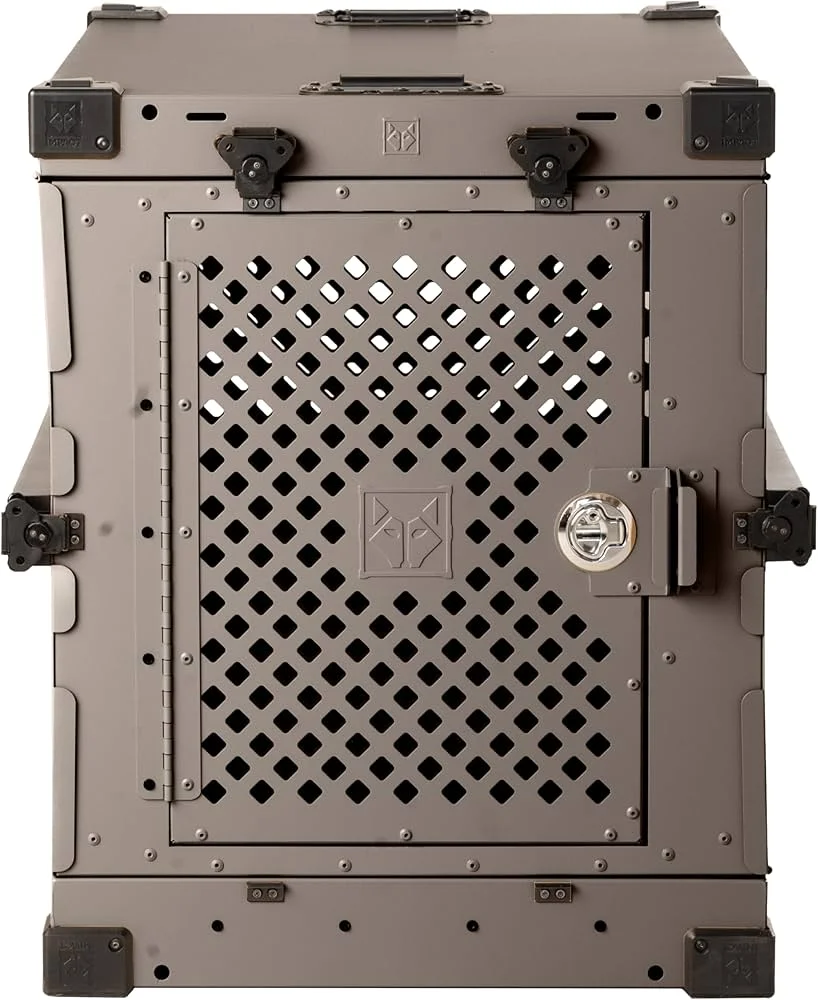
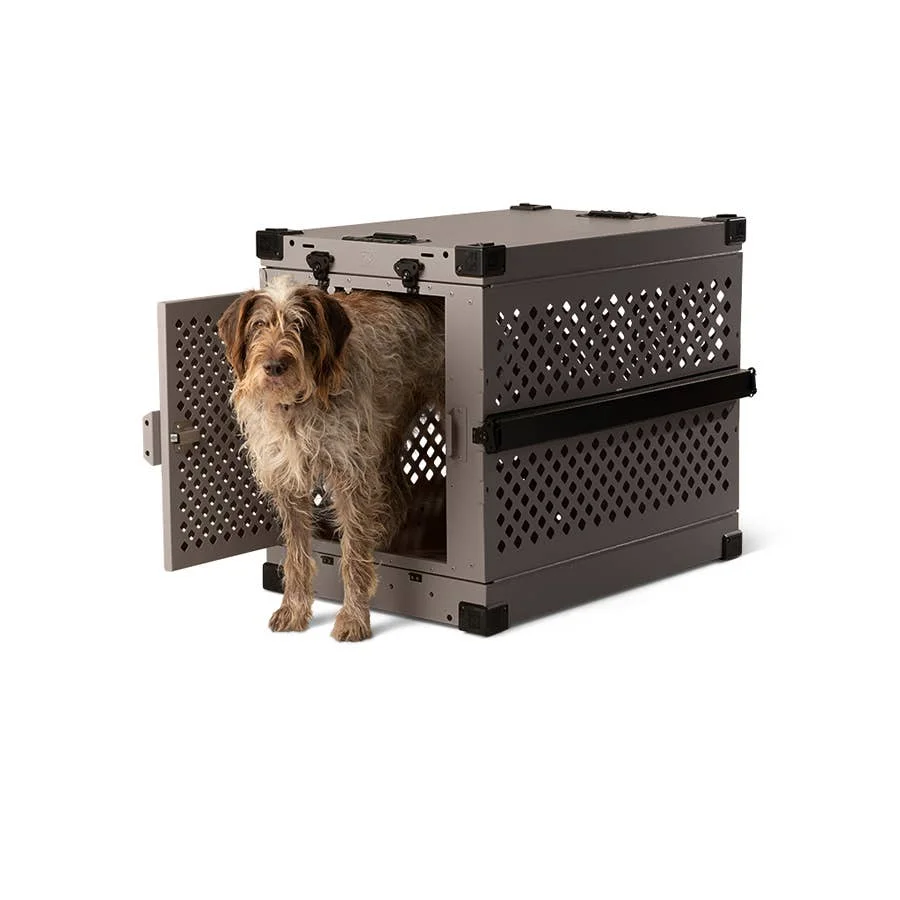
The Impact Collapsible Dog Crate uses an aircraft-grade aluminum frame that folds flat for storage, which is rare among heavy-duty crates. It is widely documented in crash and durability testing, and its escape-proof latches are a genuine differentiator for dogs that have learned to bust out of wire crates.
Be clear-eyed about what folding costs, though: a folding frame is a mechanism, and mechanisms are the parts that work loose. What separates the Impact from the folding wire crates of the same shape is the material doing the work — aircraft-grade aluminum that holds its geometry, against wire that bends. Give the frame joints and the latches the same 60-second look you give the straps before every trip.
The Impact is aluminum, collapsible, and escape-resistant, which makes it a strong choice for determined chewers and escape artists. It is rigid enough to anchor properly and to survive years of repeated road use, which is the practical test that separates a travel crate from a folding home crate.
Choose the Impact if you need the crate to fold away between trips; if it lives in the vehicle full time and never has to collapse, the welded Lucky Dog aluminum crate below does the rigid-shell job for less.
Sleepypod Air: Crash-Tested for Small Dogs
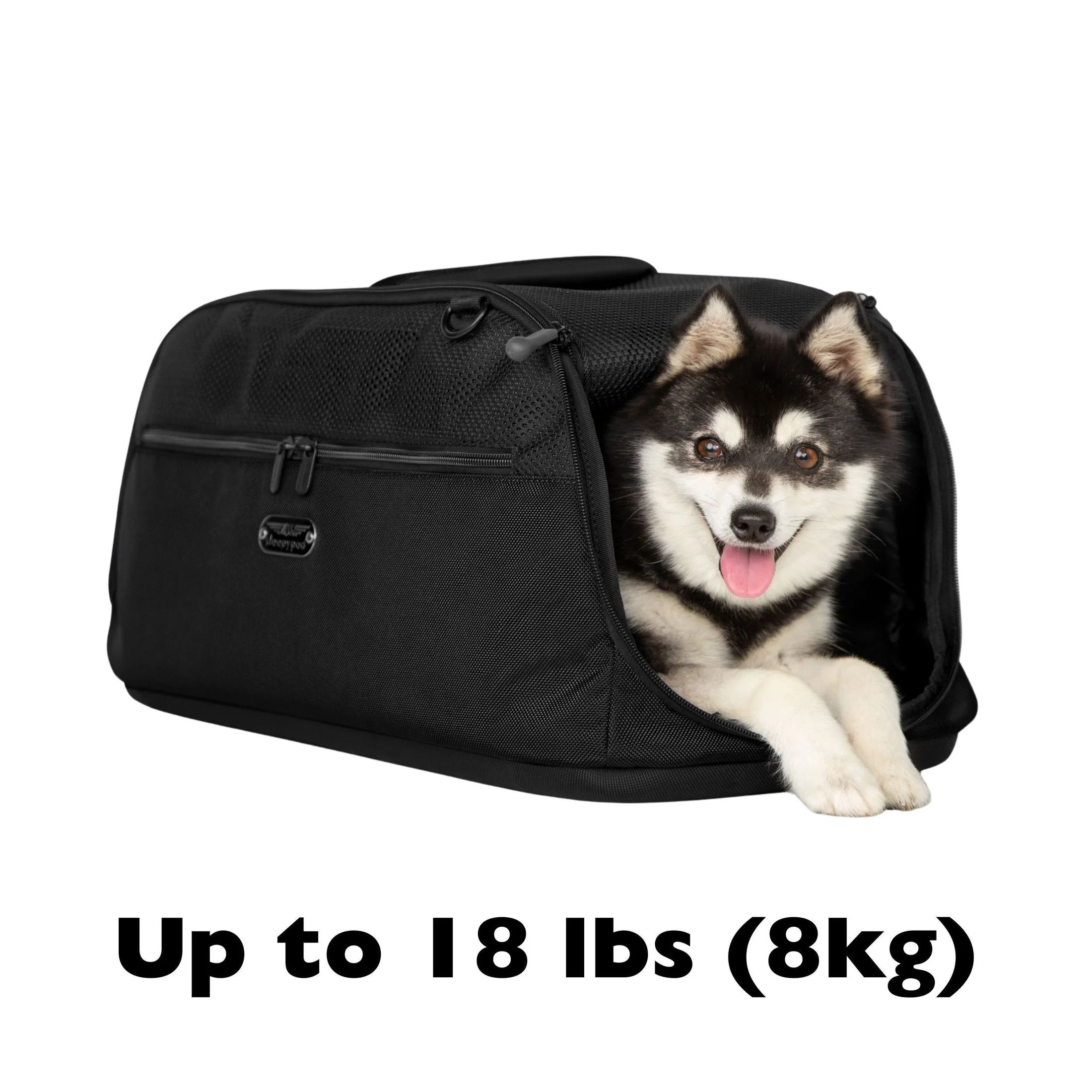
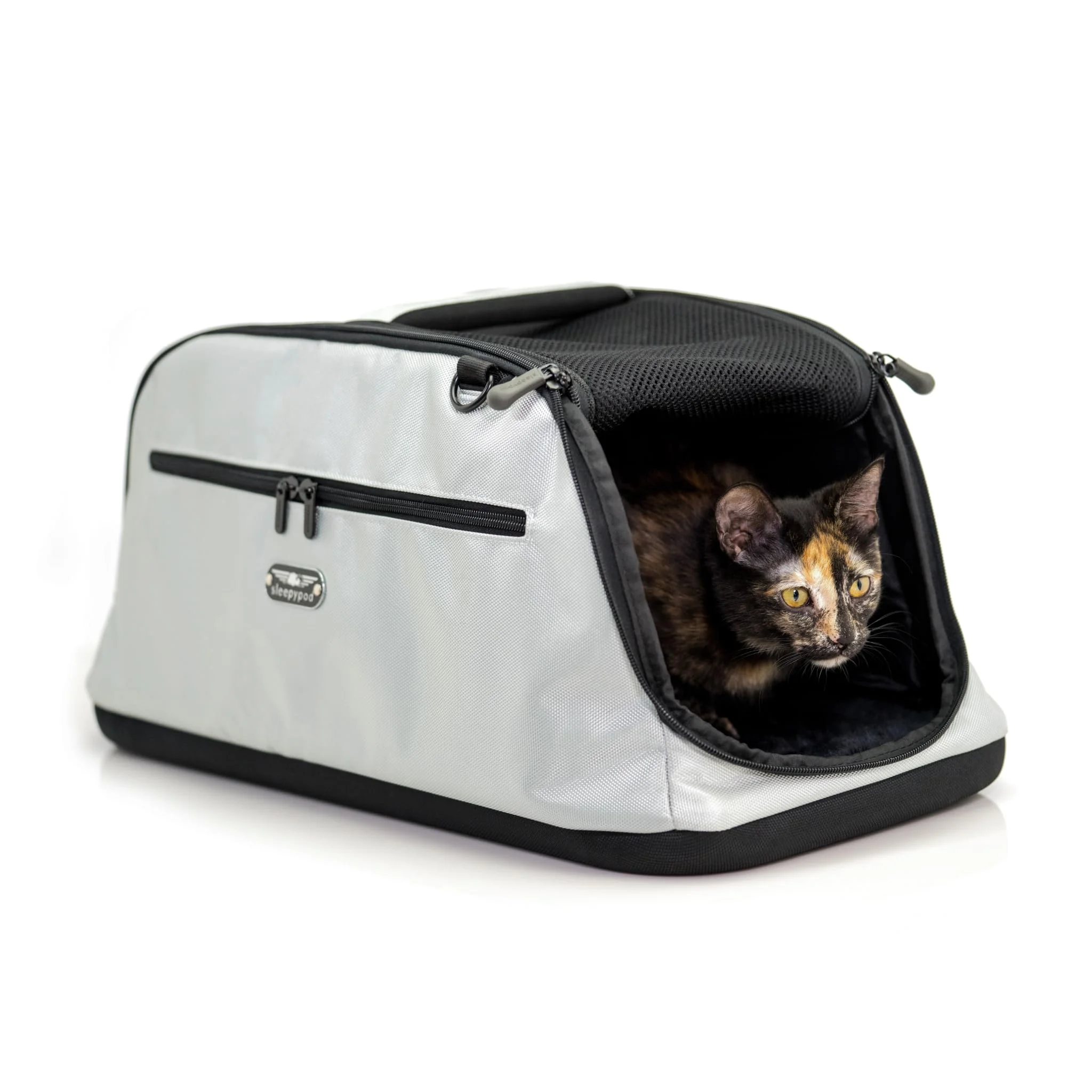
Not every dog rides in a cargo area, and not every owner needs a 40-pound aluminum box. For small dogs that travel in the cabin, the Sleepypod Air is the standout. It is a soft-sided carrier that has actually passed crash testing for small pets, using seatbelt pass-throughs to integrate with the car's existing restraints.
- Material: Structured soft-sided carrier with a reinforced base.
- Crash data: Crash-tested for small dogs; designed to work with the seatbelt, not float loose.
- Best for: Dogs under roughly 15 pounds riding in a seat, plus airline travel.
Honest limit: a soft-sided carrier is about restraint and impact mitigation for a light dog, not blunt-force protection for a 60-pound retriever. Match the tool to the dog.
Petmate, Lucky Dog and Ferplast: Budget and Mid-Range Options
If a premium crate is out of reach, a few mainstream options still beat an unsecured dog or a folding wire crate. The honest framing here is "better than nothing and well-ventilated," not "crash-certified."
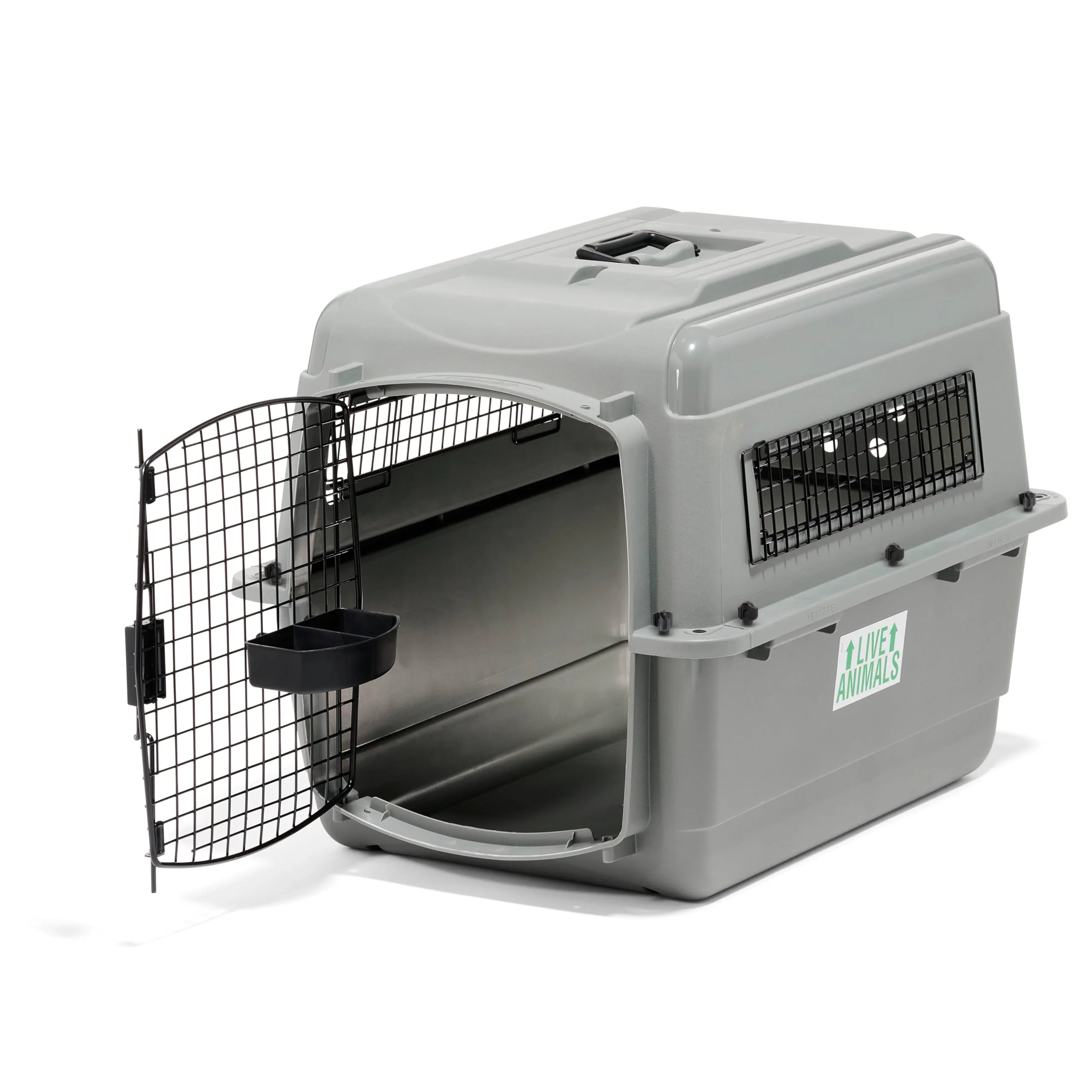
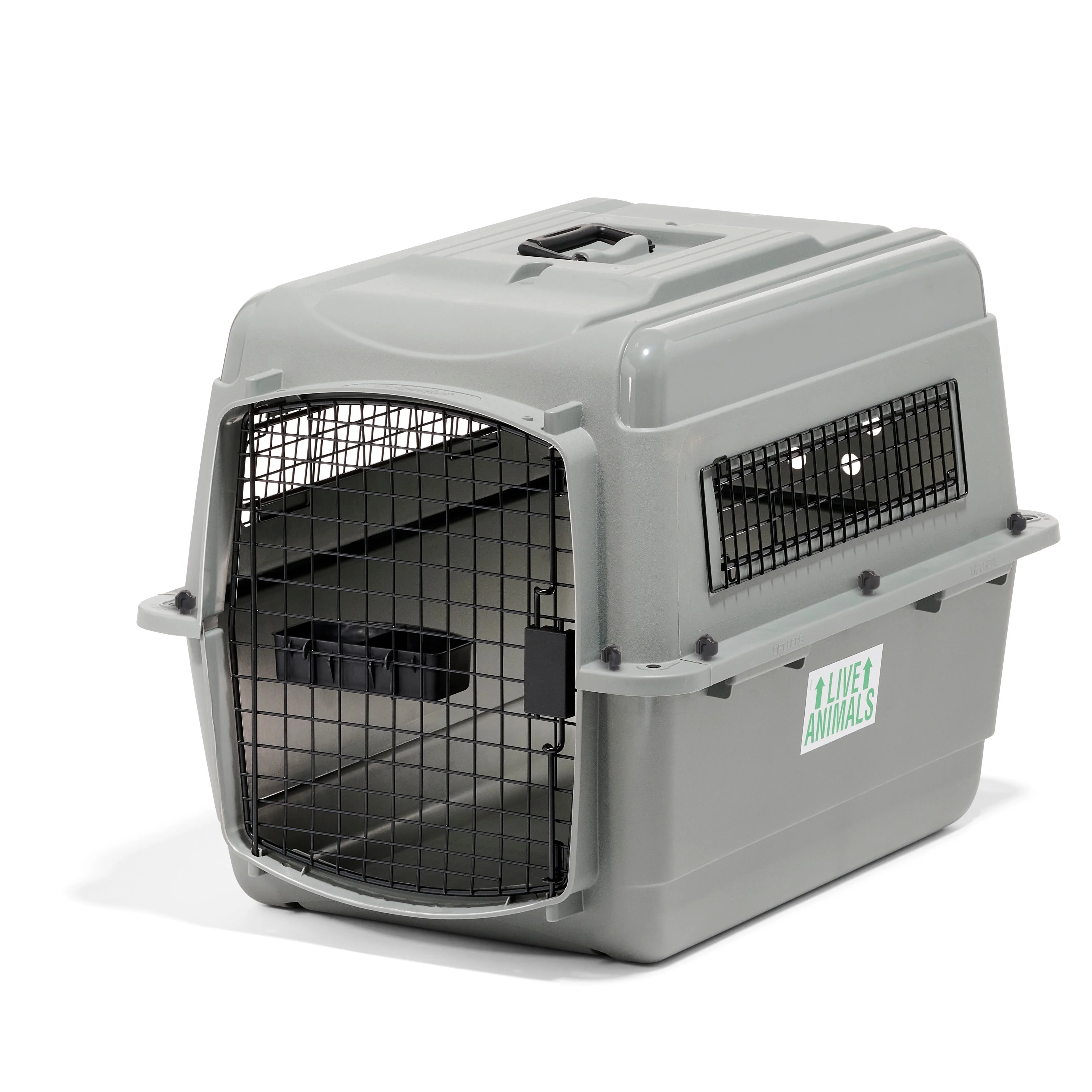
The Petmate Sky Kennel is the classic airline-style hard plastic kennel. It is affordable, widely available, and its bolt-together shell holds shape far better than a wire crate, though it is not crash-certified for vehicles.
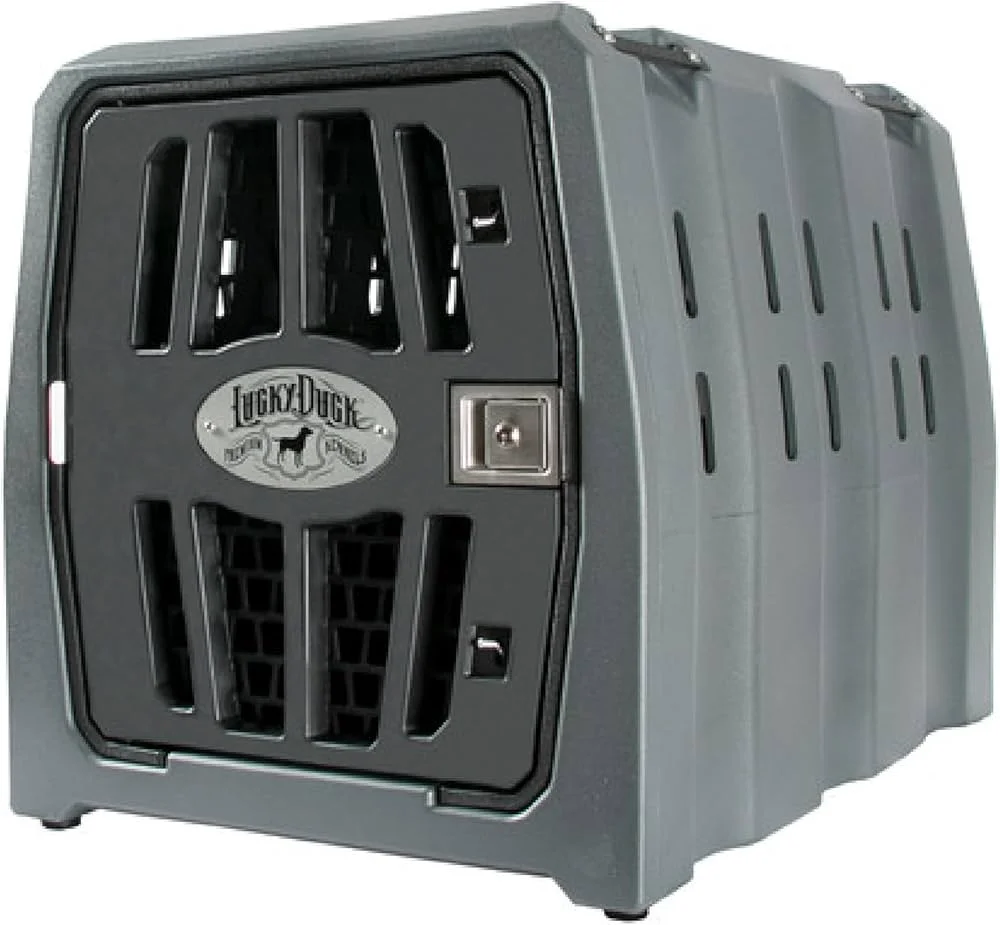
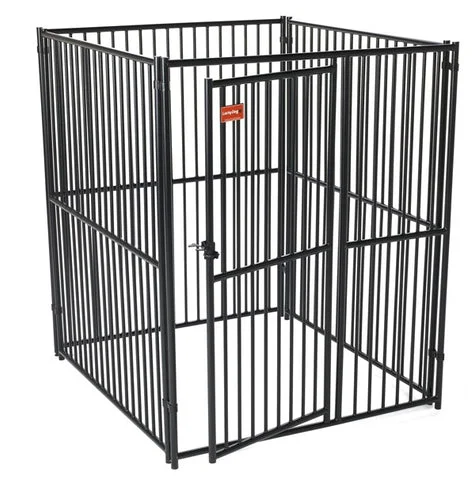
The Lucky Dog Aluminum Dog Crate brings welded aluminum construction at a mid-range price, a meaningful step up in rigidity over plastic for owners who want strength without the premium-brand cost.
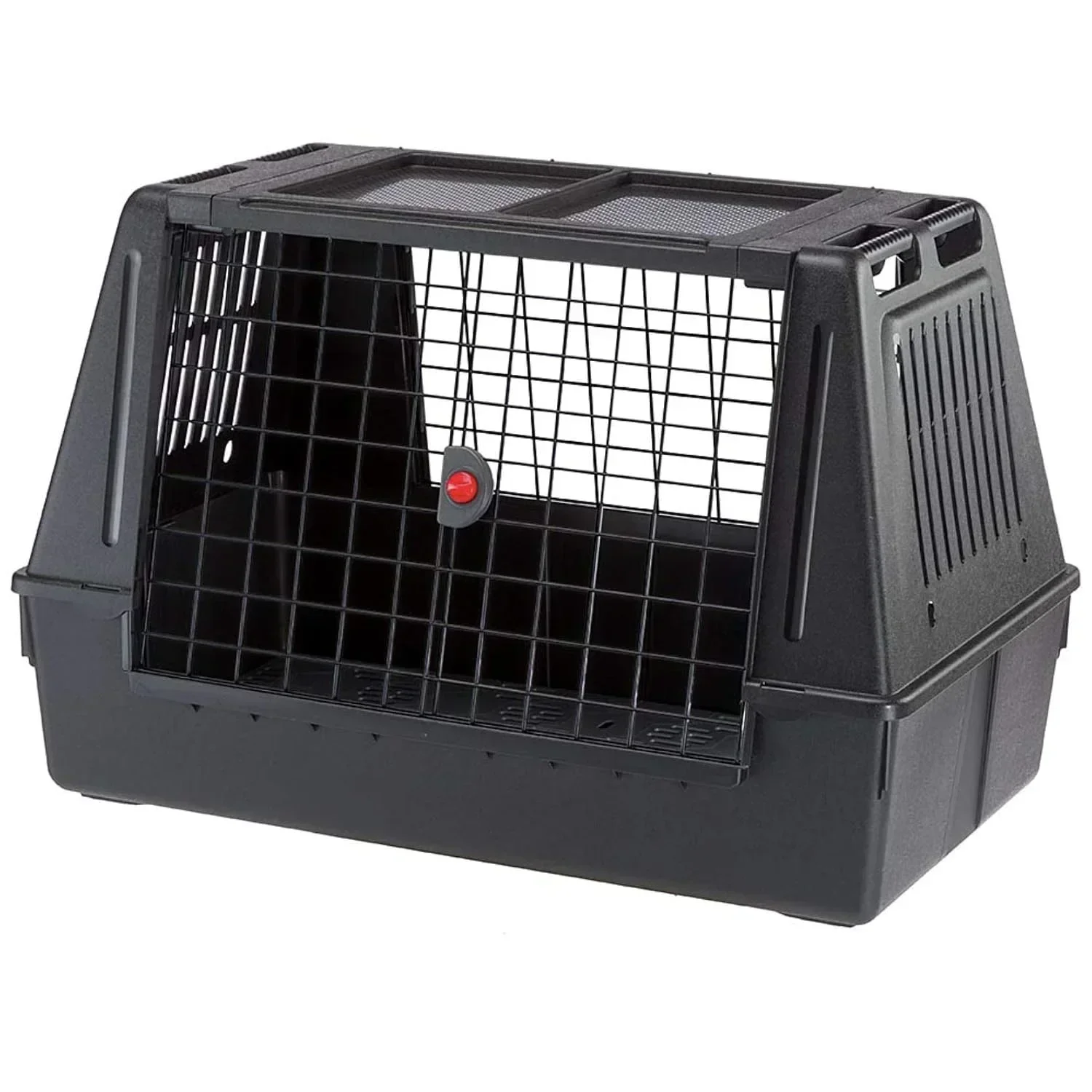
The Ferplast Atlas Vehicle SUV Dog Crate is the Atlas 100, a moulded plastic crate designed specifically for the cargo area of SUVs and hatchbacks. It measures 39L x 23W x 26H inches with a 13.5W x 18.5H inch doorway, which Ferplast sizes for medium-to-large breeds of roughly 40 to 60 pounds. Ventilation is the strong suit: metal mesh in both the front and the back, plus vented side panels.
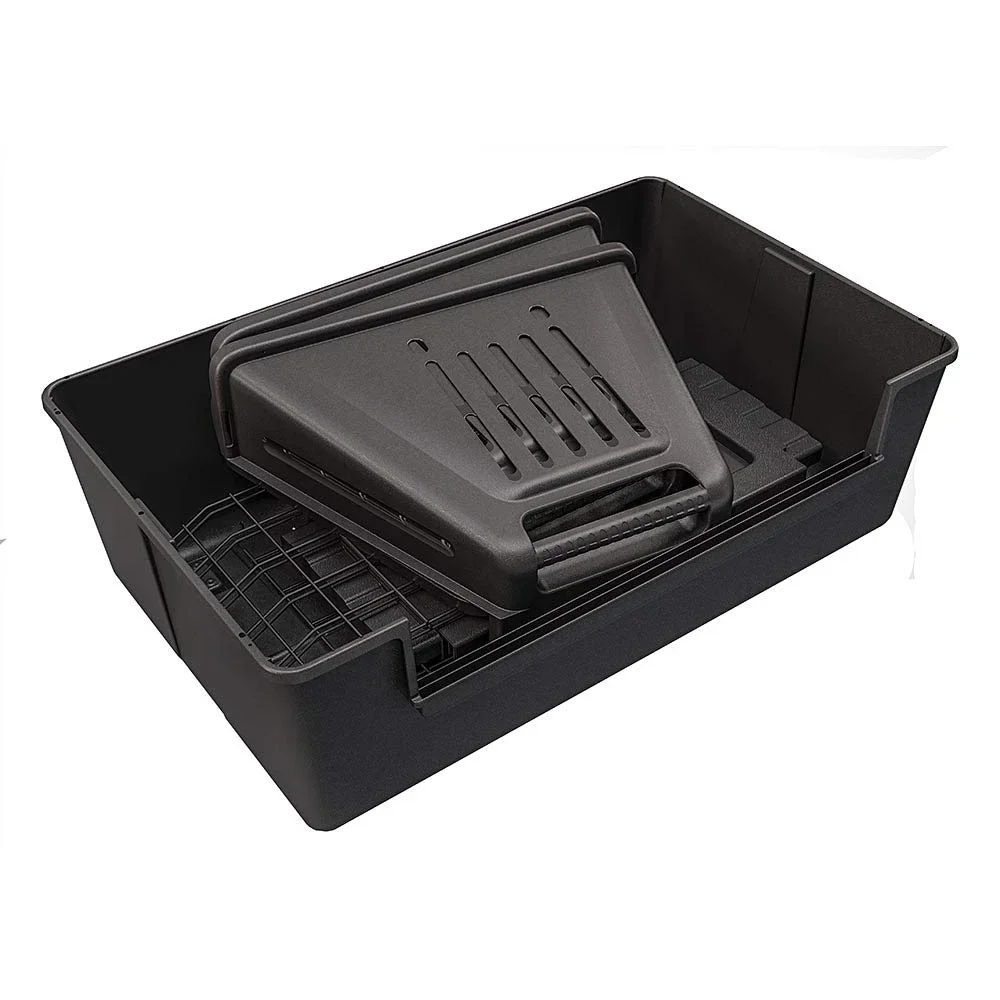
Handles are moulded into the top, the whole crate dismantles for storage, and the front door locks and slides horizontally to open, which saves the swing space a hinged door needs in a loaded cargo bay. It carries a 1-year manufacturer's warranty. Measure your cargo area before ordering, and be clear about what it is: moulded plastic rather than aluminium, and not crash-certified.
In short: the Petmate Sky Kennel is a well-ventilated, airline-style budget pick that is not crash-rated; the Lucky Dog brings welded aluminum rigidity at a mid price; and the Ferplast Atlas is a moulded-plastic crate shaped for an SUV cargo area, with metal mesh front and back and vented side panels. For any of these, the anchoring still matters more than the badge. A mid-range crate strapped tightly to the cargo anchors is safer than a premium crate sitting loose. The failure mode in real crashes is rarely the crate shattering; it is a sturdy crate sliding or tumbling because nobody tied it down.
If you are on a tight budget, spend first on a rigid hard-sided crate in the correct size and a set of quality ratchet straps, then upgrade to a crash-certified model later. That sequence buys most of the safety for a fraction of the price, and it beats waiting until you can afford a Thule Allax while your dog rides loose in the meantime.
Sizing and Anchoring: Getting It Right
Even the best crate fails its job if it is the wrong size or left unsecured. Two steps decide whether your crate actually protects your dog.
Size for containment, not luxury. Measure your dog from nose to base of the tail and add a few inches for length, then measure floor-to-head while sitting and add clearance. The dog should be able to stand, turn around, and lie down, but not have so much room that it slides during braking. Excess space lets the dog build momentum inside the crate, which is exactly what you are trying to prevent.
Anchor to the vehicle. Position the crate against the rear seats or a bulkhead so there is a buffer against forward movement, then strap it to your cargo tie-down points using the manufacturer's kit or heavy-duty ratchet straps. Cinch until there is zero play; if you can rock it by hand, it is not secure.
- Place the crate low and against a solid surface, never free-floating in the middle of the cargo area.
- Use at least two anchor points; four is better for larger crates.
- Add a thin non-slip mat inside, not a thick bed that becomes an entanglement hazard.
- Do a 60-second pre-trip check every time: latch closed, straps tight, no damage.
Bottom Line: Which Crate Should You Buy?
The right crate depends on your dog's size and your vehicle, but the priority order is consistent: crash performance first, then anchoring, then fit, then comfort.
- Best overall protection: Thule Allax, if it fits your cargo area and budget.
- Best rigid shell for less money: Impact (collapsible aircraft-grade aluminum).
- Best for small dogs in the cabin: Sleepypod Air.
- Best value: Lucky Dog aluminum or the Ferplast Atlas for a medium-to-large dog riding in an SUV cargo area; the Petmate Sky Kennel as a budget step up from wire.
Whatever you choose, the cheapest meaningful upgrade is not a different crate, it is anchoring the one you have. Pair the crate with a sturdy dog harness for car travel for short trips when the crate is impractical, and review how to safely secure a dog crate in a car before your next drive. Spend the money on the crash data, and spend the five minutes on the straps.