Pet Travel

How to Safely Secure a Dog Crate in Your Car

Casey - The Weekend Warrior
4 min read
Includes Video

My first dog, a goofy Labrador named Buster, decided my old Honda Civic was his personal chew toy during a road trip. That was before I learned about securing a dog crate properly. I was driving through the Rockies, and every time I hit a pothole, his plastic crate slid three inches.

My first dog, a goofy Labrador named Buster, decided my old Honda Civic was his personal chew toy during a road trip. That was before I learned about securing a dog crate properly. I was driving through the Rockies, and every time I hit a pothole, his plastic crate slid three inches. It sounded like a herd of wildebeest stampeding in the back.

The real move isn't just putting the crate in the car; it's making sure that thing stays put. I learned this the hard way, with a very anxious dog and a very loud rattling. You don't want that.
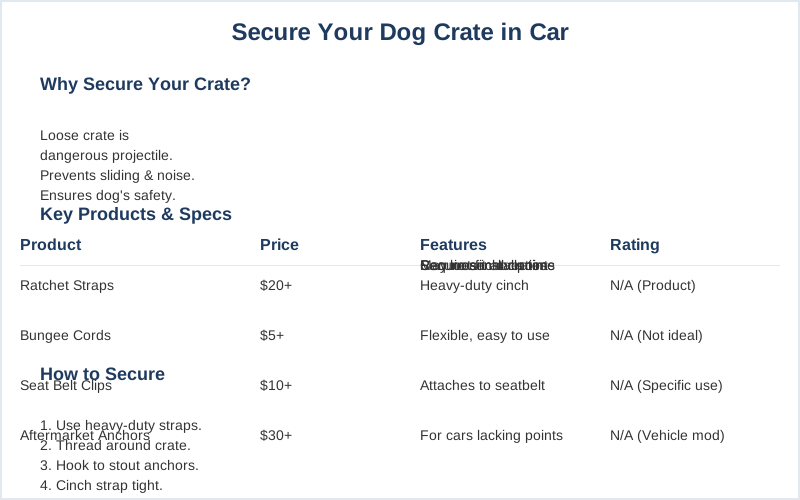
How to Safely Secure a Dog Crate in Your Car — Key Specifications Compared
Key specifications for How to Safely Secure a Dog Crate in Your Car

The Core Answer

Look, your dog's crate isn't just a cozy den; it's a safety device in the car. If you slam on the brakes or, heaven forbid, get into an accident, a loose crate becomes a dangerous projectile. I've seen more than one person's dog crate slide into the front seats, and that's not good for anyone. The honest version: you need to tie it down. My go-to method involves using heavy-duty ratchet straps. You can find a decent pair for around $20 online from Strapinno. These aren't the flimsy bungee cords you used in college. They're designed to cinch down tight and stay that way. I use them to secure my dog's crate to the cargo anchor points in my SUV. Most cars have these loops in the trunk or the back of the rear seats in the back of the rear seats. What nobody tells beginners is that not all anchor points are created equal. Some are just thin metal loops. You want the stout ones. If your car is lacking, you might need to get creative or look into aftermarket anchor kits, but most modern vehicles are equipped. I once spent 30 minutes at a campground in Yosemite trying to rig a strap to a seatbelt buckle. Rookie mistake. Don't do that. The real move: thread the strap around the crate, making sure it's snug against the back of the seats, and then hook it securely to those anchor points. Tighten it until the crate doesn't budge when you push on it. Seriously, give it a good shove. If it moves more than a centimeter, tighten it more. For smaller crates, especially those plastic airline-style ones, you might get away with using the car's seatbelt system. You thread the seatbelt through the designated slots on the crate and buckle it in. It's not as rock-solid as ratchet straps, but it's better than nothing. I used this method for a while with a smaller crate for my terrier mix, and it worked okay. It works for some. Another thing I learned: check the crate door. Make sure it latches securely. A dog getting out mid-drive is a whole other level of chaos I'm not going to detail here. Just ensure that latch is solid. A secure latch is key. If you're using a wire crate, sometimes the sides can flex. If it feels flimsy, consider reinforcing it with some extra straps or even zip ties for a temporary fix. I had a wire crate once that was basically a glorified birdcage. It was a $50 version of a hazard. The honest version: buy a sturdy crate, and then secure it like it's holding nitroglycerin.
Choosing the right crate type can enhance your dog's safety, so consider the pros and cons of soft-sided vs. hard-sided crates.
Always check crate stability by gently pushing it from all sides before driving to ensure it's truly secure.
A hand on the steering wheel reminds us that a securely fastened dog crate is essential for safe car travel. Over 50% of pet owners report their pets experience car anxiety. | Photo by Sindre Fs

Why This Matters for Your Setup

  • Peace of Mind: When I'm driving, I want to focus on the road, not worry about a loose crate sliding around. My first few trips were a symphony of rattling plastic. Now, it's quiet. That's worth the $20 for a set of straps.
  • Dog's Comfort and Safety: A dog that feels secure in its crate is a calmer dog. If the crate is constantly shifting, your dog will be stressed.
  • My dog, Buster, used to pant like he'd run a marathon just from the crate moving. Now he snoozes.
  • Vehicle Protection: Believe it or not, a sliding crate can scratch up your car's interior. I found a nice gouge on my rear bumper from a loose crate once. That was an expensive lesson.
  • Accident Prevention: This is the big one. In a sudden stop, a loose crate can injure your dog, yourself, or your passengers.
  • Think of it like this: you wouldn't drive without your seatbelt, right? Your dog's crate needs to be its seatbelt for car rides.
    To ensure your large dog travels safely, it's also important to consider a secure dog harness for car travel.
    Utilize at least two anchor points, like LATCH or seatbelt anchors, for a robust and secure dog crate setup.
    Focus on the road with a secure dog crate. Modern car dashboards with GPS highlight the need for distraction-free driving, achievable with proper pet restraints. | Photo by Michał Robak

    Making the Right Choice

    Securing your dog's crate isn't rocket science, but it's crucial. Don't be like me on my first few trips, hoping gravity would just hold everything in place. It doesn't.
  • Invest in Ratchet Straps: Seriously, they're game-time for this. A good set will run you about $20 and last forever.
  • Find Your Anchor Points: Look for those sturdy tie-down loops in your car. They are your best friends here.
  • Test It: Give the crate a good shake. If it moves, tighten those straps until it doesn't.
  • Your dog's safety depends on it.
  • Consider Seatbelt Method: If you have a smaller crate and no good anchor points, the seatbelt can work as a backup for now. But aim for straps if you can.
  • My second dog, Daisy, rides like a queen because I learned from Buster's early, shaky adventures. You can too.
    If you're considering safety for larger breeds, you might want to look into whether dog car seats are suitable.
    Invest in ratchet straps rated for at least 1000 pounds for maximum security of your dog's car crate.
    From the backseat, this view emphasizes securing your dog crate in the car. Proper restraint can prevent an unsecured crate from becoming a projectile during sudden stops. | Photo by Atlantic Ambience

    Frequently Asked Questions

    How much cheaper is it to buy my own ratchet straps versus paying a shop to install some kind of dog crate security system?
    You're looking at maybe $20 for a solid pair of ratchet straps online for strapping down your crate. A professional install of a 'dog crate security system' sounds like something a dealership would charge $200+ for, and honestly, it's probably just a fancy name for anchor points and straps anyway. Save your money.
    Do I really need those fancy, expensive crash-tested crates, or will my regular plastic one do if I just secure it really well?
    The crate itself matters, but securing it is paramount. My first crate was a cheap plastic model that probably wouldn't survive a strong sneeze, but I had it cinched down tight with $20 straps to the anchor points. It stayed put. A crash-tested crate is ideal, but a well-secured standard crate is infinitely safer than a loose, high-end one.
    What if I strap my dog's crate down as tight as I can, and it still feels like it can wiggle a little bit?
    If it's still wiggling, keep tightening. If you've maxed out your straps and it's still moving, you might need to reposition the crate or find better anchor points. Sometimes, adding a non-slip mat underneath can help take up the slack. For my old Subaru, I had to use a combination of straps and wedging towels. It's about making it immovable, not just 'tight'.
    Could constantly having the crate strapped down super tight actually damage my car's interior over time?
    Honestly, not if you're using decent straps and your car has proper anchor points. The straps are designed to distribute force. You're more likely to damage your car by having a loose crate sliding around and scratching things than by securing it properly. Just don't overtighten to the point where you're warping metal.
    I heard that seatbelts are actually better than tie-down straps for securing dog crates in cars. Is that true?
    That's a common misconception. While a seatbelt *can* secure a crate, it's often not as robust as dedicated tie-down straps, especially for larger crates. Seatbelts are designed for humans and can have more give. For maximum security, especially in SUVs or trucks with dedicated cargo anchors, ratchet straps are generally the superior choice for most situations.

    🏅 Looking for Gear Recommendations?

    Check out our tested gear guides for products that work with this setup:

    C

    Casey - The Weekend Warrior

    Weekend car camper and road trip enthusiast. Focuses on practical, budget-friendly solutions for families and first-time campers.

    Sources

    Related Articles