First, the Basics
My first dog, a goofy Golden Retriever named Max, hated riding in the car. He'd pant, whine, and try to climb into my lap. I figured a crate was the answer, but the first one I bought, a flimsy wire job for $75, barely fit in my old Civic hatchback. Max could stand, but just barely. It felt like a rookie mistake waiting to happen, and I knew I needed to figure out the real move for car crate sizing.
This isn't about stuffing your dog in a box; it's about making car rides actually safe and bearable for everyone. I learned this the hard way, and you don't have to.
This is about understanding what size dog crate you actually need for your car, and why it's more critical than you might think. Forget the fancy marketing; we're talking about physics and your dog's actual comfort. I'm going to give you the field notes from my own trial-and-error.
The Core Answer
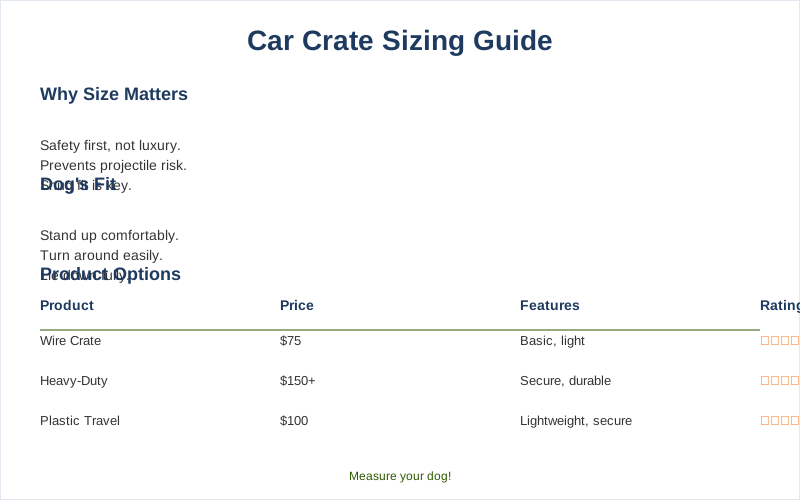
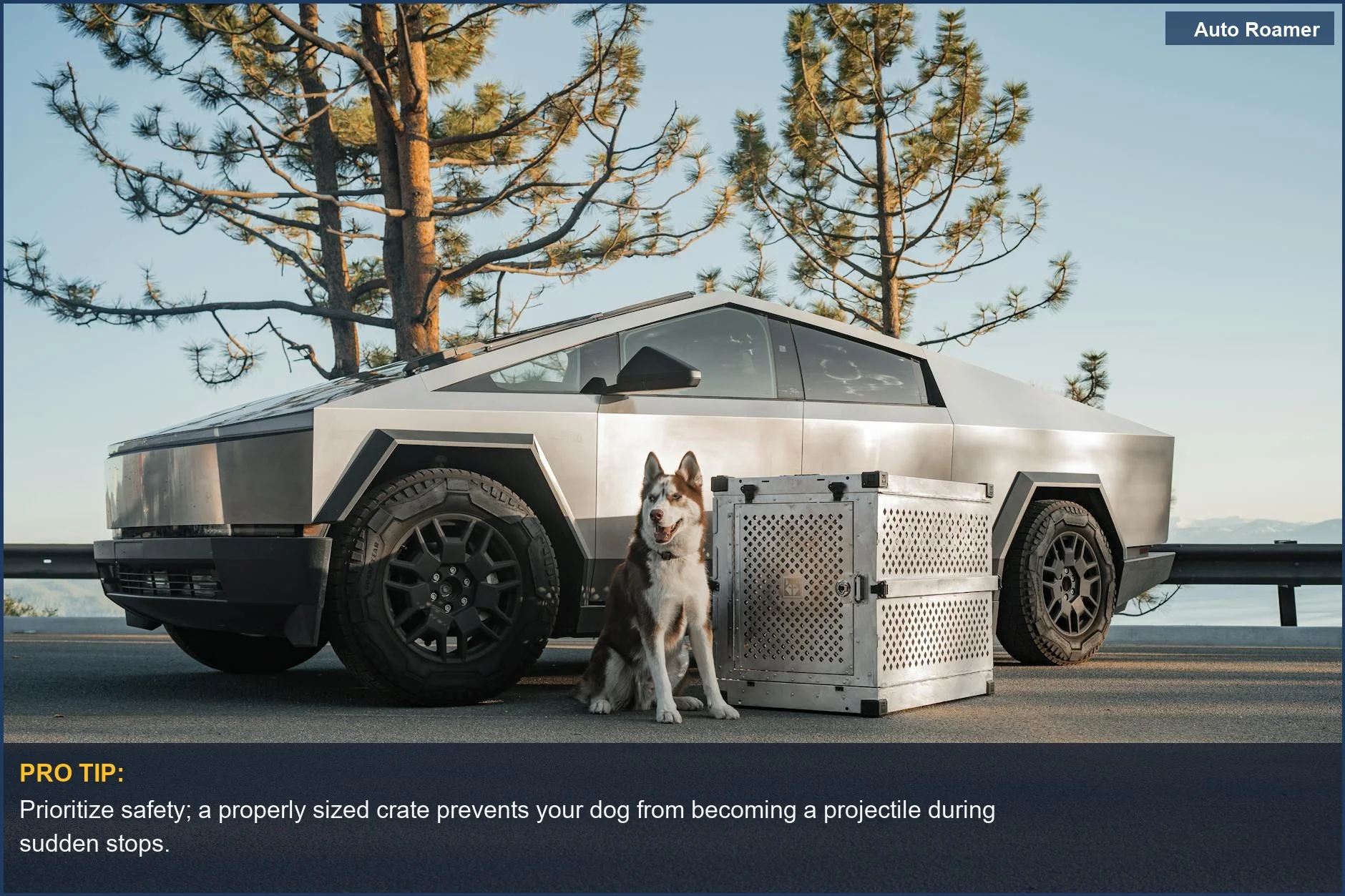
The honest version is that the crate size for your car isn't about giving your dog a luxury suite. It's about safety and preventing them from becoming a projectile if you have to slam on the brakes. Think of it like a seatbelt for your dog. The goal is a snug fit, not a penthouse.
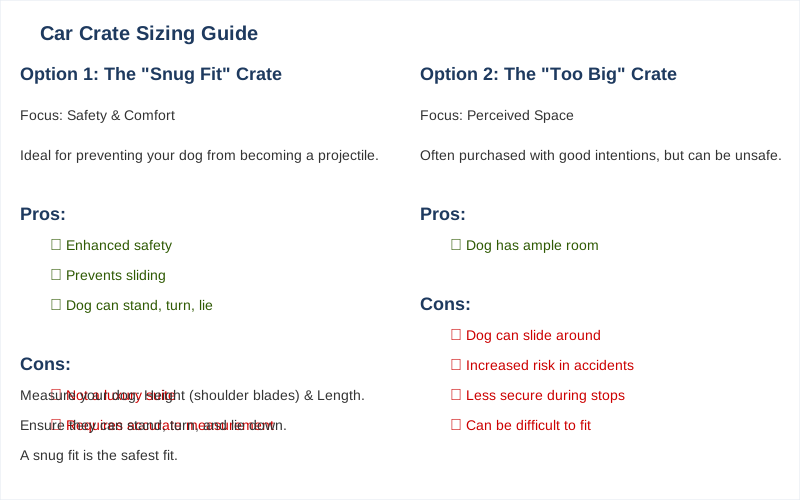
Your dog should be able to stand up, turn around, and lie down comfortably. That's the baseline. Anything significantly larger, and they can get tossed around inside the crate during a sudden stop or sharp turn. I learned this the hard way when my first Subaru Outback had a cheap wire crate that allowed my German Shepherd to slide from one side to the other like a bowling pin.
No fun for him, and definitely not safe in an accident.
Here's the real move: measure your dog first. Get their height from the ground to the top of their shoulder blades (that's the wither height) and their length from nose to tail. Then, measure the cargo space in your car. Most guides will tell you to add a few inches to your dog's measurements for standing and turning, but for a car crate, you want to be on the smaller end of that spectrum.
My 70-pound Lab fits comfortably in a 36-inch long crate in my current SUV; anything bigger would have him sliding around too much.
When you're looking at crates, pay attention to the interior dimensions, not just the exterior. Some crates have thicker walls that eat up space. For example, a crate listed as 40 inches long might only have 37 inches of usable interior space. Always double-check those numbers. I once bought a crate online that looked perfect, only to realize it was too tall for my car's ceiling when the liftgate was closed. Rookie mistake, cost me $150 in return shipping.
For most medium-sized dogs (think labs, shepherds, retrievers), a crate in the 36-42 inch length range is usually a good starting point. For smaller breeds, 24-30 inches might be plenty. Bigger dogs, like Great Danes or mastiffs, might need a 48-inch or even a 54-inch crate, but you'll need to make sure your vehicle can actually accommodate that size. I've seen people try to cram massive crates into tiny sedans, and it's never pretty.
The key is balance. You want your dog to be able to shift positions without feeling like they're in a sardine can, but not so much room that they get thrown around. It's about minimizing movement during transit, which is the core principle behind safety engineering for travel.
And if you have a particularly anxious dog, a slightly snugger fit can actually be more comforting for them. It gives them a sense of security, like a weighted blanket. My dog Max used to freak out on car rides until I switched to a more appropriately sized crate. Now, he actually settles down.
The $150 I spent on that ill-fitting crate was a wasted investment; the $300 I spent on the correctly sized one saved my sanity and probably Max's dignity.
Why This Matters for Your Setup
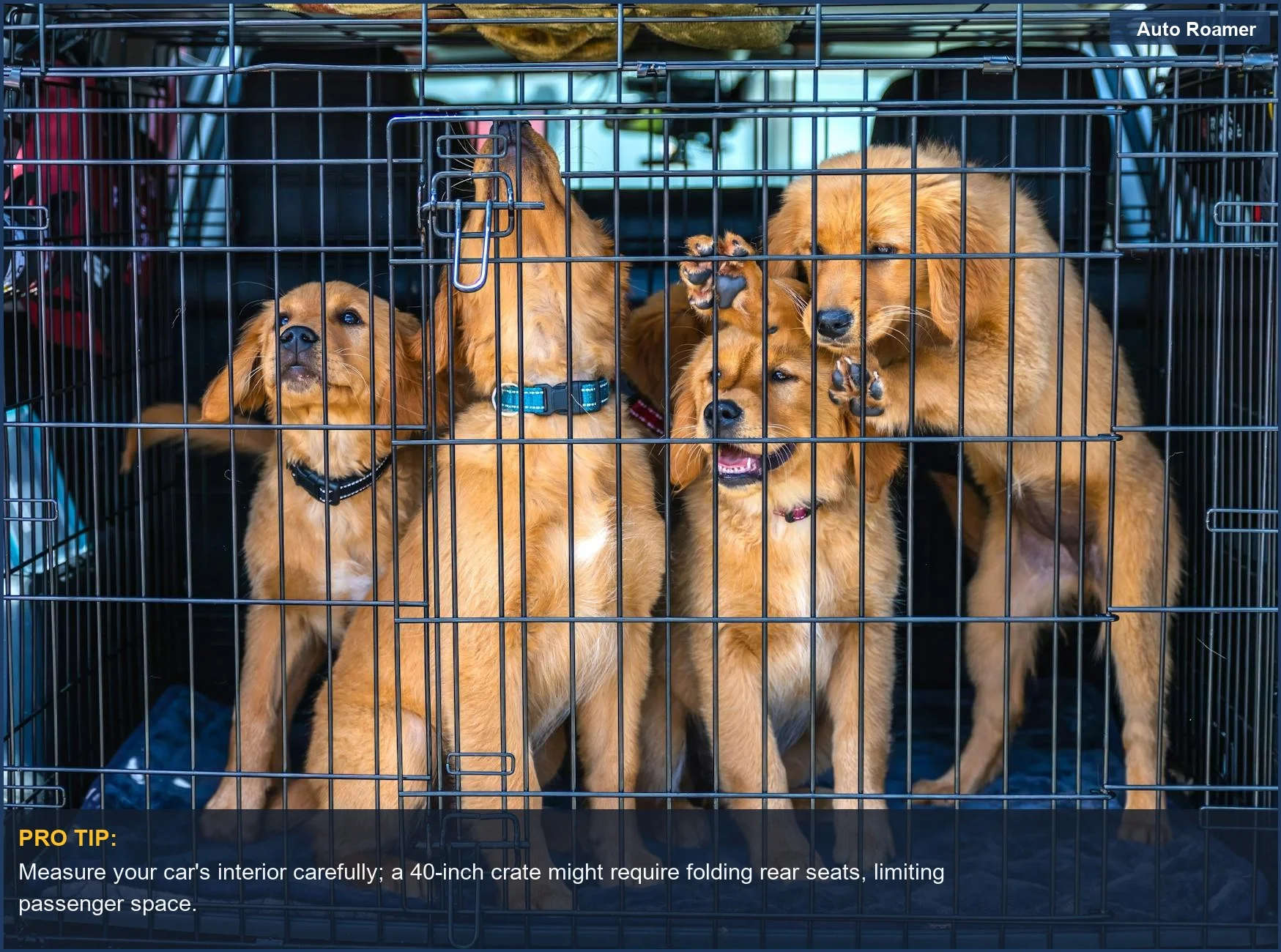
- Vehicle Fit is Paramount: You can have the perfect crate for your dog, but if it doesn't fit your car, it's useless. I learned this trying to stuff a 40-inch crate into my old Honda CR-V. It fit, but only if I folded down the back seats, meaning no passengers. Brilliant engineering, that.
- Measure Twice, Buy Once: Always measure your cargo space. Look at the depth from the back of the seats to the liftgate, the width at the narrowest point (usually wheel wells), and the height. Don't forget to account for sloped roofs or odd interior shapes that can cut into space.
- Dog's Comfort vs. Safety: The debate between a snug fit for safety and ample room for comfort is real. For car travel, safety wins. A crate that's too large means your dog can be thrown around during sudden stops. The general rule is they should be able to stand, turn, and lie down, but not have excessive room to bounce.
- Material Matters: Wire crates are cheap, but they bend and can be dangerous in a crash. Soft crates are even worse. For car travel, I highly recommend a sturdy, rotomolded plastic crate. They're heavier and pricier (think $300-$600), but they're built like tanks and have saved dogs' lives in accidents. My $100 wire crate was a complete waste of money in hindsight.
- Ventilation is Key: Make sure the crate has plenty of airflow. Dogs can overheat easily in cars, especially in warmer weather. Look for crates with multiple ventilation holes or options for adding extra vents. I once drove with my dog in a crate with minimal holes on a 75-degree day, and he was a panting mess by the time we got to the trailhead. Bad call.
Making the Right Choice
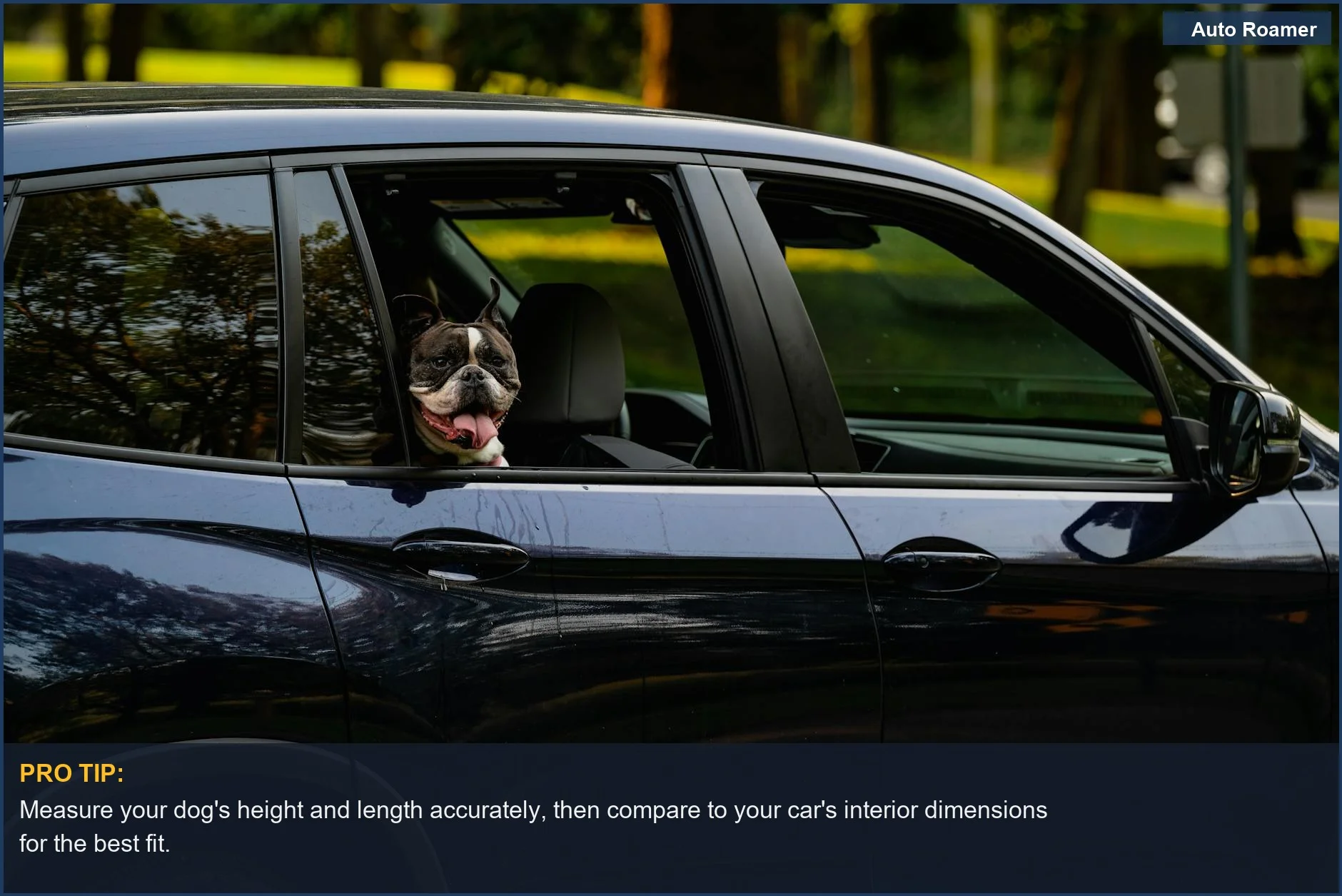
Choosing the right size dog crate for your car is a critical step for safe travel. Don't just eyeball it; grab a tape measure. Measure your dog, then measure your car's interior space meticulously at the intended placement.
Prioritize a snug fit over a spacious one for transit. Your dog should be able to stand, turn, and lie down, but you don't want them sliding around like a puck on ice during a sudden stop. This is where the physics of a crash comes into play and makes a big difference.
Consider investing in a high-quality, durable crate. While the $75 wire crate might seem like a bargain, a $400 rotomolded crate might actually save your dog's life in an accident. It's the $50 version of camping gear: it might get you out there, but it won't last and might not be safe.
Ultimately, the goal is a secure, comfortable, and safe environment for your dog on the road. This isn't just about convenience; it's about responsible pet ownership. Get it right the first time, and you'll both enjoy the journey so much more.