
Start With the Four You Already Have
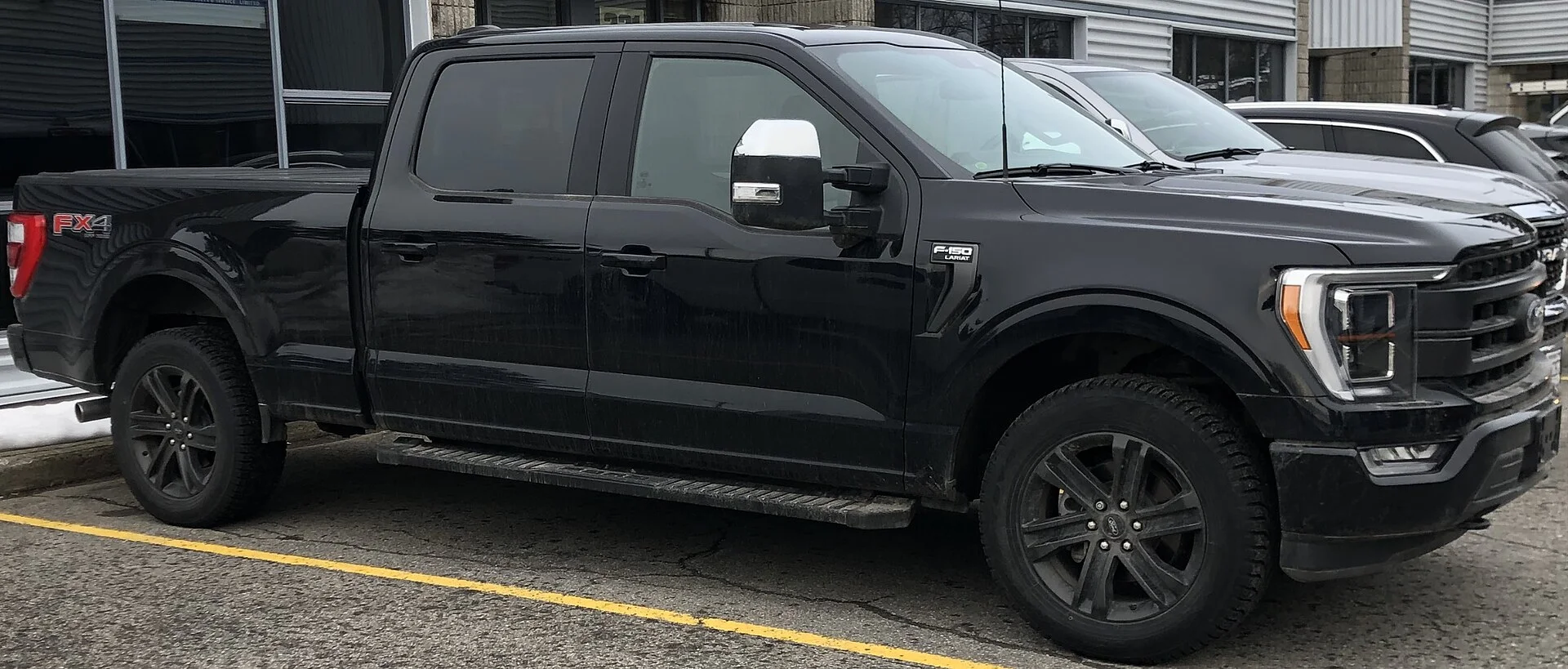
Before buying a single accessory, know that every F-150 comes ready to tie down a load. The 14th-generation F-150, launched for 2021, comes standard with four fixed tie-down hooks in the bed - one near each corner of the cargo box. Those four hooks are the foundation of securing camping gear, and a lot of owners never use them to their potential simply because they do not know the rating.
That rating is generous. The fixed corner tie-down hooks are commonly rated at approximately 600 lb each - real, usable capacity for strapping down heavy gear like a loaded cooler, a generator, water containers, or a rooftop tent's cargo. Four hooks at 600 lb apiece is far more anchoring than most camping loads ever demand, which means the factory setup alone handles the vast majority of trips.
The corner placement is deliberate and useful. With an anchor at each corner, you can run straps diagonally across a load or straight down each side, which is exactly the geometry you want for keeping cargo from shifting in any direction. For most campers, the four factory hooks are the whole answer - the trick is not adding hardware, but understanding the 600 lb rating and strapping to it correctly, which the later sections cover. Start with what the truck already gives you.
BoxLink: The System Most People Underuse
Beyond the four corner hooks, the F-150 has a modular anchoring system that many owners overlook. BoxLink is Ford's reinforced mounting-plate system, with four factory BoxLink locations in the bed - two per side. Those reinforced plates are hardpoints built into the bed sides, engineered to accept accessories far more securely than a bolt through sheet metal ever could.
Whether you have it depends on the trim. BoxLink is optional on some trims and standard on the Lariat and some XLT trims, so check your bed sides for the four rectangular plates before planning around it. When present, BoxLink turns the bed into a configurable platform: the plates anchor not just tie-down cleats but bed dividers, ramps, and storage accessories, all locking into the same reinforced points.
The value for camping is flexibility. Where the four corner hooks are fixed, the BoxLink plates let you add and reposition anchors and accessories to match a specific load, then remove them when you need a clean bed. It is a system designed to be built upon, and most owners who have it use only a fraction of its capability. If your F-150 has the four BoxLink plates, they are the key to expanding your tie-down options well beyond the factory corner hooks - and the next section covers how to add cleats to them.
Adding Cleats to BoxLink
The most useful BoxLink accessory for camping is a set of cleats, which turn the reinforced plates into movable tie-down points. A BoxLink cleat accessory kit adds four removable locking cleats that lock into the four BoxLink plate locations. Snap them in where you need an anchor, and you have four more secure tie-down points exactly where your load calls for them; pull them out when you want the bed clear.
For owners who want the factory part, it is easy to source. The OEM BoxLink cleat part number is FL3Z-99000A64-B, which gets you Ford's own cleats engineered to the plates' ratings. Aftermarket cleats fit the same BoxLink plates too, but matching the OEM part removes any guesswork about fitment and rating, which matters for anything you are trusting to hold heavy gear on the highway.
The appeal is repositionable anchoring. Unlike the fixed corner hooks, cleats in the BoxLink plates can go where a specific load needs them - anchoring a bike upright, pinning down a storage box mid-bed, or creating tie points along the sides for a cargo net. For a camper who reconfigures the bed from trip to trip, the cleat kit is the single best upgrade to the tie-down system, adding four rated, relocatable anchors to the four fixed ones the truck already has. Just know their ratings, which differ by direction - covered next.
The Cleat Rating Nobody Reads
Here is the detail that separates safe strapping from a failure on the interstate: BoxLink cleats are rated differently depending on which way you pull them. The BoxLink cleat load rating is about 275 lb horizontal - cross-box - and up to 600 lb diagonal per cleat. That is a big difference, and using the wrong number for your strap direction is how gear breaks loose.
Understanding the two figures pays off. A cross-box pull, straight across the bed, is the weaker direction at about 275 lb per cleat, while a diagonal pull can handle up to 600 lb. So the same cleat is more than twice as strong depending on the angle of the strap on it. When you plan how to run your straps, factor in that a diagonal anchor point gives you far more capacity than a straight cross-bed one.
This is exactly why knowing the number beats guessing. A camper who assumes all four cleats hold 600 lb in every direction could badly overload a cross-box strap rated for only 275 lb, and a strap failure at highway speed is dangerous for everyone behind the truck. Read the cleat rating, note that it is directional, and match your heaviest pulls to the stronger diagonal orientation. The cleats are strong when used right - the whole game is knowing which number applies to how you are actually pulling.
Fixed Hooks vs BoxLink Cleats
It is worth being precise about the two kinds of anchors, because they are not the same thing and people conflate them. The four factory fixed corner hooks are always present on every 2021+ F-150, built into the bed and rated about 600 lb each. The BoxLink accessory cleats are different: they require the BoxLink plates and a purchased cleat kit, and they clip in and out where you want them.
The distinction matters for planning. If your truck lacks BoxLink, you still have the four corner hooks - a complete, capable tie-down set on their own. If it has BoxLink but you have not bought cleats, the plates are there but you have no cleat anchors yet until you add the kit. Knowing which you have prevents the frustration of planning around cleats you do not own, or overlooking the four hooks you do.
Used together, they are a strong combination. The four fixed hooks give you permanent corner anchors, and the four cleats add repositionable mid-bed and side anchors - eight rated points total on a fully equipped truck. For camping, that is enough to secure a complex load: corners strapped down by the hooks, and the odd-shaped or mid-bed items pinned by cleats placed exactly where they are needed. Know which anchors your specific truck has, and use both kinds for what each does best.
Match Your Bed Length to Your Gear
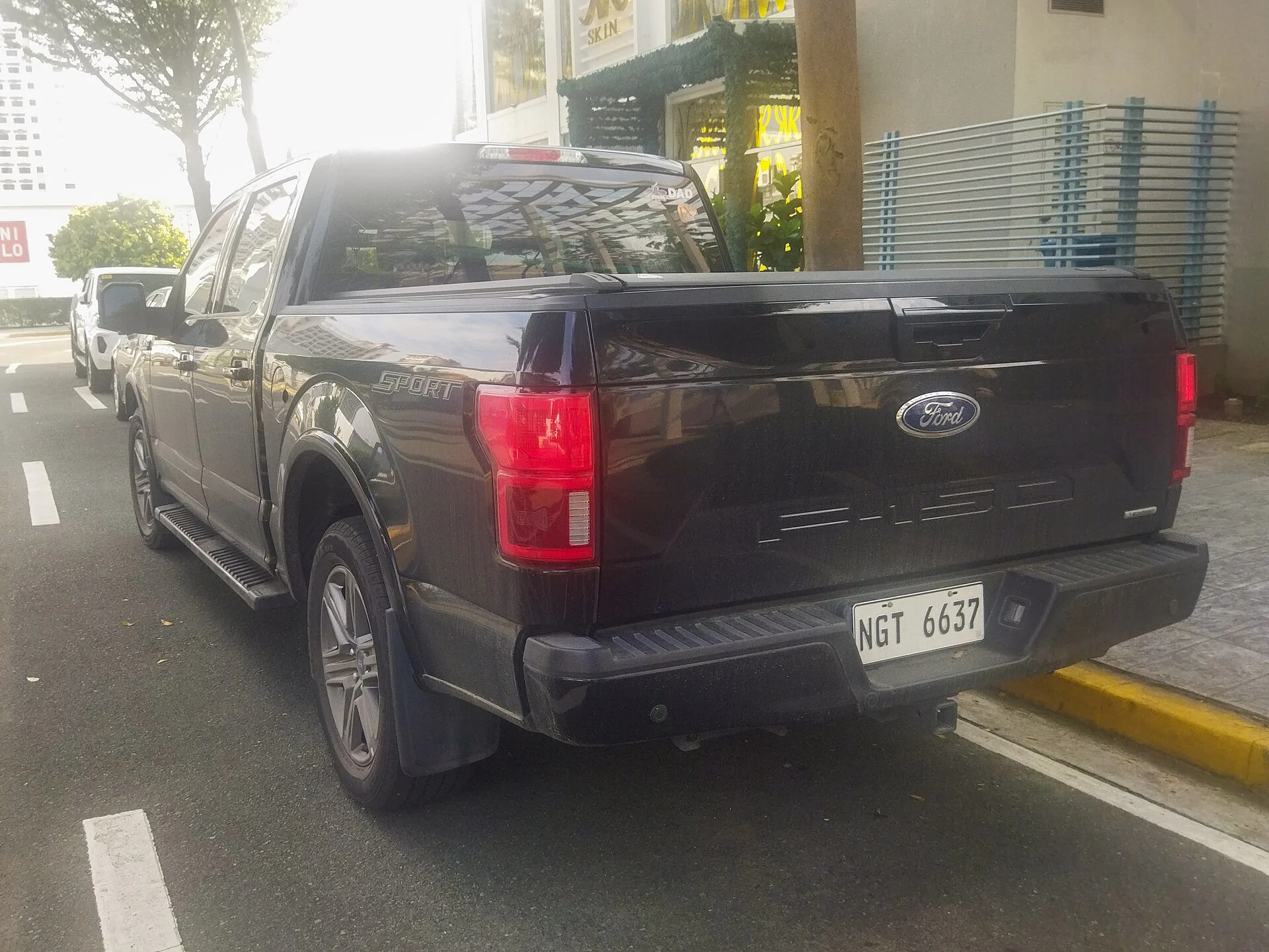
How much you can carry and how you lay it out depends on your bed length, and the F-150 offers three. The bed length options are 5.5 ft, 6.5 ft, and 8 ft, and the difference is significant for camping - especially if you plan to sleep in the bed or haul long gear. The three beds share the same 51.1 inches of width and 21.4 inches of height, so only the length changes.
The numbers tell the story. The 5.5 ft Styleside bed is 67.1 inches long with 52.8 cubic feet of cargo volume; the 6.5 ft bed stretches to 78.9 inches long and 62.3 cubic feet; and the 8 ft bed runs 97.6 inches long with 77.4 cubic feet. That is a large spread - the 8 ft bed offers nearly half again the volume of the 5.5 ft, and the extra length is what lets a taller person stretch out flat to sleep.
Match the bed to how you camp. The 5.5 ft bed is the popular crew-cab choice and holds plenty of gear, but at 67.1 inches it is short for sleeping without a tailgate extension or a diagonal setup. The 6.5 ft and especially the 8 ft beds give real room to sleep flat and to organize a lot of gear against the anchor points. Whichever you have, knowing its exact length and the anchor layout within it is what lets you plan a bed setup that actually fits.
More Anchors: Rails and Stake Pockets
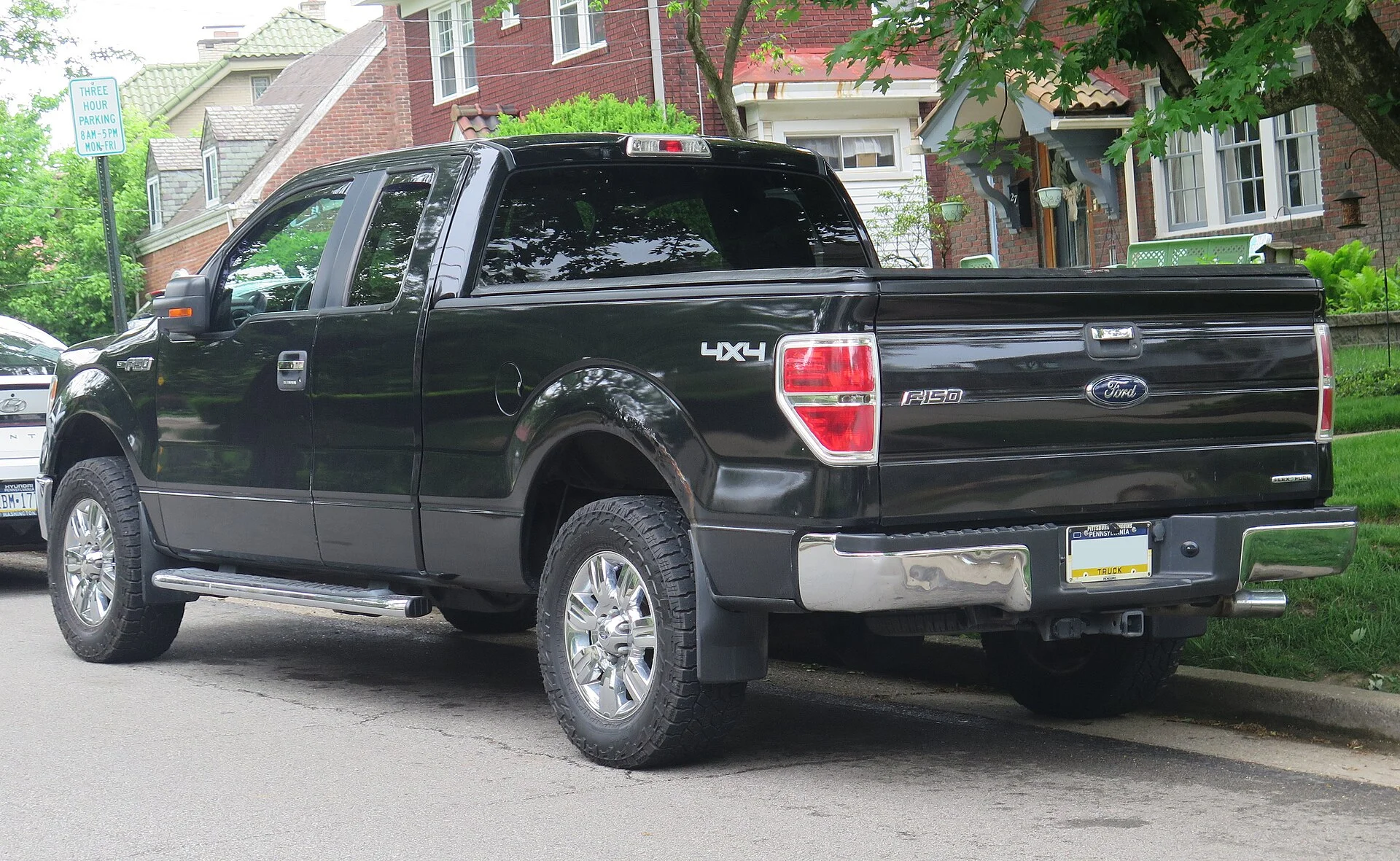
The corner hooks and BoxLink cleats are not the only tie-down options - the F-150 bed has more anchoring capacity built in if you look for it. The optional Cargo Management System and bed side rails provide additional slots and cleat-mount points along the box, giving you even more places to anchor a strap or clip a net beyond the fixed hooks and BoxLink plates.
Then there are the stake pockets. The stake pockets along the top of the bed rails accept stake-pocket tie-down anchors for additional securing points. These openings, originally meant for bed extenders and racks, take drop-in anchors that add high tie-down points near the top of the bed walls - useful for strapping tall loads or running a cargo net over the whole bed.
Between all of these, a well-equipped F-150 is bristling with legitimate anchor options: four corner hooks, up to four BoxLink cleats, side-rail cleat points, and stake-pocket anchors. For camping, that variety lets you tailor the tie-down layout to the load rather than forcing gear to fit a fixed set of points. The budget move is to use what the truck already has - stake pockets and rail slots cost little or nothing to anchor to - before spending on elaborate aftermarket systems. Look for every anchor the bed offers, and you rarely need more.
Strap It Right: Opposing Tension
Having good anchors is only half the job - how you run the straps decides whether the load actually stays put. The best practice is simple: strap over the load and anchor to opposing tie-downs so each strap works in tension. Pulling a strap tight between anchors on opposite sides of the bed puts it under real tension, which is what pins cargo down and stops it from shifting fore, aft, or side to side.
The opposing-anchor idea is the key. A strap that goes over a cooler and down to anchors on the same side does little; a strap that crosses over and pulls down to the opposite side clamps the load against the bed. Run several straps this way - front-to-back and side-to-side - and the cargo is boxed in by tension from multiple directions, unable to move. This is how you keep a load stable over rough forest roads and highway bumps alike.
Good straps make it work. A set of quality ratchet straps lets you dial in real tension and hold it, where a loose bungee just lets gear bounce. Ratchet the straps snug over the load, anchored to opposing points, and check them after the first few miles since a settling load can loosen a strap. Anchor placement and strap technique work together: the best anchors in the world do nothing if the straps are run lazily, and a smart strapping pattern is what turns those rated hooks and cleats into a load that does not move.
Working Load Limit vs Break Strength
Here is the rating trap that catches budget shoppers, and it is worth getting right because it is a safety issue. Strap packaging often advertises a big break-strength number, but the figure that matters is the Working Load Limit. The Working Load Limit (WLL) is the rated safe load, and it is typically about one-third of the strap's break strength. A strap boasting a huge break-strength headline may have a far more modest WLL - and the WLL is the number you actually load to.
The one-third relationship is your quick sanity check. If a strap advertises only a break strength, mentally divide it by three to estimate the safe working load. Loading a strap to its break strength leaves zero margin for the shock loads of a bouncing truck bed, which is exactly when a strap is most likely to fail. Plan against the WLL and you keep the safety margin the rating is designed to give you.
The other half of the rule ties back to your anchors. Match each strap's WLL to the anchor rating, because a 600 lb-rated hook is the limiting factor even if the strap is rated higher. A heavy-duty strap anchored to a cleat pulling cross-box, rated 275 lb, is limited to that cleat - the weakest link in the chain sets the real limit. And use multiple anchor points to distribute load rather than relying on a single hook or cleat for heavy gear, so no one point ever carries more than it should. Rate the whole system - strap, anchor, and direction - to its weakest number.
The Verdict: Anchors First, Straps Second, Both Rated
Securing camping gear in an F-150 bed is mostly about using what the truck already gives you, correctly. Every 2021+ F-150 has four fixed corner hooks rated about 600 lb each - a complete tie-down set on their own. If your truck has BoxLink (standard on Lariat and some XLT trims), a cleat kit adds four more relocatable anchors, and side rails and stake pockets provide even more points. Most campers already own more anchoring capability than they use.
The ratings are where care pays off. Corner hooks hold about 600 lb; BoxLink cleats hold about 275 lb cross-box but up to 600 lb diagonally, so direction changes the number. On the strap side, load to the Working Load Limit - about one-third of break strength - not the headline figure, and remember the weakest link (often a 600 lb hook or a 275 lb cross-box cleat) sets the real limit no matter how strong the strap.
Put it together and the method is straightforward: pick anchors rated for your load, strap over the load to opposing points so each strap works in tension, spread heavy loads across multiple anchors, and match every strap's WLL to the anchor it uses. Do that and an F-150 hauls a full camp setup - coolers, water, tents, bikes, generators - without a thing shifting on the roughest road. The budget lesson underneath all of it is that you rarely need to spend on elaborate aftermarket anchoring: the factory hooks, the BoxLink plates, the rails, and the stake pockets are already engineered and rated for the job. The hardware is already there and well-rated from the factory; learning to use it right is the whole job, and it costs nothing but a little attention.