
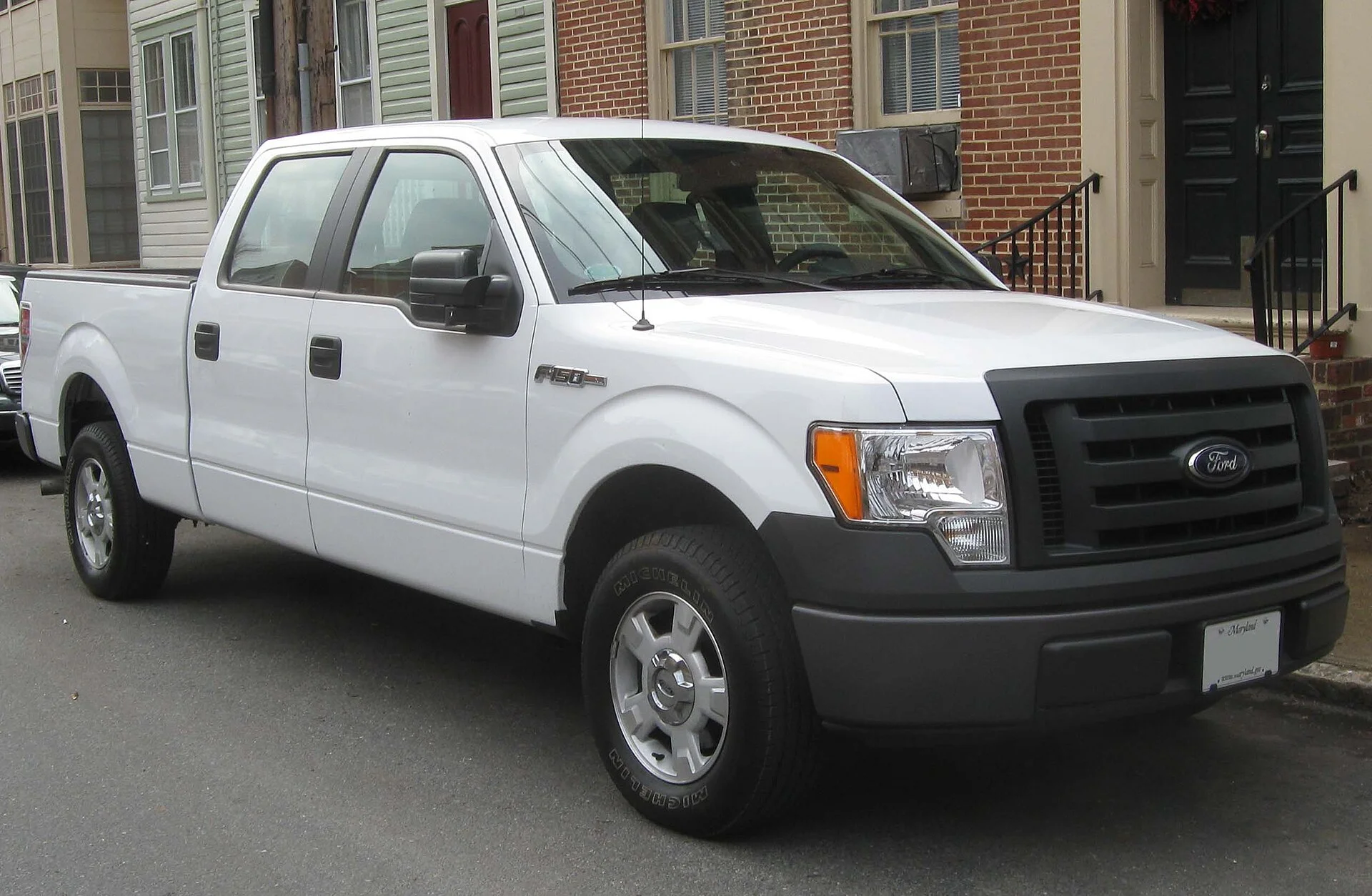
The honest overview: the bed is your bedroom, the cab is the backup
The Ford F-150 is one of the best mass-market camping platforms you can own, but the way you sleep in it is not obvious from the spec sheet. The single most important thing to understand before you plan anything is this: no standard F-150 bed is long enough for a tall adult to lie flat inside the box, and the cab is not naturally flat either. Once you accept that, the setup becomes simple.
The short version: for real comfort, sleep in the bed with a topper or a bed tent and the tailgate down, on a proper mattress. Use the SuperCrew cab as a backup for one person in bad weather. And if your truck has Pro Power Onboard, you have a campsite power plant most campers would envy.
The F-150's advantages for camping are real: a big, flat load bed, serious payload, the option of genuine off-road capability, and — on many trims — 120-volt outlets that run your whole camp. The one limitation is bed length, and it is easily solved with the right shelter and pad rather than being a reason to sleep badly.
This guide walks through the three bed lengths and what fits, how to sleep in the bed with a tent or topper, building a flat platform, sleeping in the cab when you must, using Pro Power Onboard, beating condensation, managing heat and cold, staying safe and private, and a final setup recommendation with a gear checklist.
The three F-150 bed lengths and what actually fits
Everything starts at the tape measure, because your whole sleep plan depends on which bed you have. The F-150 comes in three bed lengths, and the differences are large enough to change your entire approach:
- 5.5-foot bed (~67 in): the most common, paired with the SuperCrew cab. Too short for a tall adult to lie flat inside the box.
- 6.5-foot bed (~78.9 in): a good middle ground; still short of a flat six-foot sleep inside the box alone, but close with the tailgate down.
- 8-foot bed (~97.6 in): the long bed, and the only one that comes close to letting a tall adult stretch out flat inside the box.
The takeaway is that unless you have the 8-foot bed, you will sleep with the tailgate dropped, using a pad that overhangs it, or inside a bed tent or topper that uses the dropped tailgate for length. That is not a problem — it is just the standard full-size truck camping technique, and it works well once you set it up the first time.
If you are still shopping and camping comfort is a priority, the 6.5-foot bed is the sweet spot for most people: long enough to work well with a dropped tailgate, short enough to stay maneuverable on trails and in parking lots. The 5.5-foot bed still camps fine; you simply lean harder on the tailgate-down trick and a well-shaped mattress to reach a comfortable length.
Option A: sleeping in the truck bed (the comfortable way)
The bed is where you want to sleep, and there are three proven ways to turn a truck bed into a bedroom, each suiting a different budget and style of camping.
- A bed tent: a tent shaped to pitch inside the truck bed, giving you a stand-alone weatherproof room with the tailgate down for length. Affordable and quick, and the easiest entry point. A quality truck bed tent is the most popular F-150 sleeping solution for good reason.
- A topper or canopy with a platform: a hard or soft canopy over the bed creates an enclosed, secure, insulated space; add a sleeping platform and you have a permanent camper you can lock and leave set up.
- A rooftop tent on a bed rack: lifts you off the bed floor entirely onto a built-in mattress, freeing the bed itself for gear storage.
Whichever you choose, drop the tailgate to gain length and lay down a proper mattress or pad — the bed floor is hard, ribbed, and cold, so a good pad is not optional. A truck-bed-shaped air mattress or a thick self-inflating pad transforms the space from a metal box into a real bed you look forward to.
The bed's big advantage over the cab is that it is flat, roomy, and separate from the driving compartment, so you can leave it set up between nights. For most F-150 campers, a topper or bed tent plus a good mattress is the setup they settle on and keep for years, upgrading only the mattress or adding power over time.
Building a flat, comfortable sleeping platform
The difference between surviving a night in a truck bed and genuinely sleeping well comes down to the surface. A bare bed floor is ribbed, hard, and steals heat; a good sleep surface fixes all three problems and is worth the effort to get right the first time.
The simplest approach is a truck-bed-sized mattress. A shaped truck bed air mattress fills the box, works around the wheel wells, and uses the dropped tailgate for the last bit of length. Alternatively, a thick self-inflating car-camping mattress laid over the bed floor gives a warmer, more supportive sleep and does not risk a puncture from bed hardware the way a thin air mattress can.
For a more permanent build, many owners construct a low platform of plywood or framing that creates a flat surface above the wheel wells with storage underneath — gear below, bed on top. This is the classic camper build, and it is especially popular under a topper where the platform stays installed. It maximizes both sleeping flatness and storage, at the cost of some build effort and permanent bed space you give up to it.
Whatever the base, insulate underneath. In cold weather the bed floor and the air beneath a platform pull heat from your body all night, so a high-R-value pad or foam layer between you and the metal is what keeps you warm — a warm sleeping bag on a cold surface still sleeps cold, which surprises a lot of first-timers.
Option B: sleeping in the SuperCrew cab
Sometimes the bed is not an option — a downpour, a quick roadside overnight, or a bed full of gear — and the cab becomes your bedroom. The SuperCrew (crew cab) is the best F-150 for this because it has the most interior room, but it takes some setup to sleep well rather than just slumped in a seat.
In the SuperCrew cab, the rear seats fold up to reveal a flat load floor, which gives you a surprisingly usable space, and the front seats recline for a semi-flat position. Neither is a fully flat surface on its own, though, so the trick is to build a level platform: many campers lay plywood or foam blocks across the folded rear-seat floor to create a flat sleeping deck, then add a pad on top.
Realistically the cab suits one person comfortably, or two who are willing to sleep at slight angles. It is the backup plan, not the primary bedroom — the bed is roomier, flatter, and separate from the controls. But the cab wins in one scenario: nasty weather where you do not want to leave the sealed, heated cabin at all. Keep a pad and a way to level the floor stowed for exactly those nights.
If you also camp in smaller vehicles, the same principles scale down — our guide on sleeping in a smaller Ford like the Escape covers the compact-crossover version of this problem, where the folded cargo floor is the whole bedroom.
Using Pro Power Onboard to run your camp
Here is the F-150's secret camping weapon: if your truck has the available Pro Power Onboard system, it is a generator on wheels. The system supplies bed and cabin 120-volt outlets rated up to about 2.4kW, 7.2kW, or 9.6kW depending on configuration, with the PowerBoost hybrid carrying the highest outputs.
What that means at camp is you can run gear a tent camper only dreams of: string lights, a 12V fridge, a fan, an electric blanket, laptops, a coffee maker, even power tools for a build project — straight from outlets in the bed, with no separate generator and no fumes. The higher-output versions can run genuinely heavy loads; even the base output covers everything a typical camper needs.
- Lights and devices: trivial for any Pro Power Onboard output.
- Fridge, fan, electric blanket: easily handled overnight.
- Coffee maker, induction burner, tools: fine on the higher outputs.
If your F-150 does not have Pro Power Onboard, you get the same benefit from portable power station in the bed or cab — our guide to a portable power station for car camping covers sizing one to your overnight loads. Either way, running camp power off the truck or a battery is far safer than a fuel generator, which must never run in an enclosed space because of carbon monoxide.
Beating condensation overnight
The most common complaint from first-time truck-bed and cab campers is waking up to everything damp — the ceiling of the tent or topper dripping, the windows fogged, the sleeping bag clammy. That is condensation, and it is physics, not a defect: your breath and body release moisture all night, and in an enclosed space it condenses on the coldest surfaces around you.
The fix is ventilation. Cracking a window or adding a vent lets the humid air escape and dramatically reduces the moisture that collects overnight. Even a small opening — a window cracked an inch, a topper vent open, a bed-tent window unzipped — makes a large difference, because it breaks the sealed-box effect that traps your breath and turns it into water on every cold surface.
The instinct in cold weather is to seal everything up for warmth, but that is exactly what causes the worst condensation. The better approach is to ventilate and insulate: keep a little airflow moving while relying on a warm bag and a high-R-value pad for heat. Our full walkthrough on how to reduce condensation when sleeping in the cab covers vents, moisture-absorbers, and airflow tricks in detail. Manage this well and you wake up dry instead of soggy, which changes how much you enjoy the whole trip.
Staying warm in cold weather and cool in heat
The F-150's big cabin and metal bed are comfortable across seasons only if you manage temperature deliberately. Heat and cold each need a different plan, and the truck's power system helps enormously with both.
For cold nights, the priority is insulation from below. The bed floor and the air under a platform pull heat out of you all night, so a high-R-value pad or a foam layer between your body and the metal matters more than the sleeping bag rating alone. Layer a warm bag on top, add a Pro Power Onboard or power-station-run electric blanket for the coldest nights, and cover the windows to slow heat loss. Never run the engine or a fuel heater in a sealed space for warmth.
For hot nights, the priority is airflow and shade. Park in shade, use window covers or a windshield shade to keep the cabin from baking during the day, and run a 12-volt fan to move air through a cracked window at night. A topper or bed tent with mesh windows lets you open up for a cross-breeze while keeping bugs out.
The through-line for both is that the F-150 gives you power to solve the problem — a fan, a blanket, a small fridge for cold drinks — where a tent camper would be stuck toughing it out. Use that advantage; it is one of the biggest reasons to camp in the truck rather than beside it.
Privacy, security, and safety
A few practical points make the difference between a stressful night and a restful one, and they are easy to overlook until you are lying awake worrying about them at a busy rest area.
For privacy, cover the windows. Reflective inserts or curtains for the cab windows and a topper's or bed tent's own fabric give you a private, dark space to sleep and change, which matters at a busy trailhead or a rest area. A locking topper adds real security — you can leave gear and sleep behind a locked shell — which a bed tent cannot match.
- Level parking: find a flat spot or level the truck; sleeping on a slope is miserable and unsafe on a grade.
- Ventilation for safety: keep airflow; never run the engine to heat a sealed cabin — carbon monoxide is deadly and silent.
- Know the rules: confirm overnight parking is allowed where you stop.
The single most important safety rule bears repeating: never run the engine, a fuel generator, or a combustion heater in an enclosed cab or topper to stay warm. Carbon monoxide has no smell and can kill you in your sleep. Use battery power, a warm bag, insulation, and ventilation instead — all of which the F-150 makes easy, especially with Pro Power Onboard running an electric blanket.
Which setup to build, and a gear checklist
Pull it together and the right F-150 sleep setup depends on how often you camp and how much you want to invest up front.
- Occasional / budget: a bed tent plus a truck-bed air mattress, tailgate down. Cheapest, quick, and genuinely comfortable.
- Frequent / all-weather: a topper with a sleeping platform and a thick self-inflating pad. Lockable, insulated, and always ready to go.
- Off-ground / gear-heavy: a rooftop tent on a bed rack, freeing the bed for storage — worth reading our take on a rooftop tent versus a ground tent before committing to the cost.
Whichever you build, the core checklist is the same: a shelter (tent, topper, or RTT), a proper mattress or high-R-value pad, a warm sleeping bag, window covers for privacy and temperature, a 12-volt fan and a way to crack a window for airflow, and a power source — Pro Power Onboard if you have it, or a portable power station if you don't.
Get those pieces in place and the F-150 becomes a superb basecamp: flat, powered, capable, and comfortable. The bed length limitation is a five-minute planning footnote, not a dealbreaker — solve it with a dropped tailgate and a good pad, and you will sleep better in the truck than in most tents, with the added luxury of running power and locking the doors.