
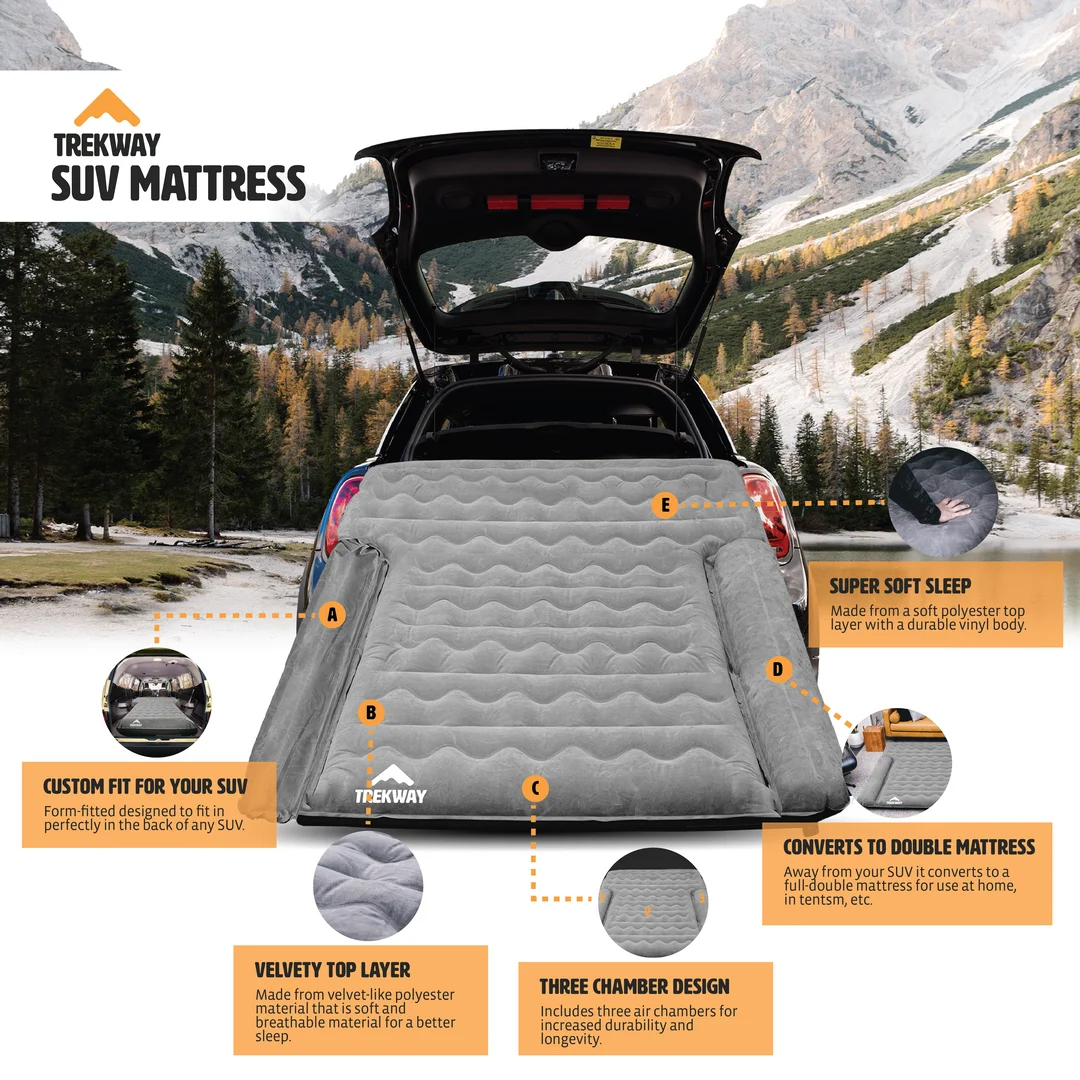
The short answer: yes, and the number that proves it is 69 inches
Yes, an adult can sleep in a Ford Escape, and one measurement settles the argument before anything else. Fold the 60/40 rear bench in a 2020-or-newer Escape and the flat cargo floor runs roughly 69 inches back to the front seats, opening up about 65.4 cubic feet of cargo volume in the gas model, per the dimensions Cars.com and Ford publish for the current car. Sixty-nine inches is five-foot-nine on the tape, so most adults lie out straight without touching either end.
The catch is not length — it is the surface. The Escape's rear seats fold down, not perfectly flat, so there is a slope and a small step where the seatbacks meet the load floor. Solve that slope and the Escape is a genuine one-person sleeper and a workable, tight bed for two.
Everything that makes the Escape frustrating to sleep in comes down to one unsolved seam. Cancel the seat-fold slope with a pad or a platform and the same car that felt impossible becomes a comfortable weekend camper.
There is also a model-year twist most guides miss, and it runs the opposite way you would expect: the older 2013-2019 Escape is actually the longer bed. This guide is built from Ford's published dimension sheets, dealer and Edmunds spec listings, and owner reports on car-camping forums — not from a staged overnight test. Where a number depends on your body or your exact trim, it says so and tells you what to measure yourself.
The dimensions that decide whether you fit
Before you buy a single piece of gear, put the Escape's real numbers next to your own height. These figures come from the 2025 Cars.com and Ford spec sheets for the current (4th-generation) Escape:
| Dimension | 4th-gen Ford Escape (2020+) | Why it matters for sleeping |
|---|---|---|
| Cargo volume, rear seats folded (gas) | 65.4 cu ft | Total room for a body plus gear |
| Floor length to front seats, seats folded | ~69 in | Whether you lie out straight |
| Cargo width at beltline | ~57 in | Shoulder room up top |
| Floor width between wheel wells | ~41.5 in | One sleeper flat; two only diagonally |
| Cargo box height | ~41 in | Sitting-up headroom over the bed |
| Ground clearance | ~7.5 in | Step-up height and how level you can park |
The 69-inch floor length is the one that decides the question, and it is worth being precise about what it means: it is the length at the floor from the closed tailgate to the back of the folded front seats. It is not a marketing “bed length,” and the usable figure shrinks slightly once a platform or a thick pad raises you off the floor and toward the wheel-well intrusion.
As a rough rule from owner reports, campers up to about 5'8" lie flat and straight with room for a pillow; those around 5'10" are right at the edge and usually recline a front seat a touch or angle their body. The only figure you should fully trust is the one you take yourself: fold the seats, run a tape from the closed tailgate to the back of the front seats at the height your pad will sit, and compare it to your height plus a few inches.
Two other numbers matter less but still count. The cargo box height of about 41 inches tells you how much you can sit up over the bed — enough to lean on an elbow and read, not enough to sit fully upright. And the 57-inch width at the beltline is wider than the floor, which is why your shoulders get more room than your hips: the wheel wells pinch the floor to roughly 41.5 inches, but the space above them opens back out. When you shop a mattress or pad, size it to the floor width, not the beltline, or it will bow up over the wheel arches.
Computed fit: every dimension this page states, run against the page's own ceiling on the same axis. Nothing here is a spec-sheet import — it is arithmetic on figures this page already states (57 in, 74.1 inches, 41.5 inches). The formula is the plain one: margin = the page’s stated ceiling on that axis − the figure. Each row subtracts on ONE axis only, and a figure the page never labels by axis is left out rather than guessed at.
| What the page states | Figure | Axis | Ceiling this page states | Margin |
|---|---|---|---|---|
| …74.1 inches wide without mirrors… | 74.1 inches | wide | 57 in | over by 17.1 in |
| A rectangle roughly 69 inches long and 41.5 inches wide has a diagonal of about 80 inches… | 41.5 inches | wide | 57 in | 15.5 in spare |
Read the last column first, because it settles the question before anything else does: 1 clear the ceiling this page states (most room to spare: 15.5 in) and 1 go over it (worst overage 17.1 in). Each row is measured only against the ceiling on its own axis (57 in wide).
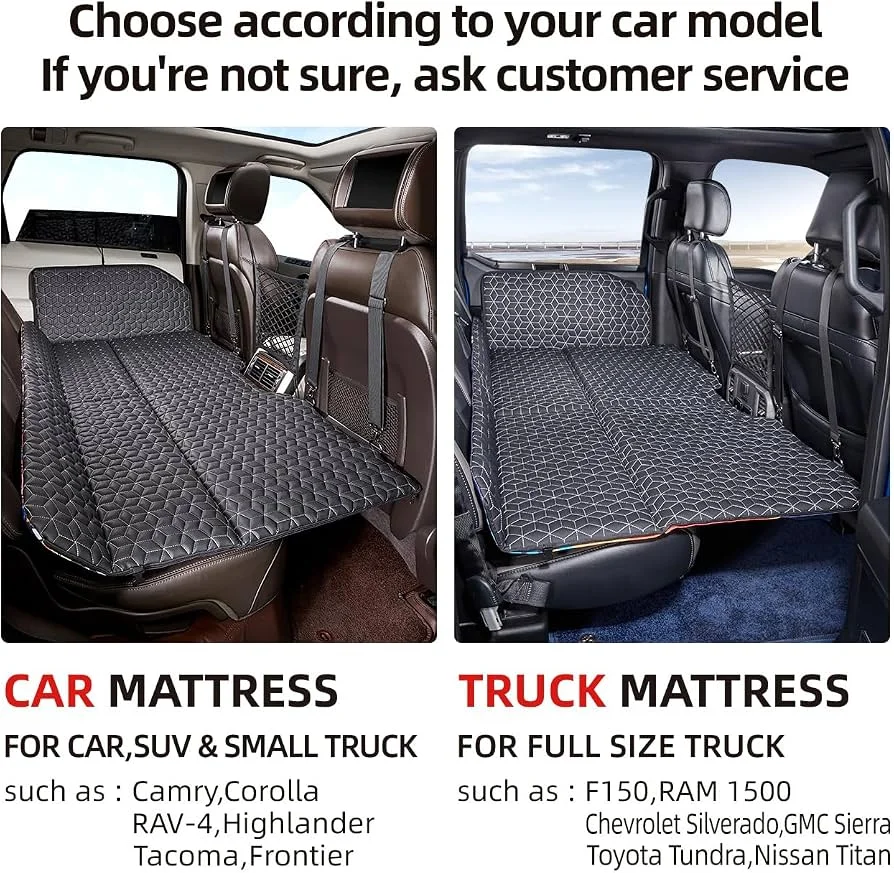
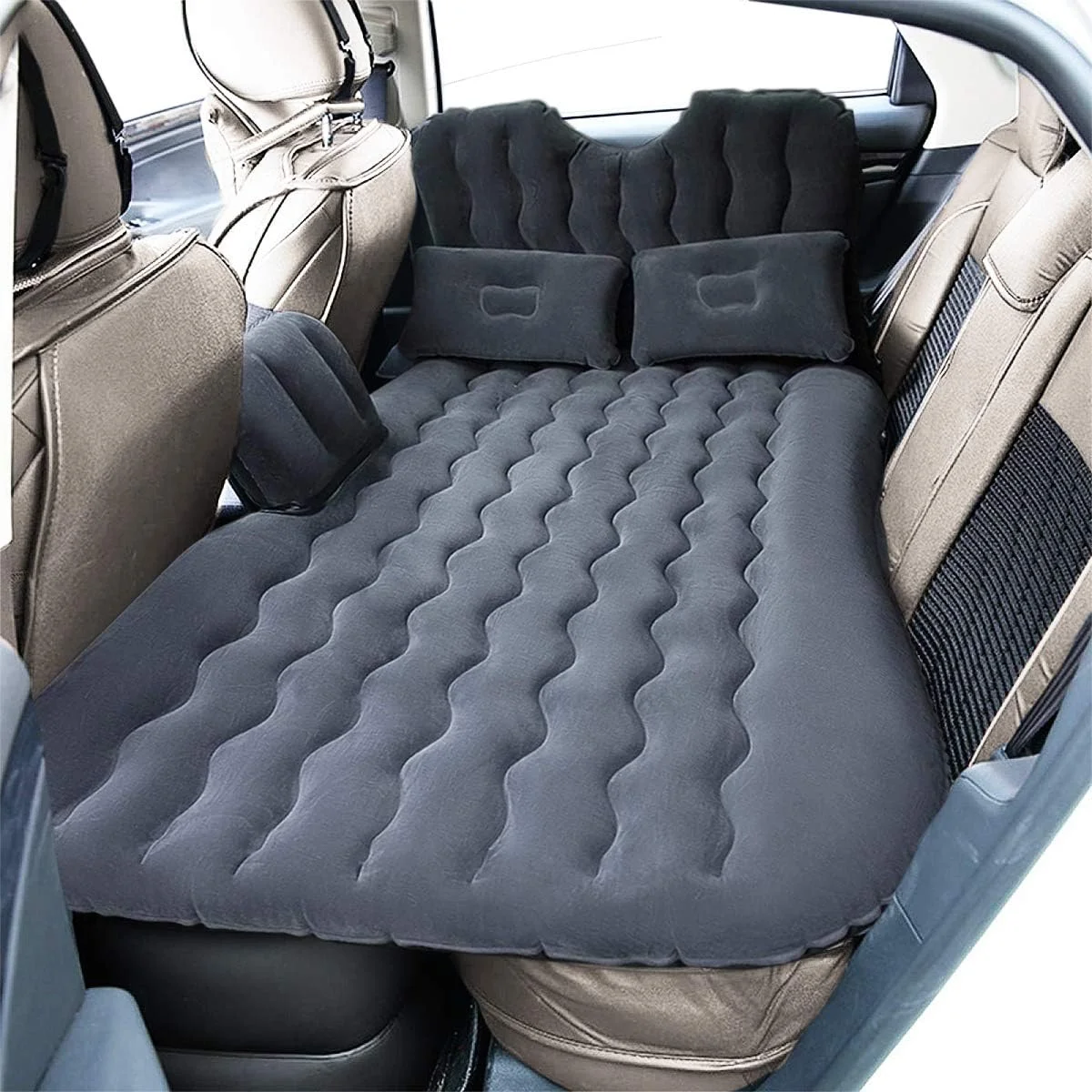
The trick tall sleepers use: go diagonal and gain a foot
If you are over 5'10", the straight-back-to-front measurement is not your real limit — the diagonal is. A rectangle roughly 69 inches long and 41.5 inches wide has a diagonal of about 80 inches, which is where the extra room hides. Lie corner-to-corner, head tucked toward one rear pillar and feet toward the opposite front footwell, and you buy close to a foot of length over lying straight.
- Straight: good to about 5'8"-5'9" before your head or feet hit the ends.
- Diagonal: roughly 80 inches of run, enough for many campers up to about 6'2" to stretch out.
- Recline a front seat: drop the passenger seatback to extend the diagonal even further, at the cost of that seat's usefulness overnight.
The diagonal works best for one person; two people cannot both take the long line at once. That is the honest reason the Escape is a comfortable solo bed and only a cozy two-person one. When two share the width, you both lie straight and short, which is why taller couples end up wanting a longer vehicle or accepting bent knees.
Two practical notes make the diagonal livable. First, put your head at the rear-pillar corner, not the tailgate seam — the seam is the least level spot on the floor and the last place you want under your neck. Second, a rectangular pad wastes the corners, so many solo campers use a wide pad turned at an angle or simply accept that their feet ride up onto the folded seatback. Neither is a dealbreaker; both are worth knowing before you assume a straight-only measurement rules you out. Measure the diagonal, not just the length, and the Escape opens up for a surprising range of heights.
The diagonal is free length. Before you decide the Escape is “too small,” actually lie down in it at an angle — a lot of people who thought they did not fit straight discover they fit fine on the diagonal.
The model-year hinge nobody mentions: older Escapes are longer
Here is the counterintuitive fact that separates this guide from the rest. When Ford redesigned the Escape for 2020 (the 4th generation), it did not gain cargo room for sleeping — it lost some. The outgoing 3rd-generation Escape, sold from 2013 through 2019, is the longer, roomier bed on paper.
| Generation | Years | Cargo vol., seats folded | Max load length |
|---|---|---|---|
| 3rd gen | 2013-2019 | ~67.8-68.1 cu ft | ~73.4 in |
| 4th gen | 2020-2025+ | ~60.8-65.4 cu ft | ~69 in |
The 3rd-gen Escape published between 68.1 cubic feet (2013) and about 67.8-68.0 cubic feet in later years behind the front seats, and owner measurements put its folded load length near 73.4 inches — more than four inches longer than the current car's roughly 69. Behind the raised rear seats it held about 34.3 cubic feet.
Why does the newer, similarly-sized Escape hold less? The 4th-gen body traded some boxy cargo utility for a sleeker roofline and a sliding rear seat, and reviewers noted it lost a few of the older car's storage nooks in the process. The practical takeaway is blunt: if you are shopping used specifically to sleep in it and you are tall, a clean 2015-2019 Escape may out-bed a newer one. Do not assume newer equals roomier — here it does not.
Why the folded seats fight you, and the three ways to fix it
The biggest myth in crossover camping is “the seats fold flat.” On the Escape they fold down, which is not the same thing. When the 60/40 bench drops, the seatbacks rest at a slight angle and sit a few inches higher than the rear cargo floor, leaving a wedge-shaped gap and a step. Lie straight on that and your hips sink into the seam while your head tilts toward the tailgate.
Owners solve it three ways, in rough order of comfort and effort:
- Thick pad only. A 3-to-4-inch self-inflating or foam pad bridges the seam well enough for one relaxed night. Cheapest, least level, fastest to pack.
- Fill-the-gap. Stuff duffels, cushions, or pool noodles into the footwells and the seatback gap, then lay the pad on top. Free, fiddly, and surprisingly effective.
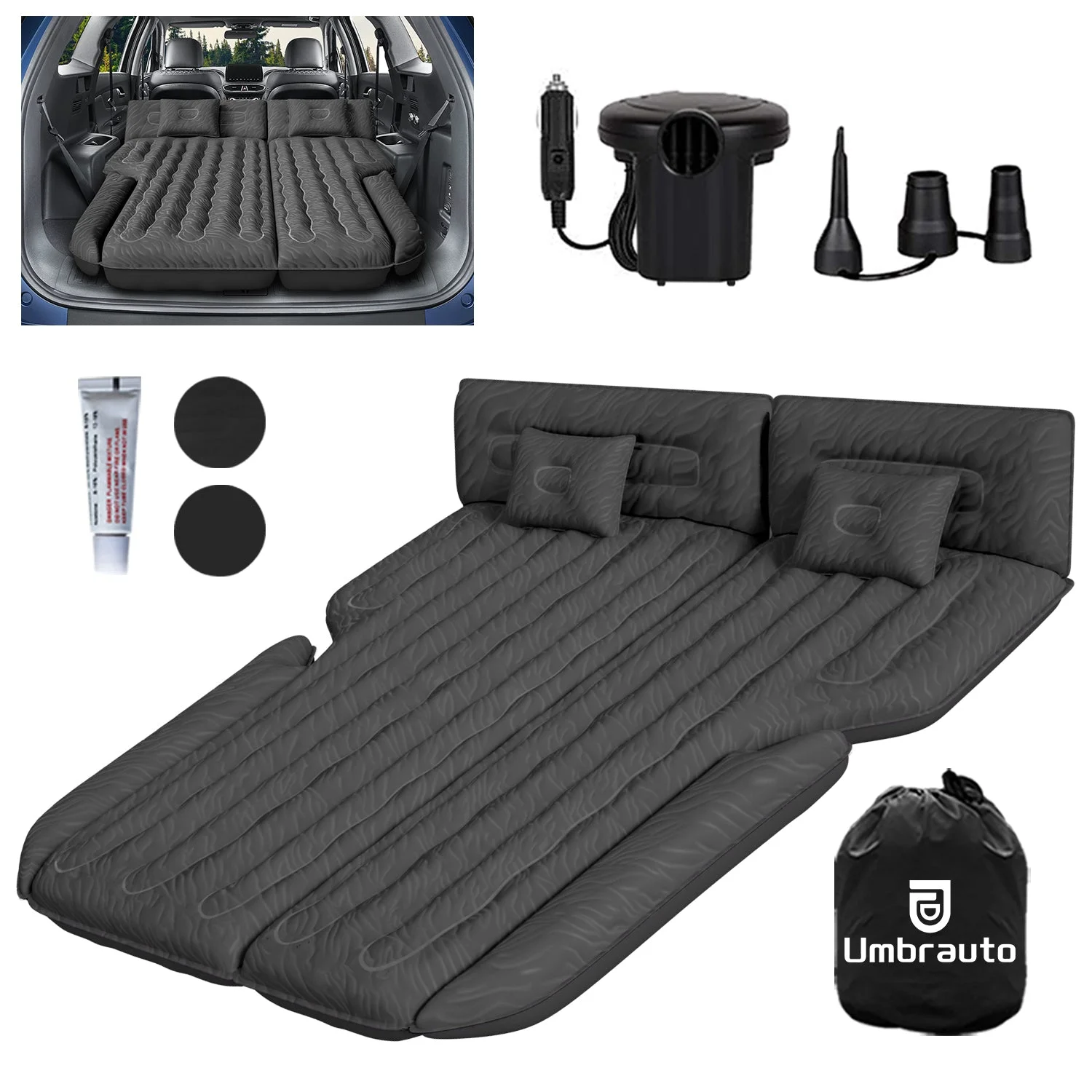
- Sleeping platform. A low plywood or modular frame spans the slope and creates a truly flat deck with storage underneath. Most work, best sleep, and the only setup that reliably levels the bed for two.
One camping-specific bonus the 4th-gen car adds: its 60/40 rear seat slides up to 5.9 inches fore and aft. Sliding it forward before you fold it can tidy up the seam angle and reclaim a little floor, which is a small but real advantage the older car lacks. Whichever fix you choose, the goal never changes: a level, continuous surface from the tailgate to the front seats so your spine follows the ground, not the factory seat angle.
Building a flat platform over the sloped load floor
A sleeping platform is the difference between an okay night and a real one. The principle is simple: build a level deck that starts at the height of the folded seatbacks and runs flat to the tailgate, so the slope and the seam vanish underneath you.
- Measure the deck width. The wheel-well intrusion caps you at roughly 41.5 inches across the widest clear span — confirm it with your own tape before cutting anything.
- Set the height to the seatbacks. Match the top of the folded seats so the platform sits level front-to-back. This single step cancels the slope.
- Leave storage below. The gap under a platform is where bins, water, and a power station live — in a compact SUV there is no room to waste.
- Pad the top. A 2-to-3-inch foam or air mattress on the deck handles the rest of the comfort.
A sloped, lumpy foundation is the number-one reason people decide a crossover “can't” be slept in — when the real problem was an unsolved seat-fold seam, not the size of the car.
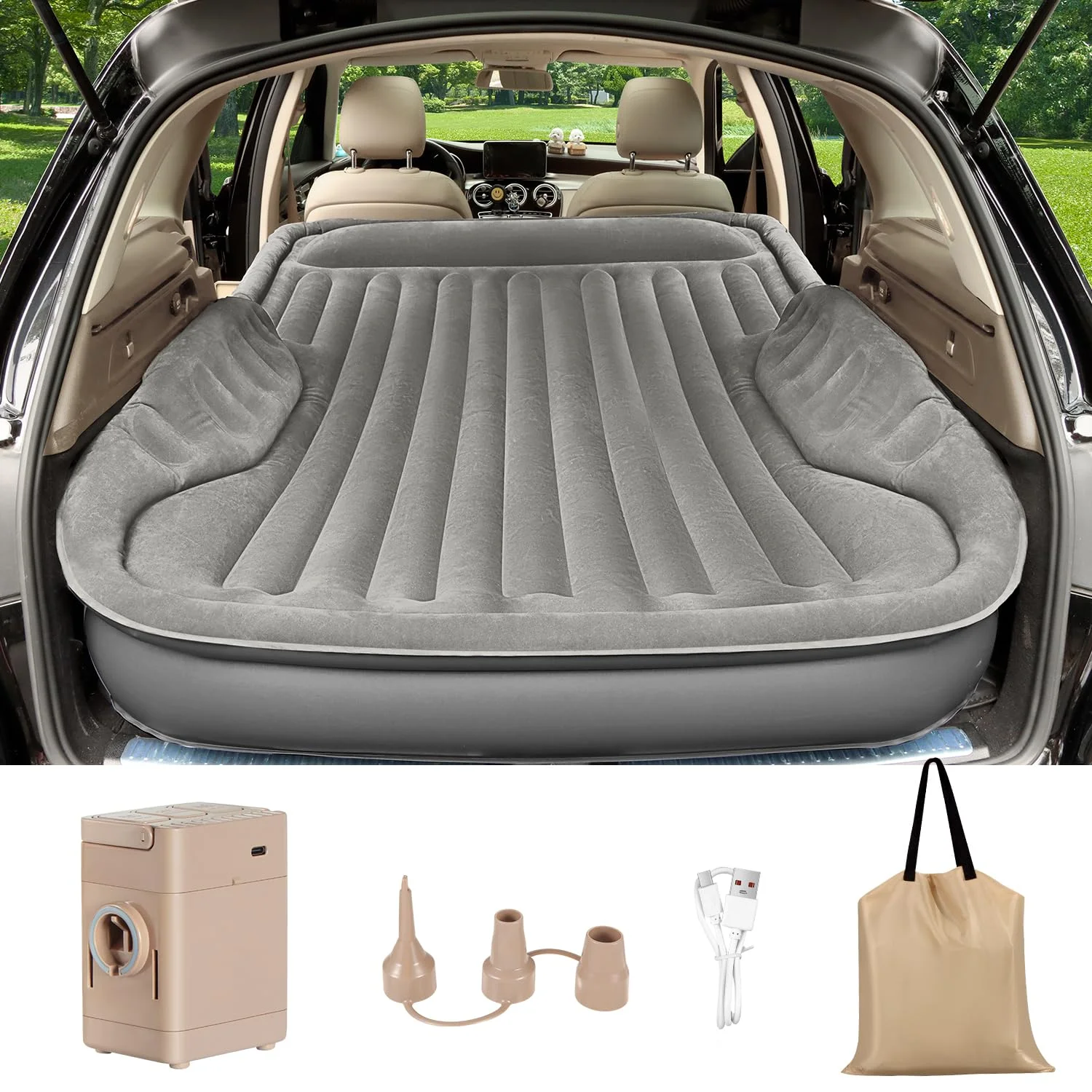
Whatever base you build, finish with a quality pad. The Escape's floor is short enough that you cannot afford to lose comfort to a thin one — a thick self-inflating mat such as the Therm-a-Rest MondoKing 3D is the comfort-first choice, deep enough to swallow the residual seat-fold seam that a firmer pad transmits.
One more platform tip specific to the 4th-gen car: because the rear seat slides, decide before you build whether you want it forward (a tidier fold and a little extra flat floor) or back (a hair more knee room for a passenger on the drive). Build the deck to whichever position you will actually sleep in, and mark that seat position so you can repeat it every night without re-measuring in the dark.
Two trips, two setups: the quick solo night vs. the weekend for two
The right build depends entirely on the trip. The same Escape becomes two very different beds, and matching the effort to the night is half the skill.
Scenario one — the late trailhead arrival. You roll in after dark, you leave at first light, and you do not want a project. Drop the 60/40 seats, throw two duffels into the footwells and the seatback gap, and roll a single thick self-inflating pad on top. Setup is a few minutes. It will not be laboratory-flat, but for one person and one night across that roughly 69-inch floor it is plenty, and you can restore the back seat the moment you fold the pad. Sleep on the diagonal if you are tall, crack two windows, and you are done.
For a solo overnighter, do not over-engineer it. A good pad and a couple of bags in the gap beat a platform you resent packing and unpacking every morning.
Scenario two — a weekend basecamp for two. Now the platform earns its keep. A level deck across the folded seats gives two people a continuous surface, and the storage underneath keeps the cabin clear for cooking and changing without a gear avalanche. Because only one person can take the long diagonal, plan for both of you lying straight — which means the shorter partner takes the head-toward-tailgate side and the taller one reclines a front seat a touch. Add window covers for privacy, a cracked window on each side for airflow, and a small fan, and the Escape sleeps two for a weekend without anyone waking up folded into the seam.
The lesson repeats across every car-camping vehicle, but it bites harder in a compact one: build for the actual trip. Minimal effort for a quick solo night; a proper leveled platform the moment two people and multiple nights are involved. The Escape rewards that discipline and punishes the person who brings a two-person basecamp rig to a one-night stop.
Hybrid, gas, or plug-in: which Escape sleeps best
The Escape is sold as a gas model, a hybrid, and a plug-in hybrid, and the choice has a real bearing on the bed. The cargo shapes are close, but the volumes are not identical:
- Gas Escape: the most cargo, about 65.4 cubic feet with the seats folded, and the simplest, most unobstructed load floor.
- Hybrid Escape: roughly 60.8 cubic feet folded — a few cubic feet less, because the battery packaging eats into the space. Still enough to sleep in, but tighter for gear.
- Plug-in hybrid: similar give-up to the hybrid, offset by the ability to run cabin power without idling the engine.
Behind the raised rear seats the current car ranges from about 33.5 cubic feet up to 37.5 cubic feet when you slide the second row all the way forward — useful for hauling on the drive and stowing on the sleep. On overall footprint, every version is close: roughly 180.1 inches long in front-wheel drive (about 181.2 inches in all-wheel drive), 74.1 inches wide without mirrors, and about 66.0 inches tall (the hybrid stands about 66.1 inches).
For most campers the deciding factors are fuel range and budget, not a dramatic difference in the bed. The hybrid's economy is the real long-trip advantage; the gas model's slightly larger, simpler cargo hold is the sleeping advantage. If you value stealth power at rest, the plug-in earns its premium.
Power, ventilation, and staying safe overnight
Sleeping in any vehicle adds two problems that have nothing to do with space: keeping devices charged and keeping the windows clear. The Escape gives you a head start on the first if you check the options sheet.
Higher trims offer an available 110V/150W power-inverter outlet — enough to trickle-charge a phone, run a small fan, or top off a tablet, but not enough to run a 12V fridge or a CPAP at full draw. For anything heavier, use a dedicated portable power station stored under the platform. That also removes any temptation to idle the engine for power overnight.
Ventilation is not optional. Two people breathing in a sealed compact SUV will fog every window by morning and, more importantly, run down the air. The fixes are cheap:
- Crack two windows slightly on opposite sides for cross-flow.
- Run a small USB fan to keep air moving.
- Add window covers — they double as privacy and cut the cold radiating off the glass.
Never run the engine for heat while parked and sleeping. A stationary vehicle can let exhaust seep back into the cabin, and carbon monoxide is odorless — this is the one rule with no exceptions, gas or hybrid.
None of this is Escape-specific engineering; it is standard car-camping kit. But the available 110V outlet and the cross-window airflow are the two things that separate a comfortable night from a cold, foggy one.
Temperature is the last variable, and the Escape's compact cabin cuts both ways. A small space warms up fast from body heat alone, which is a gift on a cold night — two people and a pair of decent sleeping bags rated for the conditions rarely need more.
That same small volume also heats up fast in the morning sun, so park with the tailgate away from the east if you want to sleep past dawn. A reflective windshield sunshade and a set of covers over the side glass do double duty here: privacy at night, and a few extra degrees of insulation against the cold radiating off all that glass. None of it requires modifying the car, and all of it packs into the same under-platform storage you built for the power station.
Who should sleep in an Escape, and who should skip it
After weighing the dimensions, the seat-fold slope, and the generations, the verdict is clear and not universal. The Ford Escape is a good car-camping vehicle for one person and a workable one for two — as long as you accept that a flat bed requires a pad, some fill, or a platform. It is not a fold-and-flop-flat wagon.
Buy into Escape camping if you are a solo traveler or a couple who values the crossover's everyday drivability and economy, and you will build or buy a leveling setup once. The roughly 65.4 cubic feet and 69 inches of floor — stretched to about 80 inches on the diagonal — are genuinely enough for a comfortable solo bed and a cozy one for two.
- Great fit: a solo camper up to about 5'8" straight (or taller on the diagonal) who wants one efficient vehicle for daily life and weekends.
- Workable: a couple who will run a platform and do not mind sleeping close.
- Look elsewhere: a tall camper who wants to lie perfectly straight every night, or anyone unwilling to solve the seat-fold slope — and if you are shopping used purely to sleep in, price a 2013-2019 model against the newer one, because the older Escape is the longer bed.
For everyone in between, the Escape punches above its size: a compact, efficient daily driver that becomes a legitimate weekend sleeper for the price of a platform and a good pad. Measure your own cargo length first, cancel the slope, and it will not let you down.