
The Big Picture
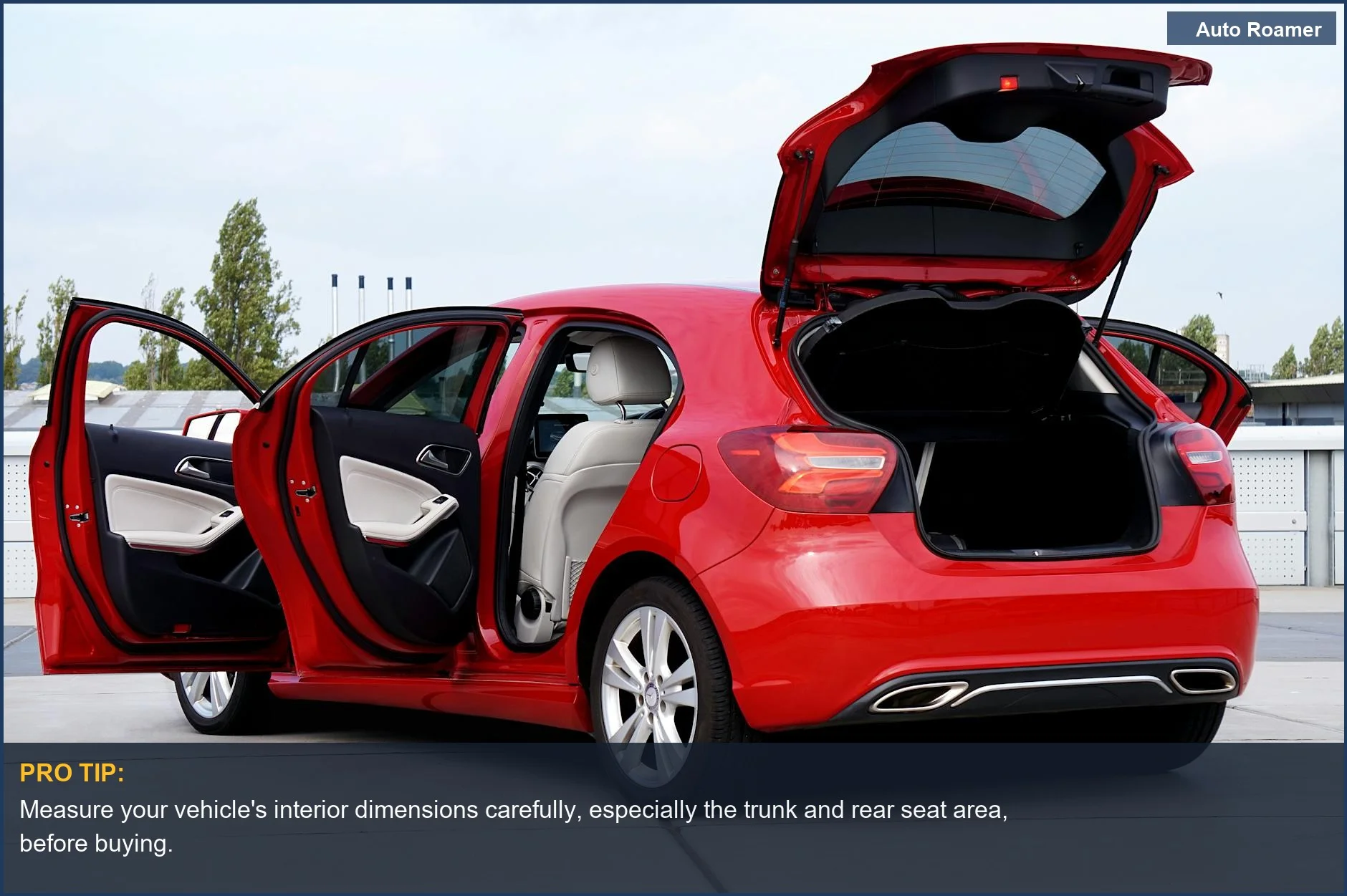
A first car camping trip can involve stuffing a deflated air mattress into the back of an older hatchback and realizing halfway through inflating it that it's about 10 inches too long. You end up with your feet crammed against the hatchback door, trying to sleep with your knees practically touching your chin.
It was less "road trip bliss" and more "car-shaped torture device." The honest version: not all car mattresses are created equal, and a few minutes with a tape measure could save you hours of discomfort. This whole car sleeping thing is way more about the fit than the fancy features. You don't have to learn that the hard way. Think of this as your cheat sheet to avoid the common rookie mistakes.
Seriously, measure your space before you even think about clicking "buy."
The Core Answer
The core answer to choosing an inflatable car bed is that you absolutely have to measure your vehicle. No exceptions. A so-called "universal fit" mattress can take up so much space you can't even close the trunk properly. It can be a $75 lesson in spatial reasoning. The real move is to use painter's tape to map out the dimensions of the mattress on your car floor.
Do this with your seats folded down, just like you plan to sleep. What nobody tells beginners is that your car's interior isn't a perfect rectangle. You have wheel wells, weird angles, and sloping seats. You need to measure the length from the back of the front seats to the inside of your tailgate, and then the width at its narrowest point, which is usually those pesky wheel wells.
A Luno mattress designed for SUVs, for instance, is built to contour around these obstacles, which is a game-changer. A generic rectangle, by contrast, leaves you sleeping half on, half off the mattress. Brilliant engineering. The $50 version from Amazon looks good on paper but can be a total disaster in a small sedan. The actual fit is king. Prioritize that over plushness or built-in pumps at first.
You're essentially trying to create a flat, comfortable surface in a space that's anything but. So, grab your tape measure, get down on your hands and knees in your car, and get those numbers. Then, compare them to the product dimensions. It's not rocket science, but it's crucial for not waking up with a crick in your neck. A mattress advertised as fitting "most sedans" can still leave your specific car an outlier.
The honest version: it fits like a sock on a foot. A very, very tight sock. Don't just eyeball it. Seriously.
Why This Matters for Your Setup
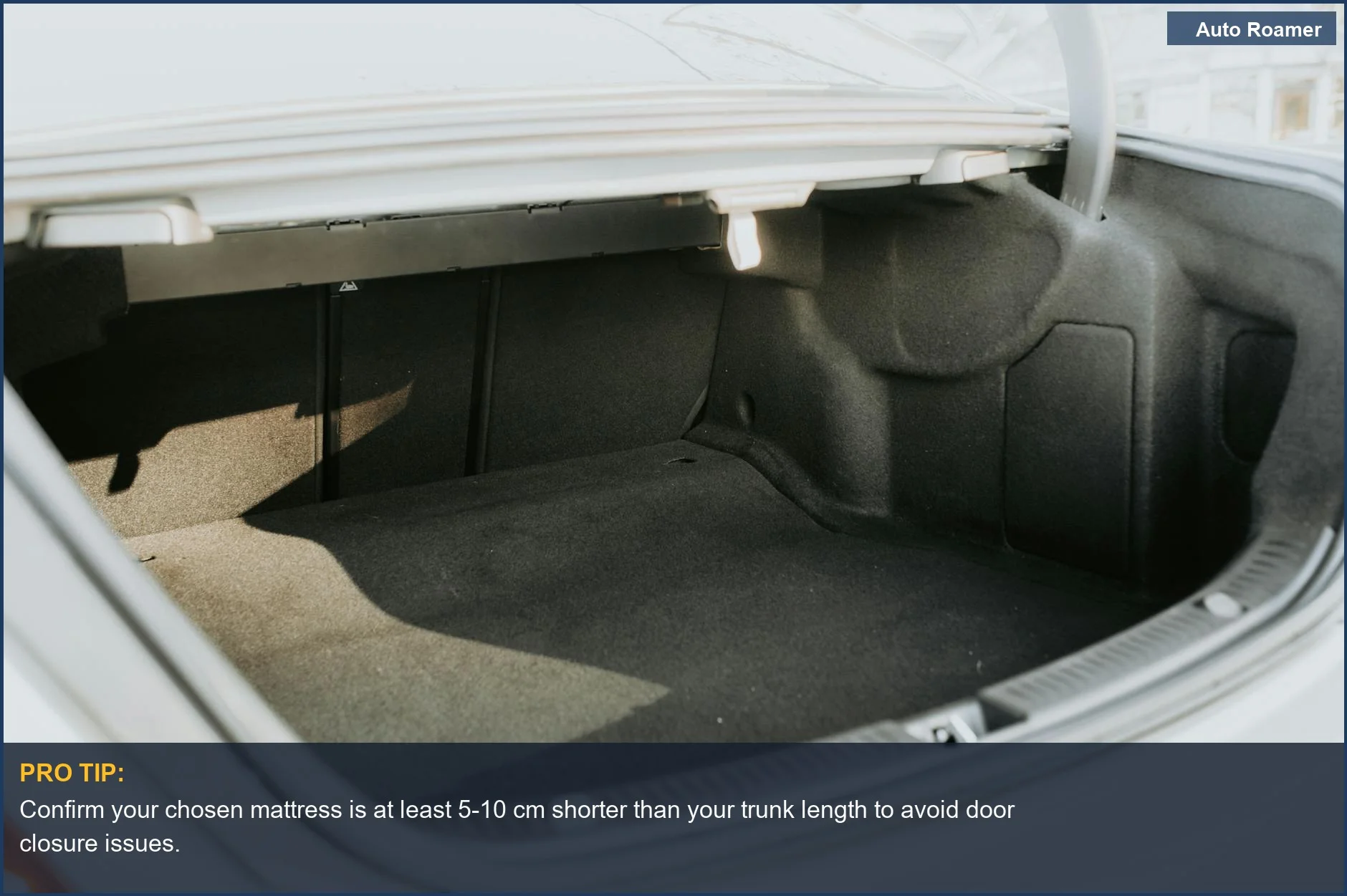
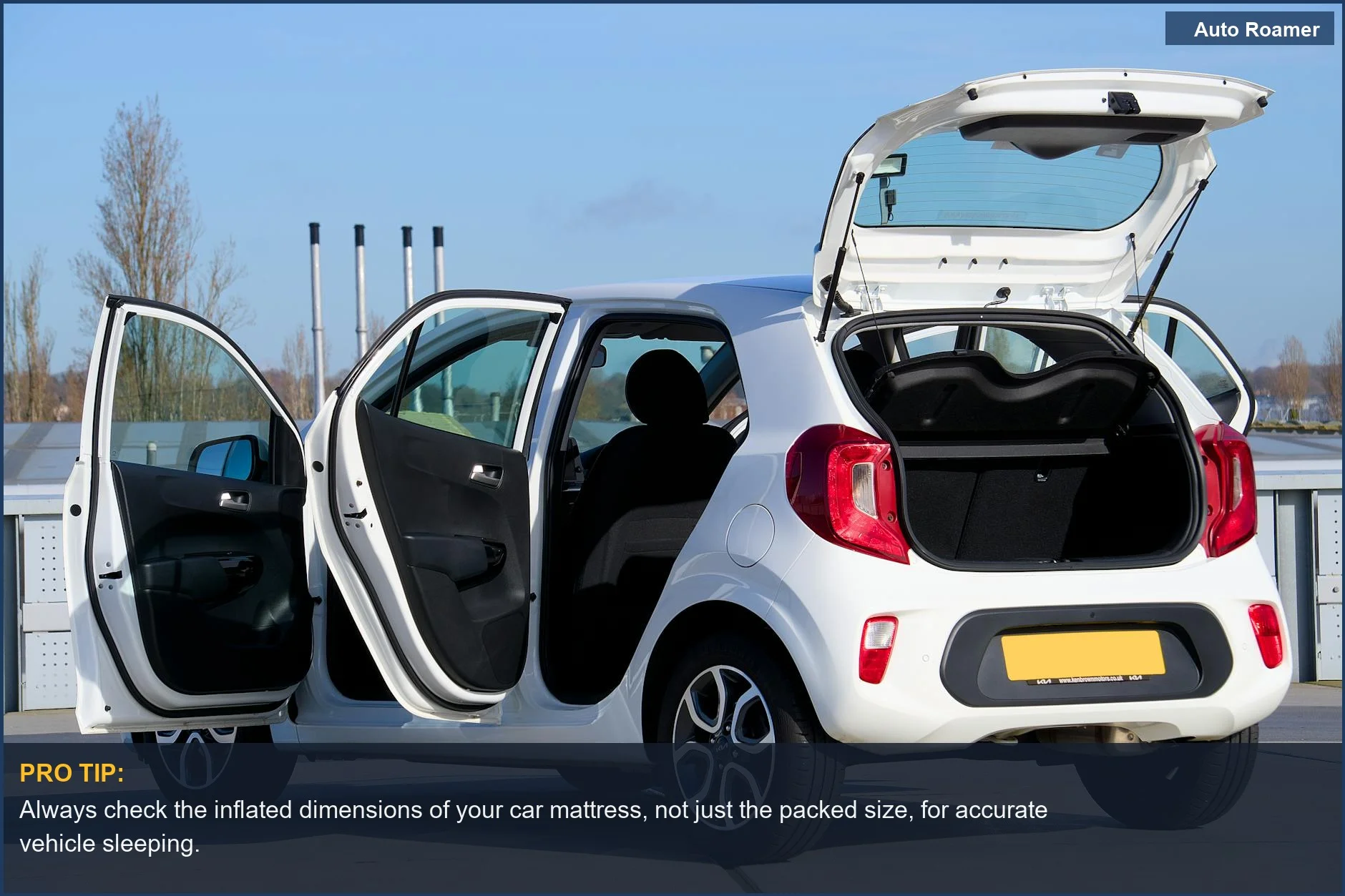
Why does all this sizing stuff actually matter? Because a poorly fitting mattress is worse than no mattress at all. Cramming a mattress that's too wide into a hatchback simply won't work. It bulges up against the doors, making them impossible to close properly — a recipe for a chilly night. The real move is to consider your vehicle type.
- Sedans: You're usually looking at fitting the mattress across the back seat with the front seats pushed forward. This means your length is limited by the distance from the back of the front seat to the back doors. Think compact. Some people have success with mattresses that go door to door in the back, but you have to be precise.
- SUVs & Hatchbacks: You've got more flexibility because you can fold down the rear seats.
This gives you a much longer, wider space to work with, but you still need to account for wheel wells. Many premium car mattresses are designed specifically for these types of vehicles to maximize that space.
- Truck Beds: If you're sleeping in a truck bed, you've got a different set of challenges, usually involving length and width, and potentially needing something that can handle the elements if you're not using a cap.
The dimensions are critical here too, but you might also be looking at weatherproofing.
A mattress designed for your specific car model fits far better — like a glove. Twice as comfortable, half the hassle. It's the difference between sleeping and just existing in your car.
Making the Right Choice
Making the right choice for your car mattress comes down to a few key things. It's not about the fanciest features or the highest price tag. It's about that perfect fit.
- Measure, Measure, Measure: I cannot stress this enough. Get out there with a tape measure and your car's interior. Mark it out. Your vehicle's dimensions are the most important spec.
- Know Your Vehicle Type: Sedans, SUVs, and trucks all have different sleeping configurations and limitations. A mattress designed for an SUV won't magically fit perfectly in a sedan. Look for brands that specify vehicle compatibility.
- Consider Your Sleeping Style: Do you toss and turn?
Do you need extra padding? While fit is first, comfort is a close second. Inflatables offer adjustable firmness, which can be a big win.
- Read Reviews (Critically): Look for reviews from people with similar vehicles to yours. Did they have to fight to get it in? Did it sag? People on forums are usually pretty honest about what works and what doesn't.
A cheap $50 mattress can be a disaster, while a $150 model made specifically for your car is a game-changer. It's an investment in your comfort and your ability to actually enjoy camping.