The honest way to power an overland rig in 2026
As an Amazon Associate I earn from qualifying purchases.
A portable power station does one job for an overlander: it runs your fridge, lights, phones and laptop for days off-grid without permanently wiring a second battery into the truck. The good news is that the math is simple and the field has matured. A 1,000Wh-class LiFePO4 unit in the $500 range now does what a costly dual-battery install used to, with zero vehicle modification and none of the fumes or noise of a gas generator.
This guide compares the real top models on the numbers that decide an overland trip — usable capacity (watt-hours), continuous AC output, weight, recharge time, ports and battery chemistry — and says plainly who each one is for. To be clear about the basis: these picks are spec-compared from published manufacturer specifications and named third-party reviews (Outdoor Life, GearJunkie, CNET, Car and Driver, StorageReview and OutdoorGearLab), not from first-hand lab testing of our own. Where a figure is a manufacturer claim rather than an independent measurement, it is called out as such, and prices are approximate because these units discount heavily and often. The aim is a clear, honest map of the real choices so you can match a unit to how you actually travel, rather than a marketing-driven ranking that pushes the most expensive option onto everyone regardless of need.
Spec comparison: the real top overlanding power stations
Here is the head-to-head on the specs that matter most off-grid. Capacity is the watt-hour “fuel tank”; AC output is the most the inverter can deliver at once; recharge is the manufacturer’s AC wall-charge claim. Every unit here uses LiFePO4 chemistry, which is the only sensible choice for the heat, cold and deep cycling of overland use.
| Model | Capacity | AC output (surge) | Weight | AC recharge | Chemistry |
|---|---|---|---|---|---|
| EcoFlow DELTA 2 | 1024 Wh | 1800 W (2700 W X-Boost) | ~27 lb | full ~80 min | LiFePO4 |
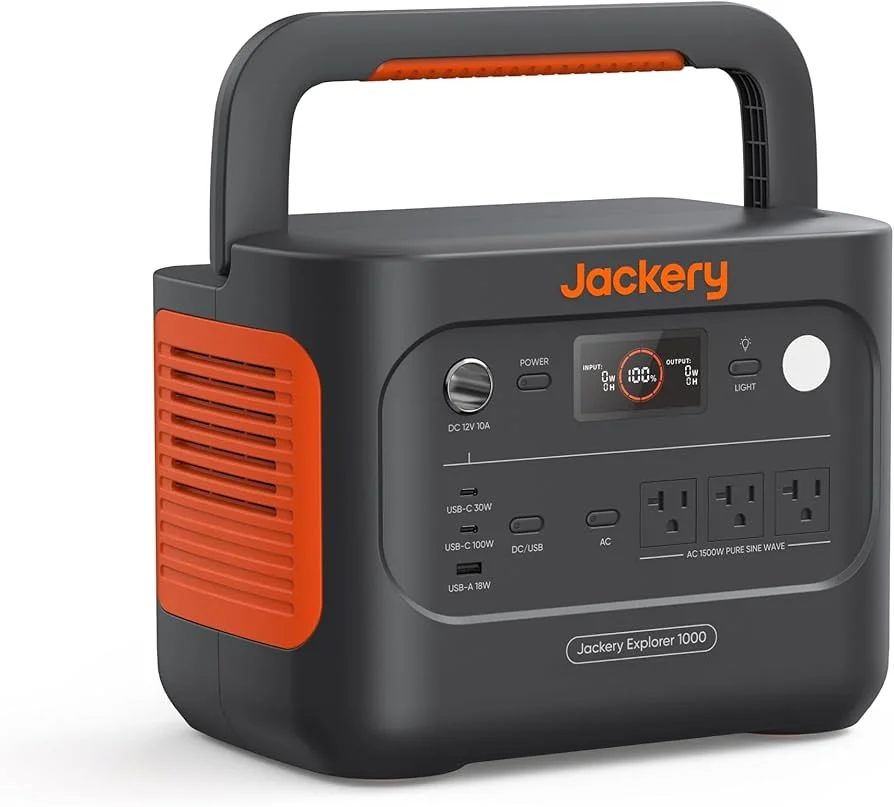
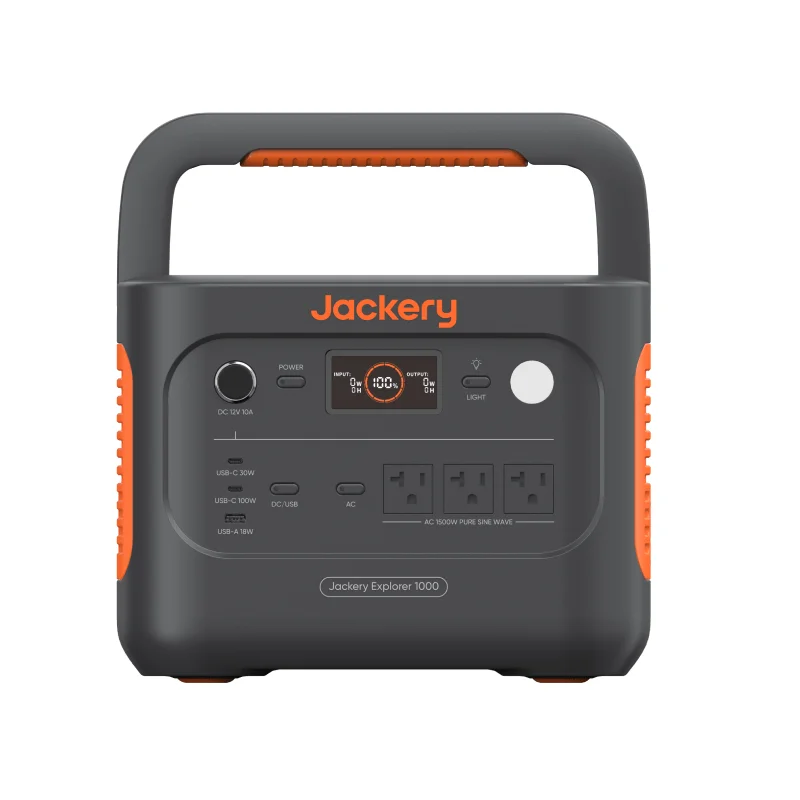
| Jackery Explorer 1000 v2 | 1070 Wh | 1500 W (3000 W surge) | ~23.8 lb | full ~1.7 hr | LiFePO4 |
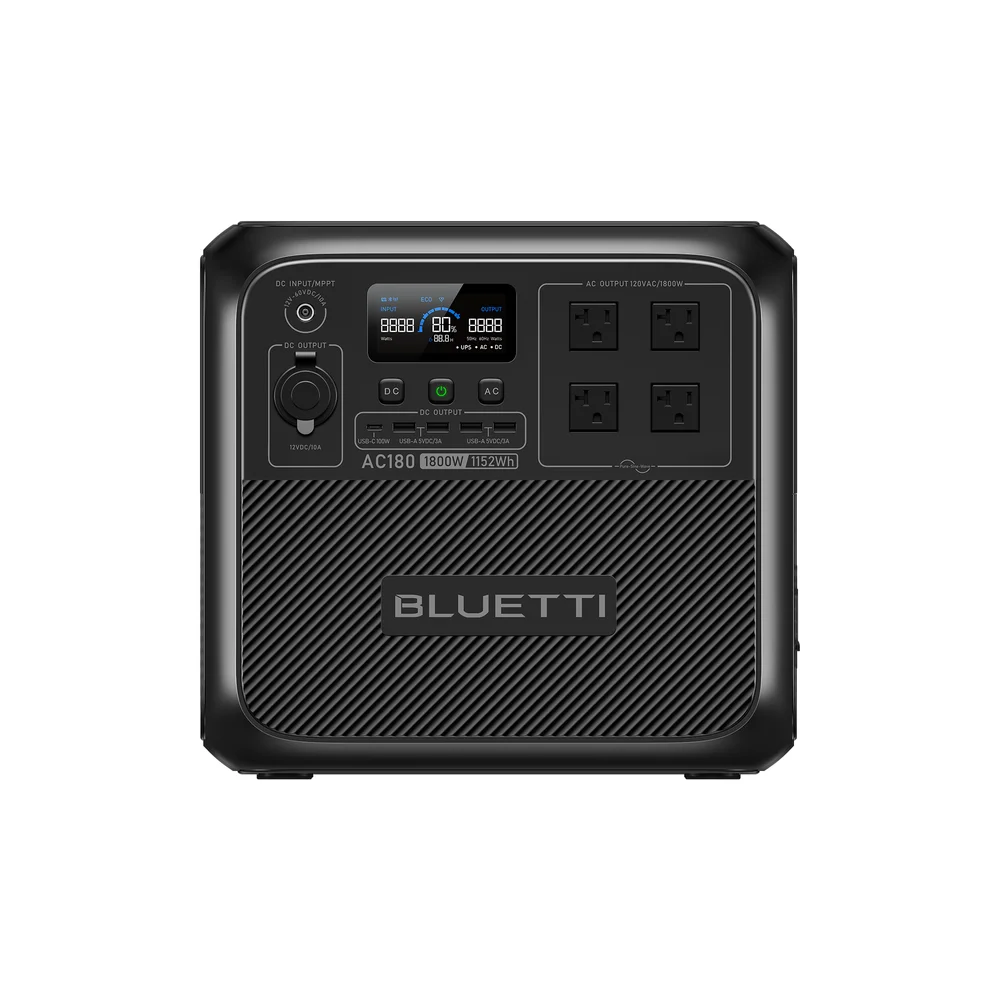
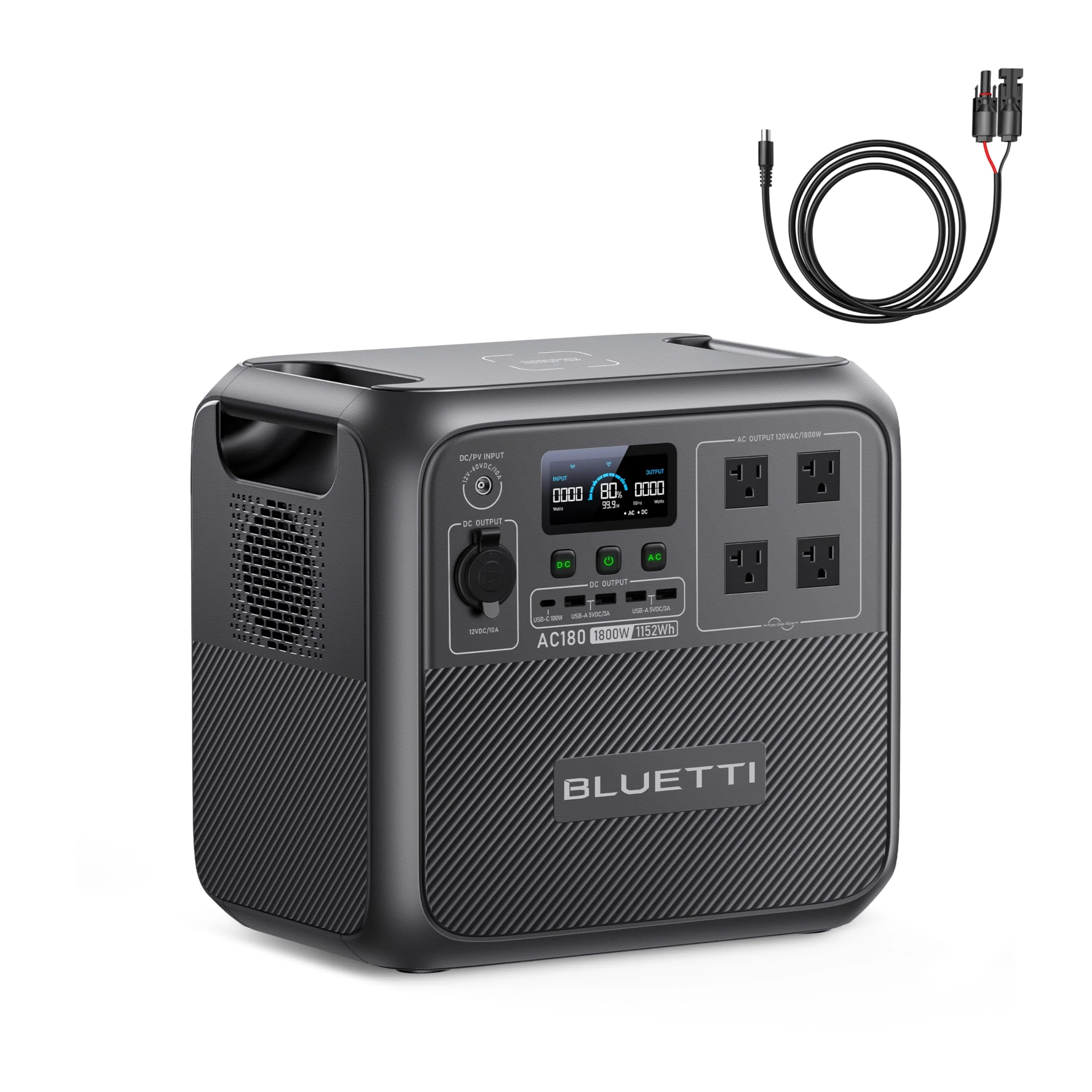
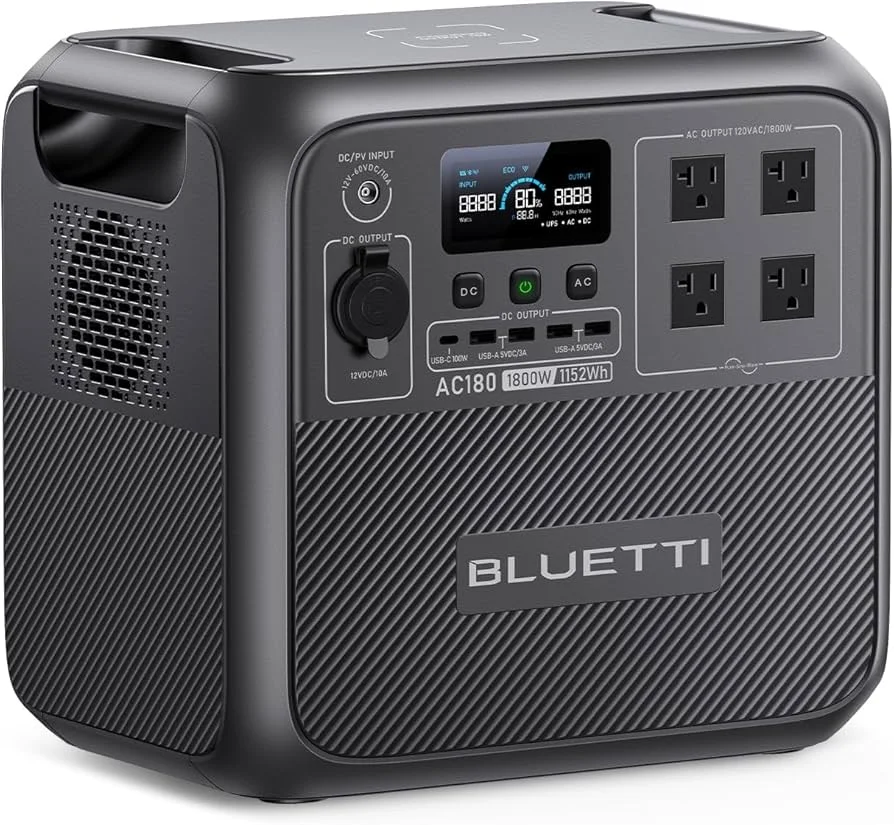
| Bluetti AC180 | 1152 Wh | 1800 W (2700 W peak) | ~35 lb | 0-80% ~45 min | LiFePO4 |
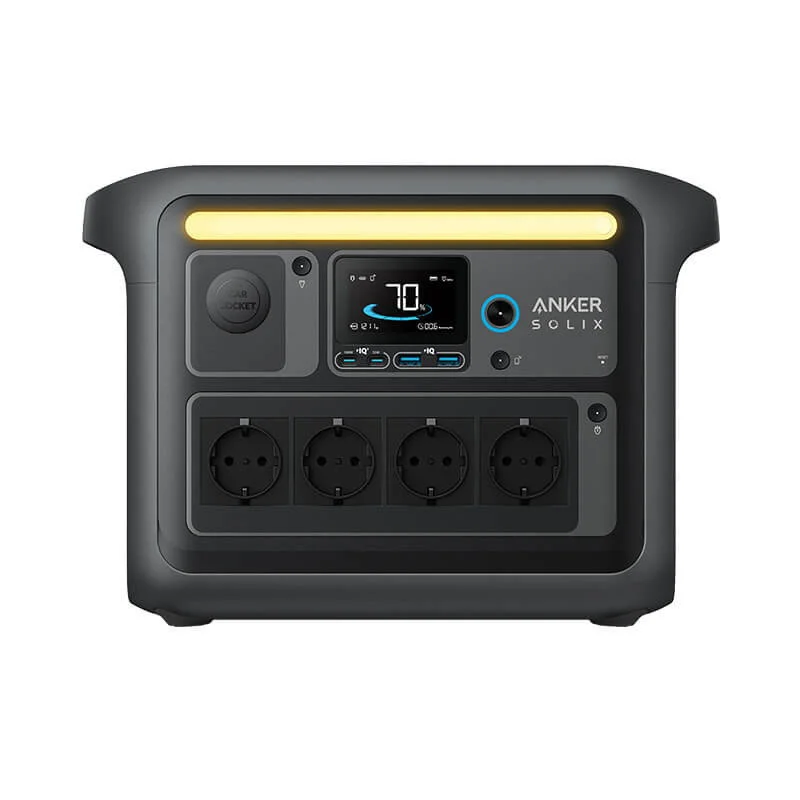
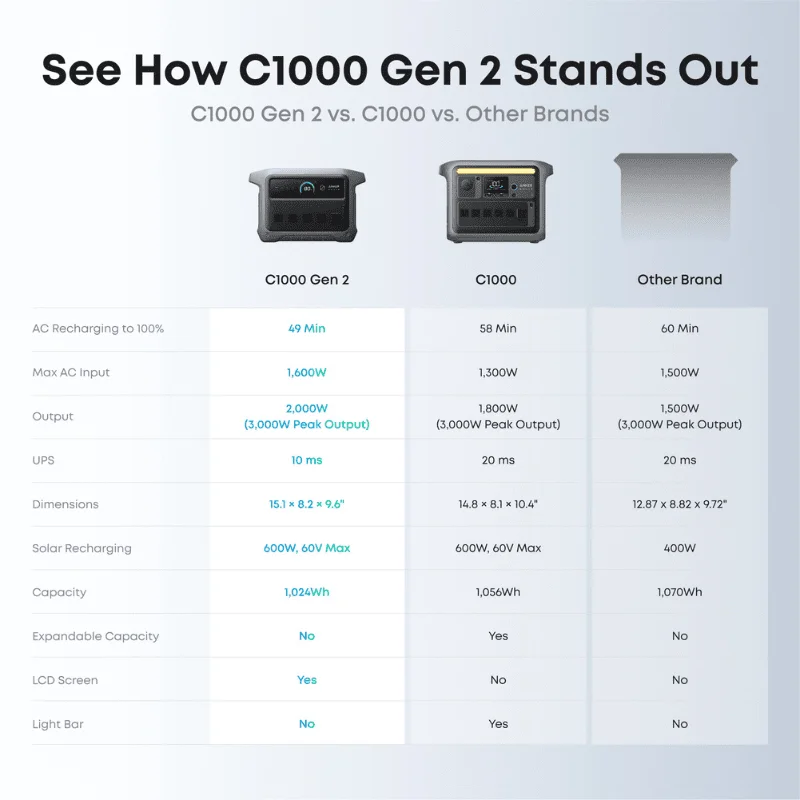
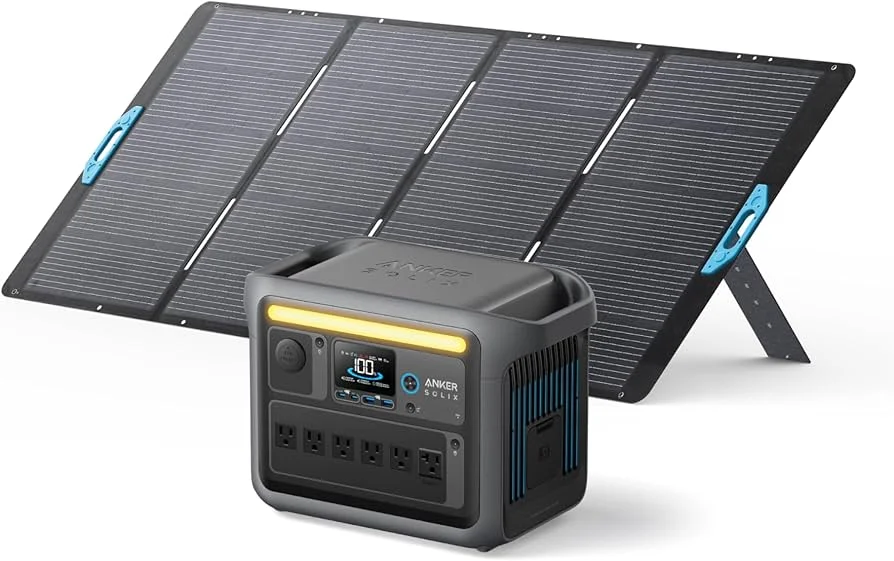
| Anker SOLIX C1000 | 1024 Wh | 2000 W (3000 W surge) | ~24.9 lb | full ~49 min | LiFePO4 |
| EcoFlow DELTA Pro (table-only) | 3600 Wh (expandable) | 3600 W | ~99 lb | ~2.7 hr | LiFePO4 |
| Jackery Explorer 2000 v2 (table-only) | 2042 Wh | 2200 W (4400 W surge) | ~39.5 lb | ~1.7 hr | LiFePO4 |
| Bluetti AC200L (table-only) | 2048 Wh (expandable) | 2400 W (3600 W surge) | ~62 lb | 0-80% ~45 min | LiFePO4 |
Figures are published manufacturer specs cross-checked against named reviews; recharge times are manufacturer AC-charge claims, and OutdoorGearLab measured the Jackery 2000 v2 at roughly 1,710Wh usable in testing — normal real-world derating worth planning around.
How much capacity you actually need
Capacity is where most buyers guess wrong, so do the watt-hour math before you shop. A typical 12V overland fridge draws roughly 30 to 60 watts while the compressor runs, and it cycles rather than running constantly, so figure on something like 250 to 500 watt-hours per day just for the fridge, depending on ambient heat and how often you open it.
If you want to dial this in precisely for your own setup, our guide to 12V fridge power consumption on a road trip walks through the fridge math in detail. Add phones, a couple of LED light strings and some laptop or camera charging and a realistic two-person day lands around 500 to 800 watt-hours. That is why a 1,000Wh-class unit is the overlanding sweet spot: it covers a full day with margin and gives you a buffer for a cloudy day or a hot night. Size up to the 2kWh class only if you run a serious dual-zone fridge, an induction cooktop, or power tools — and remember that doubling capacity roughly doubles the weight you have to live with.
The picks, and exactly who each one is for
Four units cover almost every overlander. Each is the best answer to a specific question, not just a ranked list:
- Outdoor Life lists the DELTA 2 among its top overall picks; the fast recharge is the standout for anyone topping up at a wall outlet between camps.
- Jackery Explorer 1000 v2 — best if you carry it. At about 23.8 pounds for 1070Wh it is the lightest 1kWh-class unit here, which matters the moment the station leaves the truck for a tent pad or a picnic table. Output is a lower 1500W, so it is a charging-and-fridge unit, not a high-wattage-appliance unit.
- Bluetti AC180 — best value capacity. 1152Wh and 1800W output at a frequently-discounted price, with a manufacturer-rated 0-80% recharge of roughly 45 minutes. If you want the most watt-hours and output for the least money, this is the one CNET and others repeatedly flag for value.
- Anker SOLIX C1000 — best output and recharge speed. 1024Wh but with a stronger 2000W output and a 49-minute full AC recharge, plus 600W of solar input for fast off-grid refilling. The pick when you run heavier appliances or need to top up quickly between drives.
Why battery chemistry is the one spec you cannot compromise
For overlanding, insist on LiFePO4 (lithium iron phosphate). It is more thermally stable than the older NMC lithium chemistry, far less prone to thermal runaway in a hot truck, and rated for thousands of charge cycles rather than hundreds — the difference between a station that lasts a decade and one you replace in three years.
Cycle life is where this pays off over the life of a rig. A station rated for 3,000 cycles to 80% capacity can be charged and drained essentially every weekend for years before it loses a meaningful fraction of its usable watt-hours, whereas an older NMC pack rated for a few hundred cycles reaches that same point of decline far sooner. Spread across the price of the unit, the LiFePO4 premium works out to a lower cost per usable cycle, which is the honest way to compare two stations whose sticker prices look close. The heat story matters just as much for overlanding specifically: a closed vehicle in the desert can reach temperatures that stress older lithium chemistries, and LiFePO4’s greater thermal stability is exactly the margin you want when the gear lives in a hot truck for days at a time.
Ports, solar and recharging when you are off the grid
Off-grid, how you put energy back in matters as much as how much you store. Check three things on any unit you are considering. First, the 12V DC output for your fridge — a dedicated car-port or 12V/10A output runs a compressor fridge most efficiently, bypassing the inverter losses of running it through an AC outlet. Second, USB-C power delivery: 100W USB-C ports charge laptops and fast-charge phones directly. Third, the maximum solar input, which sets how fast a panel can refill the unit between drives.
Budget, mid and premium: where your money goes
Price tracks capacity and output, but it also tracks build quality you cannot see — inverter robustness, BMS sophistication and connector quality. Here is how the tiers shake out for overlanding (prices approximate and fluctuating):
- Value (~$500): the Bluetti AC180, Anker SOLIX C1000 and frequently the EcoFlow DELTA 2 land here on sale — full 1kWh-plus LiFePO4 capacity and 1800-2000W output for the price a half-capacity unit cost a few years ago. If your budget is firmly under $500, our roundup of the best power stations under $500 for camping covers the smaller-capacity options.
- Mid (~$600-$800): the Jackery Explorer 1000 v2 trades a little output for the lowest weight in class, which is worth the premium if portability is your priority — though it discounts to value-tier prices often.
Resist buying the largest unit you can afford. The best overlanding station is the smallest one that comfortably covers your measured daily draw, because every extra watt-hour is extra weight and cost you carry on every trip whether you use it or not.
Pairing a power station with solar for true off-grid power
The moment your trip stretches past what a single charge holds, solar stops being optional. A power station is a battery; a solar panel is what keeps that battery from ever hitting empty, turning a two-day unit into an indefinite one as long as the sun cooperates. The number that governs this pairing is the station’s maximum solar input, which caps how fast any panel can refill it.
One honest caution: do not buy a huge panel array for a small station. Solar input above the unit’s rated maximum is simply wasted, and the extra panels are weight and bulk you haul for nothing. Match the panel to the station’s spec, and remember that the vehicle’s 12V socket while driving is itself a reliable recharge source that needs no sun at all, which is why many overlanders treat solar as a supplement to drive-charging rather than the sole method.
Common mistakes overlanders make buying a power station
Most regret with a power-station purchase traces back to a handful of avoidable errors. Knowing them up front saves money and a ruined trip:
- Buying on capacity alone. A big watt-hour number means nothing if the inverter’s continuous output cannot start your appliance. A 1500W unit will fault the instant a 1800W kettle kicks in, no matter how many watt-hours sit behind it. Match output to your highest single load first, then capacity to your daily total.
- Ignoring weight. Specs read the same on a screen, but a 24-pound unit and a 60-pound unit live very different lives in an overland rig. If the station ever leaves the truck, weight is a primary spec, not a footnote — which is exactly why the Jackery Explorer 1000 v2 earns its place despite lower output.
- Skipping the chemistry check. A suspiciously cheap unit that hides its battery chemistry is almost always older NMC lithium, which trades cycle life and heat tolerance for a lower price — a bad bargain in a hot truck.
- Forgetting how it recharges off-grid. Fast AC recharge is useless in the backcountry. Confirm the 12V car-charging and solar input you will actually use, not just the wall-charge headline.
- Running the fridge through an AC outlet. A 12V fridge plugged into the station’s DC car-port draws far less than the same fridge run through the inverter and an AC adapter, which wastes energy to conversion losses. Use the DC port.
Avoid these five and you have sidestepped almost every reason buyers send a unit back. The recurring theme is simple: buy for how you will actually use it off-grid, not for the biggest number on the box.
A realistic weekend running off a power station
Picture a typical two-night trip to put the numbers in context. Friday you leave with a 1,000Wh-class unit charged to full off the wall or topped up from the 12V socket on the drive out. Your fridge, a couple of LED light strings, two phones and a laptop are the whole electrical load.
Through Friday night and into Saturday the fridge sips its 250-to-500 watt-hours, the lights add a little, and phones and the laptop take their share — a realistic day landing somewhere around 500 to 800 watt-hours. By Saturday afternoon a 1kWh unit is comfortably past halfway down, which is exactly where you want it: not empty, not stressed. A few hours of solar through the afternoon, or simply the drive to a trailhead and back, puts a meaningful chunk back in. Sunday morning you are still well above empty, pack up, and recharge fully on the drive home.
That arc — full Friday, half by Saturday, topped from sun or driving, home Sunday with margin — is why the 1kWh class is the overlanding default and why oversizing is usually wasted money and weight. Scale the story up to a dual-zone fridge and an induction cooktop and the same logic points you to a 2kWh unit; scale it down to a weekender who only charges devices and the math says you barely need this much. Run your own version of this arc before you buy, and the right size becomes obvious.
Setting it up to survive the trail
A power station is a precision electronics box living in a vibrating, dusty environment, so a few habits protect your investment. Strap it down — sustained corrugated-road vibration is hard on internal solder joints and connectors, and a unit sliding around the cargo area will fail sooner than the cycle rating suggests. Keep the intake and exhaust vents clear; these units shed heat under load, and a blocked vent drives internal temperatures up and efficiency down.
For storage between trips, LiFePO4 packs are happiest sitting around 50 to 80 percent charge rather than full or empty, and they should not be left to bake in a closed vehicle in extreme heat. None of this is exotic — it is the same care any lithium battery wants — but following it is the difference between a station that holds its capacity for years and one that quietly degrades. Match the unit to your real needs, treat it as the critical gear it is, and a good LiFePO4 station will outlast several trucks.
Two more field habits are worth building in. First, test every output before you depend on it — plug in the fridge, the lights and a phone at home and confirm the 12V port, the USB ports and the AC outlets all deliver, so you discover a dead port in the driveway rather than at a remote campsite. Second, keep the unit’s firmware current if it supports app updates; manufacturers routinely improve charging behavior and battery management after launch, and a quick update before a big trip costs nothing. These are small disciplines, but the whole point of carrying a power station instead of wiring in a second battery is reliability without permanent modification, and reliability is a habit as much as a spec.
The verdict
Move off it only for a clear reason. Choose the Jackery Explorer 1000 v2 if you carry the station and want the lightest 1kWh unit; the Bluetti AC180 if you want the most capacity per dollar; and the Anker SOLIX C1000 if you need stronger output and the fastest recharge. Whichever you pick, size it to your measured daily watt-hours, insist on LiFePO4, and you will have silent, fume-free, modification-free power that does the second-battery job better than the second battery ever did.