Setting the Scene
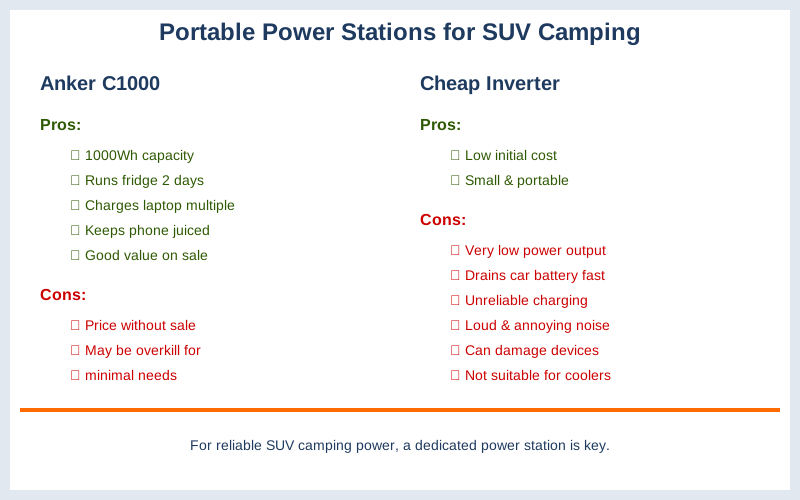
My first foray into SUV camping was with a 2018 Subaru Outback and a dream of powering my phone and maybe a small cooler. I quickly realized my car battery wasn't going to cut it. I spent about $50 on a cheap inverter that made a noise like a dying badger and barely charged anything. That's when I started looking at portable power stations, and let me tell you, the internet is a minefield of jargon.
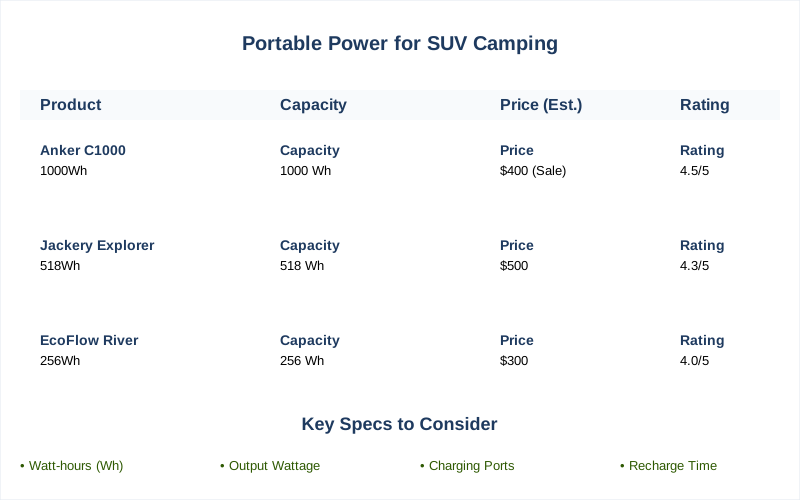
Outdoor Gear Lab has tested a bunch, and the Anker C1000 is what I landed on after my $50 disaster. It was about $400 on sale, and it's been a game-changer. I'm talking about actual usable power, not just a sad hum. CNET also has some solid reviews if you want to dive deeper.
The Core Answer
The real move for SUV camping is a portable power station that can actually handle your gear without draining your bank account or your patience. Forget those cheap inverters that sound like they're about to explode. They're glorified paperweights. Car and Driver agrees that these things are essential for anyone spending time away from the grid.
I spent my first few trips trying to run a small fridge off my car battery and a cheap inverter. It was a disaster. The battery died after about 3 hours, and I nearly lost all my food. That's when I learned about watt-hours (Wh) and output wattage. You need to match your power station to what you're trying to run.
For most SUV campers, including myself, the Anker C1000 is the sweet spot. I snagged mine for around $400 on sale. It's got a 1000Wh capacity, which is enough to run my portable fridge for about two days straight, charge my laptop multiple times, and keep my phone juiced up. That's the honest version.
What nobody tells beginners is that the advertised battery life is usually under ideal conditions. Running a fridge that cycles on and off uses less power than running something constantly. The C1000 has a 1500W output, which is plenty for most camping appliances. My old inverter could barely handle 100W without sounding like it was gargling rocks.
If you need more juice for longer trips or to power bigger items, something like the Jackery 2000 v2 is an option, but it'll set you back closer to $800 at full price. It weighs 39 lbs, so it's not exactly pocket-sized, but it's manageable for an SUV. Reddit threads often debate these, and the consensus is you get what you pay for.
Solar charging is a nice-to-have, but don't make it your primary plan for a weekend trip. It takes a long time to recharge a big battery. The C1000 can be recharged from empty in about an hour with AC power, which is what I use before I leave. You can also plug in solar panels, but I haven't bothered yet. Outdoor Tech Lab has tested these in some pretty gnarly conditions, so their insights are solid.
Ultimately, the $50 version of portable power is just a waste of money. Invest in something decent like the Anker C1000, and you'll actually enjoy your camping trips instead of worrying about dead batteries. It's the difference between being comfortable and being miserable.
Why This Matters for Your Setup
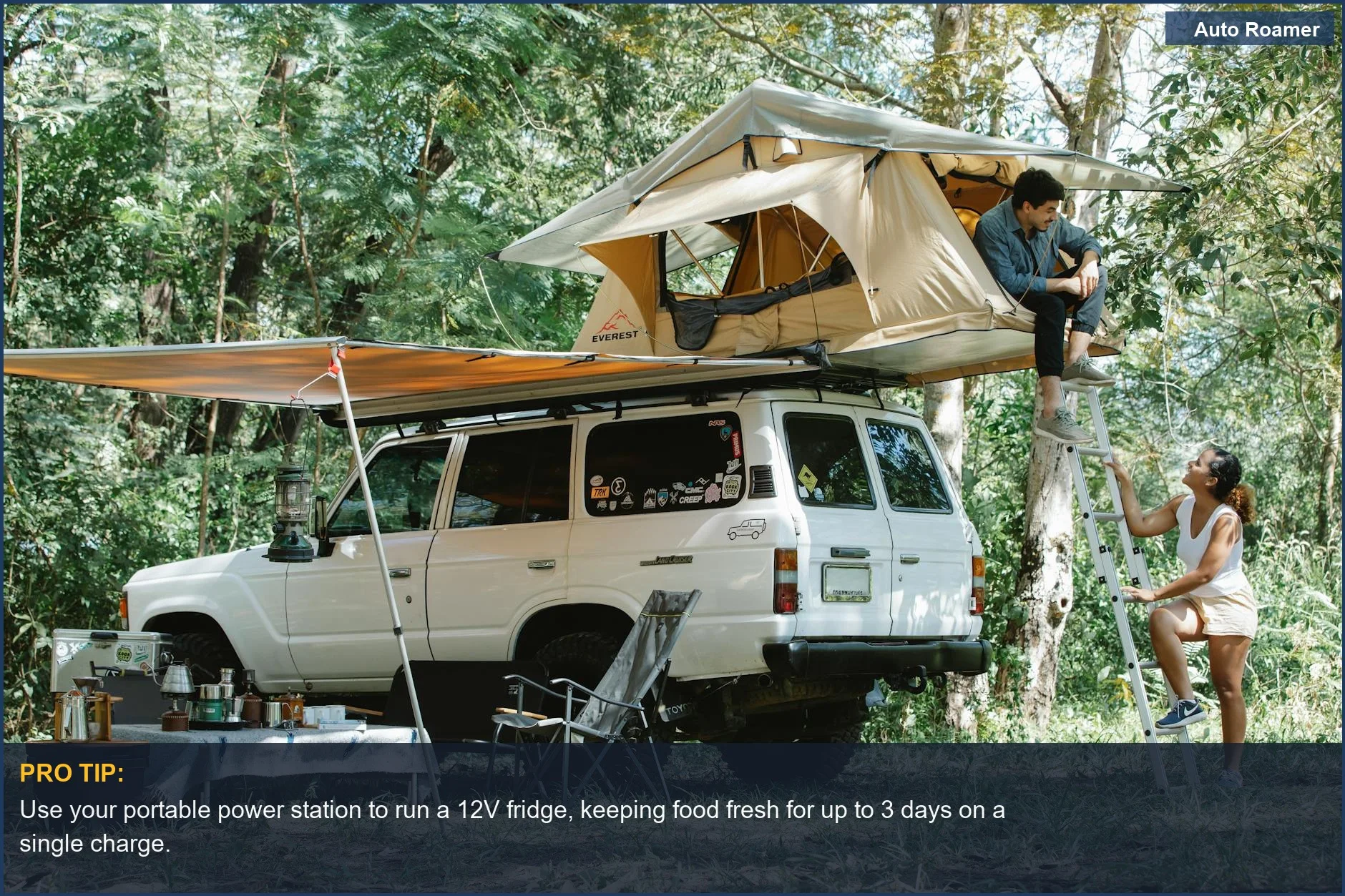
- Keep Your Food Cold: My first camping trip with a cooler and no power source was a soggy, warm mess. A portable power station running a small 12V fridge means no more ice runs or questionable leftovers. The Anker C1000 can power my 50L fridge for about 48 hours before needing a recharge.
- Charge Everything: Phones, headlamps, cameras, portable speakers - all of it needs juice. My old setup meant rationing battery life.
Now, I can keep everything topped up, which is crucial for navigation and, let's be honest, Instagram. CNET highlights how these stations can charge multiple devices simultaneously.
- Comfort and Convenience: Running a small fan on a warm night, or even a simple string of LED lights, makes a massive difference in the camping experience. It turns a basic campsite into a little home away from home.
This is the real move for making car camping enjoyable, not just bearable.
- Emergency Preparedness: Beyond camping, these units are fantastic for power outages. Having a reliable power source means you can still run essential devices, keep your phone charged to contact people, and maybe even power a medical device if needed. It's not just about fun; it's about being ready. Outdoor Gear Lab emphasizes their utility during blackouts.
Making the Right Choice
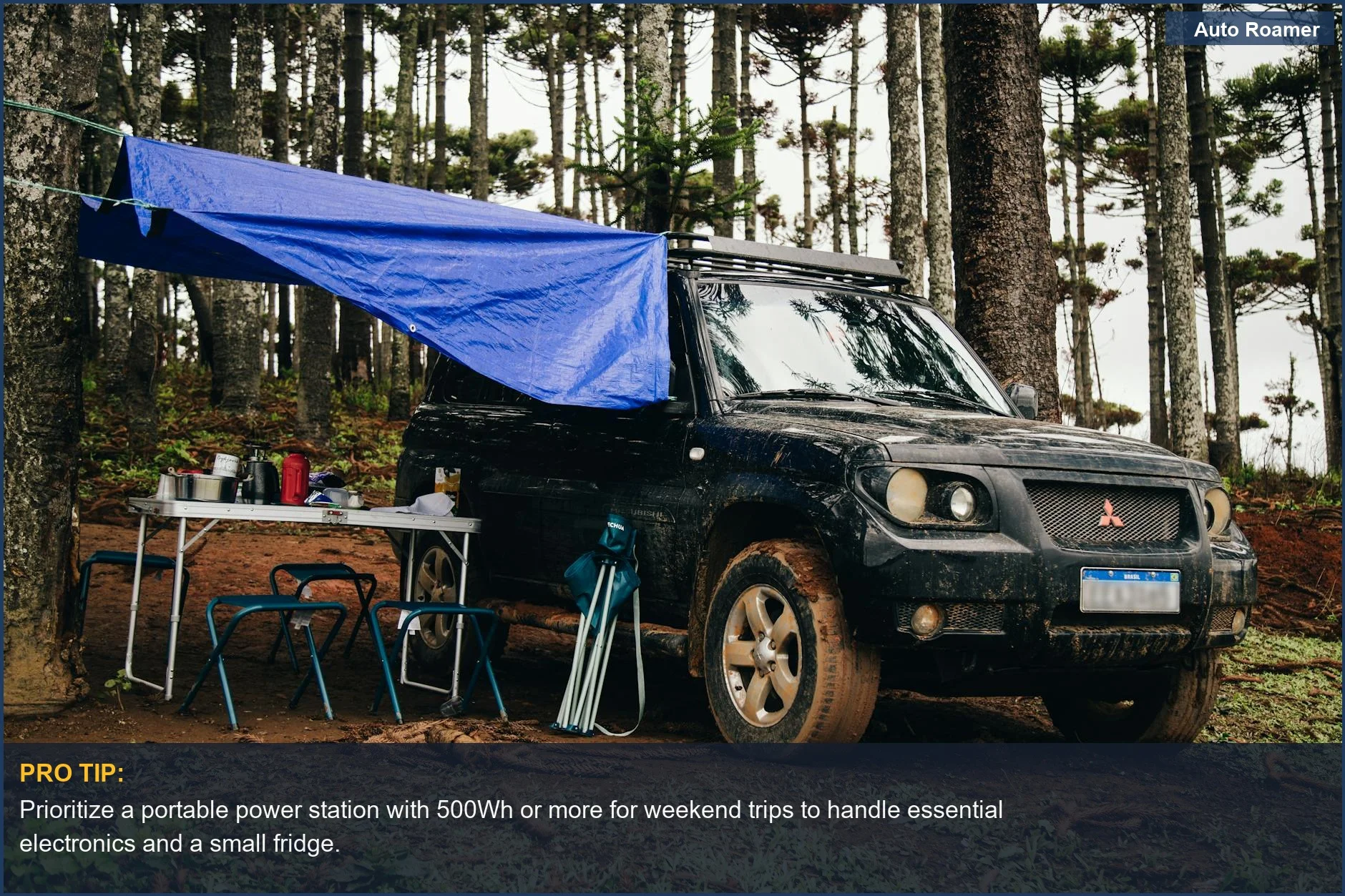
- Capacity is King: Don't just buy the cheapest thing you see. Figure out what you need to power. For a weekend trip with a fridge and electronics, aim for at least 500Wh, but 1000Wh is safer. My Anker C1000's 1000Wh capacity is perfect for me for multi-day use.
- Output Matters: A high capacity means nothing if the power station can't deliver enough watts to run your devices.
A 1500W output is a solid baseline for most SUV camping needs, handling fridges, blenders (if you're fancy), and multiple chargers. Car and Driver points out that output is just as important as capacity.
- Recharge Options: While AC charging is fastest, consider if you want solar capabilities for longer trips. It's usually an extra cost, and frankly, a rookie mistake to rely solely on solar for a short weekend.
Outdoor Gear Lab has tested various charging speeds.
- Portability vs. Power: If you have a small car or need to move it around a lot, consider the weight. The Anker C1000 is around 27 lbs, which is manageable. Bigger units can easily weigh 40 lbs or more, which might be a pain if you're constantly loading and unloading. Oupes also has some lighter options worth checking out.