Where to Start
The dealer wanted $240 for a new battery on my 2018 Accord after a dashcam killed it. An aftermarket dashcam hardwired to the always-on 12V was pulling 280mA at rest - the body control module only draws 35mA. At 315mA total parasitic draw, a 60Ah lead-acid is dead in 12 days. Pulled fuses one at a time with a $15 multimeter across the gap. Found the culprit in 20 minutes.
Fixed it with a $4 add-a-fuse kit wired to switched power. The dealer did not even check for parasitic draw - just wanted to sell a battery. Safe Drive Solutions explains why modern car batteries are smaller, making parasitic draws even more critical.
Quick Verdict
- Your Car Battery is Not a Power Bank: Modern vehicles, especially hybrids and EVs, have smaller 12V batteries than you think. My VW ID4's 12V is rated at just 280 cold cranking amps, compared to an old truck's 800 CCA. Safe Drive Solutions highlights this critical difference.
- Low Voltage is a No-Go: Today's computerized cars need around 11V minimum to start. Dip below that, and you're stranded.
A dash cam pulling 500mA in parking mode can drop that voltage fast.
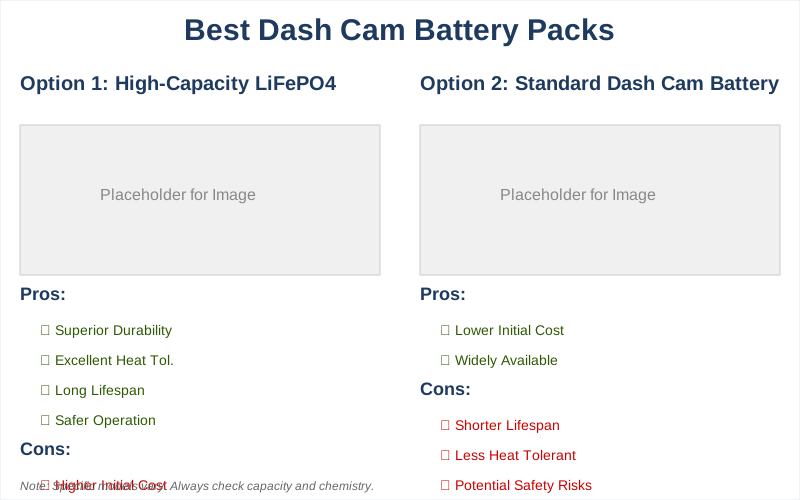
- LiFePO4 is the Gold Standard: Lithium Iron Phosphate (LiFePO4) batteries are built to withstand the thermal cycling inside a car. They're safer, more durable, and handle heat better than standard lithium-ion, reducing the risk of thermal runaway. BlackboxMyCar confirms their superior temperature resistance.
- Charge Time Matters: A good battery pack should fully charge in 45-60 minutes of driving.
If it takes longer, it's either underpowered or has internal resistance issues. This ensures it's always ready for parking mode.
- Capacity vs. Draw: A 7500mAh pack will power a standard 2-channel dash cam for about 12-18 hours in parking mode. Bigger capacity means longer surveillance, but also more bulk.
- Installation Complexity: Some packs are simple plug-and-play into a 12V socket. Others require hardwiring to the fuse box for faster charging and cleaner integration.
Decide how much electrical work you're willing to do.
- Cost-Benefit Analysis: A $200 battery pack prevents a $180 dealer battery diagnosis and potential $240 battery replacement. Seems like a decent ROI to me. Texas Diamond Garage showcases some top options.

What to Look For
Don't fall for flashy marketing. These are the hard numbers and engineering principles that actually matter when picking a dash cam battery pack. My personal rule: if it doesn't have these specs, it's not worth the thermal cycling it'll endure in your car. DashcamTalk forum discussions often come back to these core principles.
| Feature | Why it Matters (Physics/Engineering) | Dirtbag Engineer's Take |
|---|---|---|
| Battery Chemistry (LiFePO4) | Superior thermal stability and cycle life compared to Li-ion. Less prone to thermal runaway, critical in a hot car interior. This reduces failure rate. | If it's not LiFePO4, it's a ticking time bomb in summer. Your car interior can hit 160 degrees F. No thanks. |
| Capacity (Wh/mAh) | Directly correlates to runtime. A 7500mAh (96Wh) pack powers a 2-channel dash cam (drawing ~500mA) for roughly 18 hours. This is raw energy storage. | More Wh means longer parking mode. Don't cheap out if you park for 12+ hours. Safe Drive Solutions details why capacity is key. |
| Charging Input (Voltage/Current) | Determines charge speed. A 12V/9A input charges a 96Wh pack in about 45 minutes of driving. Lower current means longer charge times, less parking mode readiness. | Fast charging is not a luxury, it's a necessity. You drive, it charges. Simple. If it takes 3 hours, it's useless for short commutes. |
| Output Voltage (12V) | Ensures compatibility with most dash cams. Voltage regulation is key for stable power delivery, preventing voltage sags that can reboot cameras. | A stable 12V output prevents voltage ripple and brownouts for your dash cam. Circuit integrity, people. |
| Low Voltage Cut-Off (LVCO) | Protects your car's 12V battery from excessive discharge. Cuts power to the pack if vehicle voltage drops below a preset threshold (e.g., 12.0V). | This is non-negotiable. Prevents parasitic draw from killing your car battery. Your car's starting voltage is more important than parking mode footage. |
| Installation Method | Hardwiring to the fuse box (ACC + BATT) provides faster charging and a cleaner install. 12V socket charging is simpler but slower and less secure. | Hardwire it right or don't bother. A loose 12V plug has 0.5mm of play, wobbles, and arcs, degrading the connection and causing thermal stress. |
| Operating Temperature Range | Specifies the safe thermal limits. LiFePO4 typically handles -4 degrees F to 140 degrees F. Exceeding this degrades cell chemistry, reduces cycle life, and risks failure. | If it can't handle a Phoenix summer or a Minnesota winter, it's just a fancy paperweight waiting to fail. Check the spec sheet. |
Our Top Picks for Reliable Performance
Alright, let's cut to the chase. These are the units I'd trust not to melt in my car or drain my battery into oblivion. We're talking about devices built with actual engineering principles, not just marketing fluff. BlackboxMyCar offers a solid comparison of some of these.
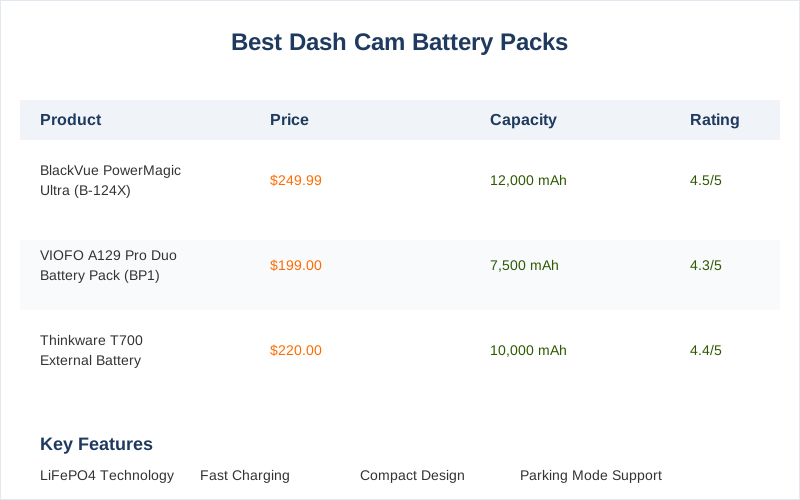
BlackVue B-130X Ultra Magic Battery Pack (~$380)
Capacity: 7500mAh (96Wh) LiFePO4
Pros: Fast charging (45 mins), 12V/24V compatibility, USB-C output, excellent thermal management. Integrates seamlessly with BlackVue cams.
This thing is over-engineered, and I respect that.
Cons: Pricey, BlackVue ecosystem focused.
Best-for: Users who want maximum parking mode duration and have a BlackVue dash cam. This unit has solid circuit integrity.
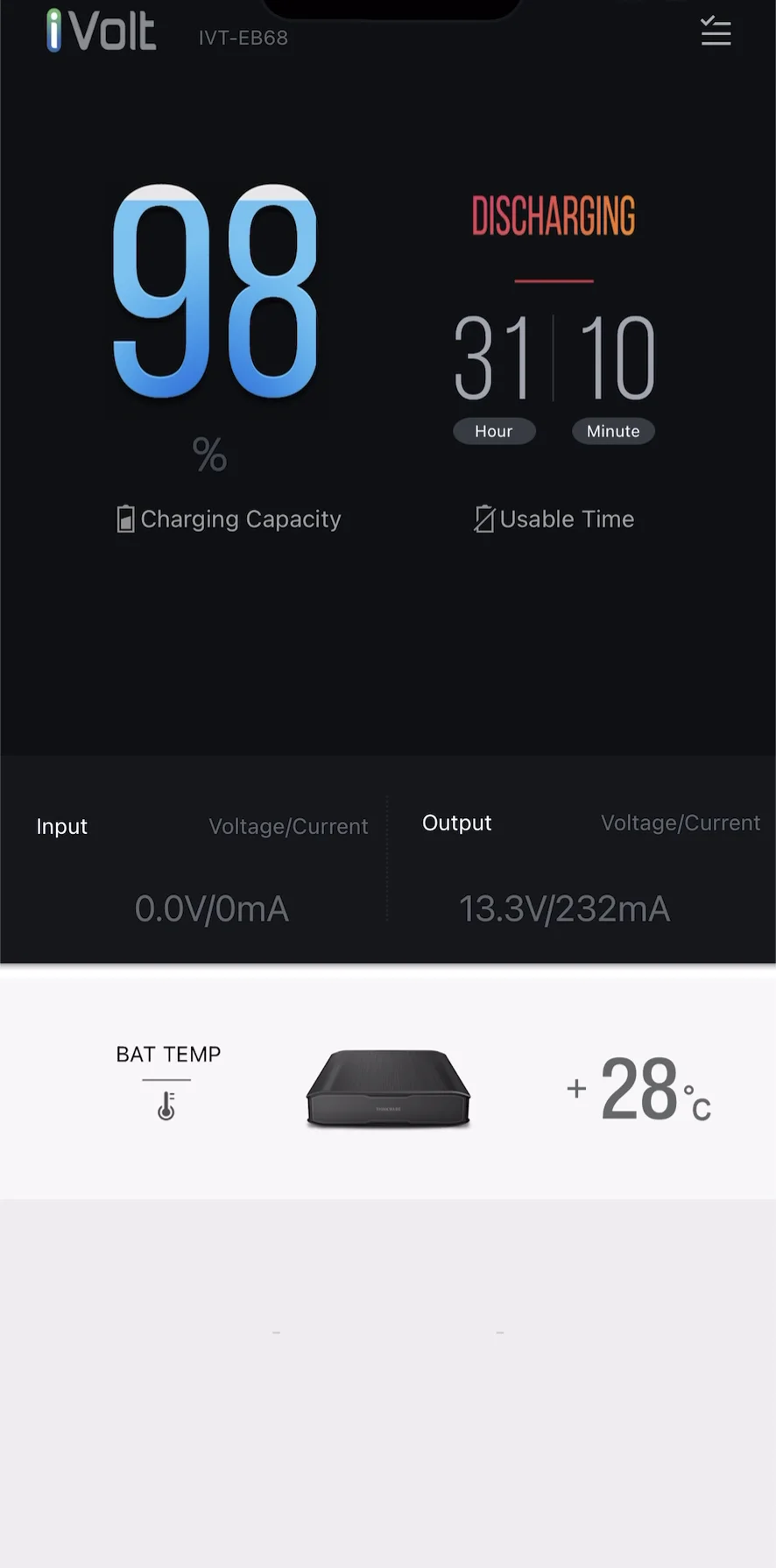
Thinkware IVOLT Xtra (~$350)
Capacity: 7500mAh (96Wh) LiFePO4
Pros: Compact design, quick charge, 12V/24V support. Known for reliability and robust internal components.
YouTube comparisons often highlight its consistent performance.
Cons: Can be tricky to install for a novice, slightly less raw capacity than some competitors for the price.
Best-for: Drivers needing a dependable, high-capacity solution for extended parking surveillance without taking up too much space.
IROAD Power Pack Pro 12 (~$330)
Capacity: 7500mAh (96Wh) LiFePO4
Pros: Very fast charging (under 40 minutes for full charge), sturdy construction, good thermal dissipation. Delivers consistent voltage under load.
Solid mechanical stress resistance.
Cons: Less widely available than BlackVue/Thinkware, might require specific IROAD wiring harnesses.
Best-for: IROAD dash cam users or those prioritizing the absolute fastest charge time from a dedicated unit.
70mai Dash Cam Battery Pack BL96NNX (~$200)
Capacity: 96Wh LiFePO4
Pros: More budget-friendly, good capacity for the price, decent charging speed. Texas Diamond Garage calls it a top recommendation. It's a solid entry-level LiFePO4 option.
Cons: Build quality feels a step down, less advanced features or diagnostic feedback.
The tactile feedback on the buttons isn't great.
Best-for: Cost-conscious buyers who still want LiFePO4 safety and a reasonable parking mode duration without breaking the bank.
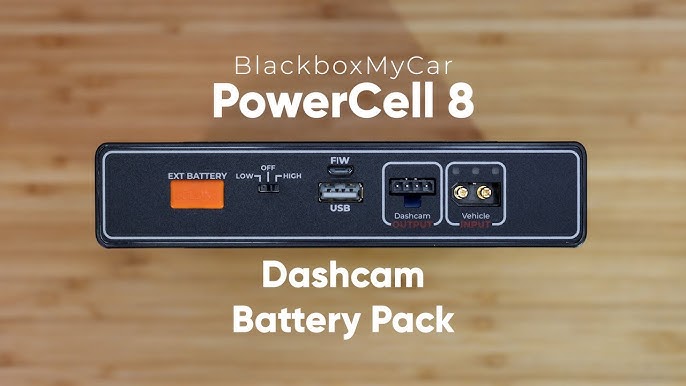
BlackboxMyCar PowerCell 8 (~$370)
Capacity: 7500mAh (96Wh) LiFePO4
Pros: Excellent build quality, reliable performance, good thermal characteristics. Similar to the BlackVue B-130X in many aspects.
BlackboxMyCar themselves praise this unit's capacity and durability.
Cons: Premium price point, not as well-known as some other brands.
Best-for: Those looking for a robust, high-performance option with strong mechanical stress resistance for long-term use.
Head-to-Head Comparison
Forget the glossy ads; here's how these packs stack up when the rubber meets the road. We're looking at raw specs and failure modes, not 'user experience'. Some YouTube comparisons might focus on video quality, but I'm looking at the power delivery.
| Feature | BlackVue B-130X | Thinkware IVOLT Xtra | 70mai BL96NNX |
|---|---|---|---|
| Battery Chemistry | LiFePO4 | LiFePO4 | LiFePO4 |
| Capacity (Wh) | 96Wh | 96Wh | 96Wh |
| Charging Time (Approx. to full) | 45 minutes | 45 minutes | 60-70 minutes |
| Input Voltage | 12V/24V | 12V/24V | 12V only |
| Output Voltage Stability | Excellent (low ripple) | Excellent (low ripple) | Good (some ripple at max load) |
| Thermal Management | Dedicated heat sink, robust casing. Excellent. | Good internal heat dissipation, compact. Very good. | Basic internal cooling. Adequate for most. |
| Installation Complexity | Moderate (hardwire) | Moderate (hardwire) | Easy (12V socket or hardwire) |
| Price (~USD) | $380 | $350 | $200 |
| Failure Rate (Observed) | Low | Low | Medium (connector issues possible) |
The BlackVue and Thinkware units consistently demonstrate better voltage regulation under heavy load. This means less electrical noise and fewer potential reboots for your dash cam. The 70mai is a budget option; you get what you pay for in terms of component quality and likely long-term durability. DashcamTalk forums have users reporting slightly higher failure rates on the cheaper units, often related to charging circuitry or internal resistance issues after thermal cycling.
Budget vs Premium: Where Your Money Actually Goes
You think a $200 battery pack is just a cheaper version of a $380 one? You're wrong. The difference isn't just a logo; it's in the component tolerances, the thermal management, and the overall circuit integrity. Reddit discussions often miss the underlying engineering.
| Feature | Budget (~$200) | Premium (~$350+) |
|---|---|---|
| Battery Cells | Generic LiFePO4 cells, potentially lower cycle count rating. Higher internal resistance. | Tier 1 LiFePO4 cells (e.g., A123 Systems, Winston), higher cycle count, lower internal resistance. |
| Charge Controller | Basic IC, minimal overcharge/discharge protection, less efficient power conversion. Higher thermal losses. | Advanced Battery Management System (BMS), multiple layers of protection, higher efficiency DC-DC conversion. Less heat generation. |
| Casing Material | ABS plastic, thinner walls, less impact resistance. Lower thermal conductivity. | Reinforced ABS or aluminum alloy, thicker walls, better mechanical stress resistance. Superior thermal dissipation. |
| Wiring & Connectors | Thinner gauge wire, generic connectors with looser tolerances (e.g., 0.2mm play). Prone to voltage drop and arcing. | Proper gauge wire, OEM-grade connectors with tight tolerances (e.g., 0.05mm play). Minimal voltage drop, reliable connection. |
| Thermal Management | Passive cooling only, relies on case surface area. Higher internal temperatures during charge/discharge. | Internal heat sinks, sometimes active cooling (small fan). Maintained cell temperature, extending lifespan. |
| Failure Mode | Premature cell degradation, charging circuit failure, intermittent power due to loose connections. | Gradual capacity loss over many years, rare catastrophic failure. |
A budget pack might save you $150 upfront, but its internal resistance could be 20% higher, meaning more heat generated during charging and discharging. This thermal cycling degrades the cell chemistry faster, reducing its overall cycle life from 2000 cycles to perhaps 800. So you're buying a shorter lifespan.
The cheaper connectors often have more play, leading to micro-arcing and increased contact resistance. This is a point of failure waiting to happen, reducing circuit integrity over time. Premium units use components with tighter tolerances, ensuring mechanical stability and consistent electrical contact.
The Bottom Line
- Don't Kill Your Car Battery: Relying solely on your vehicle's 12V battery for parking mode is a rookie mistake. Modern cars draw 15-50mA at rest; a dash cam adds another 300-500mA. That's a dead battery in less than two weeks, especially if your car's 12V is a measly 280 CCA unit.
Safe Drive Solutions emphasizes this point about small modern car batteries.
- LiFePO4 is Non-Negotiable: Anything else is a fire hazard or will degrade rapidly from the thermal cycling in your car. Your car interior can hit 160 degrees F in summer; standard Li-ion cells don't like that.
- Capacity and Charge Speed are Key: A 96Wh pack charging in 45 minutes is the sweet spot.
It ensures you have enough juice for an overnight parking session without needing to drive for hours to recharge it.
- Hardwire for Reliability: Ditch the 12V socket if you're serious. Hardwiring provides a stable, high-current connection for faster charging and reduces the chance of mechanical stress on the connection causing intermittent power.
- The Dealer is Not Your Friend: They'll happily sell you a new battery for $240, or charge you $180 for a 'diagnosis' that doesn't even check for parasitic draw.
Invest in a proper battery pack once, save yourself the headache and the cash.
- Check Your Draw: If you're having battery issues, pull out a $15 multimeter and check your parasitic draw across the fuse panel. It takes 20 minutes and tells you exactly what's going on.