Setting the Scene
Deciding between a dash cam battery pack and hardwiring it directly into your car's electrical system is a common fork in the road for anyone trying to get reliable dash cam footage. It's not just about which one looks cleaner, it's about what actually works when you need it most. I've seen folks get tangled up in wires or end up with dead batteries because they picked the wrong setup for their situation.
The honest version is, one offers simplicity for basic recording, while the other unlocks true 24/7 protection. Understanding the differences is key to avoiding a rookie mistake.
The Core Answer
The core answer boils down to what you want your dash cam to do when the engine is off. If you just need footage while you're driving, plugging into the cigarette lighter port is the easiest route. You plug it in, and it records when the car is on. Simple. Plugging in means no constant power, so no parking mode. You'll only get footage from when you're behind the wheel.
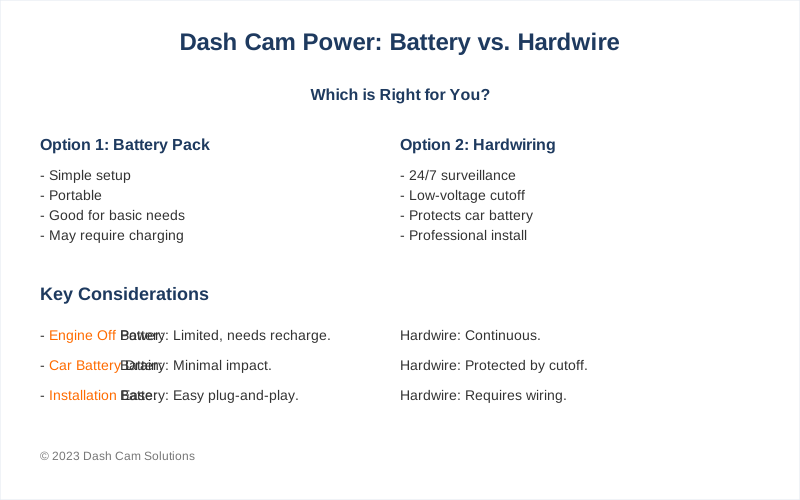
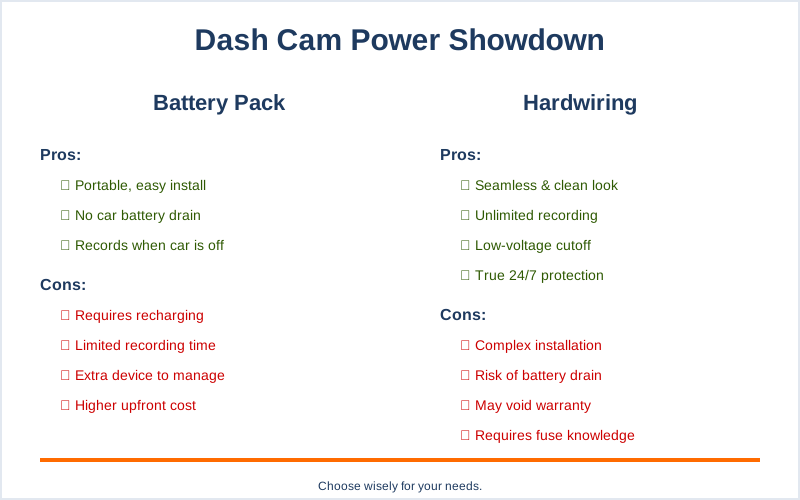
Now, if you want that 24/7 surveillance - the kind that catches hit-and-runs in parking lots or vandalism while you're at the grocery store - you need more. That's where hardwiring or a battery pack comes in. Hardwiring connects your dash cam directly to your car's fuse box. Think of it like giving your dash cam its own dedicated power line. This setup usually includes a low-voltage cutoff, which is critical.
It prevents your dash cam from draining your car's battery completely, saving you from a surprise dead battery on a cold Monday morning. I learned this the hard way in my old Civic; woke up to a brick of a car after a storm. Brilliant engineering.
A battery pack is essentially a portable power bank for your dash cam. You charge it up, and it powers the camera when your car is off. Some are small and just plug into the dash cam's power adapter. Others are larger and might need to be hardwired themselves to charge. The main advantage is that it doesn't directly pull power from your car's battery while recording in parking mode.
So, it's a way to get parking mode without directly taxing your car's main power source. It acts like a buffer. Your car charges the pack, and the pack powers the camera. It's a good middle ground if you're hesitant about messing with your car's electrical system but still want that parking surveillance.
The real move here is understanding if your car's battery can handle the constant draw, or if you're better off with an intermediary like a battery pack. For my first car, a beat-up Ford Focus, I wouldn't have dared touch the fuse box. A battery pack would have been the way to go. It offers more features and a cleaner look if done right.
Why This Matters for Your Setup
Why this matters for your setup really comes down to your priorities and your vehicle. If your car is a newer model with a beefy electrical system and you drive it daily, hardwiring is often the cleanest and most reliable way to ensure 24/7 recording. It's a permanent install that just works. For most parking situations, it's fine.
- Parking Mode Needs: If you need parking mode (recording when the car is off), plugging into the cigarette lighter won't cut it. You need either a hardwired setup or a battery pack. The honest version: if you want to catch that parking lot fender bender, don't rely on just driving power.
- Battery Drain Concerns: Older cars or vehicles with less robust batteries might struggle with the constant draw of a dash cam in parking mode, even with low-voltage cutoff. In these cases, a battery pack is a safer bet. It isolates the dash cam's power draw. The hardwire kit comes with smart low voltage protection, but it's still pulling from the main battery.
- Installation Complexity: Hardwiring involves tapping into your car's fuse box. If you're not comfortable with that, or if your car's fuse box is a nightmare to access (looking at you, my first minivan), a battery pack that simply plugs into an existing adapter might be less intimidating. Some people pay $50-$100 for a shop to hardwire it, which is the $50 version of doing it yourself.
- Cleaner Look: Both hardwiring and some battery packs aim for a clean install, hiding wires. A simple plug-in adapter often leaves a visible cord running from the dash cam to the power outlet. It also gives a 'cleaner' install with no wires exposed or dangling anywhere.
Making the Right Choice
Making the right choice between a battery pack and hardwiring really hinges on what you need from your dash cam and what you're comfortable with. There's no single 'best' answer, just the best answer for you.
- Simplicity vs. Features: If you just want recording while driving and couldn't care less about parking mode, plugging into the cigarette lighter is the simplest. It's the $0 version of setup. But if you want 24/7 protection, you're looking at hardwiring or a battery pack.
- Vehicle Health: Consider your car's battery. If it's older or you have a hybrid that already does weird things with its battery, a battery pack might be a less risky option. Hardwiring ensures only the dash cam is powered, and thus saves your car battery life.
- DIY Comfort Level: Are you okay with potentially messing with car fuses, or would you rather just plug something in? Be honest with yourself. I've seen too many perfectly good cars get a weird electrical gremlin from a DIY wiring job gone wrong. Hardwiring into the battery should be fine for most people.
- Long-Term Value: Often, a good hardwired setup is seen as a more permanent, reliable solution for continuous recording. Battery packs add another component that could potentially fail. But for many, the peace of mind of a battery pack is worth it.