The honest answer: it isn't the dash cam's battery that matters
If you are trying to keep a dash cam recording with the engine off, the first thing to understand is that a dash cam is barely a battery-powered device. Almost every modern camera is built to run on continuous power from the car and carries only a tiny internal reserve. So the real question is not "how long does the dash cam's battery last" but "how long will whatever you power it with last."
The short version: a camera's own reserve lasts seconds to a few minutes; a small 5,000mAh USB power bank runs one for roughly 1-3 hours; a dedicated dash cam battery pack can push 12-30+ hours; and a hardwire kit drawing on the car battery, with a safe low-voltage cutoff, can cover overnight parking and beyond. The rest of this guide explains where that range comes from and how to pick the right setup for parking mode.
What's actually inside: supercapacitor vs internal battery

Here is the part that surprises people: the majority of dash cams sold today do not contain a rechargeable battery at all. They use a supercapacitor — a small store that holds just enough charge to finish writing the current file and shut down safely when power is cut. It is measured in seconds. Manufacturers prefer it because it survives the extreme heat of a parked car far better than lithium, which degrades and can swell when hot.
Some older or budget cameras do use a small internal lithium-ion battery, good for maybe five to thirty minutes after you unplug. That is why the answer to "how do I replace the battery in my dash cam?" is usually: you can't, and you probably don't need to. If a camera won't hold the time or keeps resetting, the fix is almost never a new battery — see our guide on why a dash cam's time and date keep resetting. The practical takeaway: to record for any real length of time with the engine off, you power the camera from something external.
Runtime by what you plug it into
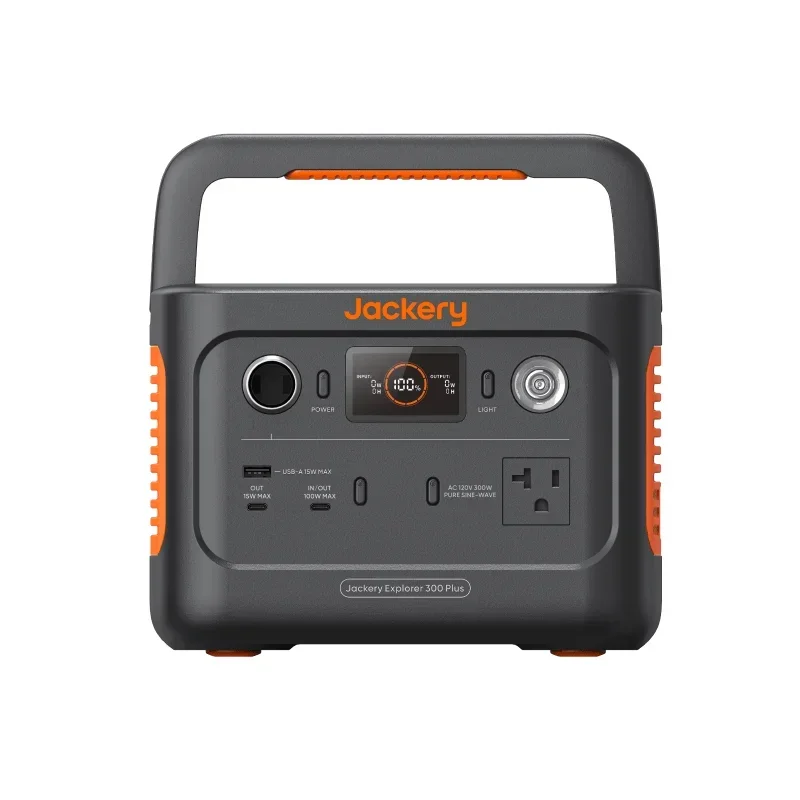
Runtime from an external pack is simple arithmetic: the pack's capacity divided by how much the camera draws. A single-lens 1440p/4K dash cam pulls roughly 3-5 watts; add a rear camera and it climbs. The catch is that power banks are advertised in milliamp-hours at 3.7V, while the figure that matters is watt-hours (Wh).
- A 5,000mAh USB power bank (~18Wh) runs a modest dash cam for about 1-3 hours — fine for an errand, not overnight.
- A dedicated dash cam battery pack (often 6,000-12,000mAh, built to pass power through while charging) typically delivers 12-30+ hours — the sweet spot for genuine overnight parking.
- A 200-300Wh portable power station, like the Jackery above, runs a dash cam for one to three days — overkill for a driveway, ideal for off-grid recording.
Two cautions: use a pack rated for pass-through charging so it powers and recharges at once, and keep any lithium pack out of a baking dashboard — route it to a shaded footwell. For a fuller breakdown, see our guide to the best dash cam battery packs.
Computed runtime: how long each capacity this page states lasts against each draw it states. Nothing here is a spec-sheet import — it is arithmetic on figures this page already states (300Wh, 18Wh, 5 watts). The formula is the plain one: hours = watt-hours ÷ watts. No conversion-loss derating is applied, because this page states none — real-world output will be lower than the division.
| What the page states | Capacity | at 5 watts |
|---|---|---|
| A 200-300Wh portable power station… | 300Wh | 60 h |
| A 5,000mAh USB power bank (~18Wh) runs a modest dash cam for about 1-3 hours… | 18Wh | 3.6 h |
Read down the 5 watts column, because that is the choice: 300Wh runs 60 h where 18Wh runs 3.6 h — at the same draw the larger capacity beats the smaller by 56.4 h. Every column to the right is that same choice at a heavier load, down to 3.6 h at 5 watts.
The everyday setup: a hardwire kit and the car battery
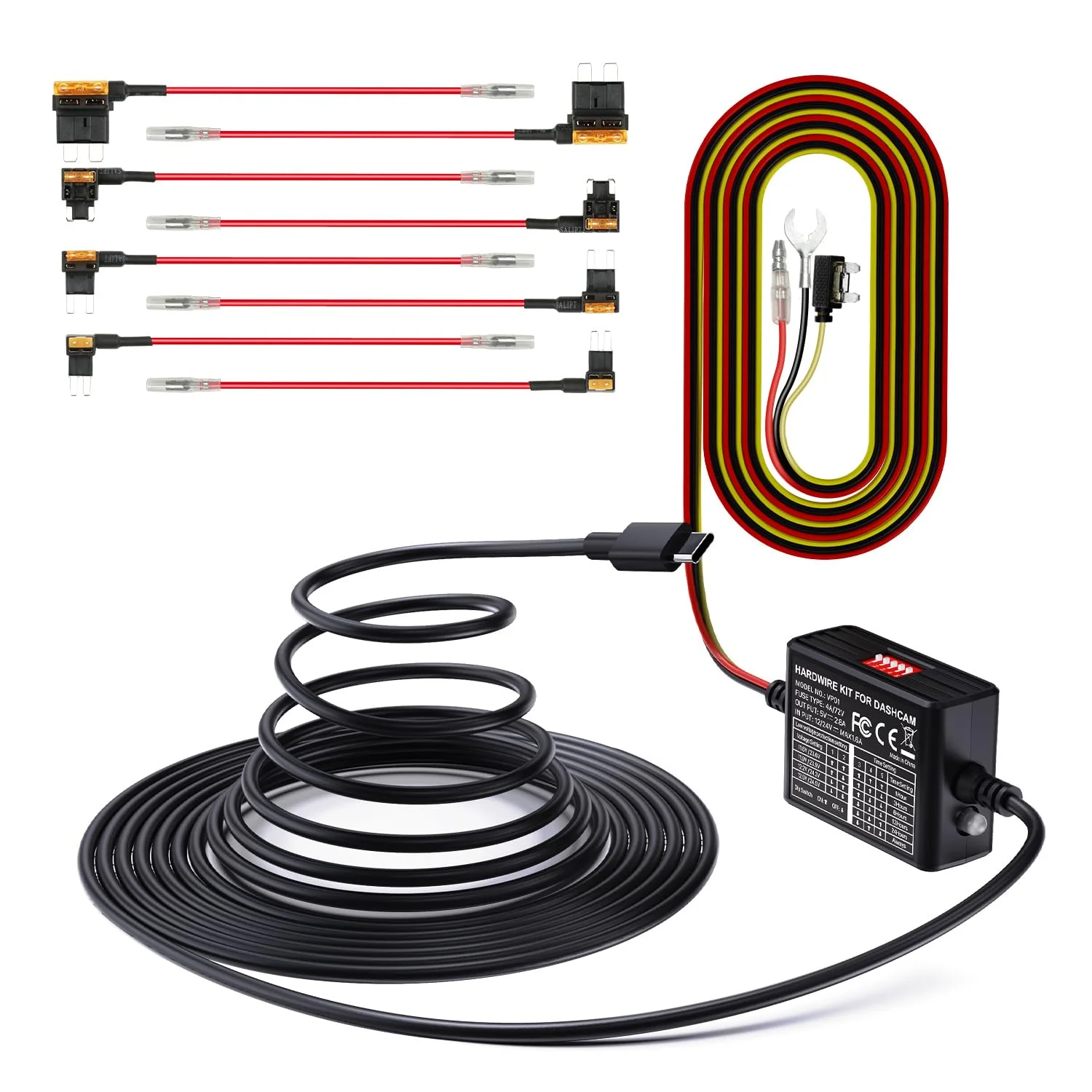
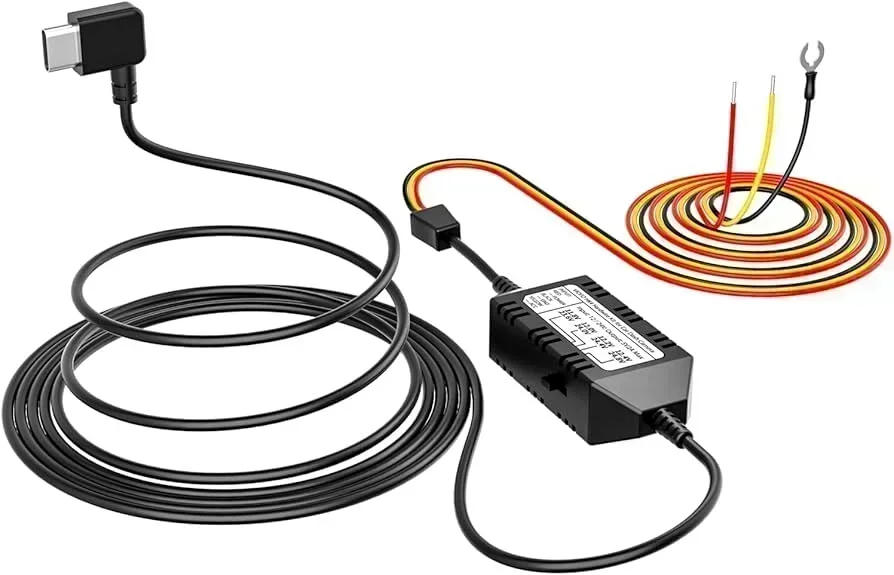
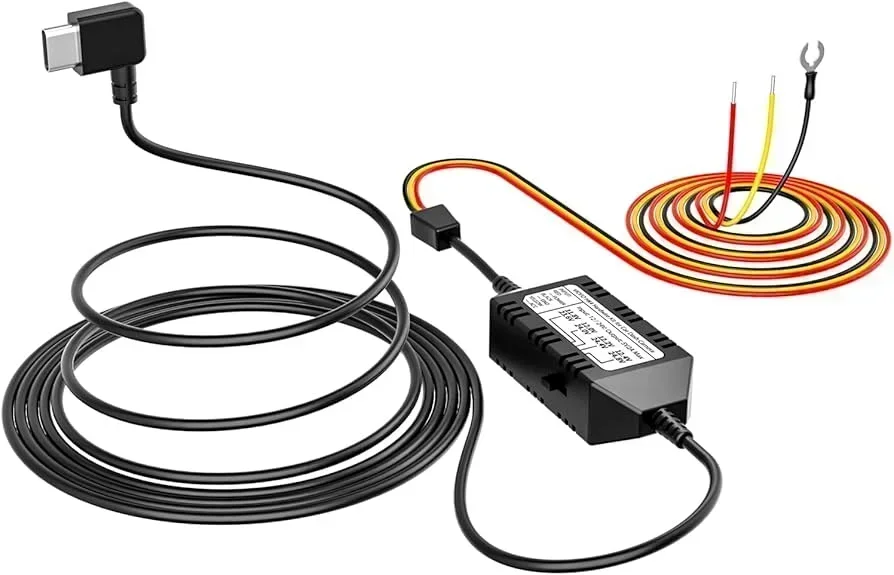
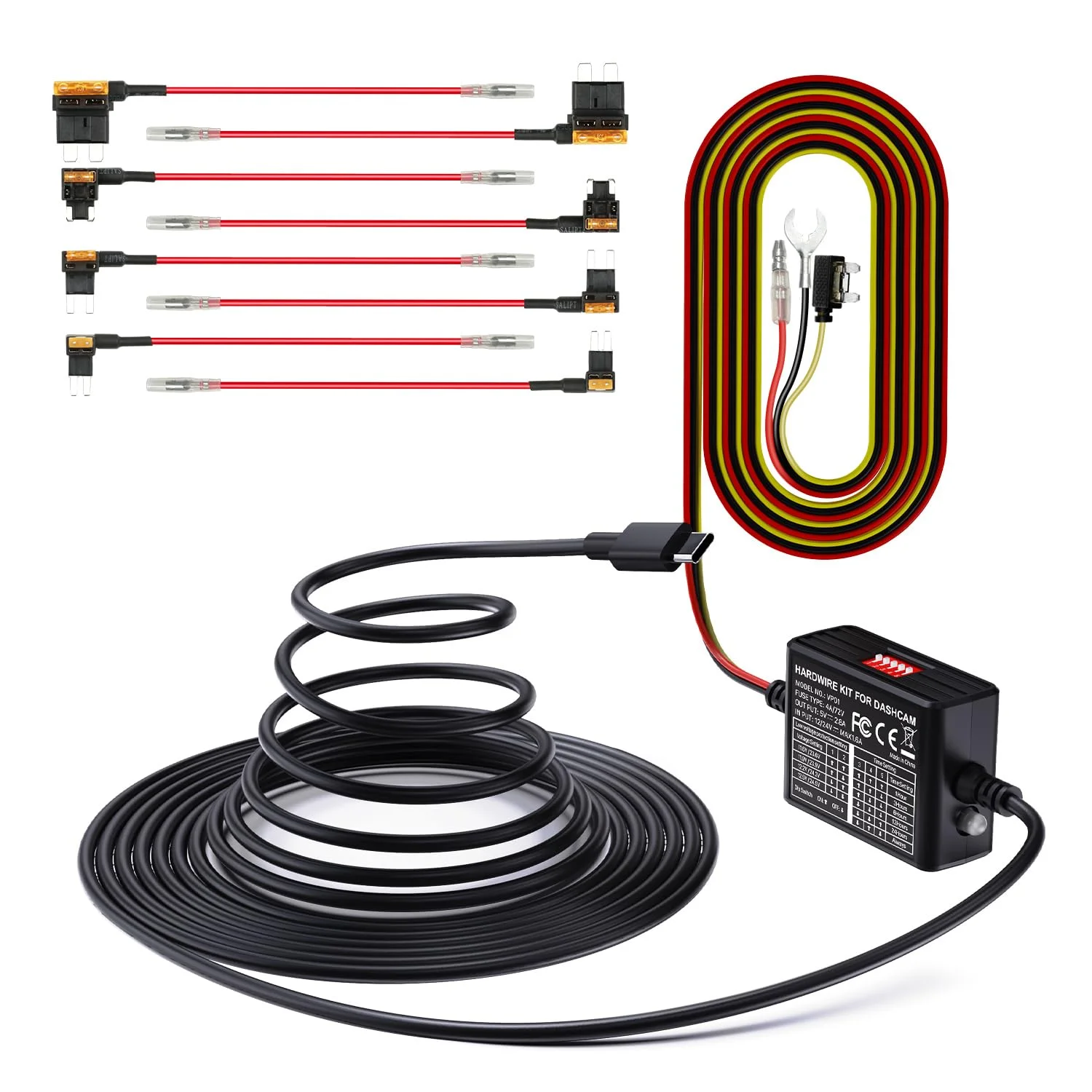
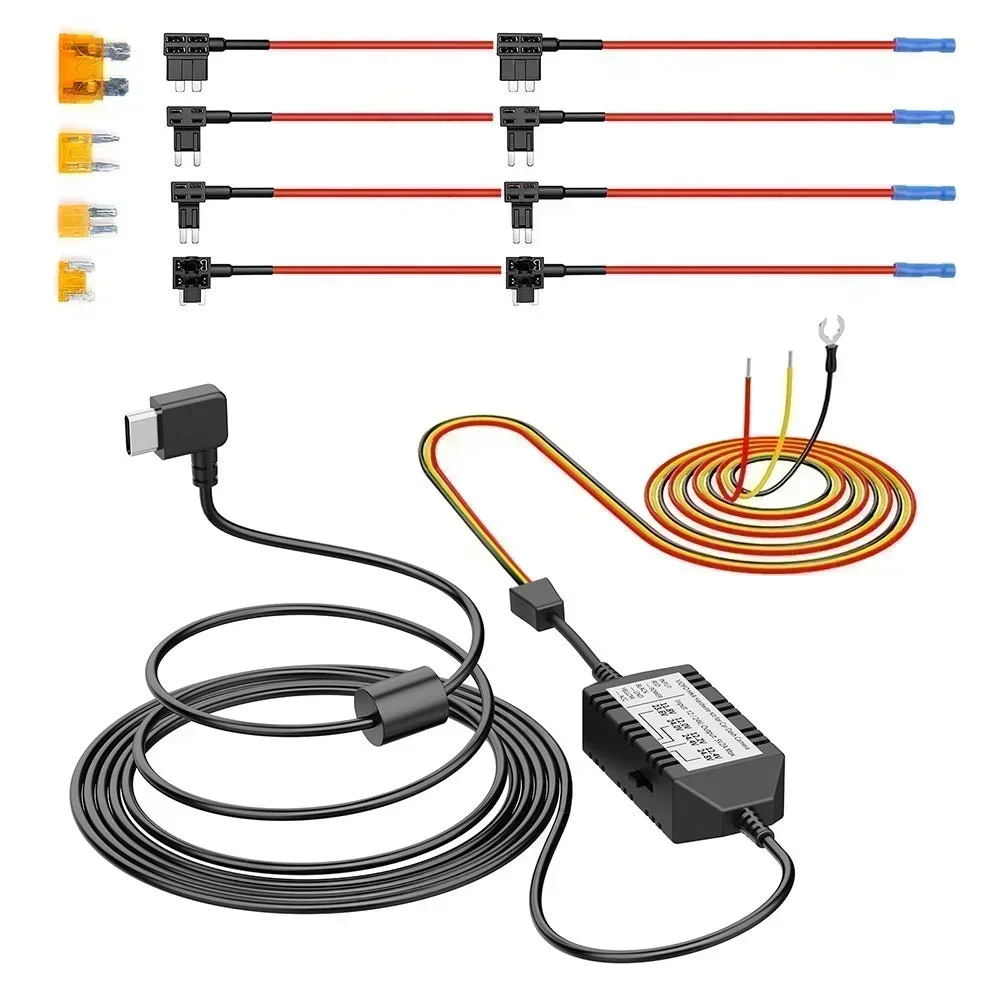
For most drivers who want parking mode every day, the answer is not a pack you carry in and out — it is a hardwire kit that powers the camera from the car's own battery through the fuse box. The obvious worry is a dead battery, and that is exactly what the smart kits solve. A kit like the VIOFO HK4 ACC Hardwire Kit or the Vantrue 5-Level Adjustable ACC Hardwire Kit includes a low-voltage cutoff.
You set a threshold — the Vantrue offers 11.6V, 11.9V, 12.2V or 12.5V, and 23.6V to 24.5V on a 24V vehicle — and the camera stops drawing power before the battery drops too low to start the engine. The Vantrue adds a parking timer as well (1, 3, 6, 12 or 24 hours, or always recording) and an ACC connection that shifts the camera into parking mode the moment the ignition goes off.
Worth knowing before you shop: the standalone cutoff module — a separate box you wired in front of any camera, whatever its plug — is no longer something you can buy. The cutoff rides on the hardwire cable now, and the cable ends in one specific connector. The Vantrue kit above terminates in USB-C, so it suits a USB-C camera; if yours takes mini-USB or micro-USB you want a kit built for that plug, or your camera maker's own.
With a healthy battery and a sensible cutoff, a hardwired dash cam can record in parking mode for many hours — often overnight — and still leave you a confident start. This is where the “how long can it run” question really lands for daily use: not the camera's tiny reserve, but how much of your car battery you are willing to lend it before the cutoff steps in. On an older vehicle or a weak battery, set a more conservative cutoff and read our notes on dash cam power on older vehicles.
Will parking mode actually drain your car battery?
It can — which is the whole reason cutoff kits exist. Left on a naive 12V feed, a camera keeps sipping power after the engine is off and, over a long enough sit, can leave you with a no-start. The cutoff is the fix, and it is worth understanding how it behaves:
- Voltage threshold. The kit watches battery voltage and cuts power at your set floor (12.0-12.5V is typical), keeping enough charge to crank.
- Timer. Many kits also let you cap parking mode at, say, 12 or 24 hours regardless of voltage — useful at an airport lot.
- Battery health. An older or weak battery has less usable margin, so set a higher cutoff or use a separate battery pack that never touches the starter battery at all.
One more variable is temperature. A cold night raises a battery's internal resistance and lowers the voltage it can deliver, so a cutoff that felt safe in summer can leave you short on a freezing morning — another reason to err on the conservative side in winter. Get those settings right and parking mode is safe to leave on; get them wrong and it is the fastest way to a dead battery. When in doubt, start conservative and loosen the cutoff once you have seen how your car holds up overnight.
Choosing your power setup
Match the source to how long you actually need to record, and the question answers itself:
- Just want a clip after you unplug? The camera's own supercapacitor or small battery already does this — no purchase needed.
- Occasional short stakeouts? A pass-through USB power bank buys 1-3 hours cheaply.
- Overnight parking most nights? Hardwire it with a cutoff kit like the VIOFO HK4 or, on a USB-C camera, the Vantrue 5-Level Adjustable ACC Hardwire Kit — the cleanest daily solution, and it protects your starter battery.
- Days of unattended or off-grid recording? A 200-300Wh portable power station is the only thing with the capacity.
The dash cam's own battery is almost never the limiting factor — what you feed it is. For the cameras that last longest off a pack, see our roundup of the dash cams with the longest battery life.