First, the Basics
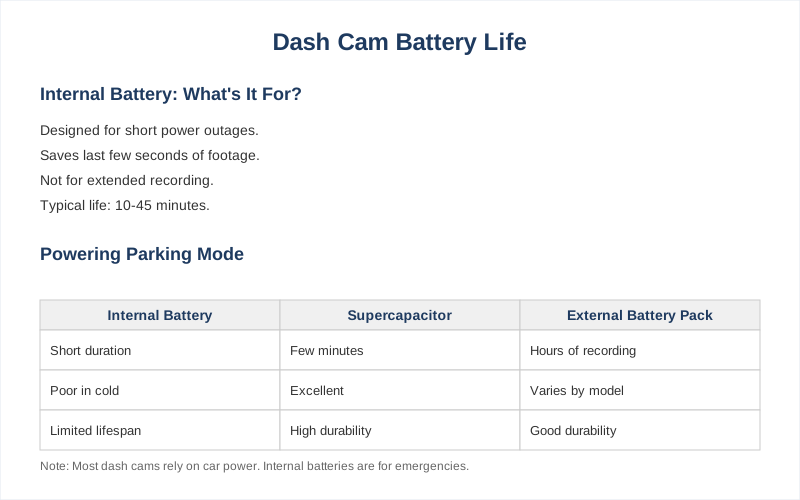
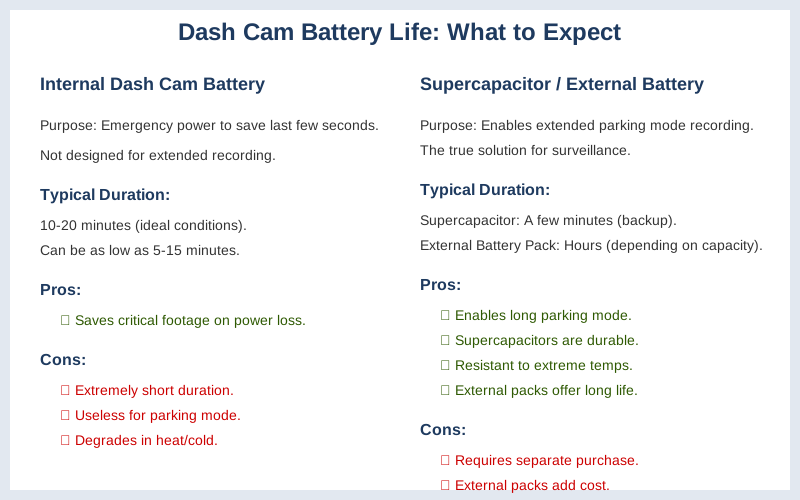
Most dash cams are built to be plugged in, not run on their own internal battery for hours. That tiny battery you see inside is usually just there to save the last few seconds of footage if the power cuts out suddenly, not to keep the thing recording all night. Think of it like a phone's emergency backup. It might last ten minutes, maybe fifteen on a good day, and then it's toast until it gets plugged back in.
This isn't a flaw, it's by design. The real magic happens when it's connected to your car's power.
The Core Answer
The honest version is that the internal battery in most dash cams is a joke if you're expecting it to run for hours on its own. These internal batteries are usually good for about 20 to 45 minutes, and that's if they're fully charged and the weather isn't trying to kill them. My first dash cam, a cheap $50 thing, would shut off after about 15 minutes of parking mode. Brilliant engineering, really.
It was basically useless for any kind of extended surveillance. People online say they might last ten minutes and get worse fast. The real game-changer for parking mode isn't the tiny internal battery; it's either a supercapacitor or an external battery pack. Supercapacitors are tougher, especially in the cold. They don't store a ton of power on their own, maybe a few minutes, but they handle heat and cold like champs.
They're more durable and resistant to extreme temperatures. For longer parking surveillance, you need something more robust. That's where dedicated external battery packs come in. These things are basically power banks specifically for your dash cam. They can keep your camera running for hours, sometimes even days, depending on the pack's capacity and how much power your dash cam sucks up.
These external packs, especially the lithium iron phosphate ones, can offer around 5,000 full charge cycles, which is way more than your typical phone battery. The lifespan of the dash cam itself, regardless of the battery, is usually around 3 to 5 years. They work every time you drive, just like a phone. So, while the internal battery is mostly for show, the system can last if you power it right.
The $50 version with just the tiny internal battery? Forget about it for parking. The $200 version with a good external pack? Now you're talking.
Why This Matters for Your Setup
Why does any of this matter? Because if you think that little built-in battery is going to catch a hit-and-run while you're sleeping, you're going to be disappointed. I've seen forums where people lament their dash cams dying after only 3-5 years. That's the camera, not just the battery. The internal battery is the first thing to go, usually degrading much faster, especially if it gets hot.
- Parking Mode: If you want parking mode to actually work, you need a constant power source. This means either tapping into your car's battery with a hardwiring kit (which has its own considerations) or using an external battery pack that charges while you drive.
- Cold Weather Woes: Remember my Shenandoah camping trip? Batteries hate the cold. If your dash cam has a basic lithium-ion battery, it'll perform even worse in freezing temperatures. Supercapacitors are the better bet here.
They're more resistant to temperature extremes.
- Longevity: Relying solely on the internal battery for anything more than a quick save will shorten its lifespan. External battery packs are designed for repeated charging and discharging, offering a much longer service life for your dash cam setup. The lifespan of a battery pack depends on usage, parking mode type, and whether it's front-only or front + rear.
Making the Right Choice
So, the battery life of a dash cam is less about the unit itself and more about how you power it. Don't expect miracles from that tiny internal cell.
- Understand the Purpose: The built-in battery is for saving the last recording, not for extended parking surveillance. It's a short-term emergency buffer.
- Consider Your Needs: If parking mode is a must, factor in the cost of a proper power solution, like an external battery pack or a reliable hardwiring kit. This is where the $50 version fails miserably.
- Temperature Matters: Extreme heat or cold will wreck basic batteries.
Supercapacitors or robust external packs are the way to go for reliable performance year-round. They handle the elements better.
- Lifespan is a Marathon, Not a Sprint: Dash cams generally last 3-5 years. The power solution you choose will significantly impact the reliability of your footage over that time. Your dash cam works every time you drive.