First, the Basics
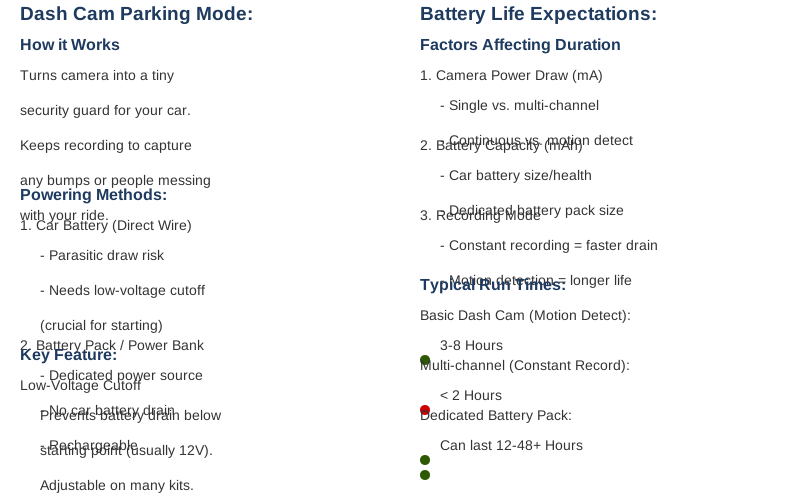
Dash cam parking mode turns your camera into a tiny security guard for your car when you're not around. It keeps recording, capturing any bumps, scrapes, or people messing with your ride. The trick is powering it without draining your car's main battery flat. This is where things get complicated, because your car's battery isn't designed for constant parasitic draw. You've got to balance continuous recording with not leaving yourself stranded with a dead battery.
It's a delicate dance of power management and understanding how much juice your camera actually needs. Rookie mistake number one is assuming your car battery can handle this indefinitely.
The Core Answer
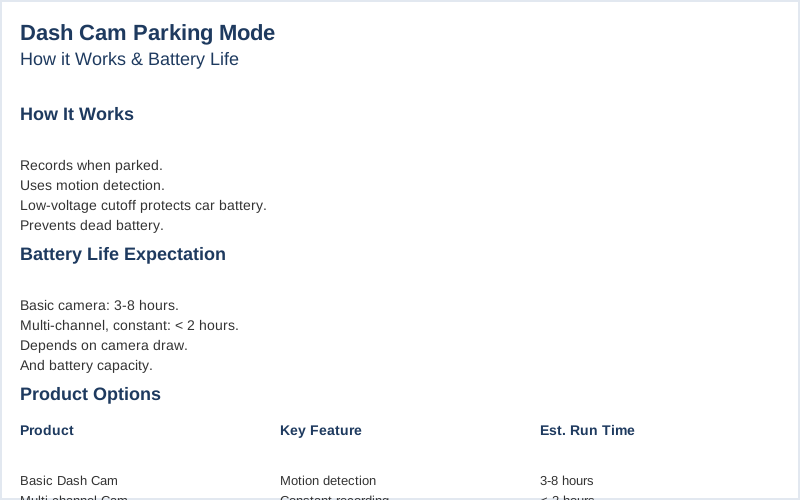
Parking mode works by drawing power from your car's battery even when the engine is off. The dash cam then uses motion detection or continuous recording to capture events. The real question is how long this can go before you're stuck. Most hardwire kits have a low-voltage cutoff, which is crucial. This feature stops the camera from draining your battery below a point where your car won't start. Think of it like a smart fuel gauge for your battery.
That cutoff is usually set around 12 volts, but you can often adjust it. Without it, you're just asking for trouble. I learned this the hard way in a freezing parking lot in upstate New York; my Civic wouldn't even turn over. The fix was a simple $30 voltage cutoff adapter. The length of time it runs depends on the camera's power draw and the battery's capacity.
A basic dash cam might run for 3-8 hours, while a multi-channel system with constant recording could drain a battery in under 2 hours. Running off your car's starting battery offers limited parking mode runtime, even with a beefy battery. If you want longer parking mode, you're looking at dedicated battery packs or a much larger vehicle battery.
The honest version is, if you're not driving much, your car battery might not have enough juice to recharge fully between parking sessions. I once parked my truck for two days with parking mode on, and the next morning it was completely dead. That was a $50 tow truck ride I won't forget. The real move is to understand your camera's power draw and your car's battery health.
Why This Matters for Your Setup
Why this matters for your setup is simple: you don't want to be that person whose car won't start. Running off the car's starting battery gives limited parking mode runtime, even with a brand new battery. Here's the breakdown:
- Your Car's Battery is Not a Power Bank: It's designed to start your car and run accessories when the engine is on. Constant drain from a dash cam is a rookie mistake.
- Voltage Cutoff is Your Friend: This is non-negotiable. It prevents your dash cam from killing your battery. Without it, you're playing Russian roulette with your car's starting power.
- Recording Time Varies Wildly: A single-channel camera set to motion detection might last 6-8 hours. A three-channel camera recording everything, constantly? Maybe 1-2 hours, tops. This battery pack can extend that, but it's an extra component.
- Driving Habits Matter: If you only drive 10 minutes to work and back, your battery isn't getting fully recharged. That means less power available for parking mode.
Making the Right Choice
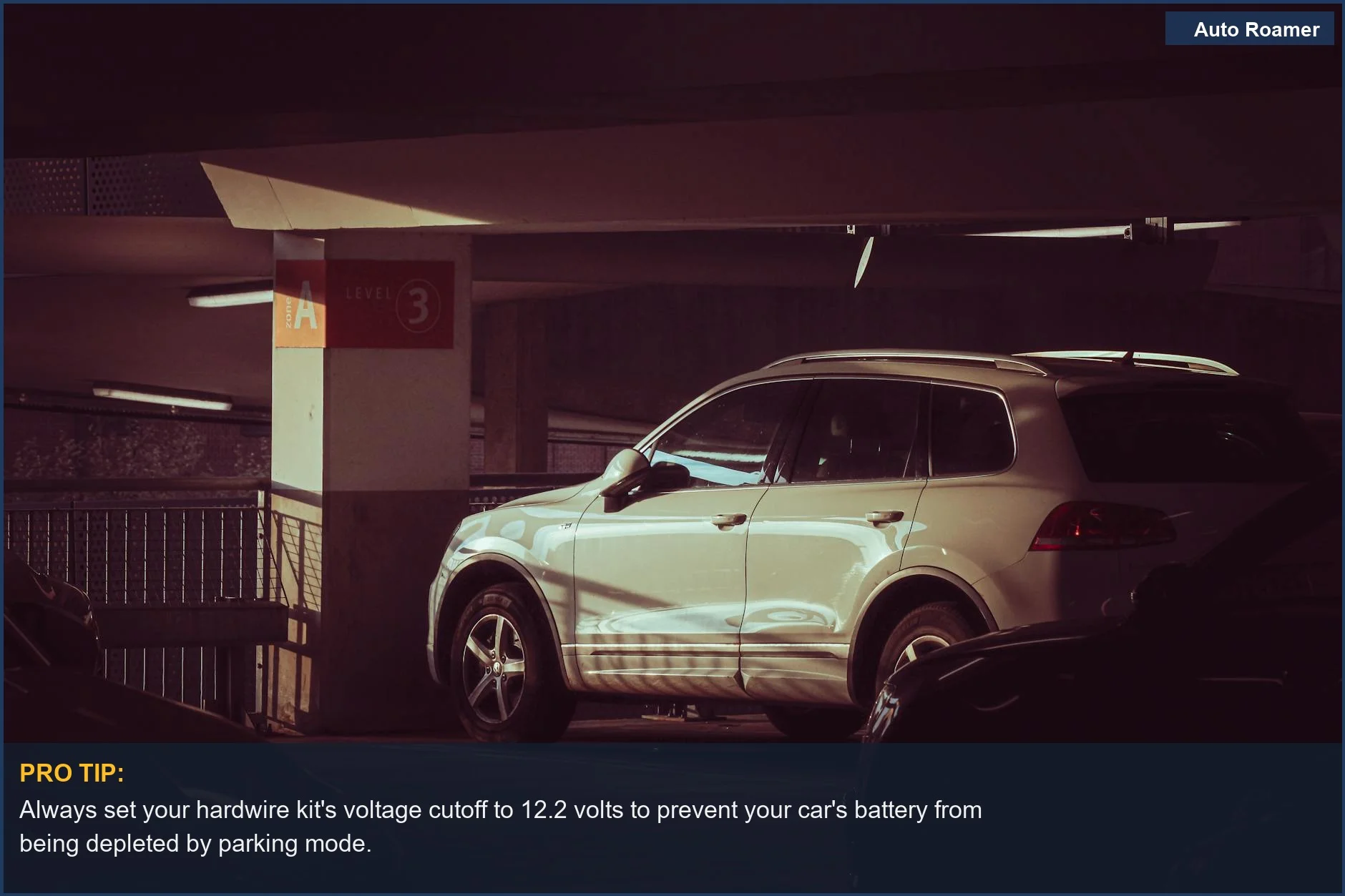
Making the right choice for parking mode power boils down to understanding your needs and your car's limitations. Set your hardwire kit to 12.2 volts and recording will stop before the battery is depleted. Here's what you need to consider:
- How long do you need parking mode? If it's just for an hour or two while you run into the store, your car's battery might be fine, especially with a voltage cutoff.
- What's your typical driving routine? Lots of short trips mean a less-than-fully-charged battery. Long highway drives are better for topping up.
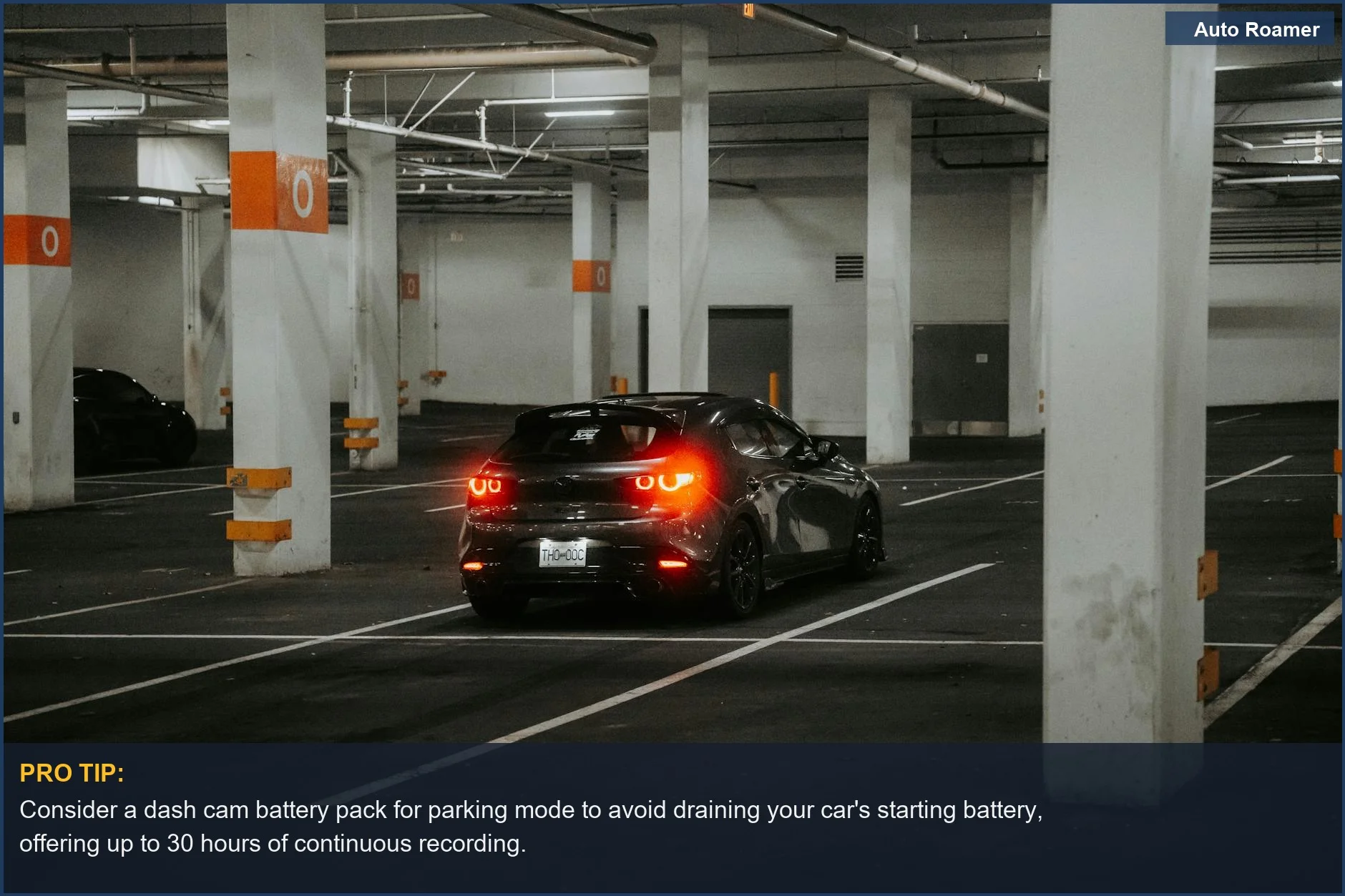
- Are you willing to invest in a dedicated battery? These external packs are designed for dash cams and can provide hours of recording without touching your car's battery. It's the $50 version of peace of mind.
- What's the weather like? Cold weather is brutal on batteries. You'll get less runtime in the winter than in the summer. Generally, dashcams with a dedicated parking mode can record for several hours on a fully charged battery, but that's often with a separate power source.