
The Big Picture
The real move for anyone wanting their dash cam to keep rolling when the ignition is off is an external battery pack. Without one, your dash cam is essentially sleeping when your car is sleeping, which defeats half the purpose. It's a costly gap: in a hit-and-run, a camera that wasn't hardwired to stay on may be dead exactly when you need it.
The honest version: you need to understand how long these things actually last so you don't end up with a useless brick when you need it most. It's not rocket science, but it's also not as simple as just plugging in your phone charger.
A 10,000 mAh battery pack, for example, might give you about 6 hours of recording time for a typical dash cam, assuming a 5-watt draw source.
That sounds like a lot until you realize your car could be parked for 10 hours overnight. The key is matching the battery's capacity to your parking needs.
The Core Answer
The core answer to how long a dash cam can run on an external battery pack really boils down to two things: the size of the battery pack itself and how much juice your dash cam sucks up. Think of it like trying to power your camping stove - a small propane canister won't last as long as a big one, right?
A typical dash cam, especially one that's always recording in parking mode, can draw anywhere from 3 to 10 watts.
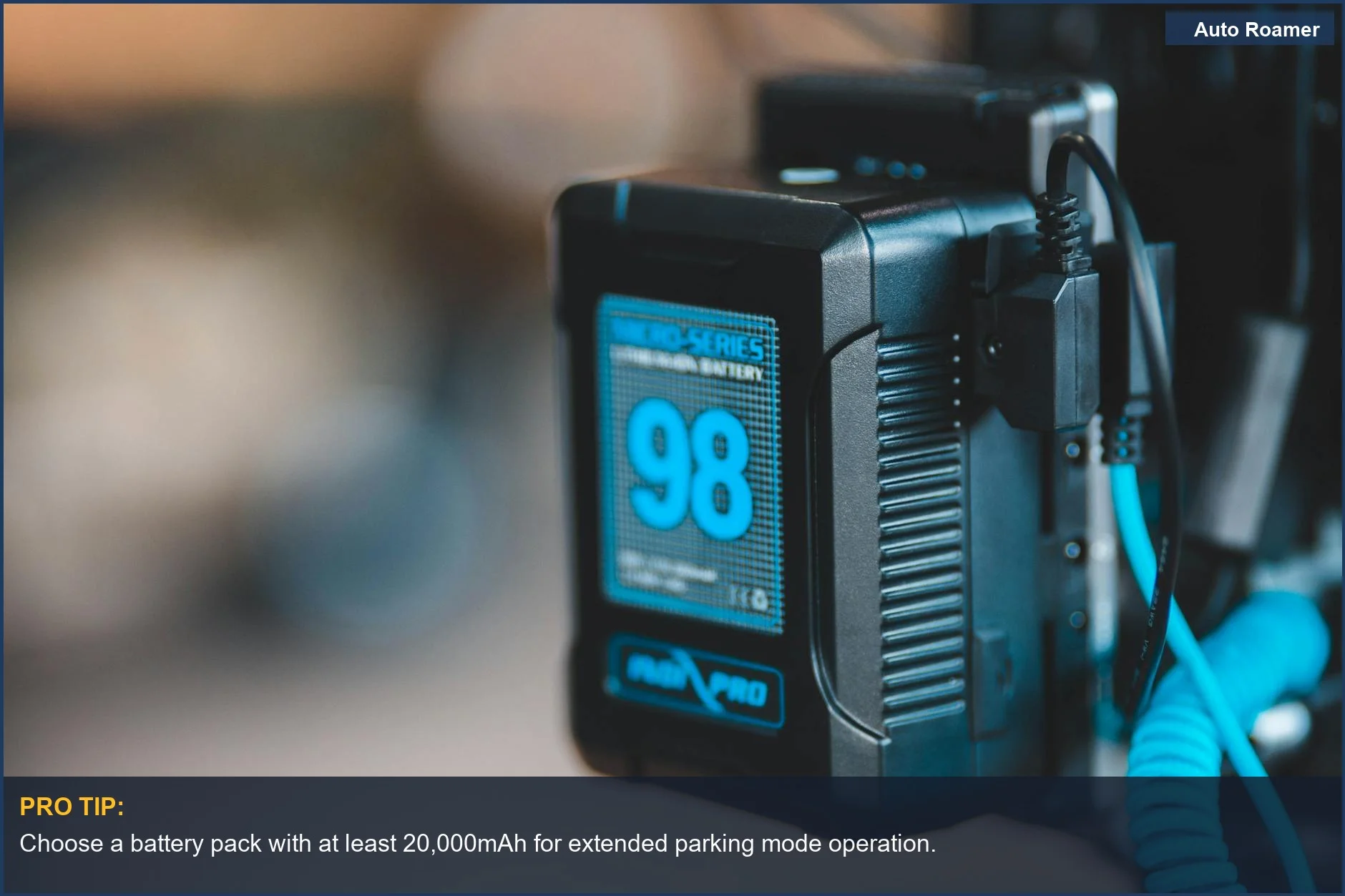
A common external battery pack size you'll see is around 10,000 mAh. This might seem huge, but when you factor in the voltage and the dash cam's power draw, you're looking at roughly 6 hours of continuous recording time source.
That's barely enough for a full workday, let alone an overnight stakeout.
Larger battery packs, say those in the 20,000 mAh range, can push that runtime up to 12-24 hours, depending on the dash cam's settings and features. Some premium battery packs are even designed for extended parking mode, claiming up to 30 hours for single-channel cameras source. That's game-time for serious parking surveillance.
What nobody tells beginners is that 'parking mode' can mean different things.
Some cameras just go into a low-power standby, while others keep recording motion or impacts. The more active the camera, the faster it'll drain that battery. It's like leaving your phone's screen on all night versus just having it in your pocket.
A generic 15,000 mAh power bank can run a dash cam for a weekend trip. I figured it would last at least 12 hours. Rookie mistake. By 3 AM, it was dead.
Turns out, my dash cam was set to record every slight breeze, and that cheap power bank wasn't designed for continuous, high-draw use source. The real move is to get a battery pack specifically designed for dash cams, not just any old phone charger.
These dedicated packs often have smarter charging circuitry and can handle the constant power draw better. They're built to charge while you drive and then deliver power when the car's off.
A healthy car battery, by the way, can usually support a dash cam in parking mode for 24-48 hours if it's directly wired, but that's not what we're talking about here source. We're talking about keeping that dash cam alive without touching your car's main battery.
Why This Matters for Your Setup
Why this matters for your setup is pretty simple: evidence. If someone sideswipes your car and drives off, and your dash cam battery is dead, you've got nothing. My second car got keyed in a parking lot, and I wished I'd had a better setup. The footage would have been invaluable.
Here's the honest version of what you need to consider:
- Your Parking Habits: Do you park on a busy street overnight?
- Dash Cam Power Draw: Is your camera a basic single-channel unit or a fancy dual-channel beast with a rear camera? More cameras mean more power needed.
- Temperature Swings: Extreme heat or cold can absolutely kill battery performance. It's easy to get caught out when a phone battery meant to power a camera dies in about 2 hours. Dash cam batteries are no different. Some packs are better shielded than others.
- Smart Parking Mode: Does your dash cam only record on motion detection, or is it constantly streaming? The former will drastically extend your battery life.
Do you leave your car in a remote lot for 10 hours? Your needs dictate the battery size. A quick 2-hour grocery run might be fine with a smaller pack, but an overnight binge needs more juice.
My old dual-channel setup ate batteries like a teenager eats pizza.
A setup that uses motion detection can last days on a decent power pack.
Making the Right Choice
Making the right choice for your dash cam's external battery pack isn't just about having a gadget; it's about peace of mind and potential evidence. Don't be like me on my first few tries, fumbling in the dark with underpowered gear.
Here's the field notes summary:
- Capacity is King: Match the battery pack's mAh (milliampere-hour) rating to your expected parking duration.
- Dash Cam Specifics Matter: Not all power banks are created equal. Dedicated dash cam battery packs are usually built to handle constant power draw and often have smarter charging features.
- Consider Your Climate: Extreme temperatures will impact battery performance.
- Check Your Dash Cam's Settings: Understanding how your dash cam uses power in parking mode (e.g., motion detection vs. continuous recording) is crucial for estimating runtime.
A 10,000 mAh pack is a starting point, but 20,000 mAh or more is better for longer periods.
If you live somewhere with hot summers or freezing winters, look for packs that advertise better thermal resistance.