
Should I Sell My Car Privately or Trade It In?
Deciding whether to sell your car privately or trade it in is a big fork in the road, and frankly, most people just guess. It feels like a coin flip, but the difference in your wallet can be hundreds, sometimes thousands, of dollars.
Deciding whether to sell your car privately or trade it in is a big fork in the road, and frankly, most people just guess. It feels like a coin flip, but the difference in your wallet can be hundreds, sometimes thousands, of dollars. I learned this the hard way trying to offload my old Corolla. I ended up taking the first offer I got because I was sick of dealing with tire kickers.
Selling your car has two main paths, and understanding them is key to not getting fleeced. One path is faster, the other pays better. Which one are you?
The Core Answer
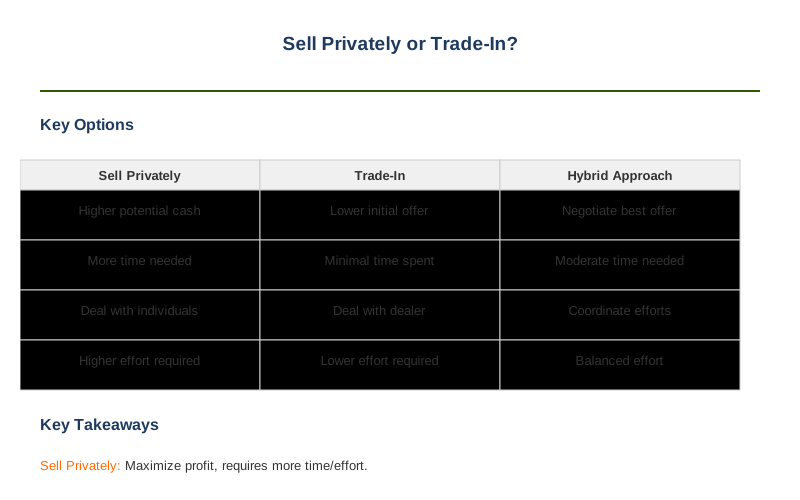
The honest version is that selling privately almost always nets you more cash. Think about it: you cut out the middleman. A dealer needs to make a profit on your car, so they're going to offer you less than they think they can sell it for. Selling it yourself means you get to pocket that dealer's profit margin. I once sold a clunker for $1,500 privately, and the dealer I initially talked to offered me $800. That's a $700 difference for an afternoon of my time. Brilliant engineering, right? When I sold my Civic, the dealership offered me $4,000. I listed it online and got $5,800 from a private buyer after about two weeks of fielding calls. The $1,800 extra was worth the hassle of scheduling test drives and haggling. Private buyers often pay closer to market value because they don't have the overhead of a dealership. They just want a car. But let's be real, selling privately isn't always sunshine and rainbows. It takes time. You have to clean the car, take decent photos (not just blurry shots from your phone in a dark garage), write a description, list it on sites, and then deal with potential buyers. Some people will ask if it's still available 10 times, then ghost you. I had one guy show up, drive it for 5 minutes, and offer me $1,000 less than my asking price. Rookie mistake was not being firm on my price from the start. Trading it in is the game-time decision for speed and convenience. You drive to the dealership, they give you an appraisal, and if you like it, you sign some papers. Done. It's especially useful if you have a loan on the car. The dealer handles paying off the loan, and you just deal with the difference. The dealership route can be a lifesaver if you need to get rid of your car fast, like if you're moving or your new car is arriving next week. My buddy traded in his old truck and was out of the dealership in 45 minutes. He got less money, but he didn't have to worry about anything else. So, if your priority is maximizing profit and you have the time and patience to deal with the public, selling privately is your move. If you want to get rid of it yesterday and don't want the headache, trading in is the way to go. There's no single 'best' way, just the best way for *you* right now.

Why This Matters for Your Setup
- The Profit vs. Time Trade-off: You're essentially choosing between more money and less hassle. Selling privately can land you an extra $1,000 to $3,000 on a car worth $10,000, but it could take you a couple of weekends. A trade-in might give you $8,000 instantly. It's a direct cost-benefit analysis.
- Condition Matters (A Lot): If your car is a mess - think dents, dings, or that weird smell that won't go away - a private buyer might walk. A dealer, however, might still give you a trade-in value because they have body shops and detailers to fix it up. They'll factor those costs into their offer, of course.
- Negotiation Skills Required: Selling privately means you're the salesperson. You need to be comfortable talking price, fielding lowball offers, and standing your ground. If the thought of negotiating makes your palms sweat, the trade-in route is probably better. This is where your confidence is tested.
- Paperwork and Legality: Private sales mean you handle all the title transfers, bill of sale, and making sure the buyer registers the car correctly. A dealership handles all of that for you. This is a huge relief if you're not familiar with the process.
Making the Right Choice
- Know Your Car's Worth: Before you do anything, get an idea of what your car is actually worth. Check online valuation tools, but also look at what similar cars are selling for privately in your area. This gives you leverage.
- Assess Your Patience Level: Are you the type who wants it done and dusted in an afternoon, or can you wait a few weeks for potentially more cash? Your answer dictates your path.
- Consider Your Next Car: Sometimes, a dealership might offer a slightly better trade-in value if you're buying a new car from them. It's worth asking about the 'out-the-door' price for both options.
- Safety First for Private Sales: If you go the private route, always meet in a well-lit, public place during daylight hours. Bring a friend. Don't hand over keys until you have cleared funds. Your safety is worth more than any car.
Frequently Asked Questions
If I sell my car privately, do I need to pay for a professional detail and new tires before listing it, or can I just sell it as-is?
Do I really need a special 'bill of sale' form, or can I just write down 'I, John Doe, sell this car to Jane Smith for $5,000' on a napkin?
What if I sell my car privately, and the buyer calls me a week later saying the transmission is shot?
If I trade my car in, can the dealership later come back and say they misappraised it and want more money?
Is it true that trading in your car gives you a tax advantage because you only pay sales tax on the difference?
🏅 Looking for Gear Recommendations?
Check out our tested gear guides for products that work with this setup: