
Car Accessories

What Features Should You Look For in a Car FM Transmitter?

Casey - The Weekend Warrior
4 min read
Includes Video

An FM transmitter is a small gizmo that lets you play music from your phone or other gadget through your car's old-school radio. Think of it as a mini radio station for your car. You tune your car radio to a specific frequency, and the transmitter beams your audio to that station.

An FM transmitter is a small gizmo that lets you play music from your phone or other gadget through your car's old-school radio. Think of it as a mini radio station for your car. You tune your car radio to a specific frequency, and the transmitter beams your audio to that station. It's how people with ancient stereos get to blast podcasts or Spotify without ripping out the whole dashboard.

This little device bridges the gap between your modern tech and your car's not-so-modern audio system. It's a surprisingly useful piece of kit, especially if your car predates Bluetooth by a decade or two. They're a budget-friendly way to get some modern audio convenience into your ride.

The Core Answer

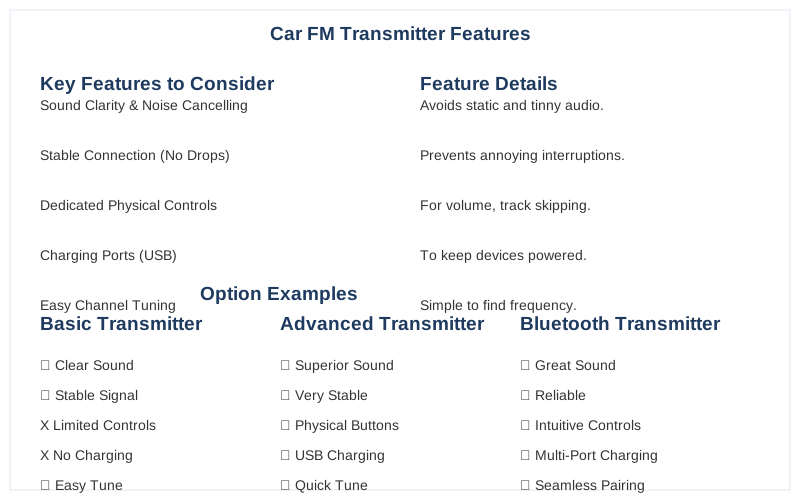
When you're looking at these things, the first thing that matters is how clear the sound comes out. Nobody wants to listen to their favorite tunes sounding like they're underwater. You want something with good noise cancellation, which is basically just tech jargon for 'doesn't sound like static.' A stable connection is key here; if it drops out every five minutes, it's more annoying than a tinny speaker. My first one, a $15 special from a gas station, sounded like a squirrel was chewing on the microphone. Rookie mistake. Look for dedicated buttons for channel tuning, volume, and track skipping. Fumbling around on a touchscreen while driving is a recipe for disaster. I once spent 3 minutes trying to skip a song and nearly rear-ended a minivan. The real move is physical controls you can feel without looking. Many also come with extra USB ports for charging your phone, which is a nice bonus. Just make sure it has enough juice to actually charge your phone in a reasonable amount of time. My current one has a USB-C port that charges my phone slower than dial-up internet.
To further explore your options, consider the differences between a Bluetooth car adapter and an FM transmitter.
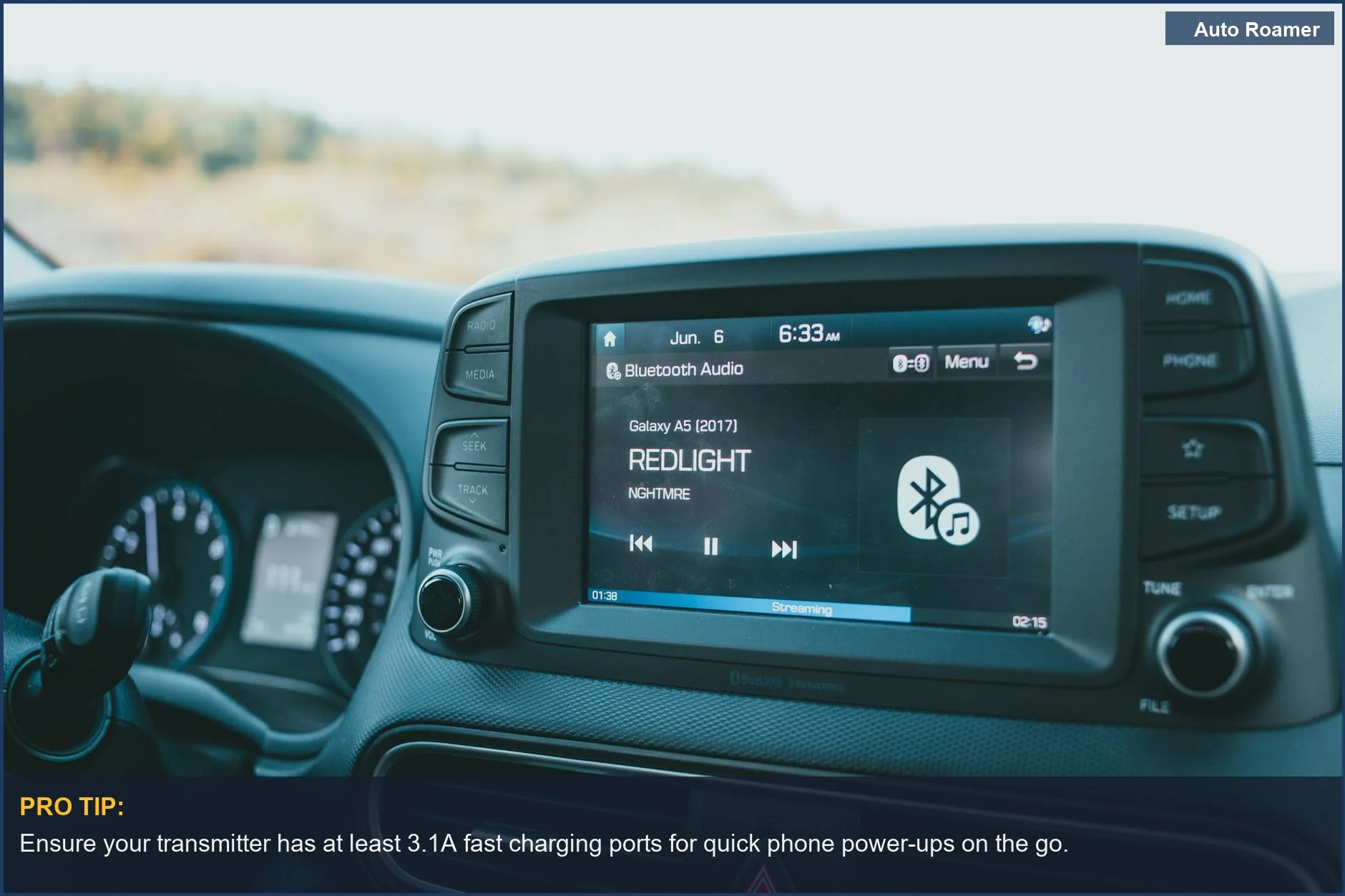
Ensure your transmitter has at least 3.1A fast charging ports for quick phone power-ups on the go.
Experience crystal-clear sound with this car FM transmitter's advanced noise cancellation, ensuring your music sounds amazing on every drive. | Photo by Erik Mclean

Why This Matters for Your Setup

Why does all this tech jargon actually matter when you're just trying to listen to your playlist?
  • Sound Quality: This is the big one. If the audio sounds like it's coming through a tin can buried in a well, you're going to hate it. You want clear highs and decent bass, not just muffled noise. Some use fancy tech to cut down on static and interference.
  • My second unit had a "bass boost" feature that just made everything sound like a booming car alarm.
  • Ease of Use: You don't want to be a contortionist trying to push tiny buttons or navigate a confusing menu. Simple controls for volume, skipping tracks, and answering calls are crucial. I remember one trip where the call button was also the volume button.
  • Trying to end a call meant blasting my music at 11.
  • Connectivity Options: Most use Bluetooth now, which is easy. But if your car is from the Stone Age and doesn't have Bluetooth, or your phone is even older, you'll want AUX or USB input options.
  • My buddy's ancient truck only had a cassette player, so he was out of luck with modern transmitters.
  • Charging Ports: If you're going to be using your phone for navigation and music, you'll need to keep it charged. Look for transmitters with at least one decent charging port. Mine has two, but one is so slow it's basically useless unless you're parked for a week.
  • To enhance your listening experience, understanding the differences between Bluetooth and auxiliary input can be crucial.
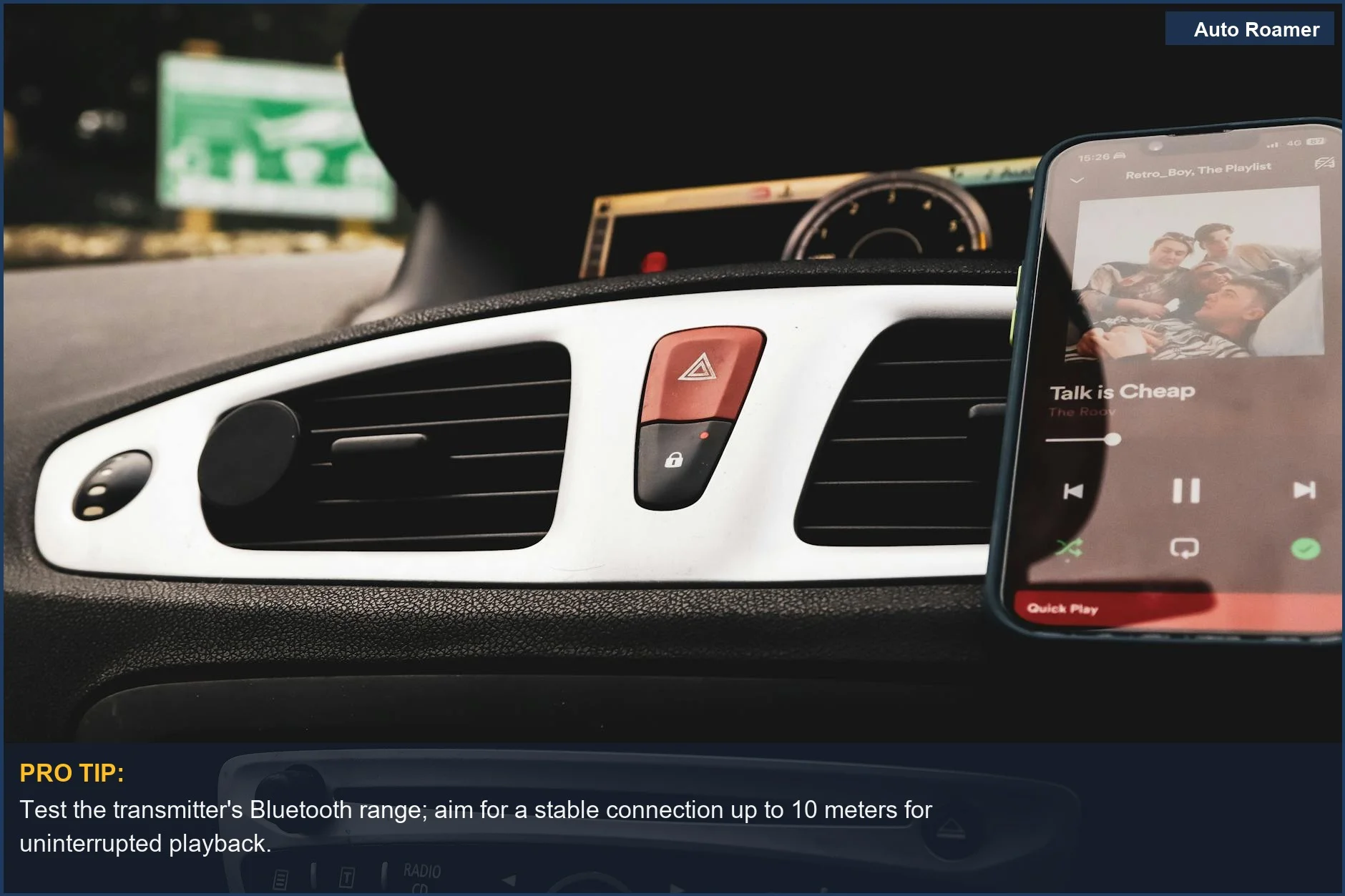
    Test the transmitter's Bluetooth range; aim for a stable connection up to 10 meters for uninterrupted playback.
    Connect your smartphone seamlessly and enjoy your favorite playlists with this Bluetooth FM transmitter, designed for the best car audio experience. | Photo by Kristian Thomas

    Making the Right Choice

    So, what's the takeaway when you're out hunting for one of these devices?
  • Prioritize Clear Sound: Don't settle for anything less than decent audio. Static is the enemy of a good drive. Look for noise reduction features. My first transmitter was a $10 mistake I learned from.
  • Keep it Simple: You need controls you can operate without taking your eyes off the road. Physical buttons are your friend.
  • Trying to tap a tiny virtual button at 60 mph is a fast track to a fender bender.
  • Check Your Connections: Make sure it works with your phone and your car's input options. Bluetooth is common, but AUX or USB might be necessary for older setups. Some even play from SD cards if you're really old school.
  • Don't Forget Power: If you're streaming music and navigating, your phone's battery will drain.
  • Ensure it has adequate charging capabilities. My current unit has a fast-charging port, which is a lifesaver.
    To enhance your audio experience, consider exploring our picks for the best FM transmitters available.
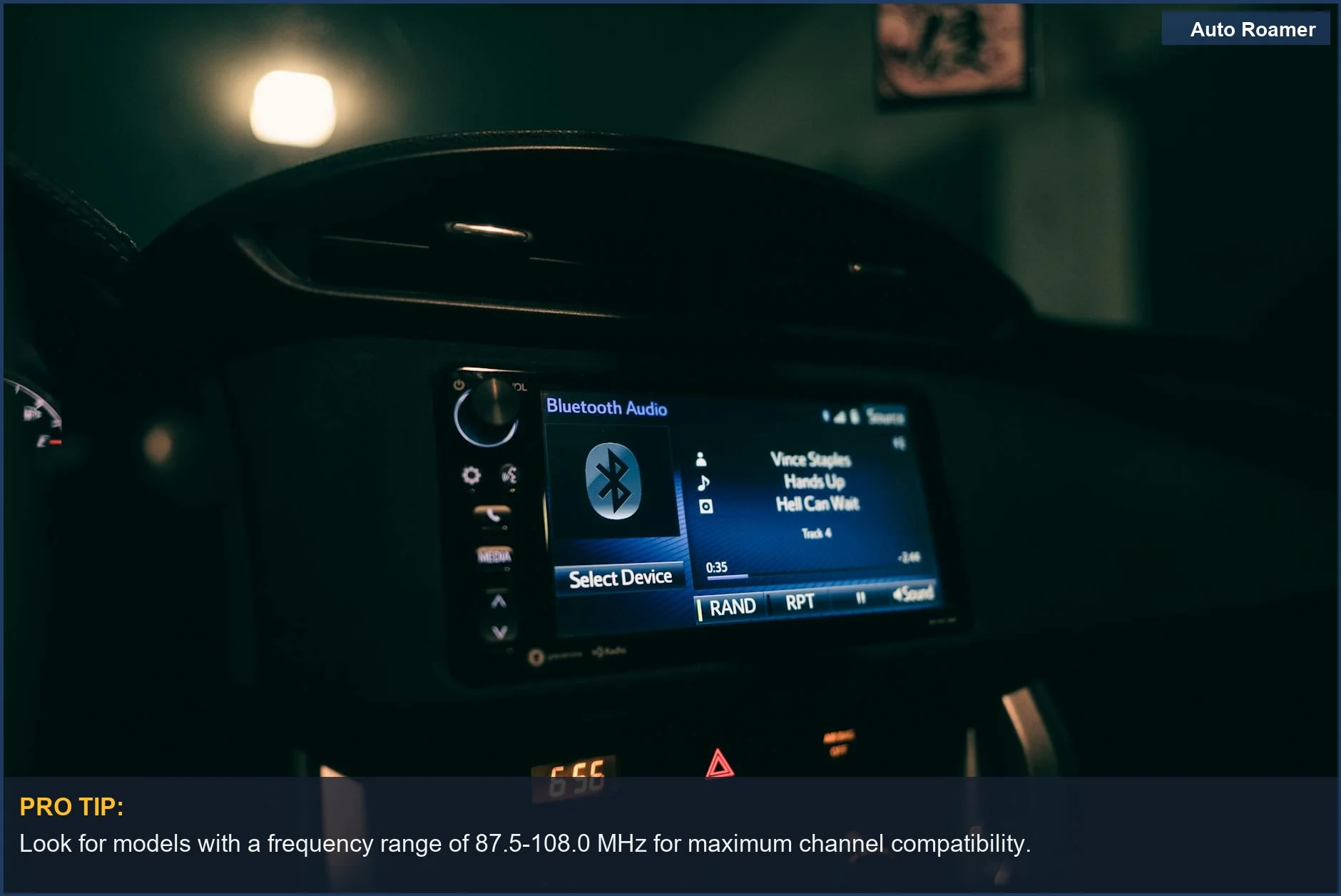
    Look for models with a frequency range of 87.5-108.0 MHz for maximum channel compatibility.
    Upgrade your night drives with this sleek Bluetooth FM transmitter, delivering superior sound quality for your wireless car audio needs. | Photo by Erik Mclean

    Frequently Asked Questions

    My car stereo shop quoted me $300 to install Bluetooth. Can I just get a cheap FM transmitter for, like, $20 instead?
    Yeah, for $20 you're getting a basic FM transmitter, which is a world away from a $300 Bluetooth installation. My first one cost $15, and it sounded like a robot gargling gravel. The audio quality will be night and day. The shop install is permanent and integrated; the transmitter is a temporary fix with potential for static. But for just trying to get your music in there, it's a no-brainer.
    Do I need a special tool to plug this FM transmitter into my car's cigarette lighter port?
    Nope. If your car has that classic cigarette lighter socket, it's designed to accept standard 12-volt plugs. These transmitters just plug right in, no special tools or mechanical wizardry required. I've never needed anything more than my fingers to plug mine in, and I've tested it in a 1998 Honda Civic and a 2010 Ford F-150.
    What if I tune my FM transmitter to a frequency and it's still full of static? What's the next move?
    That's the most common rookie mistake. Static means interference. Try a different, less common FM frequency – think 88.1 or 107.9, not 95.5 which is probably a real radio station. You might need to experiment. If it's still bad, the transmitter might just be a piece of junk. My third one was like that, so I tossed it and bought one with better reviews.
    Could using an FM transmitter for a long time mess up my car's actual radio system?
    Honestly, not really. These things are basically just sending out a weak radio signal. They're designed to be low power, so they aren't going to fry your car's internal electronics. The biggest risk is accidentally tuning into a real station and causing a minor annoyance for someone else. I've used them for years without any issues.
    I heard that some FM transmitters are illegal because they broadcast too far. Is that true?
    That's a bit of a myth for the kind of transmitters you buy for your car. The ones you buy off the shelf are designed to be low-power and only transmit a short distance, usually within your car. They operate under FCC regulations for personal use devices. You'd have to be doing something seriously shady to get in trouble with one of these things.

    🏅 Looking for Gear Recommendations?

    Check out our tested gear guides for products that work with this setup:

    C

    Casey - The Weekend Warrior

    Weekend car camper and road trip enthusiast. Focuses on practical, budget-friendly solutions for families and first-time campers.

    Sources

    Related Articles