
How Much Is My Car Really Worth?
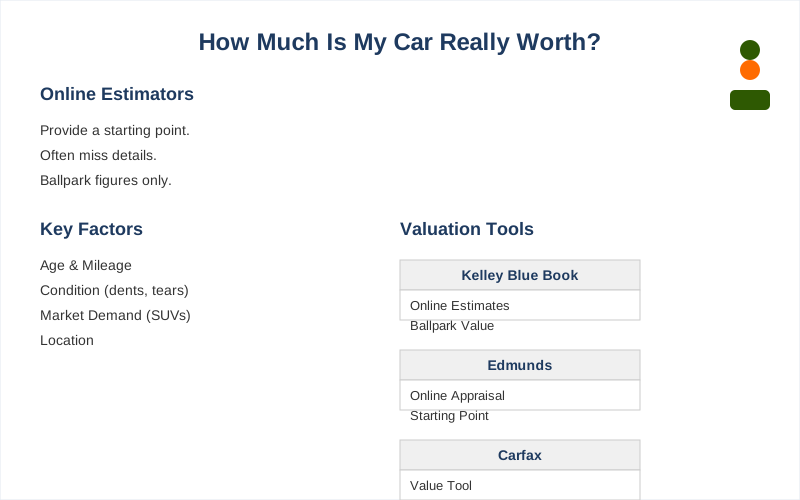
Figuring out what your car is actually worth before you sell it can feel like trying to guess the lottery numbers. It's not just about looking at the odometer and hoping for the best. Online estimators from places like Kelley Blue Book and Edmunds give you a starting point, but they often miss the finer details that make your specific car unique.
Figuring out what your car is actually worth before you sell it can feel like trying to guess the lottery numbers. It's not just about looking at the odometer and hoping for the best. Online estimators from places like Kelley Blue Book and Edmunds give you a starting point, but they often miss the finer details that make your specific car unique.
Think of it like this: your car has a story, and that story is worth something, but it's not always obvious how to tell it to a buyer.
The honest version is that the number you see online is rarely the number you'll actually get. It's a baseline, a conversation starter. My first car sale, I just took the first number I saw and got laughed out of the dealership.
Turns out, they factor in a lot more than just the year, make, and model. It's a whole ecosystem of data points that determine its true market value.
The Core Answer
The core answer to what your car is worth is that it's a moving target, influenced by about a dozen things you can actually control and a few you can't. Online tools from Kelley Blue Book and Carfax give you a ballpark figure, but they're just that - a ballpark. My first attempt at selling my old Civic, I plugged the VIN into one of those sites and got a number. The dealer countered with half of that. Brilliant engineering, right?The real move is to understand the factors. Age and mileage are obvious, but condition is huge. Did you keep up with oil changes? Are there any dings or tears? These details matter more than you'd think. I once sold a car with a minor door ding for $500 less than I would have without it. A rookie mistake.
Market demand plays a massive role too. If everyone suddenly wants SUVs, your sensible sedan might be worth less than you hoped. Location also matters; a car in a rust-belt state might fetch less than the same car in California. It's like real estate, but with more exhaust fumes.
Think of it like this: your car is a chemical reaction in a box, and the market conditions are the temperature. If it's cold, the reaction slows down. If it's hot, things move faster. Your car's value is the result of that reaction.
The honest version is that you'll get different numbers depending on who you ask. Trade-in value from a dealer will be lower than what you could get selling it yourself (private party value). They have overhead, they need to make a profit, and that comes out of your pocket. My second car sale, I did my homework and got $1,500 more selling it privately than the dealer offered. It took an extra week, but my wallet thanked me.
Features can add value, but only if they were desirable options to begin with. A fancy sound system is great, but if it was a factory option, it's factored in. Aftermarket additions? Not so much, and sometimes they can even hurt the value if they look janky. My buddy tried to sell a car with a giant spoiler he installed himself. Nobody wanted it.
Accident history is a big one. Even minor fender benders, if reported, can drop your car's value significantly. Carfax tracks this, and dealers use it heavily. A clean history is gold. I sold a car with a clean record for $2,000 more than a similar one with a minor accident report.
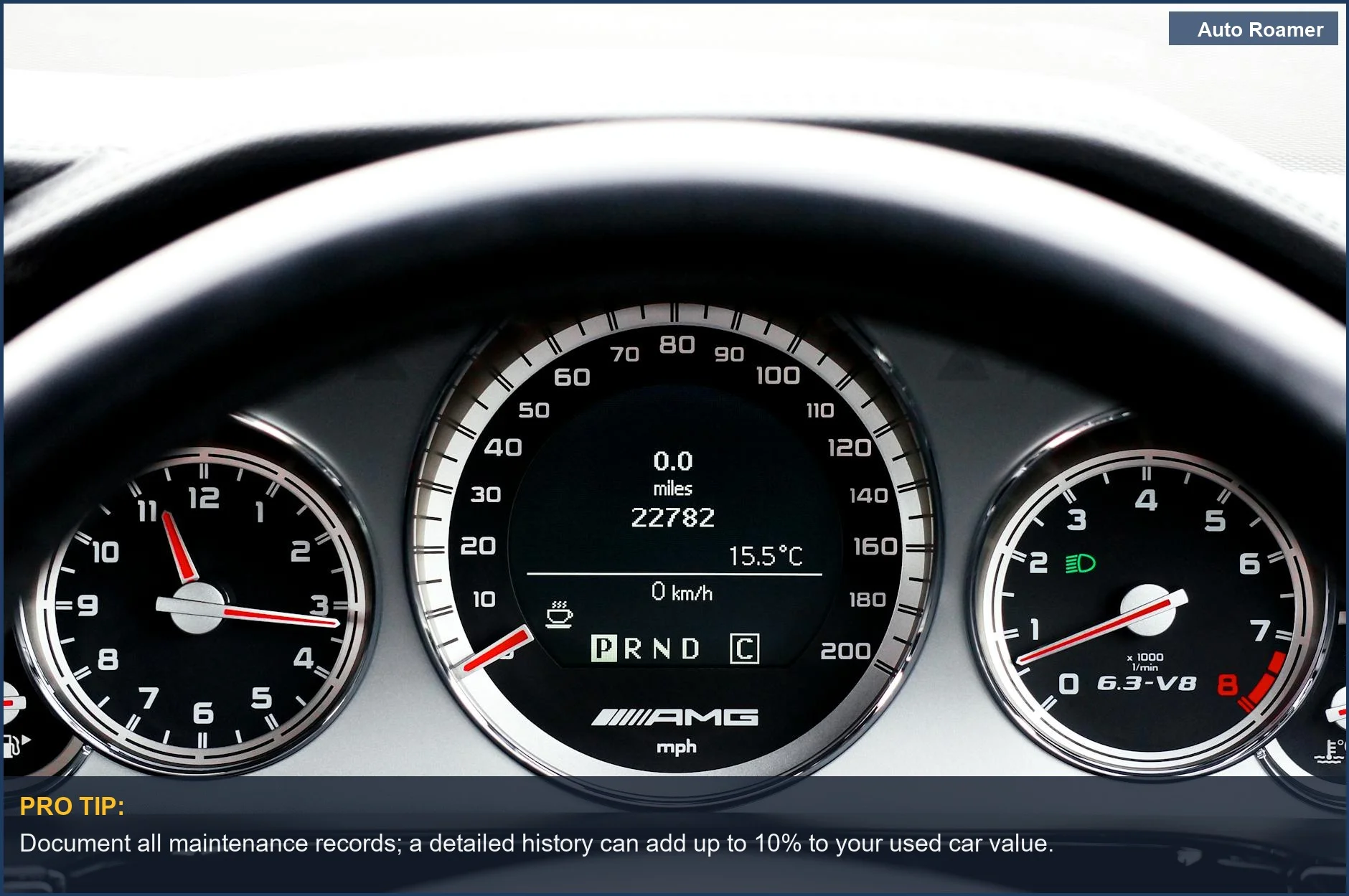
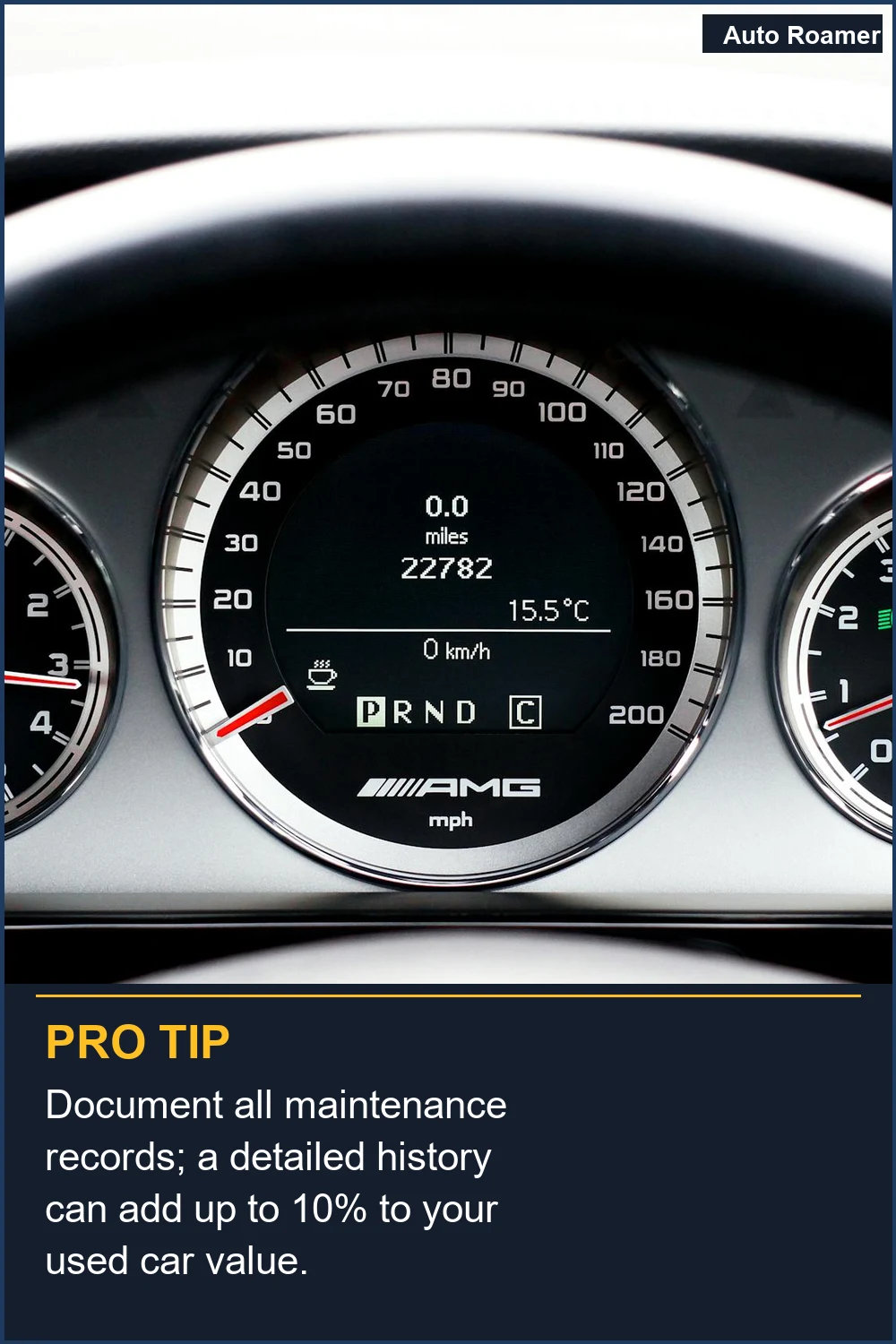
Service records are your best friend. Having a stack of receipts showing regular maintenance proves you took care of the car. It's like showing a doctor's note for your vehicle. It gives buyers confidence. My mechanic always told me to keep every single paper. Best advice I ever got.
Ultimately, the value is what someone is willing to pay. These online tools are guides, not gospel. You need to compare a few, look at similar cars for sale in your area, and be realistic about your car's condition. It's a numbers game, but you can influence those numbers.
Why This Matters for Your Setup
Why this matters for your car camping setup is surprisingly simple: your vehicle is your rolling home. Knowing its value helps you understand how much you can realistically spend on upgrades or repairs to make it the perfect base camp.- Budgeting for Adventure: If your car is worth $8,000 and you're eyeing a $3,000 rooftop tent, you're looking at a significant chunk of your car's value. Knowing the numbers helps you avoid overspending on a vehicle that might not be worth the investment. My first campervan was a $5,000 beater. I put $3,000 into upgrades, and it was still worth $5,000. Makes sense.
- Trade-in Strategy: When you're ready to upgrade to that bigger SUV or that all-wheel-drive wagon, knowing your current car's trade-in value is crucial. You can use tools from Edmunds or Carfax to get an idea. This number directly impacts how much you'll owe on your next vehicle. I got offered $4,000 for my old Forester, but after some friendly negotiation and knowing similar cars sold for $5,500 privately, I pushed them up to $5,000. Every bit counts when you're saving for gas money.
- DIY vs. Dealer: If your car needs a repair, like a new timing belt, knowing its value helps you decide if it's worth it. A $1,000 repair on a car worth $2,000? Probably not. But on a car worth $10,000? Maybe. My buddy paid $800 for a timing belt job from a dealer. I found a local shop that did it for $500. The mechanic there said it's the same job, just a different logo on the bill.
- Selling for Fun Money: Selling your current car can fund your next camping trip. Understanding its market value, using resources like NADA or Car and Driver, means you can price it right and get quick cash. My old truck, when I sold it privately, funded a whole summer of weekend trips. It was like finding free gas money in the couch cushions.
Making the Right Choice
Making the right choice about your car's value isn't just about the final dollar amount; it's about making informed decisions for your adventures.- Know Your Numbers: Before you even think about selling or trading, use multiple estimators like Kelley Blue Book and Consumer Reports. This gives you a range, not just one magic number.
- Presentation Matters: A clean car sells for more. Seriously. I spent $50 on a deep clean for my old CR-V before selling it, and it easily added $300 to the price. It looked like it had half the miles.
- Be Realistic: Your sentimental attachment doesn't translate to dollars. The market dictates value, not your memories of road trips. If it's rusty and has 200,000 miles, it's probably not worth the same as a showroom model.
- Negotiate Smart: Dealers want your car for the lowest price possible. If you've done your homework and know what similar cars are selling for privately, you have leverage. Don't be afraid to walk away if the offer is too low. My uncle always said, 'They can't buy it if you don't sell it.'
- Consider the Effort: Selling privately often gets you more money, but it takes more time and effort dealing with tire-kickers and paperwork. Weigh that against the convenience of a trade-in. Sometimes, the $500 difference isn't worth the hassle of coordinating showings.
Frequently Asked Questions
If I replace the worn-out brake pads myself, how much cheaper is it than taking it to a shop?
Do I really need one of those fancy OBD-II scanners to check my car's value?
What if I clean my car up really well, but it still has a weird smell from my dog riding in it all the time? Will it still be worth more?
Can driving with a slightly loose exhaust pipe permanently damage my engine?
I heard that a car depreciates by 20% the second you drive it off the lot. Is that true?
🏅 Looking for Gear Recommendations?
Check out our tested gear guides for products that work with this setup:
Sources
- Instant Used Car Value And Trade In Value - Edmunds
- Car Value Estimator | Trade In & Market Value - Consumer Reports
- Used Car & Trade-In Value Calculator - Car and Driver
- Instant Used Car Value & Trade-In Value - Kelley Blue Book
- How Much Is Your Car Worth? Find Instant Trade In-Value - Carfax
- NADA: Consumer Vehicle Values