The Short Version
Calculating your monthly car payment isn't rocket science, but it can feel like it when you're staring down a dealership's financing office. A first car loan might be a $12,000 deal on a used Honda Civic, with no clear sense of what you're agreeing to beyond the monthly number. Turns out, there's a bit more to it than just picking a payment you can afford. It's about understanding the engine driving that number.
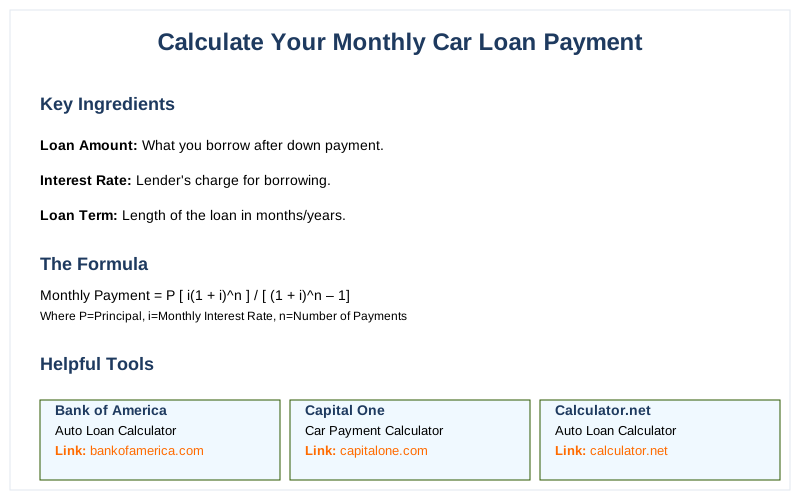
This is the breakdown of how that number is actually cooked up, so you can walk in knowing the score. Bank of America auto loan calculator and Capital One car payment calculator are good starting points to play with the numbers.
The Core Answer
The monthly car payment is basically a math problem with a few key ingredients. Think of it like packing for a weekend camping trip: you need the essentials, and then maybe some extras if you want to get fancy. The core of your payment comes from the loan amount, the interest rate, and the loan term. The calculator.net auto loan calculator lays this all out.
The loan amount is what you're borrowing after your down payment and trade-in value are subtracted from the car's price. If you buy a $30,000 car and put down $5,000, your loan amount is $25,000. Simple enough.
Then there's the interest rate, which is what the lender charges you for the privilege of borrowing their money. This is where your credit score really matters. A higher score means a lower interest rate, which means less money paid back overall. With shaky credit, the quoted rates can make your eyes water.
A NerdWallet auto loan calculator can show you how a few percentage points can change things drastically.
Finally, the loan term is how long you have to pay it all back, usually measured in months. Common terms are 36, 60, or even 72 months. A longer term means a smaller monthly payment, which sounds great, but it also means you'll pay more interest over the life of the loan. It's like choosing a longer hiking trail: easier steps each day, but you're out there for longer. The Investopedia auto loan calculator helps visualize this trade-off.
Basically, you plug these three numbers into a formula, and out pops your monthly payment. There's no magic, just math. Dealers might try to dazzle you with monthly numbers, but always ask for the total loan cost. That's the real number.
Some calculators also factor in sales tax and fees, which can add a significant chunk to your total loan amount. A surprise $800 in 'dealer fees' can hide in the paperwork until you're signing. It's the rookie mistake of not asking what's included in the 'out the door' price. Always ask for an itemized breakdown. The Bankrate auto loan calculator often includes these variables to give you a more realistic picture.

Why This Matters for Your Setup
Knowing how your monthly payment is calculated is your secret weapon at the dealership. It means you can spot when they're trying to play games with your head.
- Understand the Principal: This is the actual price of the car minus your down payment and trade-in value. If you're looking at a $20,000 car and have $4,000 to put down, your principal is $16,000. You can play with this number. A bigger down payment means a smaller loan, which means less interest paid over time. Saving an extra $1,000 for a down payment can shave almost $200 off total interest paid.
The Bankrate auto loan calculator helps you see that.
- Interest Rate Savvy: Don't just accept the first rate they offer. Shop around for pre-approval from your bank or credit union before you go to the dealership. This gives you leverage. A credit union rate can come in 3% lower than the dealer's 'best offer.' That's hundreds of dollars saved. A Investopedia auto loan calculator can show you the power of a lower APR.
- Loan Term Trade-offs: A 72-month loan might seem attractive because the monthly payment is lower, but you're paying for that convenience over a much longer period. It's like choosing the slowest, longest route to your campsite; you get there, but it takes forever and you burn more gas. Think about how much you'll owe on a car that's already several years old. The Bankrate auto loan calculator highlights this.
- Watch Out for Add-ons: Dealers love to tack on extras like extended warranties, gap insurance (which you might need, but always price it out separately), or paint protection. These inflate your loan principal. It's common to end up with $3,000 in 'extras' you don't really need on a new truck, adding almost $70 a month to the payment. The calculator.net auto loan calculator helps you see the impact of these additions.

Making the Right Choice
Figuring out your monthly car payment is less about complex formulas and more about understanding the levers you can pull. It's about being informed.
- Know Your Numbers: Before you even step onto a car lot, use an online calculator to get a ballpark figure. A solid, straightforward option is Capital One's car calculator.
- Don't Be Afraid to Negotiate: The advertised interest rate isn't always set in stone. If you have a solid credit score, push for a better rate. It's your money on the line.
- Prioritize Affordability: The real goal is a payment that fits comfortably into your budget, not just one that gets you into the fanciest car. My $47 Walmart foam pad camping setup was rough, but it was affordable. The same logic applies here. You don't need to overextend yourself for a car. The Navy Federal Credit Union auto loan calculator is another good tool to crunch numbers.
- Read the Fine Print: Always, always, always read the loan agreement. Understand the total cost, the interest rate, and the term length. If something doesn't make sense, ask. Brilliant engineering doesn't mean you shouldn't understand what you're signing.