First, the Basics
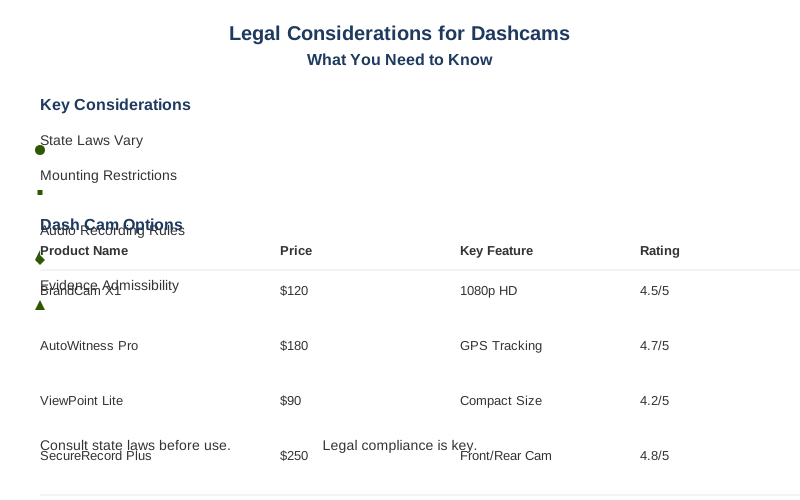
Dash cams are basically your car's silent witness, and while most of the country says "go for it," the rules on how you actually use them, especially audio, can get tangled up faster than headphone cords in your pocket. Every state allows you to own and use a dash cam, but the devil is in the details when it comes to mounting and recording conversations.
It's not just about catching that fender bender; it's about making sure the evidence you collect is even usable. My first thought was just to stick it anywhere, but that's a rookie mistake that could make your footage useless. Understanding dash cam laws is key before you even plug it in. Nobody wants their hard-earned footage thrown out of court because of a technicality.
It's like bringing a fork to a soup-eating contest; technically you have a utensil, but it's not the right one for the job. This isn't just about knowing the basics; it's about avoiding a headache later. Dash cams as evidence are powerful, but only if handled correctly.
The Core Answer
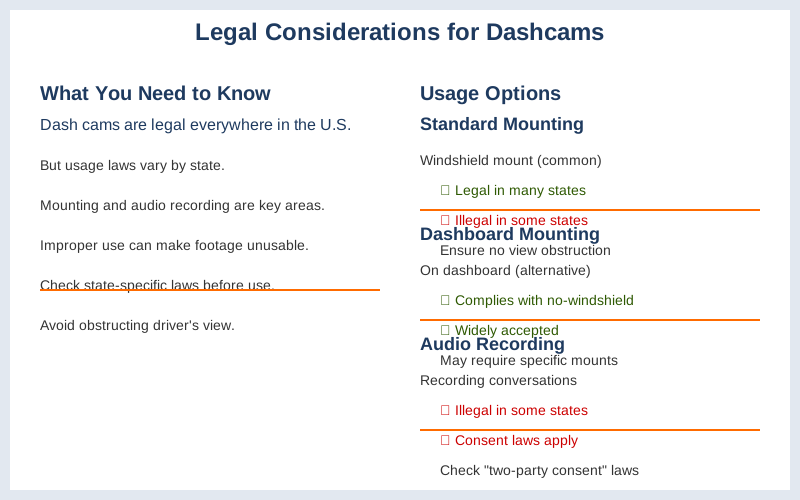
The real move with dash cams is understanding that while owning one is legal everywhere in the U.S. dash cam laws by state vary wildly on how you can actually use them. Think of it like this: you can own a fancy camping stove, but you can't just light it up in the middle of a national park without checking the fire restrictions. Mounting is a big one. Many states, like Arizona and Alabama, say no windshield mounting.
You're looking at the dashboard. Mounting requirements are strict to avoid obstructing your view. I once saw a guy mount his so high it looked like it was auditioning for a role as a second rearview mirror. Brilliant engineering. Audio recording is where things get even trickier. Most states follow a 'one-party consent' rule one-party consent rule. This means as long as you, the driver, know you're recording, you're generally good to go.
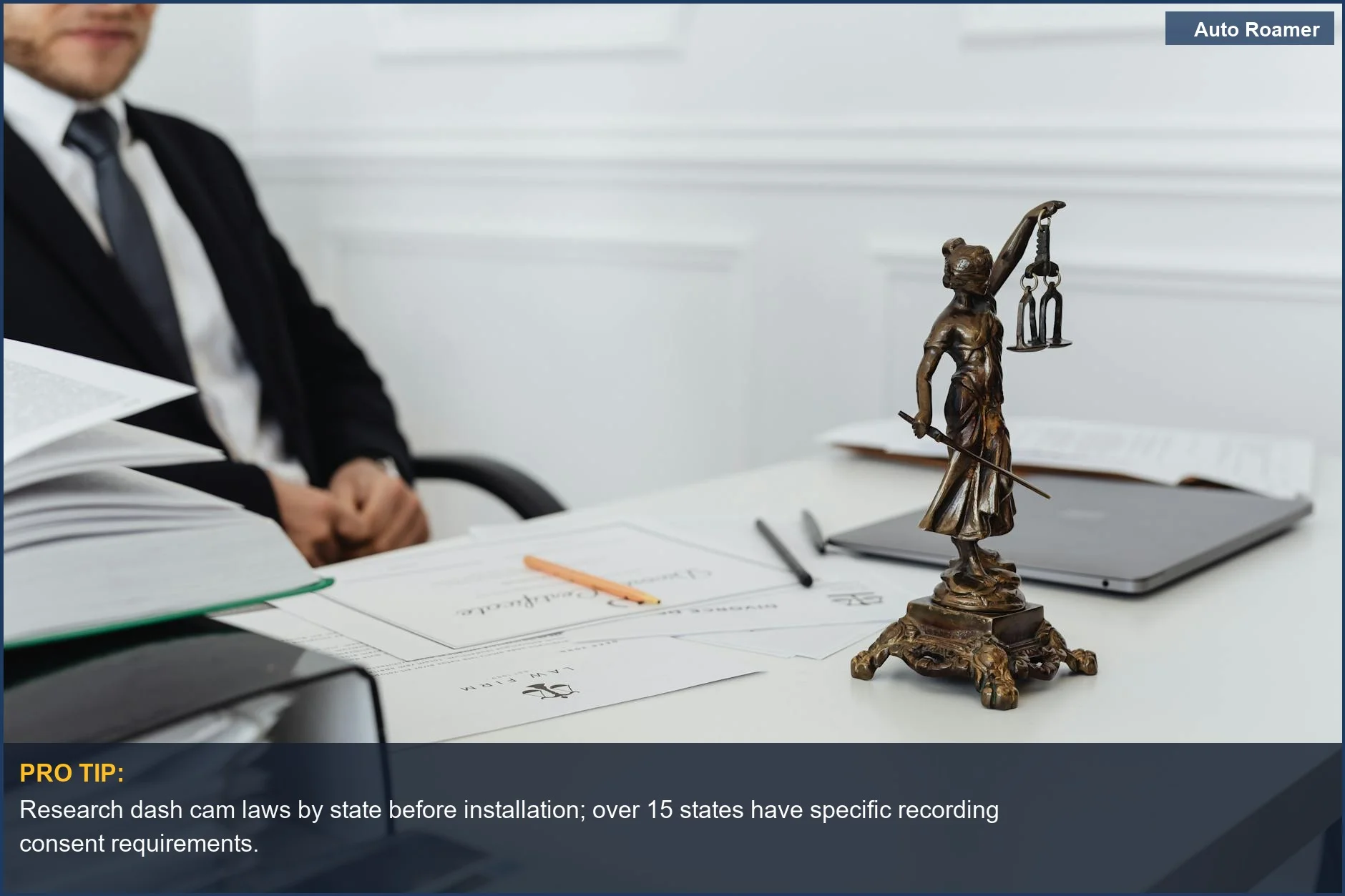
But then you have states like California and Florida that are 'all-party consent' states. If you're recording audio in Florida, everyone in the car needs to know and agree. Florida has specific rules. Imagine trying to get your chatty passenger to sign a consent form before you can record them complaining about your music. The honest version: if you plan to record audio, especially in a state you're not sure about, check the specific laws.
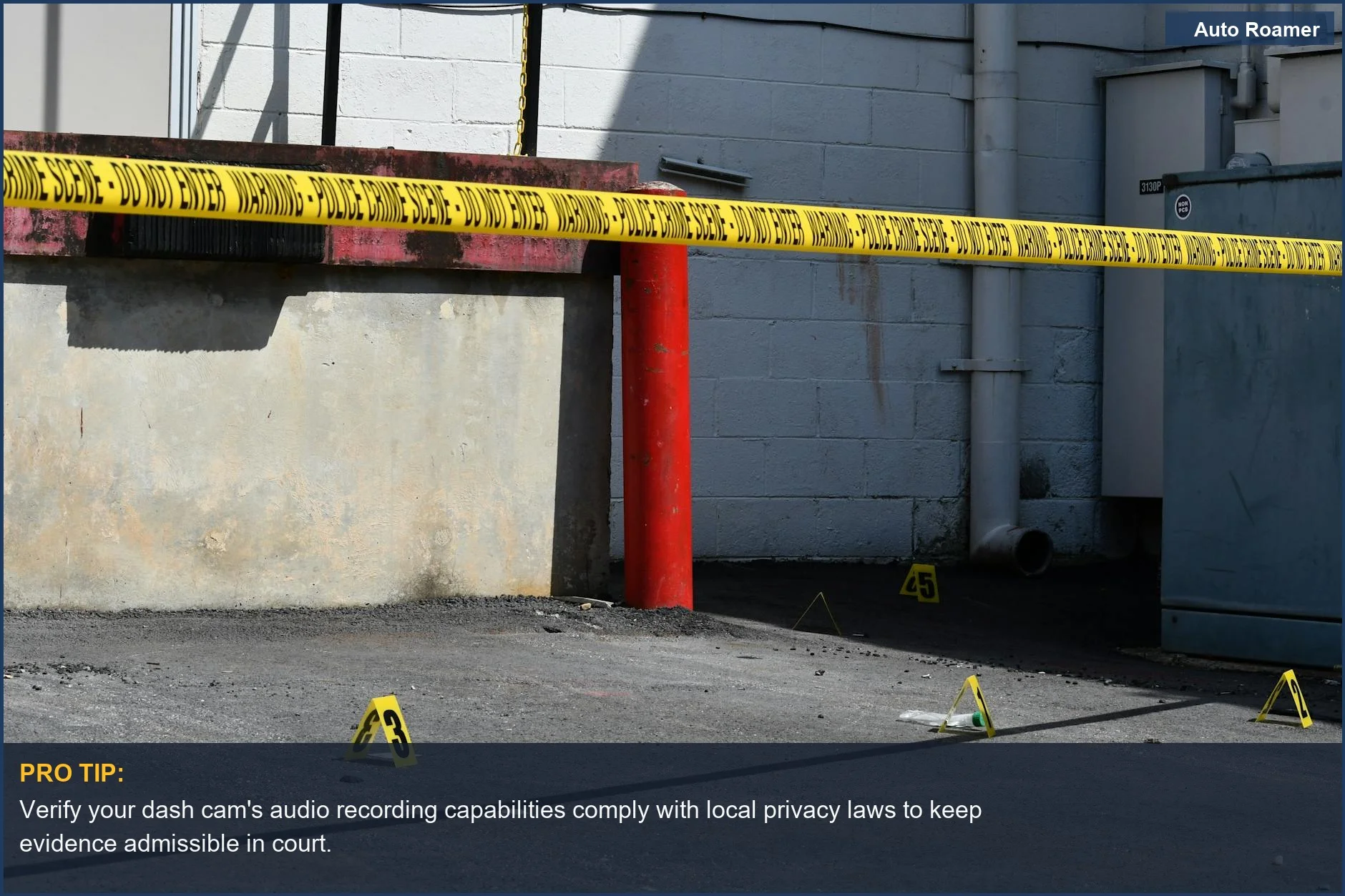
My $30 dash cam from Amazon has a mute button for a reason. Footage from dash cams is generally admissible in court if it's properly authenticated and recorded in a public place use dash cam footage in court. But if you violated a recording law, that evidence can be thrown out faster than a bad campsite review. So, know your state's rules on audio recording consent.
It's the real move to ensure your footage actually helps you, not hurts you. Some states have specific screen size limitations too; you don't want your dash cam to be bigger than your phone. Check state-specific rules before you mount. It's the $50 version of peace of mind, and way cheaper than a lawyer.
Why This Matters for Your Setup
- Mounting Matters: Don't block your view. Most states say mounting on the dashboard or behind the rearview mirror is fine. Windshield mounting is a no-go in some places. My first dash cam was so big I swear it counted as a passenger.
- Audio is Tricky: Know if you're in a one-party or all-party consent state. If you're in an all-party state and record a passenger without their knowledge, that audio is likely inadmissible.
- Evidence Integrity: Even if your dash cam records perfectly, if you broke a law to record it, it might not hold up. This is why respecting privacy laws is crucial. Legal considerations are more than just suggestions.
- Mechanic Visits: If you drop your car off for service, tell them if your dash cam records audio. You might need their consent too.
- Dashcam Buying Guide: New Vs. Used Car Considerations
- Choosing Dashcam Accessories for Optimal Accident Evidence
- Best Dashcam for Recording Wildlife While Camping (2026 Complete Guide)
colorado dash cam laws
Hey there! So you're wondering about dash cam laws in Colorado, huh? Good question. The short and sweet of it is, Colorado doesn't have specific laws *prohibiting* dash cams. You're generally free to record your drives. The key thing to remember is privacy. While you can record what's happening on public roads, be mindful of recording people in private spaces without their consent. This could get tricky if you're pointing your camera into someone's home or private property. Also, if you're recording conversations, be aware of Colorado's two-party consent law for audio recording, meaning everyone involved generally needs to agree to be recorded. So, go ahead and use your dash cam for safety and evidence, but just keep those privacy and consent rules in the back of your mind.
Making the Right Choice
Making the right choice with your dash cam setup is all about being informed. It's not just about getting the cheapest gadget; it's about understanding the legal landscape.
Here's what I've learned:
- Know Your State: Before you even buy one, do a quick search for "dash cam laws [your state]." It's the 10-minute version of due diligence that saves hours of headaches.
- Audio Off is Safe: If you're unsure about audio consent laws, or if you're driving through multiple states, just turn the audio recording off. Video evidence alone is often enough.
- Mount Smart: Follow the mounting rules.
- Privacy is Paramount: Respecting privacy laws isn't just about legality; it's about being a decent human. Your dash cam is a tool, not a surveillance state on wheels. Mounting rules are there for a reason.
You don't want your dash cam to be the reason you get pulled over. A clear line of sight is game-time.