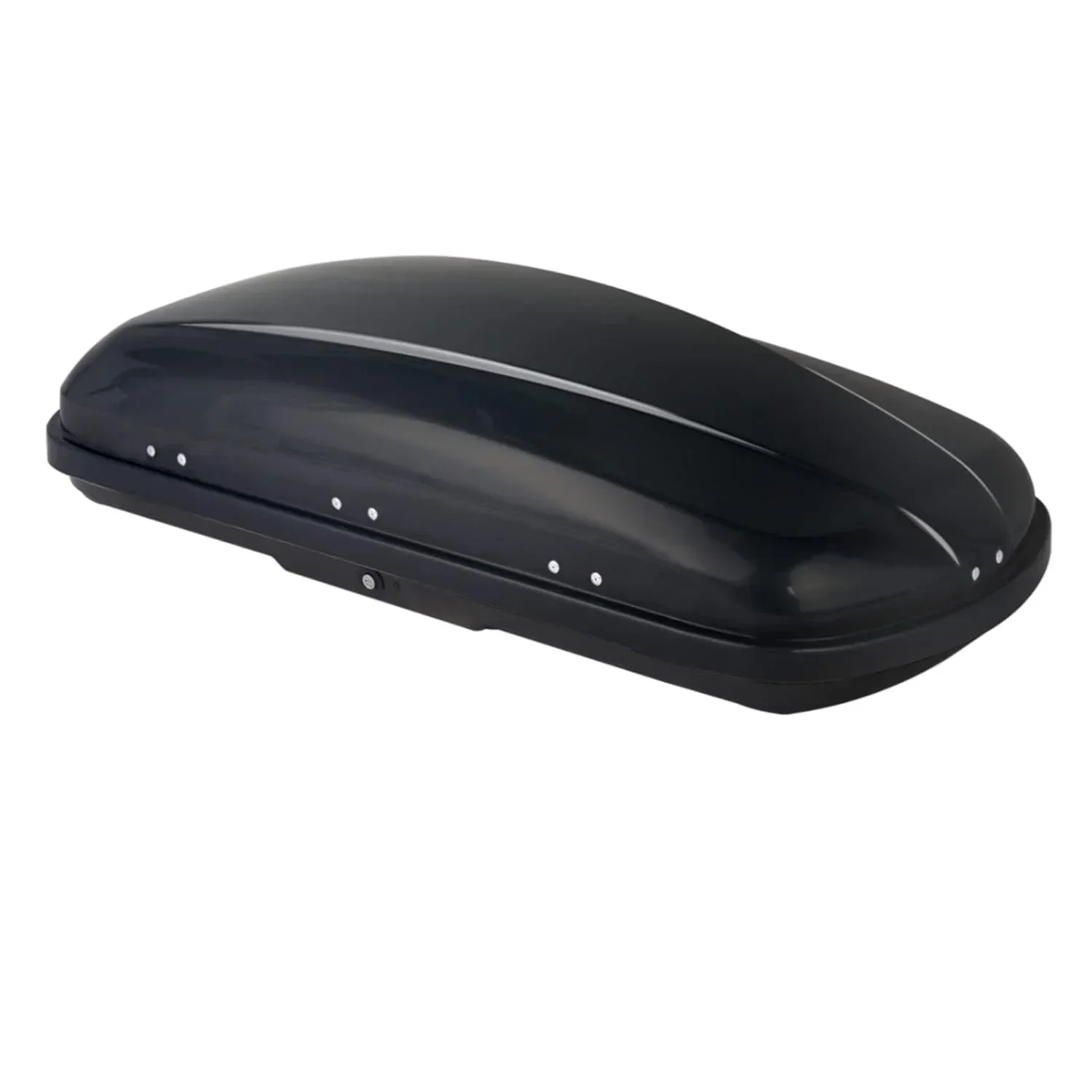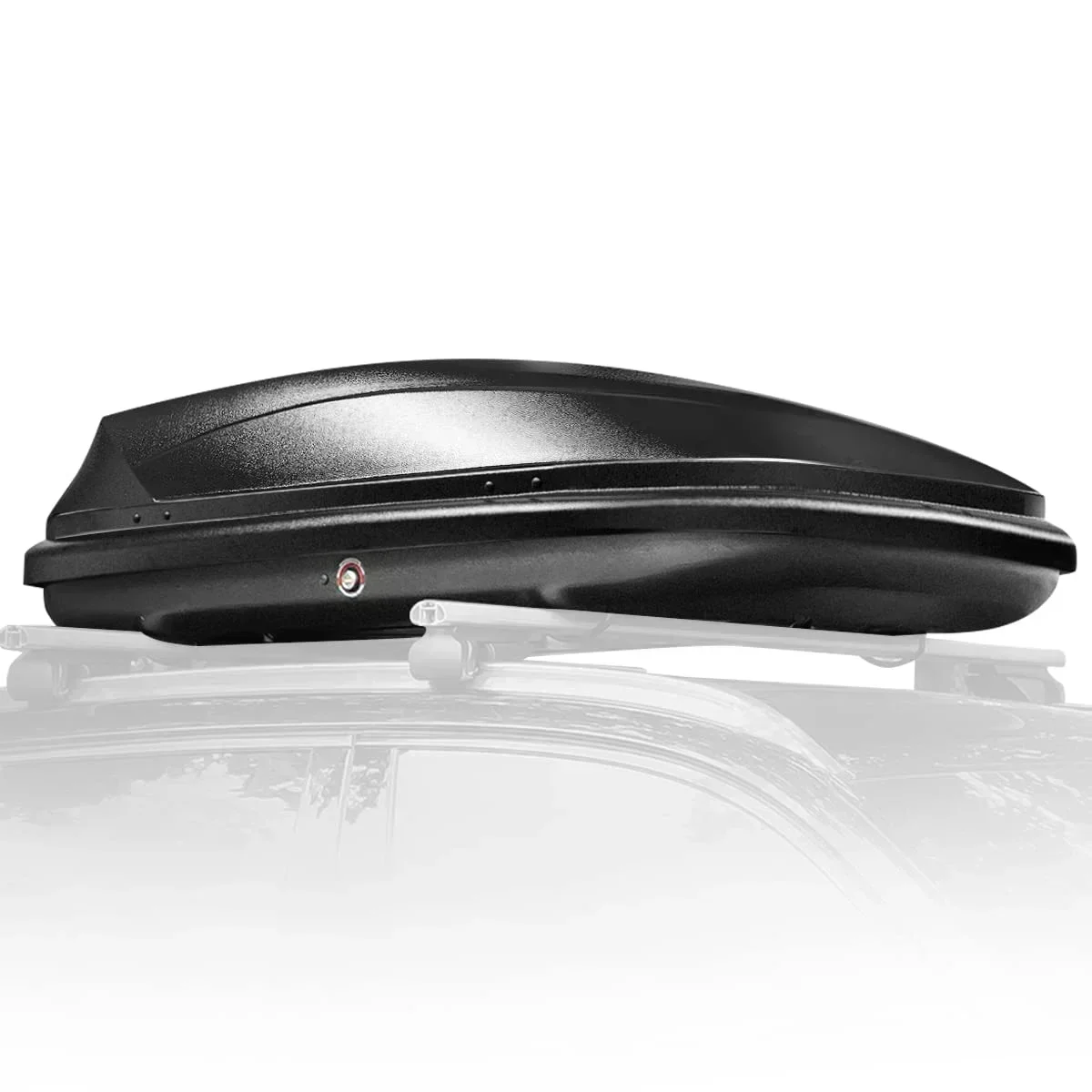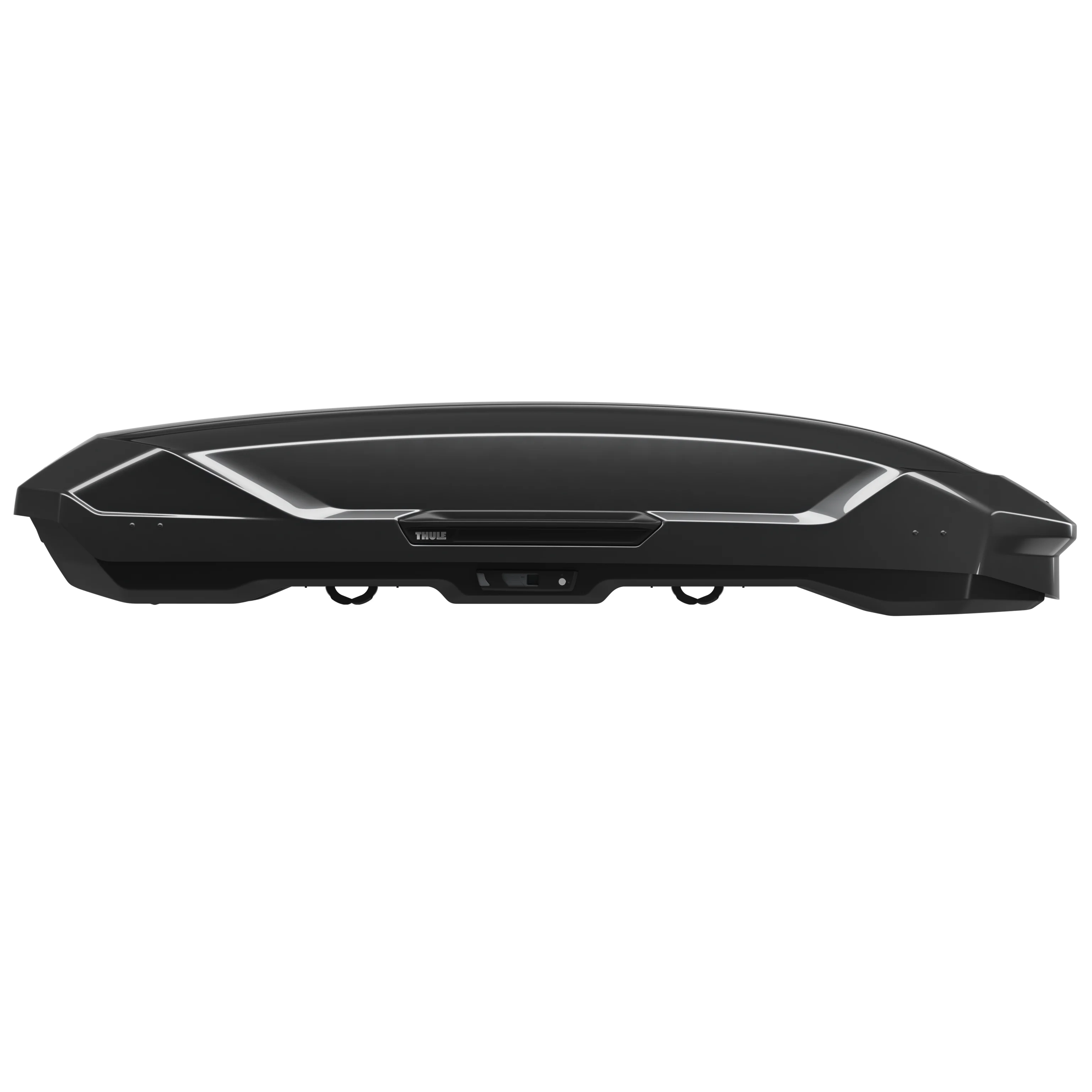
What to look for before you buy a family cargo box
Pack a family of four or five into an SUV for a week and the math is brutal: the duffels, the sleeping bags, the stroller and the cooler all want the same cargo floor the kids' feet need. A rooftop box moves the bulky, light stuff up top so the cabin stays for people. But what makes a family box different from a generic road-trip box is which trade-offs you can live with — and four things on the spec sheet decide it. Read them in this order, because the first one that fails kills the buy:
- Capacity vs. your real packing list. 16-18 cubic feet covers most families of four for a week of soft luggage; a family of five, or anyone bringing a stroller plus sports gear, wants 18-22. The catch the listings bury: a box rated for skis is long and shallow, while a family wants volume and depth for duffels — same cubic feet, very different shape.
- Fit to your crossbars and your roofline. Almost every box clamps to standard square, aero or factory bars, but length is the killer: a long XXL box on a short SUV can hang over the windshield or block the rear hatch. Measure your roof bar spread and your rear-hatch swing before you fall for the biggest box.
- Opening side. Dual-side opening lets a parent load from the curb instead of standing in traffic, and reach the far corners without climbing the door sill. On a tall SUV with kids underfoot this is the single biggest day-to-day convenience — and the clearest line between budget and mid-tier boxes.
- Weight, drag and noise. A heavier box is harder for one parent to lift onto the roof alone; a tall, boxy shape drones on the highway and dents your mileage. Low-profile boxes are quieter and thriftier but shallow, so they trade stroller-swallowing depth for calm.
This guide is spec-compared from manufacturers' published dimensions and named outlet reviews — Car and Driver, GearJunkie, Switchback Travel and Outdoor Gear Lab — not from strapping each one to a minivan and driving across the country. So we tell you where the numbers and the reviewer reports agree, and where the spec sheet hides a catch. If you want the broader, vehicle-agnostic version, our general rooftop cargo box guide covers picks for solo and couple trips too.
How this guide was built. Every capacity, fit, and drag figure here is read from the manufacturers' published dimensions (Thule, Yakima, SportRack, TUFFIOM, Auto Dynasty) and cross-checked against named outlet reviews from Car and Driver, Switchback Travel, and Outdoor Gear Lab. What this analysis adds on top of the spec sheets is the translation: turning a headline "18 cubic feet" into "about six large duffels plus a folded stroller," and turning a vague "hurts your mileage" into a dollar figure for a real road trip. This is desk analysis done honestly — published specs plus named reviewer measurements, with the math shown below so you can re-run it for your own vehicle and packing list.
How much capacity your family needs for road trips and camping
Capacity is the spec families get wrong most, in both directions — and the right number depends entirely on the kind of trip, not the headcount alone. A weekend at the grandparents' is a different load than a week of camping with a stroller, a pack-and-play and a cooler.
For a family of four on a week of soft luggage — duffels, sleeping bags, pillows — 16 to 18 cubic feet is the honest sweet spot. That is the territory of the Yakima SkyBox NX 18 and the value-priced SportRack Vista XL, both 18 cubic feet by their published specs — SportRack puts it at 510 litres. Soft, squishable gear is what a rooftop box is for.
Add a stroller, sports gear, or a fifth person and you want the 18-to-22 range. That is where the Thule Motion 3 XXL earns its keep at roughly 22 cubic feet — enough to swallow a folded umbrella stroller alongside the duffels. But more volume is not free: a bigger box is longer, taller, heavier and draggier, so do not buy capacity you will not fill. For the camping load — tents, chairs, a two-burner stove — our notes on how to choose a roof box size walk through matching cubic feet to a real gear pile.
One honest caveat the cubic-foot number hides: shape matters as much as volume. Two boxes can both read 18 cubic feet, but the deeper one holds a family's round, bulky bags far better than the long, shallow ski-shaped one. Read the box's height, not just its rating.
Computed: what each box actually swallows, in duffels — and the fuel it costs to carry. These are not marketing claims; they are two simple calculations run on the published specs. For capacity, a large road-trip duffel packs to roughly 2.6 cubic feet (about 70 liters), so duffels that fit = box volume ÷ 2.6, rounded down, with a folded umbrella stroller eating about one duffel's worth.
For drag, reviewers including Car and Driver put the highway fuel penalty in the high-single to low-double digits, worse for tall boxes — so we price the band ends (~8% low-profile, ~12% tall) on a 2,000-mile summer trip at 26 mpg and $3.50/gal, where extra fuel = [miles ÷ (mpg × (1 − penalty))] − (miles ÷ mpg), × price.
| Box | Capacity | Large duffels (÷2.6) | + folded stroller? | Est. highway penalty | Extra fuel, 2,000-mi trip |
|---|---|---|---|---|---|
| Thule Motion 3 XXL | ~22 cu ft | 8 | Yes (7 + stroller) | ~8% (low-profile) | ~$23 |
| Yakima SkyBox NX 18 | 18 cu ft | 6 | Yes (5 + stroller) | ~10% | ~$30 |
| SportRack Vista XL | 18 cu ft (510 L) | 6 | Yes (5 + stroller) | ~12% (19 in tall) | ~$37 |
| TUFFIOM 13.4 cu ft | 13.4 cu ft | 5 | Tight (4 + stroller) | ~10% (13.8 in tall) | ~$30 |
| Auto Dynasty Hard Shell | 11 cu ft | 4 | Tight (3 + stroller) | ~12% (boxy, 15 in) | ~$37 |
Two things fall out that the cubic-foot badge hides. A family of four on soft luggage needs roughly five to seven large duffels' worth of space, so an 18-cubic-foot box is the honest floor and the 22-cubic-foot Thule is what buys room for a fifth person without playing Tetris at every stop — while an 11-cubic-foot entry box is a three-duffels-plus-stroller proposition, not a week for five.
And leaving any box up all year is not free. Scale that per-trip fuel figure to about 12,000 highway miles and the low-profile boxes cost roughly $140 a year in extra gas, the tall ones about $220 — which is exactly why an easy-mount box you actually take down between trips pays for itself.
Family cargo boxes by price: budget, mid-tier and premium
Here is the range by what you actually pay, and it has moved since this guide was first written. Every figure below is the manufacturer's published spec, a named reviewer's measurement, or the live listing price checked on 31 July 2026.
First, an honest correction. This section used to open with a sub-$200 hard-shell box. That box — the JEGS carrier — is discontinued, and it is not coming back. On a live check of the market the cheapest hard shell we can actually point you at is now about $240. The tier did not vanish; it moved up.
Budget (around $240-$430). The TUFFIOM 13.4 cu ft box (~$240) is the surprise here: it is the cheapest hard shell on this page and it still opens from both sides, with locks on both, a 150 lb load rating and a shell that weighs only about 24 lb to lift up there. The Auto Dynasty carrier (11 cu ft, ~$320) is plainer — one opening, a 110 lb limit, tool-free clamps for crossbars up to 13 inches — but at 53 inches long it is the one that fits a short roof.
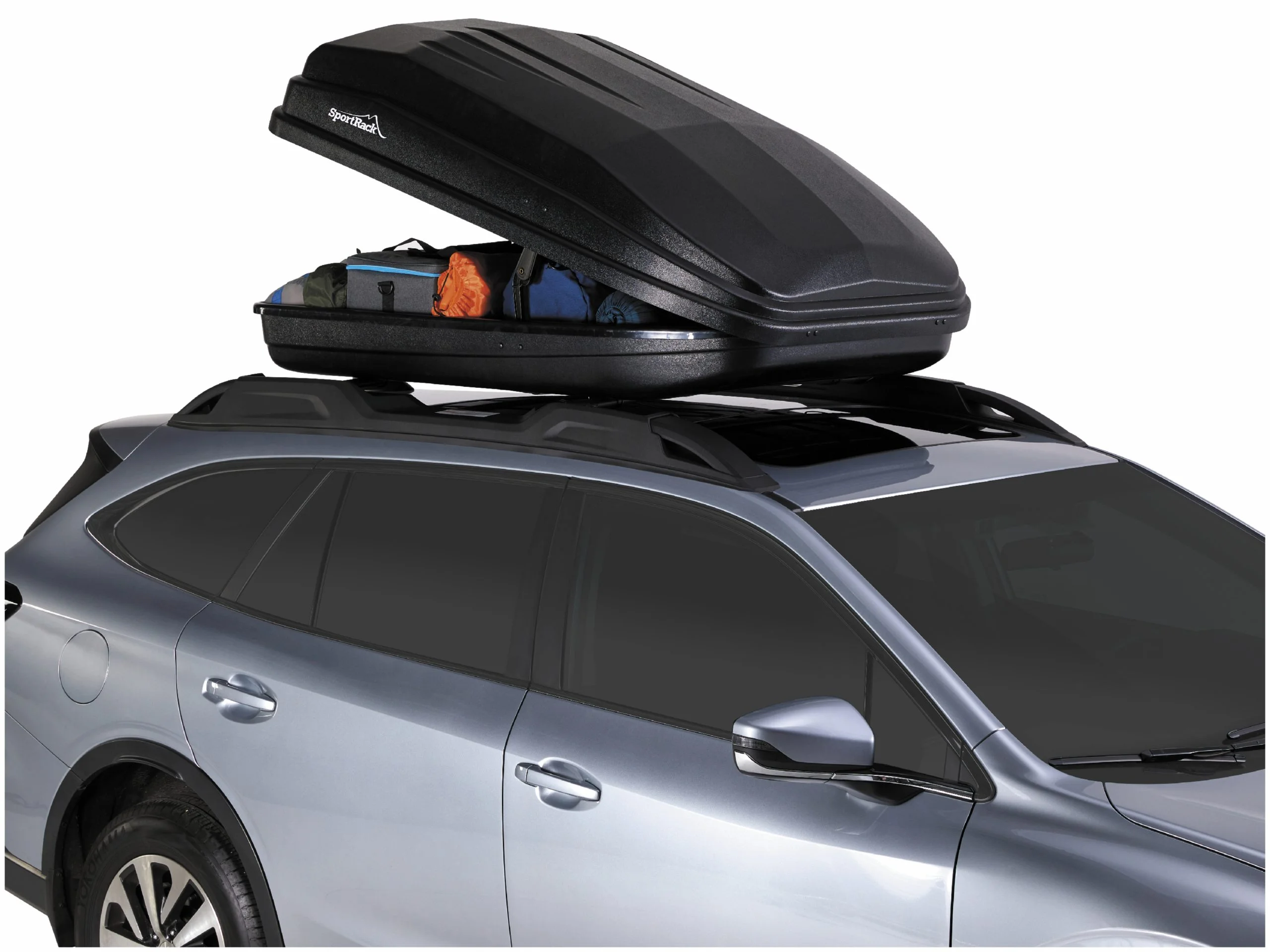
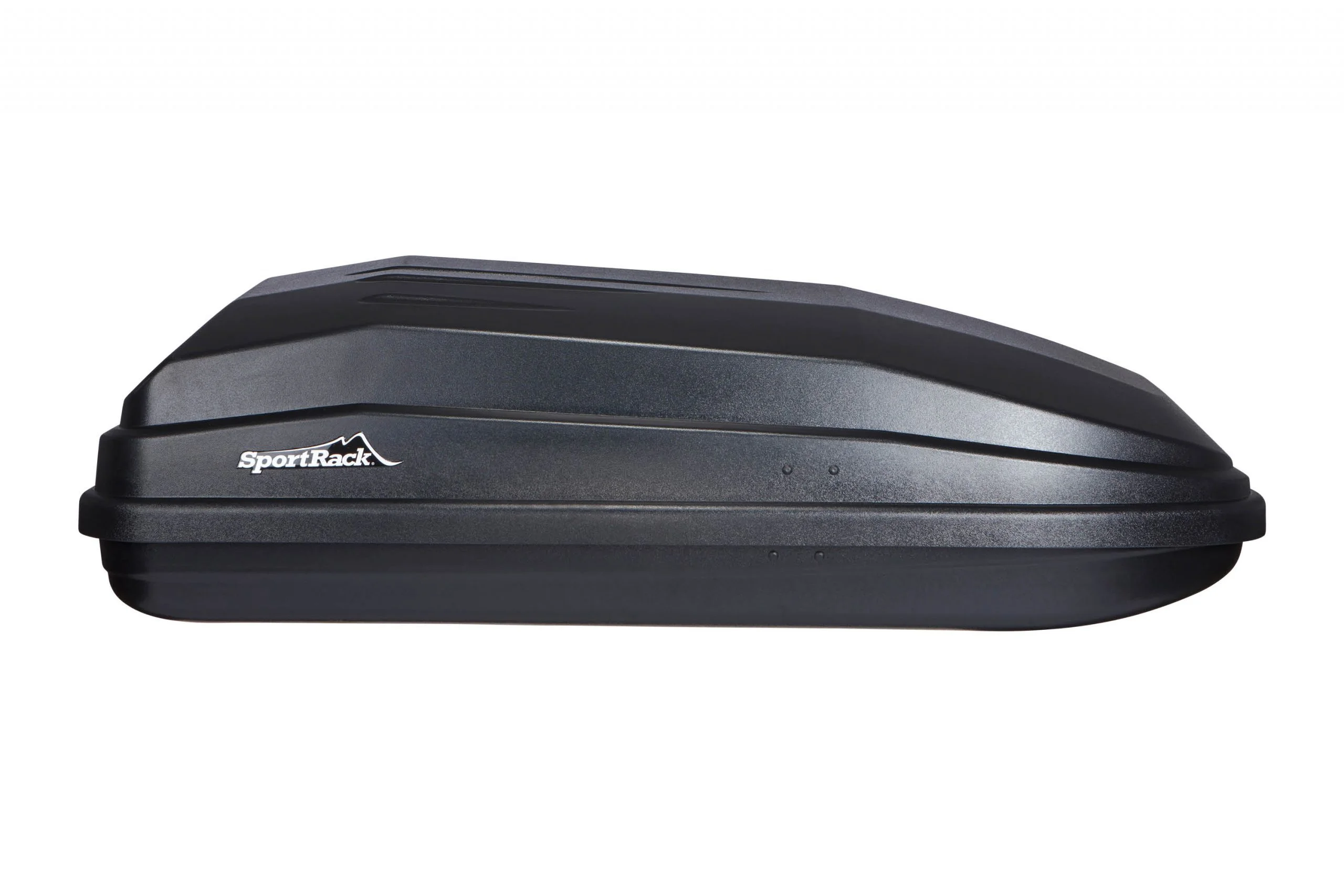
The SportRack Vista XL tops the tier at ~$425 and buys real volume: 18 cubic feet, 510 litres, with a rear opening that keeps you out of traffic while you load. The compromises across this whole tier are the ones Switchback Travel names — one opening rather than two on most, noisier on the highway, weather-resistant rather than truly weatherproof. For a once-a-year trip that is a fair trade.
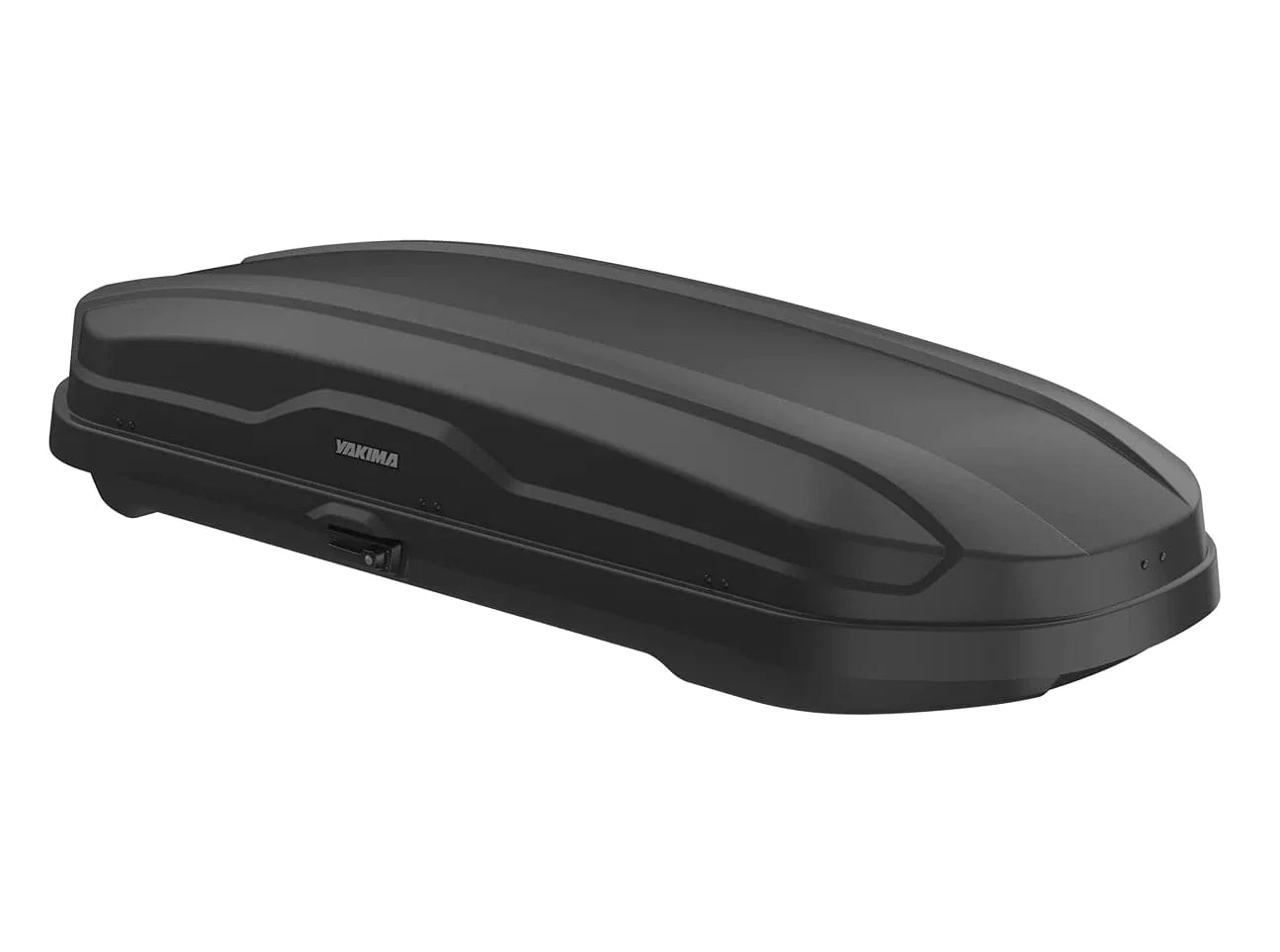
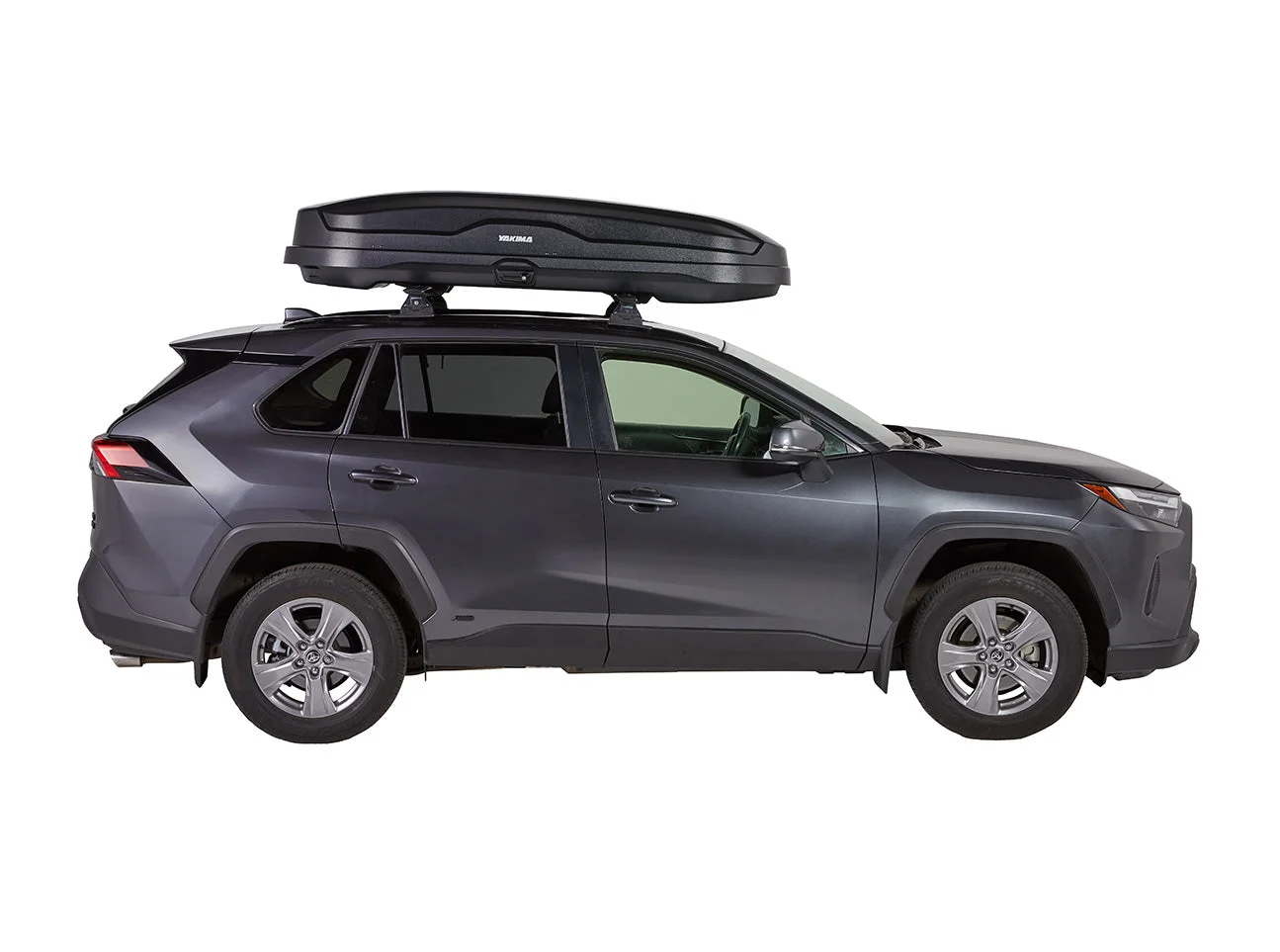
Mid-tier (around $700). The Yakima SkyBox NX 18 is the family middle ground: 18 cubic feet, dual-side opening, and tool-free SKS clamps a single parent can mount in a driveway without a second set of hands. You are paying roughly $275 over the SportRack for the same volume, easier mounting and a quieter shell.
Premium (around $1,000). The Thule Motion 3 XXL is the haul-everything box: roughly 22 cubic feet, dual-side opening, and the low-profile shape reviewers at GearJunkie and Car and Driver rank near the top for quiet highway manners. You are paying for capacity, refinement and a quieter cabin — worth it if you road-trip constantly, overkill if you don't.
Common mistakes families make buying a rooftop box
Most family cargo-box regret traces back to a handful of avoidable mistakes — the ones the listings won't warn you about because they'd cost a sale:
- Buying the biggest box without measuring. A long XXL box can overhang the windshield or stop the rear hatch from opening on a shorter SUV. The gear fits; the box doesn't fit the car. Measure crossbar spread and hatch swing first.
- Ignoring lift height. A box adds a foot or more to your roof, and getting a heavy duffel up there is a genuine problem for a shorter parent on a tall SUV. Dual-side opening helps because you load from the curb, but plan for a small folding step.
- Forgetting the mileage cost. Every reviewer who measures it, Car and Driver included, finds a rooftop box costs fuel on the highway — typically high single digits to low double digits in percent, taller boxes worse. Families who leave the box up all year quietly burn that all year.
- Assuming the box is weatherproof and theft-proof. Budget boxes are weather-resistant, not weatherproof — pack anything that must stay dry in a dry bag inside. And a box lock deters a grab, it does not stop a determined thief, so valuables ride in the cabin.
- Forgetting you need crossbars first. Boxes clamp to bars; they don't include them, and your roof has a dynamic weight limit. If you're not even sure a box is the right answer, decide whether you need a roof rack at all before buying into one.
Matching the right box to your family by vehicle and trip
Put the specs and the mistakes together and the choice comes down to your vehicle's roofline and how often you actually travel. Here is who each pick is for:
- Road-trip often, full vehicle, want it quiet → the Thule Motion 3 XXL. Most capacity, lowest drag, highest price.
- Need easy one-parent mounting → the Yakima SkyBox NX 18. Tool-free clamps, dual-side, the family default.
- Go once a summer, want the most volume per dollar → the SportRack Vista XL — 18 cubic feet, plain hardware, one rear opening.
- Short SUV, or a hatch a long box would block → the Auto Dynasty carrier, 53 inches nose to tail against 61 to 92 for everything else here. Fit beats capacity.
- Spending as little as possible without giving up both-side loading → the TUFFIOM 13.4 cu ft box.
And before you commit to a roof box at all, weigh the alternative: a hitch carrier skips the lift entirely, which many parents find easier on a tall SUV. Our roof box vs. hitch carrier comparison lays out which suits a family's loading reality — the roof box keeps gear weatherproof and the bumper clear; the hitch carrier saves your back.
Honest verdict: which family box, for which family
For most families the Yakima SkyBox NX 18 is the right buy: enough room for a week for four, dual-side loading, and clamps one parent can mount alone. Step up to the Thule Motion 3 XXL only if you road-trip constantly and want it quiet; step down to the SportRack Vista XL if you go once a summer.
The fit-first families — short SUV, blocked hatch — should measure before they shop, and the Auto Dynasty carrier is the one here short enough to clear a stubby roofline, as long as you go in knowing 11 cubic feet is three or four duffels, not a week for five. If price is the whole question, the TUFFIOM box is the cheapest hard shell that still opens from both kerbs.
There is no single best family box; there is the box that matches your trip frequency, your roofline and your budget. We rate these from published specs and named reviews rather than a first-hand test, so treat the dimensions as the hard constraint and the comfort claims as directional.
Prices here were checked live on 31 July 2026 and move constantly — always confirm the current price, and that the box fits your specific vehicle's bars and hatch clearance, before you order. Do that, get the gear off the kids' laps, and the next 400-mile leg gets a lot more peaceful for everyone in the car. See the best Lexus models for car camping.