The Big Picture
When your car is parked, it's basically a sitting duck for fender benders and opportunistic vandals. A dash cam with parking mode acts like a 24/7 security guard for your ride, catching stuff even when the engine's off 24/7 car security. I learned this the hard way after someone keyed my old Civic while I was inside a grocery store. Total rookie mistake not having a recording device running.
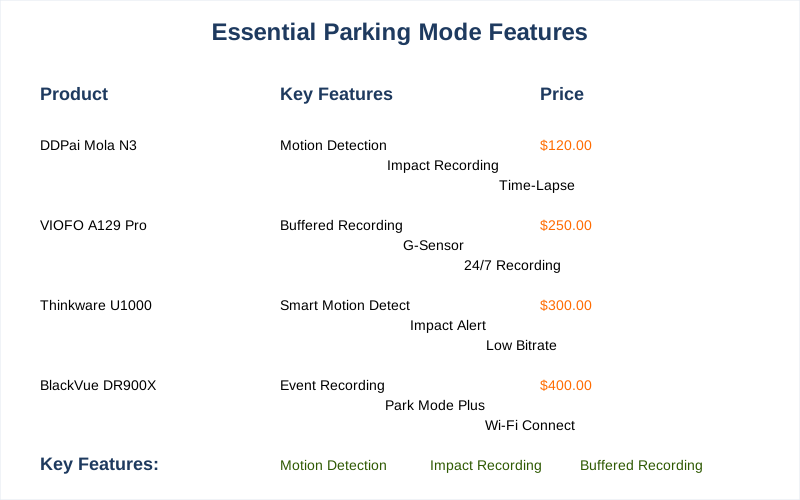
Parking mode isn't just one feature; it's a whole suite of ways to keep an eye on your car when you can't parking mode features. Think motion detection, impact recording, and even time-lapse. It's the real move for peace of mind.
The Core Answer
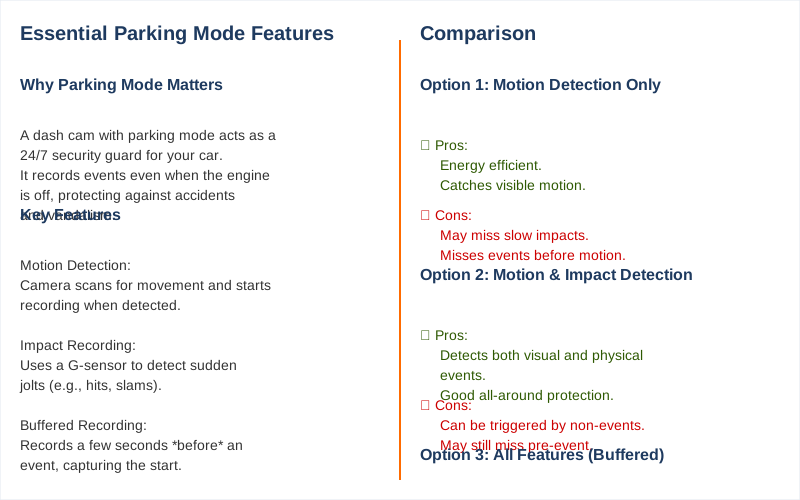
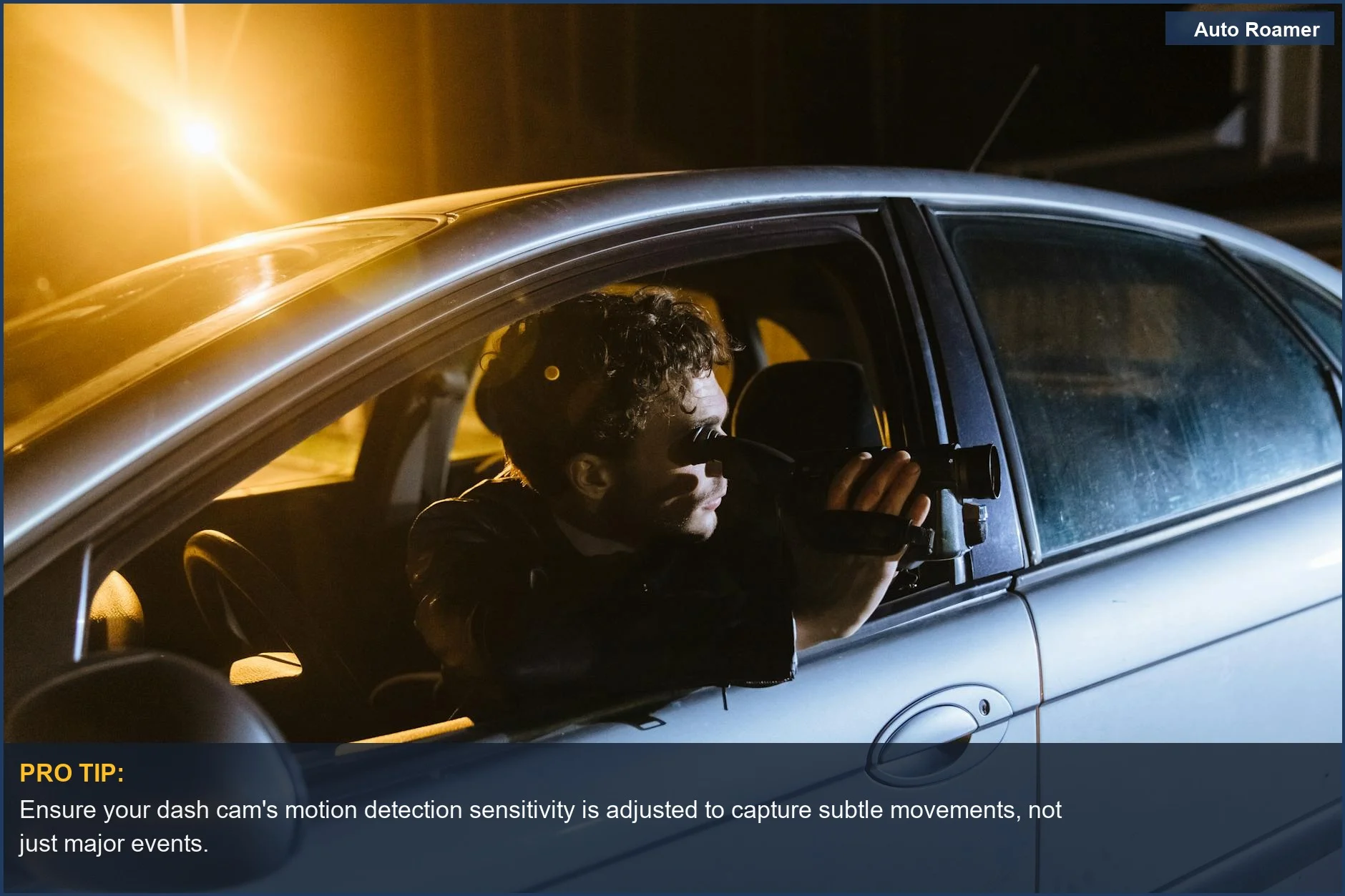
The core of any decent parking mode setup boils down to how the camera wakes up and what it records when your car is off. Forget fancy marketing; you need it to actually see what's happening. The most common trigger is motion detection. This means the camera's constantly scanning the frame for movement. When it sees something, BAM, it starts recording motion detection. My first attempt at this was a basic model that only recorded after a significant jolt.
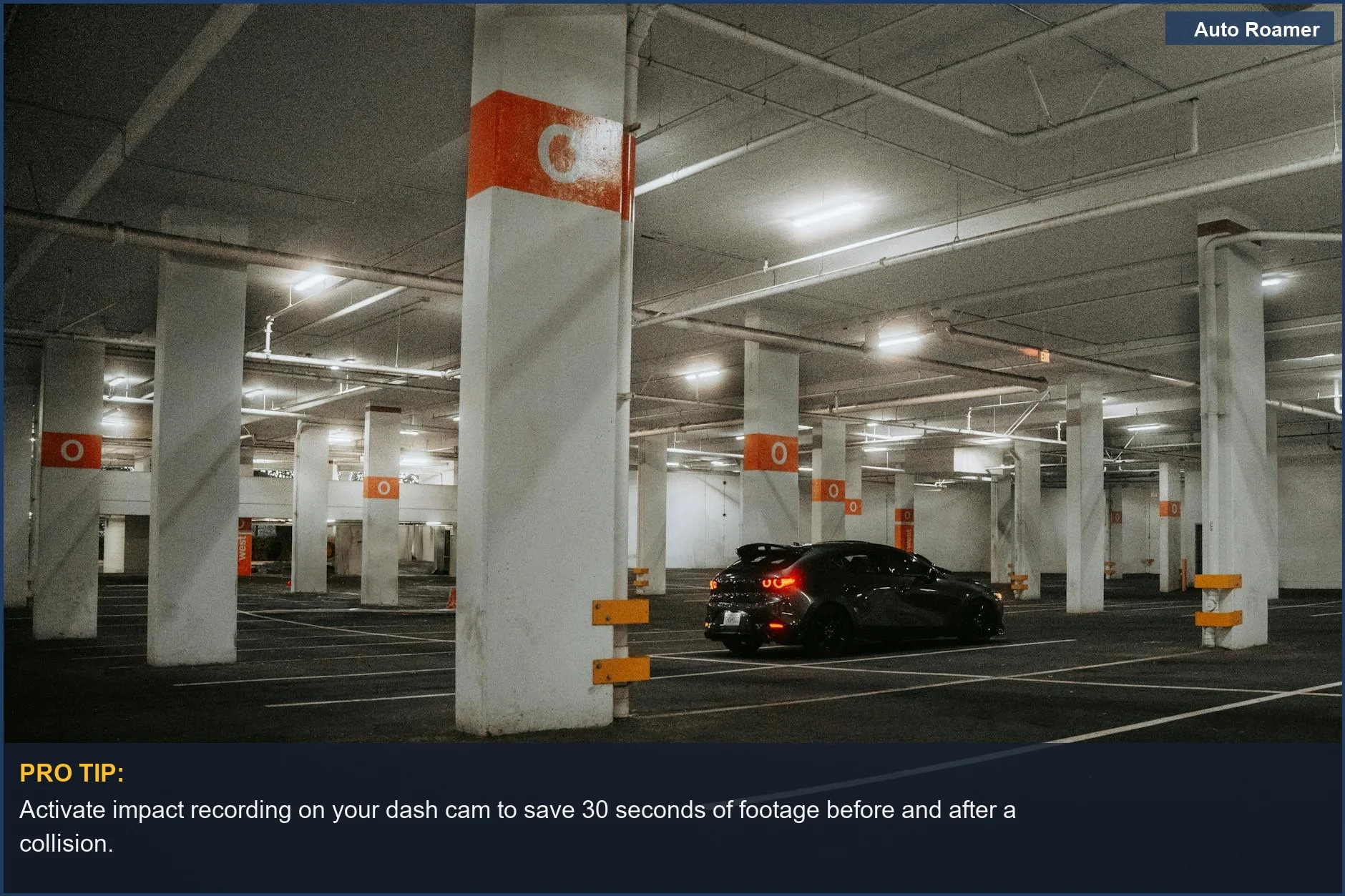
Someone bumped my bumper at the mall, and by the time it woke up, they were already gone. Brilliant engineering. The fix was a camera with buffered recording. This means it records a few seconds before the motion or impact happens, so you actually see the event start buffered function. This is the game-time feature. You also need to consider impact recording.
This uses a G-sensor to detect sudden jolts, like someone hitting your car or a door being slammed shut nearby G Force sensor. My friend's dash cam didn't have a sensitive enough G-sensor, so it missed a shopping cart incident. The real move is a camera that combines both motion and impact detection, and crucially, offers buffered recording for both. Otherwise, you're just recording empty parking lots. Some cameras offer time-lapse recording, which is great for long parking stints.
It captures frames at a low rate, creating a condensed video of hours of footage. This is way better than relying on motion detection in a busy lot where every passing car would trigger it Time Lapse Recording. Finally, don't forget about low light performance. If you park in dimly lit areas, you need a camera that can still capture clear footage. My first dash cam was useless after sunset.
It's the honest version: if it can't see in the dark, it can't protect you in the dark.
Why This Matters for Your Setup
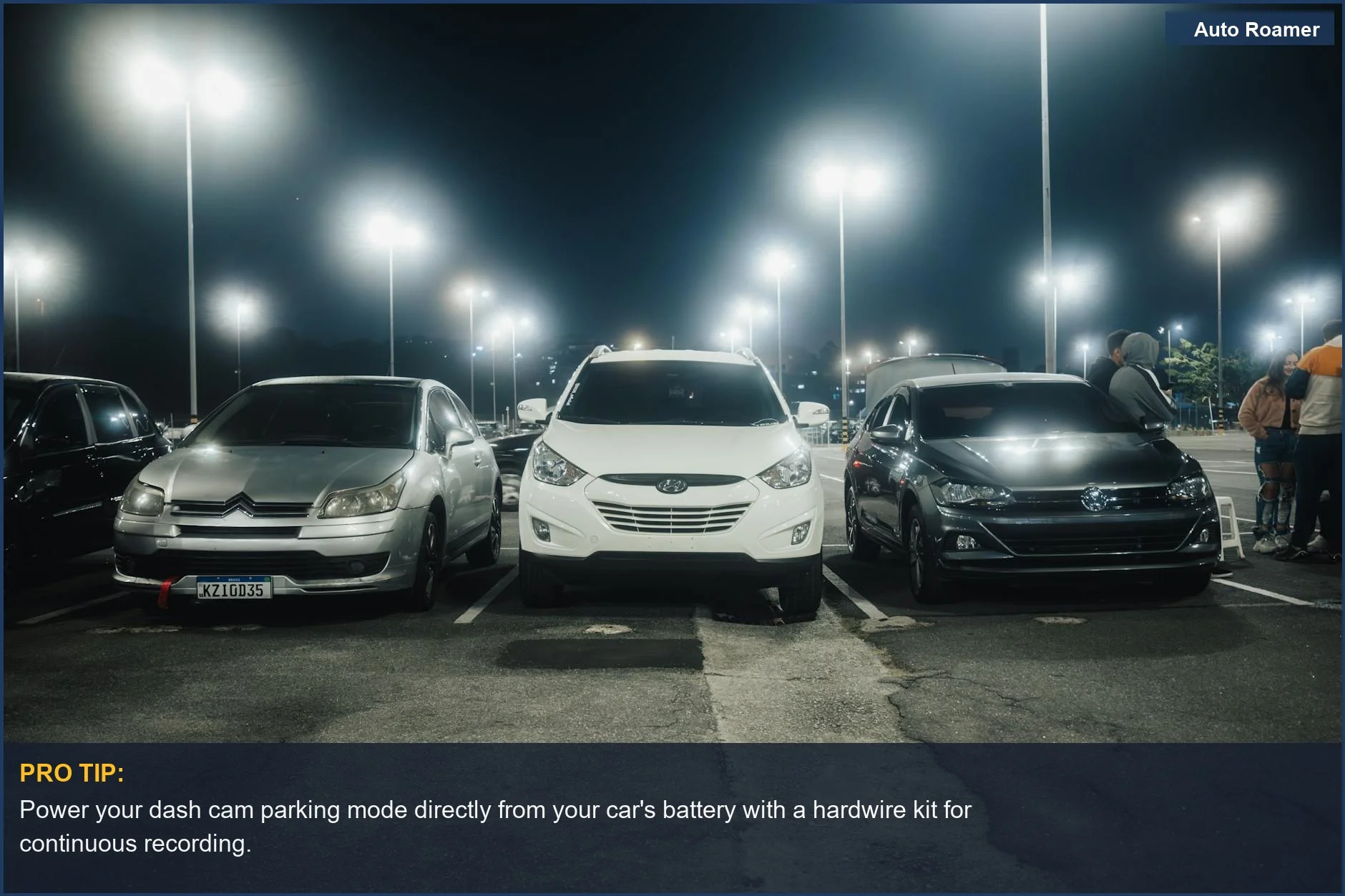
This isn't just about having a camera; it's about making sure it actually works when you need it most. My first setup used the cigarette lighter adapter. It worked fine while driving, but as soon as I turned the car off, so did the camera. That's a rookie mistake nobody tells beginners. The real move is hardwiring the dash cam directly to your car's fuse box.
This provides a constant power source, allowing the parking mode to function even when the ignition is off Hardwire Kit. Most hardwiring kits have a voltage cutoff feature, which is critical. It prevents the dash cam from draining your car battery completely. I once forgot about that cutoff and woke up to a dead battery. Lesson learned the hard way. So, here's the field notes:
- Hardwiring is non-negotiable. It's the only way to guarantee parking mode works 24/7. Trying to rely on a USB adapter is just asking for trouble.
- Voltage cutoff is your friend. Make sure your hardwiring kit has this. It saves you from being stranded with a dead car battery.
I've seen folks damage their car batteries by not using one.
- Consider a dual-channel system. If you want to protect both the front and rear of your vehicle, you need a camera that records both angles. My first dash cam was front-only, and I missed the entire hit-and-run from behind dual-channel. It's the $50 version of peace of mind versus a $500 insurance deductible.
Making the Right Choice
Choosing the right dash cam features for parking mode is all about covering your bases. You want to catch the action, not just a blurry outline of a car driving away. The honest version is that basic motion detection often isn't enough. Buffered recording, where the camera saves footage before an event, is the real move. This is what separates a useless gadget from a valuable security tool auto event detection.
- Prioritize buffered recording. This is the single most important feature for capturing actual incidents. It's the difference between seeing a bump and seeing the car that caused it.
- Don't underestimate impact detection. A sensitive G-sensor can catch sudden jolts that might not trigger motion detection, like someone bumping your car while parked Intelligent Parking Mode.
- Think about your environment. If you park in dark areas, low-light performance is critical.
A camera that can't see at night is only half the solution low light stuff.