Where to Start
The audacity of some manufacturers to market a dashcam as 'security' when its crucial mounting bracket is molded from brittle polypropylene is frankly, insulting. I recently saw a unit that claimed 24/7 surveillance, yet its power cable was a flimsy 26 AWG copper-clad aluminum, guaranteed to suffer voltage drop and intermittent power delivery. This isn't just poor design; it's a deliberate choice to compromise performance for a trivial cost saving.
Modern dash cams are marketed as your first line of defense against the estimated 90,000 cars stolen annually in Canada alone, a staggering figure that translates to a vehicle disappearing every five minutes. The stakes are too high for disposable plastic. Proactive security measures should be built to last, not to be replaced seasonally.
Quick Verdict
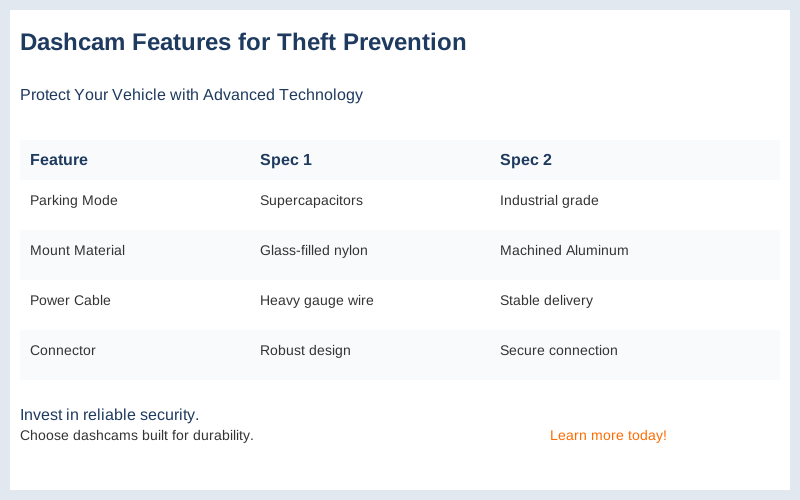
- Parking Mode Reliability: Many units boast a 'parking mode,' but few deliver industrial-grade reliability. If the internal battery is a cheap lithium-ion pouch cell, it will degrade rapidly under thermal cycling, leaving you unprotected when it matters most. Look for supercapacitors instead.
- Material Composition of Mounts: The primary failure point for most dashcams is the mount. If it's injection-molded ABS, expect UV degradation and stress cracking within 18 months, especially in direct sunlight.
A robust mount made from glass-filled nylon (PA6-GF30) or, ideally, machined aluminum, is non-negotiable for true longevity. The best dash cams for vandalism need to stay put.
- Power Delivery Integrity: A dashcam is only as good as its power source. Flimsy micro-USB connectors or poorly crimped power cables are common failure points. I've seen more 'dead' dashcams from power issues than actual camera failures.
Demand hardwired kits with proper fused connections.
- Storage Medium Longevity: The continuous write cycles of a dashcam are brutal on standard microSD cards. Many manufacturers bundle cheap, generic cards designed for casual use, not constant overwriting. This leads to premature card failure, corrupt footage, and a false sense of security. Always upgrade to industrial-grade high-endurance MLC NAND flash cards.
- Thermal Management: Dashcams operate in extreme temperatures. If the enclosure is thin-walled, non-vented plastic, internal components will suffer from thermal stress.
This accelerates degradation of the image sensor and processor, leading to reduced video quality and premature failure. Rigorous testing should include heat cycling.
What to Look For
When evaluating a dashcam, ignore the flashy marketing and scrutinize the actual engineering. My focus is always on the materials and their ability to withstand the brutal environment of a vehicle interior. Choosing a dash cam requires looking past the surface.
| Feature | What to Demand (Industrial-Grade) | Why Inferior Materials Fail |
|---|---|---|
| Power Source | Supercapacitor (rated for -20 to 80 degrees C) | Lithium-ion batteries suffer rapid capacity degradation and thermal runaway risk above 40 degrees C. |
| Mounting Hardware | Machined 6061-T6 aluminum or glass-filled nylon (PA6-GF30) | Injection-molded ABS or general-purpose PP will embrittle from UV exposure and thermal cycling, leading to fatigue cracking. |
| Enclosure Material | High-temperature polycarbonate (PC) or aluminum alloy with proper venting | Cheap, thin-walled general-purpose plastics (e.g., GPPS) warp, crack, and offer poor heat dissipation, degrading internal components. |
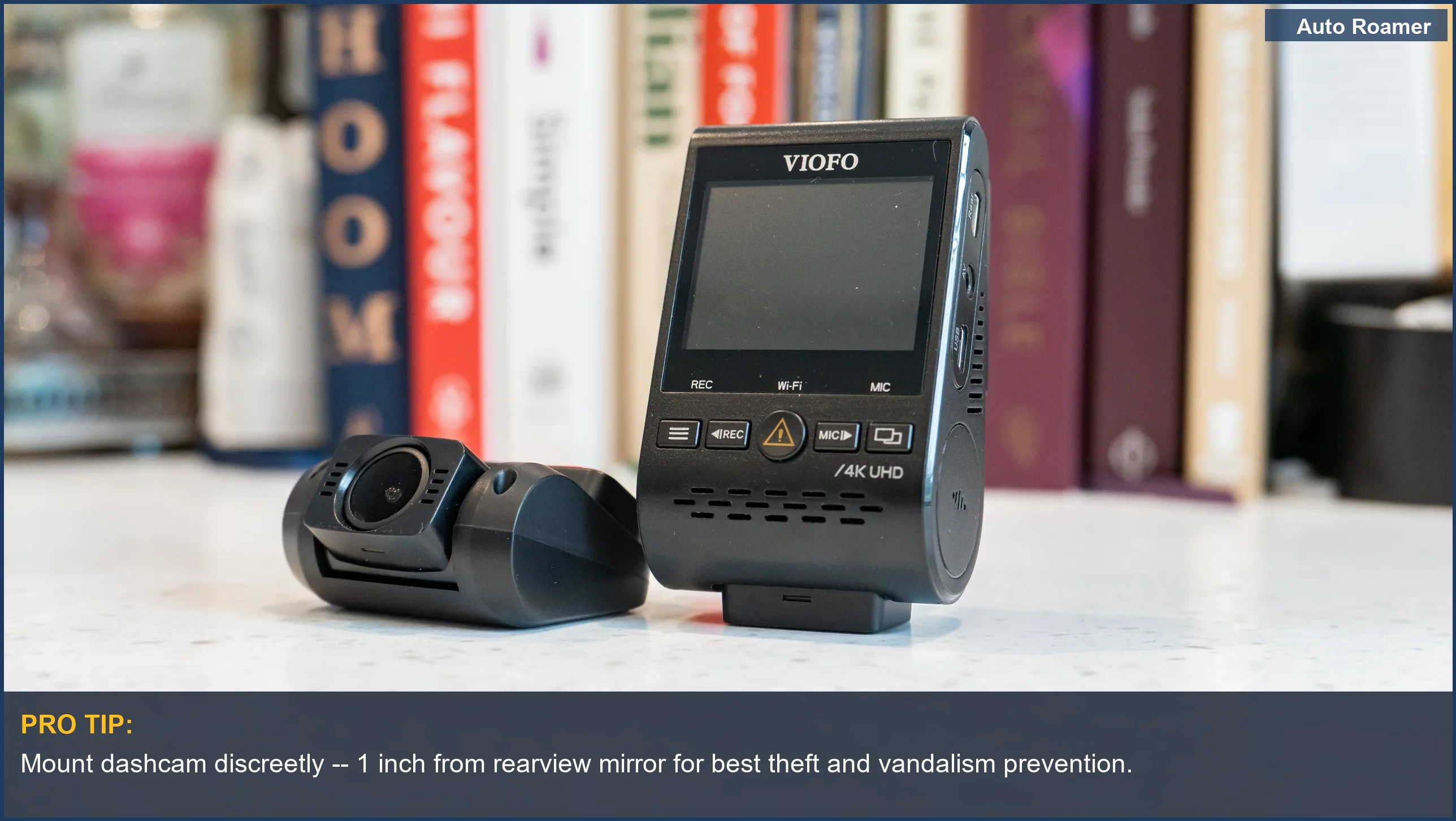
| Video Resolution & Sensor | True 4K (3840x2160) with Sony STARVIS or OmniVision PureCel sensor | Lower resolutions or generic sensors produce pixelated, unusable footage, especially in low light or high-motion scenarios. Wirecutter recommends Viofo A229 Pro for its 4K video. |
| Storage Medium | High-endurance MLC NAND microSD card (e.g., Samsung PRO Endurance) | TLC NAND or generic cards have vastly lower write-cycle ratings, leading to premature failure and corrupted video files within months. |
| Connectivity | Hardwired power kit with integrated low-voltage cutoff (LVC) and fused connections | Cigarette lighter adapters are prone to intermittent power, vibration dislodgement, and lack vital battery protection. |
| Operating Temperature Range | -20 to 70 degrees C (or wider) | Many units fail or severely degrade image quality outside a narrow range, rendering them useless in real-world conditions. |
A dashcam that can't reliably operate in a vehicle interior that can reach 60 degrees C (140 degrees F) in summer, or -10 degrees C (14 degrees F) in winter, is simply not fit for purpose. This isn't optional; it's basic physics.
Our Top Picks for Reliable Performance
I've sifted through the market's endless parade of glorified plastic boxes to identify units that actually prioritize material science and industrial longevity. These aren't just 'good enough' options; they're built with an understanding of what it takes to survive the automotive environment. Fleet safety guides emphasize durability for a reason.
Viofo A129 Pro Duo (~$250)
Capacity/Key Specs: Front 4K, Rear 1080p, Sony STARVIS sensors, Supercapacitor
Pros: Excellent video quality, reliable parking mode, robust supercapacitor power.
The enclosure is a decent PC-ABS blend, a step up from straight ABS.
Cons: Mounting adhesive can degrade over time, requiring replacement.
Best-for: Drivers demanding high resolution and reliable parking surveillance without breaking the bank on a disposable unit.
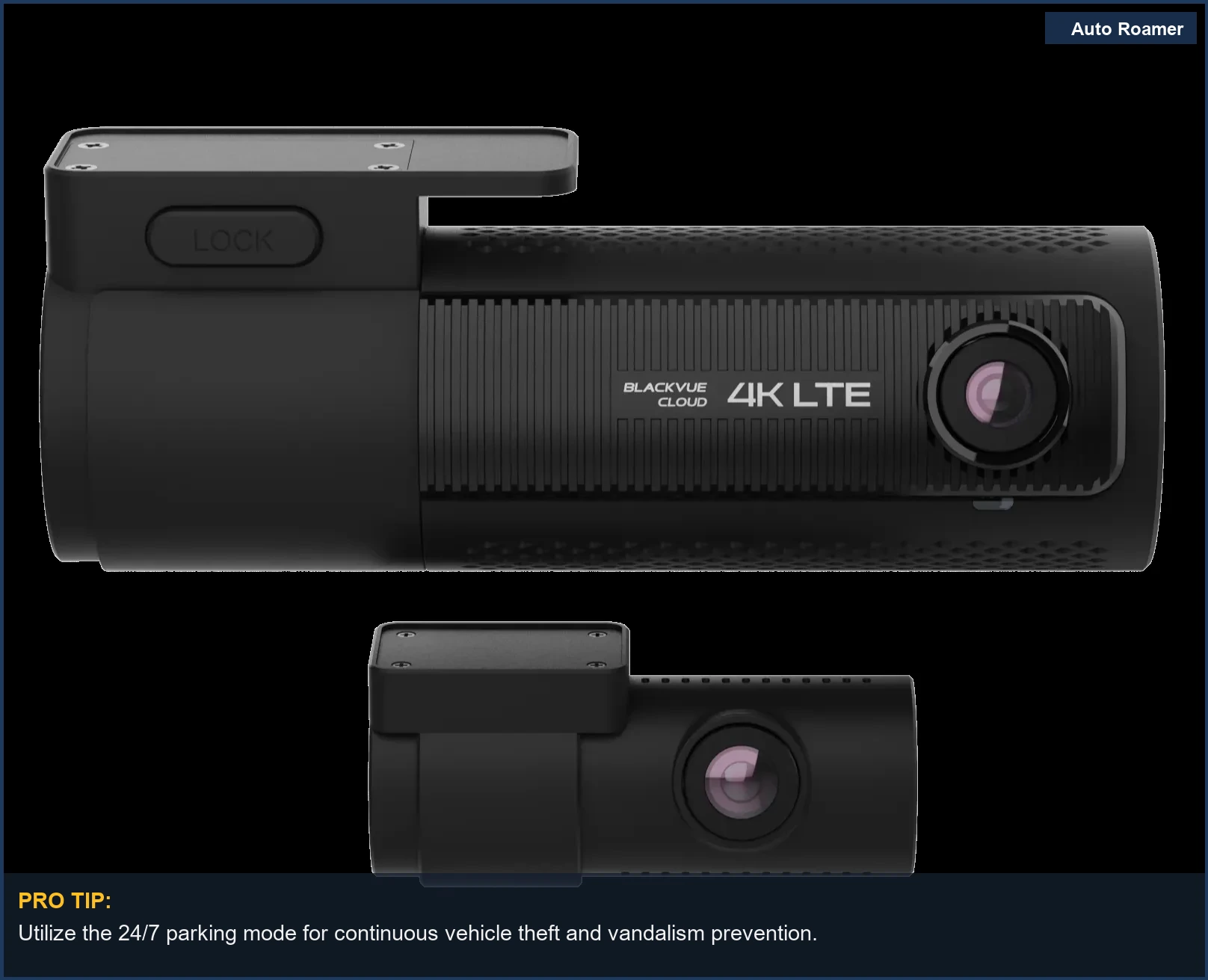
BlackVue DR970X-2CH LTE (~$600)
Capacity/Key Specs: Front 4K, Rear 1080p, Cloud connectivity, Supercapacitor
Pros: Integrated LTE for cloud alerts and remote viewing, excellent thermal management in its compact, well-ventilated enclosure.
Uses high-quality components throughout.
Cons: Premium price point, requires a SIM card for full functionality.
Best-for: Fleet managers or individuals needing constant connectivity and top-tier security. A parking monitor is invaluable here.
Thinkware U3000 (~$450)
Capacity/Key Specs: Front 4K, Rear 2K QHD, Radar parking mode, Supercapacitor
Pros: Advanced radar detection for parking mode reduces false triggers and power consumption.
The housing feels sturdy, likely a high-grade PC.
Cons: Radar can be sensitive to vehicle type and placement, some users report complex setup.
Best-for: Those prioritizing intelligent parking mode and minimal battery drain for extended surveillance.
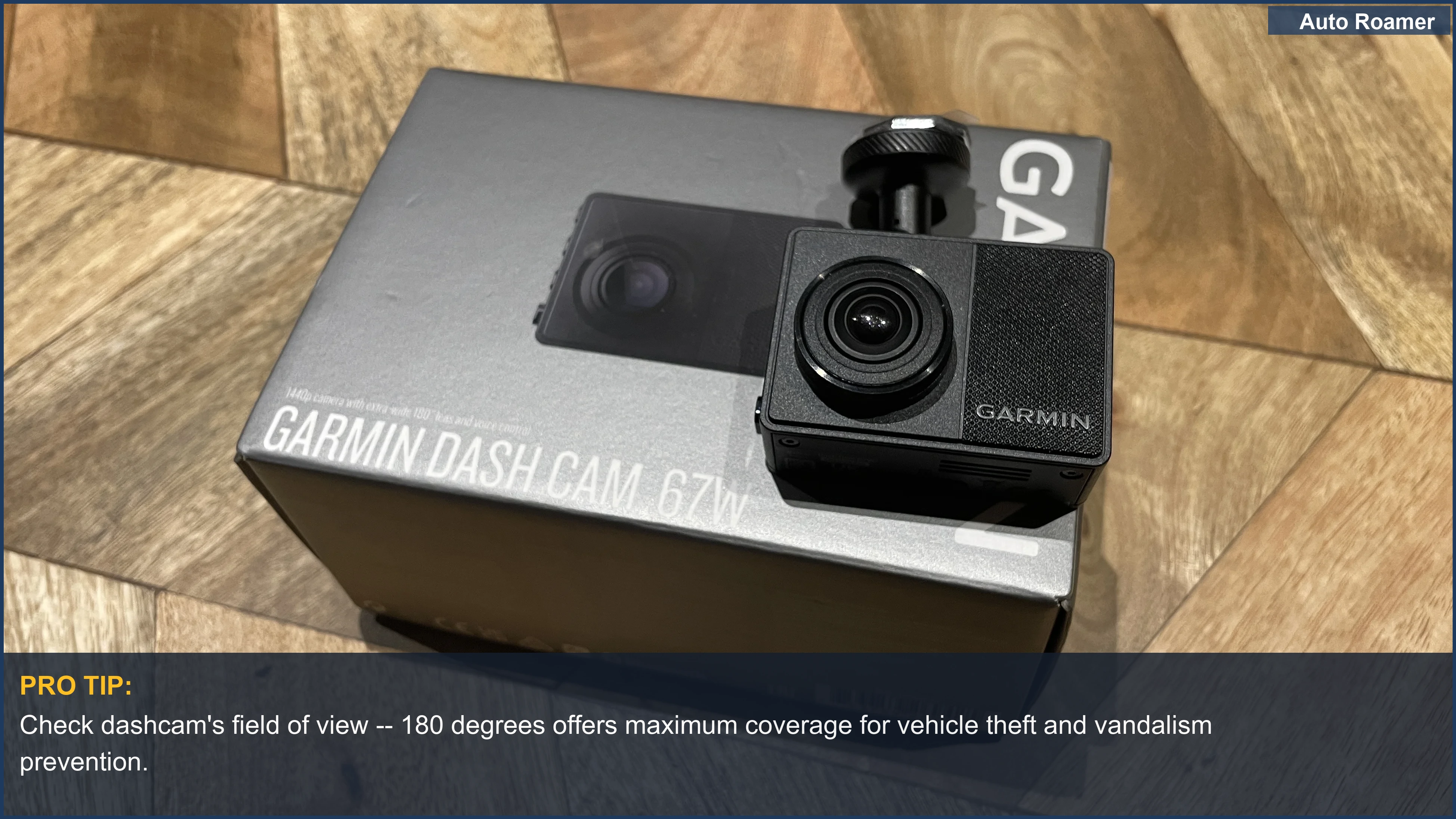
Garmin Dash Cam 67W (~$200)
Capacity/Key Specs: 1440p, 180-degree field of view, GPS, Voice Control
Pros: Compact size, decent video quality for its class, good integration with Garmin ecosystem.
The magnetic mount is surprisingly robust.
Cons: Internal battery is a Li-ion, not a supercapacitor, making it less ideal for extreme thermal cycling. Video resolution isn't top-tier.
Best-for: Users who value a small footprint and integration with existing Garmin devices, provided they understand the battery's limitations.
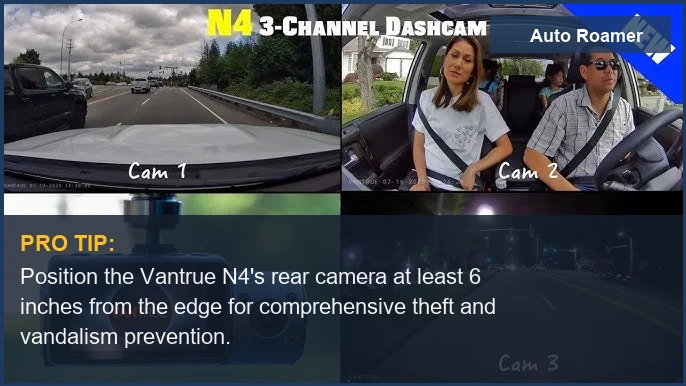
Vantrue N4 3 Channel (~$280)
Capacity/Key Specs: Front 1440p, Interior 1080p, Rear 1080p, Supercapacitor
Pros: Comprehensive three-channel coverage is excellent for rideshare or taxi drivers. The supercapacitor ensures robust performance.
A 4-channel setup deters vandalism effectively.
Cons: Video quality for each channel is good but not exceptional 4K. Bulkier form factor.
Best-for: Anyone requiring interior and exterior coverage from a single, reliable unit, prioritizing breadth over absolute pixel count.
These units, while not immune to all forms of degradation, are built with a more discerning eye towards material longevity and component selection. They represent a significant departure from the landfill-ready alternatives that dominate the market.
Head-to-Head Comparison
It's not enough for a dashcam to simply 'record.' It needs to perform flawlessly under duress, and its structural integrity must be beyond question. Here's how some top performers stack up on the metrics that truly matter. Four-channel systems offer unparalleled surveillance.
| Feature | Viofo A129 Pro Duo | BlackVue DR970X-2CH LTE | Thinkware U3000 |
|---|---|---|---|
| Power Source Longevity | Excellent (Supercapacitor) | Excellent (Supercapacitor) | Excellent (Supercapacitor) |
| Mount Material | ABS (Good for a polymer) | ABS (Good for a polymer) | ABS (Good for a polymer) |
| Enclosure Thermal Management | Good (Adequate venting) | Excellent (Compact, well-vented design) | Very Good (Robust PC housing) |
| Video Quality (Front) | 4K (Sony STARVIS) | 4K (Sony STARVIS 2) | 4K (Sony STARVIS 2) |
| Parking Mode Reliability | High (Impact/Motion) | High (Impact/Motion/Cloud) | Very High (Radar/Impact/Motion) |
| Connectivity for Security | Wi-Fi (Local access) | LTE (Cloud access, remote monitoring) | Wi-Fi (Local access, optional cloud module) |
| Anticipated Lifespan (Years) | 3-5+ | 5+ | 4-6+ |
Notice the common thread: supercapacitors. This isn't a coincidence; it's a fundamental requirement for any serious dashcam intended for long-term use in a vehicle. The thermal cycling inside a car will destroy a standard Li-ion battery with predictable efficiency. Dash cams don't increase break-in risk; they provide evidence.
Budget vs Premium: Where Your Money Actually Goes
The distinction between a $50 dashcam and a $500 one isn't just about brand recognition; it's about fundamental differences in material composition and engineering. A 'budget' unit is almost universally a masterclass in planned obsolescence, designed to fail just outside its pathetic 90-day warranty. Installation best practices are often ignored by cheap units.
| Feature Category | Budget (~$50-150) | Premium (~$300-600+) |
|---|---|---|
| Internal Power Source | Lithium-ion battery (Li-Po pouch cell) | Supercapacitor (EDLC) |
| Mounting Mechanism | Injection-molded ABS or GPPS plastic with suction cup | Glass-filled nylon (PA6-GF30) or machined aluminum with 3M VHB tape |
| Enclosure & Optics Material | Cheap, non-UV stabilized ABS or general-purpose polystyrene (GPPS) | High-temperature polycarbonate (PC) or aluminum alloy; multi-element glass lenses |
| Processor & Image Sensor | Generic, low-power SoC; entry-level CMOS sensor | Ambarella or Novatek SoC; Sony STARVIS or OmniVision PureCel sensor |
| Storage Medium Durability | Generic TLC NAND microSD card (low write cycles) | High-endurance MLC NAND microSD card (high write cycles) |
| Wiring Harness Quality | Thin 26-28 AWG CCA wire, unshielded, poor strain relief | Robust 20-22 AWG copper wire, shielded, industrial-grade connectors |
| Thermal Management | Non-existent; relies on passive convection through cheap plastic | Integrated heatsinks, proper internal airflow, high-Tg PCB materials |
| Anticipated Lifespan | 6-18 months (Landfill-Ready) | 3-7+ years (Industrial Longevity) |
You're not paying for 'features' with a premium dashcam; you're paying for structural integrity and material science that prevents premature failure. The difference between a Li-ion battery and a supercapacitor alone determines whether your unit lasts one summer or five. It's not a luxury; it's a necessity for anything you expect to rely on.
The Bottom Line
The truth is, most dashcams on the market are landfill-ready out of the box. Their manufacturers prioritize minimal bill-of-materials cost over any semblance of industrial longevity. This strategy guarantees repeat purchases, which is excellent for their bottom line, but disastrous for your wallet and peace of mind. Essential dash cam features must include durability.