Where to Start
The dealer wanted $300 to install a basic 1080p dashcam in my RV last year, citing 'complex wiring' and 'vehicle integration' for a glorified GoPro. Total scam. These things are glorified security cameras, not rocket science. RVs are rolling targets for parking lot dings and insurance fraud, so a solid dashcam isn't optional, it's a necessity. You need proof when some idiot backs their trailer into your fiberglass. Car and Driver's Gear Team agrees on the evidence part.
Quick Verdict
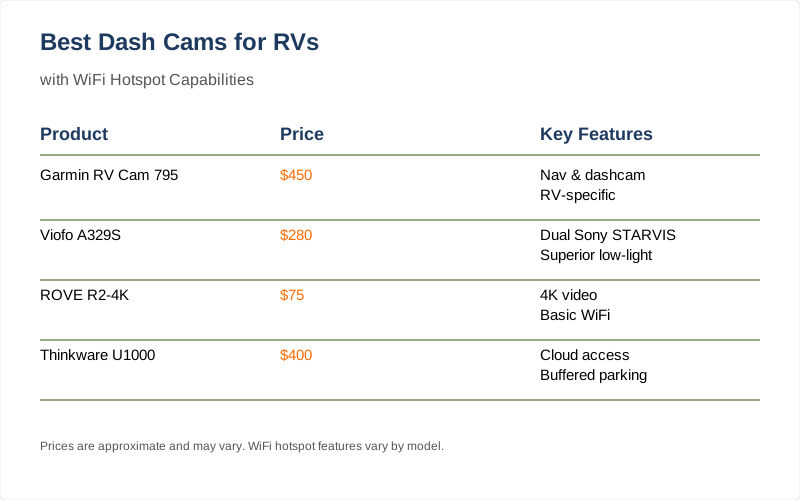
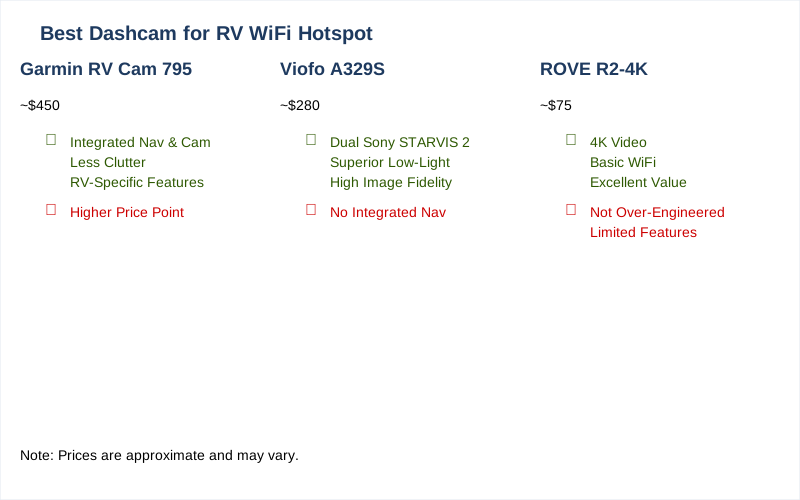
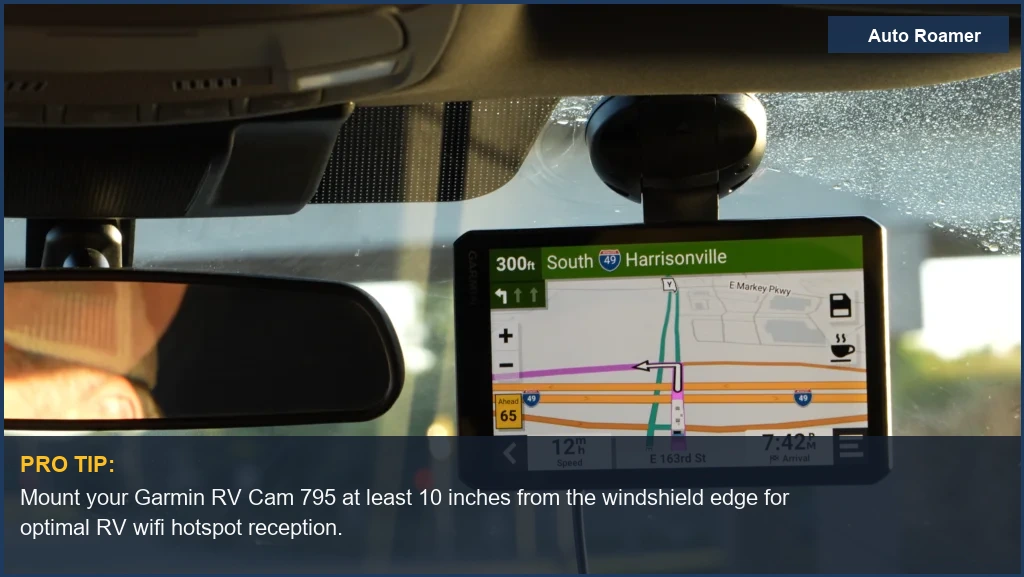
- Best Overall for RVs: Garmin RV Cam 795 (~$450) - Integrates navigation and dashcam. Less clutter, more data. The Texas Diamond Garage highlights its RV-specific features.
- Best for Pure Video Quality: Viofo A329S (~$280) - Dual Sony STARVIS 2 sensors mean superior low-light capture. This is for when image fidelity matters more than a fancy touchscreen.
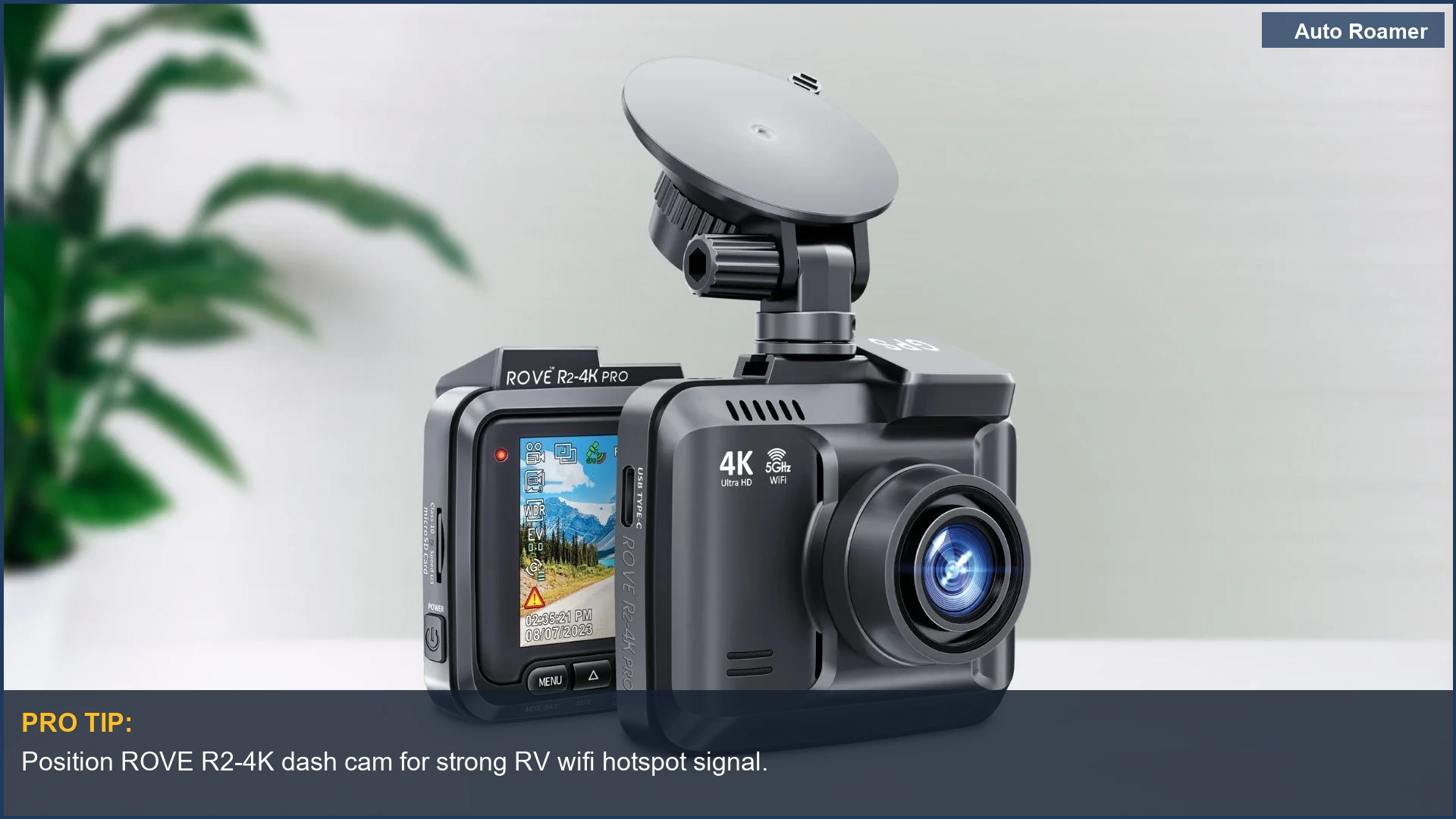
- Best Budget Option with WiFi: ROVE R2-4K Dash Cam (~$75) - For the price of a few oil filters, you get 4K video and basic WiFi. It's not over-engineered, but it gets the job done.
- Best for Cloud Connectivity: Thinkware U1000 (~$400) - If you need remote access and buffered parking mode, this is your huckleberry. Just remember that subscription fee for the cloud.
- Best Mirror-Mounted Option: Haloview MC10 (~$480) - Replaces your rearview mirror, giving you a wider field of view. Roadtreking Facebook group members swear by the integrated approach.
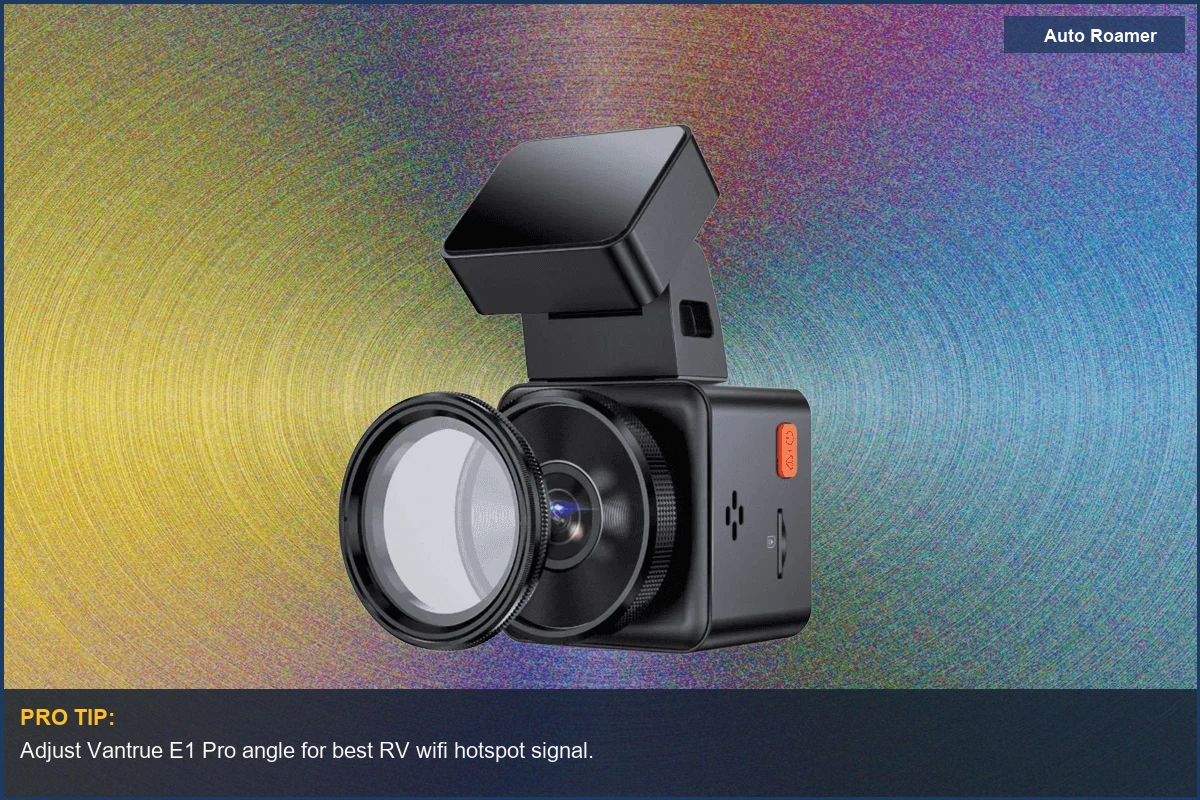
- Honorable Mention for Simplicity: Vantrue E1 Pro (~$130) - A compact single-channel option with a solid Sony STARVIS 2 sensor. No frills, just good video. DashcamTalk calls it a top-tier 4K camera for the price.
View on Amazon — Best Overall for RVs: Garmin RV Cam 795
View on Amazon — Best for Pure Video Quality: Viofo A329S
View on Amazon — Best Budget Option with WiFi: ROVE R2-4K Dash Cam
View on Amazon — Best for Cloud Connectivity: Thinkware U1000
View on Amazon — Best Mirror-Mounted Option: Haloview MC10
View on Amazon — Honorable Mention for Simplicity: Vantrue E1 Pro
What to Look For
The Specs That Matter, Not The Marketing Fluff
Forget the 'amazing clarity' and 'unbeatable features' marketing garbage. Here's what actually matters when you're trying to prove who hit who in a crowded campground. I'm talking about the physics of image capture and data transfer, not some pretty picture for your Instagram. Your RV is a big target, so you need the right tools.
| Feature | Why It Matters (Dirtbag Engineer's Take) | Failure Mode if Ignored |
|---|---|---|
| Resolution (4K vs 1080p) | Higher pixel count means more data points on license plates and faces. 4K gives you 3840x2160 pixels, four times the data of 1080p. Critical for capturing fine details. | Lack of evidence; blurry plates, unidentifiable vehicles. Your insurance claim goes nowhere. |
| Sensor Type (e.g., Sony STARVIS 2) | This isn't just a 'camera chip.' STARVIS 2 sensors have higher light sensitivity and dynamic range. They pull more photons from low-light conditions, reducing signal noise. Essential for night vision. | Excessive image noise and motion blur in low light. You get a grainy mess when you need a clear image. |
| Field of View (FOV) | A wider angle (140-170 degrees) captures more lanes and roadside activity. Too narrow, and you miss that joker swerving from the next lane over. | Tunnel vision; critical events happening just outside the frame are missed. |
| Capacitor vs. Battery | Capacitors tolerate wider thermal cycling (-4F to 150F) better than lithium-ion batteries. Batteries swell and outgas in high heat, leading to premature failure and fire risk. Motorhomes sit in the sun. | Thermal degradation of energy storage; loss of last-second recording, potential fire hazard. |
| WiFi Frequency (2.4GHz vs 5GHz) | 5GHz WiFi offers higher data transfer rates for faster video downloads to your phone. 2.4GHz is slower, more prone to interference from other RVs' devices. | Slow, frustrating file transfers. You'll give up before you get the footage you need. |
| Parking Mode (Buffered) | Records pre-event footage after impact or motion detection. Uses less power than continuous recording. Buffered mode means it saves the 15 seconds *before* the fender bender, not just after. | Missing the critical moments leading up to an incident. No proof of intent, just aftermath. |
Our Top Picks for Reliable Performance
Our Top Picks for Reliable Performance
I've seen enough cheap plastic dashcams melt on dashboards to know that 'features' mean nothing without structural integrity and reliable electronics. Here are the units that actually hold up, based on real-world use and not just brochure specs. Nobody needs a dashcam that quits when the sun hits 120 degrees F.
Garmin RV Cam 795 (~$450)
Capacity/Key Specs: 1080p, 140-degree FOV, built-in GPS, RV-specific navigation, voice control.
Pros: Seamless integration of navigation and recording. Reduces dashboard clutter.
Designed for larger vehicles, so the mounting is usually more robust. My kind of over-engineered for its purpose.
Cons: 1080p resolution is a bit behind the curve for the price. You pay for the RV-specific features, not just raw video quality.
Best-for use case: RV owners who want an all-in-one solution and prioritize convenience over absolute pixel density.
This thing is built for the long haul.
Viofo A329S (~$280)
Capacity/Key Specs: Front 4K (Sony STARVIS 2), Rear 2.7K (Sony STARVIS 2), 5GHz WiFi, GPS.
Pros: Unbeatable video quality, especially in low light. Dual STARVIS 2 sensors pull in incredible detail. If you need to read a license plate at 2 AM, this is your unit. DashcamTalk praises its stability and image clarity.
Cons: No screen, relies on app for playback.
Mounting can be finicky in some RVs, requiring careful cable routing.
Best-for use case: Drivers who prioritize forensic-level video evidence above all else. This is for the meticulous record-keeper.
ROVE R2-4K Dash Cam (~$75)
Capacity/Key Specs: 4K, 150-degree FOV, 2.4GHz WiFi, GPS.
Pros: Incredible value for 4K resolution. Has a screen for immediate playback. Easy to set up. For under $100, it's a solid entry point.
Cons: 2.4GHz WiFi is slow for large 4K files.
The thermal tolerance of the internal battery is questionable in direct sunlight, expect a shorter lifespan in hot climates.
Best-for use case: Budget-conscious RVers who need basic 4K recording and WiFi without breaking the bank. It's not fancy, but it records.
Thinkware U1000 (~$400)
Capacity/Key Specs: Front 4K, Rear 2K, 5GHz WiFi, Cloud connectivity (subscription), buffered parking mode.
Pros: Robust parking mode with pre-event recording. Cloud features allow remote monitoring, which is great for unattended RVs.
Freightwaves Checkpoint lists it as a top WiFi option.
Cons: Expensive. Cloud features require a subscription. The power draw for parking mode can drain smaller RV house batteries if not properly managed.
Best-for use case: RV owners who want advanced security features, remote access, and don't mind a recurring subscription fee for peace of mind.
Haloview MC10 (~$480)
Capacity/Key Specs: 1080p, mirror-mounted, wide-angle.
Pros: Integrates directly into your rearview mirror, providing a clean install. Eliminates windshield clutter.
Offers a wide view for both driving and parking. Facebook RV groups report good quality and functionality.
Cons: 1080p resolution for the price is steep. Installation can be more involved than a suction-cup mount.
The mirror itself might vibrate on rough roads, causing minor image distortion.
Best-for use case: RVers who want a factory-integrated look and a wider field of view without adding another gadget to the windshield.
Vantrue E1 Pro (~$130)
Capacity/Key Specs: 4K (Sony STARVIS 2), 5GHz WiFi, optional LTE.
Pros: Compact size, excellent 4K video quality from the STARVIS 2 sensor. Fast 5GHz WiFi for quick downloads. Julian23 at DashcamTalk praises its price-to-performance ratio.
Cons: Single channel only, no rear camera option.
Small screen can be hard to use.
Best-for use case: Minimalist RVers who need a high-quality front-facing camera and fast WiFi for data transfer, without the bulk of a dual-channel system.
Head-to-Head Comparison
Head-to-Head Comparison: The Raw Data
Forget the fluff, here's a direct comparison of the critical numbers. This isn't about 'user experience,' it's about specifications that dictate performance and long-term reliability. We're looking at the hard facts that determine if a dashcam is worth its weight in copper wiring, not just plastic.
| Feature | Garmin RV Cam 795 | Viofo A329S | ROVE R2-4K | Thinkware U1000 | Haloview MC10 | Vantrue E1 Pro |
|---|---|---|---|---|---|---|
| Front Resolution | 1080p | 4K | 4K | 4K | 1080p | 4K |
| Rear Resolution (if applicable) | N/A | 2.7K | N/A (some dual versions exist) | 2K | N/A | N/A |
| Sensor Type | Standard CMOS | Sony STARVIS 2 | OmniVision | Sony STARVIS | Standard CMOS | Sony STARVIS 2 |
| WiFi Frequency | 2.4GHz | 5GHz | 2.4GHz | 5GHz | 2.4GHz | 5GHz |
| Parking Mode | Basic | Buffered | Basic | Buffered | Basic | Buffered |
| Power Source | Capacitor | Capacitor | Battery | Capacitor | Capacitor | Capacitor |
| Approx. Price | ~$450 | ~$280 | ~$75 | ~$400 | ~$480 | ~$130 |
| RV Integration | High | Low | Low | Medium | High | Low |
| Cloud Option | No | No | No | Yes (subscription) | No | Yes (optional LTE) |
Budget vs Premium: Where Your Money Actually Goes
Budget vs Premium: Where Your Money Actually Goes
The difference between a $75 dashcam and a $450 one isn't just a bigger brand logo. It's about the thermal stability of the components, the quality of the optical glass, and the data transfer rate of the internal WiFi module. You're paying for engineering tolerances and material science, not just a 'better experience.' Wirecutter's research backs this up, finding that the Viofo A229 Pro delivers clear 4K video.
| Feature | Budget (~$75-$150) | Premium (~$250-$500+) | Why the Cost Difference? (The Physics) |
|---|---|---|---|
| Video Resolution & Sensor | Often 4K, but with older, smaller CMOS sensors. Low light performance suffers due to reduced photon capture efficiency. | 4K with Sony STARVIS 2 or equivalent. Larger sensor area, higher quantum efficiency, better signal-to-noise ratio. This means more usable data in all light conditions. | Higher-grade silicon wafers and larger pixel arrays cost more to manufacture. Improved thermal management to prevent sensor noise at elevated temperatures. |
| Power Source | Lithium-ion battery. Susceptible to thermal degradation. Swelling and capacity loss are common after 12 months of daily thermal cycling. | Supercapacitor. Tolerates extreme temperatures (-4F to 150F) with minimal degradation. Provides reliable power for shutdown without cell expansion. | Capacitors are more expensive per joule of energy storage but offer superior cycle life and thermal stability. No outgassing risk. |
| WiFi Speed | 2.4GHz. Slower data transfer (max 50-100 Mbps). Prone to interference from other devices in a crowded RV park. | 5GHz. Faster data transfer (max 400-800 Mbps). Less susceptible to interference, allowing quicker footage downloads to your phone. | Higher frequency radio modules require more precise antenna design and faster processing, increasing component cost. |
| Build Quality & Mount | Cheaper plastics, suction cup mounts that lose adhesion after a few thermal cycles. Vibration can introduce mechanical stress on the PCB traces. | Higher-grade ABS/PC plastics, often with a more robust adhesive or screw-in mount. Designed to minimize vibrational resonance and maintain optical alignment. | Better material science for plastics, more robust mechanical fasteners. Reduced shear stress on mounting points. |
| Parking Mode | Basic motion detection, often misses pre-event footage. Can drain battery quickly. | Buffered parking mode with G-sensor and motion detection. Records pre-event. More efficient power management. | Dedicated low-power hardware for constant monitoring. Algorithms to detect events and trigger recording, requiring more complex firmware. |
The Bottom Line
The Bottom Line: Don't Skimp on Eyewitnesses
You're driving a house on wheels. The potential for a fender bender, or worse, is higher than in a sedan. A dashcam isn't a luxury; it's a critical piece of forensic equipment. My old RV took a hit in a parking lot last year, and without the dashcam, it would have been my word against some joker's insurance company. That footage saved me a $1,500 deductible and a fight.
- Prioritize Resolution and Sensor: If you can't read a license plate, the camera is worthless. Sony STARVIS 2 sensors are the gold standard for low-light performance.
- Consider Thermal Stability: RVs get hot. A capacitor-based system is less likely to swell and fail than a battery-powered unit. This isn't just about longevity; it's about fire risk.
- Faster WiFi is Key: 5GHz WiFi cuts down on the agonizing wait time for large 4K files. You'll actually use the footage if it's easy to access.
- Don't Overlook Parking Mode: Buffered recording means you get the critical seconds *before* an impact, not just after. This is crucial for proving fault.
- Match to Your Needs: If you need navigation, the Garmin is great. If pure video quality is king, go Viofo. If you're on a tight budget, the ROVE works, but understand its limitations in thermal cycling. Reddit users agree that price, video quality, and everyday use are key factors.