Setting the Scene
The dealer wanted $300 to install a basic dash cam in my buddy's F-150, claiming 'complex wiring.' That's a 12V constant and a switched 12V line, maybe 20 minutes with a trim tool and a multimeter. They'll tell you it's about protecting your investment. I'll tell you it's about capturing the idiot who backs into your trailer hitch at 2 MPH and then claims you hit them. Don't let them upsell you.
Driving an SUV with a trailer adds 15 to 30 feet of blind spot, depending on your setup. That's a lot of real estate for some bozo to swing wide or cut you off. Your mirrors are good, but they don't record jack. When you're pulling a 7,000-pound travel trailer, a minor fender bender becomes a major liability headache.
Insurance companies love clear video evidence. Without it, it's your word against theirs, and the guy in the smaller car usually gets the sympathy vote. A decent dash cam isn't just a gadget; it's a hard data recorder for mechanical events. It records the force vectors, the timing, the exact position. Car and Driver tested a bunch, and the results are pretty clear.
For SUV towing, you're looking for more than just a forward-facing camera. You need eyes on the trailer, the rear bumper, and maybe even the interior if you're hauling precious cargo or passengers who like to kick seats. Think about the mechanical stress on your rig and how a camera can document every bump and scrape.
Quick Verdict
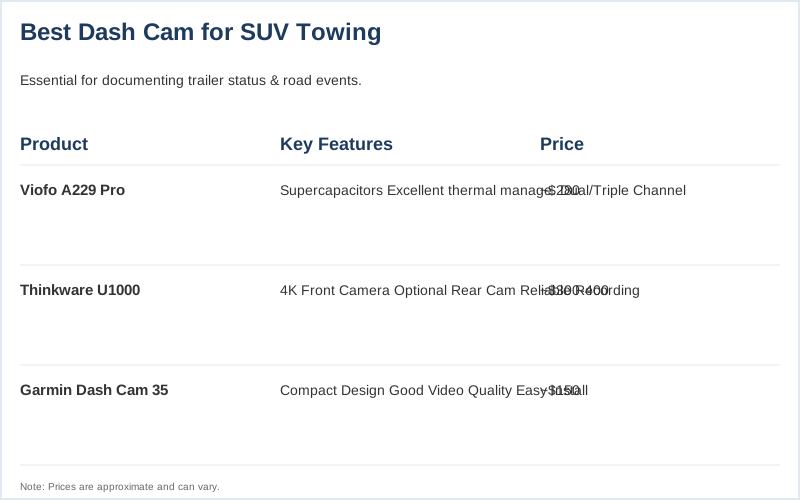
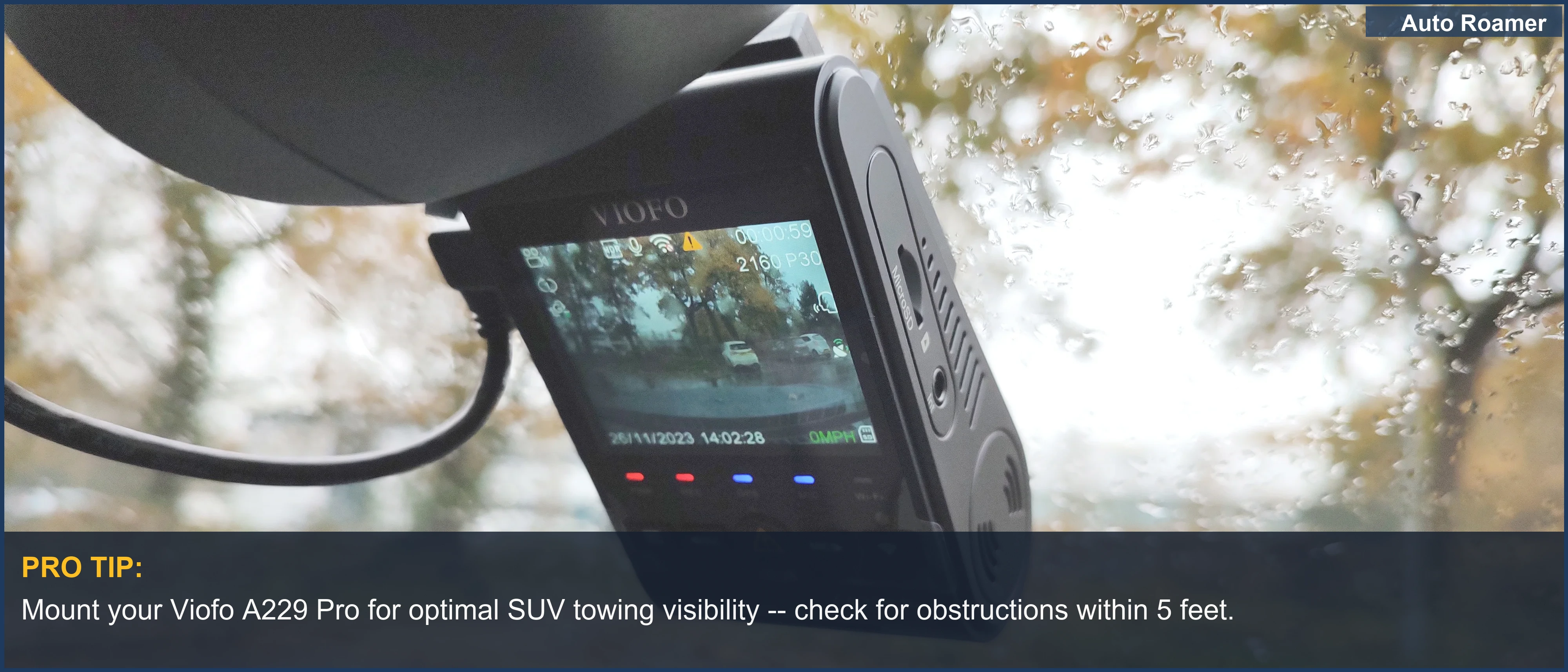
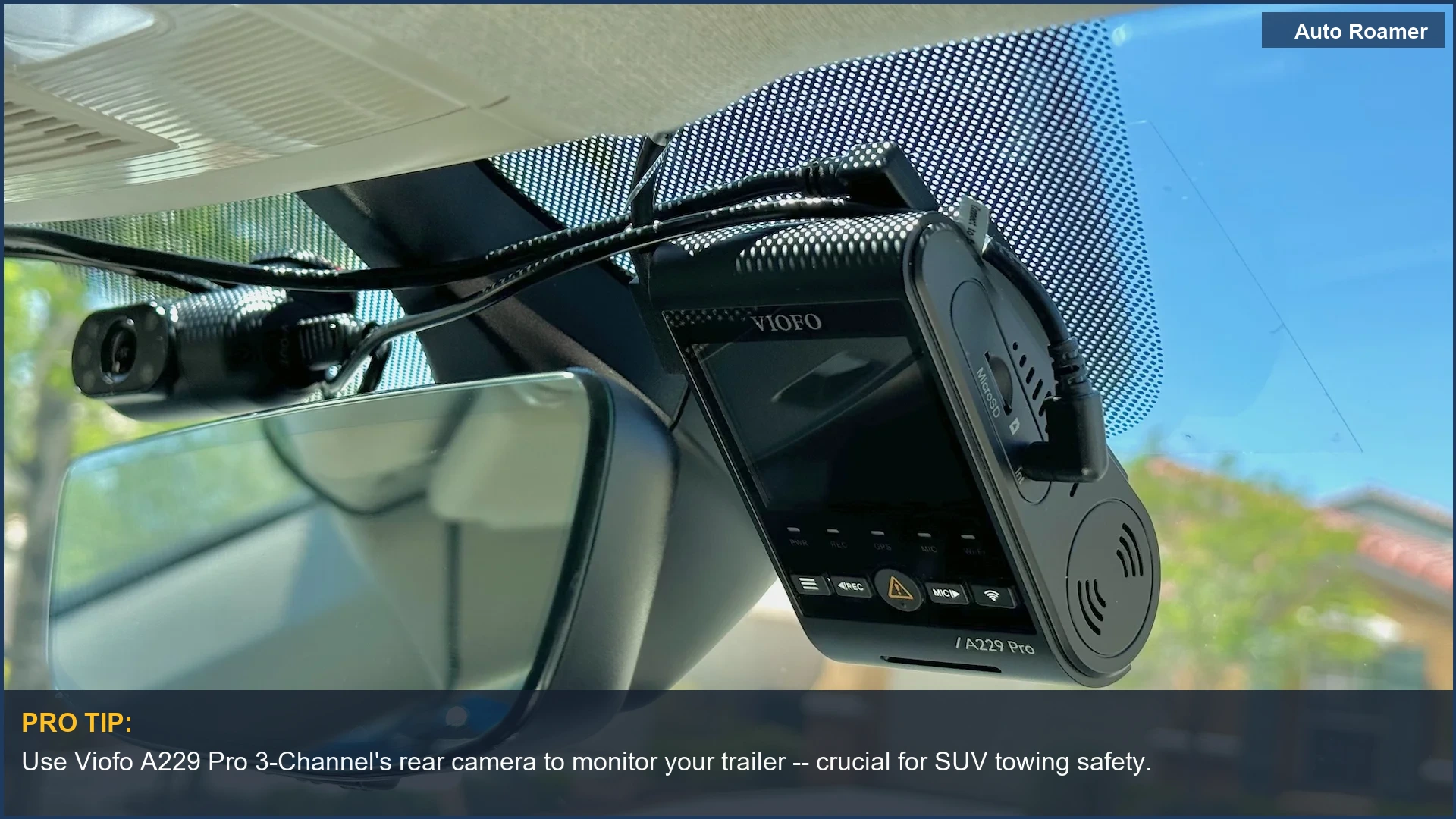
- Best Overall for Towing: Viofo A229 Pro (~$280). This unit uses supercapacitors, not lithium batteries, meaning it won't swell and die in a 140 degrees F parked car. The 3-channel option covers front, interior, and rear, which is critical for trailer visibility. It records 15 seconds *before* an impact, not just after. That pre-roll is golden for insurance claims.
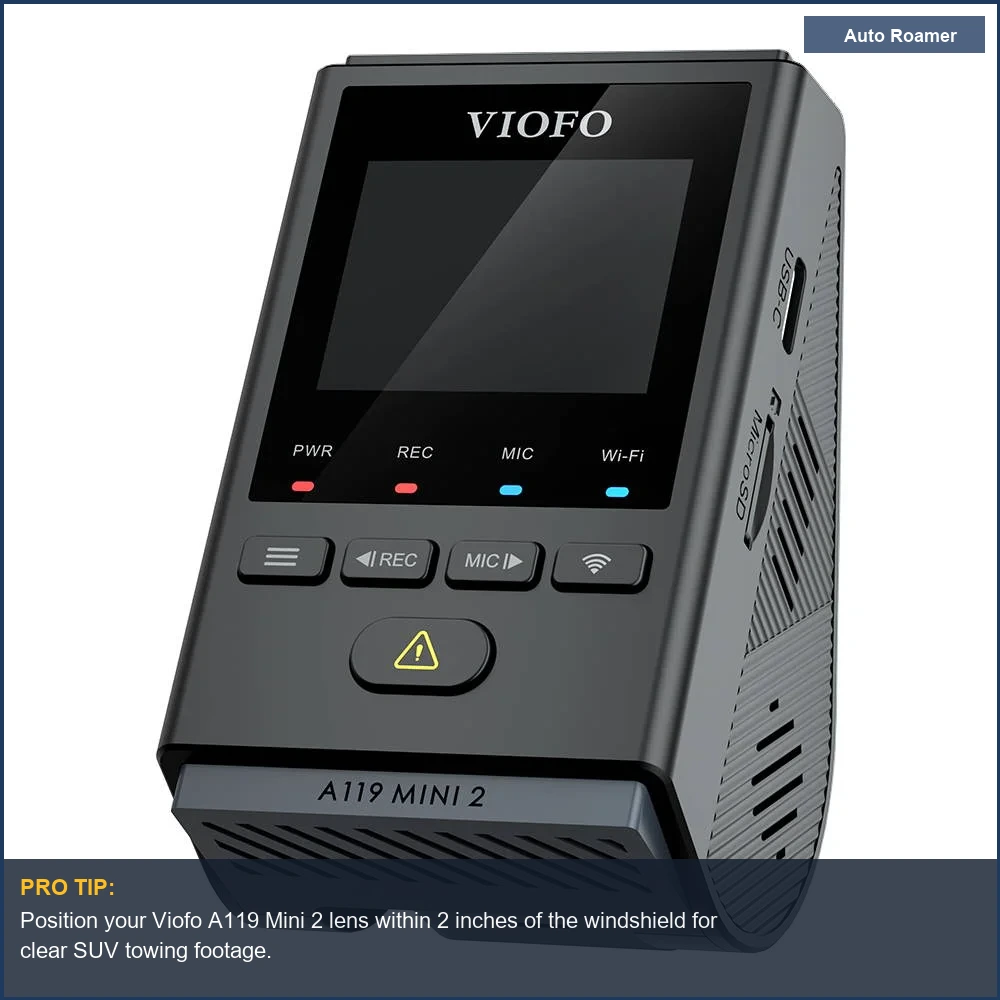
- Best Value for Towing: Viofo A119 Mini 2 (~$110). Don't let the 'Mini' fool you. This is a front-only camera with a STARVIS 2 sensor. It's 2K resolution, but the dynamic range means readable license plates even with headlight glare. If you only need forward-facing, this is solid.
- Best for Parking Surveillance: Thinkware U3000 PRO (~$400). This thing has radar-based parking mode, so it only records when motion is detected *before* an impact. Less drain on your battery, less junk footage. Great for protecting your rig in sketchy lots.
- Best for Rugged Use: Blackvue DR970X-2CH (~$430). This unit is built like a tank. It's got a solid connection for the rear camera, which is important when you've got cable vibration from towing. It handles thermal cycling better than most.
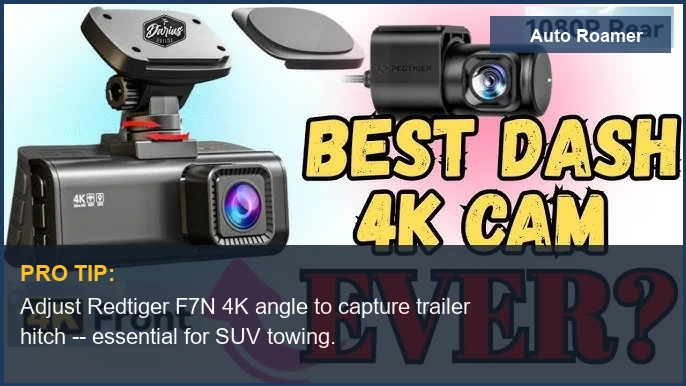
- Best Budget Multi-Channel: Redtiger F7N 4K (~$160). This one gives you front and rear for a reasonable price. The rear cam is IP68 rated, which is a must for external trailer mounting. Just make sure your wiring connections are solid; cheap connectors introduce resistance and voltage drop. Consumer Reports has tested similar units.
What to Look For
Don't just grab the first '4K' camera you see. That resolution number means squat if the sensor can't actually capture usable detail in low light or high contrast. Here's what actually matters when you're speccing out a dash cam for an SUV that tows:
| Feature | Why it Matters for Towing | Dirtbag Engineer's Take |
|---|---|---|
| Supercapacitors vs. Lithium-Ion Batteries | Lithium batteries swell and fail at 140 degrees F (60 degrees C), common in parked cars. Supercapacitors withstand extreme thermal cycling. | Always supercapacitors. Lithium-ion is a planned failure mode in a hot vehicle. A Wirecutter top pick, the Viofo A229 Pro, uses them exclusively. Smart move. |
| Image Sensor Quality (e.g., Sony STARVIS 2) | A good sensor provides wide dynamic range, capturing usable footage in both bright daylight and near-total darkness, crucial for license plates. | This is where cheap cameras fail. A 4K sensor without good dynamic range gives you blown-out highlights and black shadows. You need legible plates, not abstract art. |
| Multi-Channel Support (Front, Rear, Interior) | Essential for covering blind spots created by trailers, documenting rear-end collisions, and monitoring interior cargo/passengers. | Front and rear is non-negotiable for towing. An interior camera is cheap insurance if you're hauling gear or people. Folks in towing groups swear by it. |
| Parking Mode Functionality (Pre-buffered) | Records events before and after impact, providing critical context for hit-and-runs or parking lot incidents when you're not in the vehicle. | 'Impact detection' that starts recording *after* the hit is worthless. You need the 15 seconds *before* the clown car backs into your bumper. |
| GPS and Speed Logging | Provides irrefutable data on vehicle location and speed, crucial for accident reconstruction and insurance claims. | This isn't for showing off your top speed. It's hard data for the adjuster. No 'he said, she said' when you have a timestamped GPS track. |
| Storage Capacity and Loop Recording | Ensures continuous recording by overwriting old, non-locked footage. Supports high-capacity microSD cards for extended recording times. | Don't cheap out on the microSD card. Class 10 U3 V30 is the minimum. A bad card will corrupt footage or fail during heavy write cycles. |
| Reliable Mounting System | Adhesive mounts (3M VHB) are generally more stable than suction cups, which fail under prolonged thermal cycling and vibration. | Suction cups are for temporary use. Your SUV and trailer vibrate. That mounting point needs to be solid. Adhesive, or even a screw if you're hardcore, is the only way. |
| Hardwiring Kit Compatibility | Allows for continuous power for parking mode without draining your main battery, often with low-voltage cutoff protection. | Skip the cigarette lighter plug if you want parking mode. Hardwire it with a proper kit. Just make sure your low-voltage cutoff is set correctly, or you'll be calling AAA. |
Our Top Picks for Reliable Performance
- Key Specs: 4K front, 2K interior, 2K rear; Sony STARVIS 2 sensors; Supercapacitor; GPS logging; 15-second pre-roll parking mode.
- Pros: Excellent image quality in all conditions, especially low light. Supercapacitor resists thermal degradation. Pre-roll parking mode is a game-changer for evidence. Covers all angles needed for towing.
- Cons: Hardwiring kit sold separately. The 2K interior camera might be overkill for some, but I appreciate the data density.
- Best For: Serious towers who need bulletproof evidence from all angles and robust thermal stability.
- Key Specs: 4K front, 2K rear; Sony STARVIS 2 sensors; Supercapacitor; Built-in radar parking mode; Cloud connectivity.
- Pros: Radar parking mode is incredibly efficient, reducing false triggers and battery drain. Excellent build quality, handles vibration well. Cloud features are useful for remote monitoring.
- Cons: Pricey. Rear camera cable can be a pain to route cleanly if you're not handy with interior trim.
- Best For: Those who prioritize advanced parking surveillance and remote access for their parked SUV and trailer.
- Key Specs: 4K front, 2K rear; Sony STARVIS 2 sensors; Supercapacitor; Integrated Wi-Fi/Cloud; Parking mode.
- Pros: Known for robust construction and reliable operation. Excellent app and cloud integration. The coaxial cable for the rear camera is more resistant to EMI and signal loss than cheaper alternatives.
- Cons: Higher price point. Some find the cylindrical design less discrete than wedge-shaped cameras.
- Best For: Users who demand top-tier reliability and seamless cloud integration, willing to pay for the over-engineered feel. This is a solid alternative to the Redtiger F17 Elite.
- Key Specs: 2K front; Sony STARVIS 2 sensor; Supercapacitor; GPS optional.
- Pros: Incredible value for the image quality. Compact size means less windshield obstruction. Supercapacitor ensures longevity in heat. Reddit threads rave about its performance for the price.
- Cons: Front-only, so no direct trailer or rear-vehicle coverage.
- Best For: Budget-conscious drivers who need solid front-facing evidence without the multi-channel complexity.
- Key Specs: 4K front, 1080p rear; IP68 waterproof rear camera; Parking mode; Wi-Fi.
- Pros: Affordable dual-channel solution. IP68 rear camera is perfect for external trailer mounting, resisting water ingress and road grime.
- Cons: Image quality isn't quite on par with the higher-end Sony STARVIS 2 sensors, especially in low light. The wiring can be a bit thin, increasing voltage drop over long runs.
- Best For: Drivers needing a cost-effective front and *external* rear camera, especially for trailer monitoring.
Head-to-Head Comparison
Choosing a dash cam for towing means looking beyond the marketing fluff and focusing on the hard engineering. You need something that can handle the vibration, the thermal cycling, and still capture clear footage when it counts. Viofo's focus on sensor quality and supercapacitors is a good benchmark.
| Feature | Viofo A229 Pro | Thinkware U3000 PRO | Blackvue DR970X-2CH |
|---|---|---|---|
| Max Channels | 3 (Front, Interior, Rear) | 2 (Front, Rear) | 2 (Front, Rear) |
| Front Resolution | 4K | 4K | 4K |
| Rear Resolution | 2K | 2K | 2K |
| Thermal Management | Supercapacitor | Supercapacitor | Supercapacitor |
| Parking Mode | Buffered (15s pre-roll) | Radar-based (motion/impact) | Buffered (motion/impact) |
| GPS | Integrated | Integrated | Integrated |
| Approx. Price | ~$280 (3-channel) | ~$400 | ~$430 |
| Dirtbag Engineer's Take | Best bang for the buck on multi-channel coverage with robust thermal performance. Pre-roll is huge for evidence. | Smartest parking mode, but you pay for it. Good for minimizing battery drain if you park for extended periods. | Rock-solid build. The coaxial cable for the rear camera is a nice touch for preventing signal degradation over long runs or high vibration environments. Texas Diamond Garage has some good points on robust builds. |
All three of these use supercapacitors, which is a non-negotiable for me. Lithium-ion batteries in a windshield-mounted device are a failure waiting to happen. The thermal cycling from 30 degrees F overnight to 150 degrees F in direct sun is brutal on battery chemistry. Supercapacitors just laugh at that kind of abuse. They're built for thousands of charge/discharge cycles without degradation.
Budget vs Premium: Where Your Money Actually Goes
You want to know where your money goes with dash cams? It's not just about the '4K' sticker. It's about the underlying physics and component quality. A simple guide will tell you the basics, but I'll tell you the dirtbag truth.
| Feature | Budget (~$100-180) | Premium (~$250-450+) | Why it Matters (Dirtbag Engineer's Take) |
|---|---|---|---|
| Image Sensor | Generic or older Sony STARVIS 1 | Sony STARVIS 2 or equivalent | The sensor dictates usable detail, especially license plates at night or in glare. STARVIS 2 has 2.5x wider dynamic range. This isn't marketing; it's physics. |
| Power Source | Lithium-ion battery | Supercapacitor | Lithium batteries swell and fail under thermal cycling. Supercapacitors handle 150 degrees F without degradation. This is circuit integrity 101. |
| Video Channels | Often 1 (front) or 2 (front/rear, but rear might be low res) | 2 or 3 (front/rear/interior, all high res) | More channels mean more data. For towing, you need eyes on the trailer. A 1080p rear cam is fine, but 2K or 4K captures more detail for liability. |
| Parking Mode | Basic impact detection (records *after* impact) | Buffered (records *before* impact), radar-based | Getting the 15 seconds *before* the hit is crucial for insurance. Basic impact detection often misses the critical context. |
| Build Quality/Materials | Lighter plastics, cheaper connectors | Robust plastics, higher-gauge wiring, secure connectors | Vibration from towing will shake flimsy mounts and cheap connectors loose. That's a mechanical failure mode. Premium units use materials with better fatigue resistance. |
| GPS/Wi-Fi | Optional, sometimes unreliable | Integrated, reliable, often cloud-connected | GPS data is hard evidence. Reliable Wi-Fi means easy footage transfer without pulling the microSD card. Cloud is for remote monitoring when you're away from the rig. |
| Cable Quality | Thin gauge, unshielded | Thicker gauge, shielded coaxial for rear cam | Thin wires mean higher voltage drop and more susceptibility to EMI, especially over long runs to a rear camera. Shielding prevents signal degradation. |
Bottom line: you're paying for better components that don't fail under mechanical stress or thermal load, and for a sensor that actually captures usable data instead of pixelated mush. That extra $150 buys you reliability, not just features.
The Bottom Line
Don't skimp on a dash cam when you're towing. The mechanical stresses on your vehicle, the increased liability, and the sheer length of your rig demand more than a cheap front-facing unit. You're trying to mitigate risk, not just record your commute. The best 4K dash cams aren't just about resolution; they're about robust engineering.
- Supercapacitors are Non-Negotiable: Forget lithium-ion batteries. They will fail under thermal cycling in a hot vehicle. Supercapacitors are designed to withstand those temperature swings without degradation.
- Multi-Channel Coverage for Trailers: A front camera is a start, but you need eyes on the rear of your trailer. A 2 or 3-channel system provides critical coverage for blind spots and rear-end collisions.
- Sensor Quality Over Resolution: A cheap 4K sensor is worse than a good 2K sensor. Look for Sony STARVIS 2 or equivalent for wide dynamic range, ensuring readable license plates day or night.
- Pre-Buffered Parking Mode: This is a must for hit-and-runs. Capturing the 15 seconds before impact provides the context insurance companies need.
- Hardwiring is Best Practice: For reliable parking mode and power delivery, hardwire the unit with a proper kit. Don't rely on a loose 12V adapter that can vibrate out of the socket.
Treat your dash cam like another critical piece of safety equipment, not a novelty. The cost of a good unit pales in comparison to the legal fees or insurance hikes from an undocumented incident.