What You Need to Know
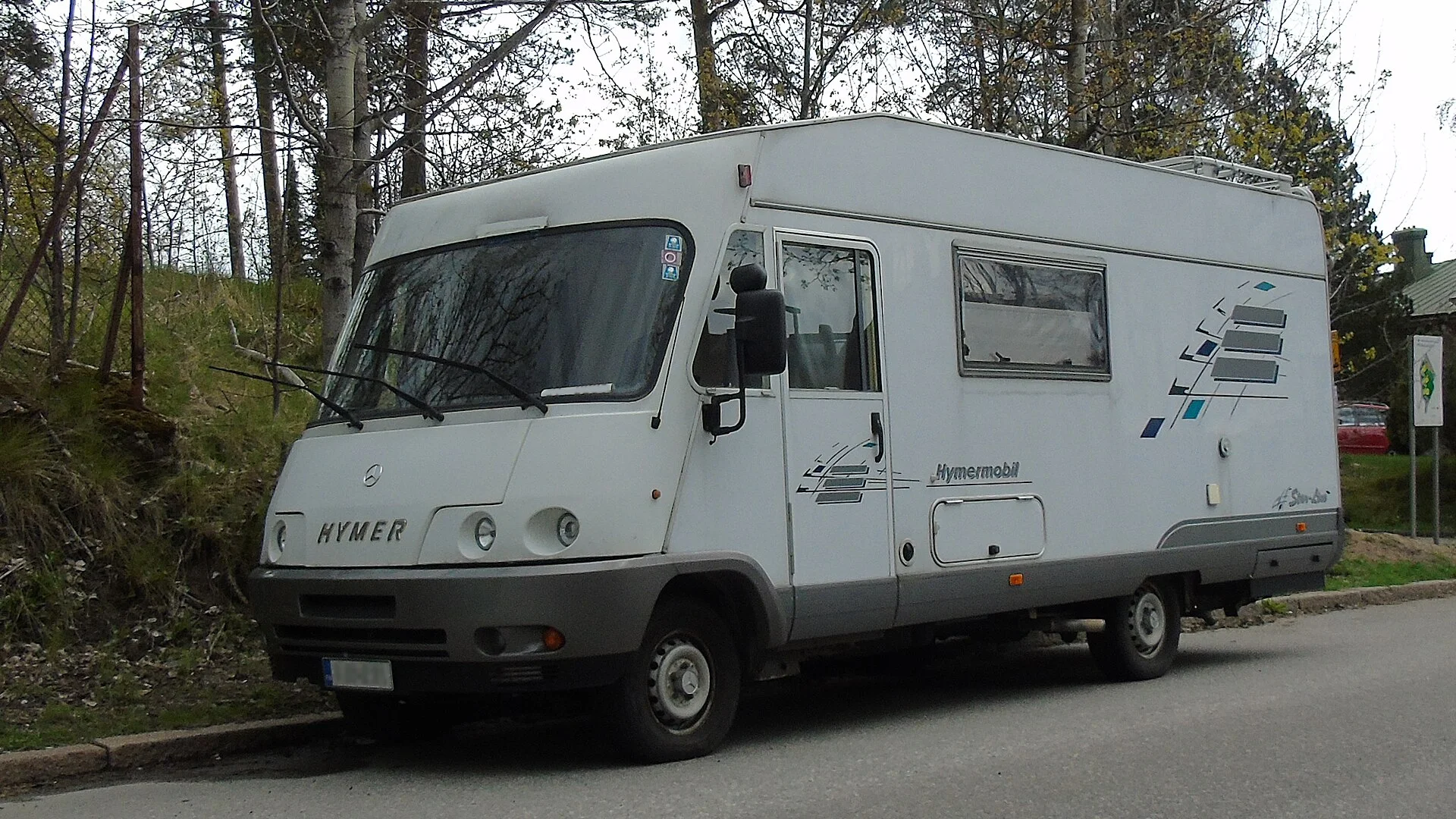
The dealer wanted $200 for a simple dashcam install on my buddy's RV, claiming 'complex wiring.' That's a 30-minute job with a $15 add-a-fuse kit and basic wire routing. RV rear views are a different beast than a sedan's, with longer runs and more vibration. You need a camera that can handle the mechanical stress and maintain circuit integrity over hundreds of miles of highway shudder. BlackSeries notes that proper installation is key for towing safety.
Most cheap dashcams are designed for small car interiors, where cable length is minimal and the thermal cycling is less extreme. An RV, especially a big Class A, introduces significant thermal load on the wiring and components. Think about a camera baking in direct sunlight at 100 degrees F, then dropping to 40 degrees F overnight. That's a recipe for solder joint fatigue and material degradation.
Your average dashcam will crap out under those conditions. The plastic housings degrade, the adhesive mounts fail due to shear stress, and the internal power regulators can't handle the voltage spikes from a fluctuating RV electrical system. We're talking about a system that needs to survive constant high-frequency vibration and wide temperature swings, not just look pretty on a spec sheet.
Car and Driver highlights that a good dashcam captures evidence, but an RV camera needs to survive the journey first.
Quick Verdict
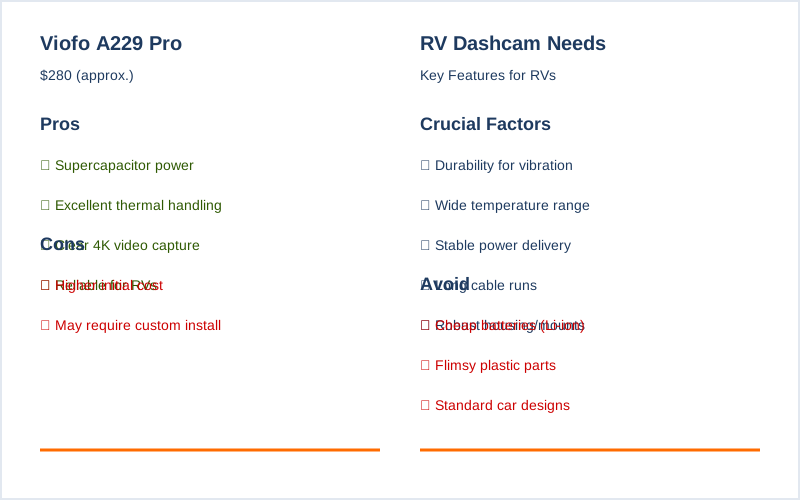
- For pure bulletproof reliability and video capture, the Viofo A229 Pro (~$280) is my go-to. It uses a supercapacitor, not a battery, which handles thermal cycling far better than lithium-ion. That's critical for an RV baking in the sun. Wirecutter also picks it for its clear 4K video.
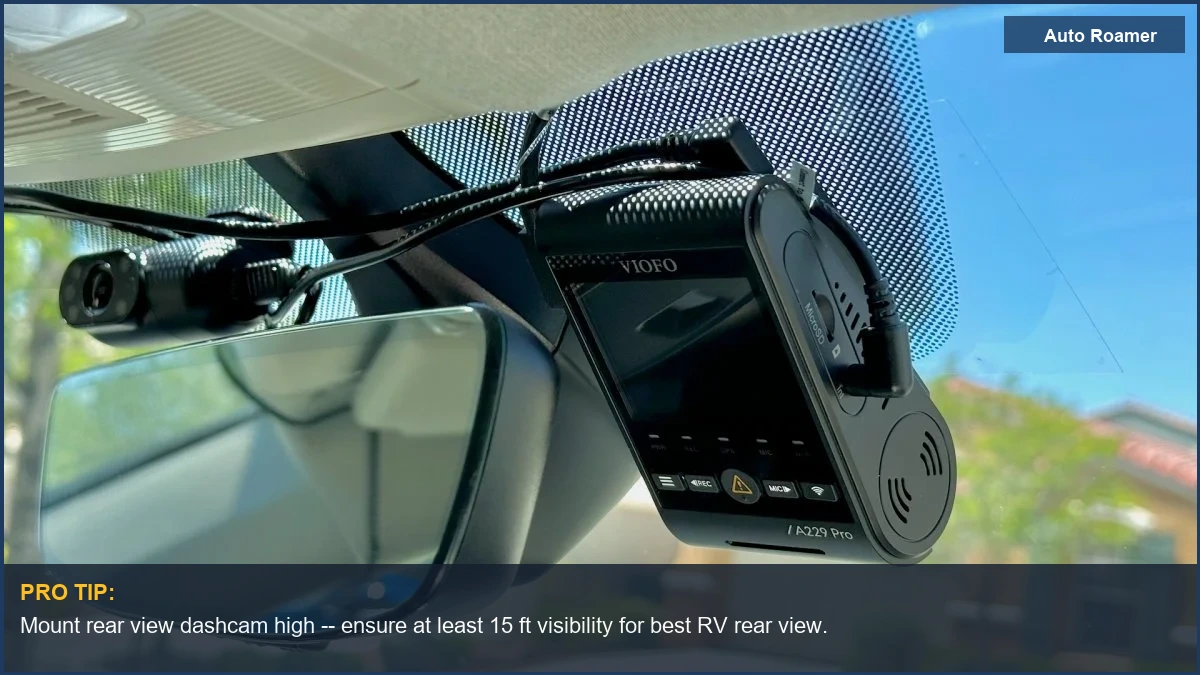
- If you're towing and need serious rear visibility, the Viofo A329S (2-Channel Version) (~$240) offers excellent dual-camera performance. The rear camera is 2.7K, which is more than enough to catch license plates, especially if you're trying to prove who clipped your trailer.
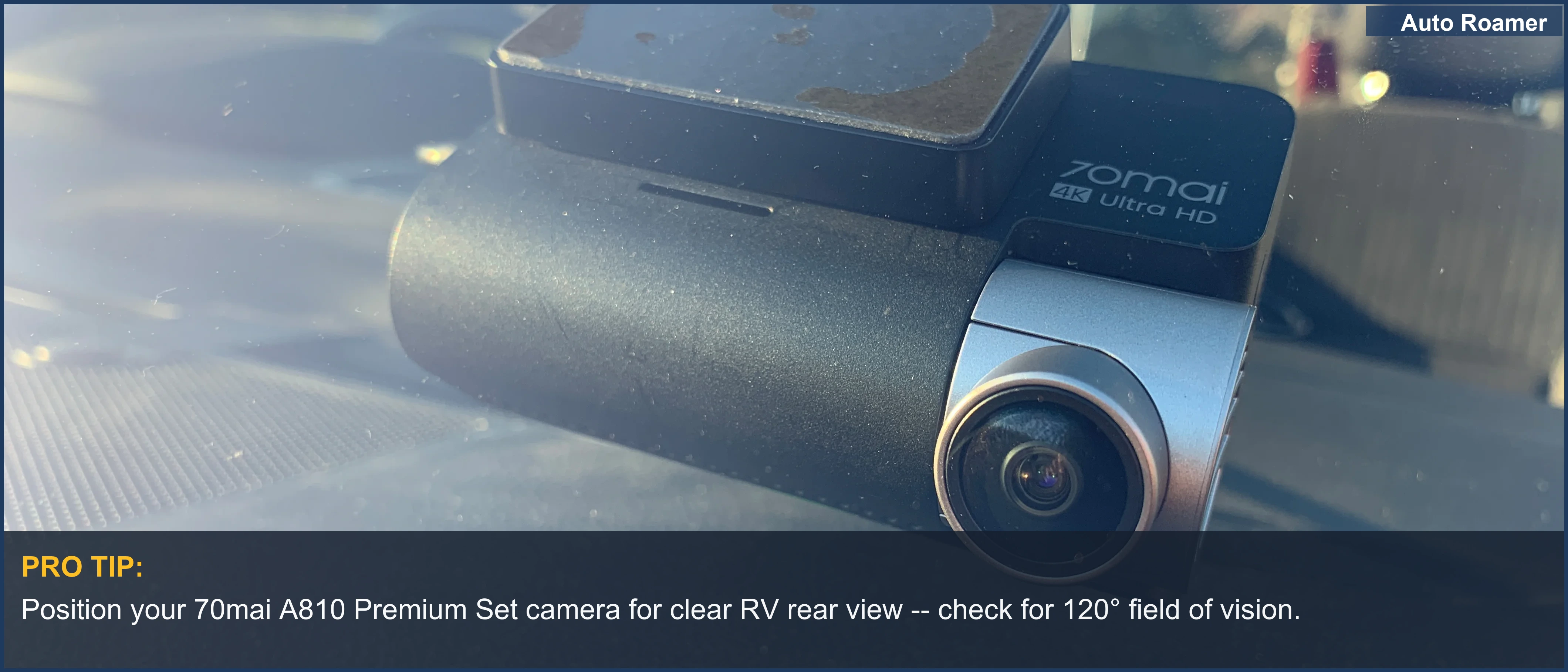
- The 70mai A810 Premium Set (~$160) is a solid all-rounder. It's got decent specs for the price, including 4K front and 1080p rear. It's not the absolute best in low light, but it's a significant upgrade from generic Amazon garbage. Car and Driver calls it a 'clean, utilitarian' option.
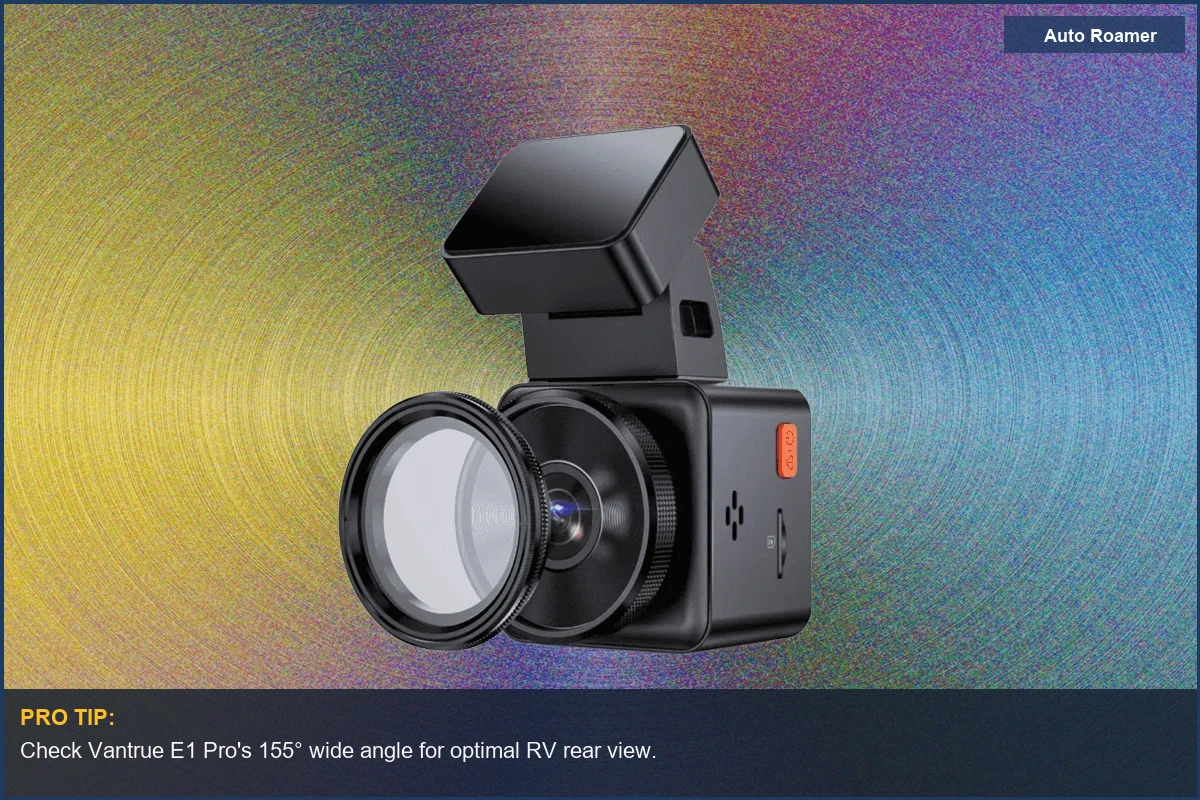
- For a budget-conscious setup that still performs, the Vantrue E1 Pro (~$120) is surprisingly capable for a single-channel system. If your RV already has a dedicated backup camera and you just need a reliable front record, this gets the job done without overspending. Julian23 on DashcamTalk praises its Sony STARVIS 2 sensor.
- Avoid anything with a large internal battery if you plan on parking in the sun. The thermal expansion and contraction cycles will kill it in months. A supercapacitor or no internal battery is the only way to go for RV use. This YouTube guide emphasizes the importance of specific features.
- Mounting is half the battle. Use VHB tape or screw mounts. Suction cups will lose their seal on rough roads or with thermal cycling. That's a mechanical bond failure waiting to happen.
- Power delivery for RVs means dealing with longer cable runs. Voltage drop is a real thing. Make sure your power cable is adequately gauged to prevent excessive resistance, which can starve the camera of current, leading to intermittent recording or outright failure.
What to Look For
What to Look For in an RV Dashcam
| Feature | Why It Matters for RVs | Dirtbag Engineer's Take |
|---|---|---|
| Power Source | Supercapacitor preferred over Li-ion battery. Li-ion cells degrade rapidly with thermal cycling. An RV in direct sun can hit 140 degrees F internally. That's well beyond optimal operating temperature for most batteries, leading to premature capacity loss and potential outgassing. | If it has a battery, it's a liability.
Supercapacitors charge fast, dump power fast, and don't swell up like a rotten potato when baked. Essential for longevity. |
| Video Resolution | Minimum 1080p, 4K front for license plate capture. Rear 1080p is usually sufficient, but 2.7K or higher improves clarity for distant vehicles. The sheer size of an RV means vehicles are often further away in the frame. | More pixels mean more data. Ensure your memory card can handle the write speed.
Don't skimp on the SD card, or you'll get corrupted files from write failures. |
| Field of View (FOV) | 140-160 degrees. Too wide, and objects become too small for detail. Too narrow, and you miss critical periphery. RVs have massive blind spots, so a wide view is crucial. | It's a compromise. You want enough to see what's happening without fisheye distortion rendering license plates unreadable. Measure twice, cut once.
Or, in this case, test the camera angle before you permanently mount it. |
| Mounting Method | Adhesive (VHB tape) or screw-in mounts. Suction cups fail due to vibration and thermal expansion/contraction cycles. The constant shear stress from road vibration will eventually break the vacuum seal, sending your camera flying. | Screw it down or use real 3M VHB. Anything else is a temporary solution. I've seen too many cameras rattling around the floor after a rough patch of road.
RV owners on Facebook often resort to stronger mounting solutions. |
| Parking Mode | Buffered recording (records before and after an event) is ideal. Hardwiring kit required. RVs are often parked in vulnerable spots, and a hit-and-run is expensive. | This feature drains power. Make sure your RV's 12V system can handle the parasitic draw without killing your house batteries in a few days. My 2018 Accord's 60Ah battery was dead in 12 days from 315mA draw.
A 100Ah RV battery won't last forever. |
| GPS/Wi-Fi | GPS for speed and location data, Wi-Fi for easy footage transfer. Useful for insurance claims and proving your speed at the time of an incident. | Nice-to-haves, not critical for core function. Wi-Fi can be finicky; direct SD card access is always more reliable. GPS is good for proving you weren't doing 80 in a 55. |
| Cable Length/Type | Longer, shielded cables for rear cameras. RVs need 30+ feet.
Ensure proper gauge to minimize voltage drop over distance. Poor shielding can introduce electromagnetic interference from other RV systems. |
This is where cheap systems fail. Thin wires mean higher resistance, more heat, and less stable power to the camera. That's a circuit integrity issue. Buy extensions if needed, but verify the gauge. |
PickupTruckTalk emphasizes the importance of both front and rear views.
Our Top Picks for Reliable Performance
Our Top Picks for Reliable Performance
Viofo A229 Pro 4K HDR (~$280)Specs: Front 4K (Sony STARVIS 2 IMX678), Rear 2K (Sony STARVIS 2 IMX675), Supercapacitor, GPS, Wi-Fi 5GHz, Buffered Parking Mode.
Pros: Unbeatable video quality, especially at night. Supercapacitor for extreme thermal tolerance. Reliable software. Wirecutter's top pick for crisp, super-high-res footage.
Cons: Pricey. Rear camera cable might be too short for very long RVs, requiring an extension.
Best for: RV owners who demand the absolute best video evidence and long-term durability against thermal cycling.
Viofo A329S (2-Channel Version) (~$240)
Specs: Front 4K (Sony STARVIS 2), Rear 2.7K (Sony STARVIS 2), Supercapacitor, GPS, Wi-Fi, Buffered Parking Mode.
Pros: Excellent front and rear video quality with STARVIS 2 sensors. Robust build. Handles vibration well. DashcamTalk praises its natural and detailed video quality.
Cons: Slightly less refined than the A229 Pro. Again, cable length can be an issue for longer rigs.
Best for: Those needing top-tier dual-channel recording without the absolute premium price of the A229 Pro.
70mai A810 Premium Set (~$160)
Specs: Front 4K, Rear 1080p, Built-in GPS, Wi-Fi, Parking Mode (requires hardwire kit).
Pros: Good value for a 4K front camera with a decent 1080p rear. Fairly compact. Easy installation for front camera. Car and Driver notes it's a 'clean, utilitarian' option.
Cons: Uses a small internal battery, not a supercapacitor. This is a thermal failure point for RVs. Night vision on the rear camera is just okay.
Best for: Budget-conscious RVers willing to accept a shorter lifespan on the internal battery or who park in cooler climates.
Vantrue E1 Pro (~$120)
Specs: Front 4K (Sony STARVIS 2 IMX678), Supercapacitor, GPS, Wi-Fi 5GHz, Optional LTE support.
Pros: Excellent 4K single-channel quality for the price. Supercapacitor is a huge plus for durability. Compact form factor. Julian23 rates it as the best single-channel 4K camera for its price-to-performance ratio.
Cons: Front-only. No rear camera option. The optional LTE adds complexity and cost.
Best for: RVs that already have a dedicated, reliable rear-view system and only need a high-quality front recording. Or if you really only care about what's ahead.
BlackVue DR750X-2CH Plus (~$350)
Specs: Front 1080p, Rear 1080p, Cloud connectivity, GPS, Wi-Fi, Supercapacitor. Built-in voltage monitoring.
Pros: Robust cloud integration for remote viewing (with hotspot). Excellent reliability, over-engineered for automotive use. RVForums users are big fans of Blackvue's reliability.
Cons: Only 1080p resolution - feels dated for the price. Cloud features require a separate data plan. Expensive.
Best for: RV owners who need remote monitoring capabilities and prioritize cloud features over raw resolution. The mechanical stress tolerance is excellent.
Head-to-Head Comparison
Head-to-Head Comparison: RV Dashcam Showdown
| Feature/Model | Viofo A229 Pro (~$280) | Viofo A329S (2-Channel) (~$240) | 70mai A810 Premium (~$160) | Vantrue E1 Pro (~$120) | BlackVue DR750X-2CH Plus (~$350) |
|---|---|---|---|---|---|
| Front Resolution | 4K | 4K | 4K | 4K | 1080p |
| Rear Resolution | 2K | 2.7K | 1080p | N/A (Front Only) | 1080p |
| Sensor Type | Sony STARVIS 2 | Sony STARVIS 2 | Proprietary | Sony STARVIS 2 | Sony STARVIS |
| Power Source | Supercapacitor | Supercapacitor | Li-ion Battery | Supercapacitor | Supercapacitor |
| Night Vision | Excellent (HDR) | Excellent (HDR) | Good | Excellent | Good |
| Parking Mode | Buffered | Buffered | Basic (requires hardwire) | Buffered | Buffered (Cloud) |
| Wi-Fi | Yes (5GHz) | Yes | Yes | Yes (5GHz) | Yes |
| GPS | Yes | Yes | Yes | Yes | Yes |
| Cable Length (Rear) | ~20 ft (standard) | ~20 ft (standard) | ~18 ft (standard) | N/A | ~20 ft (standard) |
| RV Suitability | High | High | Medium (battery concern) | High (front only) | High (expensive for 1080p) |
My take? The Viofo A229 Pro and A329S are the heavyweights for video quality and thermal durability. The 70mai A810 is a decent budget option if you're willing to gamble on the battery in high heat. The Vantrue E1 Pro is a solid single-channel unit, but you're blind out back. BlackVue is over-engineered but charges a premium for 1080p, which is a hard sell when 4K is standard for less.
Budget vs Premium: Where Your Money Actually Goes
Budget vs Premium: Where Your Money Actually Goes
| Feature | Budget (~$50-150) | Premium (~$200-400+) |
|---|---|---|
| Image Sensor | Older Sony STARVIS 1 or generic sensors. Lower light sensitivity, more noise. | Sony STARVIS 2 IMX678/675. Superior low-light performance, wider dynamic range, clearer license plate capture. |
| Resolution | Often 'upscaled' 4K or true 1080p. Rear cameras often 720p. | True 4K front, 2K or 2.7K rear. No upscaling.
Every pixel counts when you're trying to read a bent license plate from 30 feet. |
| Power Source | Lithium-ion battery. Prone to thermal degradation, swelling, and premature failure in hot RV environments. | Supercapacitor. Immune to thermal cycling, longer lifespan, more reliable power delivery in extreme temperatures. This is a critical mechanical difference. |
| Build Quality | Thin plastic housings, weak adhesive mounts. Susceptible to vibration fatigue and UV degradation. | Robust ABS or polycarbonate housings, stronger mounting hardware.
Designed to withstand constant mechanical stress and environmental exposure. |
| Cable Quality | Thin, unshielded cables. Prone to voltage drop over long runs, susceptible to EMI. | Thicker gauge, shielded cables. Maintain circuit integrity over long RV runs, minimize signal interference. This video highlights why cable quality matters. |
| Software/Firmware | Buggy, infrequent updates, poor app integration. Can lead to corrupted files or missed recordings. | Stable, regular updates, intuitive app. Better control over settings and reliable footage retrieval.
This is where the 'experience' actually matters - not the marketing fluff. |
| Parking Mode | Basic motion detection, often misses crucial pre-impact footage. Higher parasitic draw. | Buffered recording, G-sensor sensitivity adjustment, low-voltage cutoff. Efficient power management, captures the full incident. |
My take? You're paying for mechanical durability and circuit integrity. A cheap dashcam might record for a few months before the battery swells or the mounting fails. A premium one is engineered to survive the abuse of RV life. It's not about 'luxury,' it's about failure-rate reduction. Texas Diamond Garage backs up the idea that dual cameras are a smart investment.
The Bottom Line
- For RV rear view, the critical factors are thermal tolerance and mechanical durability. Anything with a lithium-ion battery is a liability when your RV interior hits 120 degrees F in direct sunlight. Stick to supercapacitors.
- Viofo A229 Pro (~$280) is my top pick for its superior video quality, especially with its STARVIS 2 sensors, and its robust supercapacitor design. It's built to handle the physical stresses of RV life.
- If you need a dual-channel system that balances cost and performance, the Viofo A329S (2-Channel Version) (~$240) is a solid choice. The 2.7K rear camera is a significant upgrade over 1080p for license plate readability.
- Mounting is paramount. Forget suction cups. Use 3M VHB tape or screw mounts. The constant vibration and shear forces on an RV will defeat flimsy attachments. This isn't a suggestion; it's a mechanical necessity.
- Don't cheap out on the microSD card. A high-end dashcam recording 4K footage generates a massive data stream. A slow or unreliable card will lead to corrupted files or dropped frames. Class 10, U3, V30 minimum.
- Consider the power delivery. Long cable runs can introduce voltage drop. Use properly gauged wiring and ensure your hardwire kit has adequate overcurrent protection. PickupTruckTalk reminds us that a complete record from both angles is key.