Smart Car Tech

Understanding Dashcam Field of View for Road Trip Coverage

Casey - The Weekend Warrior
4 min read
Includes Video

The diagonal field of view, or DFOV, on your dashcam isn't just a fancy number; it's the difference between capturing that crucial license plate and having a blurry mess when you need it most. Think of it like trying to spot a bird in a tree - you can either look through a cardboard tube or a wide-open window.

The diagonal field of view, or DFOV, on your dashcam isn't just a fancy number; it's the difference between capturing that crucial license plate and having a blurry mess when you need it most. Think of it like trying to spot a bird in a tree - you can either look through a cardboard tube or a wide-open window. For your car, that window is measured in degrees.

My first dashcam had a DFOV of 120 degrees, and it missed a cyclist swerving out from behind a parked van on my trip to the Outer Banks. That rookie mistake cost me a week of arguing with insurance.
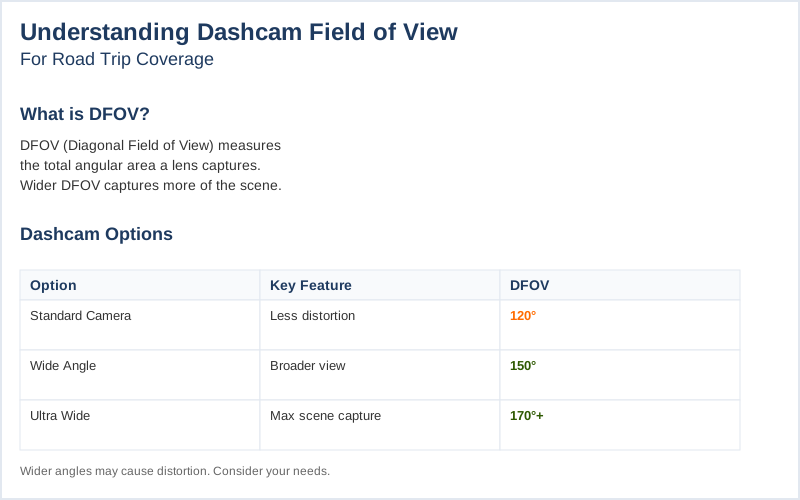
Understanding Dashcam Field of View for Road Trip Coverage — Key Specifications Compared
Key specifications for Understanding Dashcam Field of View for Road Trip Coverage

The Core Answer

The core of what your dashcam sees comes down to its field of view, usually measured as DFOV (diagonal field of view) for most car cameras. This is the total angular area the lens can capture, from corner to corner. A wider DFOV means more of the scene gets recorded. For example, a 180-degree DFOV camera sees a huge chunk of the road like a half-circle. It's easy to get tripped up on terminology, though. Some folks use 'angle of view' (AOV) and 'field of view' (FOV) interchangeably, but they're not quite the same. AOV is tied to the lens itself, while FOV is more about what you're looking at at a specific distance. The dashcam industry often throws around 'FOV' when they really mean AOV. Brilliant marketing, right? When you're looking at options, you'll see numbers like 120 degrees, 150 degrees, or even 360 degrees. A narrower angle, like 120 degrees, gives you a tighter shot. It's less likely to distort images, which is nice, but it can easily miss things happening off to the sides like a car merging. The real move for most road trips is somewhere in the middle. A 150-degree lens is often considered the sweet spot. It captures multiple lanes of traffic without warping the image too much for crucial details. Anything beyond that, like a 360-degree camera, can get tricky. They often use fisheye lenses or multiple cameras stitched together. While they cover everything, the clarity can suffer, especially at the edges. License plates might become unreadable blobs, which defeats the whole purpose of having evidence. My field notes from a trip through Colorado showed that a wider angle captures more activity around your car from multiple lenses. This broad coverage is key for recording incidents like sudden braking or unexpected lane changes. You want to cover as much street area as possible while driving on both sides.
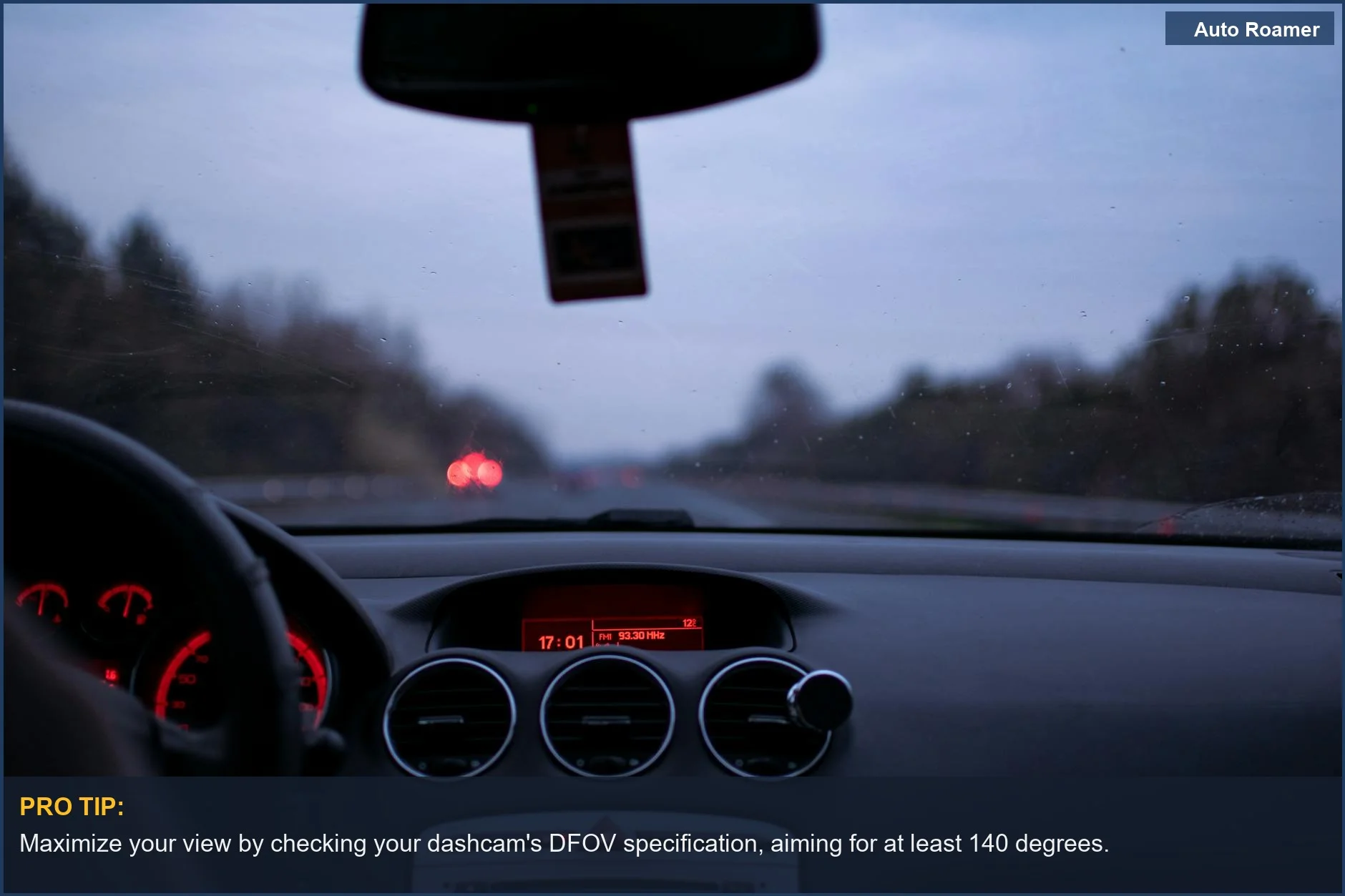
To ensure optimal coverage on your trips, understanding how to choose the right dash cam field of view is essential.
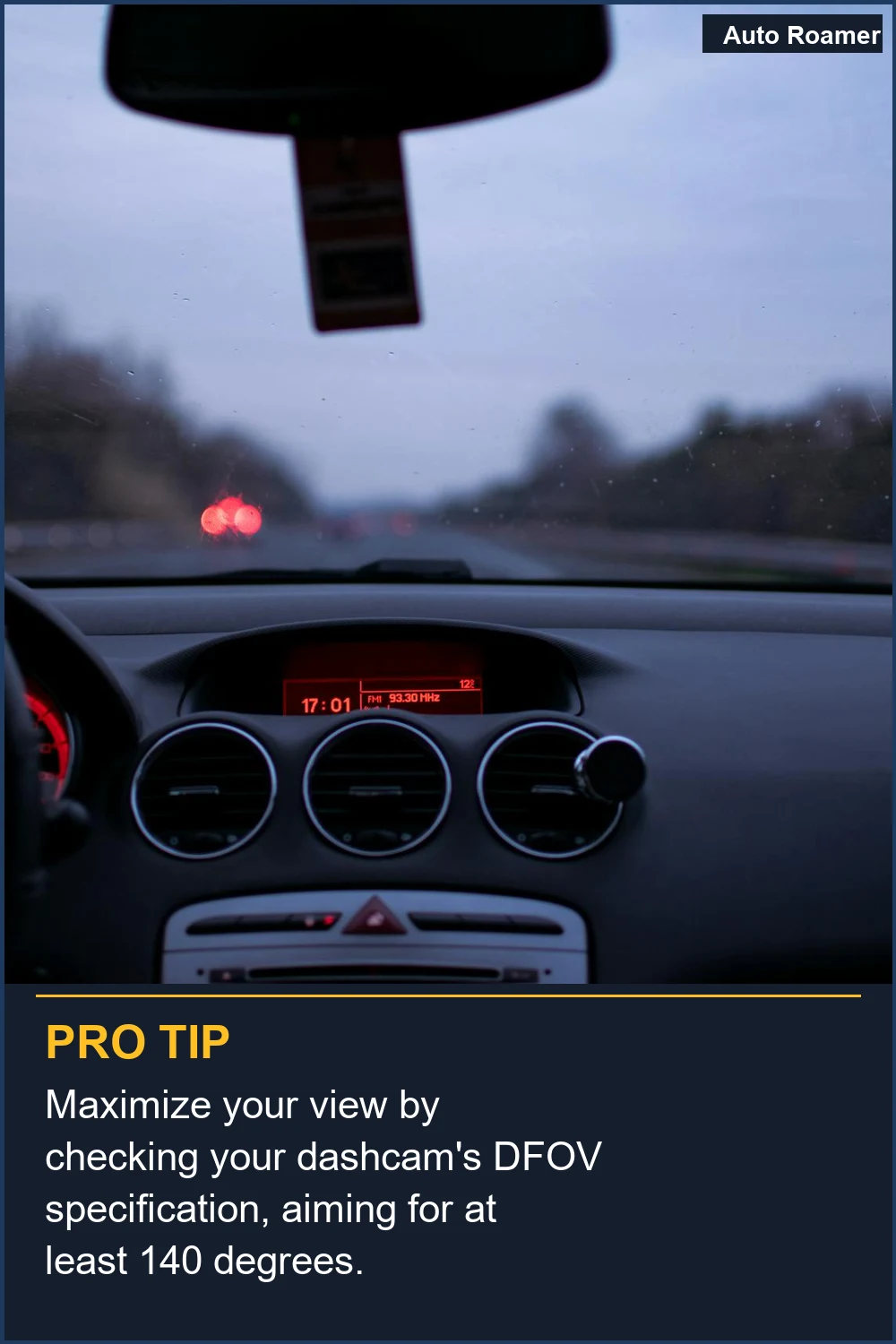
Maximize your view by checking your dashcam's DFOV specification, aiming for at least 140 degrees.
See the road ahead clearly with a wide dashcam field of view, crucial for capturing every detail on your next road trip. | Photo by Stergios Pliampas

Why This Matters for Your Setup

So, why does this angle stuff actually matter when you're packing for a road trip? It's all about what you're trying to catch on camera.
  • Missing the Action: A camera with a narrow field of view, say 120 degrees, might be great for capturing a clear shot of the car directly in front of you. But it could easily miss a motorcycle weaving through traffic on your side, or a pedestrian stepping out from behind a bus.
  • The Sweet Spot: A 150-degree lens is generally considered the sweet spot. It gives you a wider view to catch those side events, like cars changing lanes, without distorting the main road too much. I found this out the hard way when a deer jumped out on a dark highway in Vermont, and my old 120-degree cam only caught its tail.
  • Full Coverage: For maximum protection, especially if you're worried about rear-end collisions or tailgaters, a multi-lens system is the way to go. Each lens covers a different angle, giving you front, rear, and sometimes even interior views simultaneously. This is like having multiple eyes on the road.
  • Clarity vs. Coverage: While 360-degree cameras sound amazing, they often sacrifice clarity. You might get a full picture, but important details like license plates can become fuzzy messes at the edges. I'd rather have a clear shot of one lane than a distorted mess of five.
  • To enhance your setup, consider the specific needs of your vehicle with a suitable RV rear view dashcam.
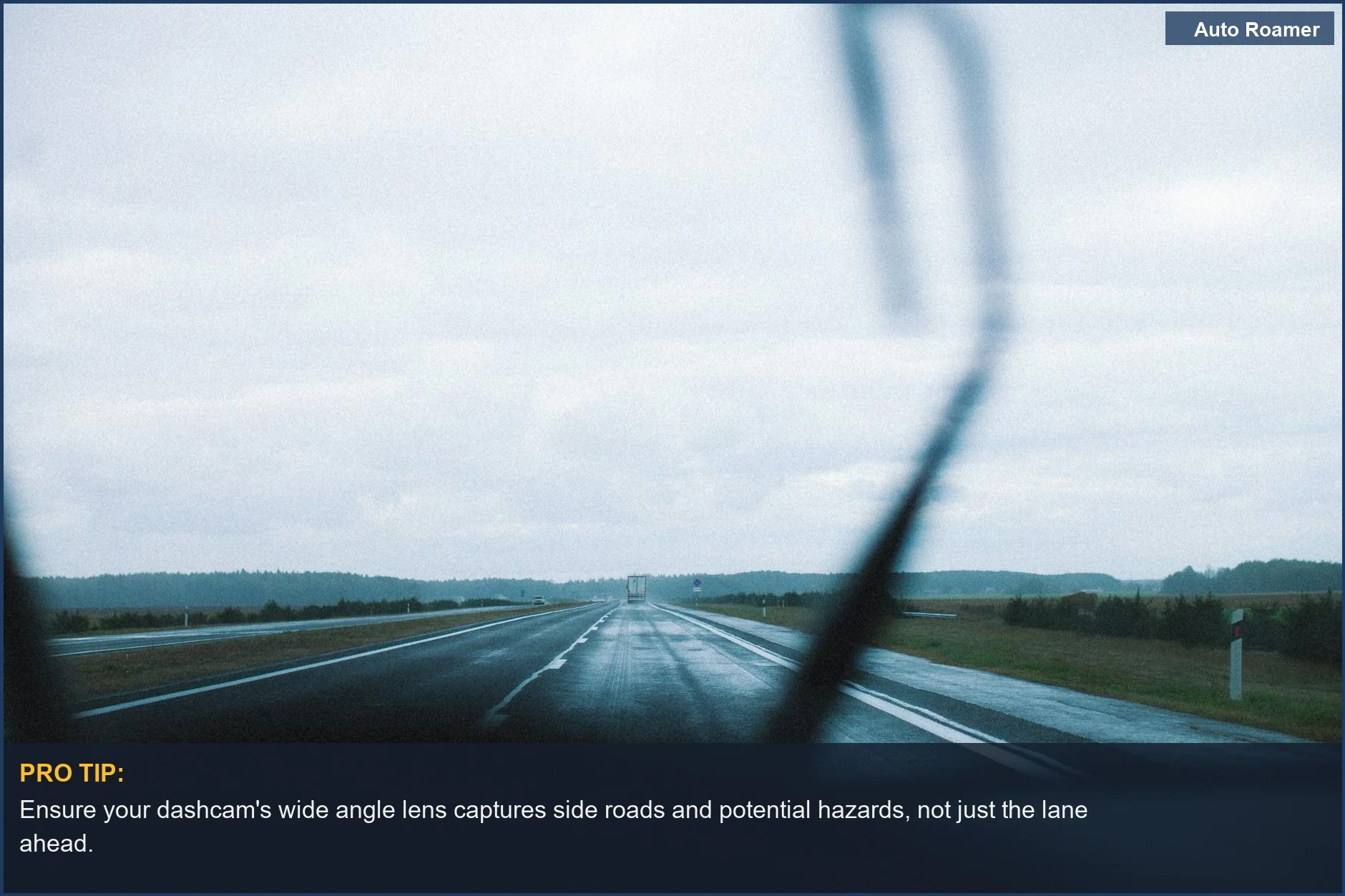
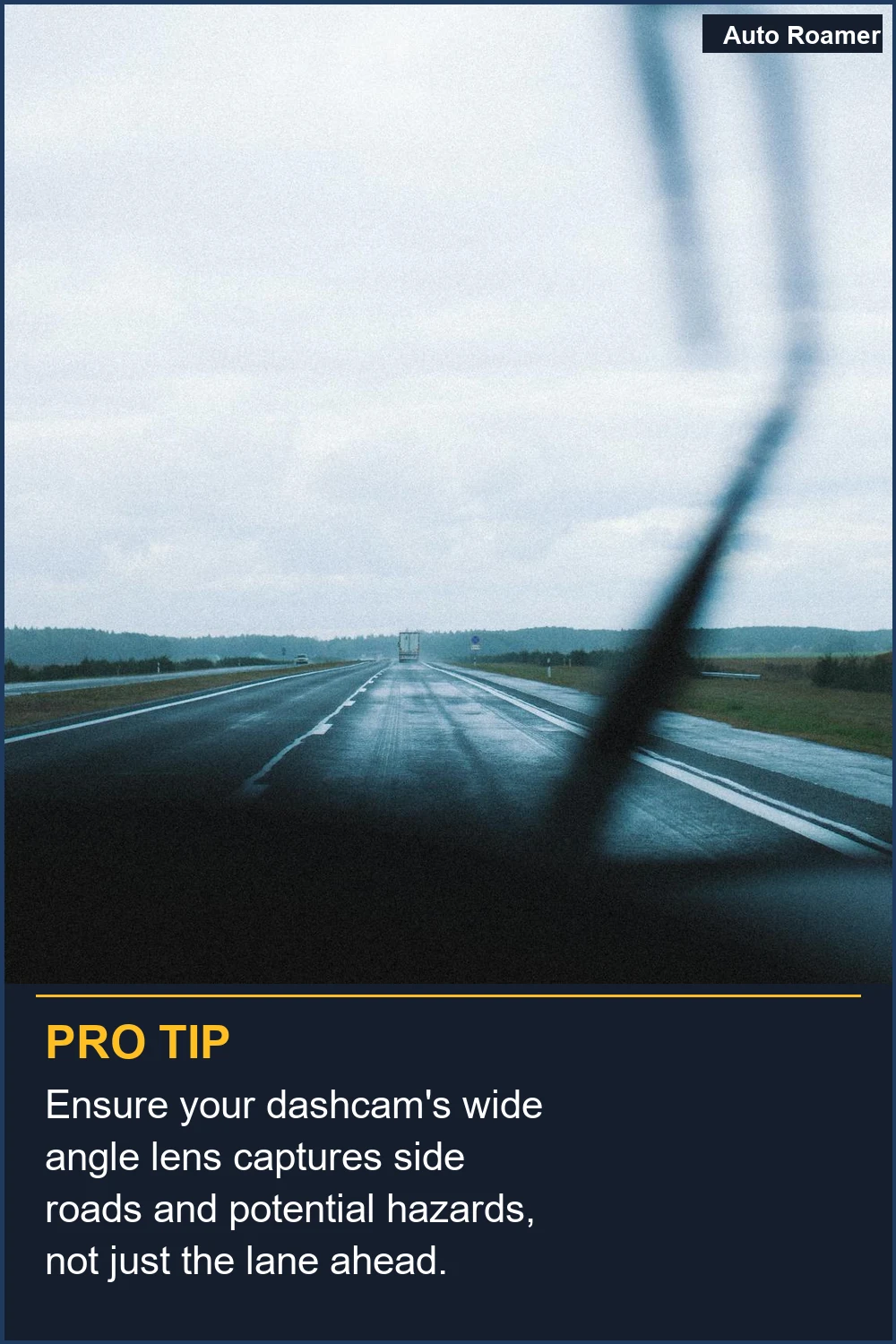
    Ensure your dashcam's wide angle lens captures side roads and potential hazards, not just the lane ahead.
    Don't miss critical moments during your road trip; a wide angle dashcam ensures you record more of the surrounding environment. | Photo by Lina Kivaka

    Making the Right Choice

  • Don't Get Distorted: When choosing a dashcam, aim for a wide-angle lens, typically 150 degrees, to capture more of your surroundings. This balances coverage with image clarity for the best road trip coverage.
  • More Lenses, More Proof: If you can swing it, a multi-lens system (like a 3-channel dashcam) provides the most comprehensive protection. This ensures you have footage from the front, rear, and even inside your vehicle for any situation.
  • Clarity is King: Avoid extreme wide-angle lenses that cause significant distortion, especially at the edges. While they might seem to capture 'everything', they often fail to capture crucial details clearly like license plates.
  • It's Not Just About the Angle: Remember that lens angle is just one piece of the puzzle. High video resolution is also critical for identifying people and objects clearly on the road during an incident. My first dashcam had a decent angle but the footage was so grainy I couldn't tell if it was a squirrel or a small dog.
  • When towing, understanding the importance of dashcam field of view can enhance your safety and coverage, especially when towing an RV.
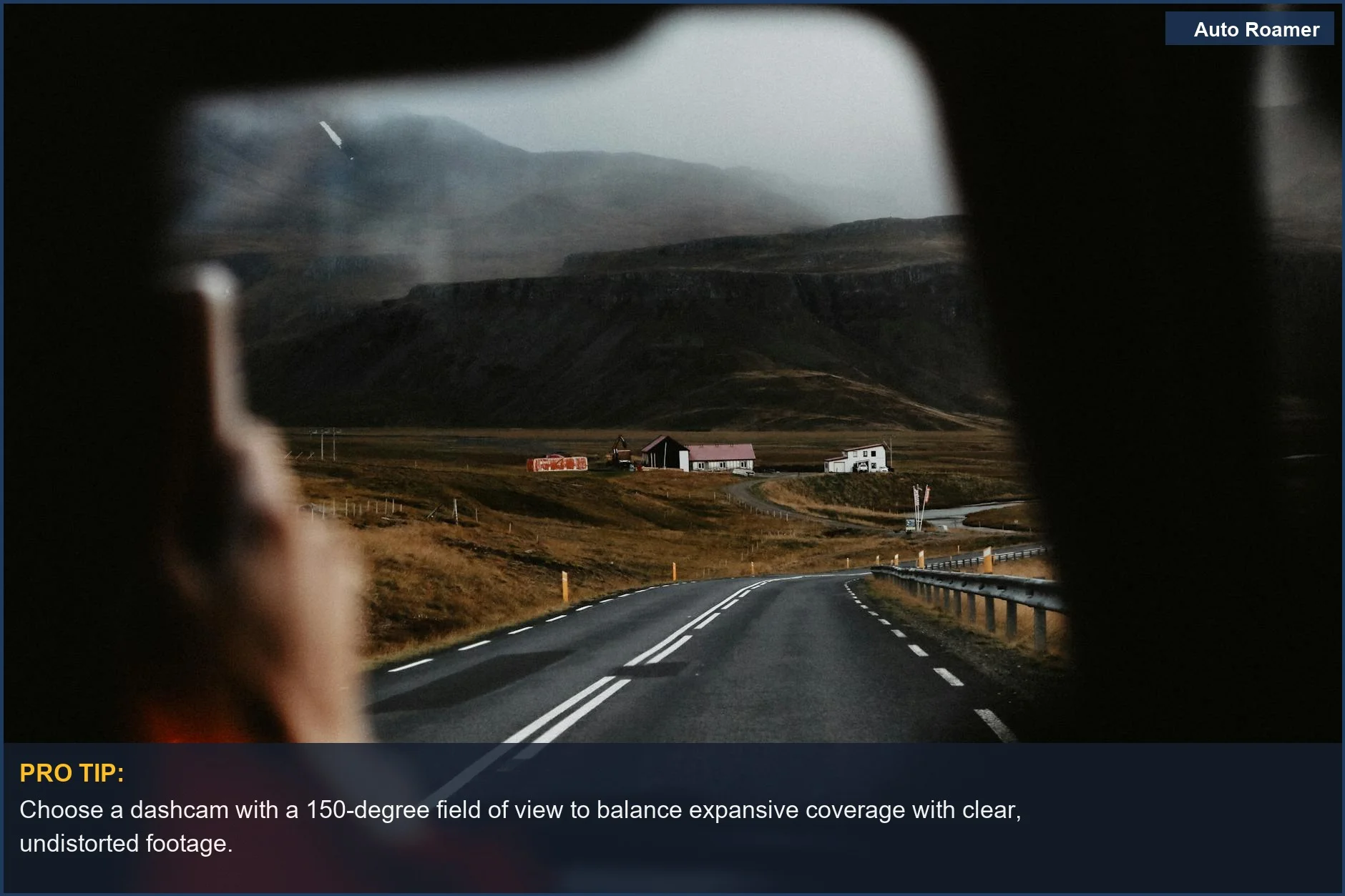
    Choose a dashcam with a 150-degree field of view to balance expansive coverage with clear, undistorted footage.
    Explore the benefits of an optimal dashcam field of view for capturing stunning scenery and ensuring complete road trip dashcam coverage. | Photo by alleksana

    Frequently Asked Questions

    If I buy a 150-degree dashcam online for $75, is that basically the same as paying a shop $200 to install a 'wide-angle' one?
    Pretty much. That $75 dashcam you snagged online is likely the exact same hardware a shop would charge you $200 for, plus their installation fee. My first dashcam was a $60 Amazon find, and it worked just fine for over a year before I upgraded to a dual-lens system. You're mainly paying for convenience and the installation guarantee with the shop.
    Do I need a special tool to measure my dashcam's field of view?
    Absolutely not. The field of view, usually listed as DFOV, is a specification printed on the box or in the product description. You don't need a protractor or a spirit level; just look at the numbers like 120, 150, or 180 degrees. Trust me, I've tried to get fancy with measurements before and ended up with a headache.
    What if my dashcam's wide angle still misses something important, like a car running a red light that was slightly off to the side?
    That's a real possibility, even with a 150-degree lens. If that happens, and you have a multi-lens system, your rear or side camera might have caught it. If it's a single-lens camera and it's still missed, the honest version is that no camera is perfect. Your best bet is to rely on other evidence if available, but a wider angle significantly reduces the odds of missing key events like that.
    Can having a super wide-angle dashcam permanently damage my car's electrical system?
    No, a dashcam with a wide field of view won't permanently damage your car's electrical system. These cameras draw minimal power, usually less than a smartphone charger. The biggest risk is accidentally draining your battery if you leave it plugged in while the car is off for extended periods, but that's a battery issue, not a system damage issue.
    I heard that the wider the angle, the worse the video quality. Is that always true?
    That's a common misconception. While extreme fisheye lenses can cause distortion and blur at the edges, modern dashcams with good optics can offer wide fields of view with excellent clarity. A 150-degree lens is often the sweet spot, providing broad coverage without sacrificing the ability to read license plates or see faces clearly. It's about the quality of the lens design, not just the number of degrees.

    🏅 Looking for Gear Recommendations?

    Check out our tested gear guides for products that work with this setup:

    C

    Casey - The Weekend Warrior

    Weekend car camper and road trip enthusiast. Focuses on practical, budget-friendly solutions for families and first-time campers.

    Sources

    Related Articles