
Smart Car Tech

Choosing the Right Dashcam Lens and Field of View for Camping Surveillance

Casey - The Weekend Warrior
7 min read
Includes Video

The lens on your dash cam is more important than you think, especially when you're parked out in the middle of nowhere, listening to the coyotes howl. It dictates how much you can actually see, and for me, that means knowing if that rustling in the bushes is a deer or just a rogue tumbleweed.

The lens on your dash cam is more important than you think, especially when you're parked out in the middle of nowhere, listening to the coyotes howl. It dictates how much you can actually see, and for me, that means knowing if that rustling in the bushes is a deer or just a rogue tumbleweed. Understanding the field of view and lens type is basically your first line of defense when you're miles from civilization.

It's not just about capturing a fender bender anymore; it's about peace of mind on your off-grid adventures. The real move is to pick one that gives you the best picture of what's happening around your car, not just what's directly in front of it. Choosing the right dash cam means looking beyond the megapixels and thinking about what you actually need to see. My first rig had a lens that was basically a peephole. Talk about feeling vulnerable.

Lens quality, specifically focal length and aperture, directly impacts how much you can resolve at a distance, which is critical for spotting anything unusual. It's a rookie mistake to overlook this.
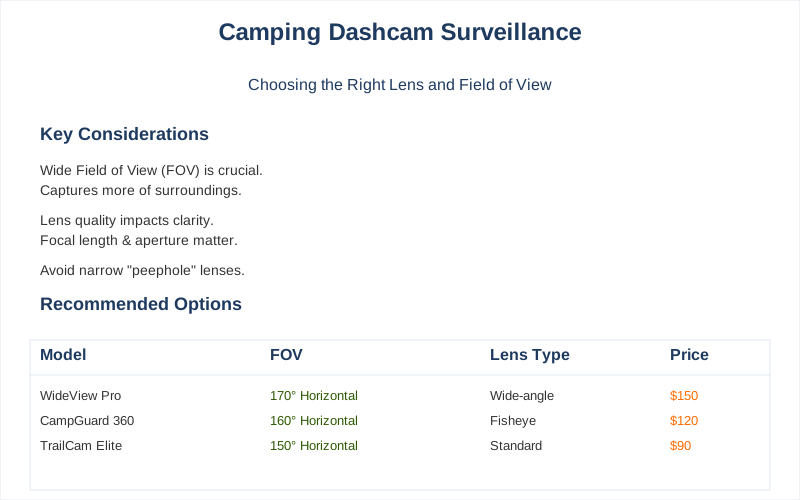
Choosing the Right Dashcam Lens and Field of View for Camping Surveillance — Key Specifications Comp
Key specifications for Choosing the Right Dashcam Lens and Field of View for Camping Surveillance

The Core Answer

When you're out car camping, the last thing you want is a blind spot where a suspicious character could be lurking. That's where your dash cam's lens and its field of view (FOV) come into play. Think of FOV as how wide your camera's 'eyes' are. A wider FOV means you capture more of the scene, which is generally what you want for camping surveillance. I learned this the hard way when my first dash cam, with a narrow FOV, missed a whole side of my campsite. My $50 Walmart camera was basically useless for anything beyond the car directly in front of me. Most dash cams offer a horizontal angle of view somewhere between 120 and 170 degrees. For camping, you want to lean towards the wider end of that spectrum. A 170-degree FOV will give you a much more comprehensive view of your surroundings. This is the real move to ensure you're not missing anything important happening off to the sides of your vehicle. Wider angles capture more, but they can sometimes stretch the image, making it harder to read license plates from far away. This is a trade-off, but for camping security, seeing more is usually better than seeing slightly sharper details of a distant object. You're more likely to spot a person or an animal with a wider lens. The focal length of the lens also plays a role. Shorter focal lengths typically give you a wider FOV. A focal length around 3.0-4.0 mm is often a good balance for capturing a broad scene without completely sacrificing detail. The aperture, represented by an f-number, controls how much light gets in. A lower f-number, like f/1.8, means a larger aperture, which is better for low-light conditions. This is crucial for those overnight camping trips where it gets dark early. My first attempt at night recording was just a black screen with some glowing headlights. Brilliant engineering. Higher resolution cameras with wider FOV lenses are your best bet for capturing clear footage of your campsite, even in the dark. Don't skimp here; a cheap camera with a tiny lens is like trying to watch a movie through a straw. You need to see the whole dang picture. I remember one trip to Big Basin Redwoods State Park where I was worried about bears. My narrow-angle dash cam only saw the road directly in front of my truck, completely missing the furry visitor sniffing around my cooler. Never again. The honest version is, you want as much coverage as possible. A wide-angle dash cam is your best friend for keeping an eye on things when you're asleep in your tent. It's the $50 version of having a security guard for your campsite. The real move is to get a lens that gives you at least a 140-degree horizontal FOV, ideally closer to 170 degrees. This ensures you're covering most of the area around your vehicle. You do not need a degree in optics to understand that seeing more is better when you're out in the wild. It's about having eyes everywhere, even when you're catching Zs. A rear dash cam with a wide angle between 140 and 160 degrees is often cited as the sweet spot. For your primary front-facing camping camera, go even wider if you can. It's the difference between a blurry glimpse and a clear picture of potential trouble.
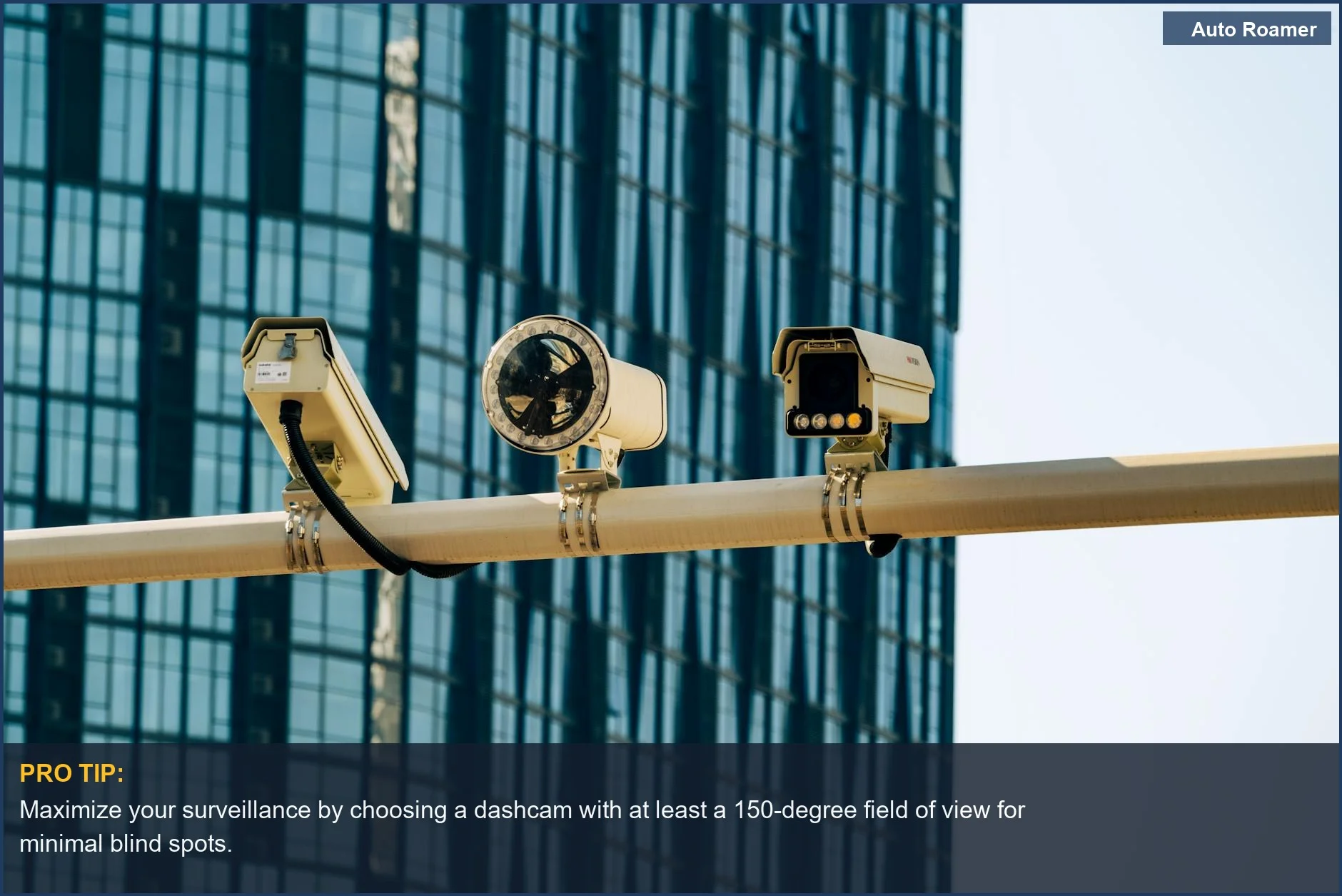
To ensure optimal coverage on your trips, understanding how to choose the right dash cam field of view is essential.
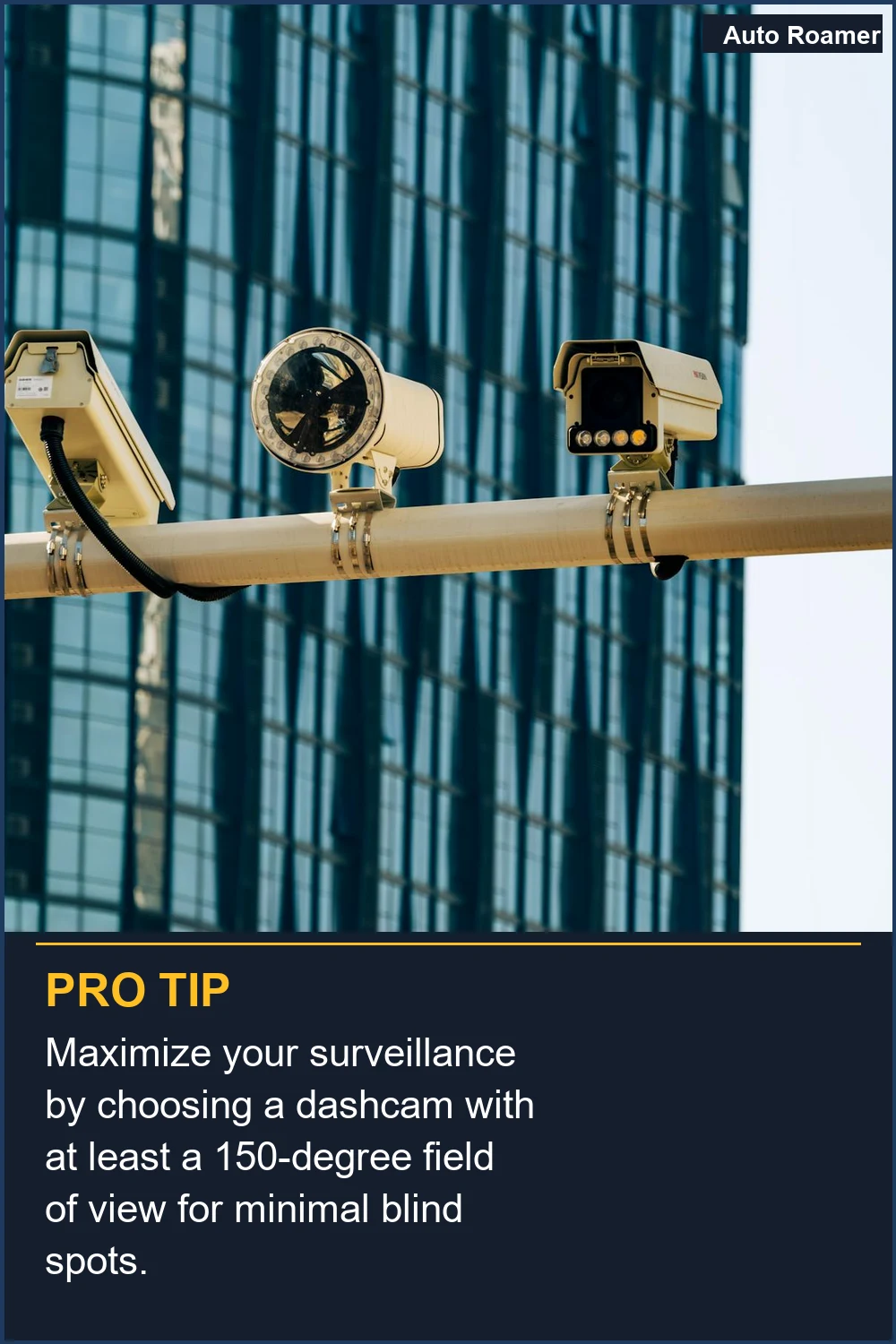
Maximize your surveillance by choosing a dashcam with at least a 150-degree field of view for minimal blind spots.
Security cameras on a modern building highlight the importance of broad coverage. For camping, a wide angle dashcam ensures you see more of your surroundings, deterring unwanted attention. | Photo by Star Zhang

Why This Matters for Your Setup

Why does all this lens talk even matter when you're just trying to enjoy the campfire? Because when you're parked at a remote campsite, your car often becomes your base camp. That dash cam is your eyes and ears when you're in your tent or exploring nearby.
  • Knowing Your Perimeter: A wide field of view (FOV) is critical. I learned this the hard way at Yosemite when my narrow-lens dash cam only captured a sliver of the road. I missed seeing who was rummaging through my unattended cooler until it was too late. The honest version: you need to see as much of the area around your vehicle as possible, not just the car directly in front. Wider is better when you're parked.
  • Low-Light is a Rookie Mistake: Most of my camping trips involve evenings and early mornings when light is scarce. A dash cam with a good aperture (lower f-number, like f/1.8) lets in more light, meaning clearer footage of any nocturnal visitors. My first dash cam at Zion produced only grainy blobs after sunset. That was a real lesson in what nobody tells beginners about night recording. Larger apertures help immensely.
  • Detail vs. Coverage: There's a balance. A super-wide lens might make distant license plates blurry, but for camping, you're more likely to need to see if someone is walking up to your car than read a plate from 100 yards away. The trade-off is often worth it for broader situational awareness. My goal is to spot activity, not identify someone from across the parking lot. 140-170 degrees is generally the sweet spot for this.
  • Coverage for your Entire Rig: If you're running a dual-channel setup (front and rear), make sure both lenses offer a decent FOV. I once had a rear camera with a FOV so narrow, it only saw the bumper of the car behind me. Useless. Understanding FOV is key for both cameras. It's the difference between knowing what's happening and just getting a fuzzy picture.
  • To enhance your setup, consider the specific needs of your vehicle with a suitable RV rear view dashcam.
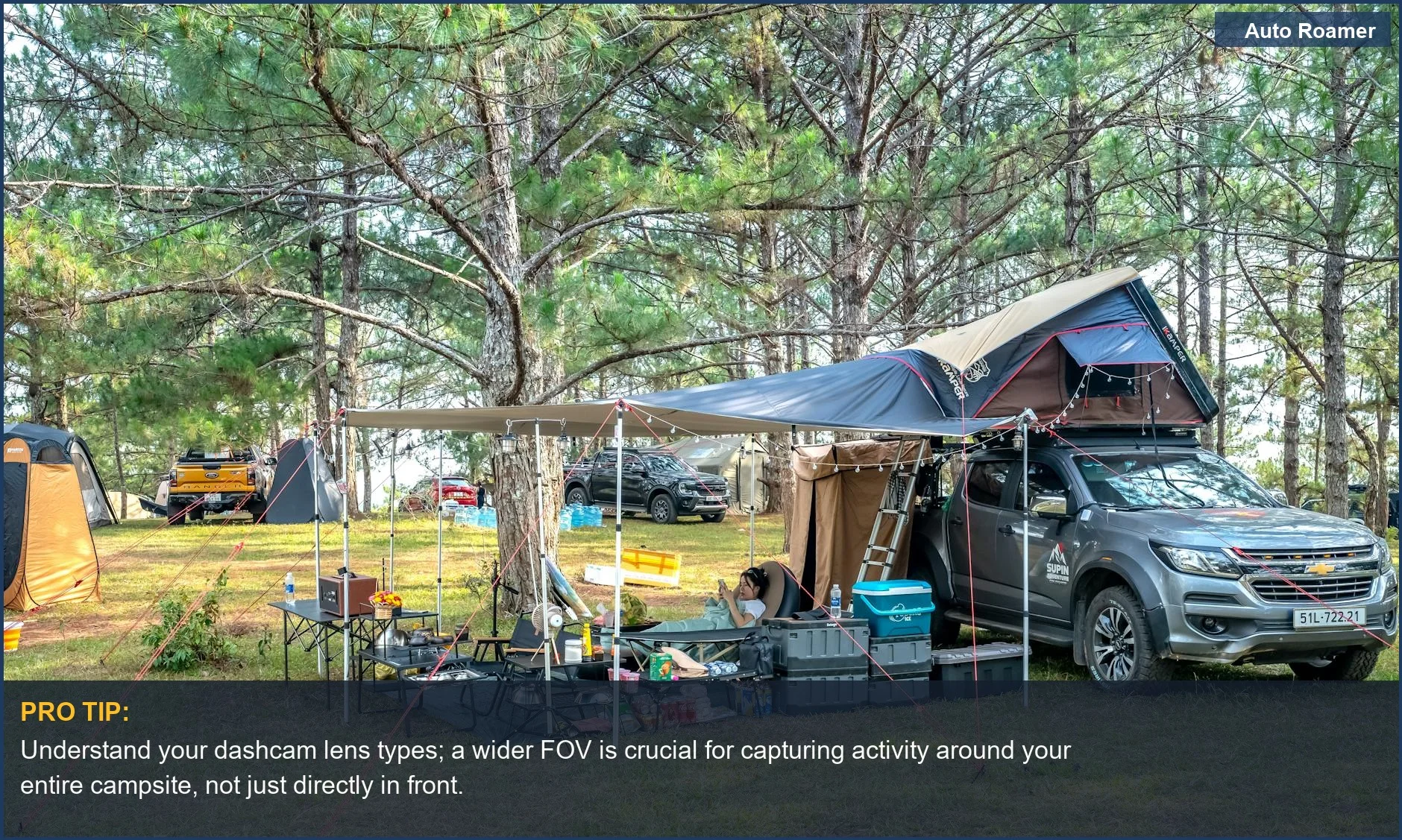
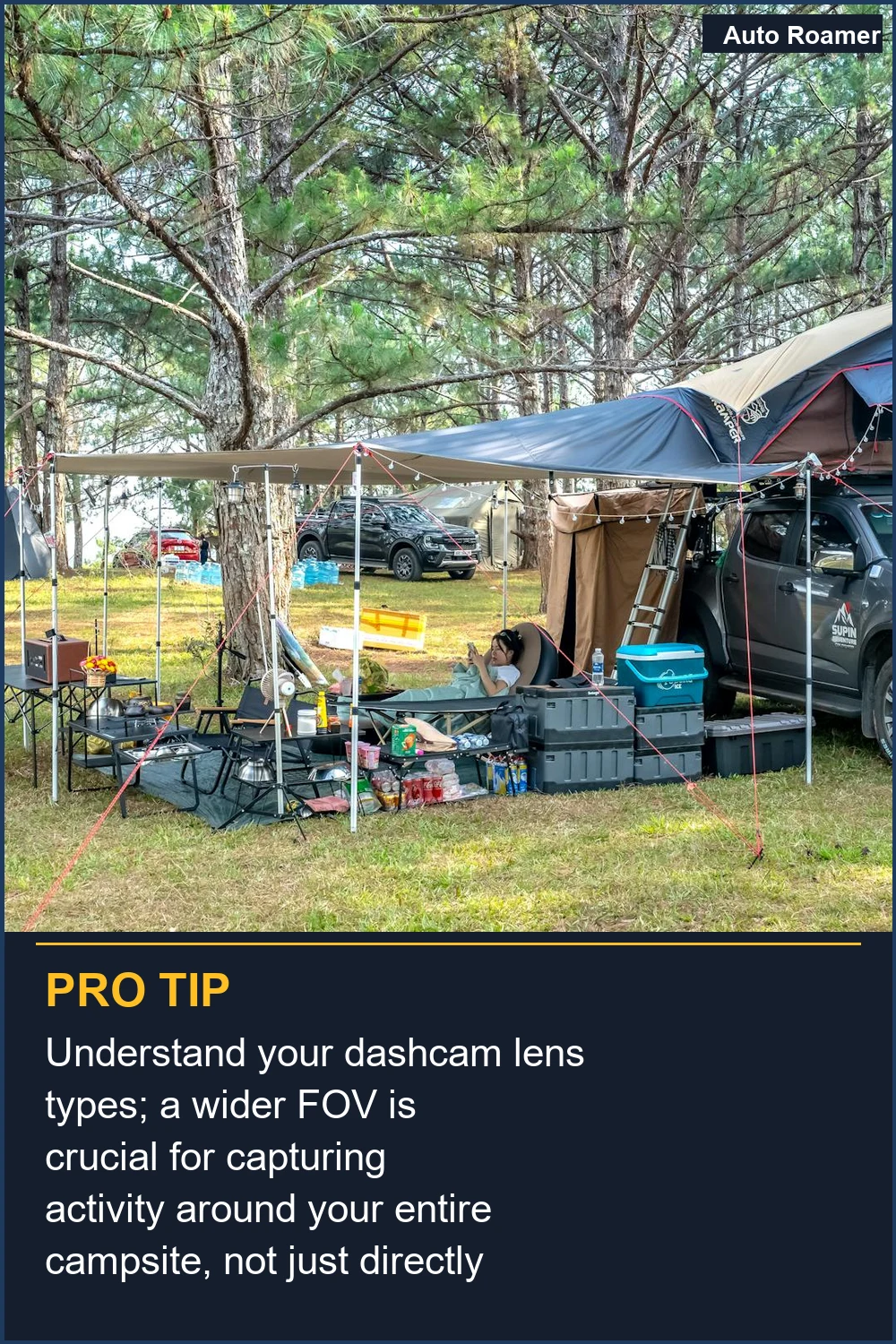
    Understand your dashcam lens types; a wider FOV is crucial for capturing activity around your entire campsite, not just directly in front.
    A busy campsite with tents and vehicles shows the car as a central hub. Selecting the right dashcam lens is key to monitoring your perimeter effectively, even when you're away. | Photo by Quang Nguyen Vinh

    Making the Right Choice

    Picking the right dash cam lens for your car camping setup boils down to maximizing your awareness when you're off the grid. It's not about having the fanciest tech, but the most practical.
  • Go Wide or Go Home: For camping surveillance, a wide field of view (FOV) is non-negotiable. Aim for at least 140 degrees horizontal, with 170 degrees being even better. This gives you the best chance of capturing any activity around your vehicle. Wider coverage is key.
  • Embrace the Low Light: Since you'll likely be recording at night, prioritize a lens with a good aperture (low f-number) for better low-light performance. My first dash cam's night footage was basically blackness. Aperture matters for clarity in the dark.
  • The Honest Version: You don't need a super-expensive, professional-grade setup. A decent mid-range dash cam with a wide FOV and good low-light capabilities will serve you well. It's about getting the most bang for your buck for security. Choosing wisely prevents headaches later.
  • Your Campsite Security System: Think of your dash cam as your personal, low-maintenance security system for your vehicle while you're out enjoying nature. The right lens ensures it actually works. The best wide-angle view provides peace of mind.
  • To ensure you capture everything on your road trip, consider the advantages of a wide-angle dash cam lens for your truck.
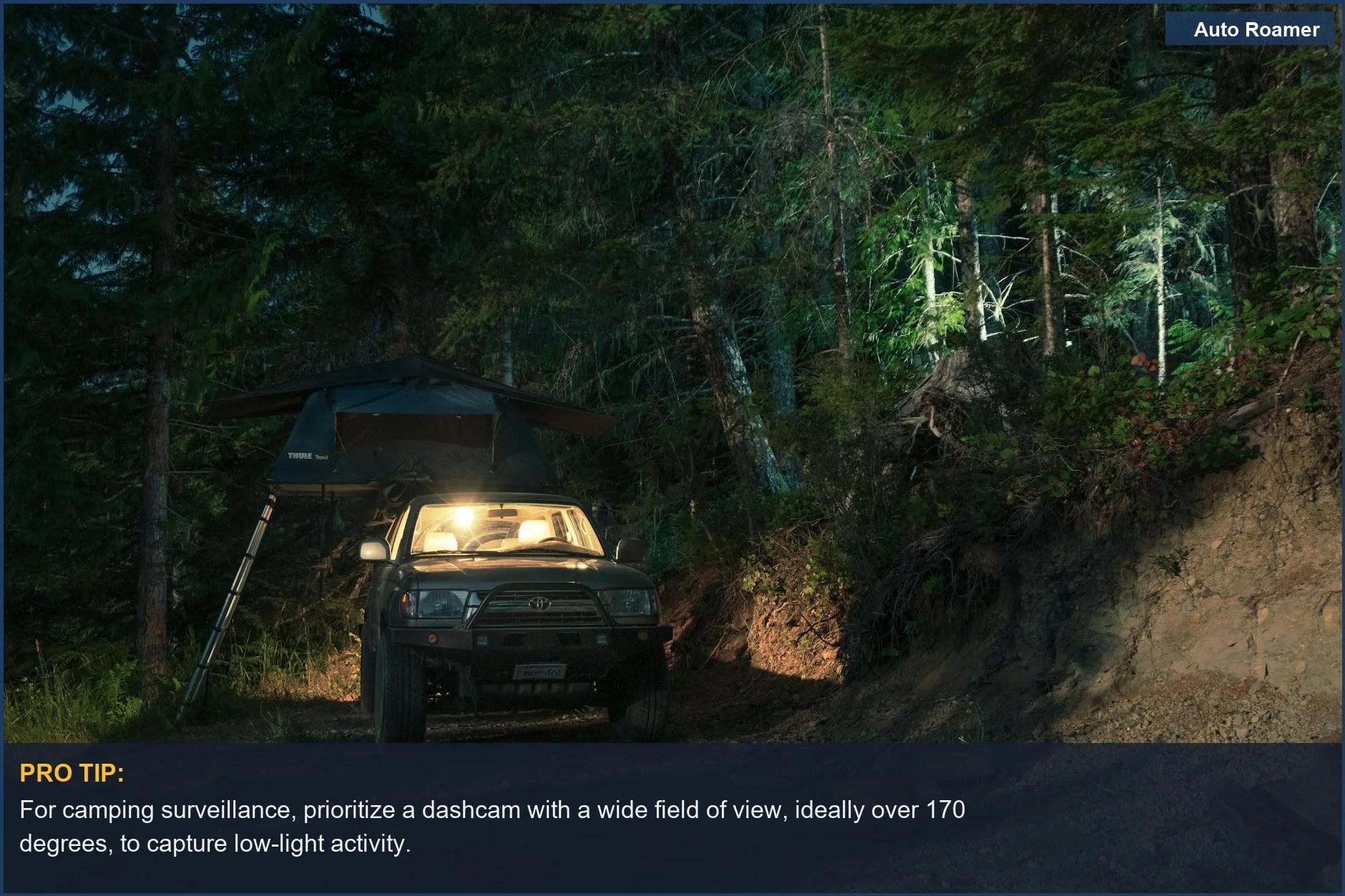
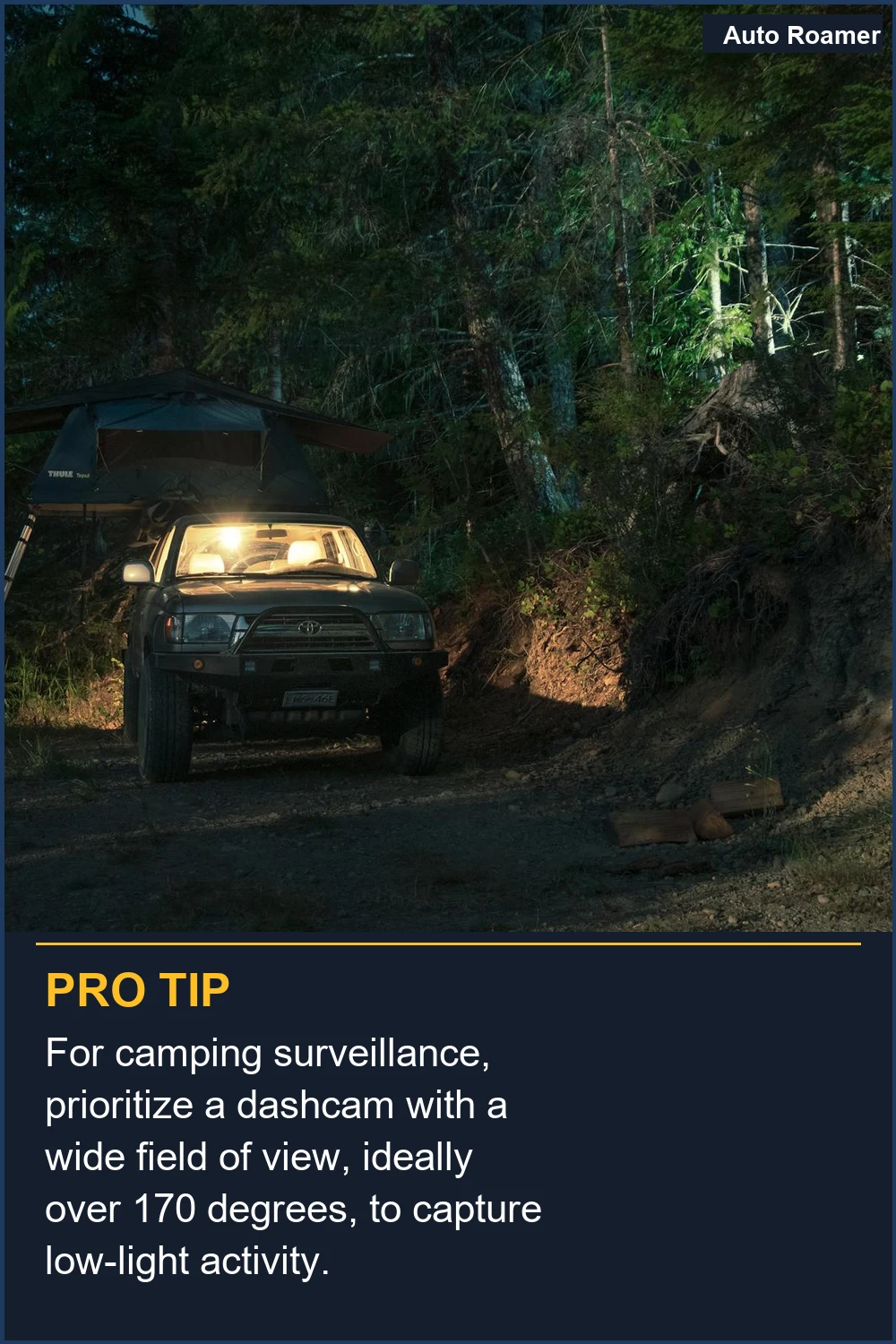
    For camping surveillance, prioritize a dashcam with a wide field of view, ideally over 170 degrees, to capture low-light activity.
    An SUV with a rooftop tent in a dimly lit forest emphasizes nighttime security. A wider dashcam field of view is essential for capturing crucial details in low-light conditions. | Photo by Rhys Abel

    Frequently Asked Questions

    My dash cam has a lens that looks like a fish-eye. Is that good for camping?
    A fish-eye lens is usually an extreme wide-angle lens, often exceeding 170 degrees. While it captures a massive amount of your surroundings, it can severely distort the image, making it hard to judge distances or even identify objects clearly. It's like looking through a warped funhouse mirror. For camping, you want a good balance of wide coverage and reasonable clarity, not extreme distortion. My first wide-angle lens was so warped I thought a squirrel was the size of a bear.
    Do I need a special tool to measure the dash cam's field of view?
    Absolutely not. You don't need any special tools to figure out your dash cam's field of view. The manufacturer will usually list the horizontal, vertical, and diagonal angles in the product specifications, often in degrees (like 140°, 150°, 170°). If you can't find it, a quick search for the model number and 'FOV' should give you the answer. I've never once pulled out a protractor to check my dash cam's specs. It's usually right there in black and white, or at least in the digital manual.
    What if my dash cam's lens gets fogged up from the condensation inside my car overnight?
    That's a classic rookie mistake, especially on cold nights. If your lens fogs, your footage will be useless. The fix is often as simple as using a dash cam with a good aperture (low f-number) that generates a little heat, or placing a small silica gel packet near the camera to absorb moisture. I learned this the hard way at 10,000 feet in Colorado; my entire night's recording was a blurry white mess. The real move is to prevent it before it happens.
    Can using a dash cam with a super wide lens permanently damage my car's dashboard?
    No, a dash cam lens itself won't damage your dashboard. The 'damage' comes from improper mounting. If you use a cheap adhesive mount that bakes in the sun, it can leave residue or even damage the plastic over time. Some mounts can also obstruct your view if not placed correctly. I've had mounts leave sticky rings on my windshield after a hot summer in Arizona, but the lens itself is harmless. Just make sure your mount is secure and won't degrade in the elements.
    I heard that wider dash cam lenses make everything look further away. Is that true?
    That's kind of the opposite of what happens. Wider lenses actually make things look closer and more prominent due to the wider perspective. The distortion can sometimes make the edges of the frame seem further away, but the primary effect of a wider FOV is to capture more of the scene in front of you. The issue with license plates is usually resolution and distortion, not necessarily that things look 'further away' in a general sense. It's more about the fish-eye effect distorting proportions.

    🏅 Looking for Gear Recommendations?

    Check out our tested gear guides for products that work with this setup:

    C

    Casey - The Weekend Warrior

    Weekend car camper and road trip enthusiast. Focuses on practical, budget-friendly solutions for families and first-time campers.

    Sources

    Related Articles