Car Camping

Choosing the Right Material for Your Car Camping Bug Net

Casey - The Weekend Warrior
5 min read
Includes Video

My first car camping bug net was a $15 monstrosity from Amazon that looked like a fishing net had a baby with a Halloween costume. It had holes big enough to drive a Fiat through. The mosquitoes in the Adirondacks laughed all night.

My first car camping bug net was a $15 monstrosity from Amazon that looked like a fishing net had a baby with a Halloween costume. It had holes big enough to drive a Fiat through. The mosquitoes in the Adirondacks laughed all night. I woke up looking like a connect-the-dots puzzle. The honest version: you need mesh that actually stops bugs, not just pretends to.

Forget fancy claims. What actually matters is the material and how tightly woven it is.

I learned this the hard way after spending 3 hours swatting at things that were clearly having a party inside my tent. This isn't rocket science, but it's also not just about buying the cheapest thing you can find. The real move is to understand the basics.

The Core Answer

The material of your bug net is surprisingly important, and it boils down to two main players: polyester and nylon. For car camping, where you're not trying to shave ounces for a multi-day trek, polyester is usually your best bet. It's durable, holds its shape even when it gets damp (which happens), and most importantly, it breathes well. Polyester is a popular choice because it allows good airflow while keeping its shape.

Nylon is lighter and stronger, which sounds great, but it can be less breathable and sometimes feels a bit more plasticky. I tried a nylon net once on a humid trip in the Smokies, and it felt like sleeping inside a sauna that also happened to be full of tiny holes. Not ideal. The real move is to prioritize airflow unless you're specifically trying to block wind too. Mosquito mesh might let more air through if hot.

Then there's the mesh size. This is where that $15 disaster failed me. You want a fine mesh, usually measured in holes per square inch. For mosquitoes and most biting flies, you're looking for something in the 156-200 holes per square inch range. Anything less and you're basically just making a decorative screen. Small mesh (156-200 holes per square inch) provides better protection against small insects.

I bought a new net after the $15 debacle, a polyester one with a 150 mesh count. It was better, but I still had gnats buzzing around my face at dusk. That's when I realized the number of holes actually matters. For car camping, where you're usually parked and not hiking miles into the woods, spending an extra $10-$20 for a finer mesh is worth it. It's the difference between a peaceful night and feeling like a human bug zapper.

The color can matter too, though it's less critical than material and mesh size. Black or grey nets tend to disappear visually, making it easier to see out. For outdoor use, a black, grey, or green net is recommended. I find black works best for me in most environments. It doesn't feel like I'm sleeping inside a giant, see-through bag.

So, the real move is a polyester net with a mesh count of at least 156 holes per square inch, preferably in black or grey. This combo gives you durability, breathability, and actual bug protection. My current setup cost about $35 and has survived three seasons of abuse, including being stuffed into a backseat next to a cooler full of questionable leftovers. They are transparent so they help cut down... wait, no, that's not the point. The point is they keep bugs OUT.
To ensure optimal protection, understanding bug net size is just as crucial as the material choice.
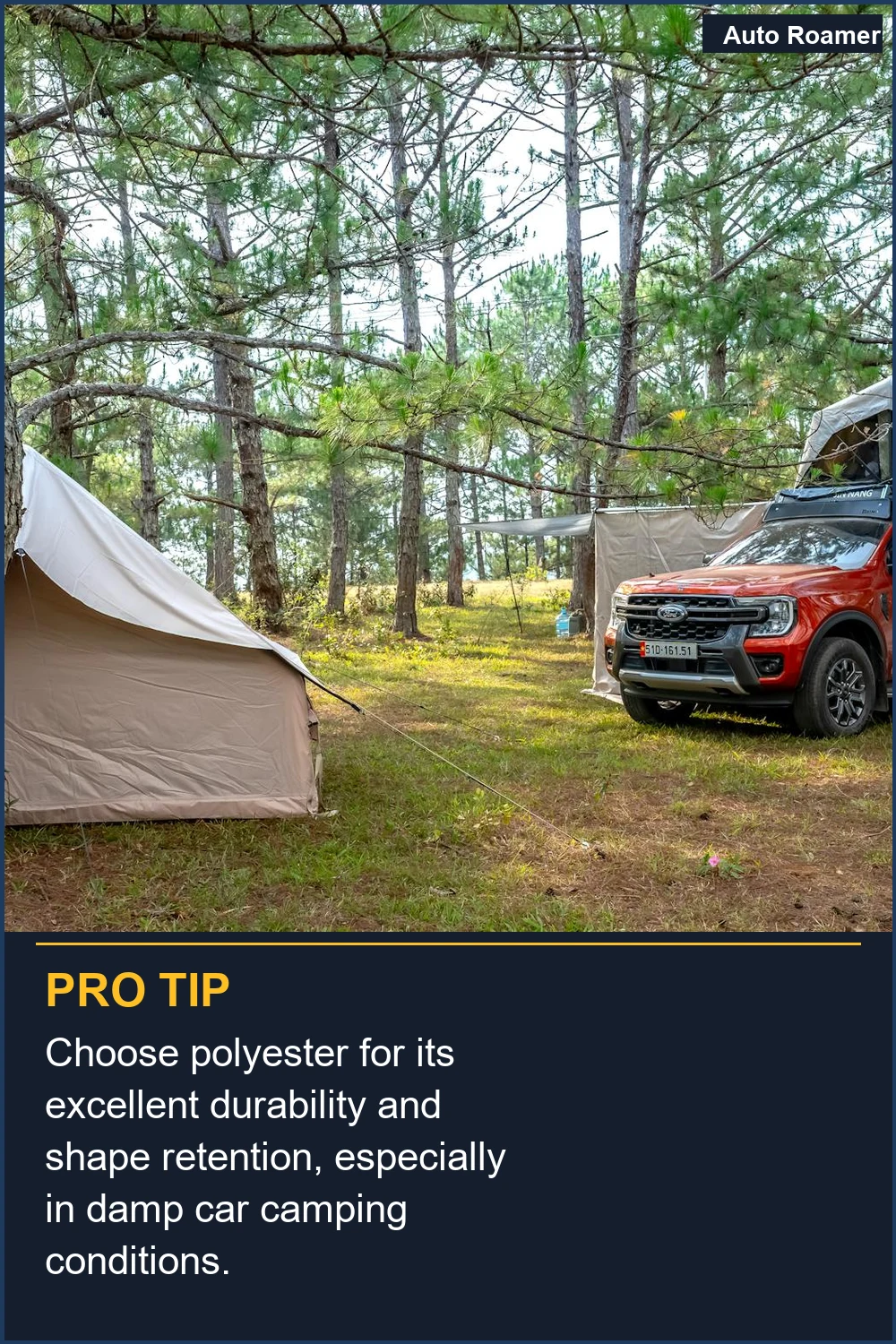
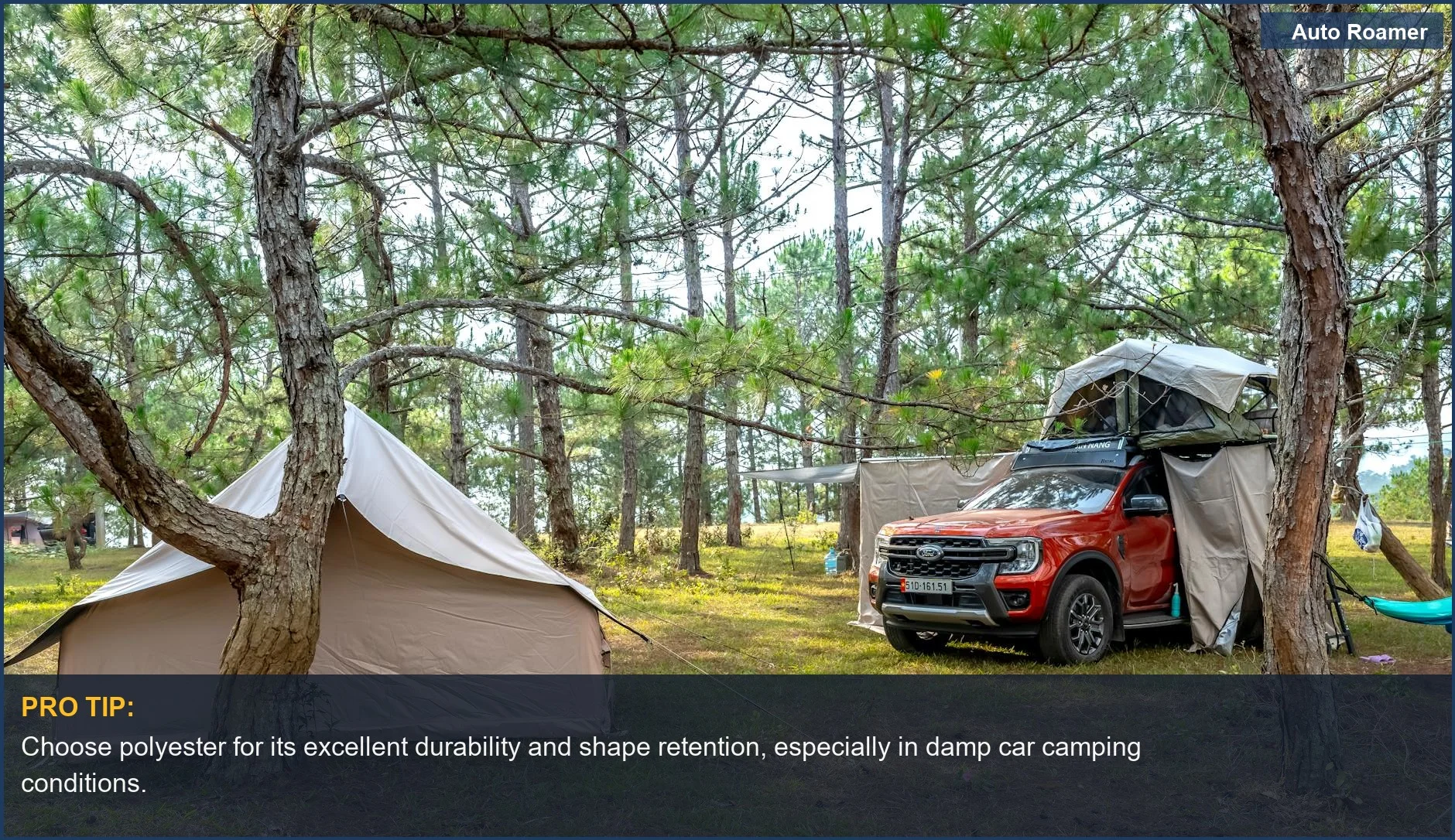
Choose polyester for its excellent durability and shape retention, especially in damp car camping conditions.
A serene forest campsite sets the scene for car camping. When selecting a bug net, consider polyester for its robust nature, ideal for outdoor adventures. | Photo by Quang Nguyen Vinh

Why This Matters for Your Setup

  • Window Covers vs. Tent Nets: For car camping, you're often dealing with window screens or nets that attach directly to your vehicle. These are usually made of polyester because it's flexible and can be cut to size or shaped. There are several mosquito netting solutions on the market, from magnetic covers to mesh shelters.
  • The key is that the mesh needs to be fine enough to stop even the smallest no-see-ums.
  • Breathability is Key: On a warm night, your car can turn into an oven. A bug net that doesn't breathe well will make you feel like you're sleeping in a plastic bag. Polyester generally offers a good balance of protection and airflow. I learned this the hard way in Moab, where the desert heat combined with a non-breathable net was miserable.
  • This Mosquito net works well, is easy to make and... well, if you can't buy one, you can make one, but the material still matters.
  • Durability for the Long Haul: Car camping gear gets tossed around. Your bug net will be stuffed into bags, potentially sat on, and generally treated less than gently. Polyester tends to hold up better to this kind of abuse than some finer, more delicate materials.
  • My first net, the $15 special, ripped on its second trip when a rogue branch snagged it. My current polyester one has survived countless instances of being crammed into my trunk.
  • Visibility Matters (Sometimes): While bug protection is the main goal, you don't want to feel completely cut off from the outside. Black or dark grey polyester nets often provide better visibility looking out compared to lighter colors.
  • This is especially true if you're in a spot where you want to enjoy the view without the bugs. Lightweight mesh can be good, but make sure it's fine enough.
    To ensure optimal protection from bugs, understanding how to properly install and secure a car camping bug net is essential; learn more in our article on installing a bug net.
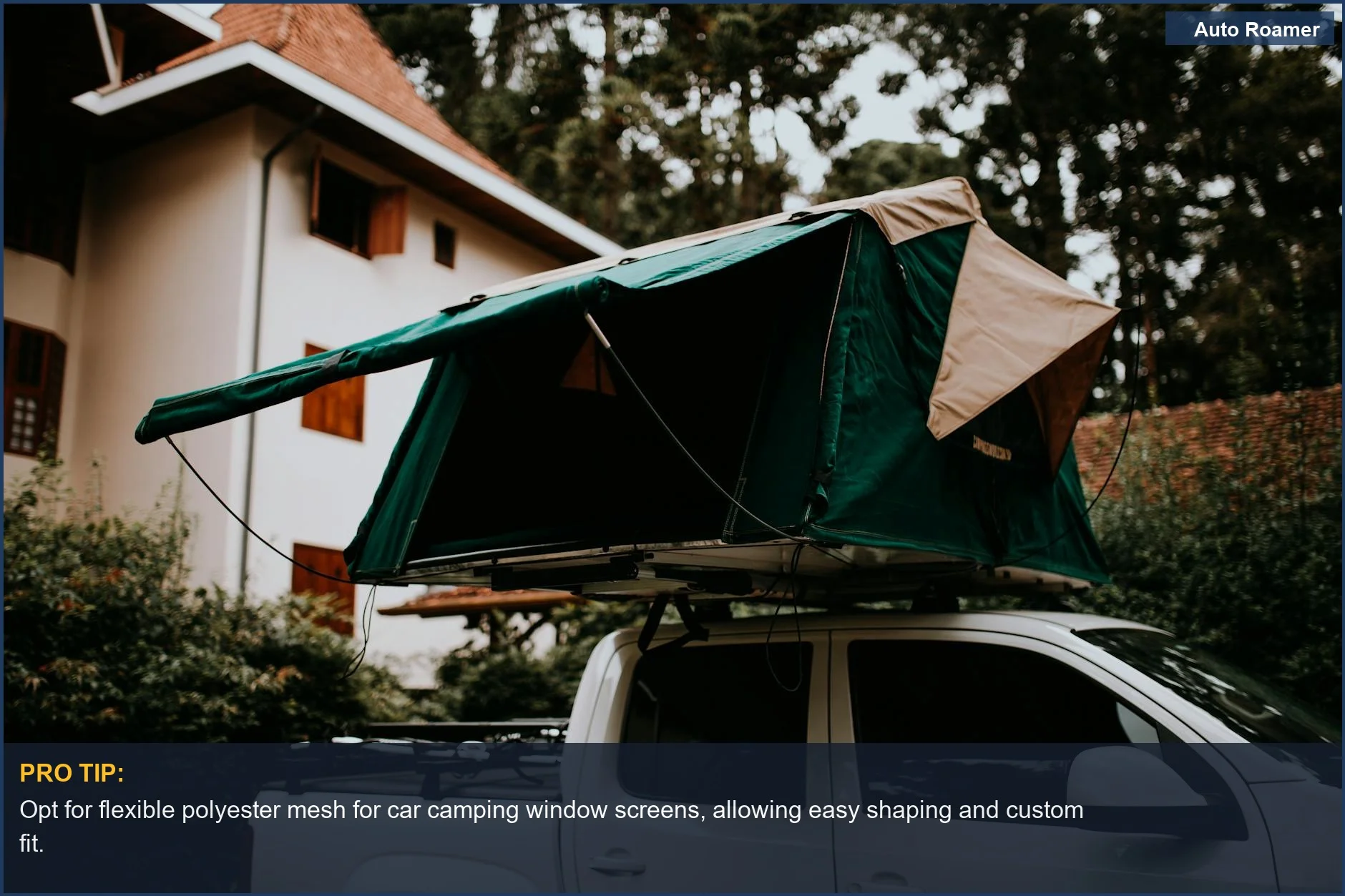
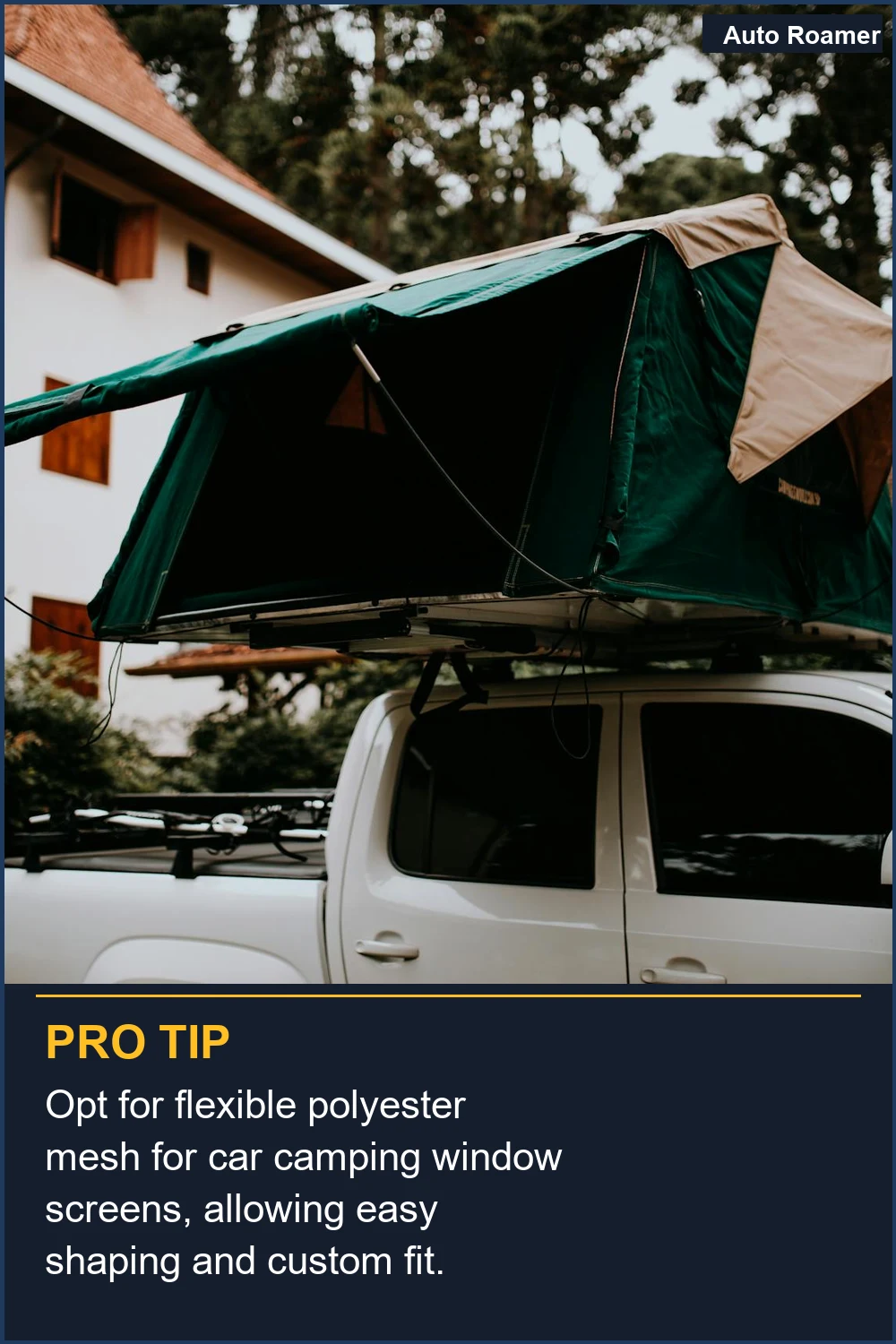
    Opt for flexible polyester mesh for car camping window screens, allowing easy shaping and custom fit.
    This pickup truck features a rooftop tent, showcasing the versatility of bug nets. Polyester's flexibility makes it perfect for custom window covers in car camping. | Photo by Matheus Bertelli

    Making the Right Choice

  • Polyester is your friend. It's durable, breathable, and doesn't cost a fortune. I've tried other materials, and honestly, polyester just works for car camping. Polyester is a popular choice because it allows good airflow while keeping its shape.
  • Mesh count is non-negotiable. Aim for at least 156 holes per square inch, and don't be afraid to go higher. My $35 net has a 180 mesh, and it's a game-changer.
  • No more tiny gnats doing laps around my head. Small Mesh (156-200 holes per square inch) provides better protection against small insects.
  • Color can help. Black or dark grey nets offer better visibility and blend in more. It's a small detail, but it makes a difference when you're trying to enjoy the scenery.
  • For outdoor use, a black, grey, or green net is recommended.
  • Don't overthink it. You don't need a tent-sized mosquito net for your car. A good quality window screen or a simple car-specific net is usually enough. My second trip out, I realized I'd packed enough bug netting to enclose a small village. The $50 version is often just a $25 net with a fancier name.
  • To enhance your camping experience, consider how the right tarp material can complement your bug net; learn more about it in our article on tarp material options.
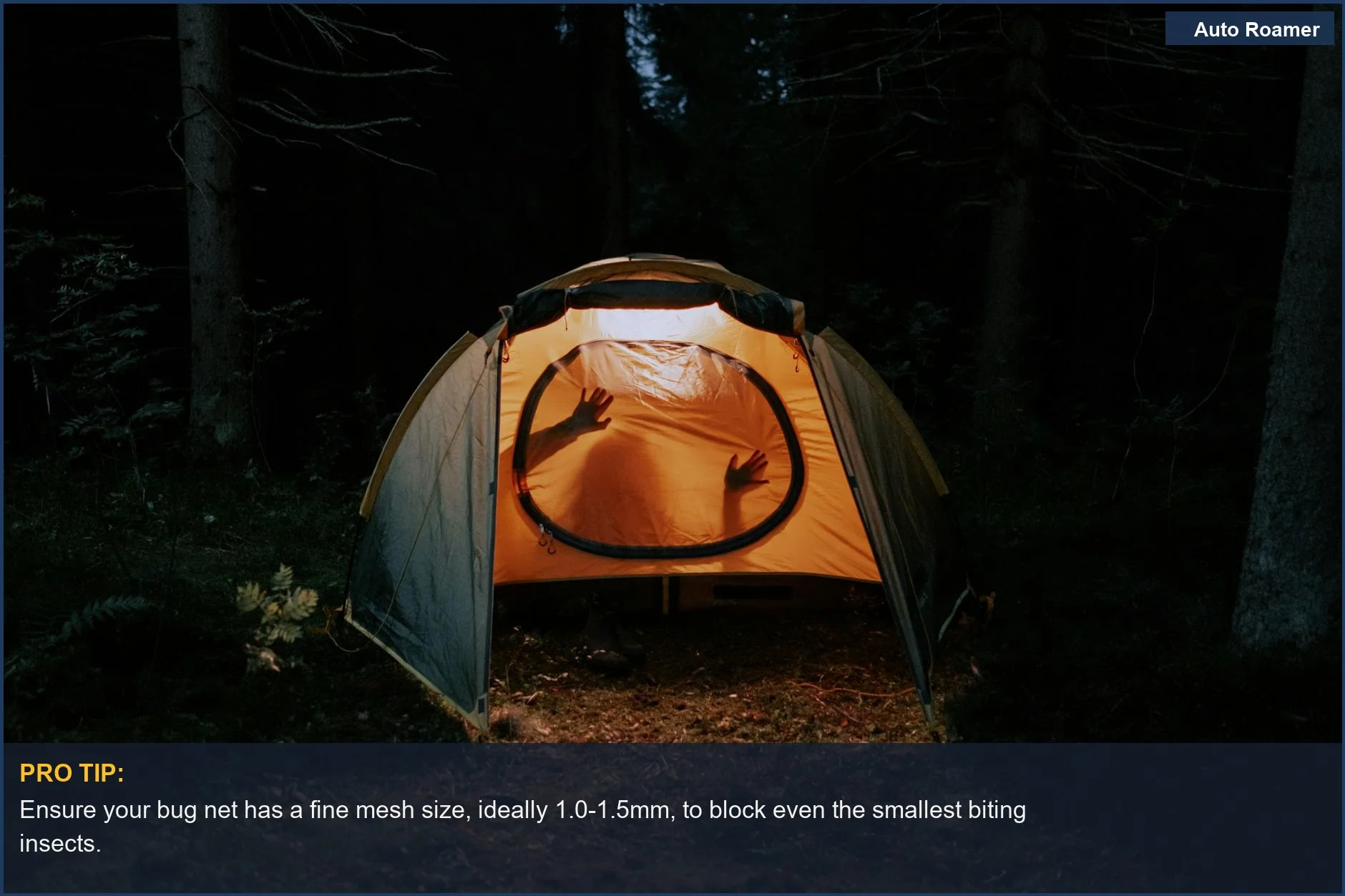
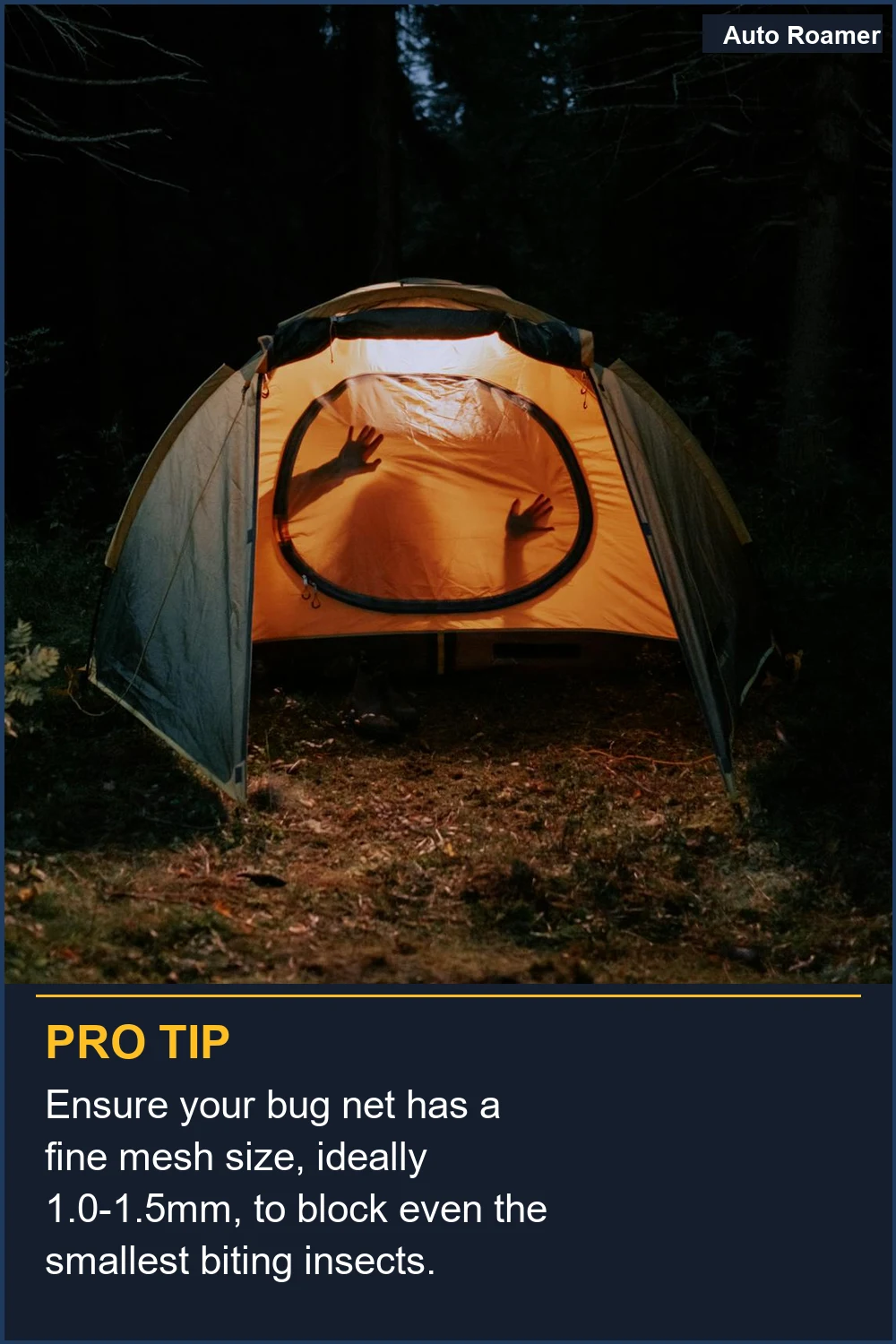
    Ensure your bug net has a fine mesh size, ideally 1.0-1.5mm, to block even the smallest biting insects.
    An illuminated tent in a dark forest hints at cozy nights. For effective protection, pay close attention to the mesh size of your car camping bug net. | Photo by cottonbro studio

    Frequently Asked Questions

    Okay, so I can buy a pre-made car window bug screen for like $40, or I could try to make my own with some $10 mesh from the fabric store. Is it really worth paying the extra $30 for the store-bought ones?
    Honestly, for car window screens, the pre-made ones are usually worth the extra cash. They often have magnets sewn into the edges or custom elastic to fit your specific window perfectly, which is a pain to DIY. My attempt to make my own involved a lot of duct tape and resulted in a screen that looked like it lost a fight with a raccoon. The $40 ones from places like Roadloft are custom-made to the dimensions of your vehicle’s windows, so no mosquitoes get in.
    Do I need to measure my car windows with a fancy tape measure, or can I just eyeball it for a DIY net?
    You absolutely do NOT need a fancy tape measure. A basic $5 tape measure from the hardware store will do. Eyeballing it? Congratulations. You're setting yourself up for a rookie mistake. You'll end up with gaps bigger than the mosquitoes themselves. The real move is to measure twice, cut once. Even for store-bought, they often have specific models for certain cars, so knowing your window dimensions is key.
    What if I get a really fine mesh net, but I still feel like I'm getting bitten? Is it possible the bugs are just super advanced and can phase through it?
    While it's tempting to blame super-powered mosquitos, the honest version is usually that there's a gap somewhere. Check the edges where the net meets your car, or any seams. I once spent an hour convinced a new net was faulty, only to realize I'd left a thumb-sized hole near the bottom. Make sure the net is fully sealed, and if you're still getting bitten, try a different color net which might make it easier to spot tiny tears.
    If I use a treated bug net with insecticide, will that permanently damage my car's interior over time from the chemicals?
    Generally, no. Insecticide-treated nets are designed for personal protection and shouldn't permanently damage your car's interior if used as directed. The chemicals are usually bonded to the fabric. However, I'd avoid touching the net excessively and then touching your dashboard or upholstery if you're concerned. Always check the product's instructions for handling and washing to ensure longevity for both you and your car.
    I heard that you can just use regular window screening material from a hardware store for car bug nets. Is that true, or is that just a myth?
    That's mostly a myth, or at least, a very incomplete truth. Standard window screening is designed to keep out large bugs like flies and moths, but it's usually too coarse to stop mosquitoes or no-see-ums. Small mesh (156-200 holes per square inch) is what you need for true mosquito protection. So while you *could* technically use window screen, you'd still be inviting plenty of unwanted guests.

    🏅 Looking for Gear Recommendations?

    Check out our tested gear guides for products that work with this setup:

    C

    Casey - The Weekend Warrior

    Weekend car camper and road trip enthusiast. Focuses on practical, budget-friendly solutions for families and first-time campers.

    Sources

    Related Articles